Our readers keep the lights on and my smoothie glass nicely filled. As an Amazon Associate, I earn from qualifying purchases.
Standard work shoes squeeze your toes into a sharp triangle and lift your heel, forcing your feet to work against their natural design. After eight hours on concrete, that unnatural posture radiates pain up through your knees and lower back. A growing number of professionals are switching to footwear that lets the foot spread, flex, and move the way it evolved to move.
I’m Mohammad Maruf — the founder and writer behind WellFizz. I’ve spent years analyzing foot biomechanics, zero-drop geometry, and real-world durability data across dozens of safety and dress shoe models to identify which pairs actually combine workplace protection with anatomical freedom.
Whether you stand on a factory line, walk a warehouse route, or sit in an office, choosing the right pair is critical to long-term joint health. This guide evaluates the seven best performing models to help you find the barefoot shoes for work that match your specific shift and hazard requirements.
How To Choose The Best Barefoot Shoes For Work
Barefoot work shoes differ from casual minimalist shoes in three critical ways: safety certification, outsole durability on industrial surfaces, and the ability to accommodate a safety toe without compressing the forefoot. Ignoring any of these will leave you with a shoe that either fails a workplace requirement or destroys your feet within a week.
Zero Drop and Stack Height
Standard work boots lift your heel 10–15 mm above your toes, shortening your calf muscles and shifting your pelvis forward. Barefoot work shoes must maintain a zero-drop platform (heel and toe at the same height) with a stack height under 14 mm so your foot can sense the ground and your Achilles tendon retains its natural length.
Toe Box Shape and Volume
The toe box must be foot-shaped — wide enough at the metatarsals and the very tip so your toes can splay under load. Many “wide” work shoes still taper at the big toe. A true anatomical toe box has a round or trapezoidal profile that matches the natural outline of a weight-bearing foot. Measure your foot width while standing, not sitting.
Outsole Grip and Safety Ratings
Look for outsoles marked ASTM F2913 (slip resistance) or equivalent. Rubber compounds with multi-directional lugs provide traction on wet concrete, oil, and gravel. For electrical hazard environments, you need ASTM F2413 EH ratings. Composite toes are preferred over steel for barefoot shoes because they weigh less and don’t conduct cold in winter conditions.
Quick Comparison
On smaller screens, swipe sideways to see the full table.
| Model | Category | Best For | Key Spec | Amazon |
|---|---|---|---|---|
| Xero Shoes Glenn | Dress Casual | Office & dress codes | Zero drop, 9mm stack | Amazon |
| Jim Green African Ranger | Work Boot | Rugged outdoor work | Stitchdown, full-grain leather | Amazon |
| New Balance Cremorne | Safety Sneaker | 12-hour warehouse shifts | Fresh Foam midsole, composite toe | Amazon |
| Ariat Outpace | Safety Shoe | Wet/oily concrete floors | Composite toe, EH rated | Amazon |
| Airwalk Deuce | Composite Toe | Lightweight daily safety | Rubber/foam sole, 10oz weight | Amazon |
| Sureway Slip On | Slip On | Fast don/doff stations | Water resistant, EH rated | Amazon |
| CAT Venward | Composite Toe | Value-oriented protection | 2.4 lbs, true to size | Amazon |
In‑Depth Reviews
1. Xero Shoes Glenn Casual Dress Leather Shoes
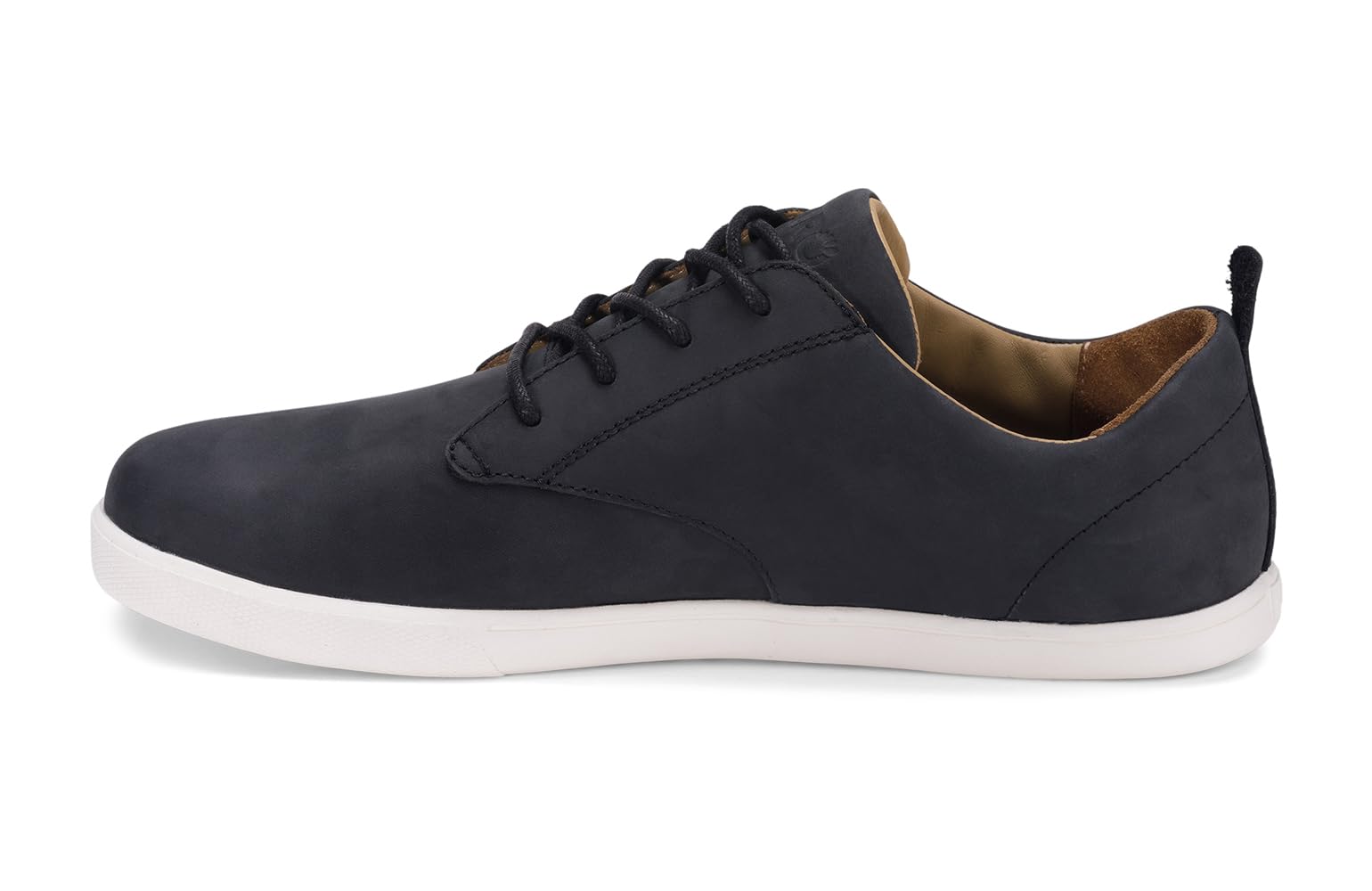
The Xero Shoes Glenn is the only true barefoot dress shoe on this list, with a zero-drop platform and a stack height of just 9 mm, giving you maximum ground feel while maintaining a polished profile. The full-grain leather upper is stain-resistant and looks appropriate with slacks or khakis, solving the problem of finding professional footwear that doesn’t cramp the toes.
Reviewers consistently note the wide toe box allows natural splay without looking bulbous. The lightweight cushioning is minimal but sufficient for office environments and short walking commutes. The dark brown variant with matching sole addresses earlier color complaints and now meets all aesthetic expectations.
While not suitable for jobs requiring safety toe ratings or heavy-duty water resistance, the Glenn excels where dress codes demand a clean look and you want to maintain barefoot biomechanics. Pairs well with business casual attire for knowledge workers who spend hours seated or on their feet intermittently.
Why it’s great
- True zero drop at 9mm stack for natural gait
- Stain-resistant leather that dresses up or down
- Wide toe box suitable for newcomers to barefoot
Good to know
- Not as wide as dedicated barefoot brands like Altras
- Lacks safety toe or slip-resistant outsole
2. Jim Green Men’s Barefoot African Ranger Boots

The Jim Green African Ranger Boots are constructed with a stitchdown method that makes the full-grain leather upper and outsole one unit, increasing durability and allowing easy resoling. The toe box is genuinely wide and round, not sharply anatomical, giving your toes room to spread naturally without pressure points that cause bunions.
Built for rugged outdoor worksites, the soft rubber outsole provides excellent ground feel and grip on uneven terrain. The leather interior resists odor buildup, and the design explicitly discourages adding insoles because the footbed is shaped to work without them. Several reviewers report relief from existing bunion pain after switching from conventional boots.
Expect a longer break-in period of several days, during which you may develop blisters at the heel or ankle. The laces require careful adjustment to lock the heel down. Not suitable for wet winter conditions, but excels on dry trails, construction sites, and any environment where a robust boot with barefoot geometry is needed.
Why it’s great
- Stitchdown construction for resoling and long life
- Very wide toe box relieves bunions and splay
- Leather interior prevents foot odor
Good to know
- Long break-in period with potential blisters
- Not insulated for cold weather use
3. New Balance Men’s Composite Toe Cremorne Fresh Foam Work Shoes

The New Balance Cremorne combines a composite safety toe with Fresh Foam cushioning that mimics the plush feel of a running shoe, making it ideal for 12-hour warehouse shifts or construction days where you’re constantly moving. The upper is breathable and lightweight, and the heel wedge makes removal easy — a small but appreciated detail after a long shift.
HVAC professionals and woodworkers report zero foot soreness after full days on ladders, attics, and concrete floors. The shoe runs significantly large — most buyers need to order a half to full size down, especially those with narrow feet. The composite toe remains warm in cold weather, unlike steel alternatives.
While the Fresh Foam midsole provides more cushion than a strict barefoot shoe, the zero-drop geometry and wide toe box preserve natural foot positioning. Some users add memory foam insoles for extra arch support, though this raises the foot slightly and may affect the safety toe clearance.
Why it’s great
- Running-shoe comfort for all-day standing
- Breathable upper for hot worksites
- Composite toe stays warm in cold climates
Good to know
- Runs 0.5–1 size large; must size down
- Fresh Foam adds stack height beyond strict barefoot spec
4. Ariat Outpace Composite Toe Safety Shoe
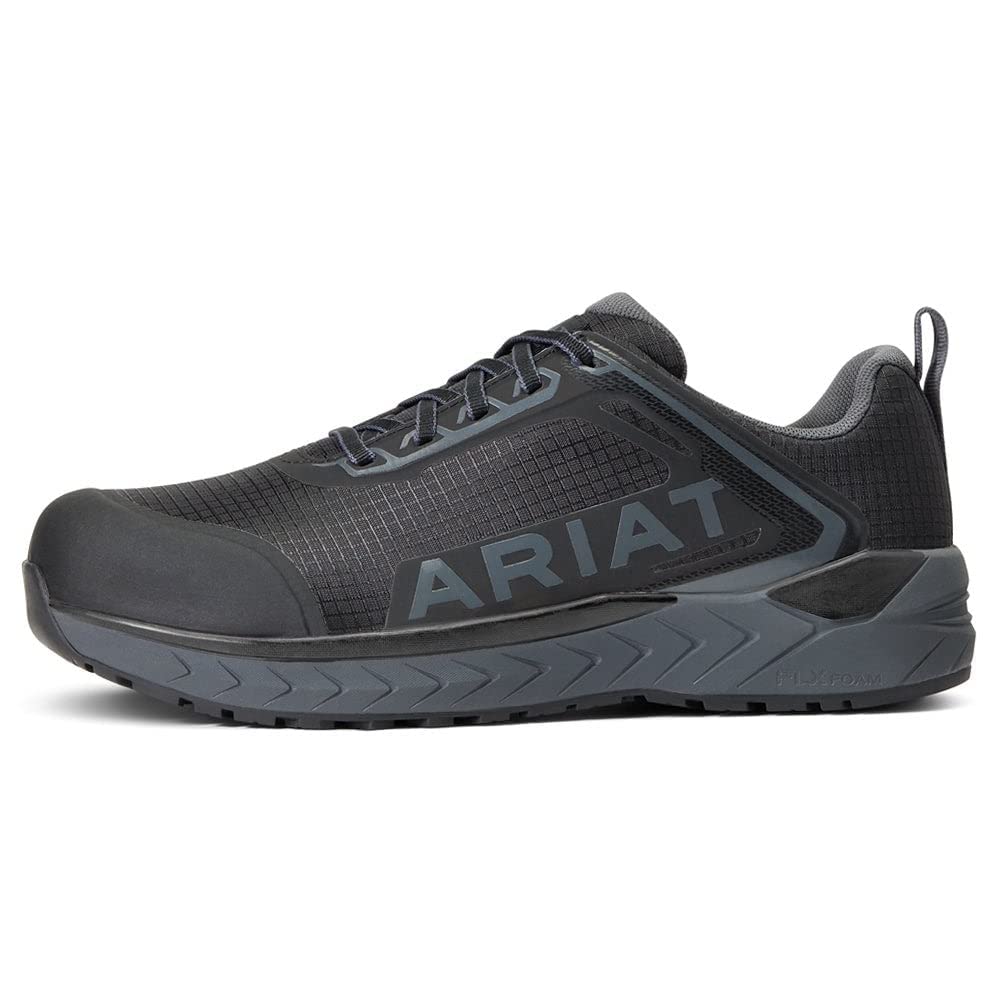
The Ariat Outpace is engineered for workers on wet, oily concrete surfaces, with a slip-resistant outsole that reviewers consistently describe as the best traction they have ever worn for kitchen or industrial floors. The composite toe meets ASTM electrical hazard standards, adding an extra layer of protection for electricians and mechanics.
Users with flat feet and plantar fasciitis report zero foot pain after 9-hour shifts, citing the sneaker-like flexibility that still manages to offer solid arch support. The flat laces require a double knot to stay secure throughout the day, and the padding in the collar tends to compress after eight months of daily use.
Where this shoe falls short for barefoot enthusiasts is the slightly narrower toe box — not quite foot-shaped at the widest metatarsal point. If your number one priority is anatomical toe splay, this won’t replace a true minimalist shoe, but for wet-safety environments it’s unmatched in its class.
Why it’s great
- Class-leading slip resistance on wet concrete
- Zero break-in required, comfortable out of box
- Durable construction, lasts over a year with daily use
Good to know
- Toe box not as wide as true barefoot models
- Flat laces may require double knotting
5. Airwalk Deuce Composite Toe Shoes for Men
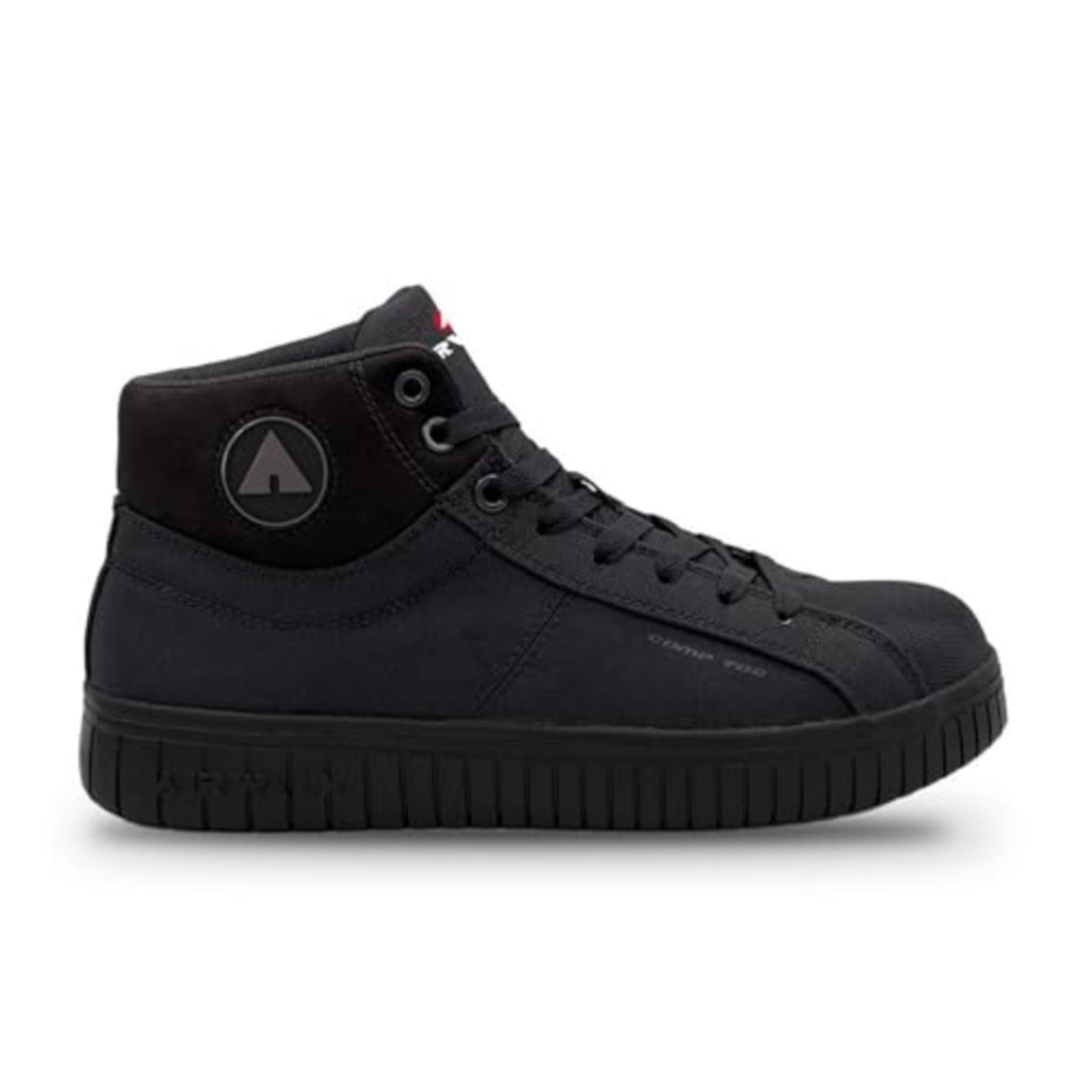
The Airwalk Deuce is a mid-range safety sneaker that balances weight, cost, and composite toe protection better than anything else near its price tier. The sole uses a rubber/foam blend with decent threading that holds up to 250 miles of warehouse walking without significant wear, though the thick gel insole may compress faster than premium foams.
The canvas upper feels tough though slightly synthetic, and the wide width accommodates broader forefeet better than many safety shoes at this price. Electrical hazard protection is included, making it a legitimate option for mechanics and electricians who don’t want to spend triple digits. The composite toe is non-metallic, so it stays warm in freezing environments and passes through metal detectors.
The major downside is the narrow toe cap — even the XX-wide version rubbed some reviewers’ big toes raw until swapping to third-party insoles. If your feet are very wide at the metatarsal heads, this may cause blisters during the first week. For medium-width feet, it’s an exceptional value for daily safety requirements.
Why it’s great
- Very lightweight, comfortable for long concrete shifts
- Composite toe is cold-weather friendly
- Good value for money compared to premium brands
Good to know
- Narrow toe cap even in wide sizes
- Poor grip on loose gravel surfaces
6. Sureway Men’s Slip On Work Boots
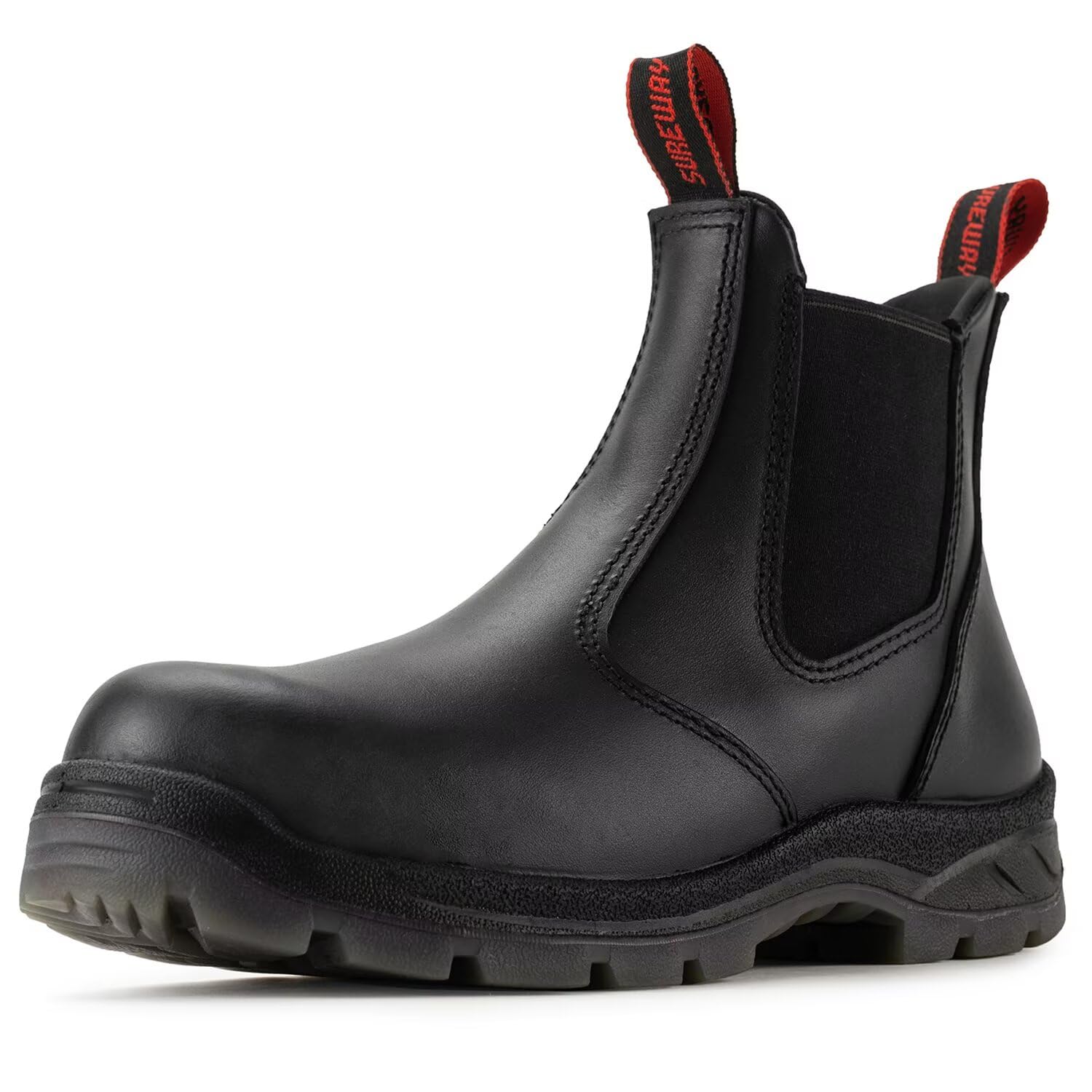
The Sureway Slip On is designed for environments where you need to kick shoes on and off frequently — fire stations, machine shops, and clean rooms. The water-resistant upper sheds light moisture, and the electrical hazard rating makes it safe for work near live circuits. The tread pattern provides good grip on smooth industrial floors.
Reviewers note the fit is comfortable from day one, with no break-in period. The pull-on style holds the heel securely for most foot shapes, though some users report looseness at the ankle opening. The toe area is moderately wide, allowing some natural splay without looking clownish. After a month of daily use, the top of the foot may feel pressure during extended driving or bending.
This is not a strict barefoot shoe — it has a slight heel rise and more internal cushioning than minimalist purists prefer. But for workers who prioritize convenience and basic safety protection without sacrificing all-day comfort, it hits a useful middle ground. The mid-range price reflects its niche positioning.
Why it’s great
- Slip-on design for fast donning and removal
- Water resistant and electrical hazard rated
- Comfortable out of box with no break-in
Good to know
- Ankle opening may feel loose for some
- Not a true zero-drop barefoot geometry
7. CAT Mens Venward Composite Toe SD

The CAT Venward delivers solid composite toe protection and a lightweight sneaker feel at an entry-level price point that appeals to budget-conscious buyers. The durable outsole handles daily abuse on construction sites, and the cushioning keeps feet relatively pain-free after full days of walking on concrete floors.
Reviewers with wide feet appreciate the fit through the midfoot and heel, but the toe box runs noticeably narrow — several users upgraded to wide sizes to avoid blisters on their big toes. The composite toe is warm in cold weather and passes through metal detectors. After three months of regular use, the insole may begin to compress and need replacement for continued comfort.
This is not a barefoot design — it has a conventional drop height and the toe box tapers at the metatarsals. For someone transitioning to minimalist footwear on a strict budget, the Venward offers a first step into lighter work shoes with safety features, though you will still experience some toe restriction compared to dedicated anatomical models.
Why it’s great
- Lightweight composite toe at a budget price
- Durable outsole for construction environments
- Wide sizing available for broader feet
Good to know
- Narrow toe box even in wide sizes
- Not a true zero-drop barefoot shoe
FAQ
Are barefoot work shoes allowed in OSHA-regulated workplaces?
Will switching to zero-drop work shoes cause calf or Achilles pain?
Final Thoughts: The Verdict
For most users, the barefoot shoes for work winner is the Xero Shoes Glenn because it delivers true zero-drop geometry and a wide toe box in a professional package suitable for office and dress-coded environments. If you need rugged, boot-level durability with anatomical toe room, grab the Jim Green African Ranger. And for 12-hour warehouse shifts where cushion and breathability matter most, the New Balance Cremorne is the safest bet.

Mo Maruf
I created WellFizz to bridge the gap between vague wellness advice and actionable solutions. My mission is simple: to decode the research and give you practical tools you can actually use.
Beyond the data, I am a passionate traveler. I believe that stepping away from the screen to explore new environments is essential for mental clarity and physical vitality.