Our readers keep the lights on and my smoothie glass nicely filled. As an Amazon Associate, I earn from qualifying purchases.
The single biggest enemy of a vlog is shaky footage. While your smartphone might be adequate, the lack of manual controls, poor audio pickup, and subpar stabilization can ruin otherwise great content. A dedicated camcorder solves these issues with superior ergonomics, better image sensors, and features engineered specifically for the demanding workflow of a content creator.
I’m Mohammad Maruf — the founder and writer behind WellFizz. My deep-dive research into imaging hardware, focusing on stabilization mechanisms, sensor sizes, and real-world battery life, helps me separate marketing specs from actual vlogging performance.
Whether you’re filming travel diaries, talking-head tutorials, or dynamic outdoor B-roll, choosing the right tool is crucial. This guide breaks down the essential specs and reviews the top contenders to help you find the absolute best camcorder for vlogging.
How To Choose The Best Camcorder For Vlogging
Selecting a vlogging camera requires balancing portability with features that directly impact your final video. You can’t simply pick the highest resolution or the lowest price—you must evaluate the complete system, from how it handles sound to how it stabilizes your run-and-gun shots.
Stabilization: Mechanical vs. Electronic
The smoothness of your footage is defined by the stabilization system. Mechanical stabilization, typically a 3-axis gimbal built into the camera, physically counteracts movement, producing cinema-smooth results even when walking or running. Electronic stabilization (EIS) crops into the sensor to digitally smooth jitters, which is effective for minor shakes but can create a warped “jello” effect during rapid motion. For active vloggers, a camera with a built-in gimbal or excellent optical stabilization on a traditional camcorder is non-negotiable.
Audio Quality and Connectivity
Viewers will forgive slightly soft video, but they will not tolerate bad audio. A professional-looking vlog requires a dedicated microphone input (a 3.5mm jack is standard). Look for cameras that offer a microphone input and a headphone jack for real-time monitoring. Some advanced units include built-in directional stereo mics that isolate the speaker’s voice from background noise, which is a massive advantage for talking-head content.
Sensor Size and Low-Light Performance
Sensor size directly dictates low-light clarity and dynamic range. A 1-inch type CMOS sensor is the gold standard for vlogging cameras, offering a significant upgrade over the smaller 1/2.3-inch sensors found in older or budget camcorders. A larger sensor captures more light, allowing you to shoot in dim cafes or at dusk without introducing excessive digital noise. This results in a cleaner image and a more professional, cinematic feel with natural background separation (bokeh).
Quick Comparison
On smaller screens, swipe sideways to see the full table.
| Model | Category | Best For | Key Spec | Amazon |
|---|---|---|---|---|
| DJI Osmo Pocket 3 | Gimbal Camera | Ultra-smooth walking shots | 1-inch CMOS, 4K/120fps | Amazon |
| Canon PowerShot V10 | Compact Vlogger | Pocketable daily carry | 1-inch CMOS, 19mm wide lens | Amazon |
| Xtra Muse | Gimbal Camera | Budget gimbal video | 1-inch CMOS, 4K/120fps | Amazon |
| OPRKQEE 6K Camcorder | Budget Camcorder | Entry-level vlogging kit | 18X digital zoom, 4500mAh battery | Amazon |
| DJI Osmo Pocket 3 (Combo) | Gimbal Camera | Complete creator kit | 1-inch CMOS, ActiveTrack 6.0 | Amazon |
| Sony ZV-1 | Compact Vlogger | Professional features | 1-inch CMOS, 24-70mm F1.8-2.8 | Amazon |
| Insta360 Luna Ultra | Gimbal Camera | High-zoom 8K workflow | Dual Leica, 8K/30fps, 12X zoom | Amazon |
| Sony FDR-AX43 | Traditional Camcorder | Long zoom events | Balanced Optical SteadyShot, 20X zoom | Amazon |
| Canon VIXIA HF G70 | Traditional Camcorder | Professional recording | 4K UHD, 20X optical zoom, UVC streaming | Amazon |
In‑Depth Reviews
1. DJI Osmo Pocket 3 (Standalone)
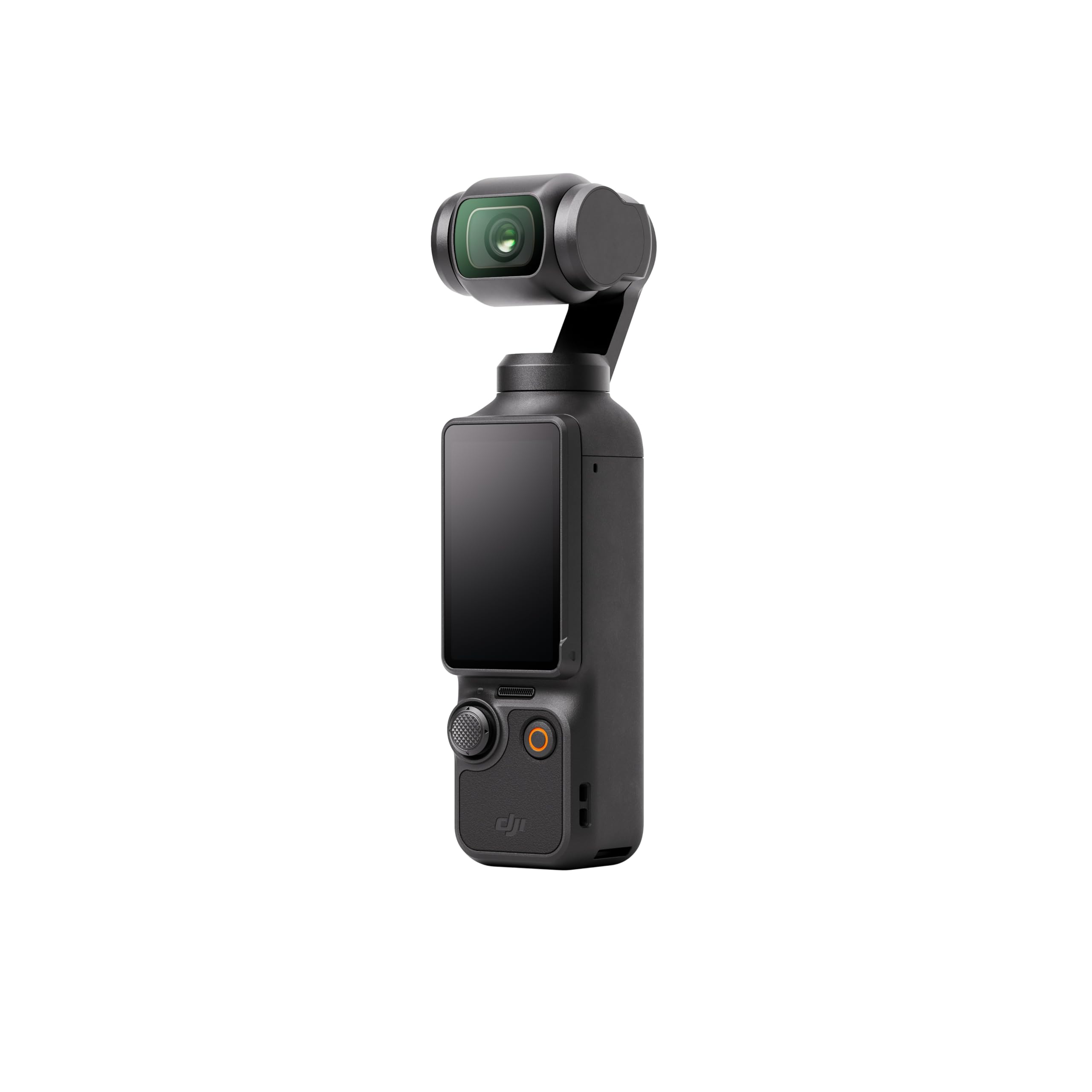
The DJI Osmo Pocket 3 is the benchmark for portable vlogging. Its 1-inch CMOS sensor captures extraordinary detail, while the integrated 3-axis gimbal provides the smoothest footage in this class, allowing you to walk or run without any rolling shutter warping. The 2-inch rotatable touchscreen instantly switches between horizontal and vertical orientation, making it the ultimate tool for cross-platform creators who post to both YouTube and TikTok.
Full-pixel fast focusing is incredibly snappy, and ActiveTrack 6.0 reliably keeps a moving subject centered in the frame, perfect for action or follow-me vlogs. The D-Log M 10-bit color profile offers significant flexibility for color grading in post-production, elevating the final look far beyond standard consumer cameras. While the battery is internal and non-replaceable without a separate handle, the 166-minute battery life covers a full day of sporadic shooting.
One notable limitation is the lack of a built-in zoom lens; it relies on digital zoom up to 2X. It also requires a microSD card, as internal storage is absent. For vloggers who prioritize stabilization and image quality above all else, and who prefer a gimbal-in-hand form factor, this is the lean, go-anywhere powerhouse.
Why it’s great
- Industry-leading 3-axis mechanical stabilization makes any walking footage look like a dolly shot.
- 4K/120fps slow-motion capture is incredibly smooth and detailed.
- 2-inch rotatable touchscreen allows instant switch to portrait mode for TikTok/Reels.
Good to know
- Digital zoom is limited to 2X, providing little to no reach for distant subjects.
- No internal storage; requires a V30 or higher microSD card.
- Flip screen can be susceptible to dust and impact when open in a pocket.
2. Canon PowerShot V10

The Canon PowerShot V10 redefines the pocket vlogging camera with a unique vertical design that feels natural for social media creators. Its fixed 19mm f/2.8 wide-angle lens (35mm equivalent) is perfect for including yourself and a wide background in a single frame, making it an excellent choice for hand-held talking-head sessions. The 1-inch back-illuminated CMOS sensor provides excellent low-light performance, keeping noise low in evening cityscapes or dimly lit rooms.
The built-in flip-out stand is a cleverly designed feature that allows for hands-free recording on any flat surface, eliminating the need for a separate tripod for sit-down vlogs. The dual stereo microphones with a third central noise-filtering mic capture surprisingly clear audio for such a small body, effectively suppressing wind rumble. While it shoots crisp 4K/30fps video, the fixed lens means you have zero zoom capability, so you must physically move to change your composition.
The included USB-C to USB-C charging is modern and fast, and the body is incredibly lightweight at just 180g. Reviewers consistently praise its video quality and ease of use. This camera is not for someone who needs optical zoom, but for the purest point-and-shoot vlogging experience—perfect for the on-the-go lifestyle creator—the V10 is unbeatable.
Why it’s great
- Extremely pocketable and lightweight at 180g, designed to be carried everywhere.
- The built-in folding stand offers immediate hands-free operation for desk vlogs.
- No need to touch settings; video starts instantly with great color science.
Good to know
- Zero optical or digital zoom capability limits framing flexibility.
- No viewfinder and the 2-inch LCD can be challenging to see in direct sunlight.
- Battery life is average at around 60 minutes of continuous 4K recording.
3. Xtra Muse

The Xtra Muse offers an impressive spec sheet for the price, matching the sensor and stabilization of premium units. The 1-inch CMOS sensor combined with a dedicated 3-axis gimbal delivers smooth, detailed 4K/120fps footage that rivals much more expensive options. This small camera is a serious challenger to the DJI Pocket 3, particularly for creators who need rock-solid stabilization on a lean budget.
Its smart tracking features, including face and object detection, work reliably to keep you in the frame during solo vlogs or when filming a moving subject. The 10-bit X-Log color mode provides a flat profile for advanced color grading, which is rare at this price point. The 2-inch touchscreen is responsive and easy to navigate, and the ability to switch between horizontal and vertical shooting is seamless.
Some users have noted that the dedicated Xtra Muse app could be more polished, and the plastic build of the handle doesn’t feel as premium as competitors. Battery life falls just short of 3 hours, which is decent but not class-leading. For the price, you’re getting a tremendous amount of gimbal-driven flexibility that was previously only available at a higher tier.
Why it’s great
- Offers the core gimbal-stabilized 4K/120fps experience without the flagship price.
- 1-inch sensor provides excellent low-light performance and dynamic range.
- Robust face/object tracking works well for automated solo shooting.
Good to know
- Build quality feels somewhat plastic compared to metal-bodied alternatives.
- Companion mobile app has reported occasional connectivity issues.
- MicroSD card not included; needs a high-speed card for 4K/120fps.
4. DJI Osmo Pocket 3 (Capture More Combo)

The DJI Osmo Pocket 3 Capture More Combo is the definitive all-in-one kit for serious creators. It takes the already superb base camera and adds the DJI Battery Handle, extending the recording time by over 60% to nearly 4 hours. This battery handle also includes a 1/4-inch tripod thread, allowing you to easily mount it on a selfie stick without any adapters. The combo also includes a mini tripod for stable desk shots and a custom carrying bag.
The core camera retains the 1-inch CMOS sensor for exceptional low-light, 4K/120fps for buttery slow-mo, and 3-axis mechanical stabilization that eliminates gimbal-level shake. The ActiveTrack 6.0 is a standout feature, intelligently keeping you centered even as you move around. The dual wireless lapel microphones included in the combo provide professional-grade audio without the constraints of a cable, syncing directly to the camera.
This kit solves the main shortcomings of the standalone: limited battery life and the need for separate audio and tripod accessories. The battery handle supports hot-swapping, meaning you can swap it out without turning the camera off. While it comes at a premium over the base model, you gain a complete, field-ready vlogging studio that fits in a single bag pocket.
Why it’s great
- Battery handle extends recording time to nearly 4 hours, perfect for all-day shooting.
- Included wireless lavalier mics solve the most critical vlogging problem: clear audio.
- Mini tripod and carrying bag make this a truly ready-to-deploy kit.
Good to know
- Still relies on digital zoom (up to 2X) with no optical reach.
- Heavier and bulkier than the standalone due to the extra handle and mics.
- The carrying bag is compact but provides minimal padding for heavy drops.
5. Sony ZV-1

The Sony ZV-1 is a purpose-built compact camera for vloggers that packs professional imaging tools into a body that still fits in a jacket pocket. Its 20.1MP stacked back-illuminated 1-inch sensor is a low-light champion, capturing clean, detailed footage in environments where other cameras struggle. The included fast 24-70mm f/1.8-2.8 ZEISS lens provides optical zoom and that desirable shallow depth-of-field effect for a cinematic look.
This camera is packed with software features that make it a vlogger’s dream: a dedicated switch for instant background bokeh, a Product Showcase mode that smoothly transitions focus from your face to an object you hold up, and Real-time Eye Autofocus that locks onto and tracks a subject’s eye with incredible accuracy. The fully articulated 3-inch flip screen faces forward so you can frame yourself perfectly, while the on-board directional mic with a supplied fuzzy windscreen does a fantastic job reducing wind noise.
The ZV-1 also doubles as an excellent webcam for live streaming. One notable downside is its battery life, which will require an external power bank for long sessions. It also shoots 4K but without the highest frame rate options for slo-mo that some gimbal cameras offer. For the vlogger who values a traditional camera form factor with a zoom lens and industry-leading autofocus, the ZV-1 is a powerful, versatile tool.
Why it’s great
- Large aperture 24-70mm zoom lens provides optical flexibility and natural bokeh.
- Real-time Eye Autofocus and Product Showcase mode are incredibly useful for solo creators.
- Side flip-out screen perfect for selfie vlogging; excellent as a 4K webcam.
Good to know
- Battery life is limited, requiring a power bank or dummy battery for long takes.
- Can overheat when shooting 4K for extended outdoor periods.
- No built-in viewfinder, which can be a problem in bright sunlight.
6. Insta360 Luna Ultra
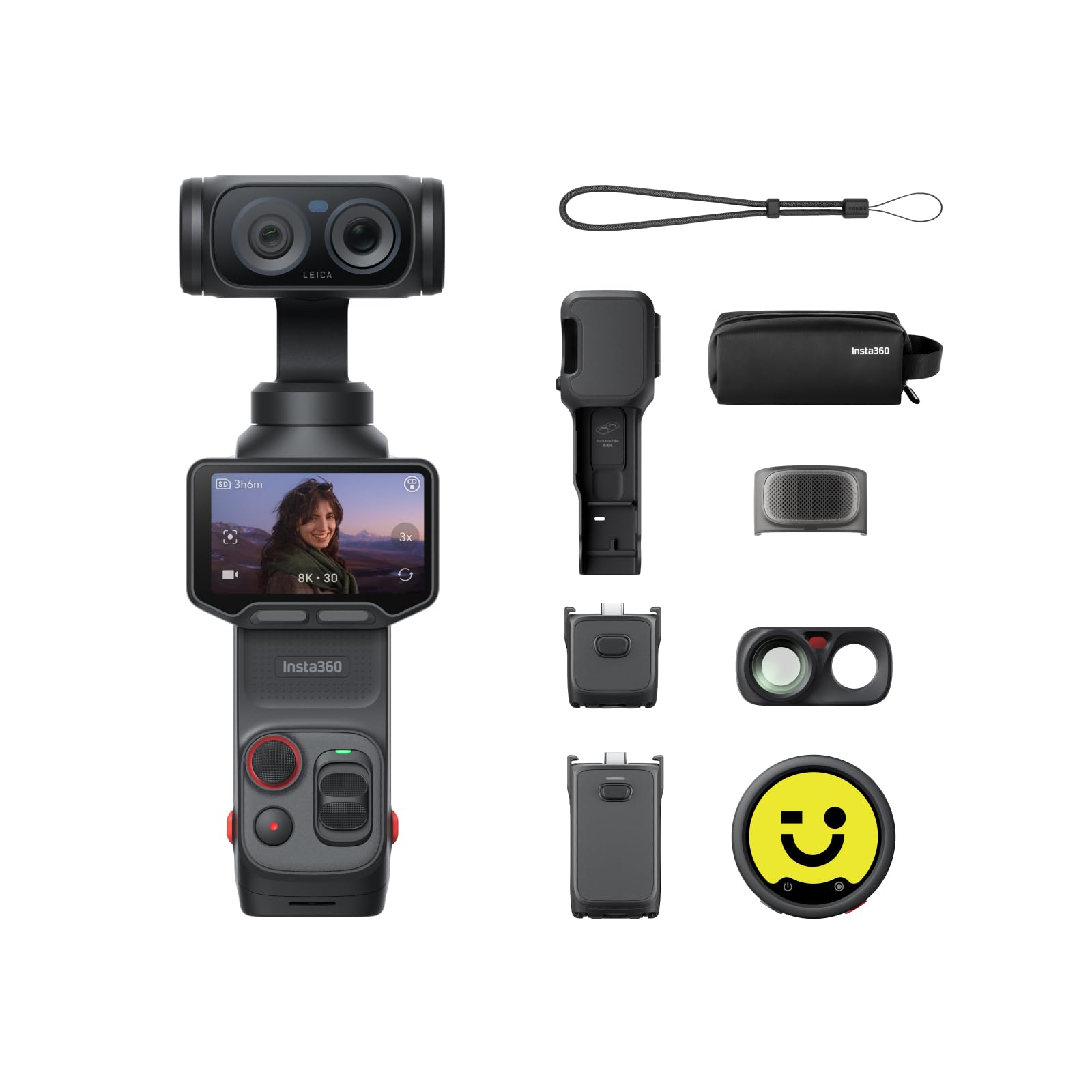
For the vlogger who demands the absolute best in image resolution and zoom flexibility, the Insta360 Luna Ultra is a technological showpiece. Its dual Leica lens system—a 1-inch main sensor and a dedicated telephoto module—allows for true 6X lossless zoom with natural optical bokeh, a significant advantage over single-lens cameras. It shoots stunning 8K/30fps video with Dolby Vision HDR, capturing a level of detail that allows for heavy cropping and reframing in post-production.
The detachable 2-inch OLED touchscreen is a brilliant innovation, acting as a wireless remote control up to 20 meters away. This is hugely beneficial for solo vloggers who want to frame themselves from a distance. The 3-axis mechanical gimbal ensures smooth footage even at full telephoto, while the 10-bit I-Log and Leica Color Science offer incredible color grading latitude. The battery life of up to 4 hours is also a best-in-class feature.
However, this advanced capability comes with caveats. The proprietary ecosystem means you are locked into using Insta360 accessories for best results. The user interface can be complex for beginners, and the massive file sizes of 8K footage demand a high-performance computer for editing. Some early reports mention gimbal errors. This is a tool for the power user who needs maximum flexibility and output quality, not for the casual point-and-shoot vlogger.
Why it’s great
- True optical and lossless zoom up to 6X with natural bokeh from the telephoto lens.
- 8K/30fps Dolby Vision footage offers the highest resolution and color detail in this class.
- Detachable touchscreen remote allows for sophisticated solo framing and control.
Good to know
- Proprietary accessory ecosystem locks out third-party gear like DJI microphones.
- 8K file sizes are enormous, requiring a very fast computer and large hard drives.
- Significant price premium; serious investment for non-commercial vloggers.
7. Sony FDR-AX43

The Sony FDR-AX43 returns to the classic camcorder shape but with modern 4K capabilities. Its defining feature is the Balanced Optical SteadyShot, a built-in gimbal mechanism that provides phenomenal electronic stabilization without the jello-effect of pure EIS. This makes it a fantastic choice for vloggers who walk while filming, as the horizon remains level and motion is remarkably smooth, even at 20X optical zoom.
The 20X optical zoom is a standout for event vlogging, allowing you to capture distant subjects without losing detail. The ZEISS Vario-Sonnar T lens is sharp and fast, and the Fast Intelligent AF tracks faces reliably. The 26.8mm wide-angle end is great for selfie-style vlogs, though the camera body is larger than a point-and-shoot. The inclusion of a headphone jack and mic input is essential for serious audio control.
One quirk noted by users is that the large battery sticks out the rear of the camera, which can feel awkward when used on a gimbal. It also lacks internal memory, so a SD card is mandatory. While it doesn’t offer the ultra-high frame rates (4K/120fps) of the gimbal cameras, its optical staying power and excellent traditional stabilization make it the best tool for classical vloggers who need to reach across a room.
Why it’s great
- 20X optical zoom provides genuine reach for event and outdoor vlogging.
- Balanced Optical SteadyShot offers gimbal-level stabilization without the setup time.
- True camcorder ergonomics with a comfortable grip for extended handheld use.
Good to know
- The large battery pack protrudes from the back, making it bulky for certain rigs.
- No internal memory; you must buy a capable SD card immediately.
- 4K video is limited to 30fps, no slow-motion options at full resolution.
8. Canon VIXIA HF G70

The Canon VIXIA HF G70 is a serious camcorder designed for professional-grade recording. It features a 1/2.3-inch 4K UHD sensor paired with the DIGIC DV 6 image processor, which together produce crisp, detailed video. The 20X optical zoom lens is powerful, and the image stabilization works well for a traditional camcorder, though not to the level of a mechanical gimbal. Its standout feature is UVC livestreaming, allowing you to stream HD video directly to a PC or Mac via USB without a capture card.
For vloggers who produce tutorial or product review content, the On-Screen Display (OSD) “Time Stamp” Recording is invaluable, permanently burning in date, time, and timecode. The dual SD card slots offer immediate backup and extended recording without swapping cards. The Hybrid AF system with face detection is fast, and the control ring on the lens barrel gives you direct manual focus and zoom control, a feature often missed on cheaper units.
The VIXIA HF G70 suffers in low-light, as the 1/2.3-inch sensor is physically smaller than the 1-inch sensors in the gimbal cameras. Some autofocus hunting can occur in 4K mode, and the built-in mic is merely adequate, requiring an external mic for professional audio. This is a land-based recording powerhouse that rewards a more deliberate, manual shooting style over run-and-gun spontaneity.
Why it’s great
- Direct UVC livestreaming to a computer without a capture card is a huge workflow advantage.
- Dual SD card slots provide instant backup and unlimited recording time.
- Professional features like Time Stamp and manual lens control are rare in this segment.
Good to know
- Smaller 1/2.3-inch sensor results in significant noise in low light.
- Autofocus can be slow and hunt in challenging lighting conditions.
- Large body and lens make it less portable than modern pocket vlog cameras.
9. OPRKQEE 6K Camcorder

The OPRKQEE 6K Camcorder is the ultimate entry-level vlogging kit. For a budget-friendly price, it includes nearly everything a beginner needs to start creating: a 64GB SD card, a 4500mAh battery providing up to 4.5 hours of recording time, a handheld stabilizer, a wired external microphone, and a 2.4G wireless remote control. The 4-inch touchscreen is large and responsive, making menu navigation and framing simple.
The camera claims a 6K resolution, but real-world testing confirms it is an interpolated resolution; the 4K/60fps mode is the native and usable standard. The 18X digital zoom is basic and best avoided, but the included night vision function is a genuine bonus that works reasonably well. The image quality in good light is perfectly acceptable for YouTube and social media, with decent color and sharpness.
The build quality is plastic, and the on-board mic is sensitive to handling noise, but the included external microphone solves this. The battery life is a major selling point, allowing you to film a full day of events without a recharge. For the vlogger on a strict budget, this camera offers a massive functional jump over a smartphone, with physical controls, a flip screen, and a huge battery.
Why it’s great
- Comes with a complete kit: 64GB SD card, external mic, stabilizer, and remote.
- Exceptional 4500mAh battery provides multiple hours of continuous recording.
- Large 4-inch touchscreen is great for framing shots and reviewing footage.
Good to know
- Claimed “6K” is interpolated; 4K/60fps is the true native recording resolution.
- 18X digital zoom is grainy and should be avoided for serious work.
- Plastic build feels less durable than premium alternatives.
FAQ
Can I use a DSLR or mirrorless camera instead of a camcorder for vlogging?
What is the best frame rate and resolution for YouTube vlogging?
Do I need a gimbal if my camera has built-in stabilization?
Is the Insta360 Luna Ultra gimbal error a common defect?
Final Thoughts: The Verdict
For most users, the best camcorder for vlogging winner is the DJI Osmo Pocket 3 because its 3-axis gimbal and large 1-inch sensor deliver an unmatched mix of stabilization and quality in a pocketable form. If you want the simplest possible pocket camera for quick social media clips, grab the Canon PowerShot V10. And for a vlogger who needs significant optical zoom or a traditional camcorder form factor for live event recording, nothing beats the Sony FDR-AX43.

Mo Maruf
I created WellFizz to bridge the gap between vague wellness advice and actionable solutions. My mission is simple: to decode the research and give you practical tools you can actually use.
Beyond the data, I am a passionate traveler. I believe that stepping away from the screen to explore new environments is essential for mental clarity and physical vitality.