Our readers keep the lights on and my smoothie glass nicely filled. As an Amazon Associate, I earn from qualifying purchases.
Shaky footage, unusable audio, and a battery that dies halfway through a walking tour — these are the three reasons most travel vlogs never get published. The right travel vlogging camera eliminates all three, but the market is flooded with options that prioritize marketing specs over real-world usability.
I’m Mohammad Maruf — the founder and writer behind WellFizz. I’ve spent years analyzing camera hardware specifications, stabilization systems, sensor sizes, and codec support to separate the truly travel-ready vlogging tools from the desk queens.
Whether you need a pocket gimbal camera or a mirrorless interchangeable-lens system, finding the best camera for travel vlogging comes down to three pillars: reliable stabilization, a flip screen for self-framing, and a dedicated microphone input for clean audio on the move.
How To Choose The Best Camera For Travel Vlogging
A travel vlogging camera is a compromise between portability, image quality, and versatility. Buying the wrong one means carrying dead weight, missing key features, or getting footage that can’t be saved in post. Here’s what separates a smart travel pick from a suitcase filler.
Stabilization type: gimbal vs. IBIS vs. digital
Three-axis gimbal systems (like the one on the Xtra Muse) deliver buttery-smooth footage while running but add bulk and battery drain. In-body image stabilization (IBIS) inside mirrorless bodies like the Panasonic G85 removes shake without external hardware but can struggle with sudden movements. Digital stabilization crops your frame — good for backup, bad if you need every millimeter of your wide-angle view.
Sensor size and low-light performance
A 1-inch type sensor (found in the Sony ZV-1 II) offers a strong balance of low-light capability and depth of field for vloggers who shoot indoors or at dusk. The Micro Four Thirds sensor inside the Panasonic G85 and Blackmagic Pocket 4K captures more light overall but requires faster lenses to match the background separation of a 1-inch sensor. APS-C sensors (Canon EOS R100, Nikon Z 30) give you more resolution flexibility for cropping in post.
Microphone input is non-negotiable
Built-in microphones on any camera capture wind noise, handling rumble, and room echo. A 3.5mm external mic jack or wireless connectivity to a DJI Mic 2 lets you record clean voiceovers even on a windy street. Cameras without a mic port (like some entry-level point-and-shoots) force you to clap sync audio later — a workflow killer for daily travel uploads.
Battery life and recording limits
A camera that stops recording after 30 minutes (European tax rule) or dies after two hours of 4K capture will frustrate you on a full-day shoot. Look for cameras with USB-C charging so you can top up from a power bank between locations — the DJI Osmo Nano offers 200 minutes of total recording when paired with its Vision Dock, while the DSLR-class Canon EOS R100 runs for roughly a day on a single charge for mixed shooting.
Quick Comparison
On smaller screens, swipe sideways to see the full table.
| Model | Category | Best For | Key Spec | Amazon |
|---|---|---|---|---|
| Xtra Muse | Pocket Gimbal | Walk-and-talk vlogging | 1″ CMOS + 3-axis gimbal | Amazon |
| Canon PowerShot V10 | Ultra-Compact | Pocket-friendly clips | 19mm wide-angle f/2.8 | Amazon |
| DJI Osmo Nano (128GB) | POV Action Cam | Hands-free first-person | 143° FOV + 200-min runtime | Amazon |
| DJI Osmo Action 5 Pro | Action Camera | Rugged outdoor adventures | 4hr battery + 20m waterproof | Amazon |
| Canon EOS R100 | Mirrorless Entry | Still-heavy hybrid travel | 24.1MP APS-C + 4K @ 24fps | Amazon |
| Panasonic Lumix G85 | Mirrorless Mid-Range | Stabilized 4K hybrid | 5-axis IBIS + 12-60mm kit | Amazon |
| Insta360 X5 | 360° Action Cam | Invisible selfie stick shots | 8K 360° + 3-hour battery | Amazon |
| Nikon Z 30 | Mirrorless Vlogger | Compact APS-C 4K vlogging | 16-50mm VR + flip screen | Amazon |
| Sony ZV-1 II | Premium Compact | Professional point-and-shoot | 18-50mm f/1.8-4.0 + 1″ sensor | Amazon |
| Blackmagic Pocket 4K | Cinema Rig | Narrative/doc-grade video | 13 stops dynamic range + RAW | Amazon |
| Sony RX100 VII | Travel Zoom Compact | Huge zoom in a pocket body | 24-200mm f/2.8-4.5 + 4K | Amazon |
In‑Depth Reviews
1. Xtra Muse Vlogging Camera

The Xtra Muse packs a 1-inch CMOS sensor into a body barely larger than a lipstick tube, then pairs it with a built-in 3-axis gimbal that eliminates the need for a separate stabilizer. Its 4K recording at 120fps means you can slow-motion a street performer or a waterfall without dropping resolution. The 2-inch touchscreen flips for self-framing, and the face/object tracking keeps you centered even when you’re dancing, running, or spinning.
Battery life averages 161 minutes, which is exceptional for a pocket gimbal camera — you’ll comfortably shoot a full city tour without hunting for a power socket. The included carrying bag, wrist strap, and 1/4-inch threaded handle mean it’s ready to mount on a tripod or selfie stick out of the box.
The 10-bit X-Log color profile captures one billion colors, giving you room to grade sunrises and sunsets without banding. Low-light performance is solid but not flagship-level — the 1-inch sensor outclasses smartphone sensors but trails the larger MFT and APS-C options in very dim interiors. Overall, this is the most complete all-in-one travel vlogger at this price point, especially if you want gimbal-smooth footage without extra gear.
Why it’s great
- Integrated 3-axis gimbal removes need for external stabilizer
- 4K/120fps allows smooth slow-motion
- Fast face/object tracking keeps subject centered
Good to know
- Image sensor smaller than Micro Four Thirds for low light
- No interchangeable lens system limits creative flexibility
2. Canon PowerShot V10

The PowerShot V10 is Canon’s answer to the “I just want to vlog without thinking about settings” crowd. Its 15.2MP 1-inch back-illuminated CMOS sensor paired with a fixed 19mm wide-angle lens (35mm equivalent) captures expansive selfie shots and tight interiors with minimal distortion. The retractable front-facing flip screen makes self-framing effortless, and the built-in stereo microphone array uses a third center mic to cancel wind noise.
Image stabilization operates in three modes — Off, On, and Enhanced — available after the v1.2.0 firmware update. The Enhanced mode works well for walking shots but struggles with running or sudden pans. There is no optical zoom, so you must physically walk closer or crop in post. The camera records 4K at up to 30fps and Full HD at 60fps, with 14 movie color filters for on-the-fly mood adjustments.
Battery life is decent for its size — reviewers report about an hour of continuous 4K recording. The lack of a lens cap or internal ND filter means you’ll carry spare accessories. The built-in stand folds forward or backward for hands-free desktop shots, making it a solid choice for hotel-room vlogs or quick unboxings during trips.
Why it’s great
- Ultra-compact body fits in a fanny pack
- Built-in stand enables hands-free shooting
- Triple-mic array reduces wind rumble
Good to know
- No optical zoom — fixed wide-angle only
- No lens cap included; screen susceptible to scratches
3. DJI Osmo Nano Standard Combo 128GB
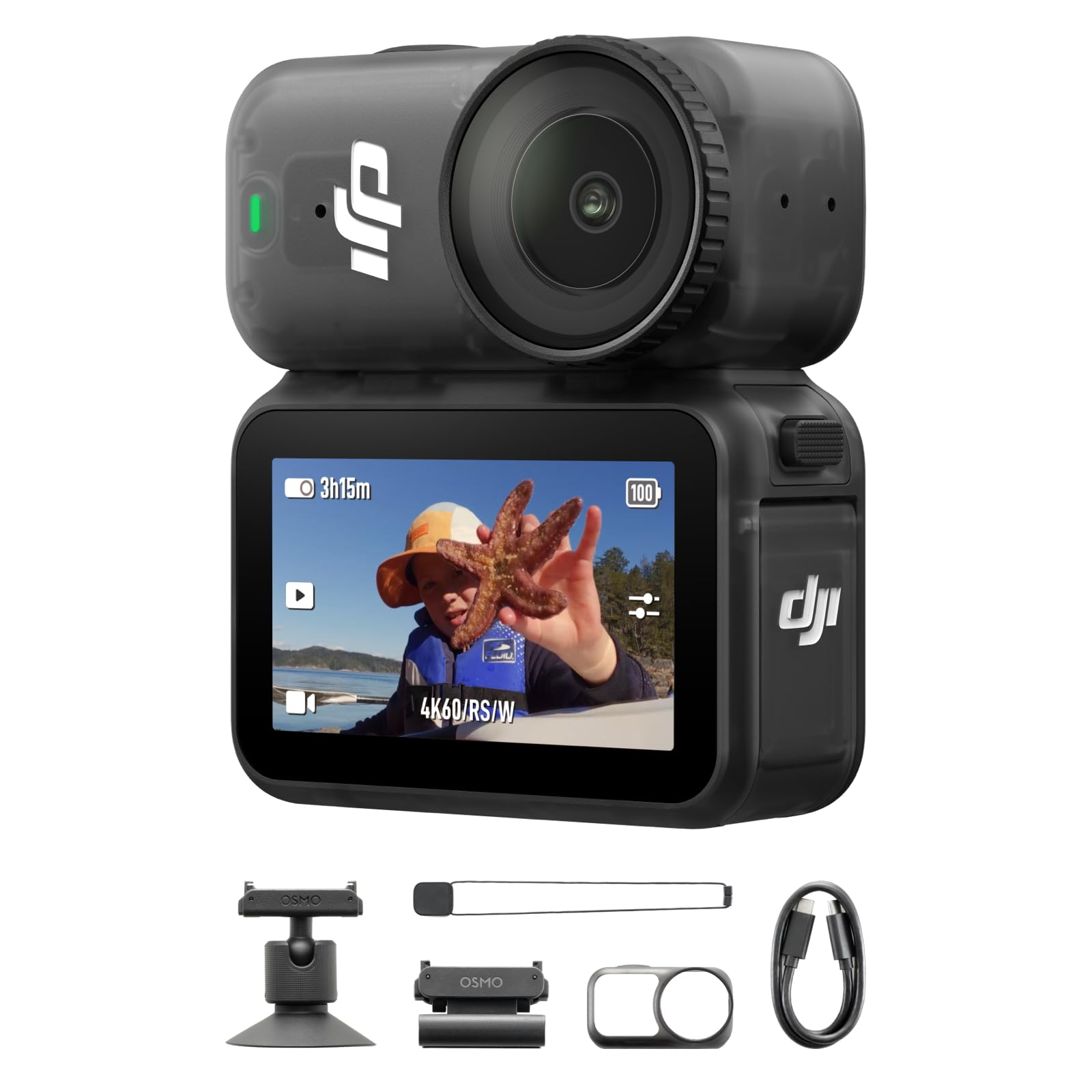
The DJI Osmo Nano is a magnetic action camera that clips onto your hat, lanyard, or bag strap, delivering a true first-person POV for travel vloggers who want immersive walking tours or adventure clips. Its 1/1.3-inch sensor captures 4K/60fps footage with a 143° ultra-wide field of view — wide enough that you don’t need to hold it at arm’s length to frame yourself. The 128GB of built-in storage means you can start recording immediately without hunting for a microSD card.
Battery runtime reaches 200 minutes when paired with the Vision Dock, and the camera supports direct microphone connectivity via OsmoAudio, letting you pair a DJI Mic 2 wirelessly. The magnetic mounting system includes a hat clip, ball-joint adapter, and lanyard, so you can attach it to pets, bicycles, or helmets. Waterproofing down to 10 meters without a housing makes it safe for poolside or light rain shoots.
Keep in mind the screen is tiny — there’s no large rear display for playback, so framing relies on the ultra-wide lens capturing everything. The camera generates heat during high-resolution recording, and the dock battery has been reported to drain passively even when off. These quirks aside, the Nano is unmatched for hands-free, carry-everyday vlogging.
Why it’s great
- Magnetic mounting enables creative POV shots
- 128GB onboard storage ready out of box
- 143° ultra-wide FOV captures entire scene
Good to know
- No large screen for instant playback review
- Vision Dock battery drains passively when idle
4. DJI Osmo Action 5 Pro Adventure Combo

The Osmo Action 5 Pro is DJI’s go-anywhere action camera built for travelers who ski, snorkel, bike, or hike. Its 1/1.3-inch sensor with 2.4 µm large pixels delivers 4K/120fps video with 13.5 stops of dynamic range, meaning shadow detail in caves and highlight retention in snow both survive the edit. The Adventure Combo gives you three 1950mAh batteries and a multifunctional battery case — enough for a full day of shooting without a power bank. The camera is IP68 waterproof to 20 meters, so no housing is needed for underwater clips.
360° HorizonSteady stabilization keeps your horizon level even when the camera rotates fully, which is a lifesaver for moto vlogging or handheld filming on a bumpy bus ride. The dual OLED touchscreens (front and rear) let you frame shots from any angle, and the color temperature sensor auto-adjusts white balance underwater for natural skin tones. Voice control keeps your hands free while climbing or steering.
Subject tracking works in both 16:9 and 9:16 aspect ratios, ideal for Reels and TikTok uploads. The camera connects wirelessly to DJI Mic 2 without a receiver, simplifying audio. The built-in memory lets you start recording immediately, but you’ll need a high-speed microSD card for maximum resolution. The combo’s 1.5m extension rod lacks a remote trigger button, so you’ll need the Mimo app or start recording before extending.
Why it’s great
- 20m waterproof without housing
- 4-hour battery life on a single charge
- 360° HorizonSteady eliminates shake completely
Good to know
- No remote trigger on extension rod
- Generates noticeable heat during extended recording
5. Canon EOS R100 with RF-S18-45mm Lens

The EOS R100 is Canon’s lightest and most affordable R-series mirrorless body, making it a logical choice for travelers who want a compact APS-C system for both stills and vlogging. The 24.1MP CMOS sensor paired with the DIGIC 8 processor produces sharp, colorful images with natural bokeh, and the kit’s RF-S18-45mm F4.5-6.3 IS STM lens provides optical stabilization and a versatile zoom range from wide to standard portrait. 4K video captures at up to 24fps — enough for cinematic clips, but not for smooth slow-motion.
The Dual Pixel CMOS AF covers 143 zones with human face and eye detection, and it works for both stills and video, keeping your face in focus during vlog segments. Continuous shooting hits 6.5 fps with One-Shot AF, which is solid for capturing moving subjects. The body is the smallest in the R series, so it slips into a daypack easily without dominating your bag weight.
The biggest limitation for vloggers is the 4K frame rate — 24fps introduces judder on fast pans, and the 4K crop is more aggressive than on higher-end EOS R bodies. There is no in-body image stabilization, so you rely on the lens’s optical stabilization or a gimbal. The battery lasts roughly a day of mixed shooting, but no charger is included — you must charge via USB-C. For travel vloggers who prioritize photo quality over 60fps video, this is a capable entry point into the Canon RF system.
Why it’s great
- 24.1MP APS-C sensor delivers excellent stills
- Lightest R-series body for easy travel carry
- Dual Pixel AF with eye detection works in video
Good to know
- 4K limited to 24fps — no smooth slow-motion option
- No in-body stabilization — lens OIS only
6. Panasonic Lumix G85 with 12-60mm Lens

The G85 remains a benchmark for budget-friendly travel vlogging because of its class-leading 5-axis in-body image stabilization, which works in tandem with the lens’s OIS to produce handheld footage that looks gimbal-mounted. The 16MP Micro Four Thirds sensor omits the low-pass filter, boosting fine-detail resolving power by nearly 10% over earlier MFT sensors, and the kit’s 12-60mm Power O.I.S. lens covers everything from wide cityscapes to moderate telephoto. 4K QFHD video records at 3840 x 2160, and the 4K Photo mode lets you extract 8MP stills from video at 30fps.
The weather-sealed magnesium-alloy body feels rugged without being heavy, and the tilt-and-touch LCD screen adjusts to high and low angles for vlogging. The integrated eye-level OLED viewfinder (2360K dots) is useful for framing in bright sunlight, though the rear screen is adequate most of the time. The G85 includes a microphone input and a headphone jack — rare at this price — giving you full audio monitoring control.
Battery life is average for mirrorless — expect about 2 hours of mixed 4K recording. The autofocus can hunt in low light during 4K capture, and the 16MP resolution is lower than APS-C competitors. The Wi-Fi app can be finicky with iOS devices. Despite its age, the G85’s stabilization and weather sealing make it a reliable travel companion for vloggers who don’t want to baby their gear.
Why it’s great
- 5-axis IBIS eliminates gimbal need for walking shots
- Weather-sealed magnesium body handles rain and dust
- Mic jack plus headphone port for pro audio control
Good to know
- 16MP sensor resolution is lower than APS-C alternatives
- Autofocus struggles in dim light during 4K recording
7. Insta360 X5 Essentials Bundle

The Insta360 X5 redefines travel vlogging by capturing everything around you in 8K 360° video, then letting you reframe the shot after the fact — no selfie stick visible in the frame thanks to the invisible stick effect. Its dual 1/1.28-inch sensors and triple AI chip design improve low-light performance significantly over earlier 360 cameras, making it usable for evening street shots and indoor market vlogs. The FlowState Stabilization combined with 360° Horizon Lock delivers smooth footage even during fast spins or bumpy rides.
Battery life reaches 208 minutes, and fast charging gets you to 80% in 20 minutes — a lifesaver during back-to-back shoots. The camera is waterproof to 15 meters without a housing, and the replaceable lens guards mean a scratch costs a few dollars instead of a whole camera replacement. The new four-mic array with Wind Guard focuses on voices while reducing wind rumble, making audio usable straight out of camera.
The biggest workflow challenge is editing — 360° footage must be reframed in the Insta360 app or desktop software, which adds post-production time. One-tap AI export can generate highlight clips automatically, but creative control requires manual adjustment. The invisible selfie stick effect works best at arm’s length, and the camera needs a microSD card (not included). For vloggers who love dynamic third-person perspectives without a camera operator, the X5 is unmatched.
Why it’s great
- 8K 360° capture eliminates missed moments
- Invisible selfie stick creates drone-like third-person shots
- Replaceable lens guards reduce repair costs
Good to know
- Requires post-production reframing in app
- MicroSD card sold separately
8. Nikon Z 30 with 16-50mm Lens

Nikon built the Z 30 from the ground up for vloggers, stripping out the viewfinder to keep the body compact and lowering the cost. The 20.9MP APS-C DX sensor paired with the Z mount’s short flange distance delivers crisp 4K video with excellent low-light performance, and the kit’s 16-50mm VR lens covers the most common vlogging focal lengths. The flip-out touchscreen faces forward, and a red REC light on the top tells you the camera is rolling without checking the screen.
Autofocus uses hybrid phase-detection with eye tracking for both humans and animals, keeping your face sharp during walk-and-talks. The built-in stereo microphone includes adjustable sensitivity, and the camera supports plug-and-play UVC/UAC streaming over USB-C — perfect for live travel streams from a cafe. The Z 30 records unlimited 4K video without overheating, a critical advantage for vloggers who shoot long single takes.
There is no in-body stabilization, so you’ll want a gimbal for walking shots or rely on the lens’s VR. The lack of a viewfinder means framing in bright sunlight can be tough. Battery life is good for a mirrorless camera — roughly 50 minutes of continuous 4K recording. The Z 30 is the most vlogging-centric body Nikon makes, and if you’re invested in the Z system, it’s a no-brainer travel companion.
Why it’s great
- Unlimited 4K recording with no overheating
- Flip-out screen with dedicated REC light
- USB-C plug-and-play streaming for live travel content
Good to know
- No in-body stabilization — gimbal recommended for walking
- No viewfinder for bright-day framing
9. Sony ZV-1 II Vlog Camera

The ZV-1 II is Sony’s second-generation vlogging compact, built around a 1-inch type sensor and a wider 18-50mm f/1.8-4.0 zoom lens compared to the original’s 24-70mm equivalent. The wider end means you can hold the camera at arm’s length and still fit your entire head and shoulders with background context — perfect for city vlogs or tight spaces. The f/1.8 aperture at the wide end produces shallow depth of field for that professional background blur, and the sensor handles low-light interiors better than any smartphone.
The directional 3-capsule microphone with included windscreen captures usable voice audio in moderate wind, and Real-time Eye AF tracks your eye even while walking. The touchscreen is fully responsive, and the side-mounted tripod screw lets you plug in an external mic without blocking the battery door — a design flaw in the original ZV-1 that Sony fixed here.
Battery life is decent but not class-leading — plan for about an hour of continuous 4K recording. The removal of Optical Steadyshot from the original is a downgrade, leaving you reliant on digital stabilization that crops the frame. Some units have reported reliability issues within months of purchase. If you prioritize the f/1.8 aperture and ultra-wide focal length for indoor vlogging, this is still the best compact option from Sony.
Why it’s great
- 18mm wide-angle fits full face plus background
- f/1.8 aperture delivers real bokeh separation
- Real-time Eye AF tracks moving subjects reliably
Good to know
- No Optical Steadyshot — digital stabilization crops frame
- Reported reliability issues on some units
10. Blackmagic Pocket Cinema Camera 4K

The Blackmagic Pocket 4K is not a casual travel vlogging camera — it is a professional cinema tool in a compact body, designed for vloggers who prioritize maximum dynamic range and color grade flexibility over point-and-shoot convenience. Its 4/3-inch sensor captures 4096 x 2160 native resolution with 13 stops of dynamic range, and the dual native ISO up to 25,600 means you can shoot candlelit dinners without visible noise. Recording formats include Apple ProRes and 12-bit Blackmagic RAW, and the camera comes with a full DaVinci Resolve Studio license.
The 5-inch LCD touchscreen is bright enough for framing in most conditions, and the MFT lens mount is compatible with a huge library of affordable lenses. The camera records to SD/UHS-II, CFast 2.0, or external SSD via USB-C, giving you immense media flexibility. The built-in XLR input with phantom power lets you connect professional microphones directly, eliminating the need for an external audio recorder.
The trade-offs are severe for on-the-go travel. There is no continuous autofocus, no in-body stabilization, and the battery lasts roughly 30 minutes — you will need a gimbal, a cage, and external batteries for any serious shoot. The screen is unreadable in direct sunlight. This camera is for vloggers who already carry a support rig and are comfortable with manual focus and exposure. For those who want cinema-grade image quality at the cost of convenience, nothing in this price range matches the Pocket 4K.
Why it’s great
- 13 stops of dynamic range for grade-heavy workflows
- Records ProRes and 12-bit Blackmagic RAW internally
- Mini XLR input with phantom power for pro audio
Good to know
- No continuous AF or IBIS — gimbal and manual focus required
- 30-minute battery life demands external power solution
11. Sony RX100 VII
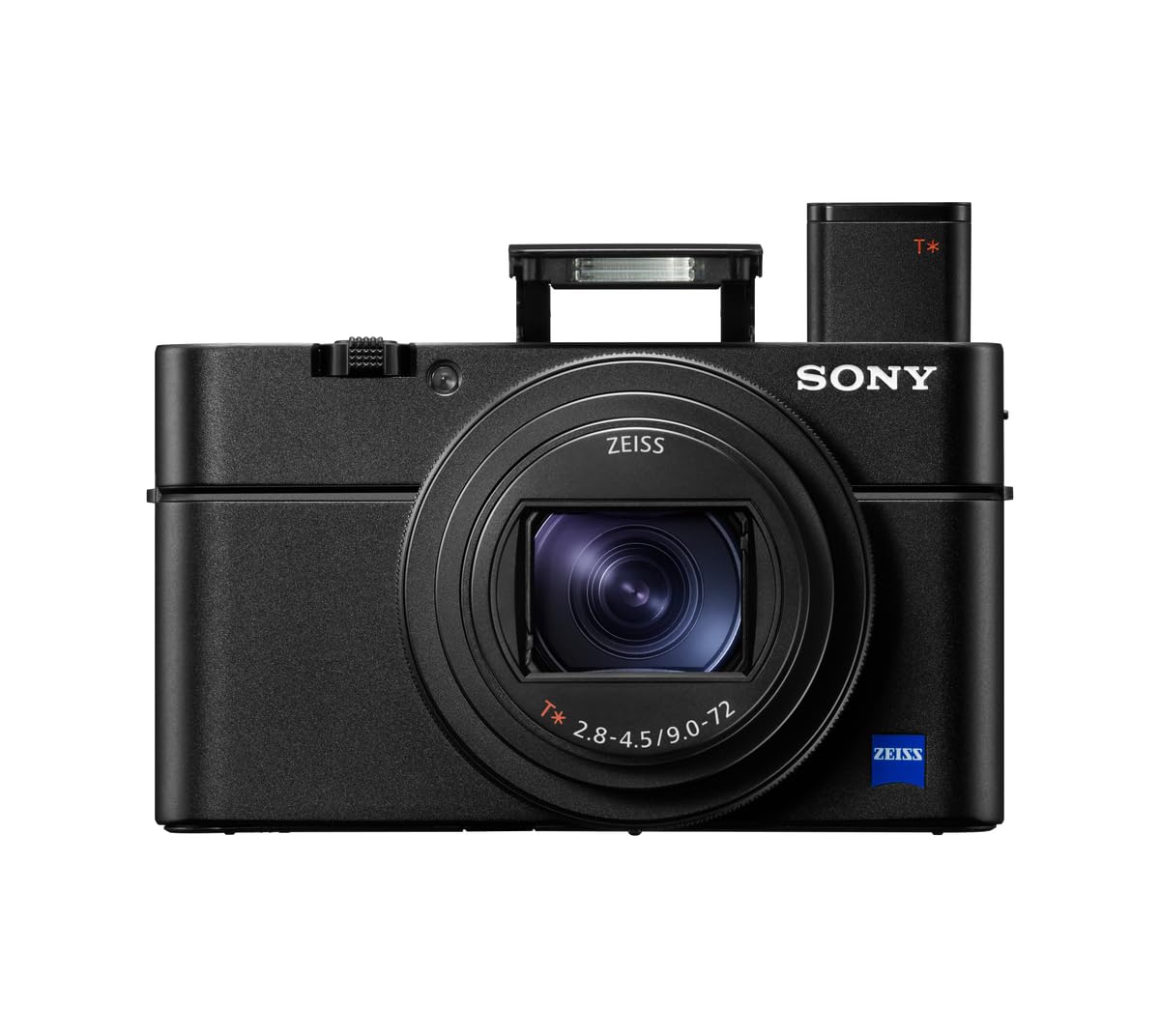
The RX100 VII is Sony’s flagship 1-inch compact travel camera, packing a 24-200mm f/2.8-4.5 Zeiss zoom lens into a pocket-sized body. This zoom range is extraordinary for a camera this small — you can shoot wide building interiors at 24mm and zoom to 200mm for candid portrait shots of street performers without being noticed. The 20.1MP stacked CMOS sensor reads out at up to 60 times per second, enabling blackout-free continuous shooting at 20 fps with full AF/AE tracking.
Real-time Eye AF works for both humans and animals (animals in stills only), and the 357-point phase-detection AF array locks focus instantly even on fast-moving subjects. 4K video includes S-Log3 gamma for color grading, and Active Mode image stabilization smooths handheld walking shots. The pop-up electronic viewfinder is ideal for bright daylight framing, while the tilt touchscreen works for waist-level or overhead shots.
Battery life is good for a compact — you’ll get roughly 2 hours of mixed shooting. The surface finish is slippery; a grip add-on helps. There is no weather sealing, so use care in rain or dusty environments. The menu system is famously dense, but after setup, the RX100 VII delivers the most versatile focal range of any travel vlogging compact on this list, making it the best choice for vloggers who want one camera for everything from selfies to telephoto.
Why it’s great
- 24-200mm zoom covers ultra-wide to telephoto in one lens
- 20fps blackout-free burst with real-time tracking
- S-Log3 gamma and mic jack for pro video workflow
Good to know
- Slippery finish — aftermarket grip recommended
- No weather sealing limits use in rain or dust
FAQ
Is a gimbal required for travel vlogging or can I rely on IBIS?
Should I choose a 1-inch sensor or an APS-C sensor for travel vlogging?
Can I use a 360-degree camera like the Insta360 X5 as my only travel vlogging camera?
What is the minimum battery life I should expect from a travel vlogging camera?
Does 4K at 120fps matter for travel vlogs?
Final Thoughts: The Verdict
For most users, the best camera for travel vlogging winner is the Xtra Muse because it combines a 1-inch sensor, built-in 3-axis gimbal, and 4K/120fps recording in a pocketable body — no extra gear needed. If you want a compact point-and-shoot with a fast f/1.8 aperture for indoor vlogging, grab the Sony ZV-1 II. And for adventure-heavy travel — snorkeling, skiing, biking — nothing beats the weather-sealed, 4-hour-battery DJI Osmo Action 5 Pro.

Mo Maruf
I created WellFizz to bridge the gap between vague wellness advice and actionable solutions. My mission is simple: to decode the research and give you practical tools you can actually use.
Beyond the data, I am a passionate traveler. I believe that stepping away from the screen to explore new environments is essential for mental clarity and physical vitality.