Our readers keep the lights on and my smoothie glass nicely filled. As an Amazon Associate, I earn from qualifying purchases.
Light hiking sits in a frustrating middle ground: your everyday commuter pack lacks the waist support for a 6-mile climb, but a full expedition pack is overkill. The wrong choice leaves you sweating under a load that shifts with every step, sapping stamina before the trail even gets interesting. The right pack feels invisible, letting you focus on the views instead of the gear digging into your shoulders.
I’m Mohammad Maruf — the founder and writer behind WellFizz. I’ve spent hundreds of hours analyzing foam density, load-transfer frame designs, and ventilation channel depth across dozens of trail-ready daypacks to find the models that actually deliver on their promises for the day-hiker.
Whether you are tackling a summit push or a weekend ridge walk, this guide breaks down the real-world specs that separate usable kits from shelf clutter so you can confidently invest in your next backpack for light hiking.
How To Choose The Best Backpack For Light Hiking
Choosing the right pack for day hikes means ignoring the marketing hype and focusing on four physical realities: how the load transfers to your hips, how breathable the back panel stays after an hour of climbing, whether the pocket layout matches your grabbing habits, and if the included extras (like a rain cover or hydration bladder) are actually functional or just filler. Most daypacks are fine sitting in a closet — you need one that works on the ridge.
Fit and Load Transfer Geometry
A daypack should sit with about 80% of its weight on your hips, not your shoulders. Look for a padded hip belt that wraps around your iliac crest — even a thin foam belt is better than a webbing-only strap if you are carrying more than 12 pounds. The sternum strap should sit at your armpit line, not your collarbone. A common miss for smaller frames is a torso that is too long, causing the hip belt to hover above the waist rather than cradle it.
Ventilation Channel Depth
A flat back panel pressed against your spine turns a 70-degree afternoon into a swamp. Seek out packs with raised air channels or a trampoline-style mesh suspension. The gap should measure at least 10mm from the pack body to your back — less than that and the airflow benefit evaporates. Osprey’s Atilon foam framesheet with a center air channel and Rab’s EVA panel are good benchmarks.
Pocket Architecture and Access Logic
On a moving hike, you do not want to take the pack off to grab a snack. Side mesh pockets must be deep enough to hold a 32-ounce Nalgene without spitting it out during a squat. A front stash pocket (sometimes called a “stuff-it” pocket) is invaluable for stashing a windbreaker or hat without opening the main compartment. Waist belt pockets — one zippered, one stretch mesh — let you access your phone or power bar without breaking stride.
Feature Honesty: Bladders, Rain Covers, and Loops
Many packs claim to be hydration-compatible but use a thin sleeve that does not hold a 3-liter bladder securely, causing it to sag and slosh. A true hydration sleeve has a Velcro hanger at the top, a pass-through port at the shoulder, and enough depth to let the bladder lie flat. Similarly, a sewn-in rain cover (like the Teton Oasis) is more reliable than a separate stored cover you will forget to pack. Trekking pole loops should be daisy-chain webbing, not bungee cord that stretches loose over time.
Quick Comparison
On smaller screens, swipe sideways to see the full table.
| Model | Category | Best For | Key Spec | Amazon |
|---|---|---|---|---|
| Osprey Sportlite 25L | Premium | All-day comfort and load transfer | Atilon foam framesheet with center air channel | Amazon |
| Rab Nitron 25L | Premium | Ultra-light, bounce-free stability | Air Contour suspension with dual chest straps | Amazon |
| Osprey Sportlite 20L | Premium | Compact carry with premium ventilation | Atilon foam framesheet, ventilation channel | Amazon |
| Eddie Bauer 26L Venture | Mid-Range | Crossover from trail to daily use | 1.34 lbs, hydration sleeve fits 15″ laptop | Amazon |
| Water Buffalo Sherpa 22L | Mid-Range | Hydration pack with trekking pole holders | 2L BPA-free bladder with waterproof zippers | Amazon |
| Teton Oasis 18L | Mid-Range | First hydration pack with integrated rain cover | Sewn-in rain cover, kink-free sip tube | Amazon |
| High Sierra Pathway 45L | Budget | Day hiker needing gear room and laptop sleeve | 45L capacity, hydration sleeve, laptop fit | Amazon |
In-Depth Reviews
1. Osprey Sportlite 25L

The Osprey Sportlite 25L nails the balance between light weight and load-bearing structure. Its Atilon foam framesheet with a center air channel is the same technology used in Osprey’s multi-day packs but scaled down — it creates a 15mm gap between your spine and the pack, keeping back sweat to a minimum even during a 7-hour trek. The padded hip belt includes both a zippered pocket (perfect for a power bank) and an open stretch mesh pocket for quick-access snacks, a layout that feels intentional, not tacked on.
Side pockets are wide enough to swallow two 32-ounce Nalgene bottles or a 750ml steel bottle, a feat that many daypacks fail at because the mesh lacks tension. The compression straps can double as quick-release lashing for a jacket, and the slot at the base of the front panel accepts a blinky light — a small detail that matters when you are descending at dusk. At just over 1.3 pounds, it disappears on your back.
One trade-off: there is no internal zippered pocket or padded laptop sleeve, so delicate electronics need a separate case. The bladder sleeve hook is designed for Osprey’s own reservoirs and may not grab wider handles from other brands (users have improvised with a carabiner). For day hikers who prioritize carry comfort and ventilation over internal organization, this is the most balanced option on the list.
Why it’s great
- Excellent weight distribution reduces shoulder fatigue on 6+ mile hikes.
- Breathable back panel with real airflow channel keeps your shirt drier.
- Waist pockets let you access essentials without removing the pack.
Good to know
- No internal zippered pockets for small items.
- Hydration sleeve hook may not fit some third-party bladders.
2. Rab Nitron 25L
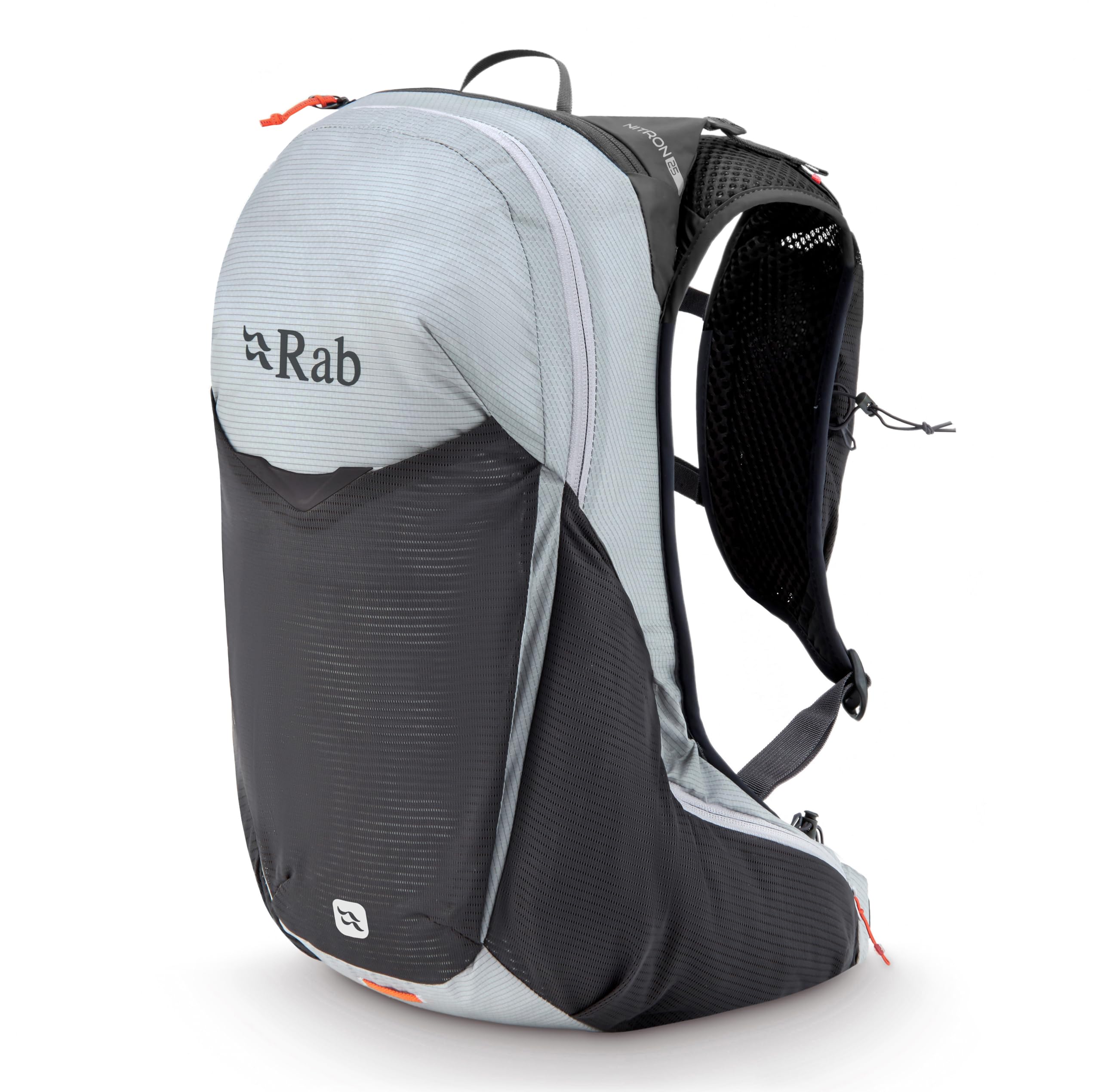
Rab designed the Nitron for fast-and-light mountain missions, and it shows in every gram. The body-hugging Air Contour suspension uses two chest straps — one at the sternum, one lower — inspired by running vest geometry, which virtually eliminates bounce even when you are jogging downhill on a trail. The 100D Robic Nylon Ripstop fabric with Hydroshield coating sheds light rain without adding weight, and the total pack weight of 1 pound 7 ounces is among the lowest in the 25-liter class.
Storage is smartly biased toward motion: there is a zippered harness pocket sized for gels, a front stash pocket for stuffing a shell, and a secondary on-the-go attachment point for Z-poles. The hydration sleeve fits a 3-liter reservoir, and the pass-through port runs along the shoulder strap for drinking without slowing down. Side pockets are deep and angled to let you grab a bottle while the pack is still on one shoulder.
The trade-off for this weight savings is foam density in the hip belt. The Nitron uses a slim, wrap-style belt that does not transfer heavy loads as efficiently as the Osprey’s padded belt — it is ideal for loads under 15 pounds but less comfortable for heavier ruck-style carries. The chest strap adjuster can feel fiddly at first. This is a specialist pack for the hiker who values speed and stability over brute load capacity.
Why it’s great
- Zero-bounce suspension is ideal for trail running or fast hiking.
- Extremely lightweight (1 lb 7 oz) without sacrificing durability.
- Hydration sleeve fits 3L reservoir with easy access port.
Good to know
- Hip belt is slim and less load-bearing for heavy carries.
- Chest strap adjuster can be tricky to fine-tune on the first use.
3. Osprey Sportlite 20L
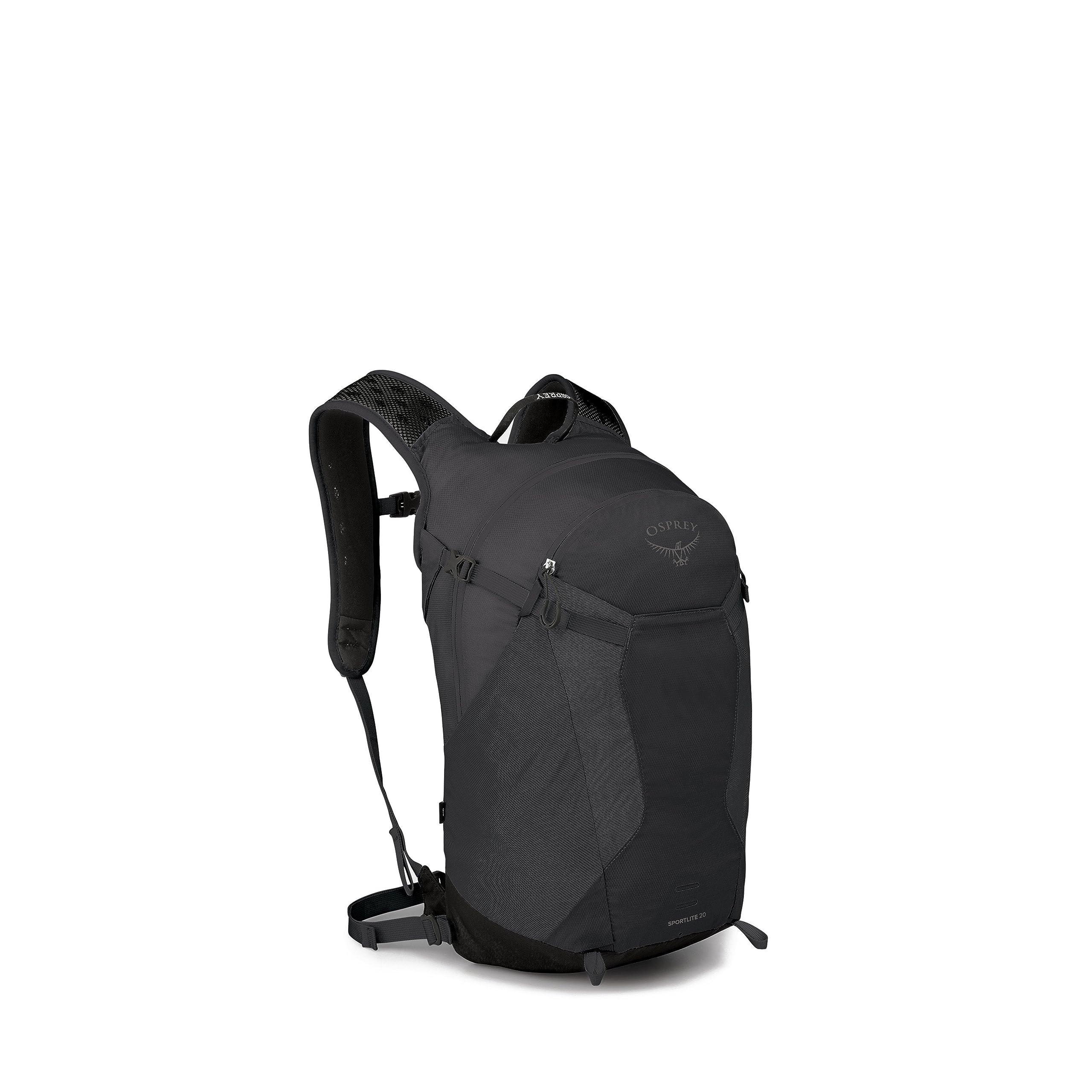
The 20-liter version of the Sportlite sheds just under a pound compared to its 25-liter sibling while keeping the same Atilon foam framesheet and center air channel. This is the ideal size for a minimalist day hike where you need a light jacket, 1.5 liters of water, snacks, and a first aid kit — nothing more. The stuff-it front pocket is a standout: a stretch mesh panel that swallows a damp rain shell or a knit hat without requiring you to open the main compartment.
The adjustable sternum strap includes a built-in rescue whistle, a small addition that many hikers overlook until they need it. Side pockets are generously sized for 32-ounce Nalgene bottles, though they do encroach slightly into the main compartment volume when stuffed full. The hydration clip works with most 2-liter bladders, though no bladder is included, and the pass-through port is well-positioned for right-handed drinkers.
At 15 liters of usable space (not counting the stuff-it pocket), this pack is tight for anyone who carries a lot of camera gear, a puffy jacket, and multiple food layers. The hip belt is detachable, which is fine for sub-10-pound loads but should be kept on if you are carrying more. It is a niche pick for the disciplined packer who wants Osprey’s carry quality in the smallest possible 3-season daypack.
Why it’s great
- Extremely lightweight (~1 lb) with premium ventilated back panel.
- Stuff-it front pocket perfect for quick stashing of layers.
- Sternum strap with built-in rescue whistle.
Good to know
- No hydration bladder included.
- Limited internal organization with no zippered pockets.
4. Eddie Bauer 26L Venture
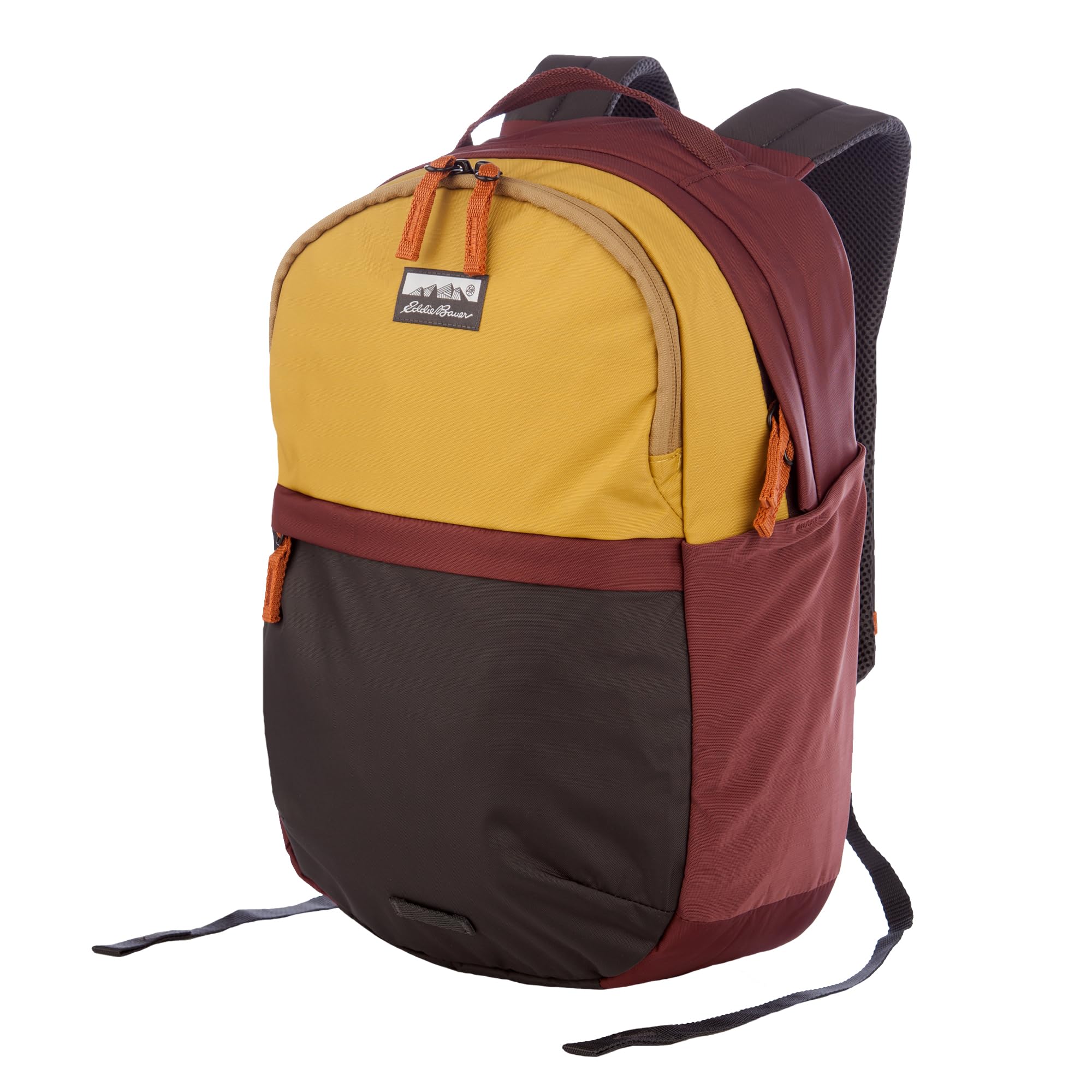
The Eddie Bauer 26L Venture is a genuine hybrid — a daypack that works for a 5-mile trail in the morning and a laptop commute in the afternoon. The hydration sleeve is also a padded laptop compartment that fits a 15-inch device, a dual-purpose trick that most hiking packs do not offer. At only 1.34 pounds, it is competitive with dedicated ultralight options while including a PFC-free water-repellent finish made from 100% recycled materials.
The pocket layout is unusual but functional: four exterior pockets, eight interior slip pockets, and a front organization compartment give you a home for every small item. The breathable air mesh back panel and adjustable sternum strap keep the pack stable on uneven terrain. Two stretch mesh side pockets hold a 24-ounce Owala or a 32-ounce bottle, though they become tight when the main compartment is packed full.
Where this pack falls short for hardcore hikers is the lack of a framesheet — load transfer relies entirely on the foam back panel, so carrying 15+ pounds for a full day will start to pull on your shoulders. The water bottle pockets also compress inward when the bag is stuffed, making bottle access awkward. It is best for the person who wants one pack for the trailhead and the office, not for the multi-day gear hauler.
Why it’s great
- Hydration sleeve doubles as padded 15″ laptop compartment.
- Very lightweight (1.34 lbs) with sustainable recycled materials.
- Multiple organization pockets for small items.
Good to know
- No rigid framesheet for heavier loads.
- Water bottle pockets compress when main compartment is full.
5. Water Buffalo Sherpa 22L
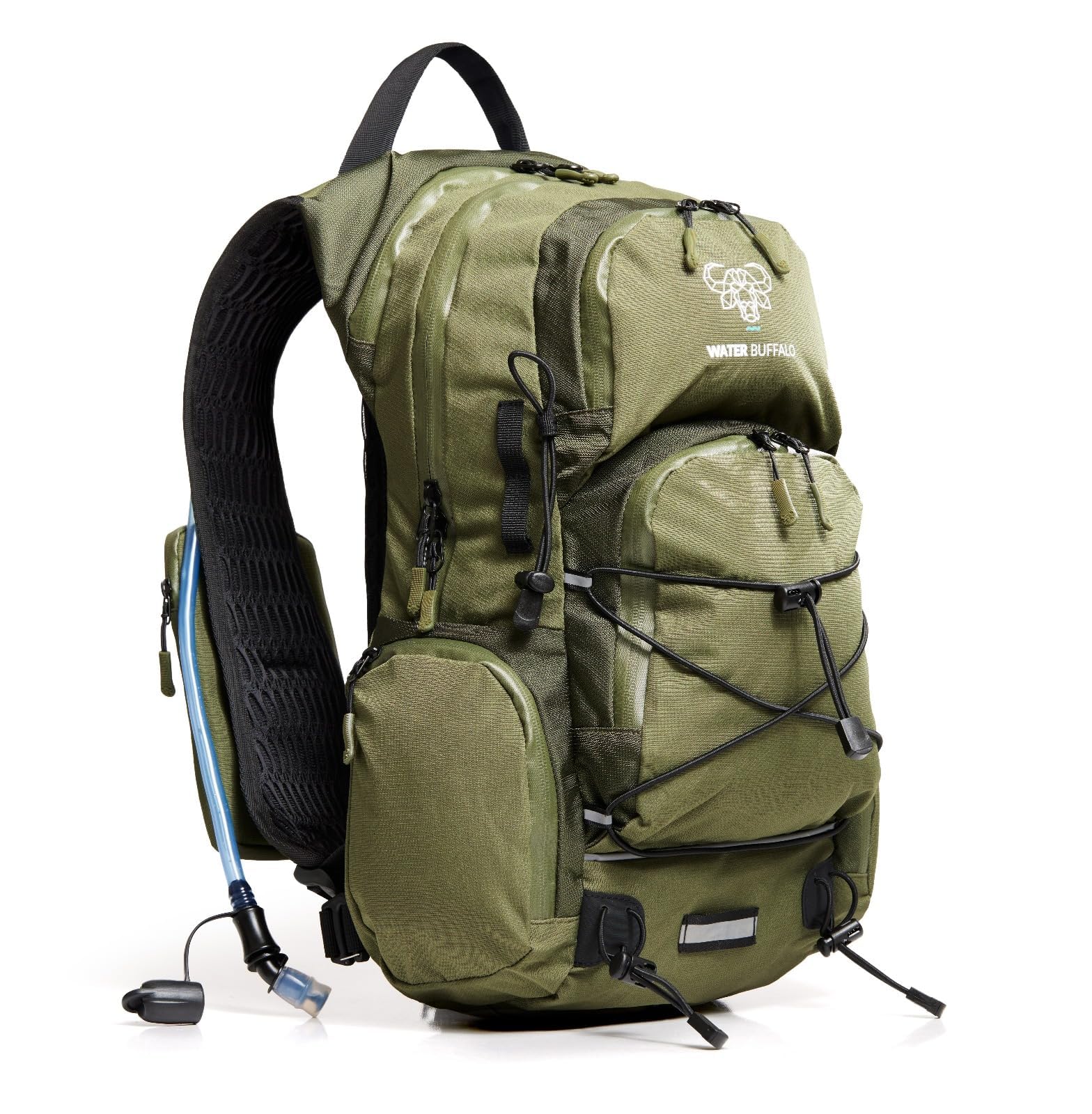
The Water Buffalo Sherpa 22L packs a surprising amount of trail-specific detail into a mid-range price. The included 2-liter bladder is BPA-free and features a wide-mouth opening for easy filling and ice cubes, though some users note the bite valve is harder to operate than premium bladders. The real standout is the trekking pole holders — dedicated webbing loops and bungee keep your poles secure on the front of the pack, freeing your hands for scrambling.
Waterproof zipper liners cover the main compartment, which is a meaningful upgrade in the sub- category. The fabric is a 150D ripstop polyester blended with 420D jacquard nylon, giving it a feel that is sturdier than the weight suggests. Adjustable hip and chest straps let you dial in the fit for torsos as short as 5’2″, and the overall profile is slim enough to not snag on tree branches.
The biggest catch is the bladder itself: the narrow opening and threaded tube connection are not as user-friendly as a top-loading wide-mouth design, and there is no tube insulation to prevent the hose from freezing in cold weather. The pocket count is lower than competitors — only two main pockets plus the side mesh. It is a solid buy if you plan to replace the bladder with a premium one later and want a well-built shell.
Why it’s great
- Includes BPA-free 2L bladder with wide mouth for easy filling.
- Dedicated trekking pole holders with webbing loops.
- Waterproof zipper liners protect gear from rain.
Good to know
- Bladder tube connection is threaded and less convenient than clip-on designs.
- No tube insulation for cold-weather hiking.
6. Teton Oasis 18L
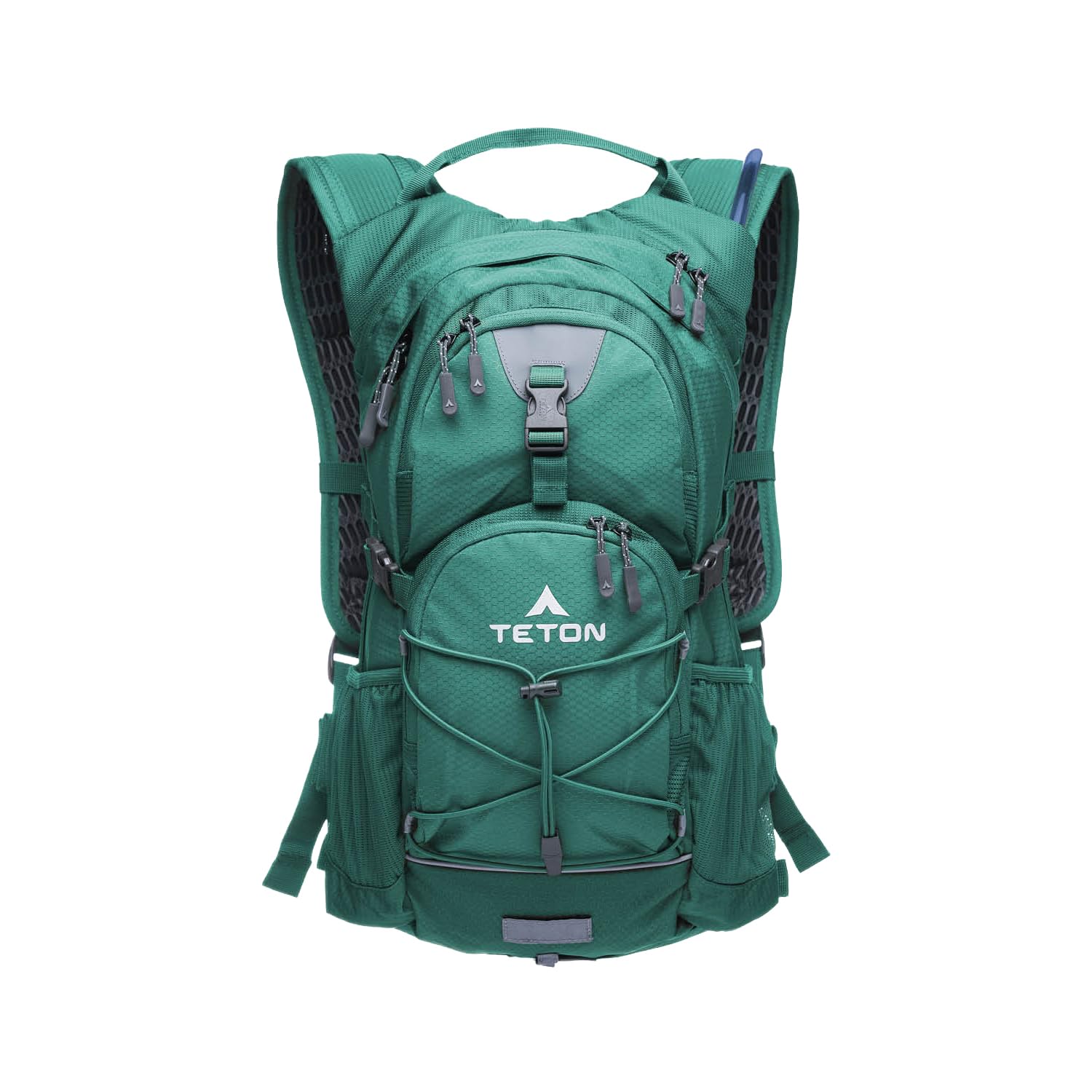
The Teton Oasis 18L is the gateway pack that punches above its price tier by including real trail features instead of filler. The sewn-in rain cover is permanently attached to the bottom of the pack, deployable in seconds — you will not forget it, and it will not blow away in a gust. The insulated bladder pocket keeps water cold for hours, which is a rare inclusion at this level, and the included 2-liter bladder has a kink-free sip tube with a cushioned bite valve that does not leak.
The 210D honeycomb ripstop polyester fabric resists abrasion well on rocky trails, and the butterfly opening (the pack opens like a suitcase) makes packing and unpacking much easier than a top-loading drawstring. The bungee cord system on the front secures a helmet or a wet jacket. Multiple reviewers have used this pack on 14-mile hikes and Iceland road trips without any structural issues.
Where it compromises is fit diversity: the shoulder straps are designed for an average male torso, and multiple users under 5’3″ report that the chest strap sits uncomfortably high across the chest. The waist belt is thin foam and does not transfer as much load as a dedicated hip belt. For a beginner looking for a complete kit (bladder + rain cover + pack) that does not nickel-and-dime them, it is the most honest value on this list.
Why it’s great
- Sewn-in rain cover is always attached and ready.
- Insulated bladder pocket keeps water cold for hours.
- Butterfly opening makes packing and organizing easy.
Good to know
- Shoulder strap geometry is less comfortable for smaller-framed women.
- Waist belt is thin foam, limiting load transfer.
7. High Sierra Pathway 45L
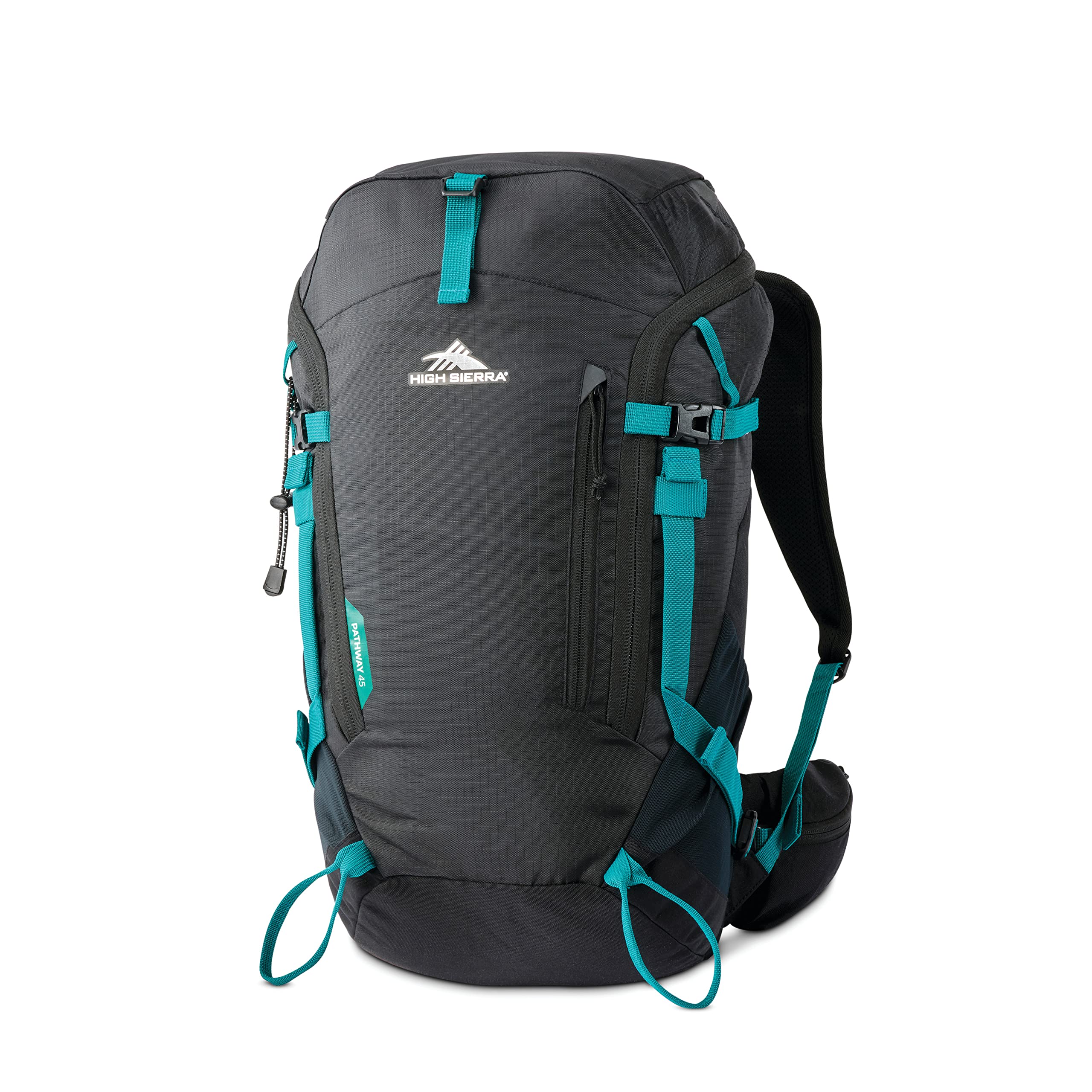
The High Sierra Pathway 45L is the largest pack on this list, designed for the day hiker who also needs to carry a 15.6-inch laptop, extra layers, and a full hydration setup. The internal hydration sleeve has a Velcro hanger and a hose pass-through port, and it doubles as a dedicated laptop compartment. The EVA molded back panel with airmesh overlay provides reasonable breathability, though the pack’s size means more surface contact than the Osprey or Rab.
Storage is generous: a front stuff pocket, a top zip pocket with a key leash, two exterior zippered pockets, and two stretch mesh water bottle pockets that fit a 32-ounce Hydro Flask. The water-repellent coated polyester fabric sheds light rain well, and the compression straps help stabilize the load when the pack is partially full. Multiple reviewers have used this as a youth camp pack for week-long canoe trips, praising its durability.
The downsides are a function of its size and price: the shoulder strap spacing is wide, and several smaller-framed users report the straps rub against their armpits or chest when the pack is loaded to 20 pounds. The hip belt is basic webbing with minimal padding, so heavy loads will settle on your shoulders. This is a budget workhorse for the gear-heavy day hiker who values capacity over carry refinement.
Why it’s great
- Massive 45L capacity fits a full day’s gear plus a laptop.
- Hydration sleeve doubles as padded laptop compartment.
- Multiple exterior pockets for organized access.
Good to know
- Shoulder strap spacing is wide; not ideal for narrow frames.
- Hip belt is basic webbing with minimal padding.
FAQ
What size pack is best for a 6-mile day hike?
Do I need a pack with a hip belt for light hiking?
How does a trampoline back panel differ from a foam back panel?
Should I buy a pack that comes with a hydration bladder or buy separately?
Final Thoughts: The Verdict
For most hikers, the clear winner in the backpack for light hiking category is the Osprey Sportlite 25L because its Atilon foam framesheet delivers the best load transfer-to-weight ratio for day-tripping, and the ventilation channel keeps your back from soaking through on warm ascents. If you prioritize an ultra-light, bounce-free carry for fast-moving missions or trail running, grab the Rab Nitron 25L. And for the budget-conscious new hiker who wants a complete kit with a bladder and a sewn-in rain cover, the Teton Oasis 18L offers the most practical all-in-one package on the market.

Mo Maruf
I created WellFizz to bridge the gap between vague wellness advice and actionable solutions. My mission is simple: to decode the research and give you practical tools you can actually use.
Beyond the data, I am a passionate traveler. I believe that stepping away from the screen to explore new environments is essential for mental clarity and physical vitality.