Our readers keep the lights on and my smoothie glass nicely filled. As an Amazon Associate, I earn from qualifying purchases.
The ache that creeps into your arches, heels, and lower back halfway through a double shift isn’t just fatigue—it’s the cumulative impact of a concrete floor punishing your skeleton through a thin, collapsing insole. Searches for the best anti fatigue work boots are often driven by the brutal math of a 60-hour work week, where a cheap outsole turns every step into a micro-trauma. That’s why we focused on real-world cushioning retention, arch support geometry, and midsole density—the specs that separate a boot that carries you through the day from one that drains you by lunch.
I’m Mohammad Maruf — the founder and writer behind WellFizz. With over 15 years of consumer hardware analysis and a focus on wearable durability, I’ve parsed thousands of user reports on boot breakdowns, insole collapse rates, and sole delamination patterns to deliver recommendations grounded in real abuse, not marketing copy.
This guide breaks down the top contenders based on measurable factors like outsole rebound, foam compound degradation, and traction retention on slick surfaces, so you can confidently select best anti fatigue work boots that keep you standing strong through the final hour of your shift.
How To Choose The Best Anti Fatigue Work Boots
The phrase “anti fatigue” gets slapped on any boot with a squishy insert. The reality? The fatigue-fighting magic lives in the midsole compound, the heel-to-toe drop, and the foam’s ability to maintain its shape under 200+ pounds of load for a full work day. A boot that feels plush in the store but flattens by week three is just a thin sole in disguise.
Midsole Foam Density & Rebound Rate
This is the single most overlooked spec. High-density polyurethane or EVA foam that returns to shape after compression (rebound rate) dictates how long the boot fights fatigue. Cheap foam compresses permanently, turning your “cushioned” boot into a hard slab. Look for boots that specify “dual-density” or “energy return” midsoles—these retain 80%+ of their original thickness after months of use.
Toe Box Volume & Metatarsal Spread
Your feet spread naturally under load. A narrow toe box forces the metatarsal bones together, creating a chain of tension up through the arch and calf. A wide, anatomical toe box (often found in KEEN or Orthofeet models) allows natural splay, reducing secondary fatigue in the knees and lower back. If your toes are cramped after four hours, the boot fails regardless of insole thickness.
Outsole Compound & Slip Resistance
A hard, brittle outsole transmits every impact back through the leg. A softer, oil-resistant rubber compound (look for ASTM F2913 certification) both grips wet floors and absorbs micro-shocks. The tread pattern matters too: chevron lugs self-clean mud and gravel, while flat wedge soles avoid rock-jamming. A boot that forces you to walk stiffly because you’re worried about slipping is a boot that fatigues you faster.
Break-In Curve vs. Immediate Comfort
Traditional leather work boots require a break-in period that can cause blisters and strain for the first week. Many modern anti fatigue boots use flexible mesh and soft leather panels that mold faster. If you need zero pain on day one, prioritize boots with active flex points and padded collars. But be careful—a boot that’s too soft out of the box often lacks long-term structural support for the arch.
Quick Comparison
On smaller screens, swipe sideways to see the full table.
| Model | Category | Best For | Key Spec | Amazon |
|---|---|---|---|---|
| Timberland PRO Boondock | Premium Work Boot | Harsh construction & wet environments | Rubberized anti-fatigue midsole | Amazon |
| Wolverine Wellington | Pull-On Cowboy Boot | All-day standing on concrete | Wedge sole with soft PU | Amazon |
| KEEN Utility Kenton | Composite Toe | Oily floors & wide feet | Oil-resistant outsole | Amazon |
| Ariat Rebar Lift | Waterproof Work Boot | Zero break-in arch support | 4LR technology footbed | Amazon |
| Timberland PRO Gridworks | Alloy Toe Wedge | Alloy safety + wedge comfort | Wedge sole, alloy toe | Amazon |
| Orthofeet Ryder | Orthopedic Boot | Neuropathy & foot drop recovery | Dual-zip + AFO grommets | Amazon |
| Skechers Arch Fit Tarver | Composite Toe Sneaker Boot | Lightweight warehouse shifts | Arch Fit removable insole | Amazon |
| Reebok Sublite Cushion | Tactical Boot | First responders & 12-hour shifts | Sublite foam midsole | Amazon |
| Dr. Scholl’s Charge | Soft Toe Slip-Resistant | Value-focused kitchen work | Slip-resistant outsole | Amazon |
In‑Depth Reviews
1. Timberland PRO Men’s Boondock 6″ Composite Safety Toe

The Boondock is the benchmark for anti fatigue design in extreme environments. Its rubberized anti-fatigue midsole behaves like a dense stress ball—it compresses under load and rebounds instantly, which is why multiple users report zero break-in time and sustained comfort even after nine months of snow, bleach, and heavy drops. The composite toe runs slightly wide, which pairs well with the thick foam underfoot.
The triple-stitched seams and glued-and-stitched sole attachment mean the outsole doesn’t separate after months of wet construction site abuse. Users who typically destroy boots within six months report the Boondock surviving over a year in the same conditions. The mesh lining breathes well in summer while the composite toe stays warm in winter, making it a true four-season boot.
The main complaint is the insole cloth separating from the foam after heavy use, and the laces can fray at the eyelets. These are minor points compared to the sheer durability and fatigue-fighting midsole. For anyone working construction, oil fields, or industrial sites who needs maximum rebound per step, this is the top pick.
Why it’s great
- Anti-fatigue midsole maintains rebound for 9+ months
- Triple-stitched and waterproof seams survive extreme abuse
- Composite toe is warm in winter, breathable in summer
Good to know
- Insole cloth can separate from the foam layer
- Laces may fray at the metal eyelets
- Runs slightly wide if you have narrow feet
2. Wolverine Men’s Wellington Work Boot
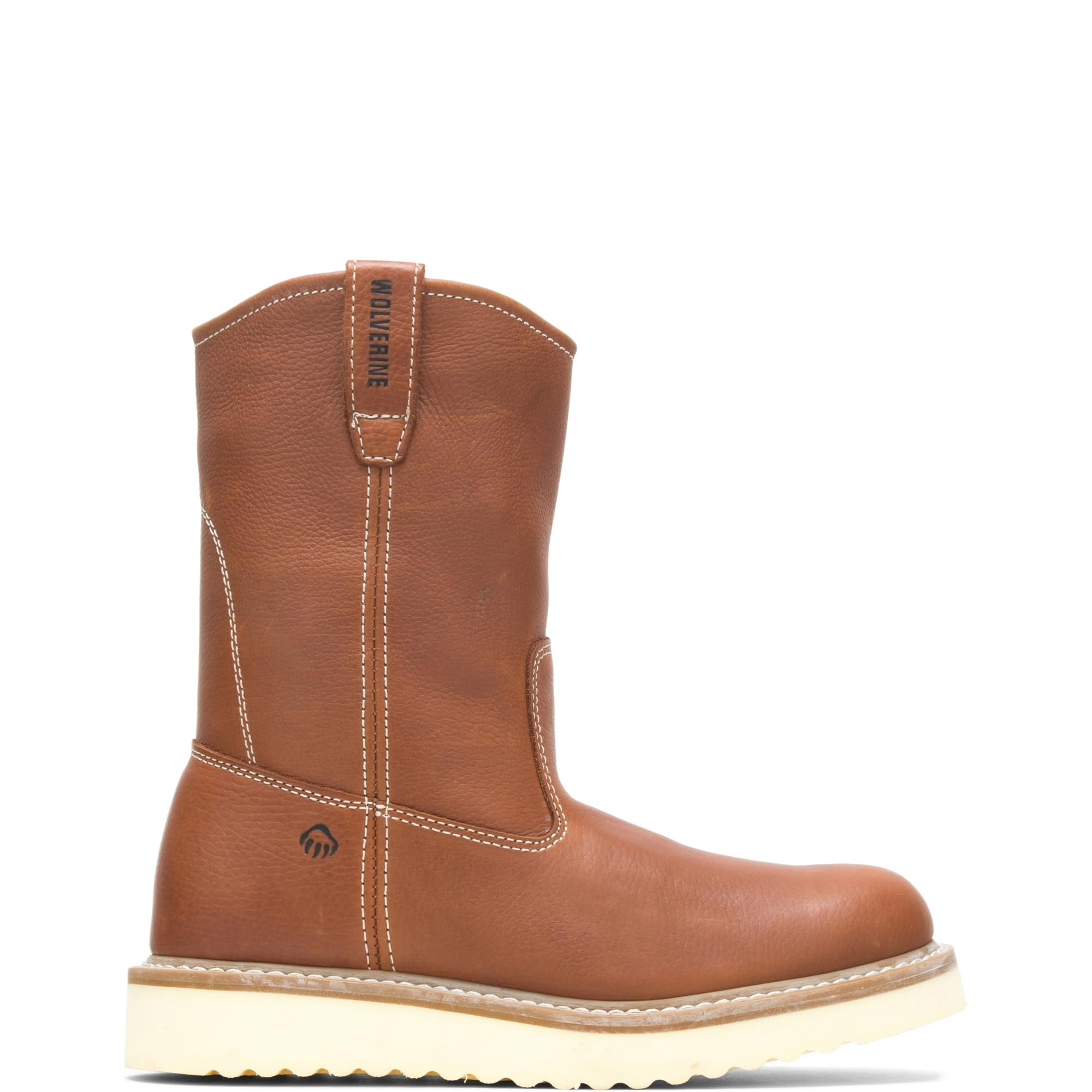
The Wolverine Wellington is a pull-on wedge boot that users consistently describe as “walking on clouds.” Its soft polyurethane outsole absorbs shock through the heel strike and doesn’t pick up gravel, making it ideal for concrete floors, metal decking, or solid surfaces. The full-grain leather is thick but flexible after a short break-in, and the wedge design keeps you stable on uneven ground without jamming rocks into the tread.
One standout detail: users coming from premium brands like Thorogood ( tier) report that the Wolverine gives 80% of the comfort at half the price. The boot runs true to size, though some users suggest going up a full size if you’re between sizes, as half sizes aren’t available. The leather looks good enough for casual wear, and the absence of a steel toe makes the boot lighter and less fatiguing for all-day standing.
The downsides: the wedge sole is less aggressive on mud, and the toe can feel snug if you’re used to a wide toe box. The lack of a composite toe means no safety certification. But for pure anti fatigue comfort on dry surfaces, this is a top contender that rivals boots nearly twice its price.
Why it’s great
- Soft PU wedge sole absorbs impact without picking up gravel
- Full-grain leather flexes with the foot after minimal break-in
- Lightweight for a leather boot; no metal toe adds weight
Good to know
- No half sizes; size up if in between
- Not suitable for wet or muddy construction sites
- Snug toe box may require stretching for wide-footed users
3. Ariat Men’s Rebar Lift 6″ Waterproof Work Boot
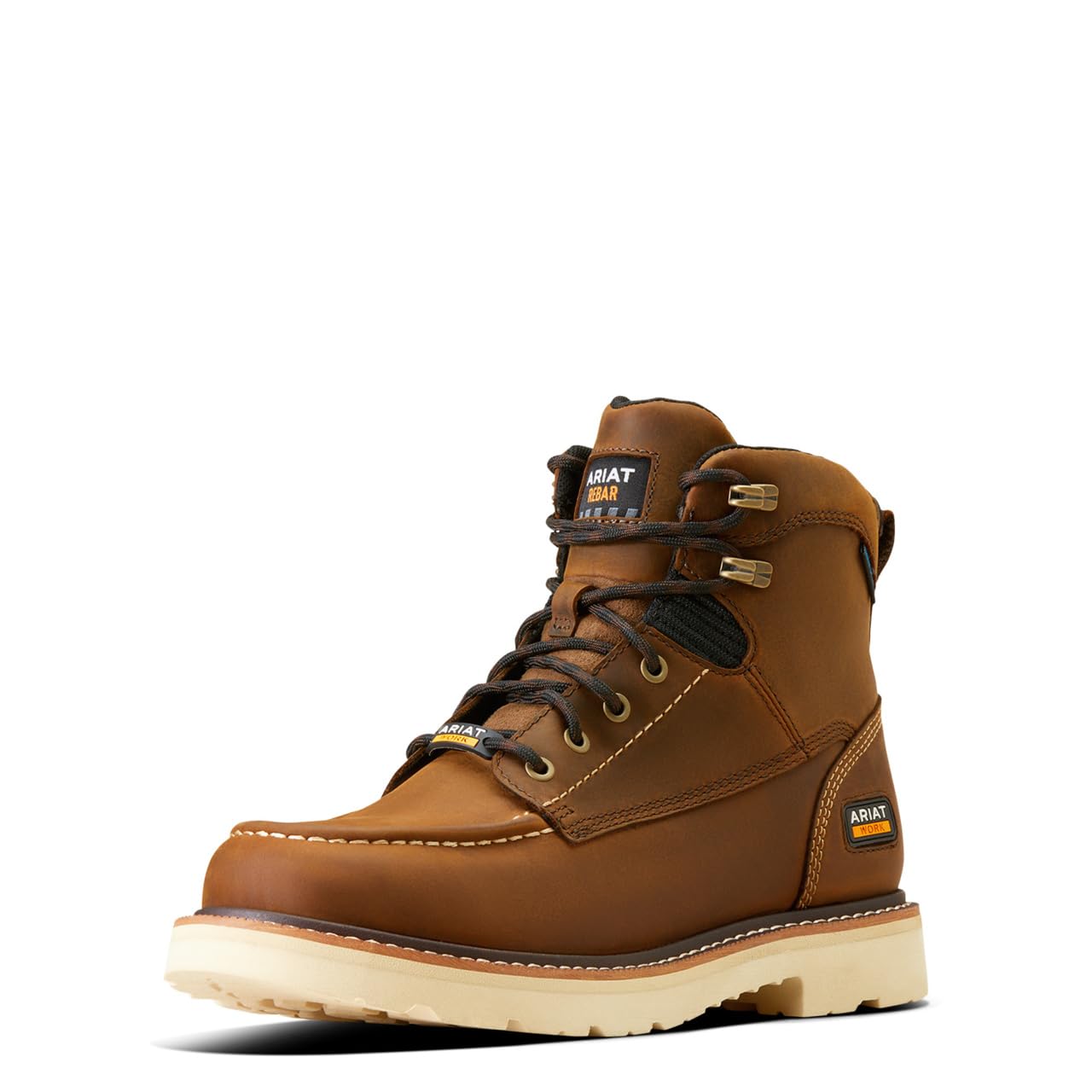
The Ariat Rebar Lift delivers comfort that users call “clouds on your feet” straight out of the box with zero break-in. Its 4LR (Four Layer Rebound) technology combines a moisture-wicking footbed, EVA midsole, and lightweight composite shank to provide arch support that doesn’t collapse. The boot is noticeably light—comparatively lighter than most steel or alloy toe options—which reduces overall leg fatigue during 8-hour shifts.
The waterproofing uses Ariat’s own barrier system, which has held up well in light rain and wet grass, though users who tested it in deep standing puddles found it adequate. The mesh lining is breathable enough for warm warehouse use. One minor drawback is the tongue stitching at the ankle: some users find it stiff at the flex point, preventing full lacing without discomfort. A quick seam cut resolves this for some, but it’s worth noting.
For anyone needing a balanced boot that combines immediate comfort, moderate waterproofing, and lasting arch support without a heavy break-in period, the Rebar Lift is a strong mid-range choice that punches above its price tier.
Why it’s great
- 4LR footbed supports the arch without bottoming out
- Zero break-in needed; comfortable on day one
- Lightweight construction reduces leg fatigue
Good to know
- Tongue seam at the ankle can be stiff
- Waterproofing is more splash-resistant than submersible
- Not as durable as full-grain leather options
4. Timberland PRO Gridworks Wedge 6″ Alloy Safety Toe
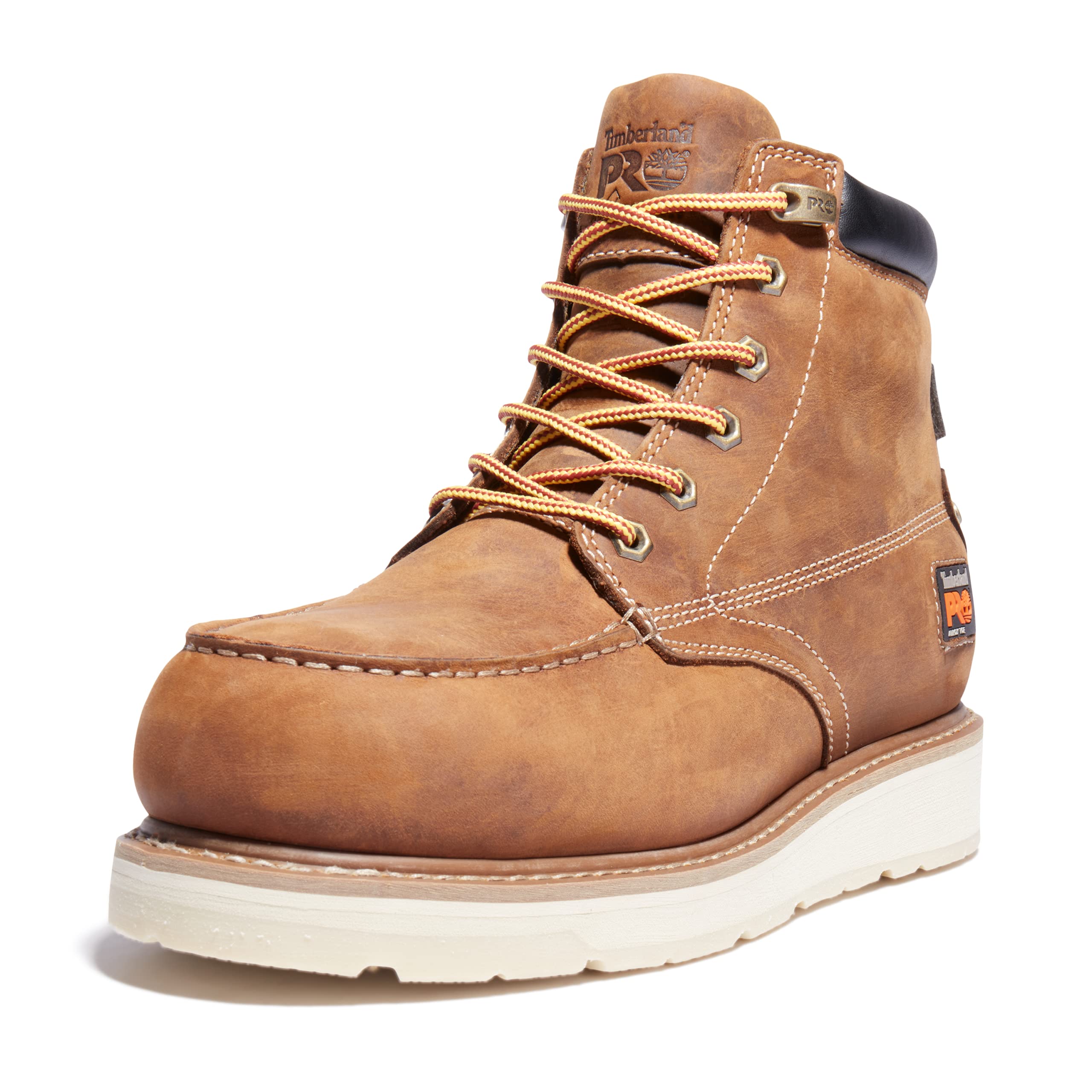
The Gridworks is a low-profile wedge boot with an alloy safety toe that provides the protection of steel without the weight penalty. Users report that with regular insert replacements (every 6-8 months), the boot can last over two years while maintaining the original sole structure. The biweekly waxing of the outer leather keeps scuffs manageable, and the wedge sole doesn’t accumulate debris like lugged outsoles do.
The anti-fatigue midsole is noticeable on concrete and tile floors. The wedge design gives a stable, flat platform that feels secure during long periods of standing. The wide version fits well without feeling sloppy, which is a common complaint in wedge boots where the toe box is too loose.
The main issues: the toe cap can feel slightly cramped if you have a tall instep, and the insole wears out faster than users want—you’ll need to budget for replacement insoles. But given the alloy toe protection and the wedge sole’s comfort, it’s a solid option for those who need safety certification without sacrificing all-day wearability.
Why it’s great
- Alloy toe provides safety without heavy weight
- Wedge sole is stable and debris-free
- Can last 2+ years with regular insole swaps
Good to know
- Insole wears out faster than the outsole
- Toe cap may feel tight for high-instep feet
- Needs biweekly conditioning to maintain leather
5. Orthofeet Men’s Orthopedic Ryder Slip-Resistant Boot

The Orthofeet Ryder is a medical-grade boot designed for neuropathy, foot drop, and post-surgery recovery. The dual rear zippers make donning possible with a swollen or brace-clad foot, and the metal grommets allow AFO (ankle-foot orthosis) attachment. The toe box is extra roomy, accommodating misshapen toes and orthotic inserts without pressure points.
The slip-resistant outsole is rated for healthcare and hospitality flooring. The included extra insoles and arch support are not afterthoughts—they provide genuine sustainable support for plantar fasciitis and metatarsalgia. Users report the boot holds up well for 2 years, though the zipper pulls can break and should be replaced with aftermarket spares.
The boots run slightly large, giving extra toe room that prevents cramping. The lightweight construction prevents leg fatigue, and the leather is soft enough to avoid pressure points. The main drawback is that the rear zipper tang can break under heavy daily wear, but the manufacturer replaces them under warranty. For anyone with chronic foot issues or recovery needs, this boot is unmatched.
Why it’s great
- Dual zip entry and AFO grommets for recovery patients
- Roomy toe box prevents pressure on bunions/hammer toes
- Includes multiple arch support levels and insoles
Good to know
- Zipper pulls can break and need replacement
- Runs large; order down if between sizes
- Leather is soft but may scuff more than thicker hides
6. KEEN Utility Kenton Mid Composite Toe

The KEEN Utility Kenton is a composite toe boot engineered for automotive shops and other oily environments. Its oil-resistant outsole grips slick concrete without degrading or hardening like standard rubber. The wide toe box is a standout feature—it prevents the foot cramping that happens when toes are compressed inside a narrow shell, a primary cause of foot fatigue among mechanics and technicians.
Users consistently report that this boot lasts 2+ years with minimal sole wear, even when exposed to oil, grease, and chemical drips daily. The boots are lightweight and comfortable once broken in—though the break-in period can be painful for the first week. Some users note that the boot is not waterproof; water seeps in at the sole edge during heavy rain or puddle crossings.
If you work on your feet in a shop or factory where oil and chemicals are common, the Kenton’s outsole and roomy toe box are worth the week of discomfort. The composite toe meets safety standards, and the light weight makes 10-hour shifts manageable. The only real trade-off is the lack of waterproofing, which limits its use in wet outdoor conditions.
Why it’s great
- Oil-resistant outsole doesn’t slip on greasy concrete
- Wide toe box prevents foot cramping during long shifts
- Lasts 2+ years in harsh chemical environments
Good to know
- Not waterproof; water seeps in at the sole edge
- Break-in period can be painful for the first week
- Slightly heavy compared to sneaker-style options
7. Skechers Men’s Arch Fit Tarver Composite Toe

The Skechers Arch Fit Tarver is essentially a sneaker with a composite toe, built for warehouse, logistics, and light industrial use. The Arch Fit insole is removable and provides pronounced arch support that works well for flat feet or overpronation. The boot is extremely light, which directly reduces leg fatigue during 10-hour standing shifts.
User reports are consistently positive on comfort, with many calling it the most comfortable work boot they’ve owned. However, the durability is not at the same level as premium leather boots. Stitching around the toe began to separate after 1.5 months for some users, and the outsole lacks the grip needed for wet or oily surfaces.
This is a budget-friendly option for those who prioritize immediate comfort and arch support over extreme longevity. The wide sizing works well for users with broader feet, and the composite toe doesn’t rub. If you’re in a dry indoor environment and want a boot that feels like a running shoe, the Tarver fits the bill—just don’t expect multi-year durability.
Why it’s great
- Arch Fit insole provides excellent arch support out of the box
- Very lightweight; reduces leg fatigue
- Wide sizes available for broad feet
Good to know
- Stitching may separate near the toe within 2 months
- Outsole grip is mediocre on wet surfaces
- Not built for heavy construction or harsh environments
8. Reebok Work Sublite Cushion Tactical 6″ Boot

The Reebok Sublite is a favorite among paramedics and mail carriers who spend 12+ hours on their feet. The Sublite foam midsole compresses effectively under heel strike and rebounds slowly, creating a “walking on barefoot” sensation while still absorbing impact. The side zipper with Velcro tab allows custom lacing tension—you can cinch the laces tight for ankle support while the zipper makes on/off fast.
The boot is extremely breathable and light, which prevents heat buildup during long summer routes. Users report that factory insoles are adequate but can be replaced with orthotics if needed. The tread pattern wears faster than harder rubber options, but this is a common trade-off for the soft, compliant sole that reduces leg fatigue.
Durability is the main concern: users typically get 6-12 months of heavy daily wear before the foam loses its bounce or the sole separates. It’s a lightweight performance boot designed for comfort first, longevity second. For first responders and route workers who need immediate all-day comfort and don’t mind replacing boots more often, this is a top pick.
Why it’s great
- Sublite foam midsole absorbs impact without feeling stiff
- Side zipper enables easy on/off with tight laces
- Highly breathable; stays cool during long shifts
Good to know
- Foam wears out faster; expect 6-12 months of heavy use
- Tread is less aggressive on loose surfaces
- Not durable for construction or rugged terrain
9. Dr. Scholl’s Shoes Men’s Charge Slip Resistant Soft Toe Work Boot
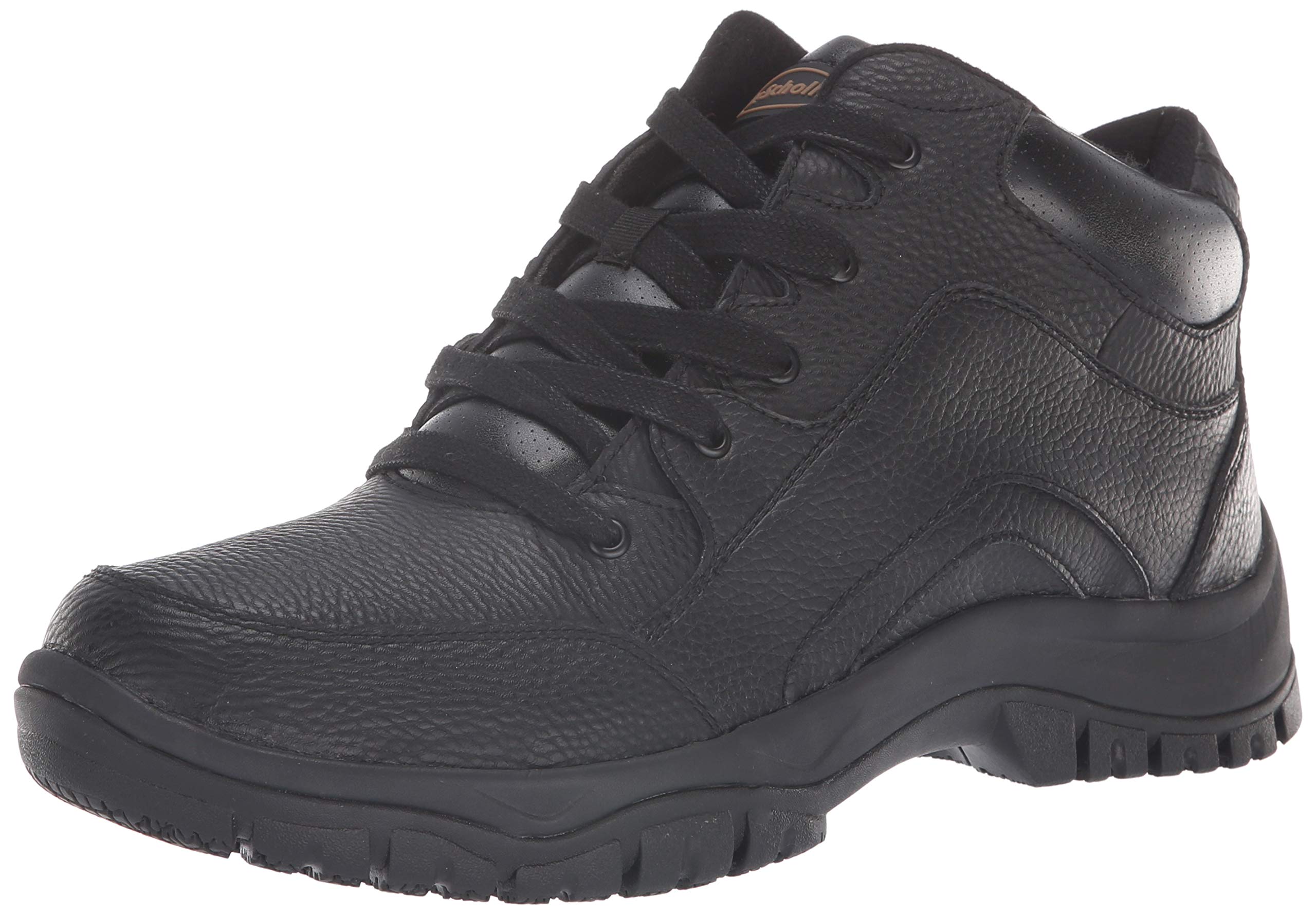
The Dr. Scholl’s Charge is a budget-friendly soft toe boot popular among kitchen staff and healthcare workers. The slip-resistant outsole gets high marks for grip on wet tile and greasy kitchen floors. The boot is lightweight, and the insole provides noticeable cushion out of the box—but users consistently report the insole flattens within the first month, requiring an immediate aftermarket replacement.
Comfort is good for the price point, but durability is the weak link. Multiple users report the upper peeling away or stitching separating within 2-3 months of daily use. The boot is essentially a wearable disposable for environments where boots get wrecked quickly and budget is the primary constraint. Chefs and ER nurses often buy these as their 3rd pair because the price allows frequent replacement.
The lack of safety features (no steel or composite toe) limits its use to environments where puncture and impact protection aren’t required. The boot works well as an ultra-light slip-resistant shoe for shifts under 8 hours, but the rapid insole collapse and construction issues mean it’s not a long-term anti fatigue solution—more of a short-term comfort fix.
Why it’s great
- Slip-resistant outsole grips wet kitchen and hospital floors
- Very lightweight; reduces fatigue in low-hazard environments
- Low initial cost allows frequent replacement
Good to know
- Insole flattens completely within 30 days
- Upper and stitching can peel/separate in 2-3 months
- No safety toe for impact or puncture protection
FAQ
How long should the anti-fatigue foam in my work boots last before it flattens?
Can I replace the insoles in anti-fatigue work boots to extend their life?
Are wedge soles or lugged soles better for anti-fatigue?
Final Thoughts: The Verdict
For most users, the best anti fatigue work boots winner is the Timberland PRO Boondock because its rubberized midsole maintains rebound longer than any competitor in this list while surviving the harshest work environments. If you want the comfort of a wedge sole and a cloud-like step on concrete, grab the Wolverine Wellington. And for anyone with chronic foot pain, neuropathy, or post-surgery needs, nothing beats the Orthofeet Ryder for medical-grade support and adjustability.

Mo Maruf
I created WellFizz to bridge the gap between vague wellness advice and actionable solutions. My mission is simple: to decode the research and give you practical tools you can actually use.
Beyond the data, I am a passionate traveler. I believe that stepping away from the screen to explore new environments is essential for mental clarity and physical vitality.