Our readers keep the lights on and my smoothie glass nicely filled. As an Amazon Associate, I earn from qualifying purchases.
Pruning a bonsai is a meditative act, but the wrong snips can crush delicate bark rather than severing it cleanly. A pair of dedicated scissors designed for this specific task uses offset blades, tight pivot points, and hardened steel to make cuts that heal quickly without leaving frayed, disease-prone stubs.
I’m Mohammad Maruf — the founder and writer behind WellFizz. I spend my time analyzing the metallurgy, edge geometry, and ergonomic data of garden tools to separate precision instruments from mass-market clippers.
Whether you are trimming buds, shaping fine branches, or cutting back twigs in tight canopy spaces, the right tool changes everything. This guide is built around finding the best bonsai scissors for your specific workflow and skill level.
How To Choose The Best Bonsai Scissors
Bonsai shears are not garden-variety pruners. Their geometry, steel, and pivot design directly affect how a branch heals after each cut. Understanding three core factors will keep you from buying a tool that leaves crushed bark or develops rust after one season.
Blade Material and Hardness
Stainless steel resists corrosion with minimal care, but high-carbon steel and Japanese Yasugi specialty steel hold a sharper edge longer. Look for hardness ratings around HRC 58–61. Softer blades dull quickly on dense woody tissue, forcing you to sharpen every few sessions.
Blade Style and Cutting Action
Straight blades are the standard for general trimming. Concave cutters (also called anvil style) let you cut thicker branches flush to the trunk. Bypass blades slide past each other for a clean scissor-like snip—ideal for delicate buds and soft growth. Choose based on whether you are shaping fine twigs or removing structural branches.
Handle Length and Grip Comfort
Longer handles (8 to 8.5 inches) provide extra leverage and reach into a dense canopy. Shorter handles (around 6 inches) offer more control for close-up detail work. Rubber or textured steel handles reduce hand fatigue during extended sessions. Ambidextrous designs work well for both left and right-handed users.
Quick Comparison
On smaller screens, swipe sideways to see the full table.
| Model | Category | Best For | Key Spec | Amazon |
|---|---|---|---|---|
| TONMA Ashinaga | Premium | Heavy-duty all-steel durability | AUS-8 steel, HRC 59±1 | Amazon |
| Wazakura Yasugi Steel | Premium | Traditional hand-forged precision | YCS3 alloy tool steel | Amazon |
| Shear Perfection Platinum | Mid-Range | Ultra-fine tight spaces | 60 mm straight blade | Amazon |
| HOMEANING 12-Pack | Mid-Range | Multi-tool home gardening | Titanium coated straight blade | Amazon |
| VOUIU 8inch Concave | Budget | Thicker branch removal | Offset anvil blade | Amazon |
In‑Depth Reviews
1. TONMA Ashinaga Bonsai Scissors [Made in Japan]
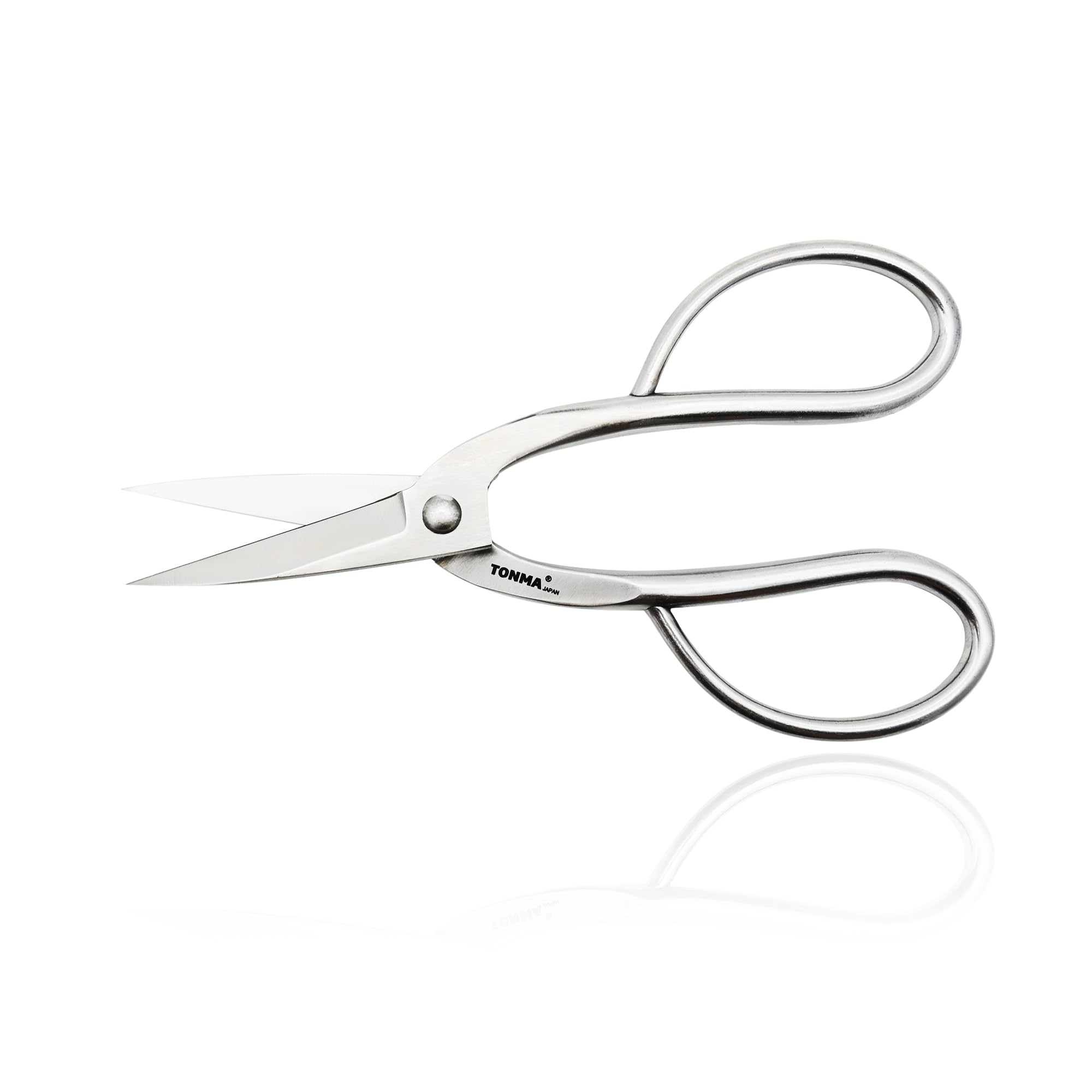
The TONMA Ashinaga uses a solid piece of Japanese AUS-8 stainless steel with a hardness of HRC 59±1, which gives it exceptional edge retention on hard wood. The 4.5 mm blade thickness feels substantial without being bulky, and the full-tang steel handles provide leverage that reduces hand strain during repeated cuts. Users reported cutting through Dahlia tubers and orchid stems with no visible edge wear after multiple uses.
The 8-inch length with slim ergonomic handles allows you to reach deep into a dense bonsai canopy without brushing against adjacent branches. The brushed finish resists corrosion, and cleaning requires only a rinse and a light coat of anti-rust oil after use. It is ambidextrous and comfortable for both left and right-handed grips.
The lifetime warranty adds confidence, but the real story is performance on 3–5 mm branches, where the clean cut minimizes bark tearing and speeds up callus formation. For a premium all-steel tool that does not require frequent sharpening, this model is the strongest contender in the mid-to-premium price tier.
Why it’s great
- Full AUS-8 stainless steel body resists rust
- HRC 59 blade stays sharp through heavy use
- Ergonomic steel handles reduce hand fatigue
Good to know
- Heavier than rubber-handled alternatives
- Blades are thicker, limiting ultra-fine bud work
2. Wazakura Yasugi Steel Twig Bonsai Scissors

Forged by third-generation artisans in Sanjo, Japan, these shears use YCS3 alloy tool steel—a Yasugi specialty steel that removes impurities (phosphorus, sulfur) that degrade sharpness. The 52 mm blades are exceptionally precise on twigs and buds, and the 8.27-inch handle provides excellent reach without excessive weight at 148 grams.
The twig-style design means the blades stay slim for maneuvering between closely spaced branches. Users note the steel arrived lightly oiled and require maintenance to prevent surface patina, but the edge holds longer than standard stainless options. It is ideal for the bonsai purist who values the touch of a master-made tool.
Some users reported minor blade crossing at the tip, which is adjustable by tightening the pivot screw. Once dialed in, the cutting action severs wood fibers cleanly, promoting faster healing. For dedicated enthusiasts who want artisan quality and Yasugi steel, this pair delivers a premium experience at a mid-range price point.
Why it’s great
- Authentic Japanese Yasugi steel holds edge longer
- Hand-forged by specialist artisans
- Long slim handles for deep canopy access
Good to know
- Needs oil maintenance to prevent rust
- Tip crossing may require pivot adjustment
3. Shear Perfection Platinum Series Bonsai Scissors

With a 60 mm straight blade, the Shear Perfection Platinum Series is built for ultra-fine work in tight spots. The extra blade length lets you reach deep between branches without disturbing the tree’s structure. The stainless steel blades come with a brushed finish that reduces friction, and the rubber grip handles provide consistent comfort even during extended trimming sessions.
Users consistently report that the blades stay sharp for over three years of regular use on branches up to 3 mm thick. The slim profile cuts fabric, paper, and cardstock cleanly, making it a versatile tool for both bonsai and general crafting. It is ambidextrous and weighs only 3.2 ounces, so finger fatigue is minimal.
The pivot action is smooth with no lateral play, which prevents crushed bark on delicate growth. For precise bud selection and tip pruning, this model excels. The only trade-off is that the thin blade may flex on wood thicker than 5 mm.
Why it’s great
- Long 60 mm blade reaches tight spaces
- Comfortable rubber grip handles
- Holds sharp edge for years
Good to know
- Thin blade not suited for branches over 5 mm
- Not designed for heavy-duty cutting
4. HOMEANING 12 Packs Garden Pruning Shears (Orange)
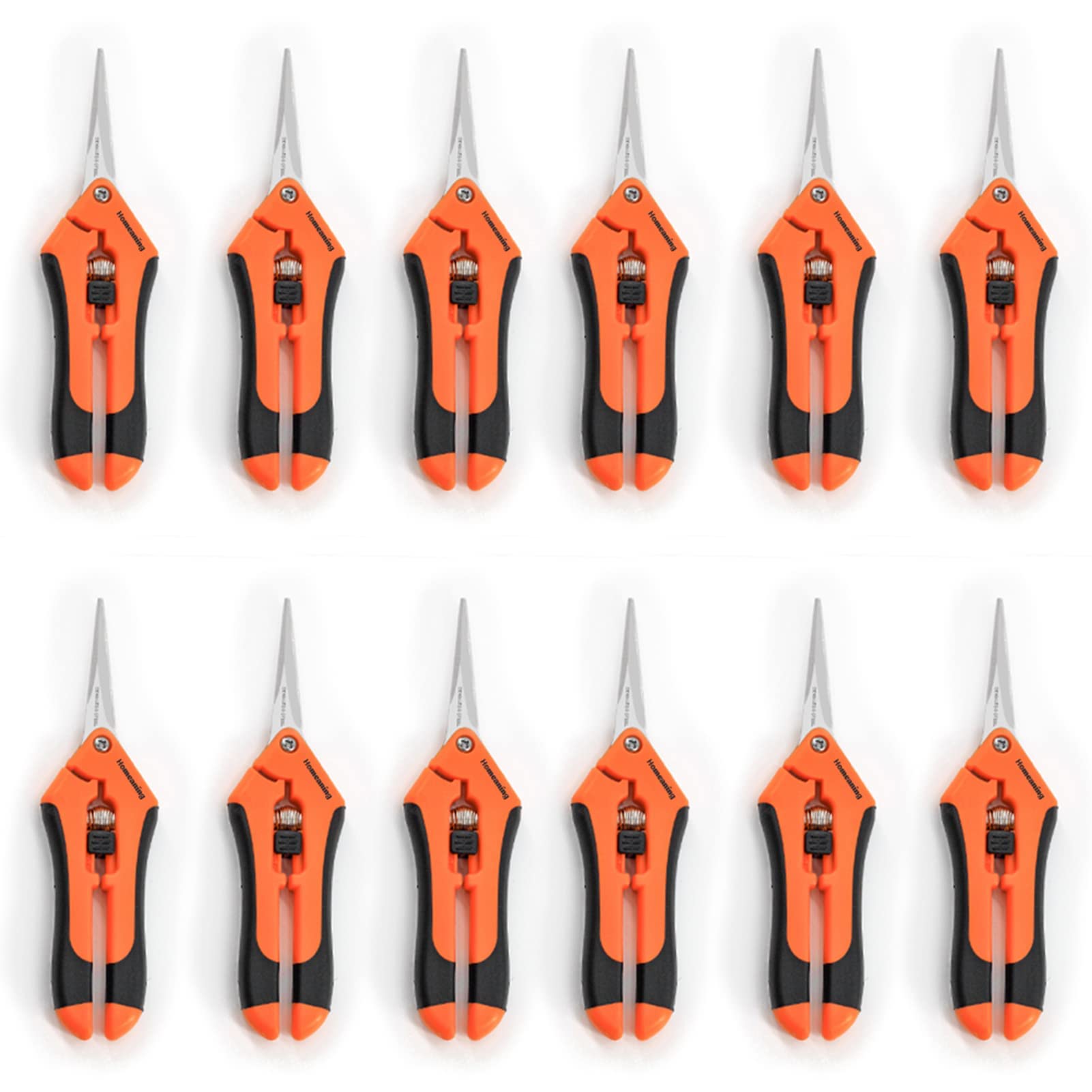
This set includes a bulk pack of straight-blade snips with titanium coating, designed to resist sap buildup and corrosion. Each pair weighs very little and uses a spring-loaded auto-open mechanism with an ergonomic rubber handle that reduces hand fatigue during repetitive cuts. The safety lock keeps the blade closed when not in use.
While marketed as a 12-pack, note that you receive 12 individual pairs rather than six—the listing image can be misleading. Each pair is identical, making this a great option for group workshops, community gardens, or keeping spares in multiple locations. The curved blade version (some units ship curved) offers precise control on flowers and herbs.
The titanium coating helps sap and sticky residue slide off easily, and the blades stay sharp for general pruning of soft stems and thin branches. For serious bonsai work on hardwood, the edge may dull faster than a solid alloy steel option, but for routine trimming and value-conscious buyers, this set delivers excellent utility per unit.
Why it’s great
- Bulk pack ideal for workshops or multiple stations
- Titanium coating resists sap buildup
- Safety lock and spring-loaded action
Good to know
- Listing image shows two pairs but only one pair sold
- Not suited for dense hardwood branches
5. VOUIU 8inch Concave Cutter Bonsai Tools

The VOUIU concave cutter uses an offset anvil design, meaning the cutting edge lands slightly to one side to create a clean flush cut against the trunk. This is ideal for removing thicker branches (up to about half an inch) without leaving a stub. The stainless steel construction resists rust and the blade comes sharp out of the package.
Users have repurposed these for equine hoof trimming, which speaks to the leverage and durability of the offset geometry. The 210 mm total length gives good mechanical advantage, and the full edge-to-edge contact ensures a clean cut. The round point style reduces the risk of accidentally piercing adjacent bark.
For bonsai-specific use, the concave cut leaves a dimple that heals into a natural-looking scar on the trunk. The handle is a bit long for some users, which can feel less controlled for detail work near the soil line. However, for chopping structural branches and rough shaping, this is a solid entry-level cutter at a very friendly price.
Why it’s great
- Offset anvil design for flush cuts
- Sturdy stainless steel handles
- Good leverage for thicker branches
Good to know
- Long handle reduces precision for fine work
- Heavier feel compared to straight blades
FAQ
Can I use regular garden pruners for bonsai?
How often should I sharpen bonsai scissors?
What is the best way to prevent rust on high-carbon steel blades?
Are longer handles always better for bonsai pruning?
Final Thoughts: The Verdict
For most users, the best bonsai scissors winner is the TONMA Ashinaga because it combines AUS-8 steel hardness with an all-metal build that resists corrosion and handles thick branches without dulling. If you want artisan craftsmanship and traditional Japanese forging, grab the Wazakura Yasugi Steel. And for budget-conscious beginners who need a reliable concave cutter for rough shaping, nothing beats the VOUIU 8inch Concave Cutter.

Mo Maruf
I created WellFizz to bridge the gap between vague wellness advice and actionable solutions. My mission is simple: to decode the research and give you practical tools you can actually use.
Beyond the data, I am a passionate traveler. I believe that stepping away from the screen to explore new environments is essential for mental clarity and physical vitality.