Our readers keep the lights on and my smoothie glass nicely filled. As an Amazon Associate, I earn from qualifying purchases.
Finding a base that carries your fragrance blend without altering its profile is the single most underrated step in perfume making. A carrier oil that adds its own scent, feels greasy on skin, or goes rancid in a week can ruin even the most expensive essential oil blend. The right one stays invisible, letting your carefully balanced notes of citrus, wood, or floral shine through exactly as intended.
I’m Mohammad Maruf — the founder and writer behind WellFizz. My research focuses on dissecting the chemical composition and cosmetic-grade certifications of base oils to identify which truly preserve fragrance integrity over time.
After evaluating dozens of formulas for molecular weight, oxidation stability, and scent neutrality, I’ve narrowed the selection to the best carrier oil for perfume blends that deliver reliable performance without interfering with your signature scent.
How To Choose The Best Carrier Oil For Perfume
Not every natural oil makes a good carrier for fine fragrance. The key factors are scent profile, absorption rate, fixation ability, and shelf stability. Here is what to check before you buy.
Scent Profile and Neutrality
A carrier oil must be virtually odorless. Oils like olive or coconut can carry a distinct natural smell that competes with your perfume notes. The best choices have been refined or cold-pressed in a way that strips away any detectable aroma, leaving a completely blank canvas.
Absorption and Skin Feel
Oil texture matters. A heavy, greasy oil sits on the skin and can smother lighter top notes. Lighter oils with smaller molecular chains absorb quickly without leaving a slick film, allowing the perfume to dry down naturally and project well throughout the day.
Fixative Properties
Some carrier oils do more than dilute — they help anchor volatile fragrance molecules, slowing evaporation and extending wear time. Dipropylene Glycol (DPG) is a synthetic fixative that binds to both essential and fragrance oils, while certain natural oils like jojoba mimic the skin’s sebum and hold scent close to the body.
Shelf Life and Oxidation
Carrier oils high in polyunsaturated fats can go rancid quickly, turning your perfume sour. Oils with a high oleic acid content or stable molecular structure, such as fractionated coconut oil or jojoba, resist oxidation for months and keep your blend fresh.
Quick Comparison
On smaller screens, swipe sideways to see the full table.
| Model | Category | Best For | Key Spec | Amazon |
|---|---|---|---|---|
| Plant Guru DPG | Synthetic Fixative | Fragrance dilution & fixative | Odorless, high boiling point | Amazon |
| MAYJAM Jojoba Oil | Natural Simulant | Skin-mimicking carrier | Molecularly mimics sebum | Amazon |
| Soapeauty Fractionated Coconut Oil | Refined Oil | Unscented body & massage perfumes | Stable, non-greasy finish | Amazon |
| Best of Nature Olive Oil | Natural Oil | Budget-friendly base | Cold pressed, rich in oleic acid | Amazon |
| Plant Guru Carrier Oil Variety Set | Sampler Pack | Exploring multiple carrier profiles | Four 4 oz oils in one set | Amazon |
In‑Depth Reviews
1. Plant Guru Dipropylene Glycol DPG

DPG is the industry-standard fixative for perfumers who want to stretch their fragrance blends without altering the scent profile. This Plant Guru offering is colorless, completely odorless, and has a high boiling point that prevents evaporation in roll-on or spray applications. It binds to both essential oils and synthetic fragrance oils equally well, making it a versatile backbone for any perfume project.
Users consistently report that DPG does not mute or distort their carefully crafted notes. Even light citrus and floral accords remain crisp after dilution. The thick, viscous texture also helps slow the release of top notes, giving your fragrance better longevity on skin compared to lighter natural oils.
Because DPG is synthetically produced, it lacks the nutrients found in plant oils. It functions purely as a carrier and fixative — not a moisturizer. This is a preferred choice for perfume makers who prioritize scent performance over skin treatment benefits.
Why it’s great
- Totally inert, adds no scent to blends
- Thick viscosity anchors volatile top notes
- Safe for skin application at proper dilution
Good to know
- Not a moisturizing oil like plant-based carriers
- Some users prefer natural over synthetic ingredients
2. MAYJAM Jojoba Oil Organic
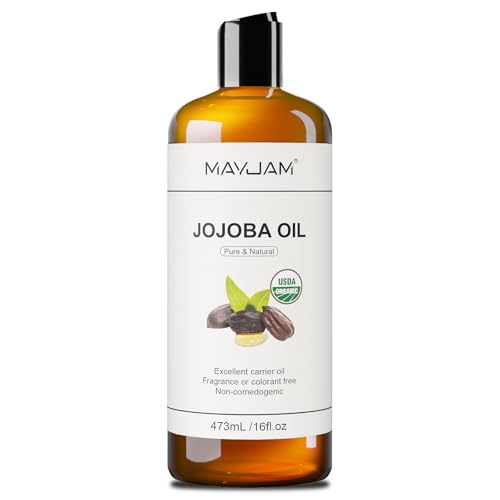
Jojoba oil is technically a liquid wax ester with a molecular structure nearly identical to human sebum. That makes MAYJAM’s cold-pressed, USDA-certified organic jojoba oil the most skin-compatible carrier on this list. It absorbs rapidly without clogging pores, leaving no greasy film behind — a must for fragrance oils that sit directly on pulse points.
Because jojoba mimics the skin’s natural oils, it integrates seamlessly and helps hold fragrance molecules against the skin’s surface. This extends the wear time of your perfume without adding a heavy synthetic feel. The oil itself has a faint nutty scent that fades within seconds, making it nearly neutral for most blends.
The 16 oz bottle offers ample volume for frequent DIY mixing. The oil remains stable at room temperature for well over a year, so you can store leftover stock without worrying about rancidity. It also works beautifully as a standalone moisturizer or makeup remover, adding versatility beyond perfume crafting.
Why it’s great
- Absorbs quickly with no slippery residue
- Mimics sebum to anchor fragrance longer
- USDA organic certification adds quality assurance
Good to know
- Slight natural scent that disappears quickly
- Can be pricier per ounce than other natural oils
3. Soapeauty Fractionated Coconut Oil
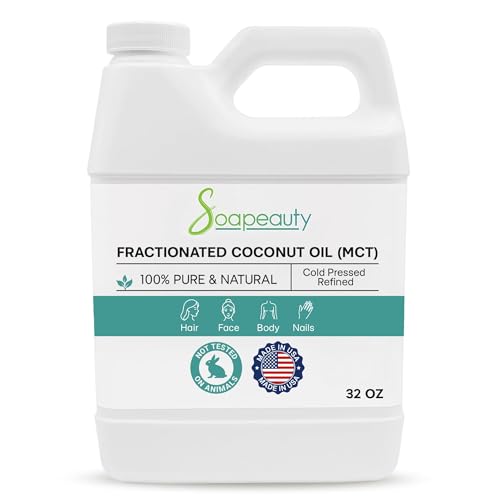
Fractionated coconut oil is refined to remove the long-chain triglycerides that cause regular coconut oil to solidify at room temperature. The result is a clear, lightweight liquid that stays pourable in any climate. Soapeauty’s version is cold-pressed and refined, stripping away the natural coconut scent almost entirely — a key advantage for perfume carriers.
This oil has a very low molecular weight, which means it penetrates the skin quickly without leaving a greasy feel. It works especially well in spray perfumes and body oils where a fast-drying, residue-free finish is desired. The unscented profile makes it compatible with delicate floral and citrus accords that would clash with a heavier natural scent.
At 32 fl oz, this bottle is the largest single-oil option in the lineup. It is ideal for high-volume projects such as making scented massage oils or filling multiple roller bottles. The refined nature also extends shelf life significantly compared to unrefined coconut oil — expect at least two years of stability when stored properly.
Why it’s great
- Virtually scentless and colorless
- Remains liquid in all temperatures
- Large 32 oz volume for bulk blending
Good to know
- Provides no moisturizing nutrients to skin
- Can feel slightly drying for very dry skin types
4. Best of Nature 100% Pure Olive Oil
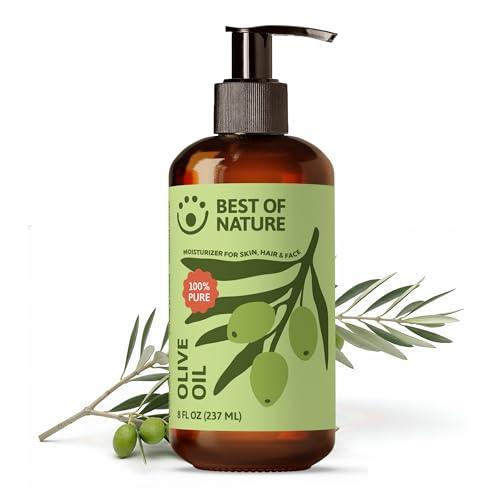
Pure olive oil is a classic base for oil-based perfumes, particularly for those who want a rich, moisturizing carrier. This Best of Nature bottle is cold-pressed and naturally unscented, though it retains a faint grassy aroma that may compete with very delicate fragrance blends. It is best suited for heavier, spiced, or woody perfume formulations where a subtle olive undertone can be masked.
Rich in antioxidants and oleic acid, this oil provides deep hydration and a long-lasting glide on the skin. Users highlight how it softens dry patches and improves skin elasticity with regular use. The 8 oz bottle is compact and easy to handle, though the cap design can occasionally leak during storage if not kept upright.
Olive oil is thicker than fractionated coconut oil or DPG. It takes longer to absorb and can leave a slightly greasy feel. For perfume makers who prioritize skin care benefits as much as fragrance delivery, this budget-friendly option performs well — just be prepared for a slower drying time and a faint natural scent.
Why it’s great
- Deeply moisturizing for dry skin
- Rich in antioxidants and oleic acid
- Very affordable price point
Good to know
- Faint natural olive scent may alter delicate blends
- Can feel greasy if applied heavily
5. Plant Guru Carrier Oil Variety Set

If you are new to perfume blending or want to test how different bases interact with your essential oils, this variety set gives you four 4 oz bottles of sweet almond, avocado, fractionated coconut, and grapeseed oil. Each oil has a distinct feel: sweet almond is light and almost odorless, avocado is rich and nourishing, fractionated coconut is quick-absorbing, and grapeseed is thin and versatile.
Users appreciate being able to compare how each carrier handles the same fragrance oil without committing to a full-size bottle. The set is ideal for creating custom blends for different seasons or skin types. The bottles are well-made without pumps, so be prepared to pour or decant into dropper bottles for finer dispensing.
This is not a single carrier oil but a toolkit for exploration. If you already know exactly which base you prefer, buying a larger single option will be more cost-effective. But for anyone building a perfume-making starter kit, this set delivers educational value and practical versatility in one package.
Why it’s great
- Four distinct oils to test fragrance compatibility
- Three of the four are nearly odorless
- Compact 4 oz bottles reduce waste
Good to know
- No pump dispensers included
- Grapeseed oil has the shortest shelf life
FAQ
Can I use olive oil as a carrier for perfume?
What is the difference between DPG and natural carrier oils for perfume?
How long does jojoba oil last as a perfume carrier?
Final Thoughts: The Verdict
For most users, the best carrier oil for perfume winner is the MAYJAM Jojoba Oil because it combines near-odorless neutrality with a skin-mimicking structure that anchors fragrance without greasiness. If you want a pure fixative that never alters your scent, grab the Plant Guru DPG. And for high-volume blending or body perfume sprays, nothing beats the Soapeauty Fractionated Coconut Oil.

Mo Maruf
I created WellFizz to bridge the gap between vague wellness advice and actionable solutions. My mission is simple: to decode the research and give you practical tools you can actually use.
Beyond the data, I am a passionate traveler. I believe that stepping away from the screen to explore new environments is essential for mental clarity and physical vitality.