Our readers keep the lights on and my smoothie glass nicely filled. As an Amazon Associate, I earn from qualifying purchases.
The line between a basic step tracker and a true fitness companion has never been sharper. Modern Android fitness watches pack AMOLED displays that rival smartphones, multi-band GPS that locks onto trails under dense canopy, and battery life that stretches from a single day to over three weeks — the challenge is filtering the glorified notification buzzers from the actual training tools.
I’m Mohammad Maruf — the founder and writer behind WellFizz. I’ve spent years analyzing wearable hardware specifications, sensor accuracy data, and real-world battery benchmarks across hundreds of models to separate marketing claims from measurable performance.
Whether you train for triathlons or just want reliable heart rate data during your morning run, finding the right best android fitness watch means matching display brightness, GPS precision, battery endurance, and ecosystem integration to your actual routine — not just the spec sheet.
How To Choose The Best Android Fitness Watch
Selecting the right wearable for your Android phone goes beyond picking a brand you recognize. You need to weigh display technology for legibility, GPS accuracy for route tracking, battery life to match your longest activity, and the operating system that determines which apps and watch faces are available. Below are the three critical factors that separate a capable fitness watch from a frustrating one.
Display Brightness and Always-On Clarity
An AMOLED screen with 1,000 nits or more is essential if you exercise outdoors. Budget models often sit around 400–600 nits, which wash out under direct sunlight. Mid-range and premium watches now reach 3,000 nits, making maps and metrics readable even on a bright trail. Also confirm that the always-on display mode doesn’t cripple battery life — some watches lose 40% of their runtime with AOD active.
GPS Accuracy and Offline Mapping
Single-band GPS works fine for open park runs, but multi-band (dual-frequency) GPS is necessary for city streets with tall buildings or forested trails where signal reflection occurs. Watches with offline map storage let you navigate without a phone — look for at least 4 GB of onboard storage if you plan to download topographic or ski maps. Dynamic round-trip routing is a premium feature that recalculates your route mid-run to match a target distance.
Battery Endurance and Charging Speed
A fitness watch that dies before your long weekend hike is useless. Entry-level models often manage 5–7 days in smartwatch mode, while premium Garmin units reach 15–16 days. GPS-on runtime is the more critical number: look for at least 20 hours of continuous GPS tracking for marathon training or ultrarunning. Fast charging (under 2 hours from empty to full) is a practical luxury that recovers a week’s worth of use during a single shower.
Quick Comparison
On smaller screens, swipe sideways to see the full table.
| Model | Category | Best For | Key Spec | Amazon |
|---|---|---|---|---|
| Garmin Fenix 8 47mm | Premium | Multisport & Adventure | 16-day smartwatch / 47hr GPS | Amazon |
| Garmin Forerunner 970 | Premium | Running & Triathlon | 15-day smartwatch / 26hr GPS | Amazon |
| Samsung Galaxy Watch Ultra | Premium | LTE Connectivity & Durability | 590mAh battery / Titanium case | Amazon |
| Samsung Galaxy Watch 8 Classic | Mid-Range | Wear OS Ecosystem | 445mAh / Rotating Bezel | Amazon |
| Google Pixel Watch 3 (41mm) | Premium | Fitbit Integration & LTE | 24hr AOD / 36hr battery saver | Amazon |
| Amazfit T-Rex 3 Pro | Premium | Rugged Outdoor Use | 700mAh / 10 ATM / Sapphire | Amazon |
| Amazfit Active Max | Mid-Range | Battery Life & Offline Maps | 25-day battery / 4GB storage | Amazon |
| SOUYIE Men’s Luxury Watch | Budget | Stylish Metal Design | 1.43″ AMOLED / 400mAh | Amazon |
| SOUYIE Smart Watch for Men | Budget | Value & Dual Straps | 466×466 AMOLED / 400mAh | Amazon |
In‑Depth Reviews
1. Garmin Fenix 8 47mm

The Fenix 8 is Garmin’s most refined multisport platform yet, combining a 1.4-inch AMOLED display with a stainless steel bezel and a built-in LED flashlight — a feature that becomes indispensable on early morning or late-night adventures. Battery life hits 16 days in smartwatch mode and 47 hours in full GPS mode, which means multi-day treks or week-long race camps need no charger.
Off-grid voice commands let you access watch controls without a smartphone, and the 40-meter dive rating with leakproof metal buttons expands usability into scuba and apnea activities. Health sensors track heart rate, sleep stages, respiration, and Pulse Ox, while the ECG app screens for atrial fibrillation (for users 22+).
Real-world user feedback consistently praises the battery endurance that “lasts 14-16 days regular use” and the intuitive interface that outperforms previous Garmin generations. The only hangup is the price point — but for athletes who want one device for trail running, cycling, swimming, and diving, this is the benchmark.
Why it’s great
- Industry-leading 16-day battery with always-on AMOLED
- Built-in flashlight with red and white modes
- Off-grid voice commands and 40m dive rating
Good to know
- Premium price reflects flagship titanium-level build
- Some mapping UI details could be more polished
2. Garmin Forerunner 970

The Forerunner 970 is purpose-built for runners and triathletes, featuring a bright AMOLED touchscreen with button controls, a lightweight titanium bezel, and a sapphire lens that resists scratches even after months of trail abuse. The built-in LED flashlight adds visibility during pre-dawn jogs, and the 26-hour GPS battery means you can finish a full Ironman with tracking to spare.
Running economy metrics — including step speed loss and running tolerance — require the optional HRM 600 chest strap, but wrist-based running dynamics like cadence, stride length, and ground contact time are available out of the box. Multisport auto-transition detects swim-to-bike and bike-to-run changes so you can focus on pace instead of button presses.
Users praise the “10-15 day battery” that makes daily charging a distant memory, and the full-color offline maps with dynamic round-trip routing make it easy to explore new routes without a phone. The learning curve is steeper than a basic step counter, but runners who invest the time find it indispensable.
Why it’s great
- Sapphire lens and titanium bezel for rugged durability
- Triathlon auto-transition and built-in flashlight
- Running economy data with optional HRM monitor
Good to know
- Advanced running metrics need a separate chest strap
- Higher price may deter casual fitness users
3. Samsung Galaxy Watch Ultra (2024)
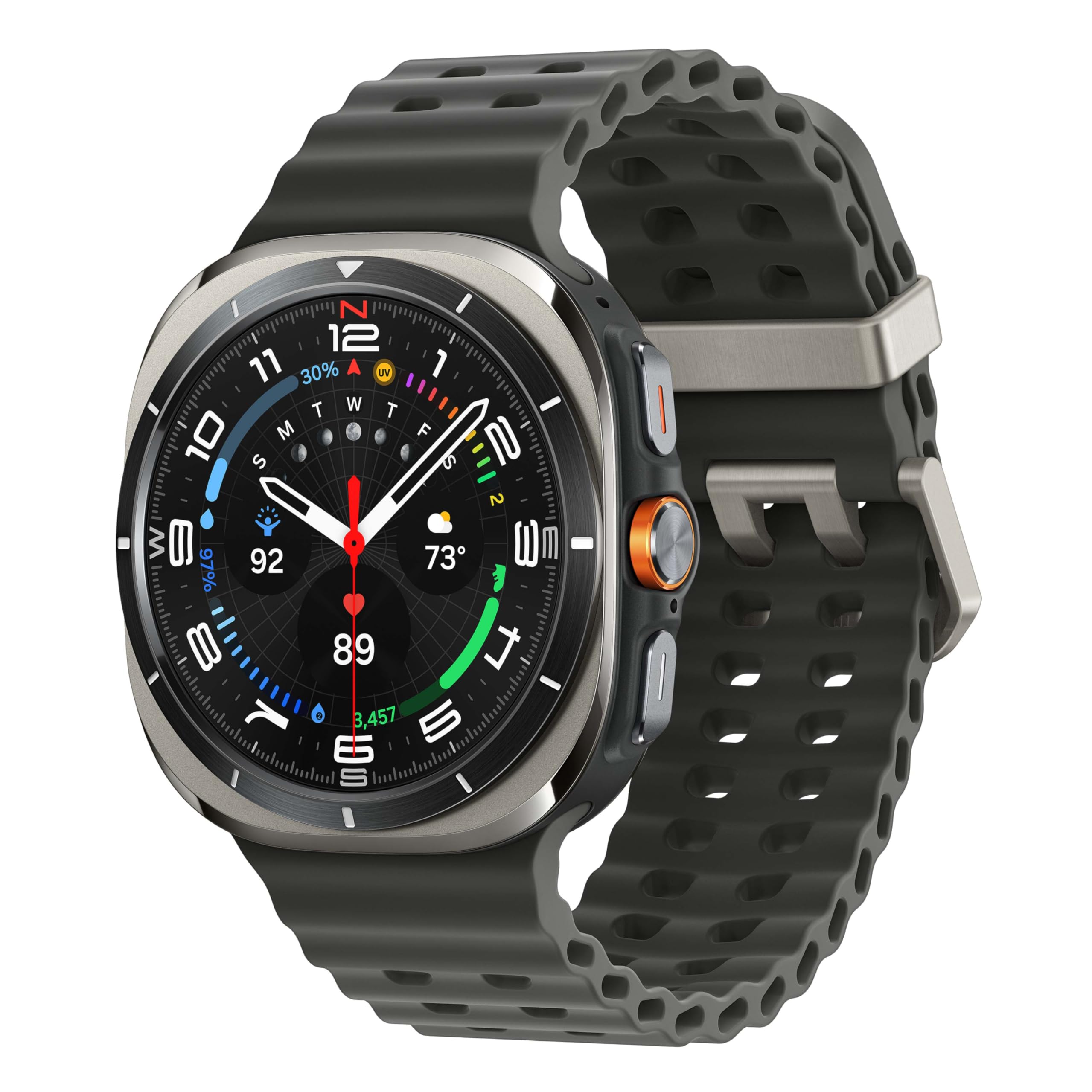
The Galaxy Watch Ultra is Samsung’s toughest wearable, built with a titanium case and a 590mAh battery that pushes runtime to around 60 hours in typical use. LTE connectivity means calls, texts, GPS, and SOS work independently of your phone — ideal for trail runs or swim sessions where carrying a phone is impractical.
Galaxy AI powers an Energy Score based on yesterday’s sleep, heart rate, and steps, and Heart Rate Tracking with AI filters out movement noise during workouts for more precise readings. The watch includes ECG, SpO2, sleep monitoring, and stress tracking, plus a customizable Quick Button for starting workouts or triggering the flashlight.
Users report “3.5-day battery” with mixed use and praise the large screen, but note that health tracking depth still lags behind Garmin’s dedicated fitness platform. The 47mm case feels substantial on smaller wrists, and the left-handed button invert option is a thoughtful inclusion.
Why it’s great
- LTE standalone operation for phone-free workouts
- Titanium case with MIL-STD-810H durability
- Galaxy AI Energy Score and precise heart rate tracking
Good to know
- Health tracking less specialized than Garmin’s platform
- Bulkier size may not suit all wrist sizes
4. Samsung Galaxy Watch 8 Classic (2025)
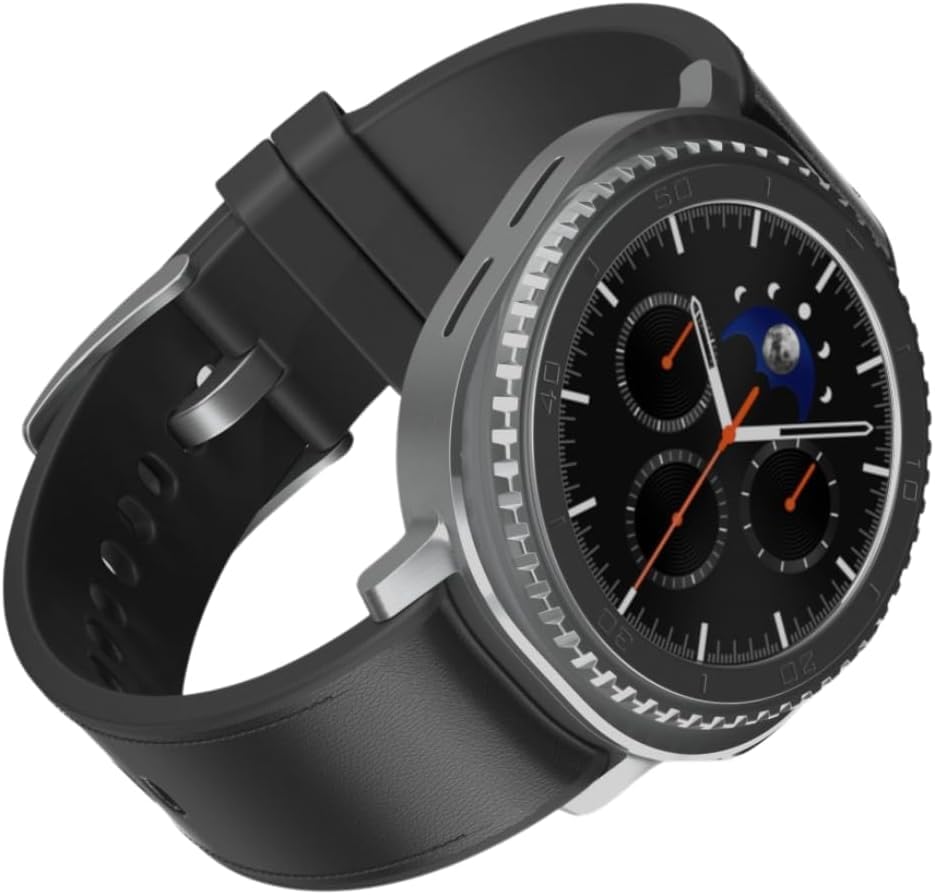
The Galaxy Watch 8 Classic revives the tactile rotating bezel that fans love, paired with a 46mm stainless steel body and a Super AMOLED display that reaches 3,000 nits — making it one of the brightest screens on this list. The 445mAh battery delivers around 30 hours with Always-On Display active, or roughly 40 hours under typical usage, which is competitive for a full-featured Wear OS watch.
Health features include continuous stress monitoring with guided breathing prompts, Vascular Load analysis, Bedtime Guidance, and an Antioxidant Index that encourages better nutrition. The AI-powered running coach generates personalized training plans based on a short fitness test, and the Daily Energy Score helps balance physical and mental readiness.
Users appreciate the “great professional look” and the seamless integration with Samsung phones, but opinions on battery life vary — some describe it as “amazing” while others note it’s “not great” under heavy use. The inclusion of two watch bands and a screen protector in the box adds immediate value.
Why it’s great
- 3,000-nit Super AMOLED with rotating bezel
- AI running coach and Energy Score insights
- MIL-STD-810H and 5ATM durability
Good to know
- Battery life varies significantly with AOD and GPS use
- Wear OS app selection still lags behind iOS ecosystem
5. Google Pixel Watch 3 (41mm) LTE

The Pixel Watch 3 is Google’s most refined wearable, integrating Fitbit’s advanced running analytics with the smoothness of Wear OS. The 41mm Actua display is 10% larger than its predecessor and twice as bright, making outdoor readability a non-issue. Battery life stretches to 24 hours with always-on display and up to 36 hours in power-saving mode, while 20% faster charging recovers a day’s use in under an hour.
Fitbit provides personalized AI coaching based on your past runs and daily form, plus offline maps for navigation without a phone. The Daily Readiness score uses sleep, resting heart rate, and HRV to tell you when to push hard or rest. LTE connectivity allows calls, texts, and music streaming independent of your phone.
Long-term users report the watch “looks good dressed up or down” and praise the seamless Google ecosystem integration, though some note that the included band can cause allergic reactions. The eSIM lock that restricts carrier choice is a frustration in certain regions, but the core fitness tracking and Wear OS app library remain excellent.
Why it’s great
- Deep Fitbit integration with AI coaching and offline maps
- 24-hour AOD battery with fast charging
- Smooth Wear OS experience with LTE standalone
Good to know
- eSIM carrier lock in some regions
- Included band may irritate sensitive skin
6. Amazfit T-Rex 3 Pro
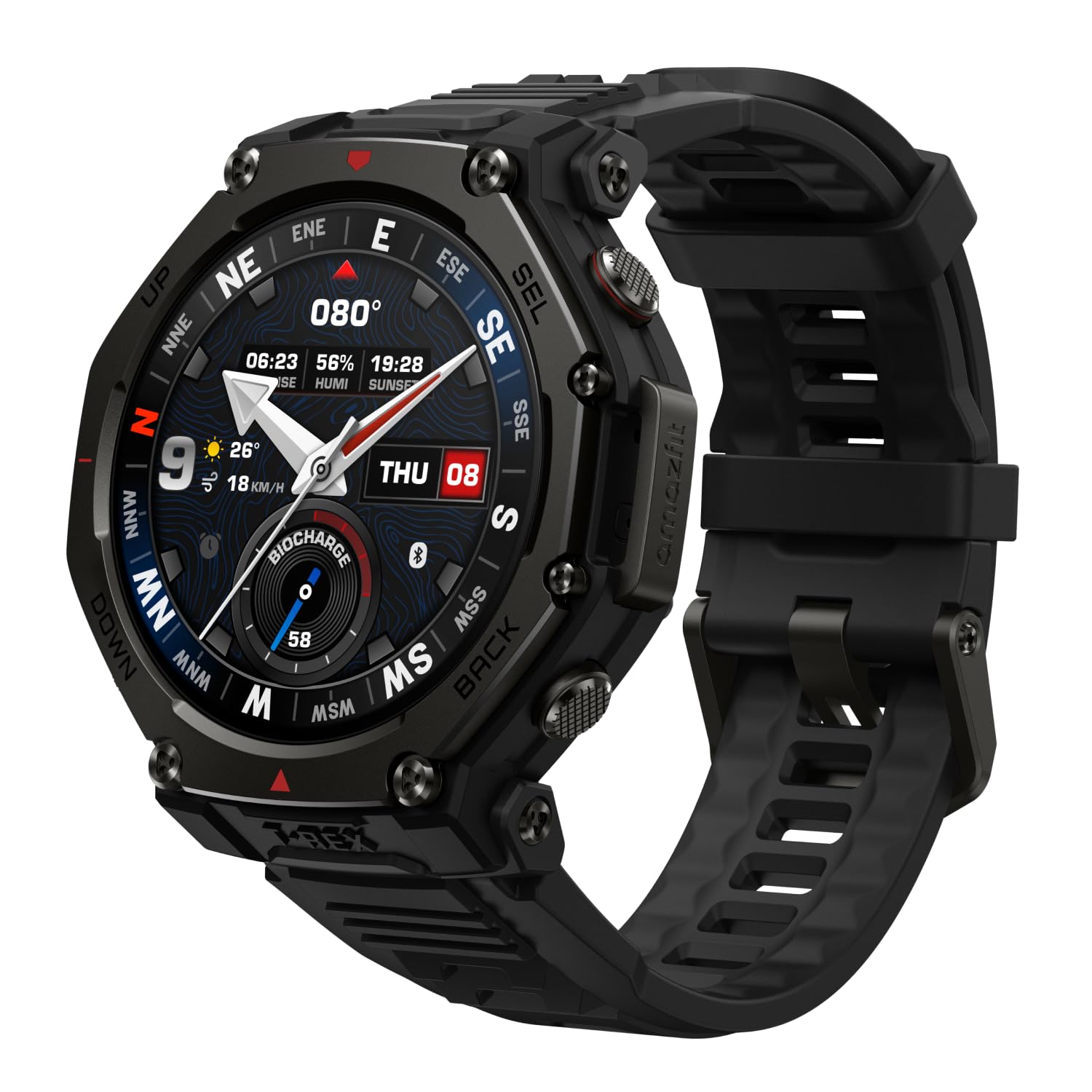
The T-Rex 3 Pro is built for extreme conditions, combining a sapphire glass display, titanium alloy bezel, and 10 ATM water resistance (dive-rated to 45 meters) in a 48mm package. The 700mAh battery is one of the largest in this roundup, delivering up to 25 days of smartwatch use and exceptional GPS endurance for multi-day expeditions.
Offline maps with POI search and auto-rerouting work without cellular signal, and dual-band GPS from six satellite systems locks quickly under heavy tree cover or between skyscrapers. The built-in two-color flashlight switches between red (for low-light interference) and white (for clarity), plus an SOS strobe for emergencies.
Users who switched from Garmin Epix and Apple Watch Ultra note the “1/3 the price” for similar hardware, praising the “fast GPS, good sensors, and large battery” while noting that software polish still trails Garmin’s ecosystem. The BioTracker sensor delivers reliable heart rate data, and optional Helio Strap integration extends recovery tracking.
Why it’s great
- 700mAh battery with 25-day smartwatch endurance
- Sapphire glass and titanium bezel for extreme durability
- Dual-band GPS and offline maps with POI search
Good to know
- Route recalculation during workouts can be inconsistent
- Screen responsiveness issues when wet or cold
7. Amazfit Active Max

The Active Max delivers an impressive combination of display brightness and battery endurance for its class. The 1.5-inch AMOLED panel hits 3,000 nits, matching premium Garmin and Samsung screens, while the 200mAh battery — small on paper — runs up to 25 days thanks to efficient software optimization. That means you can leave the charger behind for a three-week trip.
Onboard 4GB storage holds downloaded offline maps with turn-by-turn directions and music playback, and the five-satellite positioning system provides fast GPS lock. Zepp Coach delivers personalized AI-driven workout plans for distances from 3K to full marathon, and the BioCharge Energy score adjusts based on daily workouts and stress to guide recovery.
Users report “accurate HR and SpO2 readings” compared to medical devices and praise the “large, bright screen” that’s easy to read in sunlight. The lack of MyFitnessPal integration is a minor gap for nutrition tracking, and the magnetic charging base uses a proprietary connector rather than USB-C, but the overall value for battery life and display quality is exceptional.
Why it’s great
- 3,000-nit AMOLED with 25-day battery life
- 4GB storage for offline maps and music
- AI-powered Zepp Coach with adaptive running plans
Good to know
- Proprietary magnetic charger (no USB-C)
- No integrated MyFitnessPal or similar nutrition tracking
8. SOUYIE Men’s Luxury Smart Watch

SOUYIE’s luxury offering blends a full-metal body with a 1.43-inch AMOLED display at 466×466 resolution, delivering a sharp, vibrant visual experience that rivals watches costing several times more. The package includes both a steel mesh strap for formal wear and a silicone strap for workouts, plus a tool for quick strap changes — a rare convenience in the budget segment.
Bluetooth calling via the integrated microphone and speaker works reliably for hands-free conversations, and app notifications cover SMS, WhatsApp, Facebook, and Instagram. The 400mAh battery charges in two hours and delivers 7-10 days of mixed use, with standby reaching 30 days. Health sensors track heart rate, blood pressure, blood oxygen, and sleep stages with automatic analysis in the DaFit app.
Users consistently highlight the “premium feel” and “stylish design that looks expensive,” though some note that sleep tracking occasionally registers inactivity as sleep (detecting sleep while watching TV). The IP rating is suitable for handwashing and rain but not swimming or showering, and there’s no NFC for contactless payments.
Why it’s great
- Sharp 466×466 AMOLED in a full-metal body
- Includes both metal and silicone straps with adjustment tool
- Reliable Bluetooth calling and notification mirroring
Good to know
- Sleep tracking can misclassify sedentary time as sleep
- No tap-to-pay or swim-proof water resistance
9. SOUYIE Smart Watch for Men

This SOUYIE model brings the same 1.43-inch 466×466 AMOLED display and metal-body design as the luxury variant above, but at a more accessible entry point. The dual-strap system — steel for the office, silicone for the gym — and included watch adjustment tool make it a versatile option for users who want one watch for both settings.
Bluetooth calling with the built-in speaker and mic handles calls and voice assistant requests, and app notifications keep you connected to the most popular messaging platforms. Health monitoring covers heart rate, blood pressure, SpO2, and sleep, with a 24-hour automatic tracking cycle that syncs data to the DaFit app for trend analysis.
User reviews emphasize the “sleek, durable design” and “excellent battery life” for the price tier, with one reviewer noting it “feels more expensive than it is.” The same limitations apply as its sibling — no swim-proofing, no NFC payments, and a sleep tracking algorithm that occasionally misreads inactivity — but for basic fitness tracking and everyday notifications, it’s a compelling entry-level option.
Why it’s great
- Premium 466×466 AMOLED at a budget-friendly price
- Dual straps (metal and silicone) for versatile wear
- 7-10 days battery with health monitoring
Good to know
- Sleep tracking accuracy is inconsistent
- No swim-proof rating or contactless payments
FAQ
How many nits of brightness do I need for outdoor running?
Can I take calls and reply to texts on an Android fitness watch?
What is the real-world battery difference between Wear OS and proprietary systems?
Is multi-band GPS worth the extra cost for casual runners?
Can an Android fitness watch track swimming and scuba diving?
Final Thoughts: The Verdict
For most users, the best android fitness watch winner is the Garmin Fenix 8 47mm because it balances unmatched battery life, a bright AMOLED display, advanced multisport tracking, and rugged build quality in a single package that works for everything from daily runs to week-long expeditions. If you want deep Fitbit integration and a smooth Wear OS experience, grab the Google Pixel Watch 3. And for serious budget-conscious training with exceptional battery endurance, nothing beats the Amazfit Active Max.

Mo Maruf
I created WellFizz to bridge the gap between vague wellness advice and actionable solutions. My mission is simple: to decode the research and give you practical tools you can actually use.
Beyond the data, I am a passionate traveler. I believe that stepping away from the screen to explore new environments is essential for mental clarity and physical vitality.