Our readers keep the lights on and my smoothie glass nicely filled. As an Amazon Associate, I earn from qualifying purchases.
A backpacking pack that shifts all its weight onto your shoulders instead of your hips will turn a scenic ridge into a misery of hot spots and fatigue. The internal frame, the hip belt padding, the torso adjustment range — these few millimeters and ounces determine whether you finish your loop smiling or limping. This buying guide cuts through the marketing to the real measurable specs that matter for multi-day loads.
I’m Mohammad Maruf — the founder and writer behind WellFizz. I spend my time analyzing hardware specifications and cross-referencing thousands of trail-hardened user experiences to find the gear that actually delivers on its claims.
Whether you are planning a weekend in the Sierra or a thru-hike of the AT, finding the best backpack for backpacking means matching your torso length, load weight, and preferred volume to a pack that distributes weight correctly.
How To Choose The Best Backpack For Backpacking
Picking a backpacking pack is about three interlocking decisions: volume, torso fit, and the internal frame’s ability to transfer load. Get these right and the pack disappears on your back. Get them wrong and every mile feels like a punishment.
Volume and Trip Duration
A 40–50 liter pack covers overnight trips and ultralight multi-day treks. The 55–65 liter range is the sweet spot for 3–5 day trips with a tent and stove. Packs in the 70–85 liter range handle expeditions where you carry bulkier gear, extra food, or group equipment.
Torso Length and Adjustability
Your torso length — measured from the C7 vertebra to your iliac crest — determines whether the hip belt sits on your hip bones or slides down. Look for packs with at least 4 inches of adjustable range. A pack that fits correctly transfers 70–80% of the load to your hips, saving your shoulders.
Internal Frame and Suspension
An aluminum stay or wire frame gives the pack structure and transfers weight to the hip belt. Airspeed and tensioned mesh back panels improve ventilation but reduce some load capacity. Foam framesheets are lighter but less rigid. For loads over 35 pounds, a stiffer frame with a well-padded lumbar pad is essential.
Quick Comparison
On smaller screens, swipe sideways to see the full table.
| Model | Category | Best For | Key Spec | Amazon |
|---|---|---|---|---|
| Osprey Rook 65L | Premium | Multi-day trips up to 35 lbs | Adjustable AirSpeed suspension | Amazon |
| Deuter Aircontact Lite 40+10 | Premium | Lightweight long-distance hiking | Vari Quick adjustable back length | Amazon |
| Osprey Stratos 34L | Premium | Day hikes and fast packing | AirSpeed ventilated suspension | Amazon |
| The North Face Terra 55 | Mid-Range | Women-specific multi-day carry | Women-specific padded back panel | Amazon |
| Kelty Asher 65L | Mid-Range | Entry-level expert specs | Fit Pro torso adjustment | Amazon |
| Teton 75L Explorer | Mid-Range | High-volume trips with heavy loads | Multi-directional compression | Amazon |
| Teton 65L Explorer | Mid-Range | Beginners and moderate multi-day | Multi-position torso adjustment | Amazon |
| Naturehike 65L | Budget | Ultralight budget-friendly carry | Weight: 2.56 lbs, 420D nylon | Amazon |
| Mardingtop 65L+10L | Budget | Rugged use with MOLLE versatility | MOLLE webbing, 65L+10L expandable | Amazon |
In‑Depth Reviews
1. Osprey Rook 65L

The Osprey Rook 65L delivers a premium adjustable AirSpeed suspension that creates a tensioned mesh back panel, keeping your back cool on long climbs. The LightWire frame transfers loads effectively to the hip belt, reducing shoulder strain. Users report comfortable carry at 35 pounds, with the integrated rain cover ready for sudden downpours.
The zippered sleeping bag compartment with a floating divider allows you to separate a wet tent from clean clothes. Angled water bottle pockets make reaching for a drink while walking smooth and natural. The 3.7-pound weight is reasonable for a 65-liter pack with this level of suspension engineering.
Some users note the absence of a large outer mesh pocket and rear access, but the burly zippers and tough fabric more than compensate. At this price point, the Rook offers an exceptional balance of ventilation, load control, and durability.
Why it’s great
- Adjustable AirSpeed suspension reduces back sweat
- Integrated and removable rain cover
- Excellent load transfer to the hip belt
Good to know
- No large outer mesh pocket
- No rear access to main compartment
- Waist strap may feel minimal for narrow hips
2. Deuter Unisex Aircontact Lite 40 + 10 L
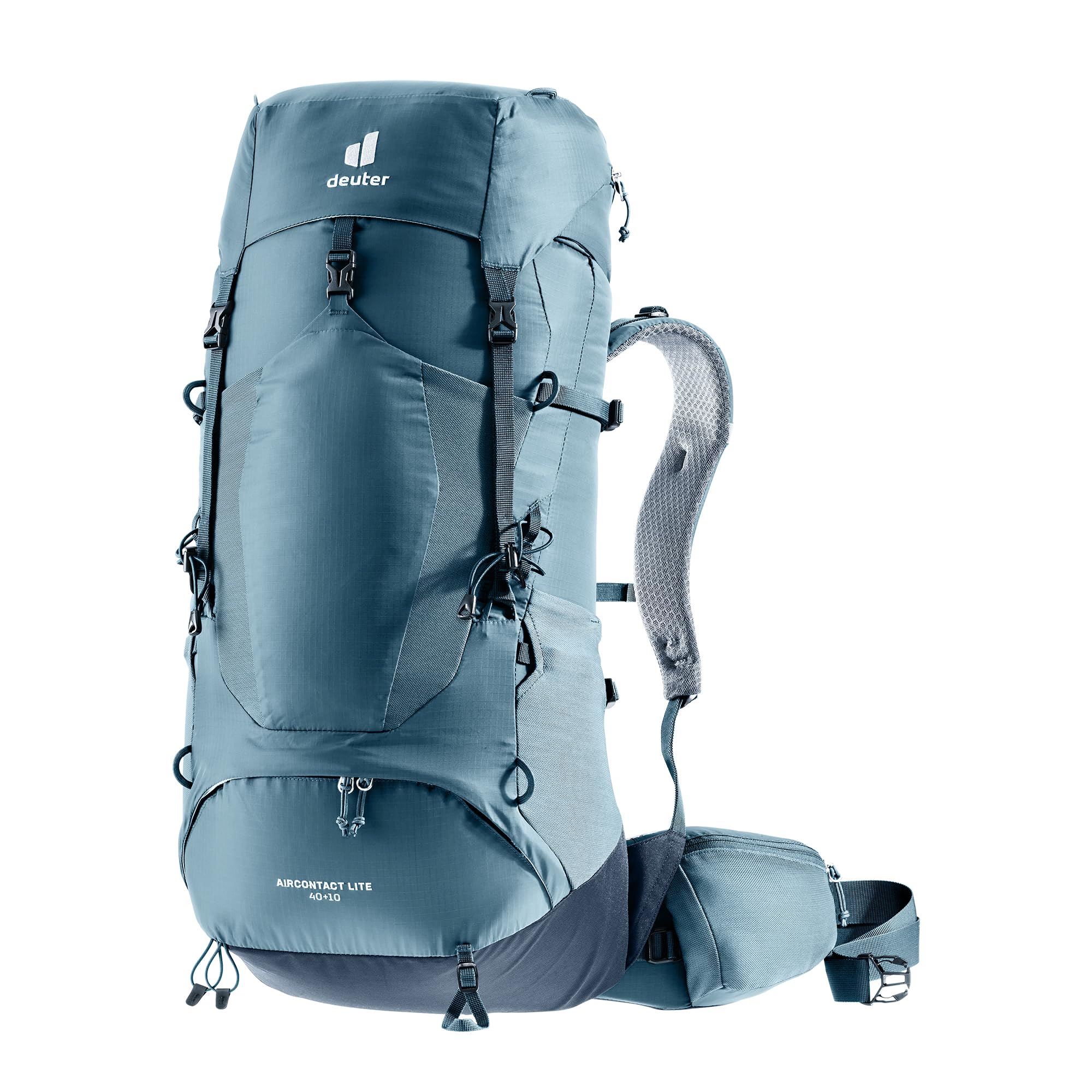
The Deuter Aircontact Lite 40+10 uses its namesake hollow chamber foam cushions to pump air with every step, reducing perspiration even on hot trails. The Vari Quick system allows you to adjust the back length continuously, giving a tailored fit for different torso sizes. The 40+10 expandable volume covers quick overnights and multi-day trips when you need a bit more room.
The lightweight X-frame provides excellent load transfer for a pack weighing only 3.5 pounds. Detachable lid, separate bottom compartment, and stretch inner pockets make organization straightforward. The 600D PES REC BS fabric with recycled content delivers durability without the weight penalty.
A few users mention the chest strap is not height-adjustable, which can be a minor annoyance for some body types. The side pockets grip a thermos tightly and remain accessible while walking.
Why it’s great
- Aircontact back system reduces sweat
- Expandable 40+10L volume
- Continuous back length adjustment (Vari Quick)
Good to know
- Chest strap height is not adjustable
- 40-liter base may be tight for bulky gear
- Hip fin pockets are smaller than some prefer
3. Osprey Stratos 34L

The Osprey Stratos 34L is built around the AirSpeed ventilated suspension, which lifts the mesh panel away from your back to create a continuous airflow channel. This design is especially valuable on warm, steep climbs where a sweat-soaked back can ruin the experience. The burly #10 zipper on the panel-loading main compartment offers wide access and long-term durability.
Users consistently praise the Stratos for its comfortable fit and excellent organization. The hip belt pockets are large enough for snacks and a phone, while the removable rain cover keeps gear dry when the weather turns. The pack works as a carry-on for flights when packed lightly.
The 34-liter capacity limits this pack to day hikes and ultralight overnight trips. The hard internal frame requires overhead bin storage on planes, which is a tradeoff for the excellent ventilation.
Why it’s great
- AirSpeed suspension keeps your back dry
- Panel-loading design with burly zipper
- Comfortable fit for long days
Good to know
- 34L is tight for multi-day gear
- Hard frame makes overhead bin travel tricky
- Prefer tall, thin water bottles for side pockets
4. The North Face Women’s Terra 55
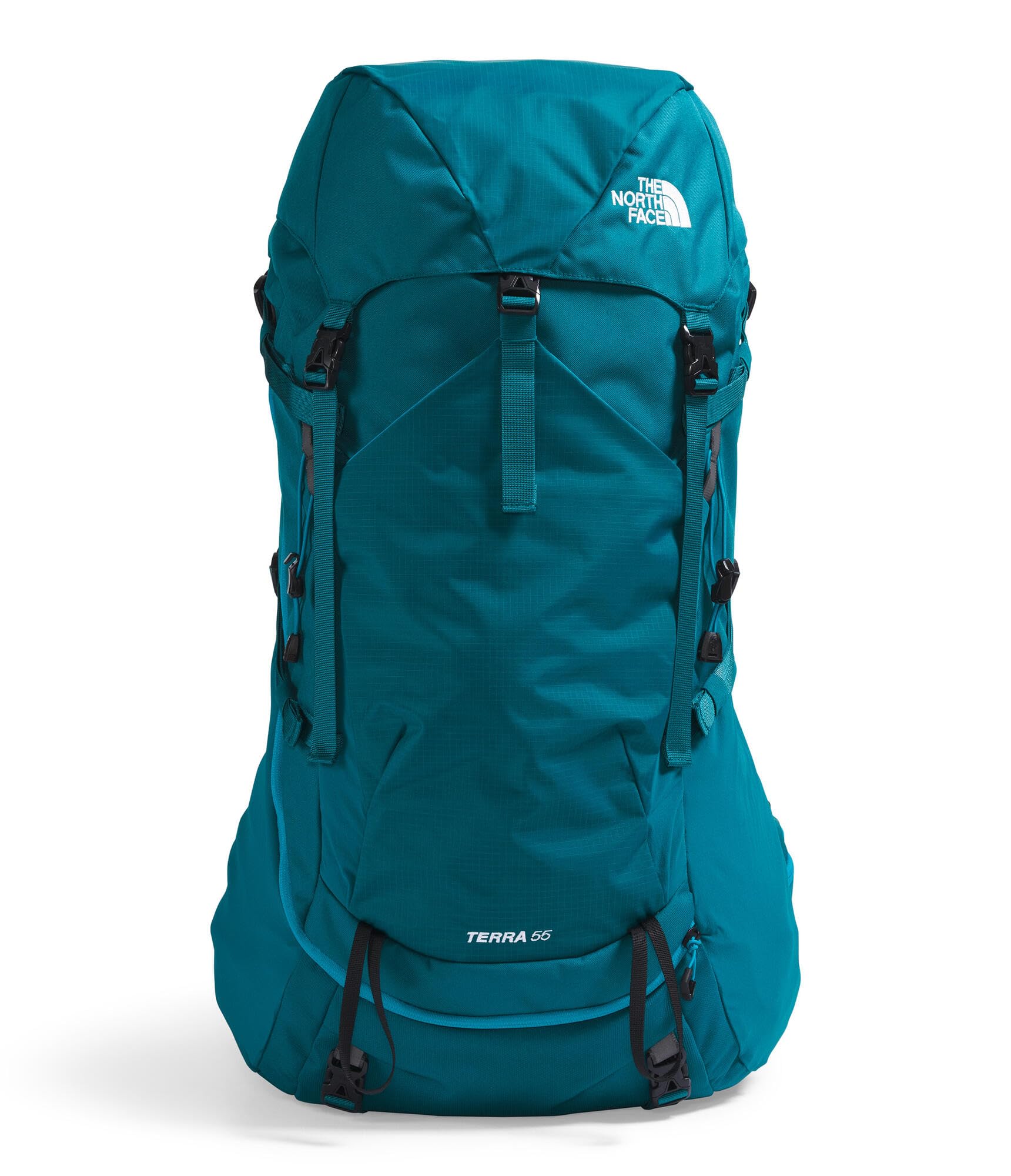
The North Face Terra 55 is engineered with a women-specific padded back panel and curved shoulder straps that accommodate a narrower shoulder profile. The full-length two-way U-zip gives you quick access to the main compartment without digging through the top. The removable lid with an internal zip pocket keeps valuables organized.
The removable framesheet and load lifter straps allow fine-tuned support for loads up to 40 pounds. Side and bottom compression straps let you cinch down the pack or attach a sleeping pad. Two stretch bottle pockets hold standard water bottles securely.
The torso adjustment range is limited, which may not fit women with longer torsos. The pack lacks a rain cover, so you will need to buy one separately. However, for women seeking a dedicated fit without resorting to unisex packs, this is a top pick.
Why it’s great
- Women-specific back panel and shoulder straps
- Full-length U-zip for easy access
- Removable lid with internal zip pocket
Good to know
- Limited torso adjustment range
- No included rain cover
- Not intended for children 12 and under
5. Kelty Asher 65L
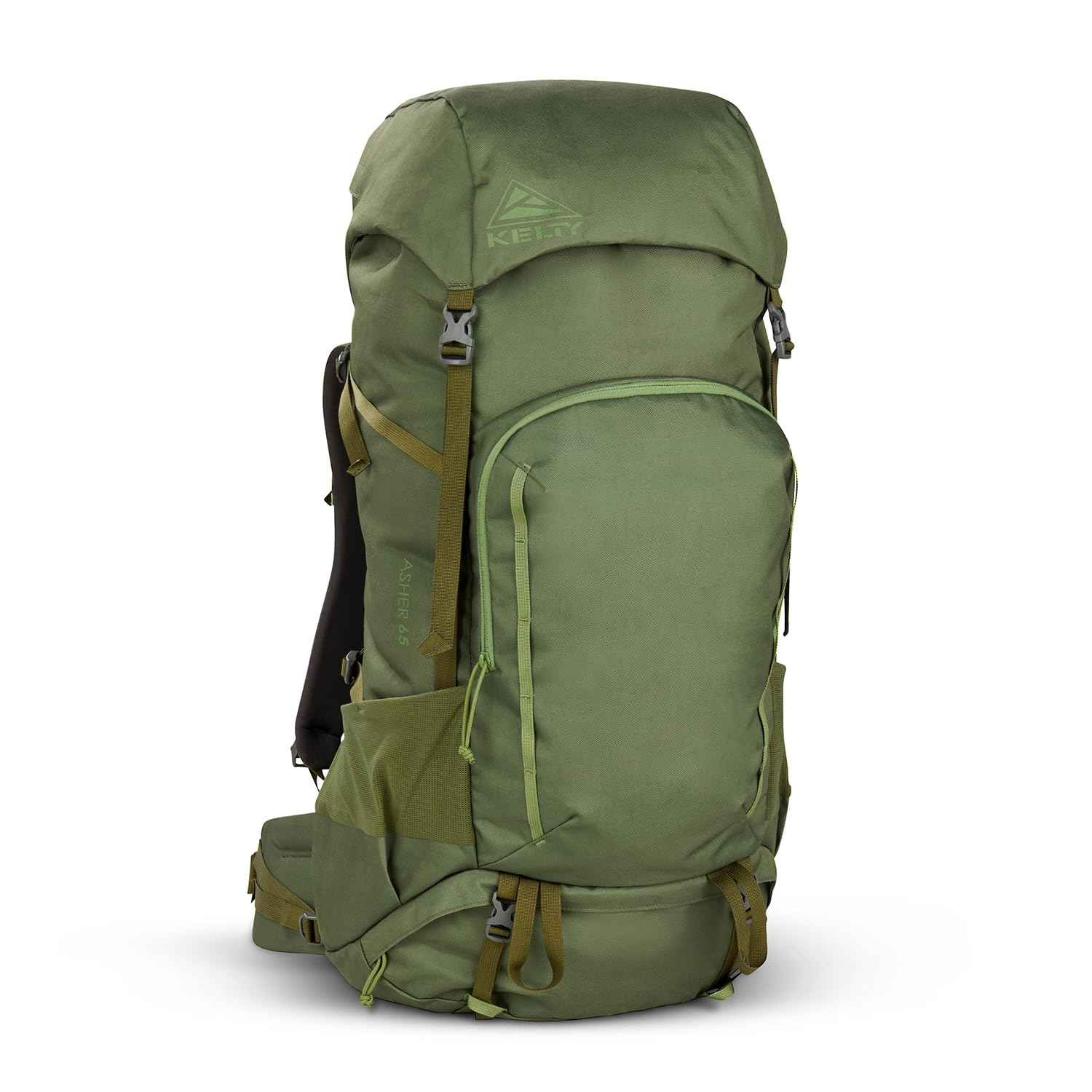
The Kelty Asher 65L brings expert-level specs to an entry-level price, featuring a perimeter frame with an aluminum stay for load stability. The Fit Pro technology allows on-the-fly torso adjustment, adapting quickly when you shed layers or hand the pack to a different user. The Amp Flow ventilated back panel works to keep your back dry during exertion.
Multiple compartments and a sleeping bag partition make organization simple. The pack handles the 30–50 pound optimal carry weight range well, with load lifter straps that fine-tune the balance. Users report the pack holds up over years of regular use with no issues.
The materials feel slightly less robust than premium competitors, and the hip belt is adequate but not luxurious. For its price category, the Asher delivers features that usually cost significantly more.
Why it’s great
- Fit Pro torso adjustment on the fly
- Aluminum stay frame for load stability
- Amp Flow ventilated back panel
Good to know
- Materials feel slightly flimsy
- Hip belt is functional but not plush
- Wide opening can be a minor adjustment
6. Teton 75L Explorer

The Teton 75L Explorer is built for high-volume trips where you need to carry a four-person tent, extra food, and gear for extended periods. The multi-position torso adjustment accommodates medium and tall adventurers, and the open-cell foam lumbar pad provides solid support. Users report carrying 47 pounds comfortably with balanced weight distribution.
The separate sleeping bag compartment and multi-directional compression straps help manage bulky gear. The included rain cover keeps the pack dry in heavy downpours. The side mesh pockets are large enough for water bottles up to 16 ounces, though larger bottles may not fit.
Some users experience stubborn zippers, and the waist belt pockets are missing, forcing you to rely on hip belt pouches. The pack is a solid option for beginners needing maximum capacity without a premium price.
Why it’s great
- Massive 75L capacity for group gear
- Comfortable open-cell foam lumbar pad
- Included rain cover works well
Good to know
- Side mesh pockets too small for large bottles
- Zippers can be stubborn
- No waist pocket compartments
7. Teton 65L Explorer
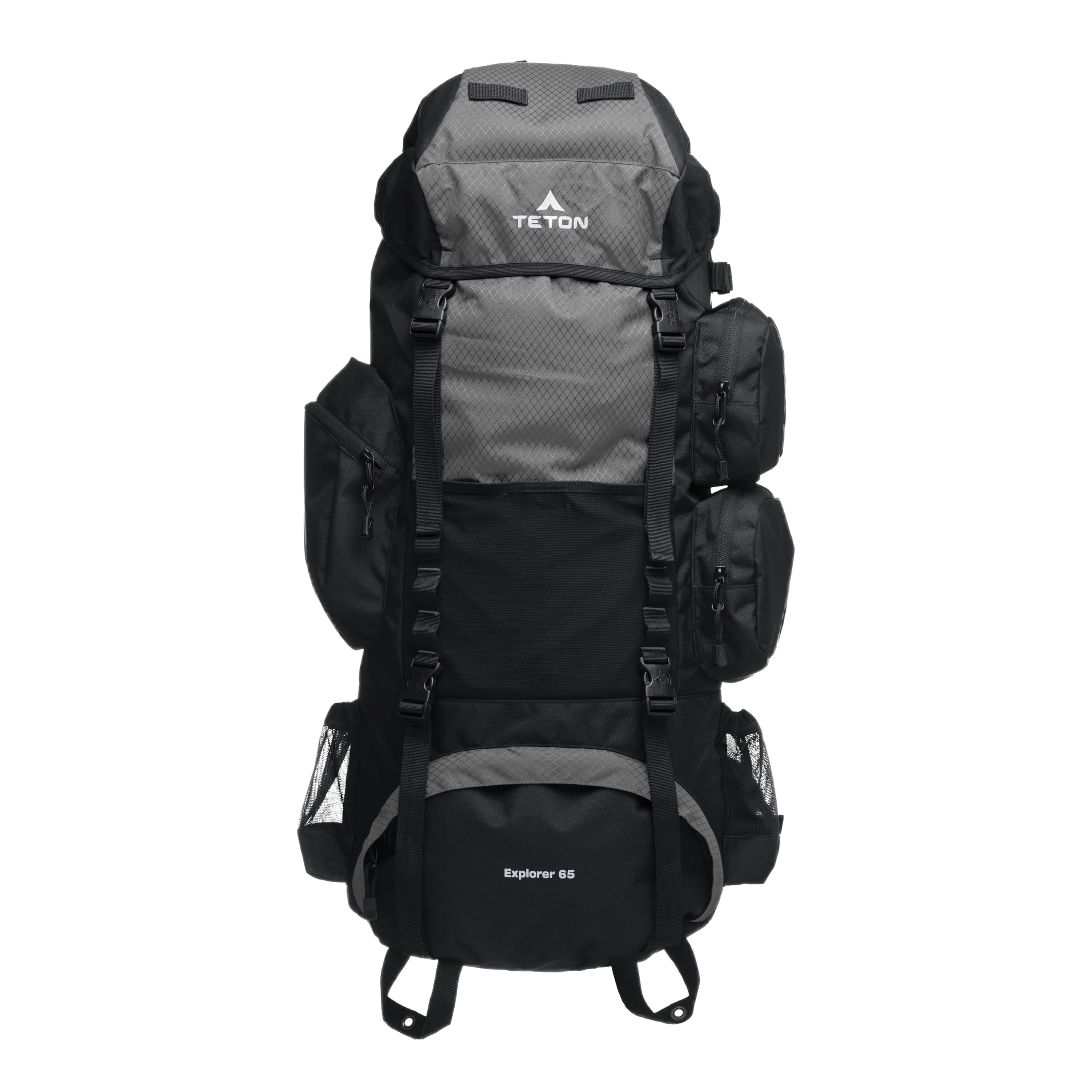
The Teton 65L Explorer balances comfort and organization for multi-day backpacking trips. The multi-position torso adjustment allows a wide fit range, and the open-cell foam lumbar pad reduces shoulder strain. Users find the external pockets useful for organizing first aid kits and headlamps without unstrapping the main compartment.
The sleeping bag compartment is spacious, and the side water bottle pockets hold standard bottles securely. The pack can handle loads up to 47 pounds with good stability. Teton’s customer service receives high marks for resolving issues quickly.
Some users note the ice axe loops are non-adjustable, and the side mesh pockets are too small for larger water bottles. The rain cover keeps gear dry in heavy rain, making it a reliable choice for beginners and experienced hikers alike.
Why it’s great
- Adjustable torso for wide fit range
- Useful external pockets for organization
- Durable construction and good customer service
Good to know
- Side mesh pockets too small for large bottles
- Ice axe loops are non-adjustable
- Stubborn zippers reported on some units
8. Naturehike 65L
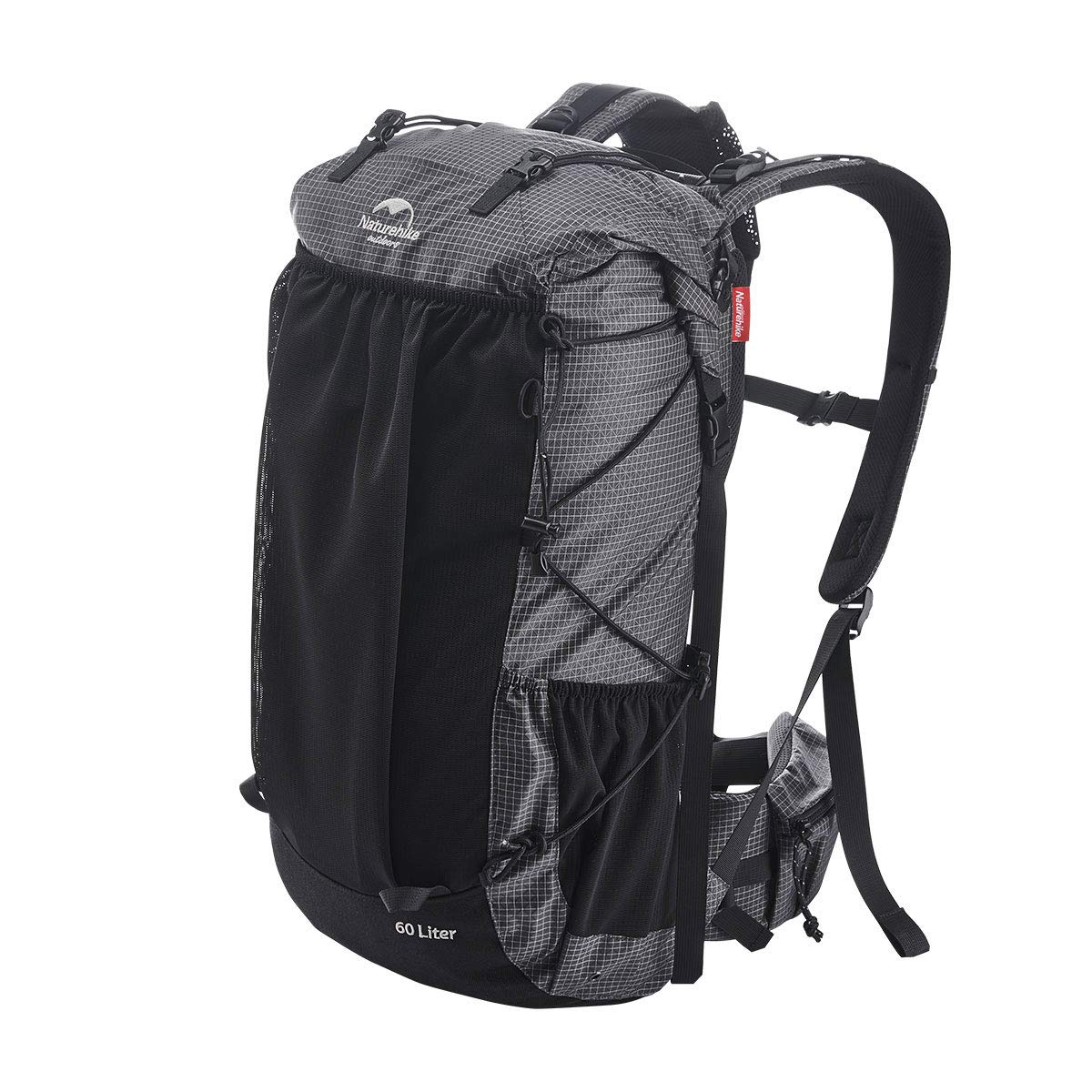
The Naturehike 65L stands out for its ultralight 2.56-pound weight, making it one of the lightest framed packs in this volume category. The 420D nylon fabric resists tears and scratches, and the mesh back panel provides good ventilation. The ergonomic shoulder straps and padded hip belt reduce bite on long carries.
Users report comfortable loads up to 35 pounds, with the frame handling weight transfer adequately. The roll-top closure allows flexible volume expansion, and the included rain cover keeps gear dry. The pack fits a wide range of body sizes, including taller users, without material stretching or seam failure.
The frame can squeak under heavy loads, and the top cinch pull loop may require a knot to stay secure. The hip belt pockets are small, and the side pockets fit standard water bottles well. For the weight savings, this is a compelling budget option.
Why it’s great
- Extremely lightweight at 2.56 lbs
- Durable 420D nylon fabric
- Good ventilation with mesh back panel
Good to know
- Frame can squeak under heavy loads
- Top cinch pull loop may need reinforcement
- Hip belt pockets are small
9. Mardingtop 65L+10L
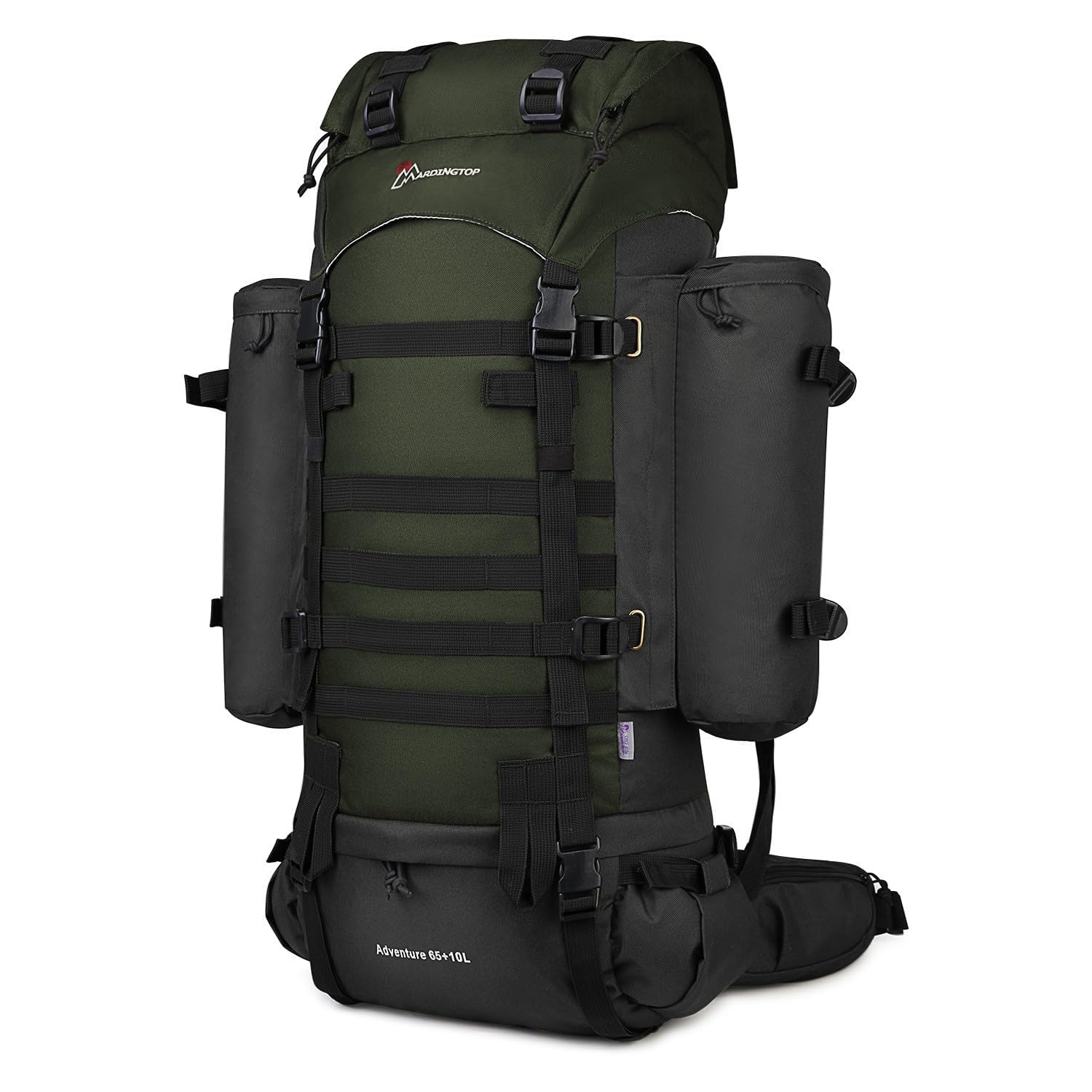
The Mardingtop 65L+10L internal frame backpack features an expandable design and MOLLE webbing for attaching additional gear pouches. The fabric is durable and not thin nylon, with single-stitch seams using heavy thread that hold up over hundreds of miles. Users report the pack surviving five years of regular use without material failure.
The internal drawstring separates compartments, and the side pouches use Velcro, zippers, and straps for adjustable storage. The included rain cover has a color that improves after sun exposure. The pack accommodates a military sleep system without compression, which speaks to its volume.
The detachable side pouches use Velcro that may weaken over time. The shoulder straps tend to slip under heavy loads, and the side zipper can unzip on its own. For those on a strict budget who value MILSPEC-style features, this is a rugged option.
Why it’s great
- Durable material that lasts years
- Expandable 65L+10L with MOLLE webbing
- Excellent value for the price
Good to know
- Shoulder straps slip with heavy loads
- Side zippers tend to unzip
- Velcro attachments may weaken over time
FAQ
What is the ideal torso length adjustment range for a backpacking pack?
Should I choose a 420D nylon or 600D polyester backpack?
How do I measure my torso length for a backpacking pack correctly?
Final Thoughts: The Verdict
For most users, the best backpack for backpacking winner is the Osprey Rook 65L because it pairs an adjustable AirSpeed ventilated suspension with robust construction at a fair price. If you need a lightweight pack for long-distance travel, grab the Deuter Aircontact Lite 40+10. And for a budget-friendly option that still includes a frame and rain cover, nothing beats the Naturehike 65L.

Mo Maruf
I created WellFizz to bridge the gap between vague wellness advice and actionable solutions. My mission is simple: to decode the research and give you practical tools you can actually use.
Beyond the data, I am a passionate traveler. I believe that stepping away from the screen to explore new environments is essential for mental clarity and physical vitality.