Our readers keep the lights on and my smoothie glass nicely filled. As an Amazon Associate, I earn from qualifying purchases.
The difference between decent earbuds and audiophile-grade sound isn’t just hype—it’s in the driver architecture, codec support, and how precisely the tuning translates the studio master to your ear canal. When you’re chasing the highest fidelity from a true wireless format, every millimeter of driver diameter, every hertz of frequency extension, and every bitrate of lossless transmission matters.
I’m Mohammad Maruf — the founder and writer behind WellFizz. I’ve spent over a decade dissecting audio hardware specifications, from balanced armature configurations to digital-to-analog conversion chips, to separate genuine high-fidelity designs from marketing shells.
This guide evaluates nine contenders on their driver systems, codec support, noise cancellation fidelity, and overall sound signature to help you find the best audio quality bluetooth earbuds for your listening preferences.
How To Choose The Best Audio Quality Bluetooth Earbuds
High-fidelity wireless audio demands a careful balance of hardware engineering and transmission standards. The cheapest earbuds can have large drivers but terrible tuning, while premium options often use multiple driver types to separate frequencies cleanly. Here are the specs that separate genuine fidelity from inflated claims.
Driver Configuration and Tuning
A single dynamic driver is the most common configuration, but it forces one membrane to handle the entire frequency range—from thumping bass to delicate cymbal crashes. Hybrid designs pair a dynamic driver for lows with a balanced armature for mids and highs, allowing each driver to operate in its optimal range. Triple-driver setups, like the Status Pro X, go further by combining dual Knowles balanced armatures with a 12mm dynamic driver for superior instrument separation.
Codec Support and Bitrate
Bluetooth codecs determine how much audio data gets compressed before transmission. AAC and SBC are universal but lose detail compared to LDAC (Sony’s 24-bit/96kHz standard) and aptX Lossless (Qualcomm’s 16-bit/44.1kHz full-resolution stream). If you stream from Android, LDAC-capable earbuds like the Technics EAH-AZ100 or Sony WF-1000XM6 deliver noticeably wider soundstage and finer transient detail. iOS users benefit from AAC’s solid implementation, but lossless codecs won’t unlock their full potential on iPhones.
Noise Cancellation and Seal Quality
Active noise cancellation is only as effective as the passive seal created by the ear tips. A well-sealed earbud blocks up to 40 dB of ambient noise passively; ANC then handles the remaining low-frequency rumble. Models with foam ear tips (like the Sony WF-1000XM6) improve passive isolation significantly. The precision of the seal also affects bass response—a leaky fit makes even the best drivers sound thin and hollow.
Build and Long-Term Durability
Aluminum housings, hardened glass, and reinforced charging cases indicate a product built for years of daily use. Cheaper plastic bodies are lighter but more prone to micro-cracks and degraded battery performance after twelve to eighteen months. Premium options from Bowers & Wilkins and Bang & Olufsen use machined metals and glass panels that resist scratching and maintain their structural integrity through repeated drops and pocket wear.
Quick Comparison
On smaller screens, swipe sideways to see the full table.
| Model | Category | Best For | Key Spec | Amazon |
|---|---|---|---|---|
| Nothing Ear (3) | Mid-Range | Balanced everyday listening | 12mm dynamic + ceramic diaphragm | Amazon |
| Soundcore Liberty 5 Pro | Mid-Range | Crystal-clear calls in noise | Thus AI chip + 10 sensors | Amazon |
| Status Pro X | Mid-Range | Audiophile-grade detail | 12mm dynamic + dual Knowles BA | Amazon |
| Technics EAH-AZ100 | Premium | Wide soundstage with Dolby Atmos | Magnetic liquid driver, 20Hz–20kHz | Amazon |
| JBL Tour Pro 3 | Premium | Feature-packed hybrid driver | 10.2mm dynamic + BA | Amazon |
| Apple AirPods Pro 2 | Premium | Seamless iOS integration | H2 chip, 6 hr battery (ANC on) | Amazon |
| Sony WF-1000XM6 | Premium | Best noise cancellation + clarity | 8.4mm driver, QN3e processor | Amazon |
| Bowers & Wilkins Pi8 | High-End | Reference-grade lossless audio | 12mm carbon cone, aptX Lossless | Amazon |
| Bang & Olufsen Beoplay Eleven | High-End | Premium build and design | 9.2mm driver, aluminum housing | Amazon |
In‑Depth Reviews
1. Nothing Ear (3) Wireless Earbuds
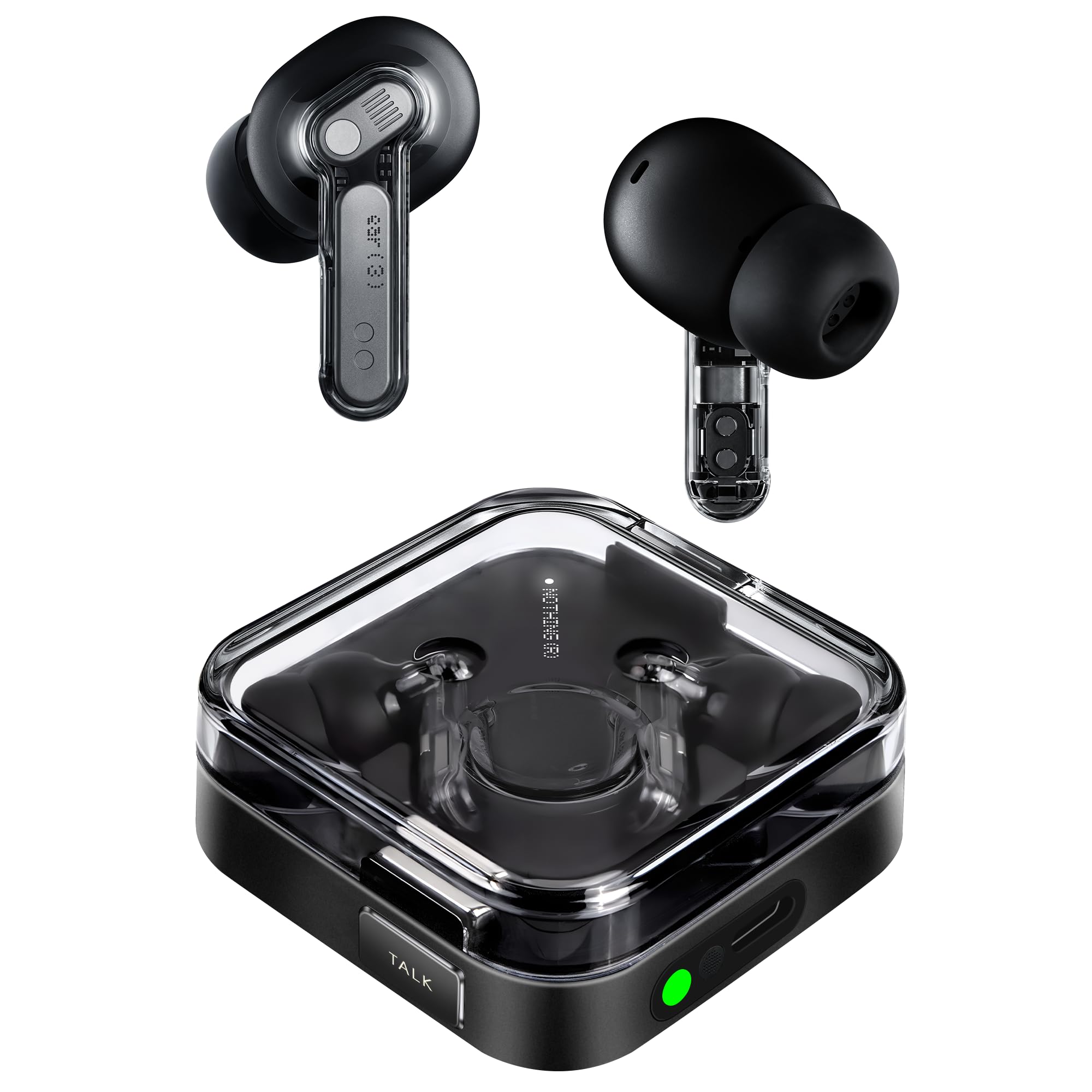
The Nothing Ear (3) strikes a compelling balance between sonic clarity and everyday usability, thanks to a 12mm dynamic driver paired with a ceramic diaphragm that reduces distortion by improving airflow by 10%. The result is a clean, detailed soundstage where bass stays punchy without overwhelming mids and highs—ideal for genres from classical to hip-hop. LDAC support ensures Android users get near-lossless streaming at 24-bit/96kHz, while the Smart Hybrid ANC adjusts noise cancellation in real time based on ambient cues, reaching up to 45 dB of attenuation.
Call quality benefits from a six-microphone array and the unique Super Mic system that uses the charging case as a dedicated voice pickup device—a clever solution for noisy environments like construction sites or busy streets. Bluetooth 5.4 provides stable multi-device switching, and the Nothing X app lets you tweak EQ, Ultra Bass, and Adaptive ANC levels to match your taste. The transparent design is visually distinctive, with the charging case doubling as a wireless charging hub.
Battery life sits at 10 hours per charge (38 hours total with the case), though enabling LDAC or heavy ANC usage drops that to around 5–6 hours—typical for high-bitrate streaming. Some users report the bass-heavy default tuning requires EQ adjustment for neutral listening, and the 110ms audio latency isn’t ideal for competitive gaming. Despite these trade-offs, the Ear (3) delivers premium audio hardware at a price that undercuts most flagships without cutting corners on driver quality or codec support.
Why it’s great
- Ceramic diaphragm reduces harmonic distortion significantly
- Super Mic case-based call system filters extreme ambient noise (up to 95 dB)
- 45 dB hybrid ANC with 5000Hz bandwidth and Transparency mode
Good to know
- LDAC streaming reduces battery life to about 3.5–5 hours per charge
- Default sound signature is bass-forward, may need EQ for balance
- 110ms audio latency may be noticeable in fast-paced gaming
2. Soundcore Liberty 5 Pro
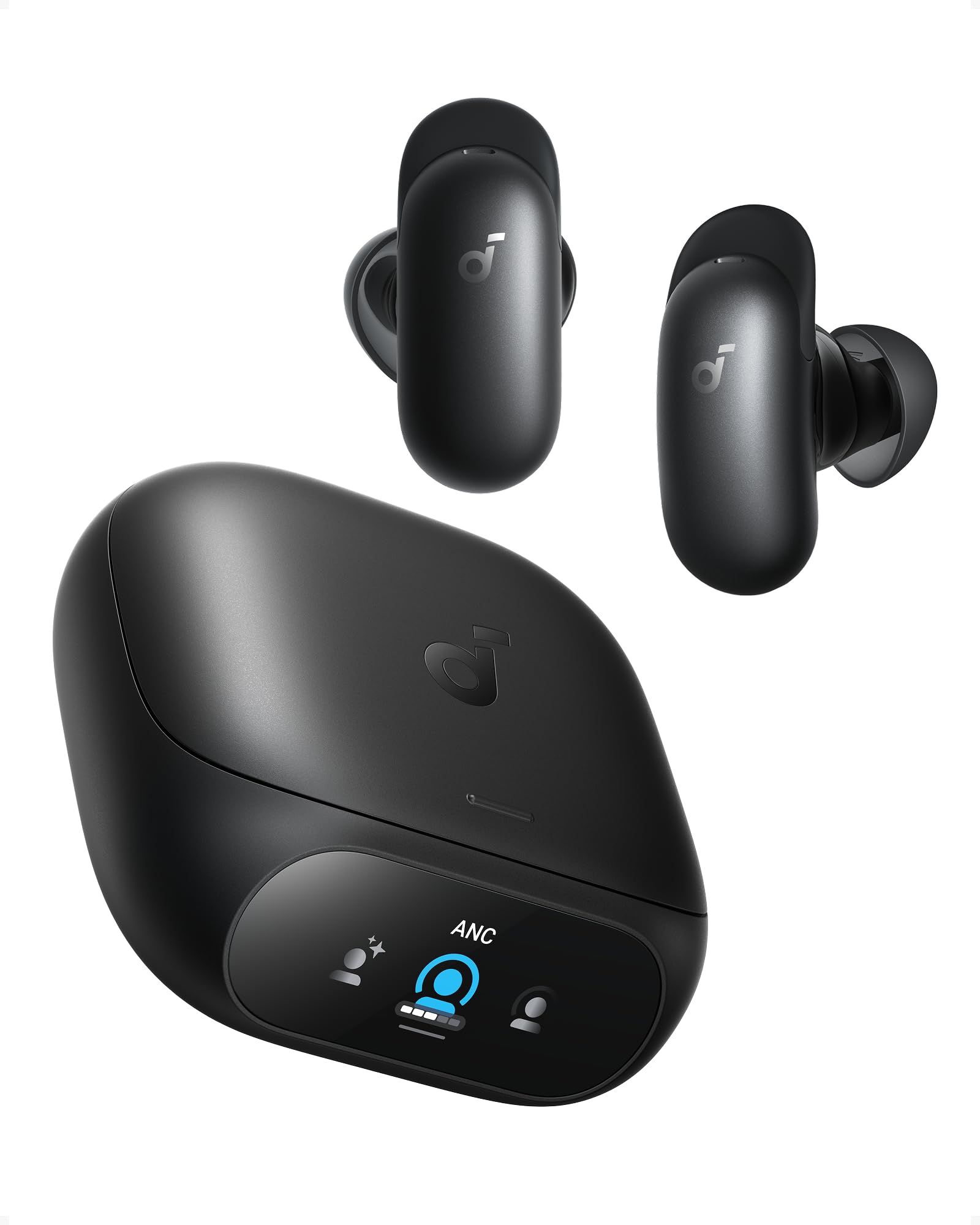
The Liberty 5 Pro doesn’t just compete on sound—it redefines call quality standards, earning a Guinness World Record for the highest speech quality score (G-MOS) ever recorded in a TWS earbud. Powered by the Thus AI Chip and ten sensors, these earbuds process over 384,000 noise signals per second, isolating your voice from background noise exceeding 100 dB. Whether you’re whispering in a library or shouting on a subway platform, the AI intelligently adapts to your vocal intensity.
Sound quality out of the box leans V-shaped with pronounced bass and slightly recessed midrange, but HearID 5.0 generates a personalized EQ profile after a brief hearing test, and the 10-band equalizer provides granular control over the frequency curve. ANC performance rivals over-ear headphones when paired with the included foam ear tips—the eight microphones and AI-driven processing block out everything from office chatter to street traffic. The touchscreen on the charging case offers at-a-glance controls, battery percentage, and even remote camera activation.
Battery life reaches 12 hours per charge with ANC on, and the case adds another 38 hours via fast charging. Bluetooth 6.1 ensures ultra-low latency for streaming and gaming, though the lack of LDAC support means Android users cap out at AAC—an odd omission given the otherwise premium feature set. The bean-shaped housing may take some users time to fit securely, and the out-of-box tuning is polarizing for purists seeking neutral reproduction. Still, for those prioritizing call clarity and ANC depth, this is a category leader.
Why it’s great
- Guinness-certified speech quality with AI-driven voice isolation
- HearID 5.0 creates personalized EQ based on your hearing profile
- 384K+ noise signals processed per second for instant ANC calibration
Good to know
- No LDAC support; maximum codec is AAC
- Out-of-box sound is V-shaped—bass-heavy with recessed mids
- Foam tips required for best ANC seal; stock silicone may leak
3. Status Pro X Wireless Earbuds
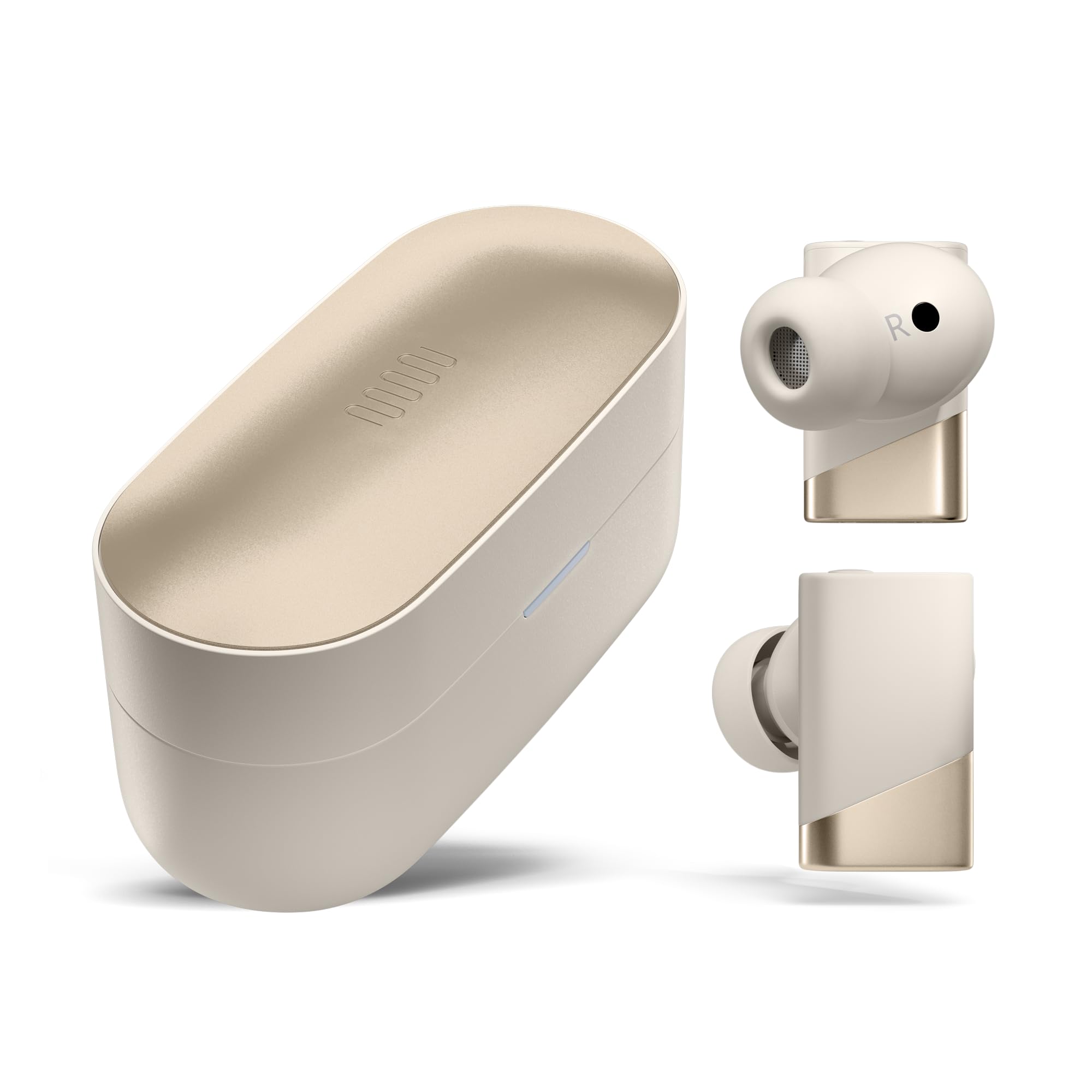
The Status Pro X is engineered for the listener who wants near-IEM-grade detail in a true wireless format. Its triple-driver architecture uses a 12mm dynamic driver for bass and dual Knowles balanced armatures for mids and treble—a combination that delivers exceptional instrument separation and clarity across the frequency spectrum. LDAC support ensures high-resolution streaming at up to 24-bit/96kHz, making it one of the best-sounding TWS options for discerning Android users.
Active noise cancellation reaches 52 dB—among the highest figures in the market—and paired with the Voiceloom AI speech enhancement, your calls remain clear even in wind or heavy machinery noise. The six beamforming microphones work together to isolate your voice while suppressing ambient chaos. Bluetooth 5.3 with LE Audio and Auracast makes future-proofing a priority, and the IP55 rating means these buds withstand sweat and light rain during workouts.
Battery life is the primary trade-off: 8 hours per charge drops to around 5 hours with ANC and LDAC enabled, and the small case provides only 24 additional hours (32 total). The stock silicone ear tips limit seal quality for some users, and the touch controls lack full customization in the app. However, for pure audio fidelity—especially at lower volumes where the BA drivers shine—the Pro X offers a transparency and staging that rivals wired audiophile rigs costing far more.
Why it’s great
- Triple-driver design (dynamic + dual Knowles BA) for detailed, balanced sound
- 52 dB hybrid ANC with Ambient Aware mode for situational awareness
- Voiceloom AI delivers clear calls even in high-wind environments
Good to know
- Battery life drops to ~5 hours with ANC and LDAC active
- Stock ear tips may not create optimal seal; aftermarket tips recommended
- Case battery drains faster than competitors due to compact design
4. Technics EAH-AZ100 Reference Class

The Technics EAH-AZ100 represents a unique approach to driver engineering: a magnetic liquid driver that replaces traditional voice coil and magnet assemblies with ferrofluid suspension. This design minimizes distortion and hysteresis, producing exceptionally low THD across the 20Hz–20kHz frequency range. The result is a soundstage wider than most competitors—Dolby Atmos content with head tracking gains an almost holographic imaging quality, with instruments precisely positioned in three-dimensional space.
Adaptive noise reduction adjusts in real time, switching between five profiles based on your environment—from quiet office to rushing subway—without you having to touch a dial. Voice Focus AI works not only during calls but also during music playback to suppress ambient chatter. Multipoint connectivity pairs up to three devices simultaneously (phone, laptop, tablet) with seamless switching that doesn’t cut audio during transitions. LDAC streaming unlocks the full potential of the magnetic driver’s low-distortion character.
Battery life reaches 10 hours per charge with ANC off (approximately 7 with ANC active), and the wireless charging case provides an additional 20 hours. Some users report the left earbud occasionally fails to charge due to alignment sensitivity in the cradle, and the app interface can be confusing for new users. The fit requires a counter-clockwise twist to seat correctly—a learning curve that, once mastered, delivers a secure seal for running and gym use. At full retail, it competes directly with premium flagships, but on sale it offers unmatched spatial audio performance.
Why it’s great
- Magnetic liquid driver produces extremely low distortion and wide soundstage
- Dolby Atmos with head tracking creates immersive spatial audio
- Multipoint connectivity for up to three simultaneous devices
Good to know
- Charging cradle alignment can be finicky; left bud may fail to charge
- Requires counter-clockwise twist for optimal seal—takes practice
- App interface is unintuitive for some users
5. JBL Tour Pro 3

The JBL Tour Pro 3 stands out for its hybrid driver architecture: a balanced armature handles high-frequency detail with crisp shimmer, while a 10.2mm dynamic driver delivers powerful, articulate bass and natural vocal presence. LDAC support brings 24-bit/96kHz high-resolution audio wirelessly, and the JBL Spatial 360 engine with head tracking transforms stereo sources into immersive sound that feels external rather than inside your head. The Smart Charging Case with 1.57-inch touchscreen adds a layer of control—you can see song titles, adjust ANC, or even stream audio from a 3.5mm AUX or USB-C source via the case’s transmitter function.
True Adaptive Noise Cancelling 2.0 adjusts in real time, listening to your surroundings and modifying attenuation on the fly to counter sudden loud noises. The JBL Headphones app offers comprehensive EQ controls (including parametric options), plus the ability to customize touch gestures. Battery life is strong at 8 hours per charge (40 hours total with the case), and a quick 11-minute charge provides enough juice for two hours of playback. The included foam ear tips improve passive isolation significantly over the standard silicone set.
The smart case’s transmitter feature is genuinely useful for airplane entertainment systems and older gym equipment, but the case itself is bulky enough to be noticeable in a slim pocket. Some users report a high-frequency hiss in the ANC during very quiet environments, and the default sound signature is bass-heavy—a JBL hallmark that may not suit purists seeking neutrality. Touch controls on the earbuds can be overly sensitive, triggering accidentally when adjusting a hood or hat. Despite these minor quirks, the Tour Pro 3 is a feature-rich powerhouse that excels in versatility.
Why it’s great
- Hybrid driver (BA + 10.2mm dynamic) delivers precise highs and powerful lows
- Smart Case with touchscreen and audio transmitter for non-BT sources
- LDAC and Spatial 360 with head tracking for immersive listening
Good to know
- ANC produces faint high-frequency hiss in silent environments
- Default tuning is bass-forward; neutral listeners will need EQ adjustment
- Case is larger and heavier than most competitors
6. Apple AirPods Pro 2
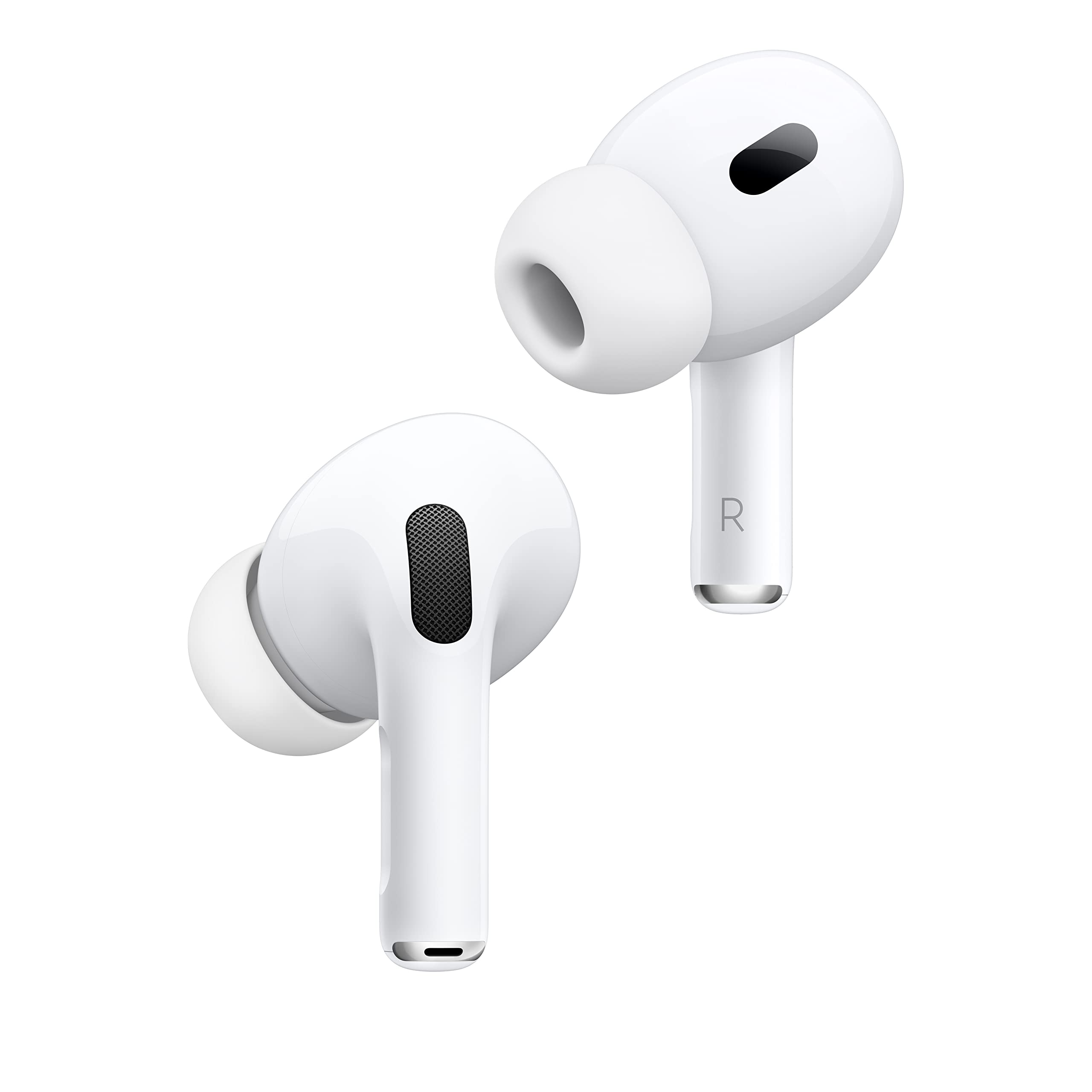
The AirPods Pro 2 remain the gold standard for seamless integration within Apple’s ecosystem, but their audio hardware is equally impressive. The Apple-designed H2 chip, paired with a low-distortion custom driver, produces tight, natural bass and crisp, sibilance-free treble with stunning definition. Adaptive Audio intelligently blends ANC and Transparency modes based on your environment, while Conversation Awareness lowers the volume when you start speaking—all without tapping a button. The Hearing Test and clinical-grade Hearing Aid features, unlocked via iOS, add a level of health utility no other earbud matches.
Active noise cancellation removes up to 2x more background noise than the original AirPods Pro, matching or exceeding top-tier Sony and Bose models in many real-world scenarios. Personalized Spatial Audio with dynamic head tracking places instruments around you in a fixed soundfield, and Dolby Atmos content feels genuinely three-dimensional. The industry-leading Transparency mode rivals unamplified natural hearing, making these ideal for users who need situational awareness during runs or commutes.
Battery life hits 6 hours with ANC enabled (30 hours total with the case), and the IP54 dust, sweat, and water resistance make them viable for intense workouts. The new USB-C case includes Precision Finding with a built-in speaker, plus MagSafe and Qi charging. However, codec support is limited to AAC—no LDAC or aptX, which means Android users won’t unlock the full resolution of the H2 chip. The stem-based touch controls are intuitive but limited in customization compared to app-driven rivals. For iPhone users, the crisp voice isolation and ecosystem loyalty make this the no-compromise choice.
Why it’s great
- H2 chip delivers class-leading Adaptive Audio and Transparency mode
- Conversation Awareness and hearing health features are category-first
- Precision Finding, built-in speaker, and IP54 rating for active use
Good to know
- Limited to AAC codec; no LDAC or aptX for higher-resolution streaming
- Stem-based touch controls have limited customization options
- Ear tips may not fit small or large ear canals optimally
7. Sony WF-1000XM6
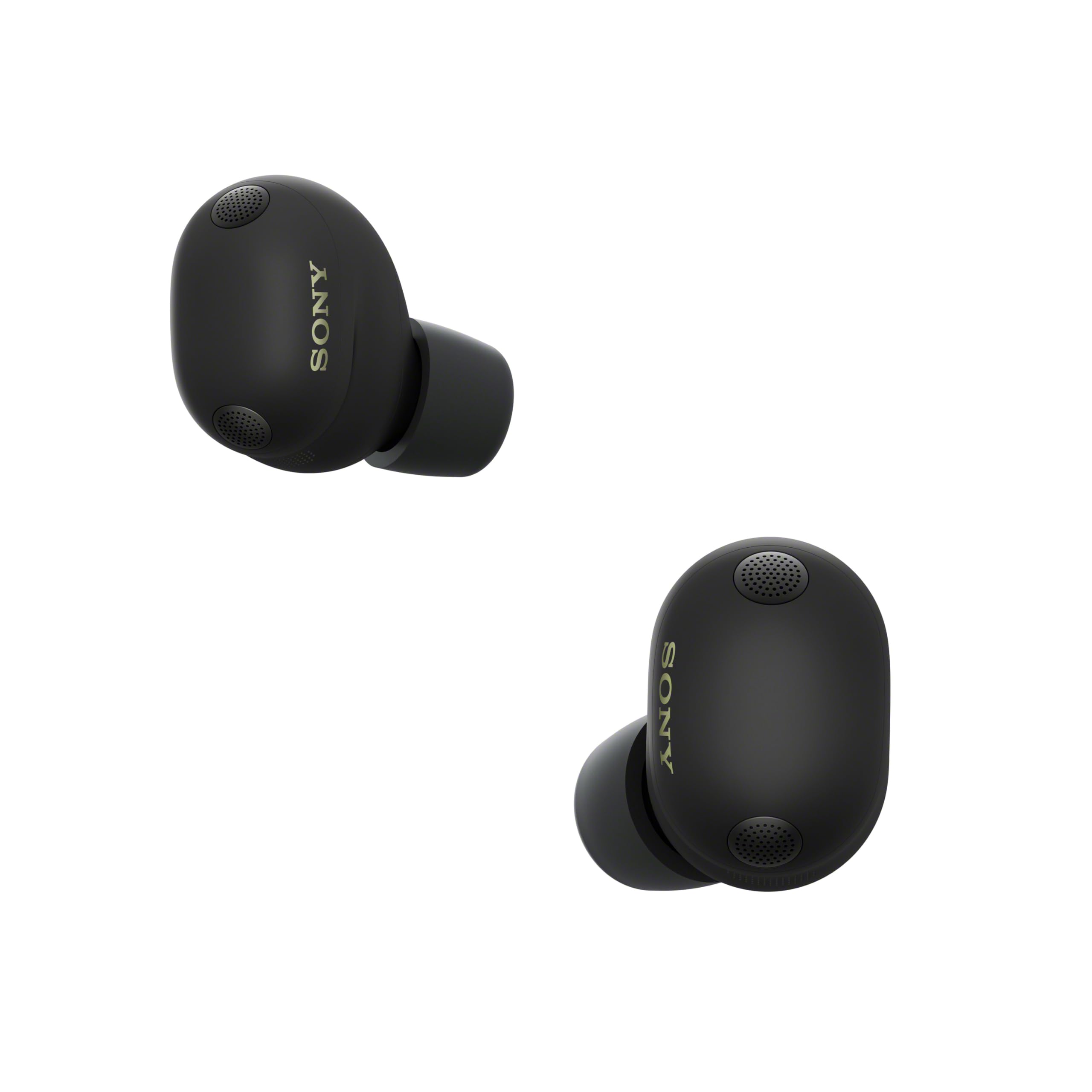
Sony’s WF-1000XM6 represents the sixth generation of their flagship TWS, and the focus remains on noise cancellation excellence paired with studio-referenced sound. The HD Noise Cancelling Processor QN3e is three times faster than its predecessor, paired with an improved DAC and amplifier that drive an 8.4mm dynamic driver with remarkable transient response. Co-developed with mastering engineers, the tuning reveals subtle instrumental details often lost in consumer-grade EQ curves—cymbal decay, room reverb, and vocal micro-dynamics feel authentic rather than processed.
ANC performance is as close to over-ear headphone level as any true wireless product has achieved, thanks to eight adaptive microphones and real-time environmental scanning. The Adaptive NC Optimizer adjusts the cancellation profile every millisecond based on ambient changes and wearing conditions. Auto Ambient Sound Mode offers three tiers of environmental blending, from full isolation to voice-priority pass-through. Call quality benefits from dual beamforming microphones, a bone conduction sensor, and AI-based noise reduction that strips out wind and crowd noise without clipping your voice.
Battery life reaches 8 hours per charge (24 hours total with the case), and a five-minute quick charge delivers one hour of playback. The ergonomic design uses premium matte texture and smart airflow vents to reduce ear pressure, though users with small ear canals may find the deep fit uncomfortable. The foam ear tips expand for an excellent seal but degrade after a few months of daily use and require replacement. Some firmware glitches—audio continuing to play when earbuds are docked, or connection drops—have been reported, though Sony typically addresses these via updates. For sheer ANC depth and balanced, detailed sound, the XM6 remains the reference standard.
Why it’s great
- QN3e processor and eight adaptive mics deliver best-in-class ANC
- Studio-engineered tuning reveals micro-dynamics and authentic timbre
- Bone conduction sensor + AI call noise reduction for ultra-clear calls
Good to know
- Deep fit may cause discomfort for users with small ear canals
- Foam ear tips lose shape and need replacement every few months
- Firmware glitches (audio in case, connection drops) reported by some users
8. Bowers & Wilkins Pi8

The Bowers & Wilkins Pi8 brings reference-grade sound to the true wireless format with 12mm carbon cone drive units adapted directly from the company’s acclaimed Px8 over-ear headphones. The carbon composite diaphragm is stiffer than conventional materials, reducing breakup distortion and delivering lifelike clarity across the entire range—from deep bass notes to airy cymbal shimmer. Qualcomm aptX Lossless streaming (16-bit/44.1kHz without compression) ensures that the source material reaches the drivers bit-perfect, while aptX Adaptive dynamically adjusts the bitrate based on signal strength for reliable connectivity.
Bespoke adaptive ANC calibrates to your environment automatically, though it’s not class-leading for high-frequency noise suppression—it handles low-frequency drone excellently but struggles with midrange chatter compared to Sony or Bose. The three-mic array for calls focuses on voice clarity, but wind rejection is merely adequate. The smart charging case is a standout feature: it can retransmit audio from a laptop, in-flight entertainment system, or TV via USB-C or 3.5mm AUX to the earbuds wirelessly—a killer feature for travelers and home entertainment setups.
Battery life is moderate at 6.5 hours per charge (20 hours total with the case), and the fast charging delivers 2 hours of playback from a 15-minute charge. The app is frustratingly minimalist—a 5-band EQ with no parametric options, no spatial audio processing, and inconsistent connection reliability that some users report as unacceptable at this price bracket. The vibrant, engaging sound signature (slightly warm with excellent instrument separation) is the Pi8’s reason to exist. If raw audio fidelity with a case-based transmitter is your priority, the Pi8 delivers beyond most competitors.
Why it’s great
- Carbon cone driver from Px8 lineage delivers reference-grade clarity and detail
- aptX Lossless streaming ensures bit-perfect audio transmission
- Case acts as transmitter for in-flight, TV, or gaming audio sources
Good to know
- ANC is weaker on mid/high frequencies compared to Sony or Bose
- App is bare-bones with 5-band EQ and connection reliability issues
- Battery life (6.5 hours) is behind premium competitors
9. Bang & Olufsen Beoplay Eleven

The Bang & Olufsen Beoplay Eleven is as much a statement of design as it is of audio performance. Machined aluminum housings, hardened glass touch surfaces, and silicone ear tips in four sizes create a tactile luxury that’s immediately apparent the moment you unbox them. The 9.2mm custom dynamic driver delivers a full-spectrum sound (20–22,000 Hz) with a beautifully balanced tonality—bass is deep but controlled, mids are lush without being forward, and treble extends smoothly without harshness. The tuning is warm and musical rather than clinically analytical, which suits acoustic, jazz, and vocal-heavy genres exceptionally well.
Noise cancellation has been upgraded significantly from the previous Beoplay EX generation, with increased microphone inlet area and improved wind filtering for calls. However, ANC performance still trails Sony’s XM6 and Apple’s AirPods Pro 2—it’s adequate for office hum and airplane drone but doesn’t fully silence a bus engine or open-plan chatter. Transparency mode is natural and effective, making it easy to hold conversations without removing the earbuds. The touch controls are among the most responsive and reliable in any TWS, with no accidental triggers during adjustments.
Battery life is limited: 6 hours with ANC active (8 hours without), with the wireless charging case providing an additional 14 hours. The aluminum housing adds noticeable weight (8 grams per bud), and the generic 9.2mm driver doesn’t offer the multi-driver detail retrieval of the Status Pro X or B&W Pi8. Some users report Bluetooth cutouts in crowded urban environments, likely due to the older Bluetooth 5.2 chipset. For those who value Scandinavian design language and are willing to accept ANC and battery trade-offs, the Beoplay Eleven offers a refined listening experience that’s hard to match in sheer aesthetic and tonal quality.
Why it’s great
- Machined aluminum and glass construction with premium tactile feel
- Warm, balanced tuning with deep, controlled bass and smooth treble
- Best-in-class touch controls with reliable, no-accident response
Good to know
- ANC performance is average—not competitive with top-tier models
- Battery life of 6 hours with ANC trails most premium rivals
- Bluetooth 5.2 may cause dropouts in high-density urban areas
FAQ
Does a larger driver always mean better sound quality?
Why do my earbuds sound thin even with LDAC streaming?
Are balanced armature drivers always better than dynamic drivers?
Final Thoughts: The Verdict
For most users seeking the best audio quality bluetooth earbuds, the winner is the Nothing Ear (3) because it delivers a ceramic-diaphragm driver with LDAC, 45dB hybrid ANC, and a clever call system at a price that undercuts competitors. If you want reference-grade lossless audio with a case that streams from any Aux/USB-C source, grab the Bowers & Wilkins Pi8. And for best-in-class noise cancellation with studio-engineered, balanced sound, nothing beats the Sony WF-1000XM6.

Mo Maruf
I created WellFizz to bridge the gap between vague wellness advice and actionable solutions. My mission is simple: to decode the research and give you practical tools you can actually use.
Beyond the data, I am a passionate traveler. I believe that stepping away from the screen to explore new environments is essential for mental clarity and physical vitality.