Our readers keep the lights on and my smoothie glass nicely filled. As an Amazon Associate, I earn from qualifying purchases.
That sharp sting every time your shoe shifts. The gnawing ache under a callus that you know will turn into a raw, open sore by mile three. Blisters don’t just ruin a hike or a day of sightseeing—they sideline you completely. The right dressing can mean the difference between finishing strong and limping to a bench, which is exactly why the details of the adhesive, the cushioning, and the healing environment matter so much.
I’m Mohammad Maruf — the founder and writer behind WellFizz. I have spent years analyzing consumer health and wellness hardware, from foam densities in recovery boots to the specific hydrocolloid configurations that either seal a wound or peel off in an hour.
After evaluating dozens of options based on adhesive reliability, cushion thickness, and real-world user feedback, I have narrowed the field to the five dressings that actually perform. This guide will help you identify the best blister treatment for your specific activity and skin type.
How To Choose The Best Blister Treatment
Not all blister dressings work the same way. The biggest mistake is grabbing a standard bandage when your foot needs a hydrocolloid seal that absorbs fluid and cushions the hot spot. Focus on these three factors before buying.
1. Hydrocolloid vs. Traditional Adhesive
A standard gauze pad sticks to the wound and rips new skin off when removed. Hydrocolloid gel absorbs exudate, creates a moist healing environment, and forms a protective gel cushion that stays put. If you want faster healing and less pain during removal, hydrocolloid is the only real choice.
2. Cushion Thickness and Flexibility
Thicker pads (around 2-3mm before compression) offer more impact absorption for high-friction zones like heels under hiking boots. Thinner, more flexible pads conform better to toes and the sides of feet inside tight cycling or running shoes. Match the pad thickness to your footwear clearance.
3. Water Resistance and Adhesion Life
Any dressing that peels off after an hour of sweat or a short shower is useless. Look for a waterproof seal tested on damp skin. A good hydrocolloid pad should stay firmly attached for 24-48 hours, enough time to let the blister begin healing without reopening the wound every time you change socks.
Quick Comparison
On smaller screens, swipe sideways to see the full table.
| Model | Category | Best For | Key Spec | Amazon |
|---|---|---|---|---|
| Nexcare Advanced Healing Hydrocolloid Pads | Thin Hydrocolloid | Flexible joints and thin skin | Water-resistant on wet skin | Amazon |
| Kimihome Gel Blister Bandages | Variety Hydrocolloid | Prevention and healing mix | 25% more cushioning per pad | Amazon |
| Spenco 2nd Skin Blister Kit | Moist Gel + Knit | Immediate hot-spot relief | Moist hydrogel pad under tape | Amazon |
| Promifun Hydrocolloid Blister Bandages | Cushion Hydrocolloid | High-adhesion for long hikes | 32-count variety pack | Amazon |
| Compeed Toes Blisters Bandages | Targeted Toe Fit | Toe-specific blister prevention | Anatomical toe shape | Amazon |
In-Depth Reviews
1. Compeed Toes Blisters Bandages
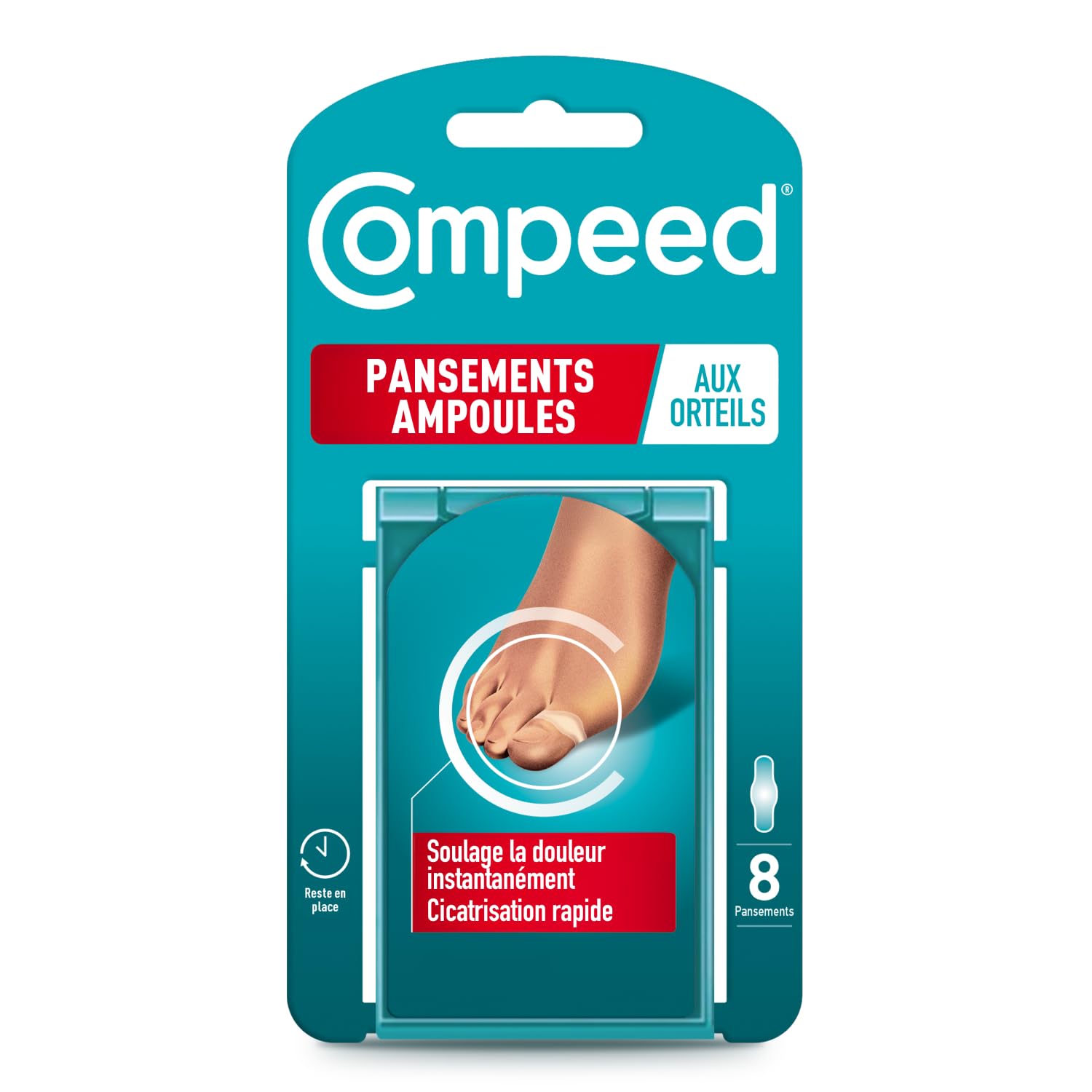
Compeed’s toe bandages are the result of decades of specialized hydrocolloid engineering. Unlike generic rectangles, these are pre-shaped to wrap around the curved contour of a toe, which prevents the edge-lift that causes most bandages to fail within an hour of walking. The adhesive uses a medical-grade acrylic that bonds aggressively to dry skin and stays put through long days in heels or hiking boots.
The hydrocolloid gel is thinner than standard foot pads, making them nearly invisible under dress socks or sheer stockings. They absorb wound fluid effectively without bulging out of shape. Each dressing is sterile and individually wrapped, so you can stash a few in a clutch or a hydration pack without taking up space.
A single application can last 24 hours on a clean, dry toe, giving the new skin underneath enough time to regenerate without reopening the wound. Users consistently report that these are the only bandages that stay on their pinky toes through an entire Disney trip.
Why it’s great
- Anatomical toe shape prevents edge peeling
- Thin and discreet under socks or stockings
- Sterile, individually wrapped for portability
Good to know
- Higher cost per dressing compared to generic packs
- Not ideal for large heel blisters or multiple toes
2. Promifun Hydrocolloid Gel Blister Bandages

Promifun delivers a 32-count variety pack that covers heels, toes, and the ball of the foot with four distinct shapes. The standout feature is the adhesive—users with known adhesive allergies report zero reaction, and the bond is strong enough to survive a full day of cobblestone walking in Europe. The pad offers 25 percent more cushioning than a standard hydrocolloid, which makes a real difference on hot spots forming under heavy backpacks.
The dressing is marketed as waterproof, and testing confirms it stays sealed during swimming and showering. This is rare for hydrocolloid pads, which typically lose grip in sustained wet conditions. The hydrocolloid gel creates a moist chamber that absorbs exudate and turns it into a soft gel, preventing the bandage from sticking to the wound itself.
Each bandage is individually wrapped, making this kit a practical companion for international travel or multi-day hikes. The removal process requires warm water loosening—do not rip it off dry or you risk pulling the new skin layer. Follow the instructions and the pad lifts cleanly without residue.
Why it’s great
- Reliable waterproof seal for swimming and sweat
- Hypoallergenic adhesive safe for sensitive skin
- Four distinct shapes for different foot zones
Good to know
- Large pack takes up more bag space
- Requires warm water soak for painless removal
3. Spenco 2nd Skin Blister Kit

Spenco takes a different approach from the hydrocolloid crowd. The kit includes a hydrogel-impregnated sheet that sits directly over the hot spot or blister, combined with a separate roll of adhesive knit tape to hold it in place. This two-piece system allows you to customize the size of both the gel and the tape, which is useful for unusual blister locations like the Achilles tendon or the side of the heel.
The hydrogel provides immediate cooling sensation on first contact, which offers genuine pain relief for a raw blister. The gel stays moist for hours and prevents the tape from adhering to the wound surface. However, the knit tape loses adhesion quickly when exposed to water, so this is best reserved for dry conditions or low-sweat activities.
Hikers and horseback riders report that the gel cushion prevents blisters from worsening while allowing continued movement. The key trick is pre-cutting the knit tape into smaller strips to avoid waste and to improve edge adhesion. For the price, you get enough material for multiple applications, making it a good value for a first aid kit.
Why it’s great
- Customizable gel and tape sizing for odd locations
- Instant cooling relief on raw blisters
- Good value for multi-application kit
Good to know
- Knit tape fails quickly in wet or sweaty conditions
- Two-step application is slower than all-in-one pads
4. Kimihome Gel Blister Bandages
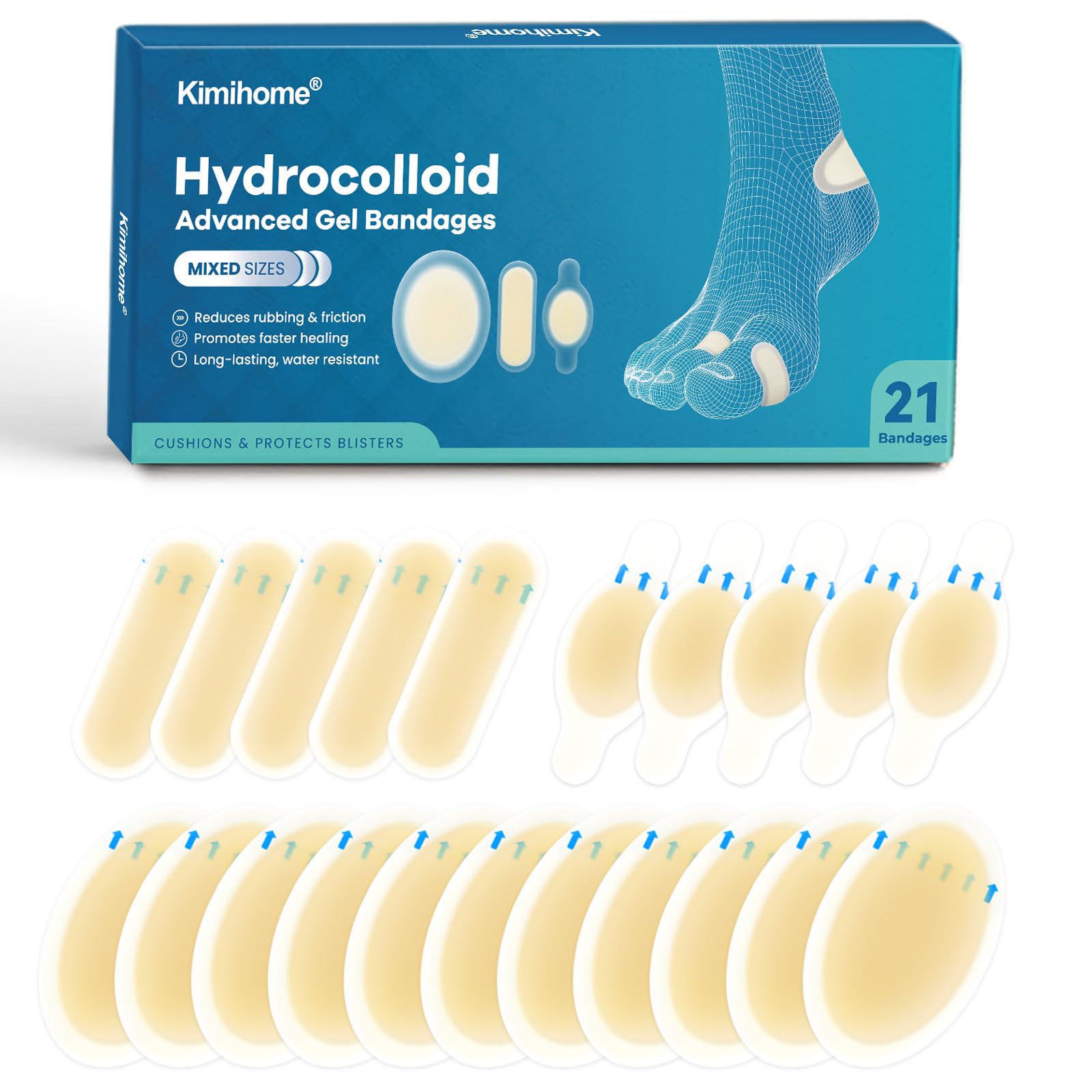
Kimihome’s 21-count pack balances prevention and active healing with a 25 percent thicker hydrocolloid gel than standard dressings. The cushion is noticeable immediately—it absorbs the shear force that creates hot spots rather than just covering them. Users specifically mention using these for breaking in new Dr. Martens and for high-mileage theme park days.
The adhesive system is designed for high-friction environments. The bond holds through hours of walking and does not slide or bunch inside a shoe. Removal is painless and leaves no sticky residue, which is a common complaint with lower-end hydrocolloid products. The variety pack includes oval, rectangular, and contoured shapes to fit heels, toes, and finger blisters.
One important limitation: the manufacturer advises against using these on already broken blisters. They are optimized for intact blisters and prophylaxis. For raw open wounds, a sterile dressing is a better choice. For the price per pad, this is the best value proposition for someone who wants a thick cushion and reliable adhesion in a range of sizes.
Why it’s great
- Thick cushion absorbs high friction and shear force
- Residue-free removal, even on sensitive skin
- Affordable per-pad cost with 21 count
Good to know
- Not recommended for open or broken blisters
- Adhesive may struggle on very thin or fragile skin
5. Nexcare Advanced Healing Hydrocolloid Pads

Nexcare from 3M uses a stretchy fabric backing that conforms to knuckles, fingers, and other high-mobility areas where rigid foam pads fail. The hydrocolloid gel is thin and flexible, making it ideal for minor burns and cuts as well as blisters on jointed areas. The unique shape—a rounded rectangle with tapered edges—creates a better seal than simple square cutouts.
The water-resistant adhesive sticks to damp skin, which is a rare claim in the category. Most hydrocolloid pads require bone-dry application. Nexcare’s tolerance for moisture means you can apply it after a quick rinse without waiting minutes for the skin to completely dry. The gel pad absorbs wound fluid and forms a cushion that reduces pain on contact.
The pack contains only six pads, which limits the value for anyone planning to cover multiple toes or a full week of hiking. However, for targeted use on a single sensitive spot—a heel rub from new shoes or a hot spot on a pinky toe—the quality of the adhesive and the flexibility of the backing make this a top-tier choice for those specific scenarios.
Why it’s great
- Stretchy fabric backing moves with joints and fingers
- Adhesive bonds to damp skin, reducing prep time
- Hypoallergenic and latex-free formula
Good to know
- Only 6 pads per pack, low value for high-use needs
- Thin cushion offers less impact absorption for hiking
FAQ
Can I wear a hydrocolloid bandage on an open broken blister?
How do I remove a hydrocolloid pad without damaging the new skin?
Why does my blister bandage keep curling up at the edges?
Final Thoughts: The Verdict
For most users, the best blister treatment winner is the Compeed Toes Blisters Bandages because the anatomical shape and advanced hydrocolloid gel provide unmatched adhesion and healing for the most common blister zone—the toes. If you want a waterproof seal and a large variety pack, grab the Promifun Hydrocolloid Bandages. And for a family-friendly value pack that prevents hot spots before they start, nothing beats the Kimihome Gel Blister Bandages.

Mo Maruf
I created WellFizz to bridge the gap between vague wellness advice and actionable solutions. My mission is simple: to decode the research and give you practical tools you can actually use.
Beyond the data, I am a passionate traveler. I believe that stepping away from the screen to explore new environments is essential for mental clarity and physical vitality.