Our readers keep the lights on and my smoothie glass nicely filled. As an Amazon Associate, I earn from qualifying purchases.
The difference between a good sourdough loaf and a great one often comes down to the vessel it bakes in. Standard loaf pans and open roasting trays simply cannot trap the steam required to develop that signature crackling crust and open crumb structure that defines artisan bread. A dedicated cast iron vessel changes everything by creating a mini steam oven inside your home oven, giving your dough the aggressive oven spring it needs.
I’m Mohammad Maruf — the founder and writer behind WellFizz. After analyzing hundreds of customer reviews and comparing the thermal properties, enamel quality, and dimensional specs of dozens of models, I’ve built this guide to help you find the right cast iron tool for your weekly bake.
This guide covers the top options to help you find the best cast iron for sourdough that consistently delivers the high heat retention and sealed environment essential for a bakery-quality loaf at home.
How To Choose The Best Cast Iron For Sourdough
Not every cast iron pot is optimized for sourdough. The wrong shape, an inadequate lid seal, or a size that forces your dough to spread thin will sabotage your results. Focus on these four factors to pick a vessel that works with your dough, not against it.
Lid Design and Steam Trapping
A tight-fitting lid is non-negotiable for sourdough. During the first 15 to 20 minutes of baking, you need a fully sealed chamber where moisture released from the dough saturates the air. This steam keeps the crust soft and allows the loaf to expand fully before the skin sets. Look for domed lids or lids with self-basting ridges that promote steam circulation rather than flat tops that let condensation drip back onto the dough.
Interior Finish: Enameled vs. Bare Cast Iron
Enameled interiors are non-reactive and require no seasoning. They release dough easily when floured or lined with parchment, and they clean up without worrying about rust. Bare cast iron develops a natural seasoning over time that becomes more non-stick with use, but it is more prone to sticking with high-hydration sourdough doughs if the seasoning is not perfectly established. Beginners usually find enameled surfaces more forgiving, while purists may prefer bare iron for the thermal conductivity.
Internal Dimensions and Dough Weight
The size of the cooking surface determines how your loaf spreads. A round vessel that is too wide will produce a flat, pancake-like boule. A rectangular pan that is too short will trap the dough and prevent the ear from forming. For a standard 500-gram flour loaf, look for a base diameter around 8 to 10 inches or a rectangular pan measuring roughly 10 by 5 inches. The total capacity should sit between 5 and 6 quarts to allow enough headroom for the dough to rise upward.
Quick Comparison
On smaller screens, swipe sideways to see the full table.
| Model | Category | Best For | Key Spec | Amazon |
|---|---|---|---|---|
| Challenger Bread Pan | Premium Dedicated | Artisan loaves with thick crust | Pre-seasoned raw cast iron | Amazon |
| Krustic 6 Quart | Premium Enameled | All-in-one baking and serving | 10 inch diameter base | Amazon |
| Nuovva 6 Quart Round | Mid-Range Enameled | Daily sourdough boules | 6 quart capacity | Amazon |
| EDGING CASTING 6 Quart | Mid-Range Enameled | Ease of handling and versatility | 7.3 inch height with lid | Amazon |
| VORRINGARD 5 Quart | Mid-Range Enameled | Smaller batches and stews | Stainless steel lid knob | Amazon |
| Nuovva Rectangular Orange | Mid-Range Enameled | Sandwich loaf shape | 24cm x 16cm interior | Amazon |
| GRMlmosa 11×5 Loaf Pan | Budget-Friendly | Entry-level sourdough baking | 5.8 quart capacity | Amazon |
In‑Depth Reviews
1. Challenger Bread Pan Cast Iron Loaf Pan

The Challenger Bread Pan was designed by bakers specifically for sourdough, and it shows in every detail. The patented inverted lid system creates an exceptionally tight seal that traps steam more effectively than any traditional Dutch oven, producing the aggressive oven spring and glassy, blistered crust that advanced bakers chase. The shallow base and integrated loop handles make loading and scoring the dough dramatically safer than reaching into a deep Dutch oven.
At 15.5 inches long and weighing 20 pounds, this is a dedicated bread tool rather than a multi-purpose cookpot. The pre-seasoning with grapeseed oil provides a solid foundation, though high-hydration doughs still benefit from a parchment sling. The raw interior will develop a deeper non-stick seasoning with regular use, but it requires careful drying and a thin oil layer after each bake to prevent rust in humid environments.
Veteran bakers consistently report that this pan elevates their loaves beyond what any standard Dutch oven can deliver. The lid inverting method also solves the common problem of burnt bottoms by lifting the loaf away from the direct heat source partway through the bake. If you bake weekly and prioritize crust quality above all else, this is the definitive tool for the job.
Why it’s great
- Patented lid seal creates unmatched steam environment for maximum oven spring
- Shallow base with ergonomic handles eliminates dangerous deep-pot dough transfers
- Pre-seasoned surface develops excellent non-stick properties over time
Good to know
- Heaviest option at 20 pounds, which may be difficult for some users to maneuver
- Requires diligent drying and oiling to prevent rust on the raw cast iron surface
2. Krustic Enameled Cast Iron Dutch Oven 6 Quart
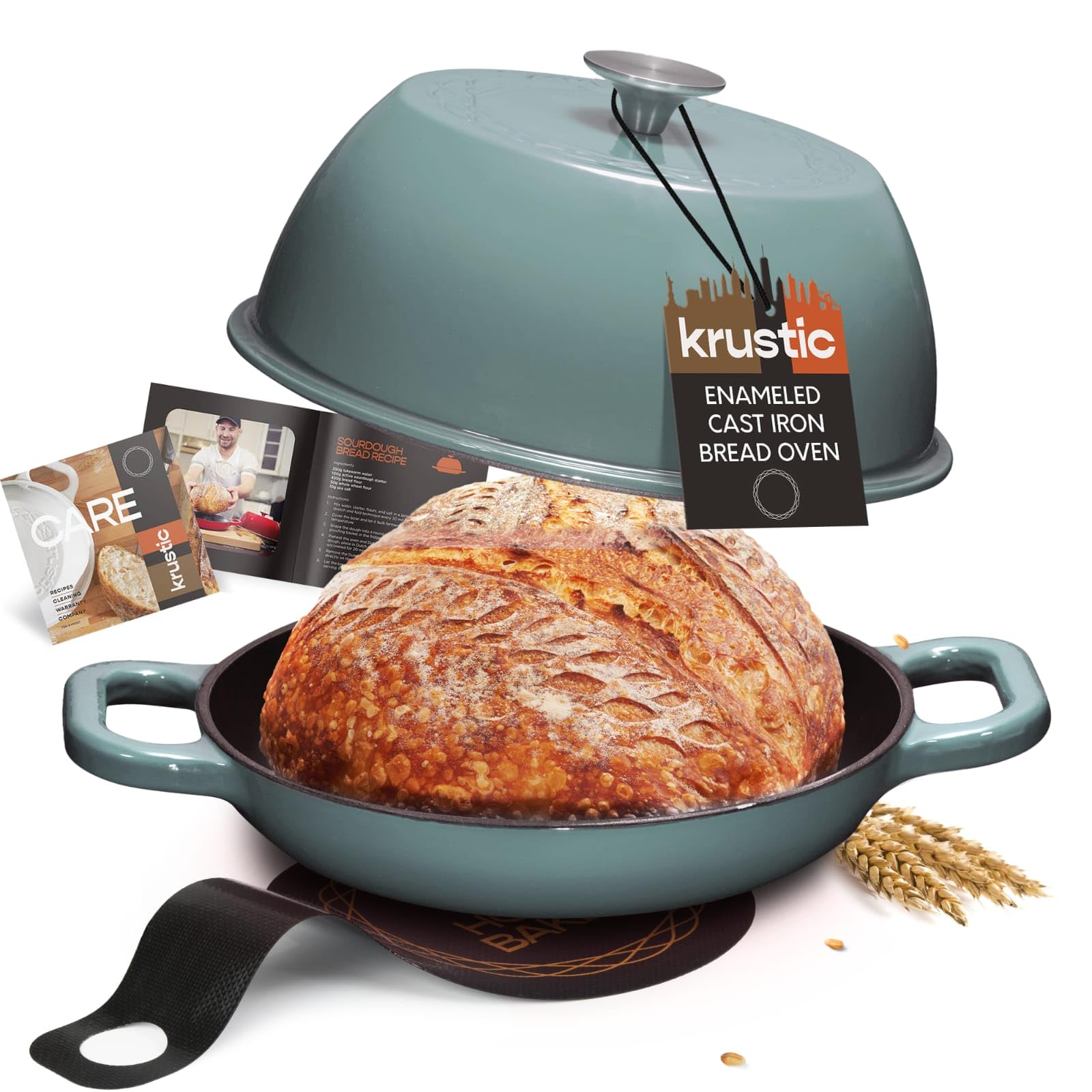
The Krustic 6 Quart delivers premium performance with a practical design that suits both bread bakers and home cooks. The 10-inch base diameter provides the ideal surface area for a standard boule, allowing the dough to spring upward rather than spreading outward into a flat disc. The thick enameled coating ensures even heat distribution across the bottom and walls, eliminating hot spots that cause uneven browning.
The included non-stick silicone baking mat is a thoughtful addition that makes removing the finished loaf effortless and protects the enamel surface from accidental scoring with a lame. The domed lid with its heavy cast iron construction locks in steam for the entire first phase of the bake, producing a deeply caramelized crust with a chewy interior crumb. The enamel finish resists staining from high-heat baking and cleans up with a simple wipe.
At 12.6 pounds, it is substantially lighter than the Challenger pan while still offering excellent thermal mass. The sea salt color and elegant shape allow it to transition from oven to table as a serving vessel. For bakers who want one piece of cookware that bakes exceptional sourdough on Saturday and braises short ribs on Sunday, this is the most well-rounded option available.
Why it’s great
- 10-inch wide base provides perfect geometry for proper boule oven spring
- Includes silicone baking mat for effortless loaf release and surface protection
- Versatile enameled cookware works beautifully for stews, roasts, and braises
Good to know
- Round shape limits its use to boules rather than sandwich-style loaves
- Weight of 12.6 pounds is still significant for some users to handle with oven mitts
3. Nuovva Enamelled Cast Iron Dutch Oven 6 Quart
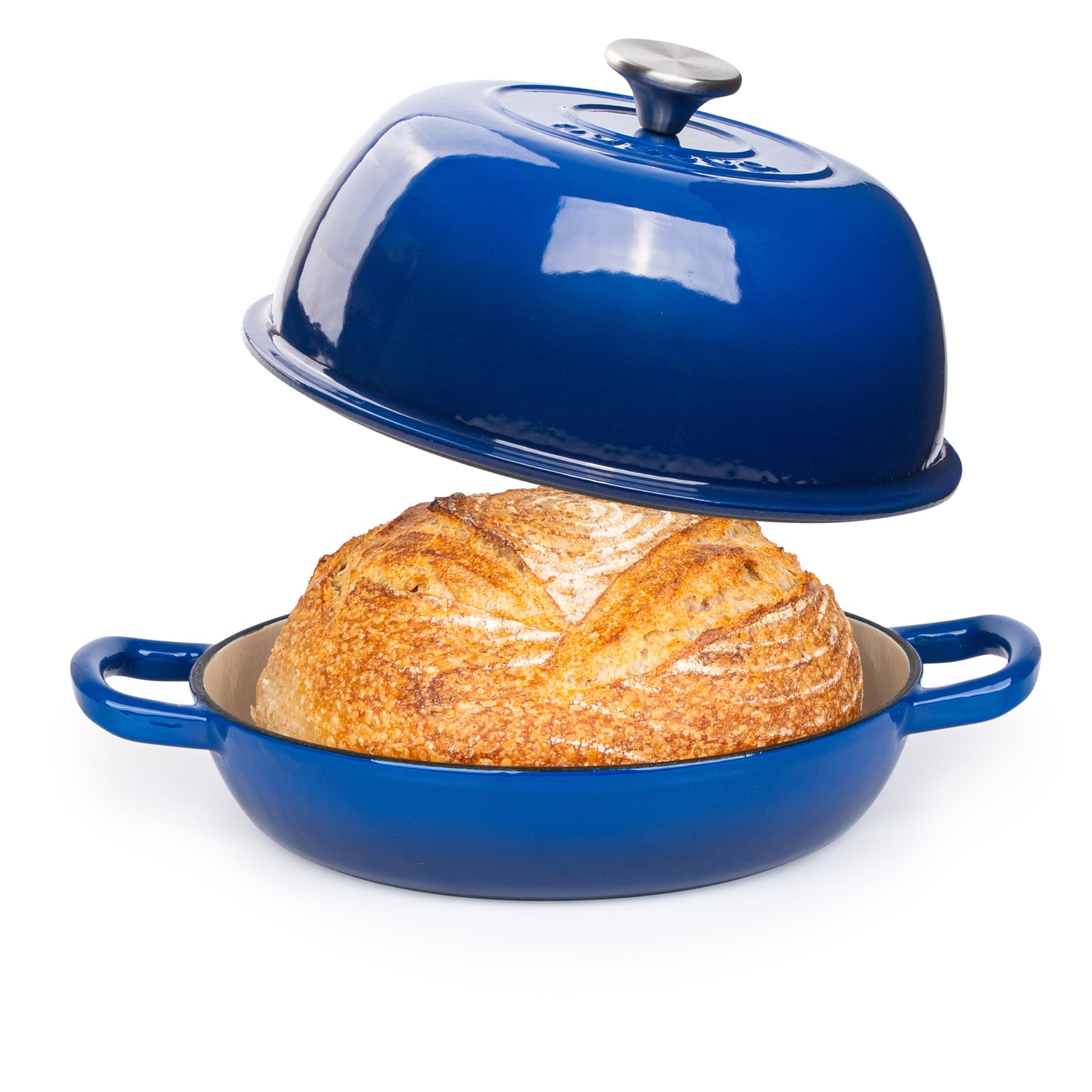
The Nuovva 6 Quart Dutch oven proves that you do not need to spend triple digits to get a vessel that bakes exceptional sourdough. The enameled construction provides the same non-reactive, rust-proof cooking surface found on premium European brands, and the domed lid seals tightly enough to eliminate the need for adding ice cubes or water sprays to create steam. Multiple long-term users report consistent high-rise loaves with crispy crusts and tender crumbs.
The lower sidewalls compared to a standard stockpot-style Dutch oven are a deliberate design advantage for bread bakers. They make it easier to lower the dough into the pot without burning your forearms, and they allow you to monitor the crust color during the final bake without removing the entire pot from the oven. The dark blue enamel exterior is visually striking enough to go directly from oven to cutting board.
At 12.6 pounds, the weight is comparable to other 6-quart enameled models, and the wide loop handles provide a secure grip even with bulky oven mitts. The interior enamel surface releases loaves cleanly when a light dusting of flour or cornmeal is used. For bakers looking for a reliable daily driver that handles sourdough, roasting chicken, and simmering soups without breaking the bank, this is a strong pick.
Why it’s great
- Lower sidewalls improve safety and visibility when loading and checking dough
- Excellent steam retention produces tall oven spring without additional water
- Attractive enamel finish transitions seamlessly from oven to table
Good to know
- Some users report enamel chipping if knocked against hard surfaces
- Standard round shape is not optimized for batard or sandwich-style loaves
4. EDGING CASTING Enameled Cast Iron Dutch Oven 6 Quart

The EDGING CASTING Dutch oven differentiates itself with a noticeably lower profile that significantly reduces the risk of burning yourself when loading dough. Standing at 7.3 inches tall with the lid, this pot is shorter than many competitors, which makes it easier to see inside and maneuver around. The 6-quart capacity still provides enough vertical space for a 900 to 1100-gram boule to rise and expand without hitting the lid.
The dome lid features a self-circulation design that continuously redistributes condensation back onto the surface of the dough during the steam phase. This promotes even hydration across the entire loaf skin, preventing the dry patches that can lead to uneven crust thickness. The enameled interior cleans up with minimal effort, and the stainless steel knob is oven-safe to 500 degrees Fahrenheit without needing to be removed.
Several reviewers have noted that this pot balances versatility with bread-specific design. It performs well for roasting whole chickens and braising vegetables, making it a practical choice for cooks who need their bread vessel to earn its cabinet space. If you want enameled convenience with a shape that prioritizes safe handling, this model deserves serious consideration.
Why it’s great
- Shorter overall height reduces risk of arm burns during dough loading
- Self-circulation lid design maintains even moisture across the crust
- Stainless steel knob is safe at full baking temperatures without removal
Good to know
- Not dishwasher safe; hand washing with mild soap is required
- Round shape limits loaf shape options to round boules only
5. VORRINGARD Enameled Cast Iron Sourdough Bread Oven 5 Quart
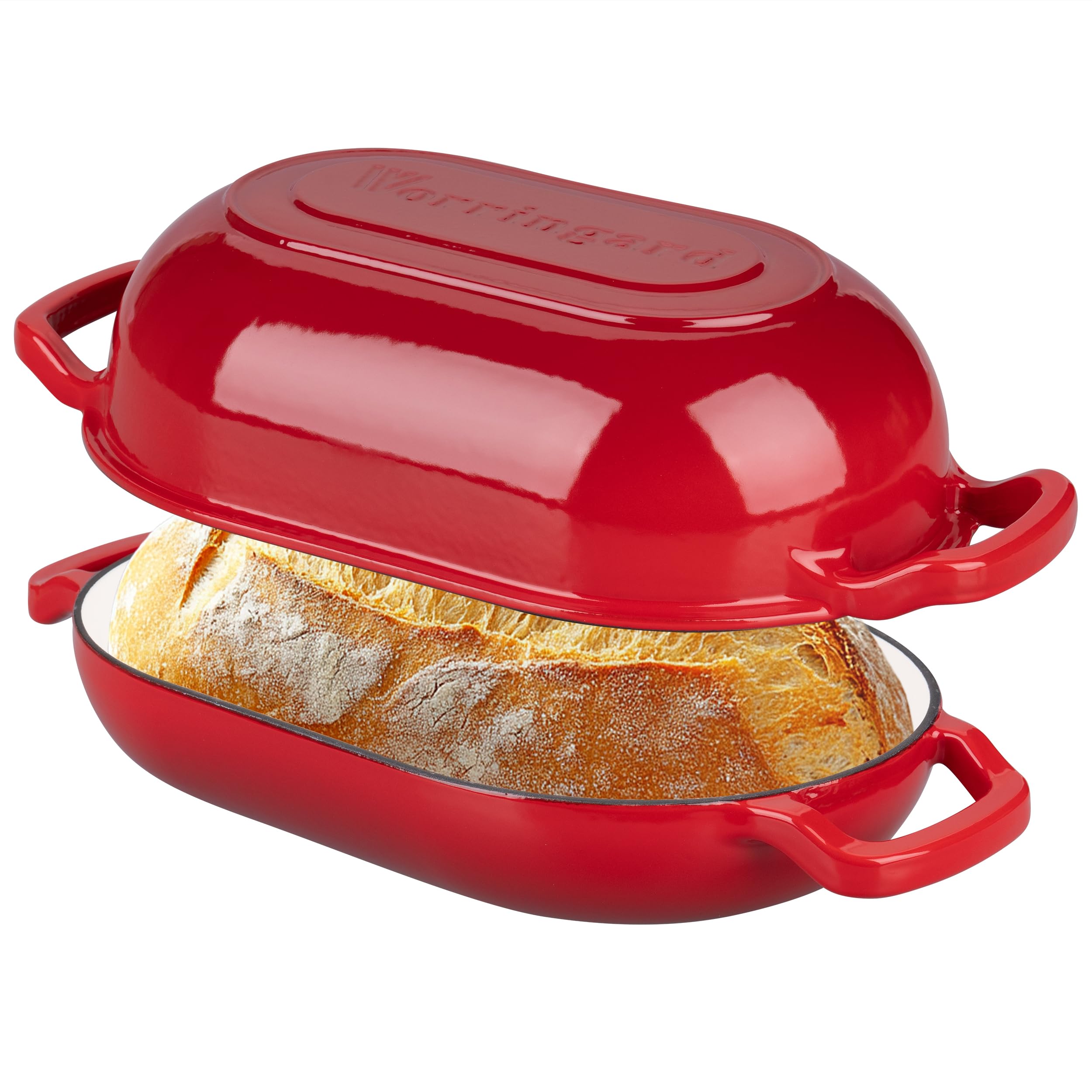
The VORRINGARD 5 Quart Dutch oven is designed for bakers who make smaller batches but still demand the full steam-trapping performance of a premium vessel. The smaller capacity means the dough fills a higher percentage of the internal volume, which concentrates the steam and produces an exceptionally crisp crust relative to the amount of dough being baked. This is especially useful for singles, couples, or anyone experimenting with new recipes without committing a full kilo of flour.
The enameled coating is notably thick and well-applied, with reviewers noting that it resists chipping better than some budget options. The stainless steel lid knob is a practical upgrade over chrome-plated steel, as it will not corrode or discolor after repeated exposure to high heat. The round shape with looped handles provides a stable grip, and the 14.2-inch diameter with handles ensures it fits comfortably in most standard home ovens.
Bakers who have owned multiple Dutch ovens often rank this model highly for its combination of build quality and performance. The flat bottom and domed lid create a consistent steam environment that supports strong oven spring even with wet doughs in the 80 percent hydration range. If you bake smaller loaves but refuse to compromise on crust quality, this is a compact solution that punches above its size.
Why it’s great
- Smaller 5-quart volume concentrates steam for superior crust development
- Thick enamel coating resists chipping and staining over extended use
- Stainless steel knob withstands 500°F baking without degradation
Good to know
- Limited to smaller loaves, making it unsuitable for large family batches
- Round shape may not produce the elongated batard shape some bakers prefer
6. Nuovva Rectangular Enamelled Cast Iron Bread Loaf Pot
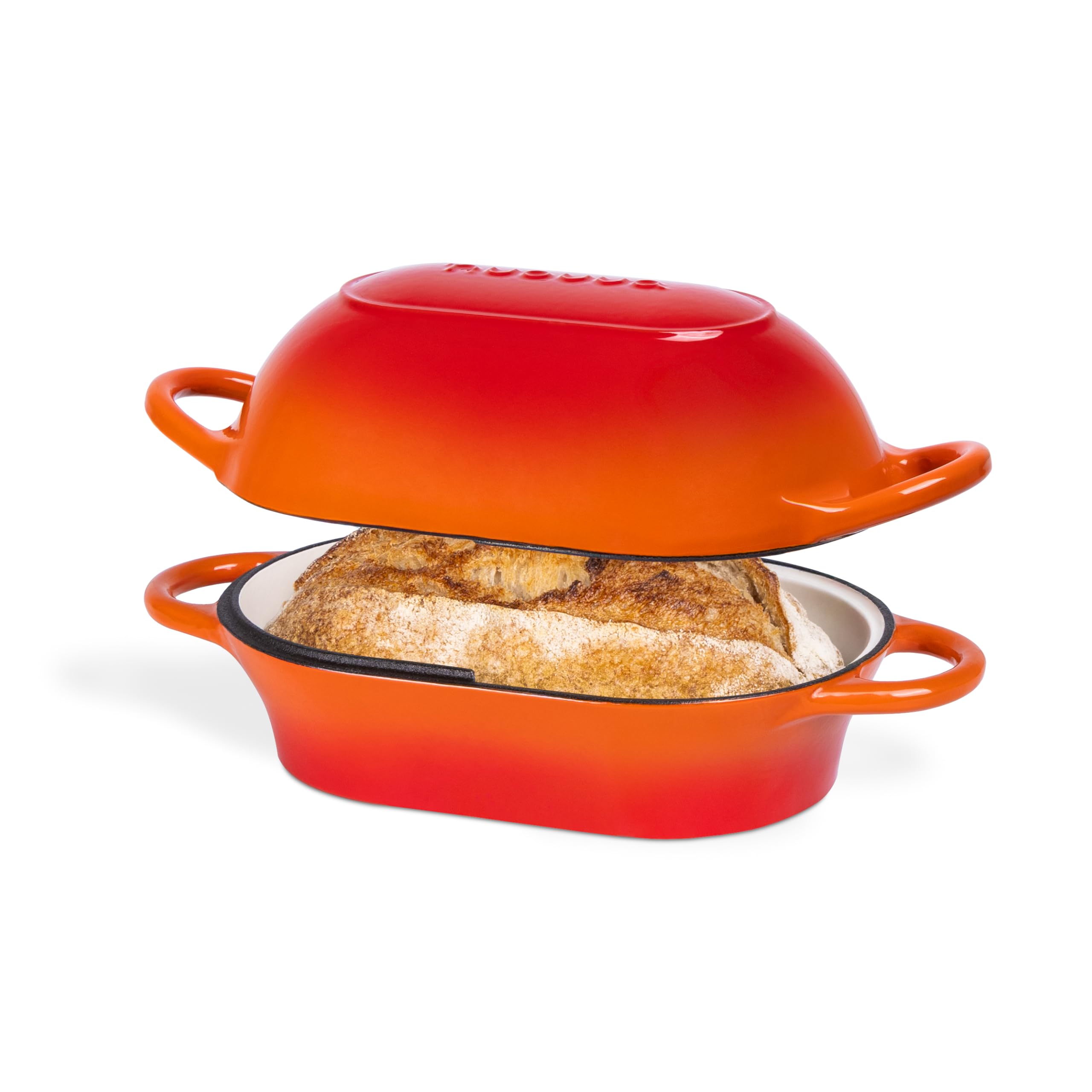
For bakers who prefer a sandwich-shaped loaf over a round boule, the rectangular Nuovva bread pot is purpose-built to deliver that classic batard silhouette. The 24 by 16-centimeter interior forces the dough to elongate naturally, producing a loaf with a defined ear and uniform slice size that is ideal for toast and sandwiches. The self-basting lid features ridges that capture condensation and drip it evenly across the dough surface, preventing the dry edges that can form in rectangular pans with flat lids.
The triple-layer enamel coating is noticeably durable, with multiple reviewers reporting months of twice-weekly use without chipping or discoloration. The rectangular shape is also significantly more space-efficient in a standard oven than a round Dutch oven, allowing you to fit two pots side by side if you want to bake two loaves simultaneously. The 4-liter capacity is optimized for smaller to medium loaves, making it a perfect fit for households that go through a loaf every two to three days.
The smooth enamel interior releases dough reliably when lined with parchment, and the bright orange exterior adds a pop of color to any kitchen. The pot is compatible with all cooktops, including induction, which adds versatility for simmering sauces or braising small cuts of meat. If your ideal loaf shape is a neat rectangle rather than a circle, this is the most specialized and effective option on the list.
Why it’s great
- Rectangular interior produces perfect batard shape for even sandwich slices
- Self-basting lid ridges prevent dry spots during the steam phase
- Compact footprint allows two pots to bake side-by-side in a standard oven
Good to know
- 4-liter capacity is small for bakers who make large family-sized loaves
- Heavy construction at 9 pounds requires two hands for safe handling
7. GRMlmosa 11×5 Inch Cast Iron Loaf Pan with Lid
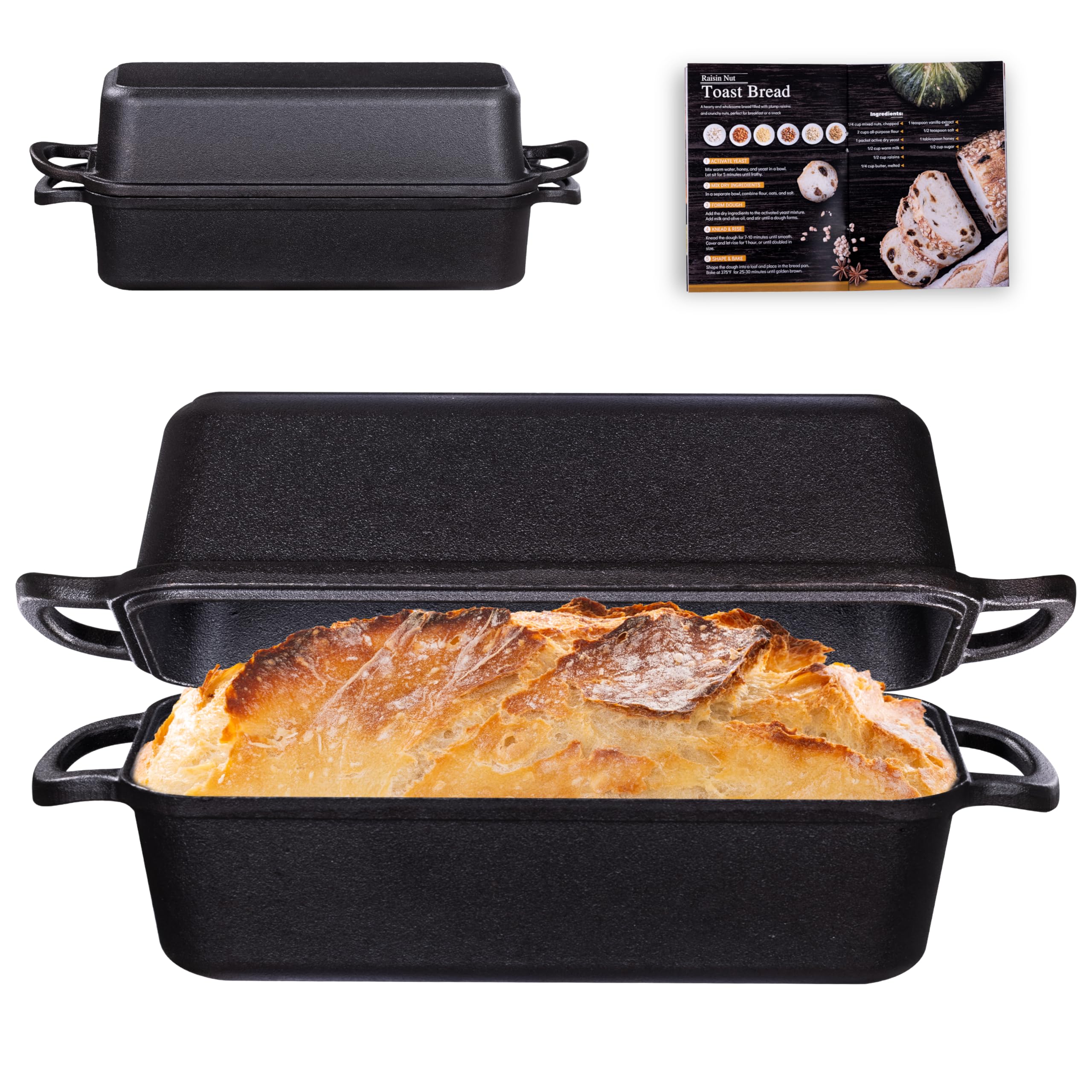
The GRMlmosa loaf pan is an entry-level option that introduces the benefits of cast iron sourdough baking without the investment required for enameled Dutch ovens. The 11 by 5-inch interior closely mirrors the dimensions of a standard loaf pan, making it familiar for bakers transitioning from thin steel pans. The raw cast iron surface delivers the even heat distribution and heat retention that glass or aluminum pans cannot match, resulting in better crust browning and a more consistent internal crumb.
The included lid transforms this pan into a mini steam oven, trapping moisture during the initial bake to support oven spring. The 5.8-quart capacity is generous for a loaf pan, allowing for doughs made with up to six cups of flour. Several reviewers noted that the pan runs slightly smaller than traditional loaf pans, meaning you may need to reduce your dough recipe slightly to prevent overflow. The raw interior benefits from a parchment sling for sticky, high-hydration doughs.
At 13.3 pounds, this is a substantial pan that feels solid in the hands. The smooth interior surface makes hand cleaning straightforward, though the raw iron requires thorough drying and a thin oil coating after each wash to prevent rust. For bakers who are not ready to commit to a full Dutch oven but want to experience the difference that cast iron thermal properties make for their sourdough, this is a low-risk starting point.
Why it’s great
- Familiar loaf pan shape makes it approachable for bakers upgrading from steel pans
- Lid creates effective steam environment for improved crust and oven spring
- Generous 5.8-quart capacity fits substantial dough batches
Good to know
- Raw cast iron requires seasoning and careful drying to prevent rust
- Runs slightly smaller than standard loaf pans; may need recipe adjustments
FAQ
Should I buy enameled or bare cast iron for sourdough?
What size Dutch oven do I need for a standard sourdough loaf?
How do I prevent my sourdough from sticking to a cast iron pan?
Can I use a regular Dutch oven for sourdough or do I need a special bread baker?
Why does my bread burn on the bottom when using cast iron?
Final Thoughts: The Verdict
For most users, the best cast iron for sourdough winner is the Krustic 6 Quart because it combines the perfect 10-inch base diameter for boule spring with a durable enameled finish and included silicone baking mat at a price point that undercuts comparable European brands. If you want the absolute highest crust quality and oven spring, grab the Challenger Bread Pan. And for bakers who prefer a sandwich-shaped loaf, nothing beats the Nuovva Rectangular for consistent batard results.

Mo Maruf
I created WellFizz to bridge the gap between vague wellness advice and actionable solutions. My mission is simple: to decode the research and give you practical tools you can actually use.
Beyond the data, I am a passionate traveler. I believe that stepping away from the screen to explore new environments is essential for mental clarity and physical vitality.