Our readers keep the lights on and my smoothie glass nicely filled. As an Amazon Associate, I earn from qualifying purchases.
Finding a spray that stops a roach mid-stride, clears a trail of ants overnight, and still feels safe to use around the kitchen counter is harder than it sounds. Most bug sprays trade efficacy for a tolerable scent, or they hit hard with fumes that keep the family out of the room for hours. The real test is residual action — how long the treated surface stays deadly to the next wave of insects without needing constant reapplication.
I’m Mohammad Maruf — the founder and writer behind WellFizz. I cross-reference labeled active ingredient percentages, residual kill windows, and real-world customer failure points to separate products that deliver one-time relief from those that build a sustained barrier.
Whether you need a contact killer for visible pests, a long-term surface barrier, or a natural formula that won’t trouble pets and kids, the best bug killer spray must balance immediate knockdown power with a residual timeline that matches your infestation level.
How To Choose The Best Bug Killer Spray
Selecting a bug spray requires matching the formula type to the pest, the application area, and the level of infestation. Chemicals like cyhalothrin deliver long-term residual control but demand careful placement. Essential-oil sprays kill on contact and smell pleasant but need reapplication every few days. Understanding the difference between a repellent and a non-repellent spray — and whether you need knockdown speed or sustained barrier protection — will guide you to the right can.
Residual Kill Window
The number of days a spray remains active on a surface after drying determines how often you need to retreat. Synthetic pyrethroids such as cyhalothrin can hold a barrier for weeks — BASF’s pressurized formula claims 21 days for general insects and 7-day intervals for bed bugs. Essential oil sprays like BugMD recommend reapplication every three to five days because plant oils evaporate faster. For a consistent wall against ants and roaches, longer residual periods reduce the labor of constant spraying.
Contact Kill vs. Non-Repellent Action
Contact sprays kill the insect the moment they hit it. Non-repellent sprays (like the BASF option) let the insect walk through the treated zone without detecting danger, then deliver the lethal dose after the insect returns to the nest. This second mechanism is critical for colony elimination because the poison spreads to hidden harborage areas that contact sprays cannot reach. Most budget-friendly essential oil sprays work strictly as contact killers and repellents — they stop visible bugs but rarely erase an infestation at the source.
Pet and Family Safety Profile
Many homeowners need a spray that won’t trigger respiratory issues or leave toxic residue where children and pets walk. Plant-based sprays (peppermint oil, lemongrass, geraniol, eugenol) are generally low-risk when used as directed and are labeled safe for use around dogs and cats. Synthetic sprays like BASF’s cyhalothrin formula are approved for use in food handling areas after drying and are used by professional pest control companies, but the wet spray must not contact pets or humans during application. Always check the label — “safe when dry” is not the same as “safe while wet.”
Quick Comparison
On smaller screens, swipe sideways to see the full table.
| Model | Category | Best For | Key Spec | Amazon |
|---|---|---|---|---|
| BASF PT 221L | Non-Repellent Aerosol | Professional-grade long-term control | 0.05% Cyhalothrin | Amazon |
| Raid Ant & Roach | Residual Contact Spray | Quick knockdown with 13-week residual | 13-week residual action | Amazon |
| BugMD Multi-Insect | Plant-Based Repellent | Pet-safe daily barrier spraying | 4% Peppermint Oil | Amazon |
| Wondercide Ant & Roach | Essential Oil Aerosol | Non-toxic kitchen and pet area use | Lemongrass & Geraniol | Amazon |
| Vet’s Best Indoor Flea & Tick | Pet-Focused Natural Spray | Flea/tick control on surfaces and dogs | Eugenol & Peppermint Oil | Amazon |
In‑Depth Reviews
1. BASF PT 221L Pressurized Insecticide

The BASF PT 221L is the same aerosol can commercial pest control operators deploy in hospitals and restaurants. Its active ingredient — 0.05% cyhalothrin — acts as a non-repellent, meaning ants and roaches walk through the treated line without sensing danger and carry the dose back to the colony. Users report ants dead overnight after laying a thin bead at entry points, with residual protection lasting three to four months per application. The 14-ounce can covers a surprising number of crack-and-crevice treatments, and a single purchase often lasts nearly two years for perimeter maintenance.
Unlike typical consumer sprays, this formulation is labeled for wall voids, weep holes, and under-sink voids — the hidden channels where insects travel. The aerosol propellant delivers a precise stream that reaches deep into crevices without overspray on visible surfaces. Multiple reviewers note they abandoned professional exterminator contracts after switching to this product for spot treatment around baseboards and door frames.
The nozzle design draws the only consistent criticism — some units spray unevenly or the actuator sticks after partial use. Consider the non-aerosol version if you need a consistent fan pattern, but for crack-and-crevice work the aerosol still outperforms every trigger-spray alternative in penetration depth. Its residual timeline alone makes it the most efficient option for serious infestations.
Why it’s great
- Non-repellent design creates colony-wide elimination
- Residual effect lasts 3–4 months per treatment
- Professional-grade active used by Orkin and Terminix contractors
Good to know
- Nozzle can become unreliable after partial use
- Must keep pets and people away until spray dries completely
2. Raid Ant & Roach Killer Spray
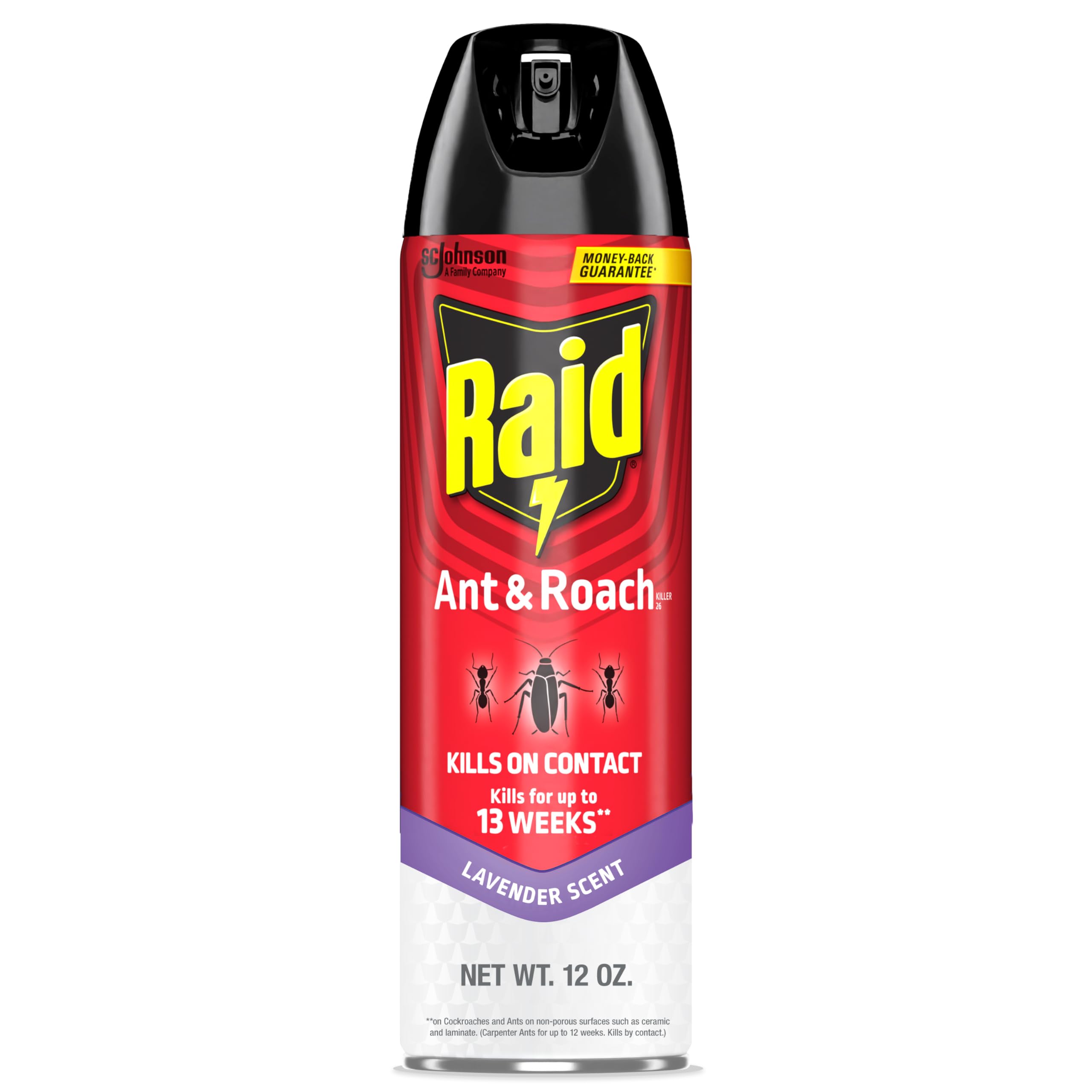
The Raid Ant & Roach spray has been a household standard for over 60 years, and the current formulation delivers contact kill across an unusually broad pest list — cockroaches, waterbugs, palmetto bugs, ants, silverfish, carpet beetles, crickets, earwigs, spiders, lady beetles, stinkbugs, scorpions, and black widows. The lavender-scented variant reduces the chemical odor that older Raid formulas were known for, making it more tolerable for indoor use while retaining the same knockdown speed.
What separates this can from knockoff sprays is the stated 13-week residual window on ants and roaches. Users confirm that a single surface application to baseboards and under cabinets eliminates visible ant activity for two to three weeks before any minor reappearance. The spray kills on contact instantly — one reviewer describes spraying a running roach and watching it keel over mid-stride. For spot-killing visible pests between deep cleanings, this is the fastest option on the list.
It is not a non-repellent, so trailing ants will avoid a heavy deposit. The key is light, even coating along travel routes rather than pooling. The 12-ounce can is smaller than some competitors, but the concentrated formula stretches further than a diluted trigger spray from a quart bottle. For anyone who wants the familiar reliability of a legacy brand with improved scent, this remains the most cost-efficient every-day carry spray.
Why it’s great
- Instant knockdown on contact with 13-week residual
- Lavender scent significantly reduces chemical odor
- Effective against 15+ insect species including scorpions and black widows
Good to know
- Repellent formula — insects may avoid heavy deposits
- Smaller 12-ounce can requires more frequent replacement for large homes
3. BugMD Pet Safe Multi-Insect Killer
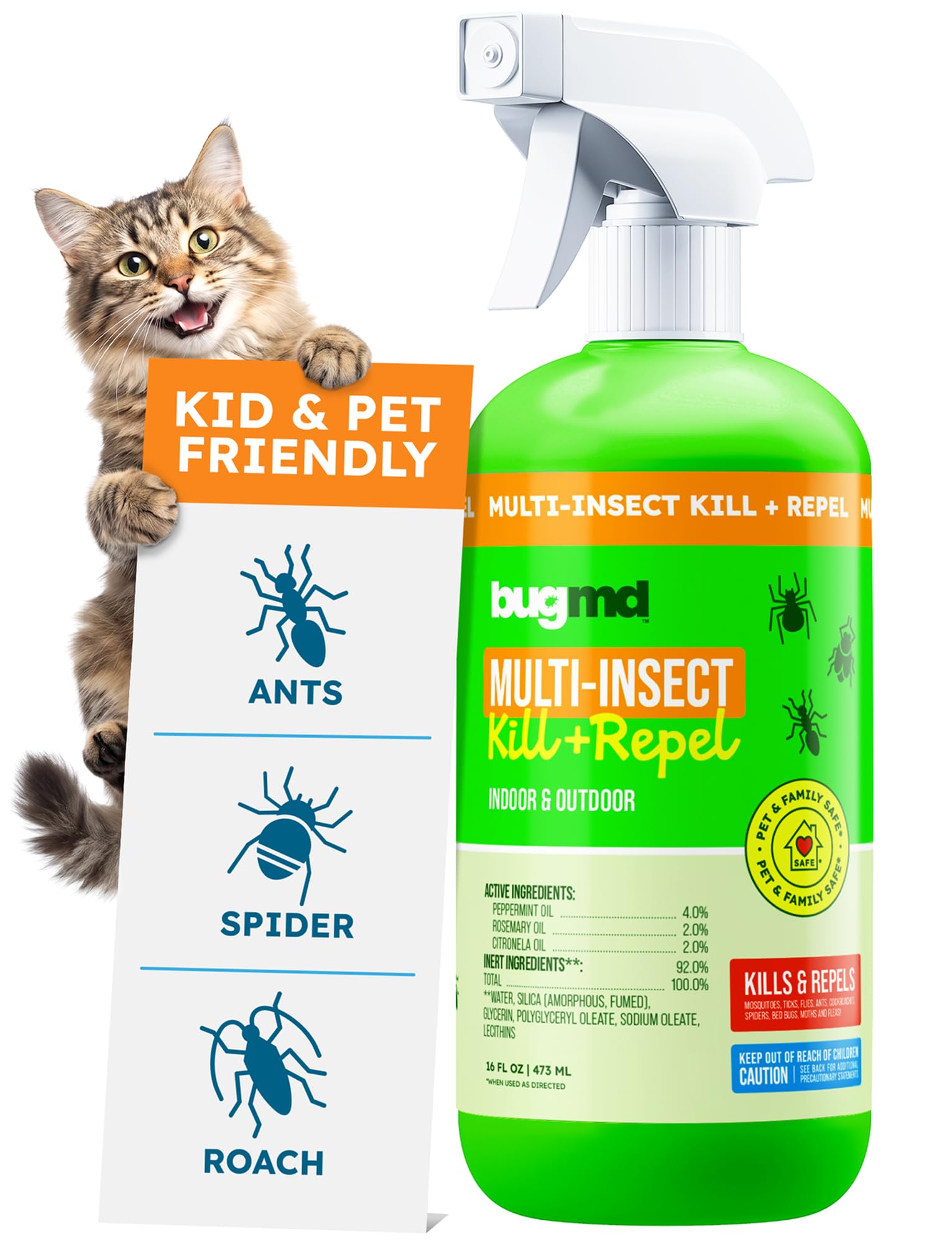
BugMD’s formula relies on 4% pure peppermint oil as its primary active ingredient — a concentration high enough to disrupt the sensory receptors of ants, spiders, and roaches on contact. Users who switched from pyrethroid-based sprays report that the peppermint scent is a refreshing upgrade from the chemical fog of traditional insecticides. The spray is labeled safe for use around children and pets when applied as directed, making it a strong candidate for kitchens and living rooms where residue concerns are highest.
This is a contact killer and repellent, not a non-repellent systemic. Reviewers note that ants that had been marching into the kitchen through door gaps stopped immediately after spraying the threshold. For existing infestations, it works best as a preventative rather than a standalone elimination tool — the manufacturer recommends reapplication every three to five days to maintain the repellent barrier. The spray also doubles as a rodent deterrent thanks to the concentrated peppermint oil, which mice find overwhelming.
A small percentage of users report skin irritation — pink-purple spots on the forearms after spraying — likely from the peppermint or rosemary oil. Wearing long sleeves during application solves the issue. The ready-to-use sprayer delivers a consistent fan pattern, but the 1.21-pound bottle is heavy enough that the trigger can fatigue the hand during extended perimeter spraying. For daily barrier maintenance in a pet-friendly home, this is the most effective plant-based option currently available.
Why it’s great
- High 4% peppermint oil concentration for strong insect sensory disruption
- Certified safe around pets and children when used as directed
- Dual-action as rodent deterrent for garages and basements
Good to know
- Requires reapplication every 3–5 days for sustained protection
- Peppermint oil may cause skin irritation on bare arms during application
4. Wondercide Ant & Roach Aerosol Spray

Wondercide builds its formula around lemongrass oil and geraniol — two plant-based actives that kill ants, roaches, spiders, fleas, carpet beetles, earwigs, silverfish, and stink bugs on contact. The 10-ounce aerosol 2-pack is designed for quick spot treatments around kitchen cabinets, baseboards, and window frames. Users with small dogs appreciate that the spray leaves no toxic residue on floors where paws travel — the oil-based formula is slippery on hard surfaces but poses no ingestion risk once dry.
The spray delivers fast knockdown on sugar ants and roaches, though the effect is temporary. Multiple reviewers note that ants return within 24 hours, requiring reapplication to maintain control. This aligns with the product’s intended use as a contact killer rather than a long-residual barrier. The lemongrass scent is light and fades quickly, making it one of the least intrusive options for indoor use. For families who prioritize non-toxic ingredients above all else, this is the most accessible entry point.
The aerosol nozzle is the weakest component — several users report the actuator clogging permanently after the can is half empty, wasting the remaining product. Because the formula is oily, it leaves a slick film on tile and hardwood that can be a slip hazard for pets and toddlers. Applying it to non-porous surfaces like ceramic tile or concrete around door thresholds avoids the slipping issue. If the nozzle design holds up, this is the best natural aerosol for kitchens where chemical sprays are not an option.
Why it’s great
- Plant-based formula safe for households with small dogs and cats
- Lemongrass scent fades quickly with no lingering chemical smell
- Kills over 20 insect species on contact
Good to know
- Nozzle frequently clogs after half the can is used
- Oily residue creates a slipping hazard on smooth flooring
5. Vet’s Best Indoor Flea & Tick Spray
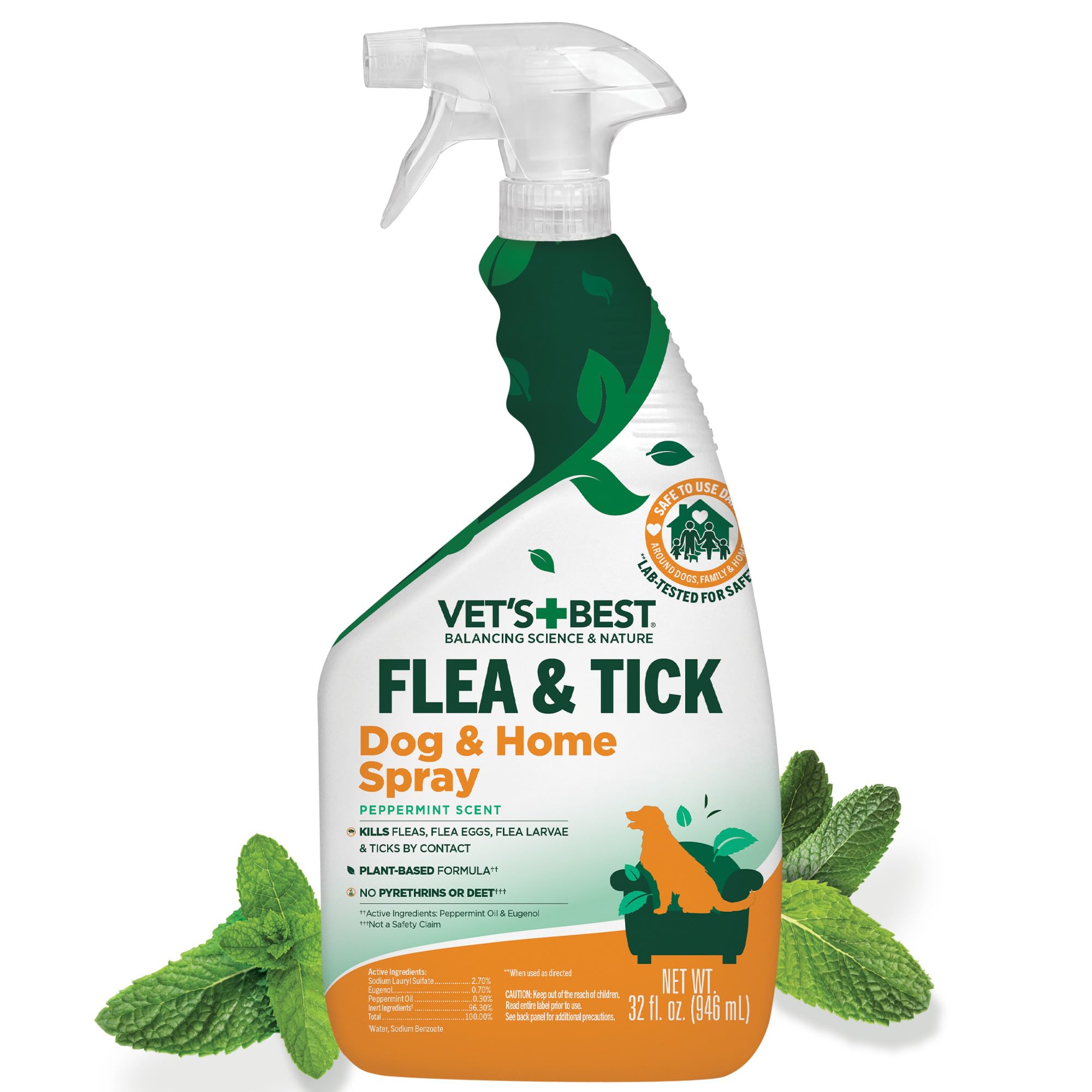
The Vet’s Best spray is the only product on this list formulated specifically for flea and tick control on both the dog and the home environment. Its active ingredients — eugenol (clove oil) and peppermint oil — kill fleas, larvae, eggs, and ticks on contact without the synthetic neurotoxins found in spot-on treatments. Multiple reviewers confirm that a heavy application to furniture, carpets, and pet beds ended severe flea infestations that Frontline and Capstar had failed to stop. The 32-ounce bottle offers far more volume than typical aerosol cans, making it practical for whole-room treatment.
Users report immediate results — fleas stop jumping within minutes of spraying carpets, and direct application to the dog’s fur kills visible fleas in seconds. The peppermint scent is strong during application but dissipates within an hour, leaving a mild spearmint-like freshness. For homes with a flea outbreak that has spread beyond the pet, this spray addresses both the animal and the environment with a single product, eliminating the need for separate dog and home treatments.
The trigger sprayer is the consistent pain point — several units fail after a few weeks, either sticking in the depressed position or refusing to spray when the bottle is tilted. The formula itself performs well, but the delivery mechanism compromises the experience. Buying a separate hand-crank sprayer and transferring the liquid solves the reliability issue. For pet owners fighting a multi-front flea war, the efficacy of the liquid inside outweighs the packaging flaw.
Why it’s great
- Kills fleas, eggs, and ticks on contact on both dog and home surfaces
- Effective against severe infestations that resist oral flea medications
- Large 32-ounce bottle covers multiple rooms without immediate repurchase
Good to know
- Trigger sprayer often fails after a few weeks of use
- Strong peppermint scent requires ventilation during application
FAQ
Can I use a bug spray labeled for ants and roaches on spiders and silverfish?
How do I apply a non-repellent spray like BASF PT 221L without contaminating food surfaces?
Why does my essential oil spray stop killing bugs after a few days?
Final Thoughts: The Verdict
For most users, the best bug killer spray winner is the BASF PT 221L because its non-repellent cyhalothrin chemistry wipes out entire colonies by letting the insects carry the dose back to the nest. If you want a familiar household brand with instant knockdown and a 13-week residual, grab the Raid Ant & Roach. And for a pet-safe, plant-based barrier that smells like peppermint instead of chemicals, nothing beats the BugMD Multi-Insect Killer.

Mo Maruf
I created WellFizz to bridge the gap between vague wellness advice and actionable solutions. My mission is simple: to decode the research and give you practical tools you can actually use.
Beyond the data, I am a passionate traveler. I believe that stepping away from the screen to explore new environments is essential for mental clarity and physical vitality.