Our readers keep the lights on and my smoothie glass nicely filled. As an Amazon Associate, I earn from qualifying purchases.
Waking up to a tugging toddler or a complaining partner with a muffled ear is a classic household stress test — one that usually ends in a guessing game or an urgent care copay. An at-home otoscope removes the mystery, letting you check for redness, fluid, or blockage before deciding on next steps. But the market is split between two radically different camps: the classic optical pocket scope with a magnifying lens and a bright bulb, and the new wave of digital ear cameras with built-in screens and recording capabilities. Choosing the wrong type means either straining to see a tiny reflection or dealing with blurry focus and dead batteries mid-exam.
I’m Mohammad Maruf — the founder and writer behind WellFizz. I’ve spent years parsing medical gadget specs, from LED color temperatures to lens distortion ratings, so you don’t have to guess which tool actually shows you the eardrum clearly.
Whether you are a worried parent, a caregiver, or just someone tired of guessing, finding the right best at-home otoscope means balancing light quality, magnification, build durability, and ease of use.
How To Choose The Best At-Home Otoscope
An otoscope for home use is not the same as the one your pediatrician uses — but it can get you close if you prioritize the right specs. The two main branches are optical (magnifying lens + bulb) and digital (camera + screen). Each serves a different purpose, and knowing the trade-offs prevents wasted money and frustration.
Optical vs. Digital — Choose Your Window
Optical otoscopes give you a direct, distortion-free view through a glass lens — no batteries required for the image, just for the light. They are instant, durable, and preferred by physicians who need a reliable daily tool. The catch: only one person can look at a time, and you need steady hands and good lighting conditions. Digital otoscopes with a built-in screen let you see the ear canal in real time on a display, capture photos and video, and even share files with a doctor. The trade-off is focus lag, potential image blur if you are not at the correct working distance, and reliance on battery-powered electronics.
Light Source — Brighter Is Not Always Better
The light in an otoscope is measured in lumens (brightness) and color temperature in Kelvin (tone). A 3.0V LED producing around 24 lumens and a color temperature of 5500K gives a neutral, white light that reveals true tissue color without the blue wash that older LEDs had. Warm soft-white LEDs (around 3000-4000K) mimic halogen light and are easier on the eye, but they can distort redness. Look for an LED that is bright enough to illuminate the tympanic membrane without creating a glare on the speculum walls.
Magnification and Field of View
Standard pocket otoscopes offer 3X to 4X magnification. A 3X lens with a 30% greater field of view than a pneumatic otoscope gives you a wider perspective of the ear canal, which is helpful for seeing beyond earwax obstructions. A 4X lens offers more detail but a narrower window. For home screening, a 3X lens is usually the sweet spot — enough detail to see redness or fluid without making you dizzy every time you move.
Build Materials and Handling
Optical otoscopes come in two materials: anodized aluminum (lighter, rustproof, durable) or chrome-plated plastic (cheaper, prone to cracking over time). The handle diameter and texture matter — a thicker, textured aluminum body gives you a more secure grip, especially when you are looking into a child’s ear while they squirm. Digital ear cameras often have a shorter, thicker wand shape that is comfortable for extended use but harder to maneuver in tight ear canals. Check the weight: anything over 12 ounces can feel heavy after a few minutes of steady aiming.
Quick Comparison
On smaller screens, swipe sideways to see the full table.
| Model | Category | Best For | Key Spec | Amazon |
|---|---|---|---|---|
| Doctor Mom 4th Gen | Optical | Daily family screening | 4X optical glass lens | Amazon |
| Aertnelz Q2 | Digital | Photo/video recording | 1.21″ 1080P screen | Amazon |
| ScopeAround MS450 | Digital | Large-screen viewing | 4.5″ IPS + 32GB card | Amazon |
| Jeebel Camp Otoscope Kit | Optical | Budget home starter | 3X coated glass lens | Amazon |
| Aertnelz 1.38″ Screen | Digital | Multi-purpose exam | 90° rotating head | Amazon |
| ScopeAround SA160 | Digital | Gentle self-exam | 3.9mm slim lens + IPS | Amazon |
| CynaMed ENT Diagnostic Kit | Optical/ENT Kit | Medical students, full kit | 1.81 lb leather case | Amazon |
In‑Depth Reviews
1. Doctor Mom 4th Generation LED Pocket Pro Otoscope

The Doctor Mom 4th Generation is the closest thing to a clinic-grade pocket otoscope you can buy without a medical license. Designed by an ER physician, it uses an optical quality glass lens with 4X magnification that delivers zero-distortion images — no digital lag, no focus hunting, just a crisp, clear view of the eardrum the moment you look through the eyepiece. The LED module produces a soft white natural spectrum light that avoids the bluish cast that distorts tissue color, a common complaint with earlier LED otoscopes. The body is thick anodized aluminum, not crack-prone plastic, and the textured grip makes it easy to hold steady even when examining a fidgety child.
A standout detail is the larger lens diameter compared to standard pocket scopes — about 1 inch across — which gives a wider field of view and makes it easier to orient yourself inside the ear canal. The kit comes with both adult and pediatric disposable specula tips, plus one AA battery and a hard plastic protective case. The company backs it with a lifetime support policy: if anything breaks (outside of battery corrosion or external damage), they will repair or replace it. Reviews from RNs and physicians confirm it competes directly with legacy brands like Welch Allyn for a fraction of the cost.
One trade-off: the disposable specula tips can feel slightly wobbly when seated, though they stay in place during use. And the bright LED is powerful enough that you should not shine it directly into the eye for pupil reflex checks. But for its primary job — spotting middle ear fluid or redness in a child — this is as reliable as it gets without a wall-mounted head.
Why it’s great
- Lifetime warranty from a US-based company with 25 years in business
- 4X optical glass lens with zero distortion and natural spectrum LED
- Lightweight anodized aluminum body that resists drops and cracking
- Larger 1-inch lens offers a wider field of view for easier canal navigation
Good to know
- Disposable specula can feel slightly loose on the attachment ring
- Only one person can view through the lens at a time
- Remove batteries during long-term storage to avoid corrosion
2. Aertnelz Q2 1080P HD Otoscope Ear Camera
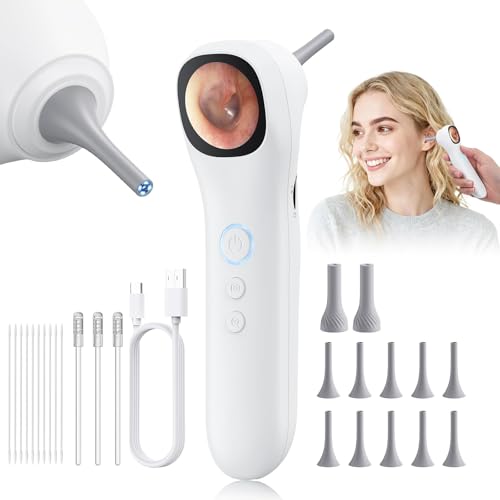
The Aertnelz Q2 represents the digital otoscope category at its most practical, combining a built-in 1.21-inch IPS screen with a 1080P HD camera for a self-contained viewing experience that needs no smartphone or app. You power it on, insert the tip, and see the ear canal in real time on the small display — no pairing required. The 4 LED lights offer multiple brightness levels, and the 3X magnification helps you focus on details like redness, earwax consistency, or a retracted eardrum. The package includes two interchangeable probe tips — one for ear/nasal exams and a wider bell-shaped tip for skin inspection — plus 10 silicone ear tips, adhesive ear sticks, and cotton swabs.
The USB-C connection supports both charging and PC viewing, letting you transfer captured photos and videos to a computer for a larger display or telemedicine sharing. Keep in mind that to save video directly to the device, you will need a separately purchased MicroSD card — there is no internal storage. The optimal working distance is between 1.4 and 2 cm; moving closer or farther causes blur, which is a normal characteristic of fixed-focus camera modules. Users report that the image on the device screen is sharp and the recording is smooth, ideal for tracking changes over time.
This is not a tool for a one-second look — it requires a moment to steady the camera and achieve focus. But for families who want to document ear health, share images with a remote doctor, or simply involve older children in the process (the screen makes it a fun experience), the Q2 delivers a lot of versatility. The rechargeable lithium battery holds enough charge for multiple exams between charges, and the ergonomic grip is comfortable for extended use.
Why it’s great
- Self-contained 1080P digital viewing without a phone app
- Interchangeable ear and skin inspection tips for multi-purpose use
- USB-C fast charging and PC connectivity for file transfer
- Plentiful accessories: 10 silicone tips, ear sticks, cotton swabs
Good to know
- Requires a MicroSD card for video and photo storage (not included)
- Fixed focus means blur if working distance is not 1.4–2 cm
- Manual and quick-start guide are basic — some button functions require trial
3. ScopeAround MS450 Digital Otoscope with 4.5″ IPS Screen

The ScopeAround MS450 is the digital otoscope that feels most like a mini medical monitor. Instead of squinting at a 1.2-inch screen, you get a full 4.5-inch IPS display mounted on a sturdy stand that sits on your countertop, leaving both hands free for the inspection wand. The camera wand itself is metal, 3.9mm thin, and connected by a flexible cable — you can inspect your own ear without needing a helper. A built-in gyroscope keeps the image orientation stable, preventing the sudden flips that plague cheaper ear cameras when you rotate the wand. The package includes a 32GB MicroSD card right in the box, so you can take photos and videos immediately without an extra purchase.
The 6 adjustable LED lights provide plenty of illumination for a clear view of the ear canal and tympanic membrane, and the display resolution is good enough to see small details like impacted wax or early-stage infection. Because the screen is separate from the wand, you can position it at eye level while you work, reducing neck strain during a long exam. The unit is FSA/HSA eligible, which adds a financial advantage for eligible buyers. The kit also includes ear spoons, specula, and cleaning picks for wax removal after inspection.
The one learning curve: the camera is manual focus, not autofocus. You have to move the wand slowly in and out of the ear to find the sharpest image — a skill that takes a few tries to master. A physician-reviewer noted the build quality is excellent for the price, with good battery life and the ability to examine ears, nose, and throat using the same wand. If you want to involve a family member in the exam or show a child what their own eardrum looks like, the large, screen-based display makes it engaging and educational.
Why it’s great
- Generous 4.5-inch IPS screen with stand for hands-free operation
- 32GB MicroSD card included for immediate photo and video capture
- Gyroscope keeps image orientation steady during wand rotation
- Metal camera wand with 3.9mm slim head for comfortable self-exam
Good to know
- Manual focus requires practice to find and hold the sharpest image
- FSA/HSA eligible but check your specific plan requirements
- Battery is rechargeable but a full charge takes a couple of hours
4. Jeebel Camp Professional Otoscope Kit

The Jeebel Camp Otoscope Kit is the budget-friendly optical entry that punches above its weight class. It uses a 3.0V LED bulb rated at 24 lumens with a 5500K color temperature — that is a neutral white light that accurately shows tissue color, avoiding the yellowish or blue tints that can mislead you into thinking redness is worse or less severe than it is. The 3X magnification glass lens is specially coated to resist scratches and offers a 30% greater field of view than many pneumatic otoscopes, giving you a broader perspective of the ear canal without missing the eardrum. The kit comes with four reusable speculum tips in sizes 2.5 mm, 3 mm, 4 mm, and 5 mm, covering infants through adults.
The handle is plastic but well-constructed, with a power on/off switch and a compact shape that fits easily into a medicine cabinet or travel bag. At about 10.5 ounces packaged, it is light enough to carry in a diaper bag. The included hard case keeps everything organized and protected from drops. Reviews consistently praise the brightness of the LED — several users mention using it to examine dog ears and finding it effective for pet care as well.
The main trade-off is the plastic construction: while it feels solid in the hand, it is not as impact-resistant as an aluminum body. Users who drop it on tile floor risk cracking the housing. The light is also non-adjustable — it is either on or off, with no brightness control. Still, for the price, you get a functional optical otoscope that shows the tympanic membrane clearly, includes all four speculum sizes, and comes in a protective case. It is the perfect entry-level tool for a family that wants to stop guessing and start seeing.
Why it’s great
- Bright 24-lumen LED with 5500K color temperature for accurate tissue color
- Anti-scratch coated glass lens with 3X magnification and wide field of view
- Includes four reusable speculum sizes from 2.5 mm to 5 mm
- Hard carrying case keeps everything organized and portable
Good to know
- Plastic handle is less durable than anodized aluminum options
- LED brightness is fixed — no dimming adjustment for sensitive ears
- Reusable specula require cleaning between uses vs. disposable tips
5. Aertnelz 1080P HD Otoscope with 1.38″ Screen
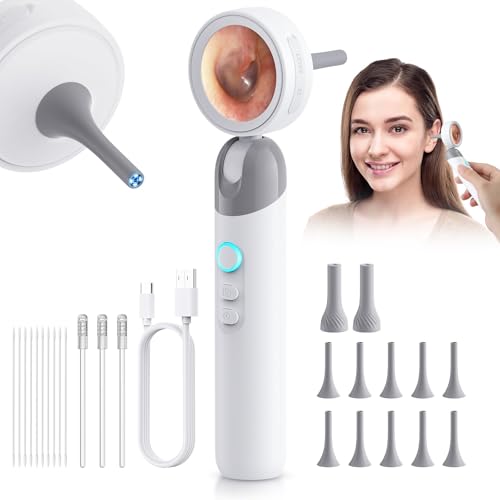
The second Aertnelz entry in our list upgrades the screen size to 1.38 inches and adds a 90-degree rotating inspection head, a feature that dramatically improves access when examining a reluctant child or your own ear. Like the Q2, it captures 1080P HD video and still images, but the larger IPS display makes it easier to see details in real time without squinting. The rotating head lets you angle the camera to follow the natural curve of the ear canal, reducing the need to twist your wrist into awkward positions. The 4 built-in LED lights offer multiple brightness levels, and the 3X magnification works well for eardrum inspection when you maintain the optimal 1.4–2 cm working distance.
The kit is certified FCC, CE, ROHS, and UKCA, which adds a layer of confidence for those concerned about electronic safety and medical-grade reliability. The package includes the same generous accessory set as the Q2: 10 ear/nasal tips, 2 skin inspection tips, USB-C cable, adhesive ear sticks, and cotton swabs. The USB-C connection supports both charging and PC viewing, though you will need a MicroSD card for onboard storage of videos and photos. The ergonomic grip is the same comfortable design, making it easy to hold for several minutes of inspection without fatigue.
The rotating head is the star here, but the same fixed-focus limitation applies — you must be patient and steady to get a clear image. Some users on Windows noted that the USB live view did not work out of the box, so relying on the device screen or a separately purchased MicroSD card is more dependable. If you are looking for a digital otoscope with a slightly bigger screen, a flexible viewing angle, and the same solid camera performance as the Q2, this is the upgraded version to consider.
Why it’s great
- 90° rotating inspection head for easier access and self-exam
- Larger 1.38-inch IPS screen compared to standard 1.2-inch displays
- Multiple international safety certifications (FCC, CE, ROHS, UKCA)
- USB-C connectivity for PC viewing and charging
Good to know
- Fixed-focus camera requires precise 1.4–2 cm working distance
- USB live view may not work on some Windows 10/11 systems
- MicroSD card not included — must purchase separately for recording
6. ScopeAround SA160 Digital Otoscope with Built-in Screen
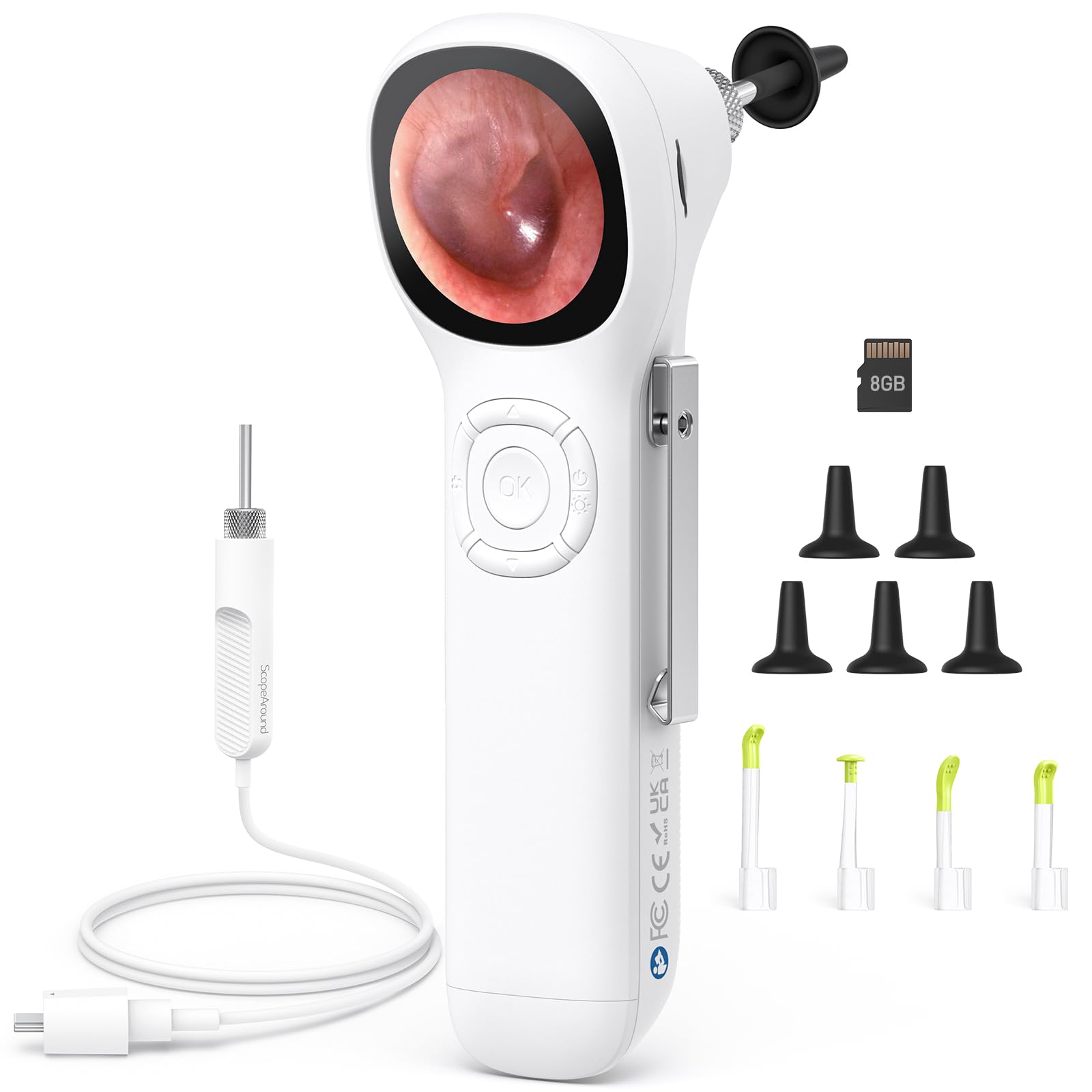
The ScopeAround SA160 is a compact, no-app-needed digital otoscope that prioritizes portability and ease of use. Its 3.9mm slim lens is the narrowest in our lineup, making it the gentlest option for small ear canals or sensitive children. The built-in IPS screen is small but clear, and the 6 LED lights with 3 adjustable brightness levels let you dial in just enough illumination without overwhelming a sensitive ear. The detachable lens design connects to the handle via an extended cable, giving you the freedom to inspect your own ear while watching the screen — the handle stays on the counter while you guide the lens into the canal.
A key advantage: the SA160 includes an 8GB MicroSD card right in the box, so you can start taking photos and videos immediately. The image quality is rated at 720P effective still resolution, which is sufficient for tracking wax buildup or visible redness but not as sharp as the 1080P sensors in the Aertnelz models. The unit is manual focus, meaning you twist the lens barrel to adjust sharpness rather than moving the entire wand. This can be more precise once you get the hang of it. The kit also includes ear picks, specula, alcohol pads, and Q-tips — everything needed for a basic ear hygiene routine.
The main downsides are the lower resolution and the lack of a gyroscopic stabilizer — the image can flip or rotate when you change the wand angle. Some users have also noted that the included ear picks are not recommended for deep cleaning. But for quick, gentle ear checks at home — especially if you or your child are nervous about ear exams — the SA160’s slim profile and detachable cable make it the least intimidating option here.
Why it’s great
- Ultra-slim 3.9mm lens for comfortable insertion in small ear canals
- Detachable lens cable allows easy self-examination
- 8GB MicroSD card included, ready to capture photos and videos out of the box
- 3 adjustable LED brightness levels for sensitive subjects
Good to know
- 720P effective resolution is lower than 1080P competitors
- No gyroscope — screen orientation can flip if wand is rotated
- Manual focus ring takes a few tries to calibrate for sharp images
7. CynaMed ENT Diagnostic Kit
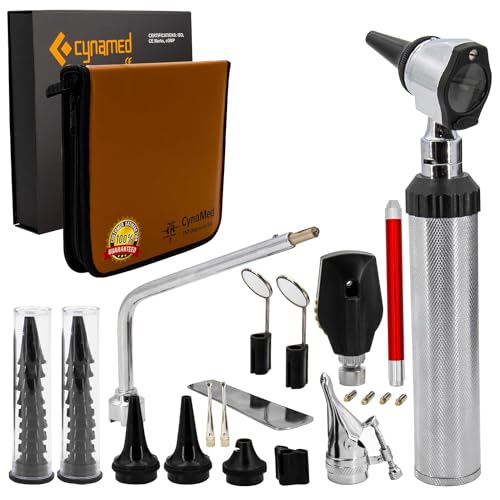
The CynaMed ENT Diagnostic Kit is not just an otoscope — it is a full ear-nose-throat examination set that also includes an ophthalmoscope, earwax remover, nasal dilator, speculum attachments, mirrors, and replacement LED bulbs, all packed in a leather carrying bag. This is the kit for medical students, nursing practitioners, or serious preppers who want a comprehensive diagnostic toolkit rather than a single-purpose device. The otoscope head provides bright LED illumination with a chrome-and-plastic handle that feels substantial in the hand. The ophthalmoscope head swaps onto the same handle, giving you the ability to examine the retina as well — a rare feature in home-use kits.
The build quality is a step above entry-level plastic scopes, with a handle that withstands unexpected drops. The chrome plating on the metal parts resists corrosion, and the attachments lock securely without wobbling. The leather carry bag is genuinely useful for transport and organization, with dedicated slots for each instrument. The included quick start guide makes it easy to identify the correct attachment for each exam type.
The trade-offs are notable: this is an analog optical kit, not digital — no screen, no photo capture, no telemedicine capability. The ophthalmoscope is basic compared to professional-grade instruments. Some users have reported that the initial unit stopped working after a few uses, though the seller replaced it promptly. And at 1.81 pounds, the full kit is the heaviest option in our list. But if you want a single set that covers ears, eyes, nose, and throat — and you prefer the tactile feel of traditional diagnostic instruments — this is the most complete solution available for home or training use.
Why it’s great
- Complete ENT set includes otoscope, ophthalmoscope, nasal dilator, and more
- Durable chrome and plastic handle that resists drops
- Professional leather carrying bag for organization and transport
- Interchangeable heads on a single handle reduce clutter
Good to know
- Analog optical only — no digital screen or recording capability
- Heaviest option at 1.81 pounds; not pocket portable
- Some units reported DOA; check seller warranty coverage before purchase
FAQ
Can an at-home otoscope replace a visit to the doctor?
What is the difference between reusable and disposable specula?
How do I clean an optical otoscope lens without scratching it?
Why does my digital otoscope show a blurry image?
Final Thoughts: The Verdict
For most users, the best at-home otoscope winner is the Doctor Mom 4th Generation because it combines a 4X distortion-free optical glass lens, a durable anodized aluminum body, and a lifetime support policy at a reasonable price — it is the closest thing to a professional pocket scope you can buy without a medical license. If you want to capture photos and videos for telemedicine or tracking changes, grab the Aertnelz Q2 for its self-contained 1080P screen and versatile accessory kit. And for a full hands-free viewing experience with a large screen and included storage, nothing beats the ScopeAround MS450 with its 4.5-inch IPS display and 32GB card.

Mo Maruf
I created WellFizz to bridge the gap between vague wellness advice and actionable solutions. My mission is simple: to decode the research and give you practical tools you can actually use.
Beyond the data, I am a passionate traveler. I believe that stepping away from the screen to explore new environments is essential for mental clarity and physical vitality.