Our readers keep the lights on and my smoothie glass nicely filled. As an Amazon Associate, I earn from qualifying purchases.
Capturing sharp frames from a moving subject—whether a sprinting athlete, a dancing child, or a bumpy bike ride—demands hardware engineered for speed and stability. A camera that misses focus or introduces motion blur turns your dynamic scene into a frustrating mess of smeared pixels.
I’m Mohammad Maruf — the founder and writer behind WellFizz. I’ve spent years analyzing sensor readout speeds, IBIS systems, and autofocus algorithms to find the cameras that actually deliver crisp, fluid results when the action starts.
After sorting through autofocus coverage, stabilization stops, and frame rates across dozens of models, I’ve built a guide to the best camera for movement shots that handles everything from casual family moments to pro sports sequences without blur or hesitation.
How To Choose The Best Camera For Movement Shots
Not every camera can keep up with fast-paced subjects. You need specific specs working together to freeze motion and maintain sharpness. Here are the critical factors to prioritize.
Autofocus That Tracks
For movement shots, contrast-detect AF is too slow. Look for phase-detection systems with at least 400 AF points and real-time subject recognition (people, animals, vehicles). A camera that locks onto a moving eye or body and stays locked is the difference between a sharp series and a throwaway sequence.
In-Body Stabilization
IBIS counteracts your own hand shake and low-frequency vibrations. For walking shots, gimbal-like pans, or handheld follow-cam, at least 5 stops of stabilization is ideal. Some bodies offer coordinated IS with compatible lenses, pushing correction beyond what the body alone can manage.
Frame Rate and Buffer
Frames per second (fps) determines how many images you capture during a burst. For sports, 10 fps mechanical or 20+ fps electronic is standard. The buffer depth matters more: a deep buffer lets you hold the shutter down without choking. Electronic shutters with high readout speeds avoid rolling shutter distortion on fast-moving subjects.
Quick Comparison
On smaller screens, swipe sideways to see the full table.
| Model | Category | Best For | Key Spec | Amazon |
|---|---|---|---|---|
| Sony Alpha 7 V | Full-Frame | Pro hybrid action | 30 fps electronic shutter | Amazon |
| Canon EOS R5 | Full-Frame | High-rez motion capture | 45MP / 20 fps electronic | Amazon |
| Nikon Z6 III | Full-Frame | Low-light action | 6K/60p N-RAW internal | Amazon |
| Sony Alpha 6700 | APS-C | Compact all-day tracking | 759 AF points / AI processor | Amazon |
| Canon EOS R7 | APS-C | Sports/wildlife burst | 30 fps electronic / 651 AF | Amazon |
| Nikon Z50 II | APS-C | Entry-level action kit | 231 AF points / 4K60p | Amazon |
| Insta360 X5 | 360 Action | Third-person POV motion | FlowState stabilization | Amazon |
| Panasonic LUMIX ZS99 | Compact Zoom | Concert/event zoom | 30x optical zoom / 5-Axis OIS | Amazon |
| Panasonic LUMIX FZ80D | Bridge Zoom | Long-reach wildlife | 60x optical zoom / OIS | Amazon |
| DJI Osmo Pocket 3 | Gimbal Cam | Vlog walking shots | 3-axis mechanical stabilization | Amazon |
| Fujifilm X100VI | Compact Prime | Street/party snapshots | 5-axis IBIS / 6 stops | Amazon |
In‑Depth Reviews
1. Sony Alpha 7 V
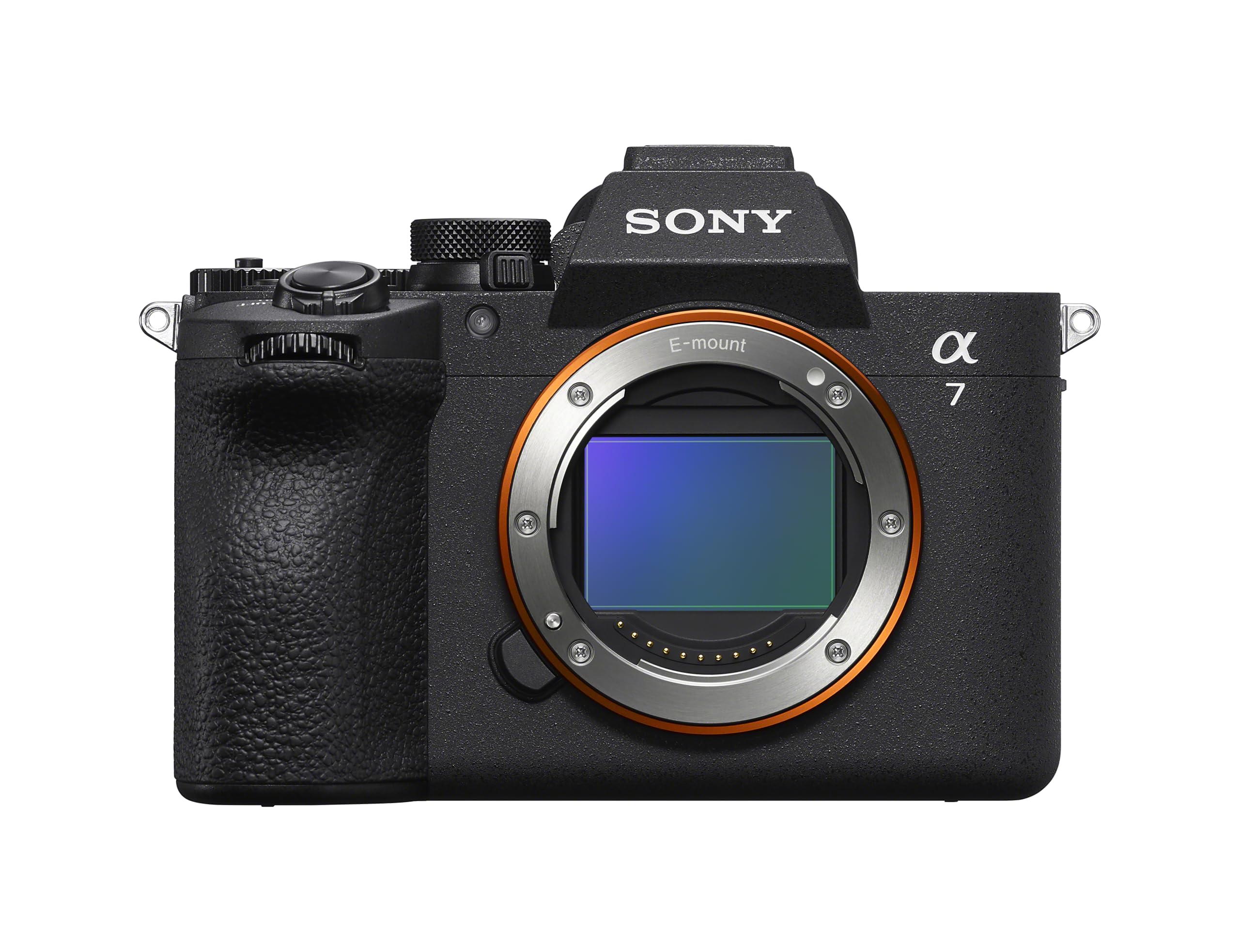
The Sony Alpha 7 V redefines what a hybrid body can do for motion-heavy shoots. Its partially stacked 33MP sensor reads out 4.5 times faster than the previous generation, enabling blackout-free bursts at 30 fps with full AF/AE tracking. For action photographers, that means no missed frames during a sprint or a jump.
The AI-based Real-time Recognition AF uses human pose estimation to lock onto eyes, head, and body position even when the subject turns or ducks. It also recognizes animals, birds, vehicles, and insects—so it’s equally deadly on a wildlife trail. The 759 phase-detection points cover nearly the entire frame, making it the most forgiving AF system on this list for erratic movement.
Stabilization hits 7.5 stops centrally and 6.5 stops peripherally, so handheld walking shots remain usable at slower shutter speeds. Video shooters get 4K 120p with active stabilization and 16 stops of dynamic range. The body alone is an investment, but the sensor readout speed and AF stickiness justify every dollar for serious movement work.
Why it’s great
- 30fps blackout-free burst with continuous tracking
- AI pose estimation for human subjects is incredibly sticky
- 7.5-stop IBIS for handheld motion clarity
Good to know
- Requires extra batteries for extended video sessions
- Learning curve for new Sony users due to deep menu system
2. Canon EOS R5

The Canon EOS R5 delivers 45 megapixels of detail while still offering 20 fps electronic shooting and 12 fps mechanical. For movement shots where you need to crop later, those 45MP give you serious flexibility. The Dual Pixel CMOS AF with 1,053 points covers 100% of the frame and uses deep learning to track humans, animals, and vehicles.
Eye Control AF—where you look at a subject to select the focus point—sounds gimmicky but works surprisingly well during quick pans. The 5-axis IBIS with coordinated control IS lets you shoot handheld at shutter speeds that would normally require a monopod. Video goes up to 8K RAW internally and 4K 120p, though long 8K clips may trigger thermal throttling in hot environments.
Build quality is rugged, with weather sealing that survives light rain. The 45MP sensor also handles high ISO extraordinarily well—images remain clean up to ISO 6400, which matters when shooting fast action in fading light.
Why it’s great
- 45MP resolution allows heavy cropping after capture
- Eye Control AF for instant subject selection
- Excellent high-ISO performance for dim action
Good to know
- Extended 8K recording may trigger thermal limits
- Battery life ~650 shots, requires power management
3. Nikon Z6 III

The Nikon Z6 III is built for shooters who demand clean frames in challenging light. With an ISO range extending to 204,800 and autofocus detection down to -10 EV, it acquires focus in near-darkness—making it the go-to for indoor sports or twilight action. The 299 phase-detect points and Deep Learning AF track subjects even when they occupy just 3% of the frame.
Internal N-RAW recording at 6K/60p gives video editors immense grading flexibility. Oversampled 4K UHD and full HD 240p slow motion offer smooth workflow options for sports analysis and replays. The 4000-nit electronic viewfinder with 120 fps refresh rate eliminates blackout during burst shooting, so you never lose sight of the action.
Weather sealing is genuinely robust—users report it surviving sustained downpours. Dual card slots (CFexpress Type B + SD UHS-II) allow simultaneous backup recording, which is critical when you cannot reshoot a movement sequence.
Why it’s great
- AF acquisition at -10 EV for extreme low-light action
- 4000-nit EVF with 120fps refresh for blur-free tracking
- 6K N-RAW internal recording for color flexibility
Good to know
- AF can occasionally hesitate at night in very specific scenarios
- Menu system is deep; expect a setup curve
4. Sony Alpha 6700

The Sony Alpha 6700 packs the same AI autofocus processor from its full-frame siblings into a smaller, lighter APS-C body. With 759 phase-detection points and Real-time Recognition for humans and animals, it punches far above its size class. The 26MP Exmor R sensor delivers sharp 4K 60p video oversampled from 6K, plus 4K 120p for slow-motion crops.
Its compact footprint makes it ideal for all-day carry—shoot handheld walking footage through a park or follow a toddler without tiring. The IBIS system provides solid handheld stability, though it’s not as robust as full-frame bodies with bigger stabilization units. The kit lens 18-135mm is optically versatile but has a small aperture in low light; a fast prime like the Sigma 30mm F1.4 transforms low-light action.
Single UHS-II SD slot is the only real compromise—pro shooters who need redundancy should look at the Canon R7 or Z6 III. Battery life is decent for a compact, but heavy 4K 60p recording can drain faster than expected.
Why it’s great
- AI AF processor from pro bodies in a compact form
- 4K 60p oversampled from 6K for sharp slo-mo
- Very portable for all-day motion shooting
Good to know
- Single SD card slot with no backup
- Overheating possible after ~40 min in 4K 60p
5. Canon EOS R7

Canon’s EOS R7 is a purpose-built action body in the APS-C class. With 30 fps electronic shutter and a 1/2-second pre-capture buffer, it catches the exact moment before you fully press the shutter—essential for unpredictable sports or wildlife. The 651 Dual Pixel CMOS AF zones cover the entire frame, and the subject-detection algorithm stays locked on animals, cars, and people.
The 32.5MP sensor gives you room to crop tight on a runner or bird without losing usable resolution. IBIS with 5-axis stabilization and coordinated control IS works well for handheld pans. Dual card slots (both UHS-II) let you write to two cards simultaneously or overflow record for peace of mind.
Battery life is better than advertised, often exceeding the CIPA rating in real-world shoots. The body is weather-sealed and comfortable for long grips. It’s arguably the best APS-C option for pure speed work before jumping to full-frame.
Why it’s great
- 30fps electronic shutter with 1/2s pre-capture
- 651 AF zones with 100% coverage
- Dual UHS-II card slots for backup
Good to know
- RF lens ecosystem still maturing after launch
- No built-in flash; relies on hotshoe add-ons
6. Nikon Z50 II

The Nikon Z50 II is an excellent gateway camera for shooters who want to move beyond phone video without spending premium-tier money. The 20.9MP DX sensor is several times larger than a phone sensor, giving you genuine depth-of-field control and better low-light performance. Its 231 phase-detection points handle people, dogs, cats, birds, and vehicles with reliable accuracy.
The dual-lens kit (16-50mm plus 50-250mm VR) covers wide to telephoto ranges, making it flexible for anything from family soccer games to hiking shots. Built-in electronic VR smooths handheld video, and the Picture Control presets let you dial in a look before you even start shooting. The Nikon SnapBridge app transfers images wirelessly for quick sharing.
It’s not the fastest body here—burst rate and buffer are modest compared to the R7 or A6700—but for a learner building skills, it offers the right balance of capability and simplicity. The flip-out touchscreen makes it easy to compose from low or high angles during active shooting.
Why it’s great
- APS-C sensor far outperforms phone sensors in motion
- Two-lens kit covers wide to telephoto action
- Built-in electronic VR and simple wireless sharing
Good to know
- Burst buffer is limited compared to dedicated action bodies
- Only one battery included; extras recommended
7. Insta360 X5

The Insta360 X5 takes a completely different approach to movement shots: it captures everything around you in 8K 360 video, then lets you reframe the action afterwards. The dual 1/1.28-inch sensors and triple AI chip provide strong low-light performance. Combined with FlowState Stabilization and full 360° Horizon Lock, the footage remains level even during rapid spins or bumpy rides.
The invisible selfie stick effect creates the illusion of a third-person drone shot—perfect for action sports like skateboarding or mountain biking. You shoot without worrying about framing, then pull your desired angle in the app later. The 208-minute battery and fast charging (80% in 20 minutes) keep you shooting all day.
Waterproof to 49 feet without a housing, the X5 is also ready for underwater movement. The replaceable lens design is a huge upgrade: if you scratch a lens, you swap it in seconds rather than replacing the whole camera.
Why it’s great
- 360 capture means you never miss framing the action
- FlowState Stabilization with full Horizon Lock
- Replaceable lenses extend camera lifespan
Good to know
- Required app editing adds a post-processing step
- 8K 360 files are large, requiring fast microSD cards
8. Panasonic LUMIX ZS99

The ZS99 is a pocket-sized powerhouse for shooting movement in venues where big cameras are banned. Its 30x LEICA optical zoom (24-720mm) delivers reach that no smartphone can match, while the 5-Axis HYBRID OIS keeps telephoto shots steady despite your hand shake. For concerts, sports arenas, or travel where you need zoom mobility, it’s a unique tool.
The 1,840k-dot tiltable touchscreen lets you shoot from overhead or low angles easily. 4K video at 30p is solid, and the 120 fps HD slow-motion adds creative flexibility. Bluetooth 5.0 and a dedicated Send Image button make it simple to transfer clips to your phone for instant sharing.
Low-light performance is limited by the small sensor—it’s not a night shooter. 4K recording also has a 15-minute continuous cap, which may interrupt longer event coverage. But for its size, the zoom reach and stabilization are unmatched.
Why it’s great
- 30x optical zoom in a pocketable body
- 5-Axis OIS keeps telephoto action sharp
- Venue-friendly form factor for concerts and events
Good to know
- Small sensor struggles in dim concert lighting
- 4K video capped at 15-minute continuous recording
9. Panasonic LUMIX FZ80D

The FZ80D is the entry-level bridge camera for shooters who need extreme reach on a budget. Its 60x optical zoom (20-1200mm equivalent) pulls distant wildlife and sports action into tight frames. POWER O.I.S. suppresses hand-shake vibration at the telephoto end, which is crucial when you’re fully zoomed in on a moving subject.
4K video and 4K Photo mode let you extract 8MP stills from video clips—a helpful trick for capturing fast moments you couldn’t frame perfectly. The 2,360k-dot LVF remains visible in bright sunlight, solving a common problem with budget EVFs. Post Focus mode lets you shift focus point after the shot, buying extra forgiveness for fast-moving scenes.
Image quality at high zoom can be soft and grainy, especially in low light. The battery drains quickly with heavy zoom use, so having a spare is essential. It’s not a pro tool, but for its price range, the zoom range is absurdly generous.
Why it’s great
- 60x optical zoom range unmatched at this level
- Bright EVF works in direct sunlight
- Post Focus mode saves blurred shots after capture
Good to know
- Soft image quality at maximum zoom
- Battery life is short with heavy zoom use
10. DJI Osmo Pocket 3

The DJI Osmo Pocket 3 is the smallest dedicated camera for movement shots that doesn’t sacrifice stabilization. Its 3-axis mechanical gimbal eliminates all high-frequency shake, delivering smooth walking footage without any post-processing. The 1-inch CMOS sensor captures 4K/120fps video and 9.4MP stills with full-pixel fast focusing.
The 2-inch rotatable touchscreen allows quick switching between horizontal and vertical framing—essential for creators who cross-post to social media. ActiveTrack 6.0 locks onto a subject and keeps them centered as you move. The included battery handle extends runtime by 62%, and the mini tripod is versatile for stationary shots.
Low-light performance is limited by the small sensor compared to larger-body cameras. The DJI Mimo app is required for full feature access, which may feel restrictive to some users. But as a grab-and-go tool for walking vlogs, dancing kids, or travel movement, it’s the most portable solution on this list.
Why it’s great
- 3-axis mechanical gimbal for true stabilizing
- Rotatable screen for quick vertical/horizontal switch
- Ultra-portable, fits in a pocket
Good to know
- Small sensor limits low-light performance
- App required for many advanced features
11. Fujifilm X100VI

The X100VI is unique: a fixed 23mm F2 lens with a 40MP APS-C sensor and in-body stabilization. It’s not a zoom camera, and it won’t chase a football across a field, but for close-quarters motion at parties, street photography, or social gatherings, it excels. The 5-axis IBIS with 6 stops of stabilization lets you shoot handheld at 1/4 second without blur.
The hybrid OVF/EVF lets you see outside the frame before the action enters it—a huge advantage for anticipatory shooting. Subject detection for faces and eyes is fast, though autofocus is not as aggressive as Sony or Canon systems. Color science from Fujifilm’s film simulations is exceptional, giving you striking JPEGs straight out of camera.
For movement shots, it’s limited by the fixed focal length—you move physically instead of zooming. The battery life is modest, and the autofocus can hunt in very low contrast. But for the photographer who wants a compact, beautiful tool for spontaneous motion, it’s one of a kind.
Why it’s great
- 6-stop IBIS for handheld stability at slow speeds
- Hybrid OVF/EVF anticipates movement outside the frame
- Incredible film simulation JPEGs for instant sharing
Good to know
- Fixed 23mm lens limits subject reach
- AF can hunt in very low contrast scenes
FAQ
Is IBIS necessary for movement shots or can I rely on a lens stabilizer alone?
What frame rate do I need to freeze fast action like sports or dancing?
Final Thoughts: The Verdict
For most users, the camera for movement shots winner is the Canon EOS R7 because its 30fps burst, 651-point AF coverage, and 32.5MP resolution offer the best speed-to-value ratio in the APS-C class. If you want full-frame low-light capability and 45MP cropping power, the Canon EOS R5 is the upgrade. And for pocket-only portability with true mechanical stabilization, nothing beats the DJI Osmo Pocket 3.

Mo Maruf
I created WellFizz to bridge the gap between vague wellness advice and actionable solutions. My mission is simple: to decode the research and give you practical tools you can actually use.
Beyond the data, I am a passionate traveler. I believe that stepping away from the screen to explore new environments is essential for mental clarity and physical vitality.