Our readers keep the lights on and my smoothie glass nicely filled. As an Amazon Associate, I earn from qualifying purchases.
The sharp, localized bump just below your kneecap that flares the moment you jump, squat, or run up stairs isn’t just growing pain — it’s Osgood-Schlatter disease, and the wrong brace can actually make the tibial tuberosity more irritated. A targeted patellar strap or compression sleeve designed for this specific condition works by redirecting the pull of the quadriceps tendon away from the inflamed growth plate, letting you stay active without grinding bone on tendon.
I’m Mohammad Maruf — the founder and writer behind WellFizz. I analyze clinical biomechanics data and consumer stress-test reports to separate which braces actually offload the patellar tendon versus those that just squeeze the leg.
After reviewing hundreds of athlete and parent experiences, I’ve narrowed the market to five braces that treat the tibial tuberosity directly. Whether you need an all-day classroom-and-practice brace or a competition-ready strap, this guide to the best brace for osgood schlatter disease will help you find the right fit for your knee.
How To Choose The Best Brace For Osgood Schlatter Disease
Osgood-Schlatter disease is not a typical knee pain — it’s a traction apophysitis where the patellar tendon pulls on the tibial tuberosity growth plate. The brace you choose must reduce that tensile load without cutting off circulation or shifting during sport.
Pressure Pad Placement and Strap Width
A simple strap that sits across the patellar tendon must land exactly between the kneecap and the tibial bump. Braces with a built-in silicone or viscoelastic gel pad distribute compression more evenly than a flat elastic band. A strap width of at least 1.5 inches prevents the strap from digging into the tendon, which can worsen pain rather than relieve it.
Adjustability and Sizing for Growth
For adolescent athletes, a brace that uses hook-and-loop fasteners with at least 3 inches of adjustment range allows the brace to be tightened or loosened as swelling changes during a game. Sleeve-style braces should be sized by thigh circumference measured 5 cm below the center of the kneecap — not by age or height — to ensure the pad sits on the correct anatomical landmark.
Quick Comparison
On smaller screens, swipe sideways to see the full table.
| Model | Category | Best For | Key Spec | Amazon |
|---|---|---|---|---|
| DonJoy Performance Webtech | Patellar Strap | High-impact sports & warehouse work | Silicone web pad, reflective strip | Amazon |
| Zamst JK-1 | Compression Sleeve | Adolescent athletes in growth spurts | PT pressure pad, double raschel knit | Amazon |
| Cho-Pat Dual Action | Dual Strap | Chronic patellar tracking issues | Double-layer, dual tubes above & below | Amazon |
| Push Sports Patella Brace | Viscoelastic Pad Strap | Competitive sports that require non-slip fit | Anatomically shaped viscoelastic pad | Amazon |
| PROBAND KneedIT XM | Magnetic Compression | All-day walking & osteoarthritis overlap | Soft-plastic plate with magnetic pads | Amazon |
In‑Depth Reviews
1. DonJoy Performance Webtech Patella Knee Strap
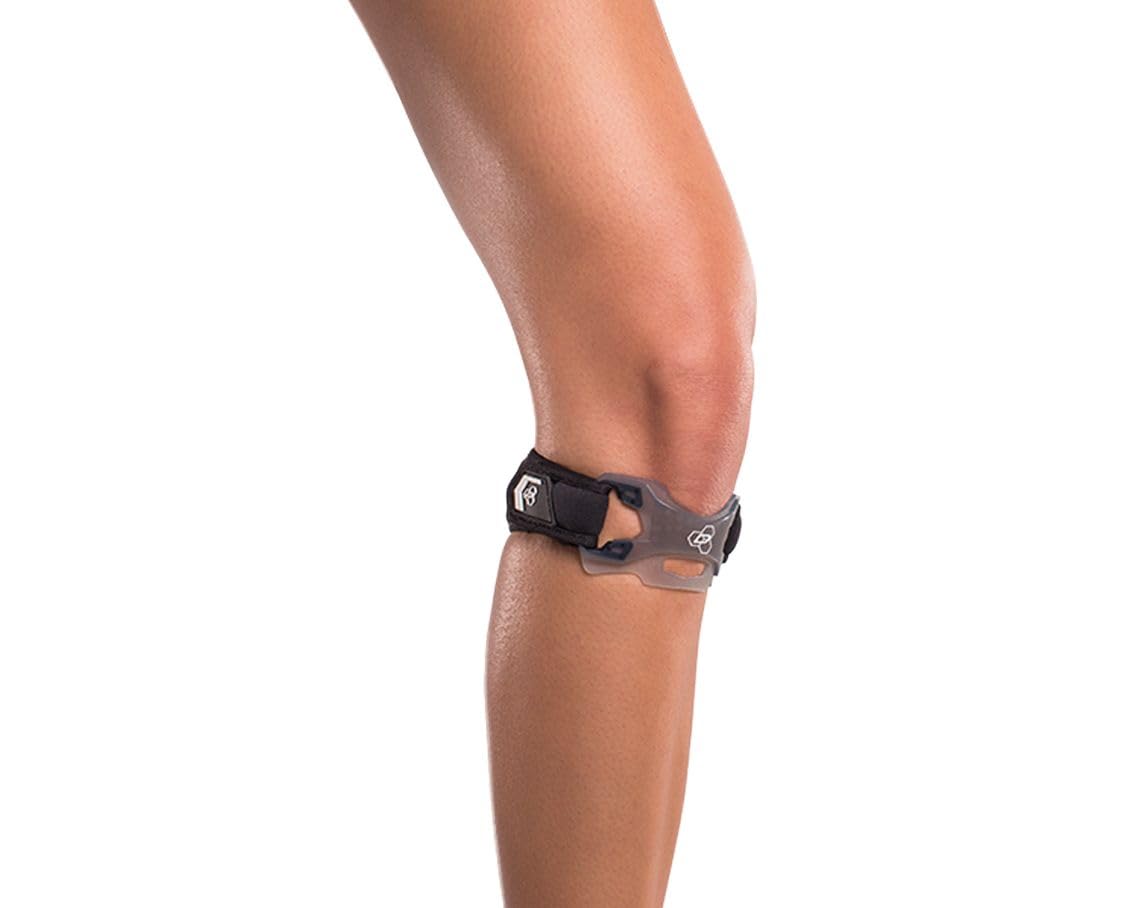
The DonJoy Webtech uses a silicone web pad that applies even pressure across the patellar tendon rather than a single hard point. This distributed force is critical for Osgood-Schlatter because it spreads the load away from the tibial tuberosity while still stabilizing the tendon. The compression-molded back pad with mesh layers makes it one of the more breathable options for sweaty summer practices or 10-hour warehouse shifts.
Multiple verified buyers who work delivery jobs and jump from trucks report complete pain elimination during their shift — one reviewer said they could forget about their knee entirely while wearing it. The contoured top and bottom lines prevent the strap from rolling or shifting out of position, which is a common complaint with thinner straps.
The thermoplastic rubber pull tabs make on-and-off adjustments easy even with sweaty hands, and the reflective strip adds safety for pre-dawn runs. The primary long-term durability concern is that the Velcro patch can lose stickiness after about a year of daily use, but the comfort and secure fit during high-impact movement make it a top contender for active users.
Why it’s great
- Silicone web distributes pressure evenly across the tendon
- Reflective element adds safety for low-light running
- Full mobility maintained during sprints and jumps
Good to know
- Must be cinched very tight to feel full effect for severe cases
- Hook-and-loop fastener may weaken after 12 months of heavy use
2. Zamst JK-1 Sports Knee Brace
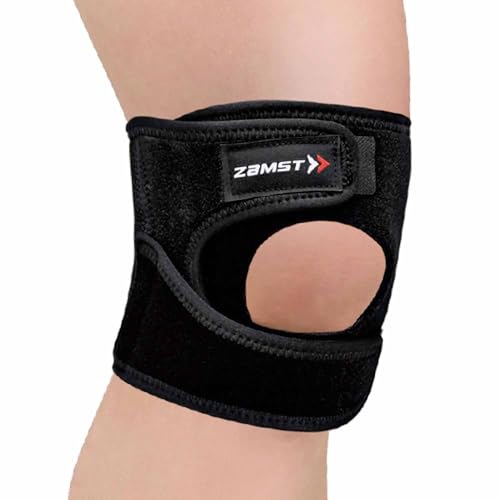
The Zamst JK-1 is built specifically for the adolescent knee — it comes in XS through L, and the sizing chart uses thigh circumference measured 5 cm below the kneecap, which is exactly where Osgood-Schlatter needs targeted compression. The PT pressure pad sits precisely below the kneecap where the tibial tuberosity is inflamed, and the adjustable under-strap with hook-and-loop fasteners lets you fine-tune the compression level as swelling changes during a tournament.
Unlike a simple strap, this is a sleeve that offers moderate knee support while the open panel design allows for easy wear under pants or field gear. One verified buyer raced a half marathon in it the day after purchase and reported that it got them through a rough patch — a strong endorsement for a brace that was originally designed for middle-school through high-school athletes.
The double raschel knit fabric provides breathability that prevents overheating during extended wear, and the fact that it can be applied without disrobing (just pull on over your pants) is a practical advantage for field use. The sleeve stays in place without slipping, though some users with very muscular legs found the open panel fit less snugly than expected.
Why it’s great
- Designed specifically for growing athletes and growth plate pain
- PT pad provides accurate compression below the kneecap
- Breathable double raschel fabric reduces sweat buildup
Good to know
- Sizing must be precise — measure thigh circumference, not height
- Not enough compression for very severe adult cases
3. Cho-Pat Dual Action Double-Layer Adjustable Knee Strap

The Cho-Pat Dual Action stands out because it applies force both above and below the kneecap — the upper tube reduces the pull from the quadriceps on the knee muscles while the bottom tubes press directly on the patellar tendon. This dual-action approach is particularly effective for Osgood-Schlatter when the condition also involves patellar tracking issues or chondromalacia. The open, double-layer design keeps the kneecap itself uncovered for full range of motion during activities like rowing and golf.
Orthopedic surgeons have recommended this brace to patients for nearly two decades, and one reviewer reported that it nursed their knee back to health in just four days after a downhill trail run injury. The Dynamic Diffusion tubes are removable for washing, which helps maintain hygiene during daily use. The double-layer material is lightweight and moisture-wicking, making it tolerable for all-day wear even in warm conditions.
Some users note that the strap feels slightly bulky compared to single-strap designs, and the pressure from the tubes can cause initial discomfort for those with sensitive skin or fibromyalgia. However, the consensus among long-term users — some have owned the same model for 15 years — suggests the durability and consistent pressure distribution justify the slightly larger profile.
Why it’s great
- Dual strap addresses both quadriceps pull and tendon pressure
- Orthopedic surgeon-recommended with 15+ year history
- Tubes removable for easy washing
Good to know
- Bulky feel may not fit under very tight pants
- Initial pressure can irritate sensitive skin for a few days
4. Push Sports Patella Brace

The Push Sports Patella Brace uses a unique anatomically shaped viscoelastic pad that cradles the patellar tendon rather than just pressing on it. This pad is designed with a specific curve that matches the posterior knee anatomy, which helps the brace stay in place during dynamic sports like volleyball and basketball without sliding down the shin. The anti-slip interior layer prevents the brace from migrating even during sweaty 5K runs, a feature that multiple marathoners and trail runners have praised.
One reviewer described the effect as “like magic” for runner’s knee, noting that the pain vanished completely once the brace was properly positioned. The low-profile construction means it fits easily under competition shorts without creating a bulky lump. The one-size design uses hook-and-loop fasteners for precise adjustment at any angle, and the navy blue color is discreet enough for daily wear.
However, the price point is the main friction point — some users note that the materials are essentially elastic, a small soft pad, and velcro, which made the current cost feel inflated compared to its earlier pricing. A smaller number of users reported that the strap can dig into the back of the knee if over-tightened, causing skin irritation during all-day wear. For those with severe sensitivity behind the knee, a sleeve-style brace might be more comfortable.
Why it’s great
- Viscoelastic pad provides even, non-slip pressure distribution
- Stays put during high-sweat, high-movement competition
- Low-profile design fits under shorts and uniform pants
Good to know
- Strap can irritate the back of the knee if too tight
- Some users feel the build quality doesn’t match the premium price
5. PROBAND KneedIT XM Compression Band

The PROBAND KneedIT XM takes a different approach from strap-style braces — it uses magnetic pads embedded in a soft-plastic plate that curves around the knee shape. This design creates intermittent soft tissue compression as the knee bends and straightens, which may help reduce swelling associated with Osgood-Schlatter. The V-notch at the front cradles the kneecap, while the pad wraps around the back of the leg with nylon hook-and-loop straps that allow adjustable tension.
Users with osteoarthritis and runner’s knee have reported immediate pain reduction, with one describing it as “80% pain relief instantly” and another calling it a “miracle” that let them walk stairs again. The magnetic compression mechanism is latex-free, which is important for users with latex allergies. The unit is machine-washable on the gentle cycle, though the manufacturer recommends hand washing to preserve the magnetic components.
The main limitation is the “one size fits most” claim — heavier users (over 250 lbs) have reported that the strap can create deep grooves in the leg when swollen, and the Velcro hook portion can protrude and irritate the skin behind the knee. The magnetic theory also isn’t universally accepted, though the consistent positive reviews suggest the compression therapy itself is the real driver of relief. This brace is best suited for all-day walking and general activity rather than high-speed competitive sports.
Why it’s great
- Magnetic pads provide an additional therapy dimension beyond compression
- Curved soft-plastic plate conforms to knee anatomy
- Can be worn under pants for daily, low-profile use
Good to know
- One-size design may not fit very large or very small legs properly
- Strap can dig into back of knee if not adjusted carefully
FAQ
Can a brace cure Osgood-Schlatter disease permanently?
Should I wear the brace during non-sporting hours?
How do I know if the pressure pad is positioned correctly?
Final Thoughts: The Verdict
For most active users, the best brace for osgood schlatter disease winner is the DonJoy Performance Webtech because the silicone web pad delivers even, non-slip pressure that stays put through sprints, jumps, and long work shifts. If you need a sleeve-style brace designed specifically for growing adolescent athletes, grab the Zamst JK-1. And for those dealing with both Osgood-Schlatter and patellar tracking issues, the Cho-Pat Dual Action provides the most comprehensive dual-point support.

Mo Maruf
I created WellFizz to bridge the gap between vague wellness advice and actionable solutions. My mission is simple: to decode the research and give you practical tools you can actually use.
Beyond the data, I am a passionate traveler. I believe that stepping away from the screen to explore new environments is essential for mental clarity and physical vitality.