Our readers keep the lights on and my smoothie glass nicely filled. As an Amazon Associate, I earn from qualifying purchases.
The promise of a built-in GPS for tracking your runs, hikes, and bike rides used to come with a price tag that felt punishing. You either paid a premium for a name-brand sports watch or lived with the inconvenience of strapping your phone to your arm. That compromise is dead. A new wave of trackers has brought standalone satellite positioning down to a price point that makes the feature a realistic expectation, not a luxury. The challenge now is separating the ones that deliver reliable tracking from those that just play the part.
I’m Mohammad Maruf — the founder and writer behind WellFizz. I spend my time digging into the hardware specs and real-world performance of wellness gadgets, cross-referencing user data across thousands of miles of tracked activity to find the devices that actually hold a satellite lock when you need it.
To find a budget fitness tracker with gps that won’t drop your route mid-run, you have to look past the marketing and focus on satellite system support, battery life with the GPS antenna active, and the accuracy of the positioning chipset under tree cover and urban canyons.
How To Choose The Best Budget Fitness Tracker With GPS
The entry-level GPS tracker market is dense with lookalikes that share the same oval screen and rubber band. But the internal silicon that actually pulls down satellite signals varies widely. You need to check three things before clicking add to cart: the number of satellite systems supported, the real-world GPS battery drain, and the water-resistance rating that matches your activity.
Multi-System Positioning vs. Single GPS
A tracker that only uses the American GPS constellation will struggle to lock quickly in dense tree cover or between tall buildings. Models that also pull from GLONASS (Russia), Galileo (Europe), or BeiDou (China) lock faster and hold the signal through more challenging environments. The more systems a chipset can listen to at once, the more accurate your pace and distance data will be.
GPS-On Battery Life is the Real Number
Manufacturers often advertise 10 to 14 days of battery life. That number comes from standby or light wrist-based tracking with the GPS antenna turned off. When you activate the satellite receiver for an outdoor workout, battery drain accelerates sharply. A tracker that lasts a week in daily use may only survive three to four hours of continuous GPS tracking. Look for the GPS-on battery spec or check user reviews that mention actual run time with the antenna engaged.
Water Resistance That Matches Your Workout
An IP68 rating means the tracker can survive submersion in fresh water up to 1.5 meters for 30 minutes — fine for rain and hand washing but risky for swimming laps. A 5ATM rating (50 meters) is the safe minimum for pool swimming and showering after a run. If you plan to track open-water swims, look for a higher rating and check that the manufacturer actually supports swimming as a sport mode.
Quick Comparison
On smaller screens, swipe sideways to see the full table.
| Model | Category | Best For | Key Spec | Amazon |
|---|---|---|---|---|
| Amazfit Bip 6 | Premium | All-day wear + accurate GPS | 5 satellite systems, 14-day battery | Amazon |
| Jugeman V20 | Premium | Rugged outdoor adventures | 6 satellite systems, 520mAh battery | Amazon |
| Tiwain Military | Mid-Range | Trail running with compass/altimeter | 6 satellite systems, 530mAh battery | Amazon |
| HUAKUA GPS Watch | Mid-Range | Budget-friendly daily tracking | Built-in GPS, 400mAh battery | Amazon |
| Xiaomi Smart Band 10 | Mid-Range | Minimalist fitness and sleep tracking | AMOLED display, 21-day battery | Amazon |
| Parsonver GOPO2 | Budget | Entry-level GPS without phone | Built-in GPS, IP68 waterproof | Amazon |
| LICYAPO AI Watch | Budget | Multi-system GPS on a tight budget | GPS+GLONASS+BeiDou+Galileo | Amazon |
In‑Depth Reviews
1. Amazfit Bip 6

The Amazfit Bip 6 is the rare tracker that doesn’t force you to choose between a quality display and reliable satellite performance. Its 1.97-inch AMOLED panel hits 2000 nits of peak brightness, which means you can read your pace mid-stride even under direct summer sun. The aluminum alloy case keeps the weight low enough for sleep tracking, a feature that matters when you need recovery data between long runs.
Satellite acquisition is fast thanks to support from five positioning systems — GPS, GLONASS, Galileo, BeiDou, and QZSS. The free downloadable maps and turn-by-turn directions give it navigation capability that most budget trackers omit entirely. With a 14-day battery life in typical use, you can charge it once every two weeks rather than every morning. The GPS-on endurance is roughly 14 hours, enough for a full marathon or a long-day hike.
The Zepp app packs a lot of data but requires some patience to navigate if you want to drill into advanced metrics. You cannot reply to texts or emails from the wrist, and there’s no onboard music storage. If you want a pure fitness companion with premium display quality and a mature companion app, this is the benchmark for the sub- GPS tracker category.
Why it’s great
- Bright AMOLED display visible in direct sunlight
- 14-day battery life with GPS endurance for full marathons
- Offline maps with turn-by-turn navigation
Good to know
- Cannot reply to texts from the wrist
- No onboard music storage for phone-free runs
2. Jugeman V20 Military Smart Watch
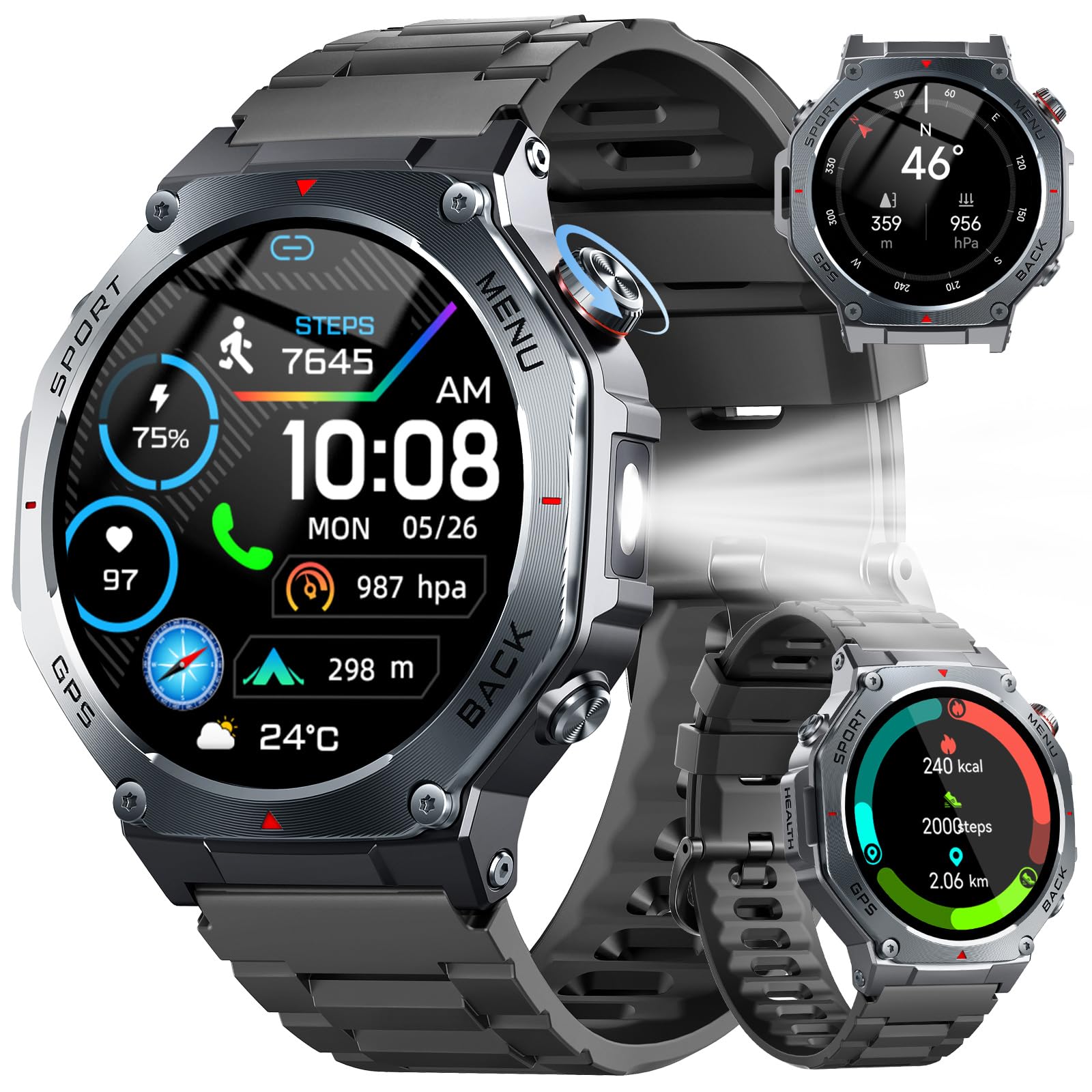
The Jugeman V20 takes a different approach to the budget GPS tracker formula by prioritizing physical resilience. The case is built from a composite material with a metal shell, and it has passed military-standard tests for temperature extremes, low air pressure, dust, salt spray, and liquid contamination. If your runs take you through mud, rain, and gravel paths, this tracker won’t flinch.
The 1.43-inch AMOLED display with always-on functionality looks sharp, and the 520mAh battery delivers 7 to 10 days of typical use. When the GPS is active for continuous tracking, the battery lasts approximately three days — a respectable figure for a tracker in this price tier. The six-satellite support (GPS, GLONASS, BeiDou, Galileo, NAVIC, QZSS) gives it quick lock times even in canyons or under dense canopy.
The built-in LED flashlight, activated by a single button, is genuinely useful for early-morning or post-sunset runs. The compass and barometer add trail-ready data points. The alarm tone is fixed to a specific melody and cannot be changed, and customer support is difficult to reach. For runners who prioritize durability over software polish, this is a strong contender.
Why it’s great
- Military-standard build for harsh outdoor environments
- Six-satellite positioning for fast, accurate GPS locks
- LED flashlight and compass for trail safety
Good to know
- Alarm tone cannot be customized
- No direct customer service phone line
3. Tiwain Military Smart Watch

The Tiwain Military Smart Watch delivers a feature set that rivals devices costing twice as much. The 1.43-inch AMOLED HD touchscreen produces vivid colors, and the zinc alloy with vacuum-plated finish gives it a premium hand feel that belies its price segment. The included orange silicone band adds visibility for trail running, while the black band keeps the look clean for daily wear.
Satellite positioning draws from six systems, and the onboard compass, altimeter, and barometer provide real-time altitude and air pressure readings — tools that hikers and trail runners actually lean on. The 530mAh battery yields 7 to 10 days of typical use, and GPS-on endurance stretches to approximately three days of continuous tracking. The IP68 waterproof rating means it can handle rain and sweat but should not be submerged in salt water or used in a sauna.
The companion GloryFitPro app has raised privacy concerns due to extensive data collection, and GPS stability has been reported as inconsistent by some users. For outdoor enthusiasts who want a full sensor suite at a bargain price, the hardware is compelling, but be prepared to evaluate the app carefully before syncing personal health data.
Why it’s great
- Zinc alloy case with vacuum-plated finish
- Compass, altimeter, and barometer onboard
- 530mAh battery with 30-day standby
Good to know
- GloryFitPro app has extensive data collection policies
- GPS stability can be inconsistent
4. HUAKUA GPS Smart Watch
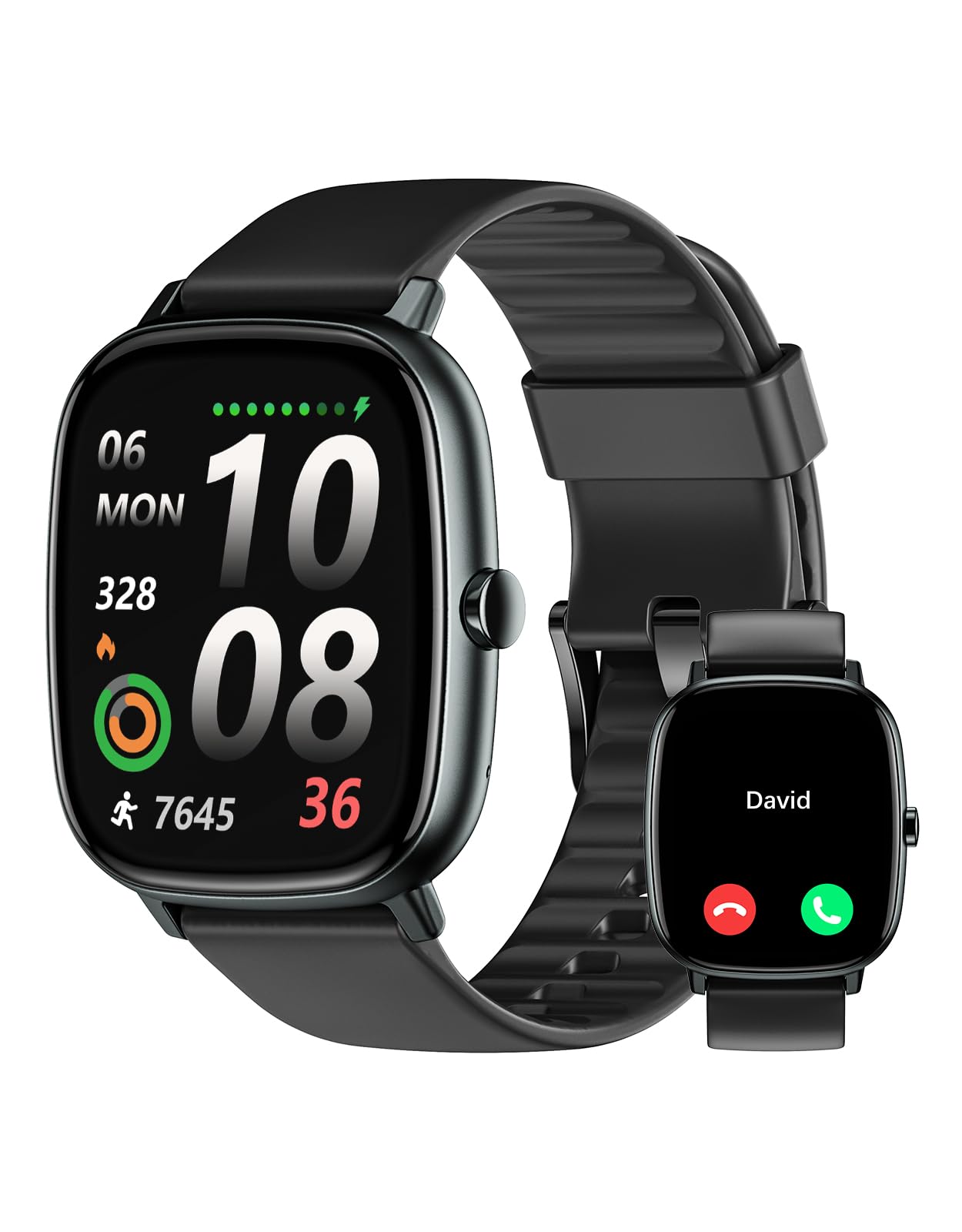
The HUAKUA GPS Smart Watch focuses on the essentials without bloating the experience with secondary features you won’t use. Its 1.95-inch full-touch screen uses enlarged fonts and high contrast ratios to make data readable during movement, and the ultra-thin bezel gives it a modern silhouette that looks more expensive than it is. The lightweight plastic case keeps the watch comfortable enough for 24-hour wear.
The built-in GPS operates independently of your phone, recording real-time pace, distance, and route data. The 400mAh battery delivers up to 7 days of typical usage and approximately 14 hours with GPS active — enough for a full day of hiking or multiple short runs between charges. The IP68 rating handles sweat, rain, and hand washing but is not suitable for swimming or submersion beyond 1.5 meters.
Over 200 customizable watch faces and the ability to upload personal photos give it a level of personalization that many pricier competitors restrict behind paywalls. The main limitation is the lack of a dedicated sport app with advanced analytics; the companion app presents basic metrics without deep training insights. For casual runners and daily step counters who want reliable GPS without complexity, this is the most straightforward option.
Why it’s great
- Large 1.95-inch HD display with readable fonts
- 14 hours of continuous GPS tracking
- 200+ custom watch faces with photo uploads
Good to know
- Companion app lacks advanced training analytics
- Not rated for swimming or deep submersion
5. Xiaomi Smart Band 10
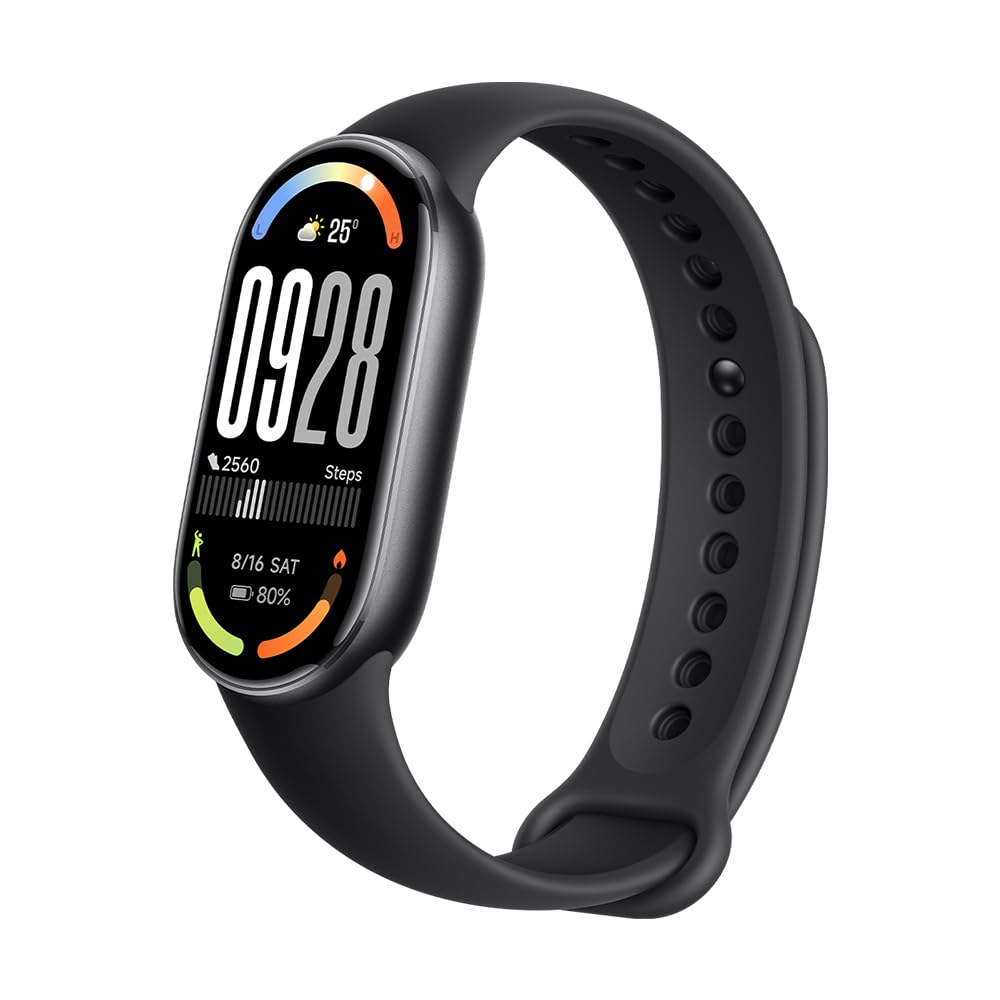
The Xiaomi Smart Band 10 proves that a fitness tracker does not need a large watch face to deliver accurate satellite tracking. The 1.72-inch AMOLED display is the largest on a Xiaomi Band to date, and the 1500 nits high-brightness mode makes it legible in direct sunlight — a critical spec for outdoor runners. The fluoroelastomer band is soft and flexible, making the band comfortable for 24-hour wear including sleep tracking.
The 21-day battery life is the standout feature here. Even with GPS-enabled outdoor workouts a few times per week, you can expect to charge roughly once every two weeks. The fast charging fills the 200mAh battery in one hour. The band supports connected GPS, meaning it uses your phone’s GPS signal for route tracking rather than an independent receiver — a compromise that saves cost and weight but requires you to carry your phone during outdoor activities.
The step counter has documented accuracy issues, often miscounting compared to dedicated pedometers. The companion app uses a metric-only system by default, and switching to imperial units requires linking through Google Fit. For runners who always carry a phone and want the longest possible interval between charges, this is the lightest and most battery-efficient companion available.
Why it’s great
- 21-day battery life with fast 1-hour charging
- Bright AMOLED display at 1500 nits
- Ultra-light and comfortable for sleep tracking
Good to know
- Uses connected GPS — requires phone for route tracking
- Step counter accuracy is inconsistent
6. Parsonver GOPO2 Smart Watch

The Parsonver GOPO2 brings standalone GPS to an unusually low price point without forcing you to surrender the basics. The built-in GPS operates entirely independent of your phone, tracking your route, pace, distance, and calories during outdoor activities. The watch automatically recognizes running, cycling, rowing machine, and elliptical workouts — a convenience feature typically reserved for mid-range devices.
The 1.85-inch HD display is paired with two bands: a breathable nylon strap for workouts and a soft silicone band for daily wear. Bluetooth 5.3 handles call and notification duties with a clear speaker and noise cancellation, and the 300mAh battery delivers roughly 7 days of normal use with GPS usage reducing that window to about 6 days per the customer feedback. The IP68 waterproof rating protects against rain and hand washing.
The step counter tends to overcount during workouts while undercounting distance traveled, and the FitBeing companion app lacks customization options for sport modes. Several users reported battery degradation after several months of use, with some units failing to hold a charge after a full year. For a starter GPS tracker that proves the concept at a very low entry cost, this device delivers the core feature you actually need.
Why it’s great
- Standalone GPS without phone dependency
- Two included bands for workout and daily wear
- Bluetooth 5.3 with clear call quality
Good to know
- Step and distance tracking accuracy is inconsistent
- Reported battery degradation after extended use
7. LICYAPO AI Smart Watch

The LICYAPO AI Smart Watch packs an unusually broad sensor suite into its budget frame. The multi-system GPS supports GPS, GLONASS, Galileo, and BeiDou simultaneously, which translates to faster and more stable lock times than single-system alternatives at this price tier. The onboard compass, barometer, and altimeter provide real-time environmental data that outdoor runners and hikers will actually use.
The 1.96-inch HD display supports AI voice commands for setting watch faces and accessing tools, and the SMS quick reply feature works on Android devices — a rare inclusion at this price point. The battery life spans 3 to 4 days with typical use, which is shorter than the competition but reasonable given the always-on GPS and AI processing. The silicone band has been reported to fail after a few months, and finding replacement bands in the correct size can be difficult.
The health tracking features include emotional analysis and fatigue assessment alongside the standard heart rate, SpO2, and sleep monitors. These secondary metrics are interesting but lack clinical validation. The PAI health score provides a single-number summary of daily activity intensity. For runners who want the most satellite support and AI features for the lowest possible cost, this watch offers the best specification per dollar spent, with the caveat that build quality on the strap is a weak point.
Why it’s great
- Four-system GPS for fast satellite locks
- AI voice assistant with SMS reply on Android
- Compass, barometer, and altimeter onboard
Good to know
- Silicone band prone to breakage after a few months
- Battery life limited to 3-4 days per charge
FAQ
Can a budget GPS tracker work without a phone nearby?
How accurate is the GPS on a budget fitness tracker compared to a premium brand?
What does IP68 mean for a fitness tracker used during running and swimming?
Final Thoughts: The Verdict
For most users, the budget fitness tracker with gps winner is the Amazfit Bip 6 because it combines an excellent AMOLED display, reliable five-system GPS, and a mature app ecosystem without pushing past a reasonable budget ceiling. If you want a rugged build with an LED flashlight and compass for trail running, grab the Jugeman V20. And for the absolute lowest entry cost into standalone satellite tracking, nothing beats the Parsonver GOPO2.

Mo Maruf
I created WellFizz to bridge the gap between vague wellness advice and actionable solutions. My mission is simple: to decode the research and give you practical tools you can actually use.
Beyond the data, I am a passionate traveler. I believe that stepping away from the screen to explore new environments is essential for mental clarity and physical vitality.