Our readers keep the lights on and my smoothie glass nicely filled. As an Amazon Associate, I earn from qualifying purchases.
Finding the right mobility aid when ALS progresses is less about choosing a device and more about preserving dignity, safety, and caregiver energy. Each piece of adaptive equipment must solve a specific daily challenge — transferring from bed to wheelchair, standing to pivot, or moving independently around the home — without adding complexity or physical strain to the routine.
I’m Mohammad Maruf — the founder and writer behind WellFizz. I’ve spent years analyzing medical mobility hardware specifications, comparing weight limits, lift ranges, and compatibility across brands to identify equipment that genuinely reduces caregiver burden while keeping patients safe.
This guide focuses on the specific mobility challenges of ALS, from transfer slings to electric lifts. You’ll find the adaptive equipment for als patients that balances clinical reliability with practical daily use.
How To Choose The Best Adaptive Equipment For ALS Patients
ALS progression affects each patient differently, which means no single device covers every stage. The key is matching the equipment’s weight capacity, transfer height range, and patient support type to the specific mobility level as it changes. Focus on three variables: how much weight the device holds, the range of motion it allows, and how much upper body effort the patient can contribute.
Weight Capacity & Lift Range
Every lift, sling, and wheelchair has a maximum load. For ALS patients, choose equipment rated at least 50 pounds above the patient’s current weight to leave room for future use. The lift range — how low and how high the boom travels — determines whether the device can pick someone up from the floor, the bed, or a seated chair. Floor-to-bed lifts need a range of at least 20 to 64 inches.
Sling Types & Patient Participation
Stand-assist slings require the patient to bear weight and hold on during the transfer. Full-body slings lift the patient completely off the surface, ideal for those with minimal trunk control. For ALS patients who can still stand briefly but have weak legs, a sit-to-stand sling preserves mobility longer. Full-body slings with padding reduce pressure on fragile skin.
Manual vs. Electric Operation
Hydraulic lifts use a hand pump — no batteries, reliable, but require physical effort from the caregiver. Electric lifts run on rechargeable batteries and lift with a button press, saving caregiver energy during multiple daily transfers. For ALS home care with one caregiver, electric models reduce long-term physical strain, while hydraulic models remain dependable and serviceable without charging.
Rollator vs. Transport Chair vs. Wheelchair
A rollator-walker combo works when the patient can walk short distances but needs to sit when tired. A transport chair is pushed by a caregiver. A reclining wheelchair allows position changes for pressure relief. For ALS, the ability to recline and elevate legs becomes critical as the condition progresses — consider a reclining wheelchair with elevating leg rests for positional comfort.
Quick Comparison
On smaller screens, swipe sideways to see the full table.
| Model | Category | Best For | Key Spec | Amazon |
|---|---|---|---|---|
| Invacare Hydraulic Patient Lift | Hydraulic Lift | Floor-to-bed transfers | Lift range 20-64 inches | Amazon |
| Hi-Fortune Electric Patient Lift | Electric Lift | Caregiver ease with push-button | 450 lb capacity, battery powered | Amazon |
| Aotedor Electric Wheelchair | Power Wheelchair | Independent outdoor mobility | 30-mile range, 39 lbs | Amazon |
| Etac Turner PRO Transfer Aid | Pivot Transfer | Stand-pivot transfers with caregiver | 440 lb capacity, 17.6 lbs | Amazon |
| Medline Reclining Wheelchair | Reclining Wheelchair | Positional comfort & pressure relief | Reclines 90-140 degrees | Amazon |
| Helavo 2 in 1 Walker Wheelchair | Rollator Combo | Active user who needs rest seating | 300 lb capacity, 21.2 lbs | Amazon |
| Patient Aid Padded Sit-to-Stand Sling | Transfer Sling | Weight-bearing standing transfers | Fits 400-600 lb patients | Amazon |
In‑Depth Reviews
1. Invacare Hydraulic Patient Lift

The Invacare 9805P delivers a clinical-grade bent mast geometry that keeps the patient centered during lifts rather than swinging into the frame — a design detail that reduces anxiety for ALS patients during transfers. Its 20- to 64-inch lift range means it can recover someone from the floor after a fall, then reach bed height without changing equipment. At 68 pounds, it is the lightest hydraulic lift in its category, making it easier for a single caregiver to assemble and reposition between rooms.
The hydraulic pump handle rotates to either side, which matters in tight bathrooms or narrow hallways where approaching from only one angle is possible. The legs spread from 22 inches for doorway clearance to 62 inches for stable transfers into a wheelchair. The low-friction casters reduce the force needed to start rolling even on carpet, which directly reduces shoulder strain for the caregiver.
This is a manual lift — no battery to charge, no electronics to fail. For ALS families who need a reliable everyday tool for bed, chair, and floor transfers, the bent mast design and three-year warranty provide long-term value that entry-level lifts do not match.
Why it’s great
- Bent mast prevents patient from hitting the frame during lift
- Floor-to-bed range covers emergency pickups
- Lightest in class at 68 pounds for easier transport
- Three-year frame warranty
Good to know
- Wheels may struggle on thick carpet
- Sling fabric can feel rough — consider a padded sling separately
2. Hi-Fortune Electric Patient Lift

For ALS caregivers handling multiple transfers daily, the Hi-Fortune electric lift removes the physical pumping action entirely. A push-button hand control raises and lowers the patient smoothly, and the rear pedal lets the caregiver widen or narrow the base with one foot. The lift range of 33 to 68 inches covers bed, chair, and shower transfers but cannot reach the floor for fall recovery unless the patient is already near ground level.
The swan-neck leg design curves around furniture, allowing closer positioning to wheelchairs and recliners without having to perfectly align the patient in mid-air. The four-point spreader bar distributes weight evenly, and the included U-sling is made from polyester that works in dry or wet environments — useful for transfers into a shower chair. The unit weighs 99 pounds, heavier than the hydraulic Invacare, but electric operation compensates for the extra heft.
Battery life holds up well over a year of daily use based on long-term reviews, and the lift cannot operate while charging, so overnight charging becomes the standard routine. The one-year frame warranty and six-month actuator warranty are shorter than premium brands, but the electric convenience is a real advantage when caregiver energy is the limiting factor.
Why it’s great
- Push-button operation saves caregiver physical effort
- Swan-neck base fits around furniture for close positioning
- Pedal-controlled leg width adjustment
- Sling works in wet environments
Good to know
- Heavier than hydraulic equivalents at 99 pounds
- Cannot lift from floor — minimum height is 33 inches
3. Aotedor Lightweight Electric Wheelchair
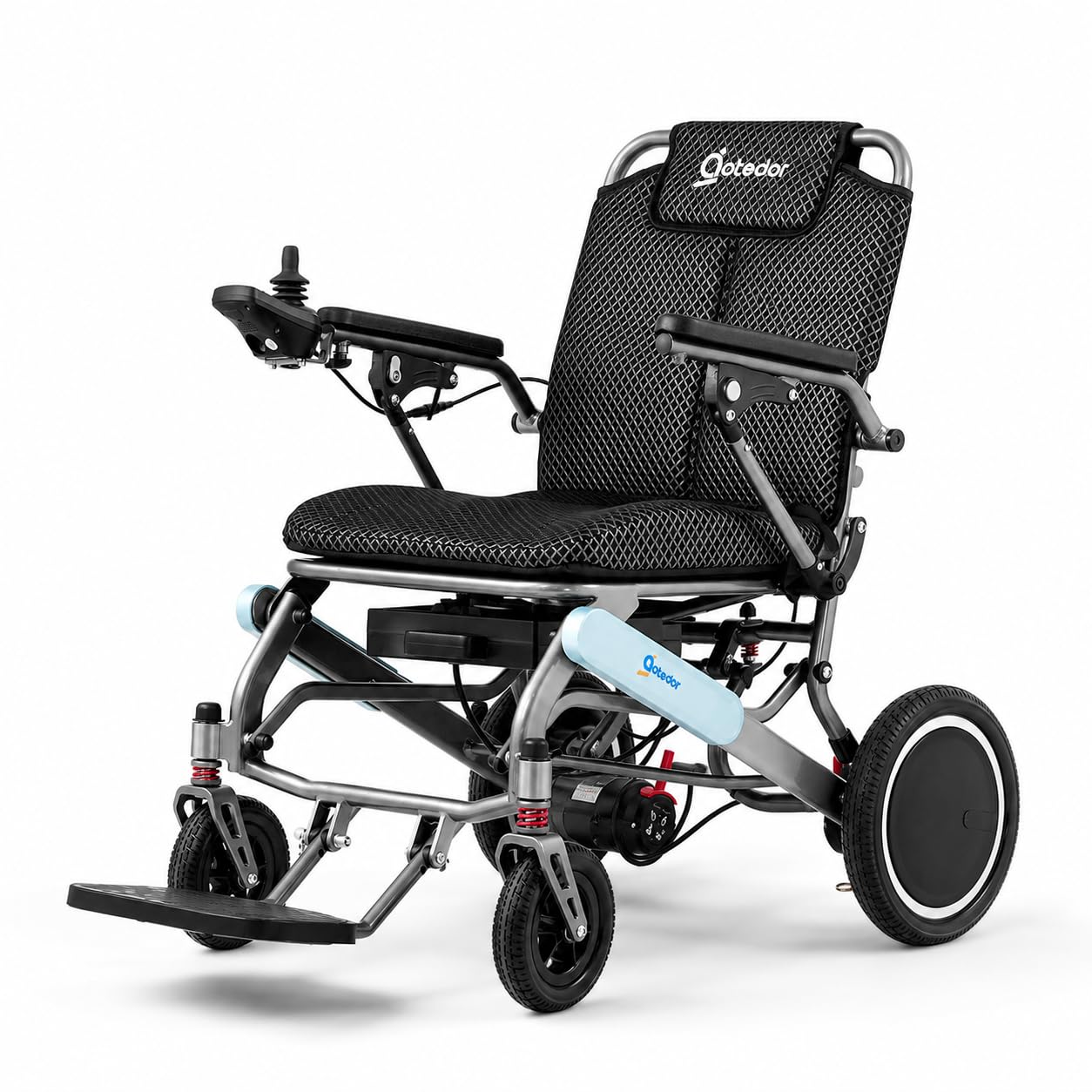
The Aotedor 220 is built for ALS patients who still have upper body control and want independent mobility without needing a caregiver to push. At 39 pounds with a foldable aluminum frame, it fits into most car trunks and is airline-approved — practical for maintaining outside activities. Dual brushless motors and spring suspension provide a smooth ride on pavement, sidewalks, and indoor flooring, though the front wheels are small enough that large thresholds may require a slow approach.
The dual 12Ah lithium batteries deliver up to 30 miles per charge, which covers full days of errands or visits. The electromagnetic braking system stops the chair automatically when the joystick is released, adding a safety layer for users with reduced hand control. The ergonomic seat cushion provides reasonable comfort for extended sitting, though some users report the seat slants slightly backward, which may require a separate positioning cushion for proper alignment.
Battery replacement after about a year is a noted concern, and the joystick sensitivity can trigger accidental movement. However, the lightweight foldable form factor and responsive customer support make it a strong option for patients who still drive their own mobility.
Why it’s great
- Folds to 39 pounds for easy car transport and airline use
- Dual batteries deliver up to 30 miles per charge
- Electromagnetic braking for added safety
- Suspension smoothens outdoor rides
Good to know
- Small front wheels struggle with high thresholds
- Joystick can be overly sensitive for some users
4. Etac Turner PRO Transfer Aid
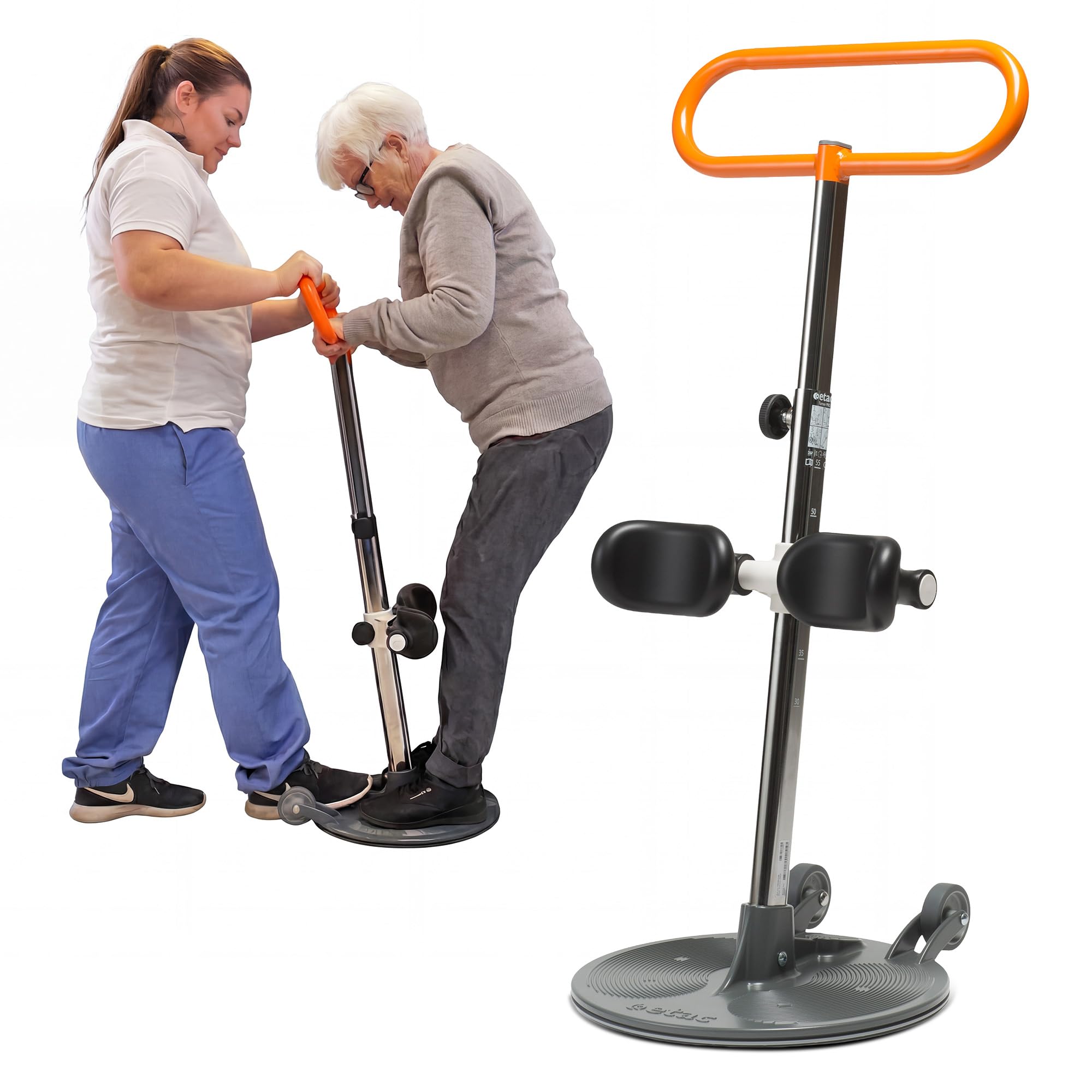
The Etac Turner PRO is a standing pivot transfer aid, not a lift — meaning the patient must have enough upper body strength to pull themselves to a standing position and grip the handle for 15 to 30 seconds. For ALS patients in early to mid stages who can still stand with support, this device transforms what would be a two-person lift into a one-person guided pivot. The caregiver stands close, guides the rotation, and the patient controls the standing phase.
The adjustable leg pads provide lateral stability during the pivot, and the anti-slip base plate works on tile, hardwood, and low-pile carpet. The unit weighs only 17.6 pounds and has a compact footprint, so it stores easily under a bed or in a closet. The swivel function lets the patient turn in place without shuffling their feet, reducing fall risk during bed-to-commode or chair-to-toilet transfers.
The handle height adjuster on some units struggled to lock at lower positions, which is a quality control point to check upon arrival. But for eligible patients who can stand briefly, this aid preserves their remaining mobility and gives caregivers a dramatically safer transfer method than manual lifting.
Why it’s great
- Eliminates manual lifting for caregivers
- Lightweight and compact for storage
- Encourages patient to use remaining leg strength
- Smooth swivel base for controlled rotation
Good to know
- Requires patient to pull themselves to standing
- Handle height adjuster inconsistency reported
5. Medline Reclining Wheelchair 18″
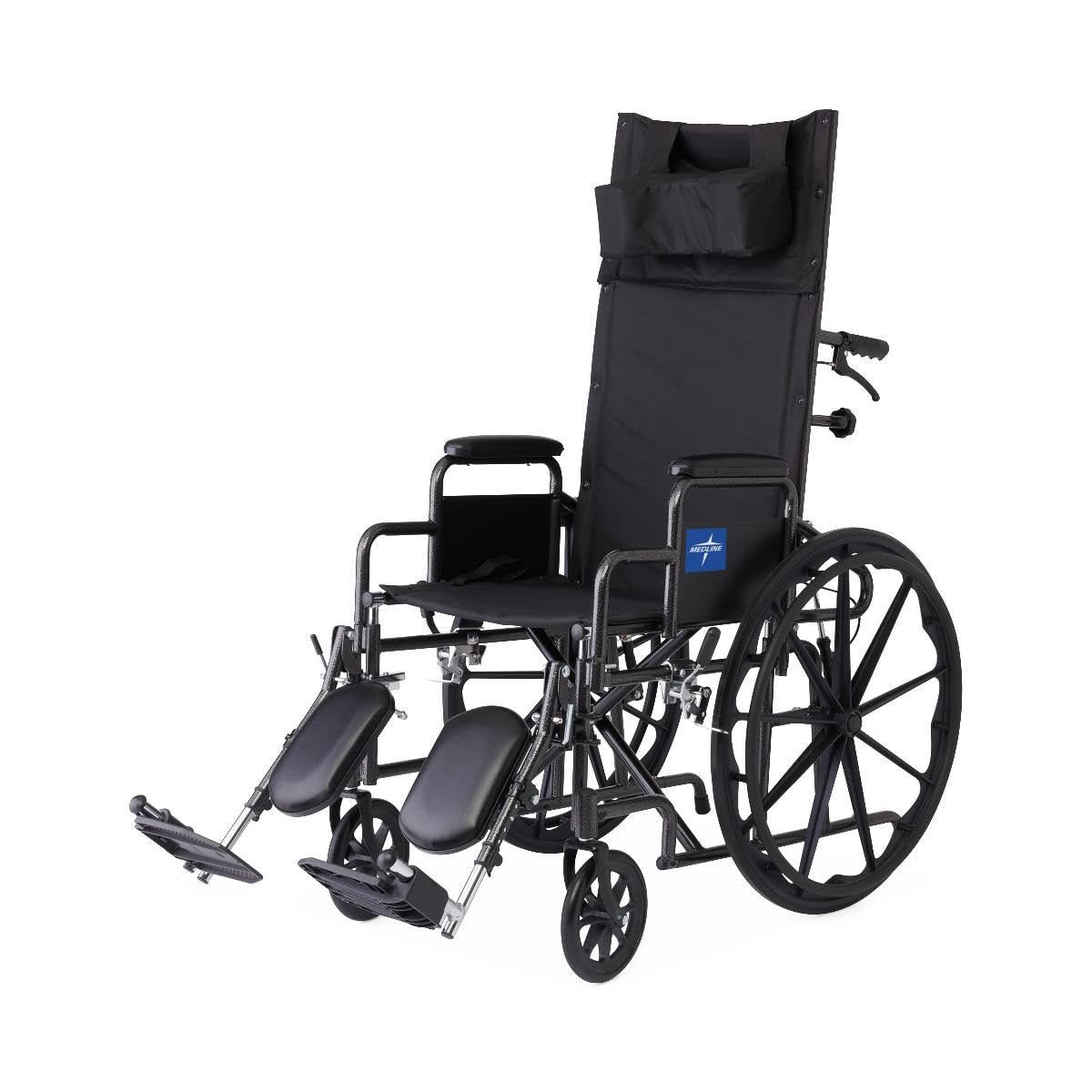
The Medline KR188N21E reclining wheelchair addresses a specific ALS need: the inability to maintain an upright seated position for long periods. The back reclines from 90 degrees to 140 degrees, allowing the patient to shift weight and relieve pressure without being moved to a bed. Elevating leg rests further reduce edema and provide positional comfort during daytime rest — a practical feature for ALS patients who spend most of their waking hours in a chair.
The nylon upholstery wipes clean easily, which matters for daily use. The 300-pound weight capacity covers most adult users, and the desk-length arms allow the wheelchair to slide under tables. Assembly requires attaching the back extension and leg rests, and the 65-pound shipping weight means two people should unpack it. The 18-inch seat width fits standard door frames, and the overall width at 22 inches clears most residential hallways.
The rear pushing handles are not height-adjustable and sit lower than many caregivers prefer, which can make navigating uphill or over long distances more tiring. Reclining the chair while someone is in it also takes notable effort and works best when done empty first. Still, for daytime pressure relief and leg positioning, this chair fills a gap that standard wheelchairs cannot.
Why it’s great
- Reclining backrest for pressure relief without bed transfer
- Elevating leg rests improve circulation and comfort
- Easy-clean nylon upholstery
- 300-pound weight capacity
Good to know
- Rear push handles not adjustable — low for some caregivers
- Reclining while occupied requires significant effort
6. Helavo 2 in 1 Walker Wheelchair Combo
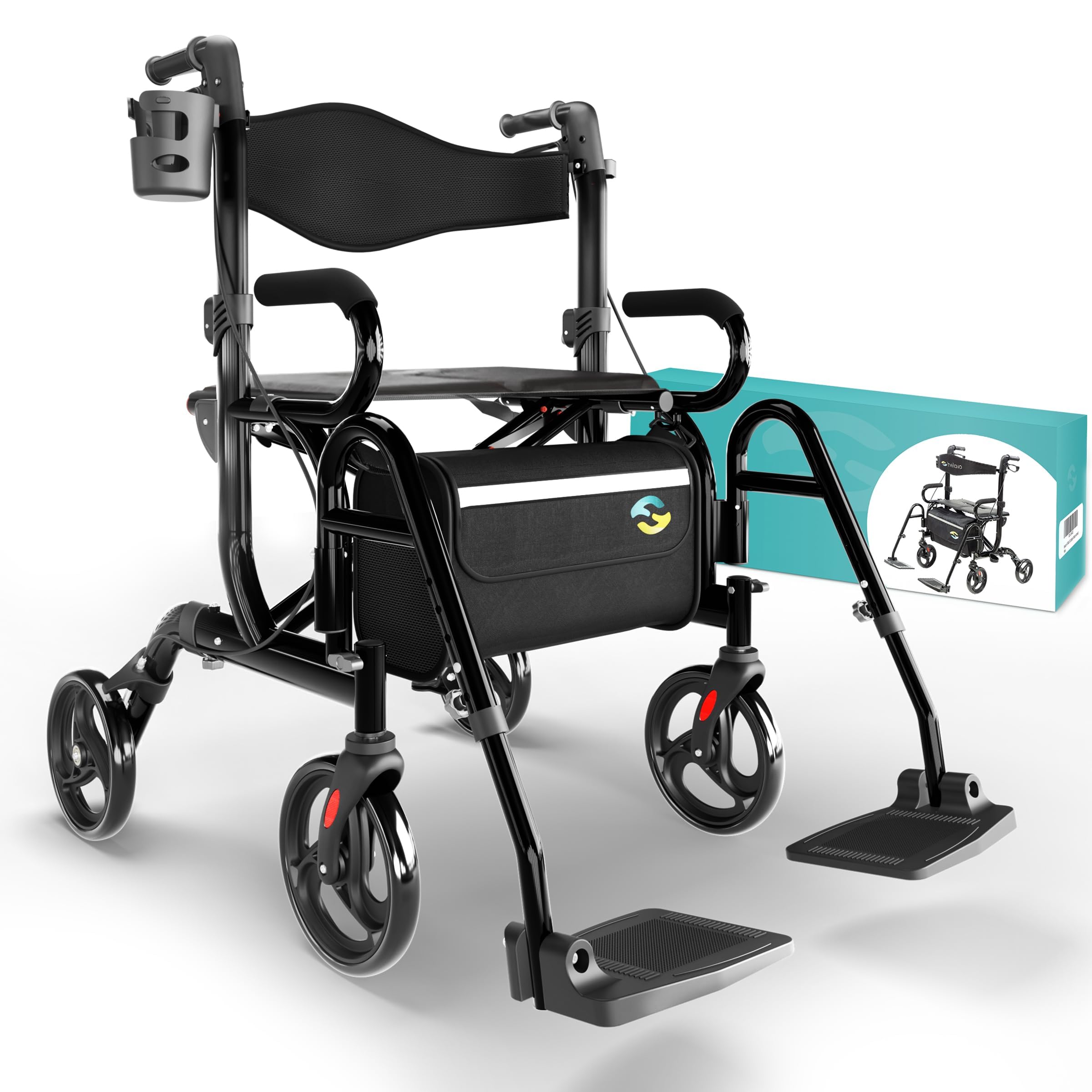
The Helavo H1070 serves ALS patients who can still walk short distances but fatigue quickly — it functions as a rollator walker with a seat, then converts to a transport chair for caregiver-pushed mobility. The conversion takes seconds: swing the footrests into place and the walker becomes a wheelchair. At 21.2 pounds, it is light enough for most caregivers to lift into a car, and the compact folded size of 27.6 x 11.4 inches fits in smaller trunks.
The seat width is 18.3 inches with a depth of 12.2 inches and a seat height of 21.7 inches, making it comfortable for users between about 5 feet 4 and 6 feet 2 inches. Large rear wheels handle uneven sidewalks and curbs better than smaller casters, though the hard plastic front wheels can slip on grass or gravel. The handle height adjusts between 32.7 and 37.8 inches, accommodating a range of caregiver or user heights.
The included cup holder, cane holder, and shopping bag add daily convenience. The one-year warranty is extendable to three years. For ALS patients in the early to middle stages who still get out of the house, this combo reduces the need for separate walker and wheelchair purchases.
Why it’s great
- Converts from walker to transport chair in seconds
- Lightweight at 21.2 pounds for easy car transport
- Folds compact for storage
- Adjustable handle height fits multiple users
Good to know
- Hard plastic wheels struggle on grass and gravel
- Storage bag can knock off during use
7. Patient Aid Padded Sit-to-Stand Sling

The Patient Aid PASA4 sit-to-stand sling is the accessory that makes transfer lifts actually usable for ALS patients who can bear partial weight. It wraps around the torso with padding at the lower back and under the arms, reducing pressure points during the lift. The four pairs of color-coded straps connect to 2-, 4-, or 6-point spreader bars, making this sling compatible with lifts from brands like Drive, Hoyer, Invacare, Lumex, and Medline.
This is not a full-body sling — it requires the patient to support some of their own weight during the transfer. The X-Large size fits patients up to 600 pounds with a torso width designed for larger frames. The polyester material may feel stiff for the first several uses but softens with washing and regular use. The belt fastens around the waist to prevent slipping during the lifting motion.
For ALS patients who still have some trunk support, this sling preserves their active participation in the transfer, which can slow muscle atrophy. The padded design directly addresses the skin sensitivity that comes with prolonged sitting. Caregivers report the sling works well with sit-to-stand lifts and provides noticeable additional security compared to unpadded alternatives.
Why it’s great
- Padded back and under-arm areas reduce pressure
- Color-coded straps simplify lift attachment
- Compatible with most major lift brands
- X-Large fits up to 600 pounds
Good to know
- Not a full-body lift — patient must bear weight
- Polyester fabric requires break-in period
FAQ
Can a sit-to-stand sling be used for a patient who cannot bear any weight?
How often should the lift battery be charged on an electric patient lift?
Final Thoughts: The Verdict
For most users, the adaptive equipment for als patients winner is the Invacare Hydraulic Patient Lift because the bent mast floor-to-bed range and lightweight frame make it the most versatile single lift for progressive ALS. If you want electric push-button convenience, grab the Hi-Fortune Electric Lift to reduce caregiver effort during every transfer. And for patients who still have independent mobility, nothing beats the Aotedor Electric Wheelchair for lightweight foldable freedom outside the home.

Mo Maruf
I created WellFizz to bridge the gap between vague wellness advice and actionable solutions. My mission is simple: to decode the research and give you practical tools you can actually use.
Beyond the data, I am a passionate traveler. I believe that stepping away from the screen to explore new environments is essential for mental clarity and physical vitality.