Our readers keep the lights on and my smoothie glass nicely filled. As an Amazon Associate, I earn from qualifying purchases.
A hemiplegic shoulder isn’t just painful — it pulls the humeral head out of its socket with every gravity cycle, stretching the capsule and compressing nerves. Standard slings that loop around the neck add pressure precisely where a stroke patient can least tolerate it, often causing skin breakdown and breathing restriction. The right orthosis must counteract subluxation by cradling the glenohumeral joint and redistributing the limb’s weight across the torso, not the cervical spine.
I’m Mohammad Maruf — the founder and writer behind WellFizz. I’ve spent years dissecting medical orthotic data, comparing joint alignment mechanisms, and analyzing real-world feedback on shoulder stabilization devices for neurological patients.
This guide evaluates seven slings and braces, focusing on sublimation control, material breathability, adjustability for one-handed donning, and long-term wear comfort, so you can confidently choose the best arm sling for stroke patients for your specific recovery needs.
How To Choose The Best Arm Sling For Stroke Patients
Selecting the right shoulder orthosis for a stroke survivor means prioritizing subluxation reduction, pressure distribution, and ease of use for a caregiver or one-handed patient. Here are the three critical factors to evaluate.
Subluxation Reduction Mechanism
A hemiplegic shoulder often develops inferior subluxation — the humeral head drops downward. Look for a brace with a shoulder saddle (a curved pad that sits on the superior shoulder) connected to a biceps or forearm cuff via adjustable distraction straps. This setup lifts and supports the humerus from above, unlike a standard sling that merely holds the wrist and pulls the arm against the body, which does not correct the upward displacement.
Donning Independence & Caregiver Workflow
Many stroke patients have only one functional hand. An optimal sling features a front-closing hook-and-loop system that allows single-handed adjustment, or a design where the arm can be slipped in and out without threading straps through buckles. If the brace requires complex routing of straps behind the back, plan for a caregiver to assist — but ensure the adjustment points are clearly labeled and accessible.
Breathable, Skin-Friendly Materials
Extended wear against impaired skin demands moisture-wicking, non-abrasive fabric. Neoprene traps heat and sweat, increasing maceration risk on insensate skin. Open-cell polyurethane padding, breathable cotton, or silicone-lined elastic panels reduce friction while allowing airflow. Machine-washable construction is a strong advantage for hygiene maintenance.
Quick Comparison
On smaller screens, swipe sideways to see the full table.
| Model | Category | Best For | Key Spec | Amazon |
|---|---|---|---|---|
| Ottobock Shoulder Stabilizer (Medium Left) | Premium | PDAC-approved subluxation control | 20-24 lbs lifting capacity; silicone grip | Amazon |
| Ottobock Shoulder Stabilizer (Large Left) | Premium | Extended torso fit for larger frames | Chest 40.6-43.3″; silicone grip | Amazon |
| AliMed Hemi Shoulder Sling (Left Large) | Premium | Lightweight saddle anchor system | 4.8 oz; open-cell foam cuff | Amazon |
| AliMed Hemi Shoulder Sling (Right X-Small) | Premium | Pediatric or petite hemiplegic arm | 1.6 oz; elastic belly band | Amazon |
| NEOFECT Shoulder Brace Left | Mid-Range | Memory foam armpit pillow comfort | 272 g; detachable arm sling | Amazon |
| ACKIEIVTO Shoulder Belt Support | Mid-Range | Quick budget-friendly immobilization | 140 g; hook-and-loop closure | Amazon |
| Wonder Care WC Shoulder Support | Budget | Breathable cotton for sensitive skin | 6 oz; 5″ wide bicep base band | Amazon |
In‑Depth Reviews
1. Ottobock Shoulder Stabilizer Orthosis L3670, Medium Left

The Ottobock L3670 is a premium orthosis designed by a German medical-device leader, PDAC-approved for shoulder instability. Its dynamic realignment mechanism repositions the humeral head within the glenoid socket using a multi-strap system that crosses the torso, distributing the arm’s weight across the ribcage rather than the cervical spine. Non-slip silicone strips line the interior surfaces, preventing brace migration during repositioning or therapy sessions.
Available in six chest circumference sizes (XX-Small through XL), the Medium Left fits chest measurements from 37.8 to 40.2 inches. The fabric is breathable and machine-washable, addressing hygiene needs for long-term daily wear. Two included strap lengths allow caregivers to tune the distraction tension precisely for the patient’s subluxation grade.
Physical therapists consistently recommend this model for post-stroke patients because the shoulder saddle design offloads the deltoid completely while allowing controlled arm movement for functional tasks. Patients report significant pain reduction within days of fitting, though some note that the initial setup requires a caregiver or a video fitting session to dial in the exact strap configuration.
Why it’s great
- PDAC L3670 code for insurance reimbursement eligibility
- Silicone grip prevents slipping on smooth skin
- Wide size range for tailored anatomical fit
Good to know
- Learning curve for optimal strap tension adjustment
- Higher price point reflects orthotic-grade engineering
2. Ottobock Shoulder Stabilizer Orthosis L3670, Large Left
Ottobock’s large variant of the L3670 shares the same PDAC-approved shoulder stabilization architecture but scales the fabric and strap lengths to accommodate a chest circumference of 40.6 to 43.3 inches — critical for larger-framed patients where standard slings dig into the fleshy deltoid or axilla. The silicone strips follow the same contour pattern, ensuring the brace stays anchored during repositioning in bed or wheelchair transfers.
The dynamic realignment straps run from the saddle down through a subaxillary pad and across the scapular region, then attach to the arm cuff. This multi-vector tension scheme corrects both inferior and rotational subluxation errors common in severe hemiparesis. The fabric is breathable knitted polyester that resists pilling after repeated wash cycles.
Caregivers appreciate that the Ottobock design does not require threading straps around the unaffected arm — the entire vest-like wrap starts at the affected side and closes with a front-facing hook-and-loop panel. Some patients with very broad shoulders reported that the medium size was too snug, making the large the correct therapeutic fit for their morphology.
Why it’s great
- Extended torso coverage for larger body types
- Machine-washable without losing silicone grip integrity
- Two strap lengths for subluxation grade flexibility
Good to know
- Initial fitting may require a therapist’s guidance
- Bulkier than lightweight cotton slings under clothing
3. NEOFECT Shoulder Brace Left

NEOFECT’s shoulder brace combines a compression sleeve with a detachable arm sling, designed by a physical therapist to address rotator cuff injuries and hemiplegic subluxation. The memory foam armpit pillow lifts the humeral head while the adjustable elastic straps cross the chest to offload the shoulder joint. The arm cuff can be unclipped during seated activities, allowing the patient to type or eat without removing the whole brace.
Weighing 272 grams, this brace is significantly lighter than the premium Ottobock models, making it suitable for patients with limited trunk control who cannot tolerate heavy orthoses. The neoprene-nylon blend breathes moderately well, though some users found the foam pillow too thick (about 1.5 inches) when lying supine, as it pushed the shoulder into upward rotation rather than neutral alignment.
The front hook-and-loop closure enables one-handed operation — a major advantage for stroke survivors. Some users reported that the pillow bounces back rather than compressing like true viscoelastic memory foam, which can create a lever effect that uncomfortably elevates the shoulder in smaller-framed individuals.
Why it’s great
- Detachable sling allows partial arm use during therapy
- Lightweight construction for weak trunk musculature
- Single-handed front closure design
Good to know
- Armpit foam may be too voluminous for petite frames
- Not PDAC-coded for insurance claim
4. AliMed Hemi Shoulder Sling, Left Large

The AliMed Hemi Shoulder Sling uses a shoulder saddle as its primary anchor — a contoured pad that rests on the unaffected shoulder, connected via adjustable distraction straps to a forearm cuff lined with open-cell polyurethane foam. This design eliminates the neck-loop pressure that standard slings create, making it a strong option for patients with cervical spine sensitivity or tracheostomy sites.
At just 4.8 ounces, the left large version is remarkably lightweight. The elastic belly band encircles the biceps-triceps area, locking the forearm cuff in place and preventing the arm from sliding forward during repositioning. However, the upper arm piece is a fixed-width panel that cannot be opened for donning, requiring the patient to slip the affected arm through — a motion that may be impossible for a fully hemiplegic limb.
Users who could manage the on-off process reported excellent offloading of the glenohumeral joint. The absence of metal components makes the sling MRI-safe and airport-friendly. Several reviewer complaints focus on the flimsy plastic brace insert within the cuff, which some users said broke within two weeks of daily wear, raising questions about long-term durability at this price.
Why it’s great
- Shoulder saddle eliminates neck pressure
- Extremely light — ideal for weak trunk control
- Open-cell foam cuff breathes better than neoprene
Good to know
- Upper arm piece cannot be opened for easy application
- Plastic brace insert has reported breakage issues
5. AliMed Hemi Shoulder Sling, Right X-Small
The X-Small variant of the AliMed Hemi Sling serves the same saddle-anchor design as its large counterpart but shrinks every dimension to fit a child or small adult with a chest circumference under roughly 28 inches. At only 1.6 ounces, it places virtually no gravitational load on the patient’s trunk, which is critical for pediatric stroke survivors whose shoulder girdles cannot tolerate additional weight.
The distraction straps adjust vertically to fine-tune the degree of humeral head lift, and the open-cell polyurethane cuff pad contours to small forearms without creating pressure points. The elastic biceps-triceps belly band locks the forearm in a comfortable flexed position, preventing the arm from dangling and exacerbating subluxation.
As with the larger AliMed models, the upper arm piece is a non-opening tube that requires threading the limb through — a potential barrier for a patient with no active arm movement. Caregivers report that the plastic brace insert inside the cuff is thin and can snap if the patient uses the sling for leverage during transfers, a risk worth noting for active children.
Why it’s great
- Extremely minimal weight for small or frail patients
- Adjustable distraction straps for precise humeral lift
- Open-cell foam reduces skin maceration risk
Good to know
- Non-opening upper arm piece complicates donning
- Plastic cuff insert may not withstand rough use
6. ACKEIVTO Shoulder Belt Support Arm Sling
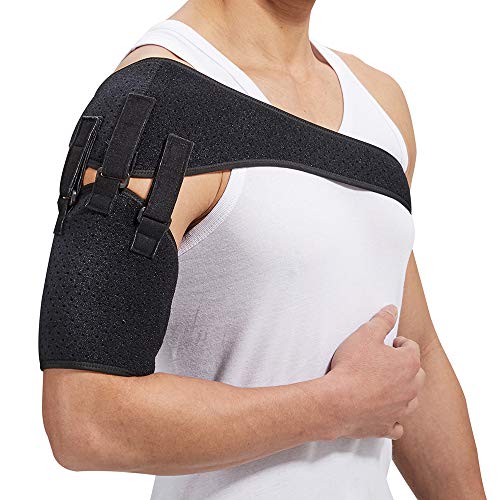
ACKIEIVTO’s shoulder belt is an entry-level option designed primarily for post-stroke subluxation and general shoulder instability. It uses a single elastic strap that wraps around the torso, connecting to a padded cuff that supports the arm at the biceps rather than the wrist — a configuration that reduces the lever effect of a full arm sling. The magic tape (hook-and-loop) closure allows quick one-handed adjustment.
Weighing just 140 grams, this brace is one of the lightest in the lineup, making it a reasonable choice for patients who cannot tolerate any bulky orthosis. The elastic OK fabric provides moderate breathability, though the chest panel is not large enough for users with a broad torso — multiple reviews note that the fabric stops adhering to the hook-and-loop pad after about six months of daily use.
Physical therapists sometimes recommend this brace for very mild subluxation or for patients who are transitioning away from a rigid sling. However, for significant shoulder drop, the single-strap design does not provide the multi-vector distraction force needed to fully reduce the humeral head. Users with larger chests also reported that the strap digs into the axilla of the unaffected side.
Why it’s great
- Ultra-lightweight for minimal trunk load
- Single-strap design for quick application
- Budget-friendly entry into subluxation support
Good to know
- Not suitable for significant shoulder drop
- Adhesive hook-and-loop patch may degrade over time
7. Wonder Care WC Shoulder Support Brace
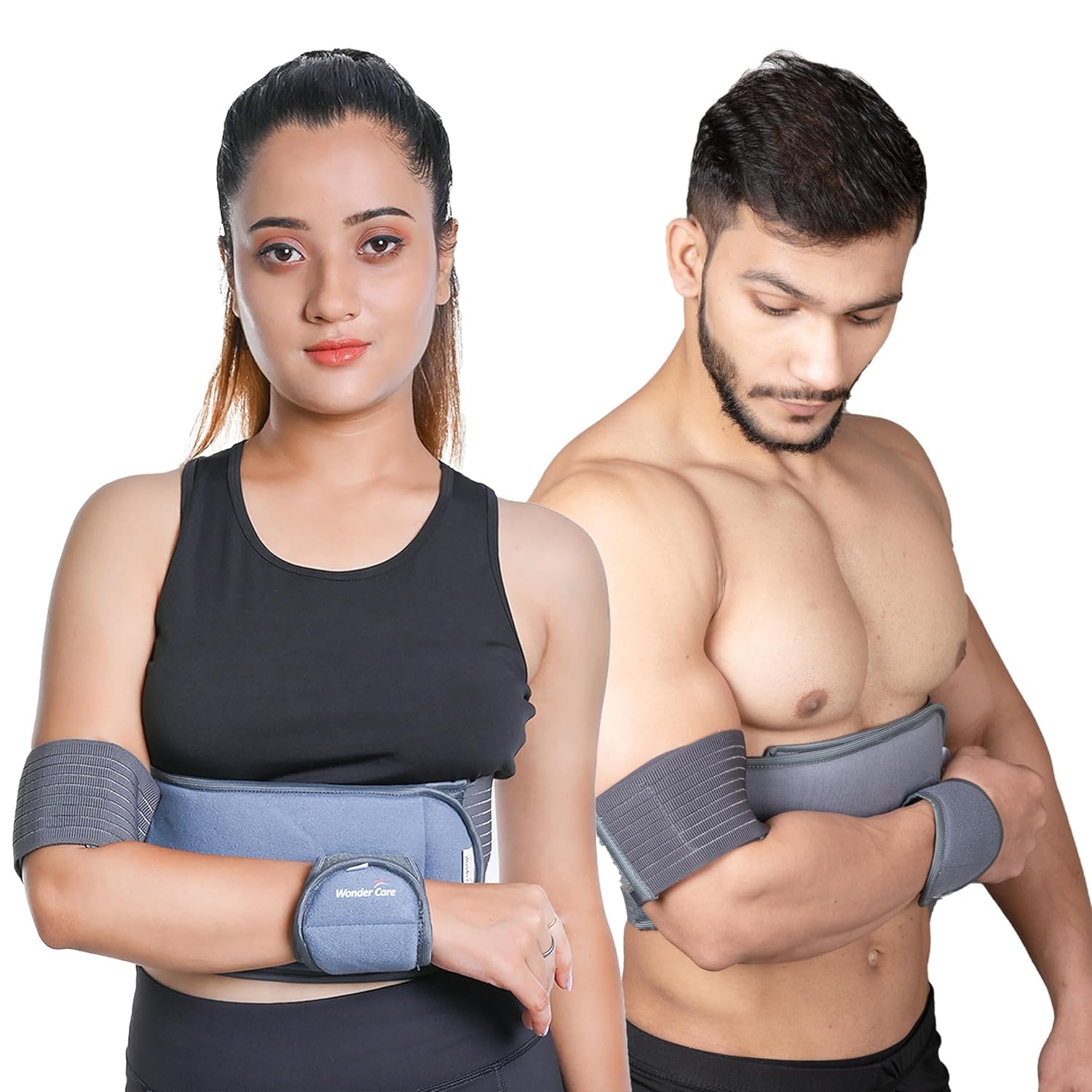
The Wonder Care WC shoulder support brace distinguishes itself by using 100% breathable cotton — a material choice that significantly reduces skin maceration risk for patients who must wear the sling for extended hours, including overnight. The design features a 5-inch wide bicep base band that distributes the arm’s weight across a broad area of the upper arm, preventing the narrow strap pressure that causes pain in traditional slings.
The brace does not go over the neck or shoulder. Instead, it wraps around the torso and secures at the front with a wide hook-and-loop panel, allowing the patient to self-adjust without reaching behind the back. The wrist loop can be easily slipped out for meals or typing while the elbow loop maintains upper arm stability — a practical feature for stroke survivors who need brief arm-free periods during the day.
Some users with larger arm circumferences (17+ inches) found the bicep band too snug even at the maximum size setting, which only accommodates up to 15 inches. The cotton fabric is machine-washable, but it may shrink slightly over time if dried on high heat. Overall, this brace excels in comfort and breathability but lacks the rigid distraction capability needed for moderate-to-severe subluxation.
Why it’s great
- 100% cotton fabric reduces skin irritation risk
- Front closure enables self-application
- Removable wrist loop for brief arm-free activity
Good to know
- Bicep band may be tight for 17-inch arms
- Cotton may shrink if machine-dried on high heat
FAQ
How do I measure chest circumference for a shoulder stabilizer?
Can a stroke patient put on an arm sling with one hand?
What is the difference between a sling and a shoulder stabilizer orthosis?
Should I wear the brace while sleeping?
Final Thoughts: The Verdict
For most users, the best arm sling for stroke patients winner is the Ottobock Shoulder Stabilizer Orthosis L3670 (Medium Left) because its PDAC-approved dynamic realignment repositions the humeral head with multi-vector tension and silicone grip that stays in place all day. If you want a lighter, detachable design with a memory foam armpit pillow for partial arm use, grab the NEOFECT Shoulder Brace Left. And for a breathable cotton option that lets you self-apply and briefly remove the wrist loop during meals, nothing beats the Wonder Care WC Shoulder Support Brace.

Mo Maruf
I created WellFizz to bridge the gap between vague wellness advice and actionable solutions. My mission is simple: to decode the research and give you practical tools you can actually use.
Beyond the data, I am a passionate traveler. I believe that stepping away from the screen to explore new environments is essential for mental clarity and physical vitality.