Our readers keep the lights on and my smoothie glass nicely filled. As an Amazon Associate, I earn from qualifying purchases.
A canister stove that sputters in a breeze or takes forever to simmer a sauce can turn a peaceful backcountry meal into a frustrating chore. The difference between a good trip and a great one often comes down to how reliably your burner handles wind, cold fuel, and precise flame control. That’s why choosing the right one matters more than just picking the lightest or cheapest option on the shelf.
I’m Mohammad Maruf — the founder and writer behind WellFizz. I’ve spent countless hours analyzing fuel efficiency ratings, regulator designs, wind-resistance tests, and real-world user reports across dozens of portable canister stoves to separate the true performers from the also-rans.
Whether you’re thru-hiking the PCT or car camping with the family, having a best canister stove means you can count on a steady flame, fast boil times, and reliable ignition in conditions that would leave lesser stoves sputtering.
How To Choose The Best Canister Stove
Not all canister stoves are built the same. The three factors that most seriously impact your daily cooking experience are wind resistance, pressure regulation, and burner design. Focusing on these will get you far more reliable results than chasing raw BTU ratings alone.
Wind Resistance and Burner Head Design
Wind is the single biggest thief of heat in the backcountry. A stove with a wide burner head and integrated wind block — like the SOTO Windmaster’s honeycomb design — can maintain a controlled flame in gusts that would turn an open burner into a useless torch. Look for models with protective cup-style heads or fold-out wind blockers rather than relying on a separate windscreen, which can dangerously trap heat near the fuel canister.
Pressure Regulation and Cold-Weather Performance
Standard unregulated stoves lose power as the fuel canister gets cold or low. A built-in pressure regulator — such as the one in the MSR PocketRocket Deluxe — maintains consistent output down to freezing temperatures, so your boil time stays predictable whether you’re at 8,000 feet or in a 30°F morning. This is a non-negotiable feature for winter backpackers and high-altitude trips.
Integrated Systems vs. Standalone Burners
Integrated canister stoves like the Jetboil Flash bundle the burner, pot, and heat exchanger into one unit, offering faster boiling and better fuel efficiency in exchange for weight and packability. Standalone burners like the GasOne dual fuel are lighter, more versatile for different pot sizes, and easier to pack, but they require a separate pot set and are more susceptible to wind without additional gear.
Quick Comparison
On smaller screens, swipe sideways to see the full table.
| Model | Category | Best For | Key Spec | Amazon |
|---|---|---|---|---|
| SOTO Windmaster Combo | Standalone Burner | Wind resistance & fuel efficiency | 2,800 W / 3.2 oz stowed | Amazon |
| MSR PocketRocket Deluxe | Standalone Burner | Ultralight & cold weather | 2.9 oz / pressure regulated | Amazon |
| Jetboil Flash | Integrated System | Fast boil for one person | 1.0L cup / 2 min boil time | Amazon |
| Jetboil Zip | Integrated System | Compact solo use | 0.8L cup / 2 min boil time | Amazon |
| Fire-Maple Polaris | Integrated System | Group cooking & simmer | 1.0L / micro-regulator valve | Amazon |
| Fire-Maple Star X2 Pro | Integrated System | Budget integrated system | 1.0L pot / 19.8 oz total | Amazon |
| GasOne Dual Fuel | Standalone Burner | Dual fuel & base camping | 15,000 BTU / 6 lb weight | Amazon |
In‑Depth Reviews
1. SOTO Windmaster Combo

The SOTO Windmaster has earned a reputation as the gold standard for wind resistance, and the data backs it up. Its patented burner head architecture creates a concentrated, stable flame that barely flickers even in significant gusts — a critical advantage when you’re cooking on an exposed ridgeline. The 2,800-watt output boils two cups of water in under two and a half minutes, and the micro-regulator maintains steady flow as the canister pressure drops, giving you excellent performance in cold weather and when fuel is running low.
The four detachable pot-support arms create a stable platform that handles pots up to a surprisingly large size, and the whole burner folds down to a stowed size of just over an inch thick. Many users report that the fuel efficiency here beats most competitors by around 20%, and the piezo igniter fires reliably after thousands of clicks. It’s also whisper-quiet during operation, a plus for campers who want to avoid drawing attention.
One minor knock is the included drawstring storage bag, which feels a bit flimsy for the price. Some users also note a small gas puff when first attaching or detaching the canister, though this is common with threaded stoves. Overall, the Windmaster offers the best balance of wind protection, fuel economy, and simmer precision of any standalone burner on this list.
Why it’s great
- Exceptional wind resistance keeps flame steady in strong gusts
- Micro-regulator provides consistent output in cold or low-fuel conditions
- 4Flex arms offer stable support for large pots without tipping
Good to know
- Included storage bag is thin and may wear quickly
- Minor gas release noted during canister attachment
- 4Flex arms require some practice to assemble initially
2. MSR PocketRocket Deluxe

The PocketRocket Deluxe is a fixture in the ultralight backpacking community for good reason. At just 2.9 ounces, it folds to a compact size that slips into a 700-milliliter titanium mug alongside a fuel canister and mini lighter. Its built-in pressure regulator is the star feature here — it ensures consistent boil times even in sub-freezing temperatures, a real advantage for winter campers and high-altitude trekkers who can’t afford a stove that loses power as the mercury drops.
The broader burner head compared to the standard PocketRocket improves wind resistance and also allows for genuine simmer control, which is rare in such a lightweight stove. Users report being able to cook delicate meals like hashbrowns without scorching them, a sign of the fine flame adjustment the regulator enables. The push-start piezo igniter is protected inside the burner housing, making it durable against pack abuse and trail grime.
Some users wish the stove came with a pot stabilizer included, or that the simmer dial was slightly more granular at the lowest settings. However, for the weight-conscious hiker who needs reliable cold-weather performance and the ability to do more than just boil water, the PocketRocket Deluxe is a standout choice.
Why it’s great
- Pressure regulator delivers steady flame in below-freezing and low-canister conditions
- Weighs only 2.9 ounces, among the lightest regulated stoves available
- Piezo igniter is protected inside the burner for long-term reliability
Good to know
- Pot support feels less stable than wider four-arm designs without the stabilizer
- Not the most fuel-efficient option for boiling small amounts of water
- Simmer adjustments require a gentle touch at the lowest flame settings
3. Jetboil Flash
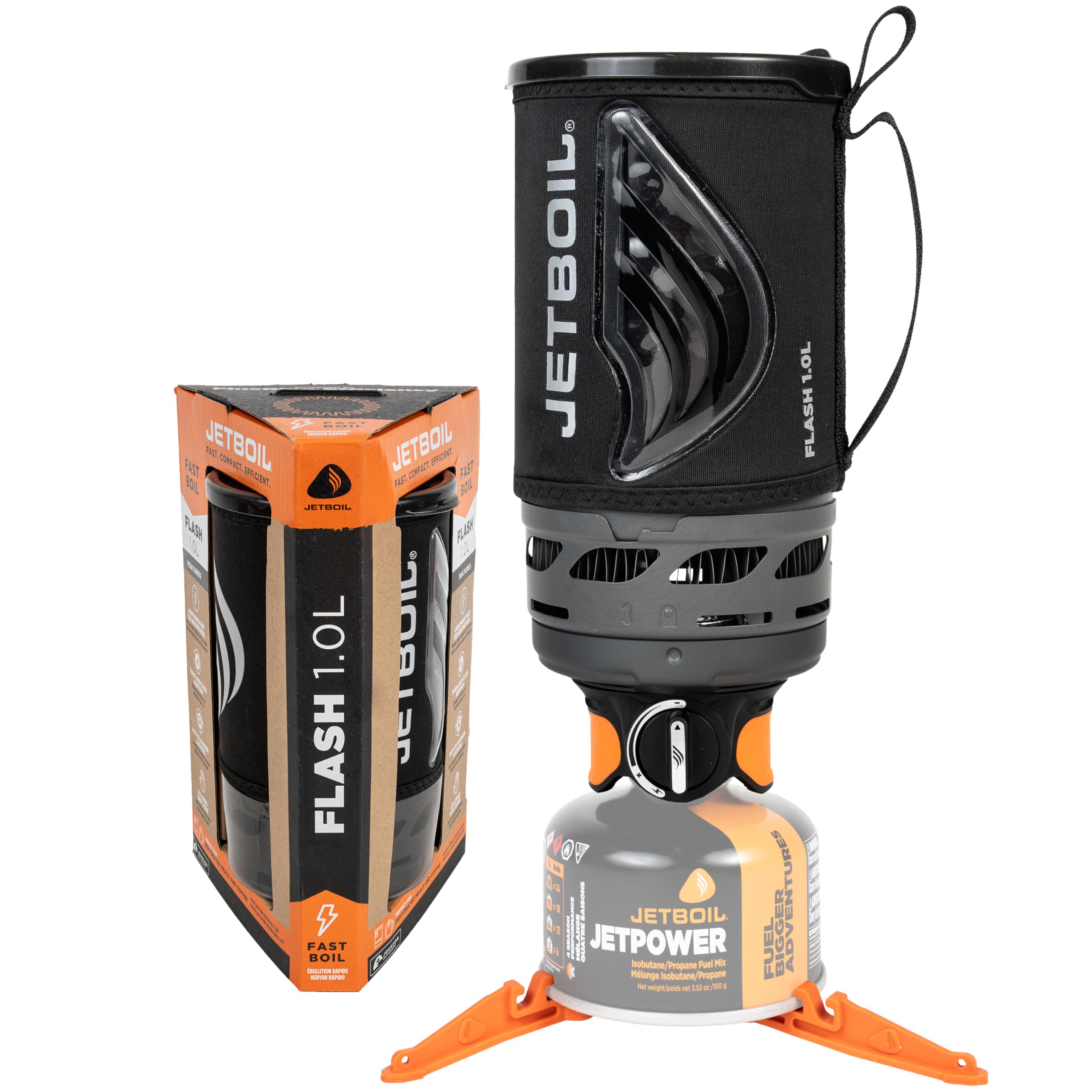
The Jetboil Flash is the classic integrated system that many backpackers default to, and the updated version refines the formula further. Its FluxRing heat exchanger transfers heat from the burner to the water with impressive speed — two cups of water in about two minutes flat. The new auto ignition knob turns like a home stove dial and lights the burner without matches or lighters, a welcome convenience when your hands are cold and wet at the start of the day.
The 1.0-liter capacity and included bottom cup — which can serve as a measuring tool or a bowl — make it a complete personal cooking system. The color-changing thermochromatic indicator on the cozy shows you when the water is hot, eliminating the need to check. The whole kit packs neatly with a 100-gram fuel canister inside the cup, saving space in your backpack. Testers consistently confirm the Flash uses fuel efficiently, helping you stretch a canister further on longer trips.
One trade-off is that it is primarily a boil-only system — serious simmering is not its strong suit, and the steep sides make eating directly from the pot awkward. The weight is moderate for an integrated system at 0.82 pounds. If you prioritize lightning-fast boil times and convenient one-handed ignition over gourmet cooking capabilities, the Flash is hard to beat.
Why it’s great
- Auto ignition knob operates like a home stove, no matches needed
- Boils 16 ounces of water in about two minutes with the FluxRing heat exchanger
- Thermochromatic indicator lets you see when water is hot without opening the lid
Good to know
- Poor simmer control; best for boiling water and freeze-dried meals
- Eating directly from the cup is awkward due to the steep pot shape
- Slightly heavier than standalone burners when compared ounce-for-ounce
4. Jetboil Zip

The Jetboil Zip is the smaller sibling in the Jetboil family, designed specifically for the solo backpacker who wants minimal weight and maximum packability. The 0.8-liter cup is just the right size for boiling water for a single freeze-dried meal or a morning coffee, and it still manages a two-minute boil time for 16 ounces thanks to the same FluxRing technology. The easy-turn knob works with a match or lighter — a minor step back from the Flash’s auto ignition, but it saves a little weight and simplifies the mechanism.
Safe-touch zones on the rubberized cozy keep your hands safe while pouring, and the improved locking system now features three points with visual indicators for a secure pot-to-burner connection. The entire system, including a 100-gram fuel canister, fits into the cup for a total package that occupies very little space. Many motorcycle campers and single-person hikers rave about the Zip’s ability to deliver fast hot water without excess bulk.
The main limitation is the small pot size, which makes cooking for two people impractical. Also, like the Flash, the Zip is optimized for boiling rather than simmering. It is a focused tool for the soloist who values speed and simplicity above all else, and it delivers on that promise reliably.
Why it’s great
- Ultra-compact system packs stove, fuel, and cup into one small unit
- Boils single portions of water extremely fast — under two minutes
- Safe-touch rubberized zones protect hands during hot pouring
Good to know
- 0.8-liter capacity is too small for cooking for two people
- Requires a match or lighter for ignition; no built-in piezo
- Not designed for simmering or cooking anything beyond boiling water
5. Fire-Maple Polaris

The Fire-Maple Polaris takes direct aim at the Jetboil lineup with a feature set that includes a micro-regulator valve for consistent output in cold conditions and a wide 1.0-liter pot with a heat exchanger that matches the boil speed of premium competitors. This system boils one liter of water in about three and a half minutes, which is competitive with the best in class, and the micro-regulator allows for a genuine simmer range — you can turn the flame down low enough to cook rice or soup without scorching, something many integrated systems cannot do.
The all-in-one package includes the stove, pot, pot stand, and a canister stabilizer that all nest together for storage. A 230-gram fuel canister fits inside the pot, making it a self-contained carry. The hard anodized aluminum pot is BPA-free with a locking stainless steel handle and an insulating neoprene cover. The piezo igniter fires easily, and users consistently report reliable startup even after the stove has been used on multiple trips.
Where the Polaris loses ground is in weight — it is noticeably heavier than the Jetboil Flash at around 622 grams, and the build quality of the locking handle on early units was inconsistent according to some reports. It is also a bit overbuilt for solo use; this system shines for two to three people. But for campers who want an integrated system with real simmer control at a lower cost than the premium brands, the Polaris is a compelling option.
Why it’s great
- Micro-regulator valve provides genuine simmer capability, rare in integrated systems
- Stows compactly with a 230g fuel canister inside the pot
- Includes a canister stabilizer and protective neoprene cozy for the pot
Good to know
- Heavier than comparable integrated systems from Jetboil
- Some units have shipping defects with the pot handle or lid retention
- Bulky for solo backpackers; better suited for 2-3 person use
6. Fire-Maple Star X2 Pro
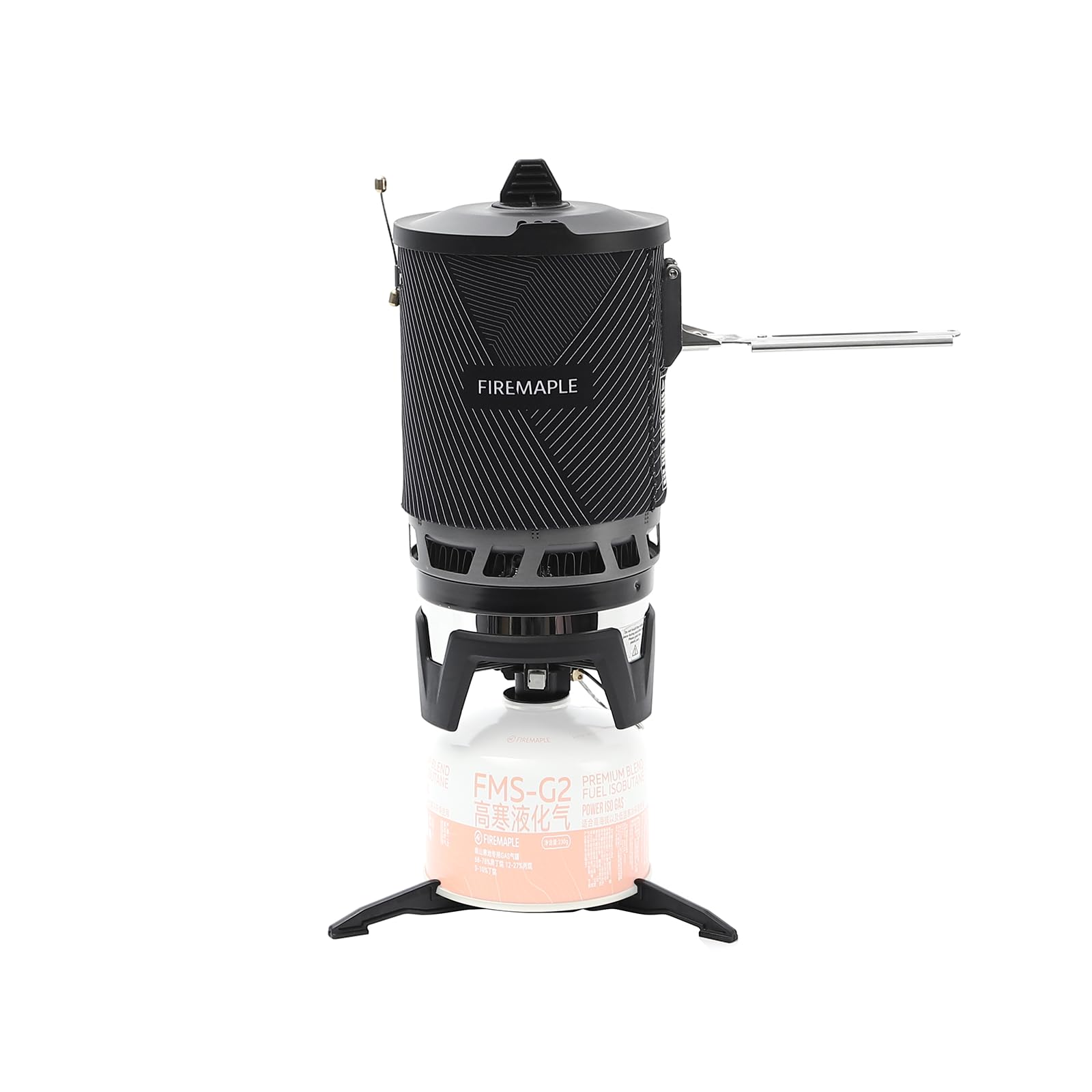
The Fire-Maple Star X2 Pro is aimed squarely at budget-conscious campers who want the convenience of an integrated system without paying the Jetboil premium. It uses a hard anodized aluminum pot with a locking stainless steel handle and an insulating neoprene cover, and the built-in piezo igniter fires instantly. In real-world tests, the X2 Pro boiled a liter of water in around two minutes and twenty seconds, placing it squarely in the fast-boiling category and only slightly behind the premium contenders.
The pot features a pour-through lid with a strainer, which is useful for draining pasta or rinsing rice, and the entire kit packs the stove inside the pot for a compact storage solution. The pot capacity is suitable for one to two people, and the included heat exchanger helps the stove perform in windy conditions. Users who have side-by-side comparisons with the Jetboil systems report that the X2 Pro’s boil speed is nearly identical, making it a strong value choice for casual campers and hikers.
Build quality is the main concern here — multiple users have reported issues with the lid handle wire breaking or failing after a few uses, and customer service has been difficult to reach in some cases. The stove is not pressure regulated, so its cold-weather performance won’t match the MSR or SOTO options. If you are a weekend car camper or casual backpacker on a strict budget, the X2 Pro delivers solid performance for the price, but you may want to inspect the lid mechanism carefully before relying on it.
Why it’s great
- Fast boil time comparable to premium systems at a lower price point
- Pour-through lid with a strainer adds practical cooking utility
- Complete integrated system that packs down into a single unit
Good to know
- Lid handle wire has been reported to fail after minimal use on some units
- No pressure regulator; performance drops in cold weather and with low canisters
- Customer service has been inconsistent for resolving handle issues
7. GasOne Dual Fuel Stove

The GasOne Dual Fuel Stove is a different animal from the ultralight backpacking models — it is a 15,000-BTU workhorse built for base camps, emergency preparedness kits, and car camping. Its standout feature is dual-fuel compatibility: it runs on both butane camping cartridges and standard 16.4-ounce propane cylinders via the included adapter. This gives you flexibility to use whichever fuel is more available or cheaper, and the included heating strip helps maintain butane pressure in cooler conditions.
The stove includes a built-in piezo-electric igniter, an adjustable heat dial, and a heavy-duty windblocker on all four corners of the burner head to prevent the flame from being blown out. The burner head features a dual spiral flame design with a brass burner, and the rubber feet keep the stove planted on picnic tables or uneven ground. The included hard carrying case protects the stove during transport, making it easy to grab and toss in the trunk.
At six pounds, this stove is not designed for backpacking — it is for situations where weight is not the primary concern. The propane adapter requires careful alignment, and the stove is large enough that it dominates your gear bag. However, for the price, it is hard to argue with the sheer heat output and fuel flexibility. Users who want the ability to switch between cheap butane cans and bulk propane for emergency use will find this stove delivers real value.
Why it’s great
- Dual fuel operation works with both butane and propane cylinders for flexibility
- High 15,000 BTU output provides powerful heat for large pots and cold conditions
- Includes a hard carrying case and built-in wind blocker on all four sides
Good to know
- Heavy at 6 pounds; not suitable for backpacking or long carries
- Propane adapter alignment can be fiddly and requires some patience
- Bulky size makes it take up significant space in camping gear storage
FAQ
Can I use propane and butane interchangeably in all canister stoves?
Does a higher BTU rating mean a faster boil time?
How cold can a canister stove operate before the fuel stops flowing?
Are integrated canister stoves more fuel-efficient than standalone burners?
Final Thoughts: The Verdict
For most users, the best canister stove winner is the SOTO Windmaster Combo because it offers unmatched wind resistance, excellent fuel efficiency, and a micro-regulator that works in cold weather and low-canister conditions. If you want the lightest regulated stove for ultralight backpacking, grab the MSR PocketRocket Deluxe. And for fast, one-person boil convenience with automatic ignition, nothing beats the Jetboil Flash.

Mo Maruf
I created WellFizz to bridge the gap between vague wellness advice and actionable solutions. My mission is simple: to decode the research and give you practical tools you can actually use.
Beyond the data, I am a passionate traveler. I believe that stepping away from the screen to explore new environments is essential for mental clarity and physical vitality.