Our readers keep the lights on and my smoothie glass nicely filled. As an Amazon Associate, I earn from qualifying purchases.
The dream of a self-contained campervan or overland rig hits a wall the first time you try to sleep in July heat with the engine off. A standard household window unit won’t run on your battery bank, and a generator defeats the whole purpose of being off-grid. The solution demands a dedicated 12-volt system purpose-built for the van’s unique constraints — limited roof space, low available amperage, and the absolute necessity of silent, drain-lean operation. This category separates weekend converts from year-round dwellers based on one spec above all others: how few amps it pulls while still moving enough air to drop the interior temperature by a meaningful margin.
I’m Mohammad Maruf — the founder and writer behind WellFizz. I’ve spent years analyzing the technical specifications of mobile climate control systems, comparing compressor types, inverter efficiency curves, and real-world power draw data to separate marketing claims from actual performance.
After combing through dozens of models and thousands of verified owner reports, the core challenge is clear: finding a 12v air conditioner for van that cools effectively without draining a typical lithium battery bank before dawn.
How To Choose The Best 12V Air Conditioner For Van
Selecting a 12V AC for your van involves more than glancing at the BTU number. Your battery bank’s capacity, the van’s insulation, the roof thickness, and the available mounting space all dictate which unit will actually work — and which ones will leave you with a hot, dead bank by 3 a.m.
BTU Ratings and Real Cooling
A 10,000 BTU unit is the sweet spot for most standard van conversions (up to about 100–120 square feet). Higher numbers like 13,500 or 18,000 BTUs will cool faster, but they also demand more current from your batteries. In a van, the trade-off is speed vs. runtime. Units with inverter-driven compressors can modulate their output, maintaining a steady temperature on a fraction of the peak amps, which is far more useful for overnight use than a fixed-speed unit that cycles on and off at full power.
Power Draw and Battery Math
This is the single most important specification. A non-inverter 12V AC can draw 60–80 amps at full tilt, which would drain a 200Ah battery bank in under three hours. Look for units with a “ECO” or “Sleep” mode that drops consumption to the 200–400W range (roughly 17–35 amps at 12V). A 400Ah lithium bank paired with an efficient inverter unit can deliver 8–10 hours of cooling. Always calculate your usable battery capacity (about 80–90% for LiFePO4) against the unit’s lowest sustainable amp draw.
Form Factor and Installation Complexity
Rooftop units are the most common because they fit a standard 14×14-inch roof vent opening and keep the interior space clear. They require a roof thickness of roughly 1 to 5 inches and a solid seal to prevent water ingress. Under-dash split systems keep the roof clean and lower the center of gravity, but installation is more complex — you must mount the compressor-condenser unit outside or underneath the van and route refrigerant lines. Mini-split-style units (often from the trucking sector) bolt to the rear wall or roof, but they require careful wiring and have a mixed reliability record.
Quick Comparison
On smaller screens, swipe sideways to see the full table.
| Model | Category | Best For | Key Spec | Amazon |
|---|---|---|---|---|
| Contrymod 10K BTU | Rooftop Inverter | Off-grid overnight performance | 260W ECO draw, 45-55 dB | Amazon |
| Outequip Pro 10K (Cool Only) | Rooftop Inverter | VW bus and small campers | 45 lbs, 54 dB, Remote/App | Amazon |
| Gidrox RX55 | Rooftop Inverter | Quiet sleep mode cooling | 40 dB Sleep, ~350W avg draw | Amazon |
| Aspligo 12V Split (Product 1) | Split System | Budget-friendly split install | 10K BTU, 800W power consumption | Amazon |
| Universal Under-Dash AC Kit | Under-Dash Split | Heating and cooling in one kit | 10K BTU, 550-600W, Water Heating | Amazon |
| Aspligo Under-Dash 10K | Under-Dash Split | 20CC scroll compressor, fast cool | 10K BTU, 550-600W, Scroll Comp. | Amazon |
| Outequip Pro 10K (w/ Heater) | Rooftop Inverter | Heating + cooling in one rooftop unit | 43 lbs, 40 dB, 4,500 BTU heater | Amazon |
| FOGATTI InstaCool 13.5K | Rooftop (115V + 12V) | Large campers and food trucks | 13.5K BTU, 59 dB, 77.8 lbs | Amazon |
| Dometic FreshJet 3 | Rooftop (115V + 12V) | Brand reliability, plug-and-play | 15K BTU, 64 lbs, E-coated coils | Amazon |
| TURBRO GL14V 13.5K | Rooftop Inverter | Inverter efficiency + heat pump | 13.5K BTU, 10″ profile, Wi-Fi | Amazon |
| Furrion Chill Cube 18K | Rooftop Inverter | Max cooling for large RVs | 18K BTU, 72.4 lbs, variable speed | Amazon |
In‑Depth Reviews
1. Contrymod 10K BTU 12V DC RV Air Conditioner
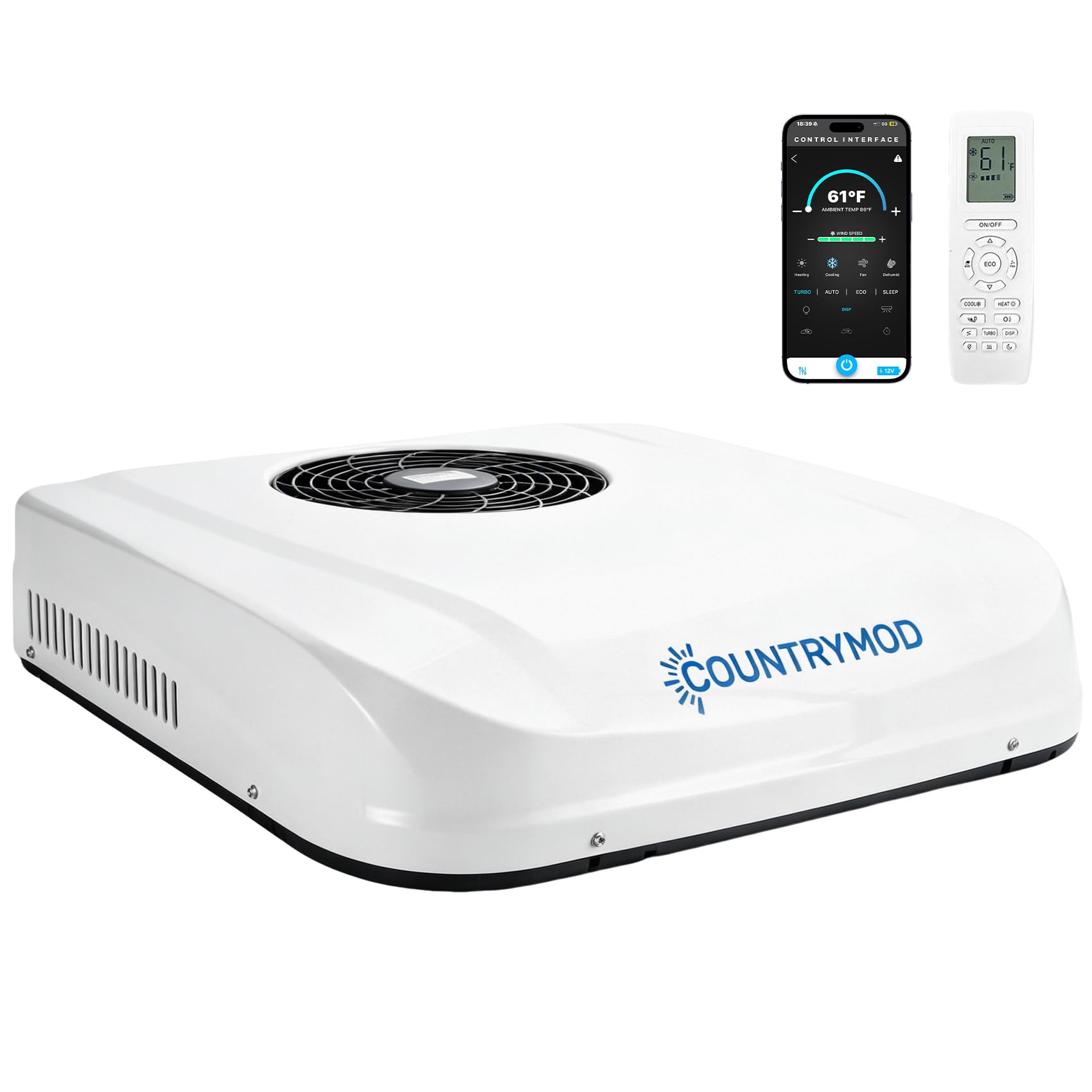
The Contrymod 10K is a standout because it nails the two specs that matter most for van dwellers: ultra-low power consumption in ECO mode and a noise floor that won’t wake you. Verified owners report drawing as little as 260 watts (roughly 22 amps at 12V) in ECO mode, which means a 400Ah lithium bank can easily run it all night. The unit’s horizontal inverter compressor design reduces vibration and lowers the center of gravity on the roof, a thoughtful engineering touch that also extends service life.
Installation is straightforward if your van has a standard 14×14-inch roof vent, though owners note that thicker roof builds (above 3 inches) require sourcing longer M8 all-thread bolts. The included instructions are sparse, but the community on YouTube has filled the gap with detailed walkthroughs. The unit’s low-profile appearance on the roof is a bonus for anyone conscious of aerodynamics.
Customer feedback is overwhelmingly positive, with multiple users reporting that the Contrymod replaced louder, less efficient Dometic and GE units. One verified owner ran the unit in 113°F desert heat and maintained 72°F inside overnight. The only consistent complaint is the vague manual, which is a minor hurdle given the overall value here.
Why it’s great
- Extremely low 260W ECO draw for all-night off-grid use
- Very quiet at 44–55 dB, especially in Sleep mode
- Lightweight and easy to install in standard 14×14 roof openings
Good to know
- Manual is vague; installation requires YouTube research
- Thicker roofs need longer bolts (not included)
2. Outequip OutEquipPro 12V 10K BTU Rooftop AC (Cool Only)
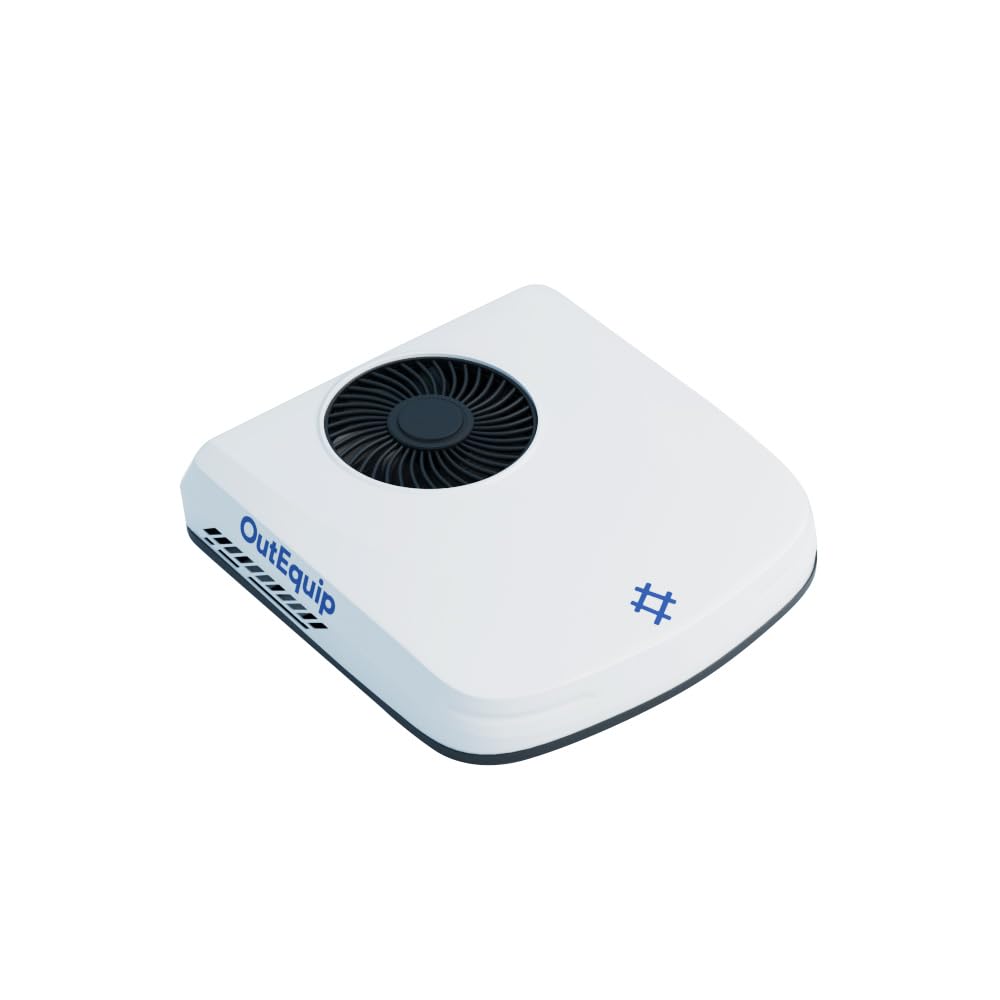
The Outequip Pro weighs just 45 pounds, making it one of the lightest 10,000 BTU rooftop units on the market. That matters when you’re hoisting an AC onto a van roof solo. It uses a brushless copper motor and spring-supported mounts to keep noise at a reasonable 54 dB, and it includes a remote control, temperature monitoring, and three modes (ECO, Sleep, Turbo). The ECO mode draws roughly 20 amps, which is competitive for the price tier.
Verified buyers have installed this in VW Westfalia buses and pop-up campers with great results. One owner measured an 89°F to 79°F drop in 25 minutes on Turbo mode. The unit requires a 14×14-inch roof opening and comes with a zinc-coated condenser for weather resistance. A Bluetooth app adds convenience, though some users note the app is basic compared to the Gidrox or Contrymod offerings.
The main drawback is that this version is cooling-only. If you want a built-in heat pump for shoulder-season camping, you’ll need to step up to the version with the 4,500 BTU PTC heater (reviewed below). For dedicated warm-weather van builds, the weight savings and reliable cooling make this a strong mid-range option.
Why it’s great
- Very lightweight at 45 lbs for solo rooftop installation
- Draws about 20 amps on ECO mode for extended runtime
- Fits standard 14×14 roof vents with simple install
Good to know
- Cooling only; no built-in heat pump
- App control is functional but not as polished as some rivals
3. Gidrox RX55 12V RV Air Conditioner 10K BTU
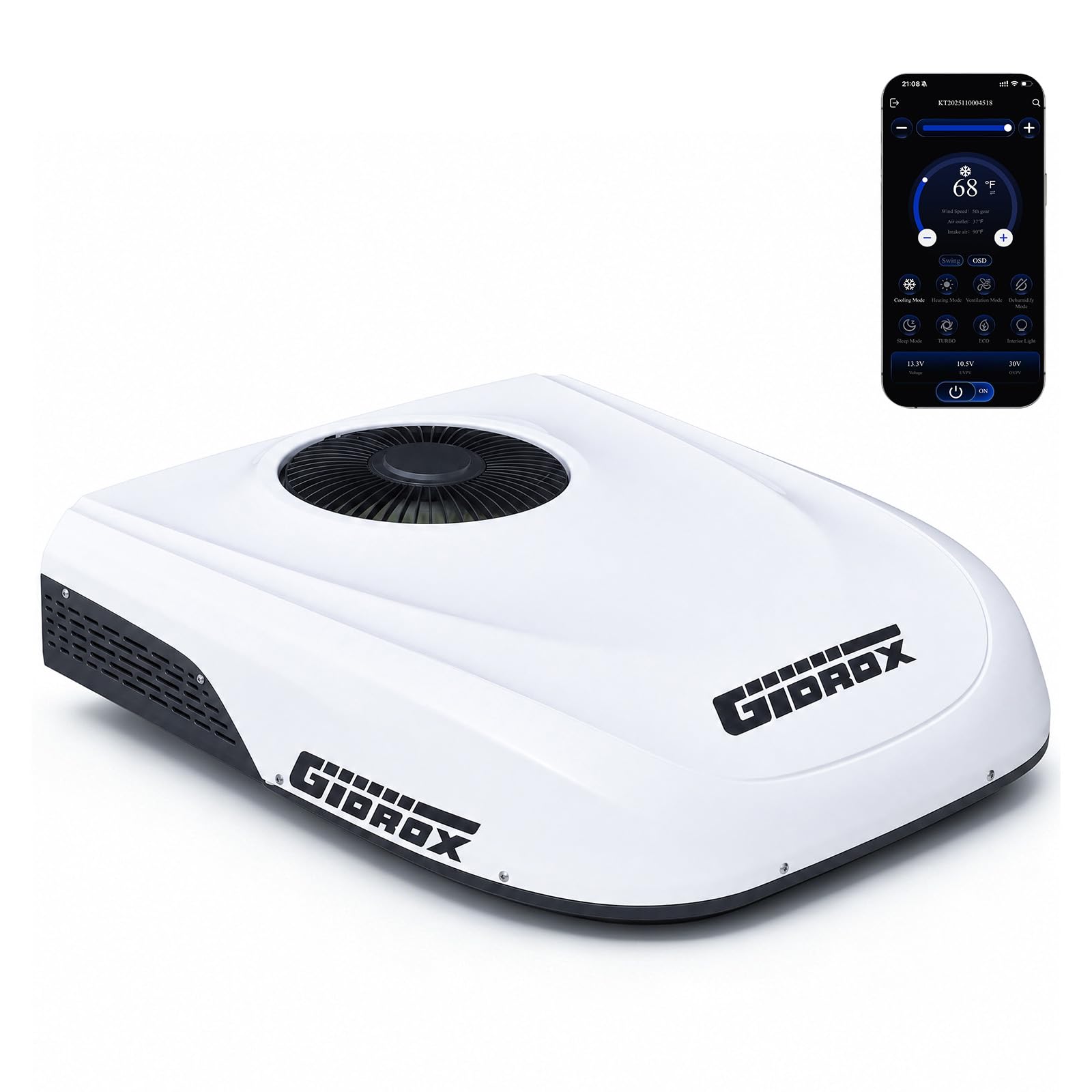
If noise is your top priority, the Gidrox RX55 is the quietest 12V rooftop unit in this roundup, with a claimed 40 dB in Sleep mode — quieter than a library. It uses inverter technology to ramp the compressor speed smoothly, and the brushless fan design keeps the sound profile low and consistent. Verified owners report that the unit averages around 350W during nighttime operation in 86°F ambient temperatures, which is excellent for battery conservation.
The RX55 ships with a 19.7-foot power cable and all mounting hardware for a 14×14-inch roof opening. It offers three control methods: panel buttons, an infrared remote, and a Bluetooth app. One technical owner documented a minimum draw of 250W on dehumidifier mode and 420W on standard cooling, with the compressor-off state sipping just 25–50W. That level of granular control is rare at this price point.
Potential buyers should note that the manual is vague on wiring specifics, and the unit’s 59-pound weight is manageable but not as light as the Outequip. A few owners mention that the included all-thread can be tricky to align, but careful measurement solves the issue. For those who value a silent cabin, the RX55 is hard to beat.
Why it’s great
- Exceptionally quiet at 40 dB in Sleep mode
- Very low average draw of ~350W for efficient overnight use
- Three control options: panel, remote, and Bluetooth app
Good to know
- Wiring instructions in the manual are lacking detail
- Requires careful measurement for all-thread alignment
4. Aspligo 12V Mini Split Air Conditioner 10K BTU

The Aspligo 12V split system is a different approach from the rooftop units. It keeps the interior profile low by mounting the bulky evaporator unit inside and the compressor-condenser outside. The 10,000 BTU rating is comparable to the rooftop options, but the split form factor can be a major advantage for vans with low headroom or non-standard roof openings. The unit uses R134a refrigerant (not included) and operates at a rated current of 60–80A.
Owners report mixed experiences, which is typical for the split-system category. A successful installation took about three hours for a first-time installer and resulted in quiet, powerful cooling. However, other buyers received units with missing parts (fan and controller not included) or found that the system struggled to produce cold air when ambient temperatures exceeded 85°F. The 12mm² copper wire upgrade is a nice touch for voltage drop reduction.
The split configuration introduces more potential leak points and installation complexity than a rooftop unit. If you have the skills to mount the outdoor unit securely and run the lineset without kinks, the Aspligo can be a budget-friendly way to get 12V cooling. But the risk of receiving an incomplete or underperforming unit is higher here than with the more established rooftop options.
Why it’s great
- Split design preserves low interior profile for vans with limited headroom
- Bare-bones price for a 10K BTU 12V split system
- Upgraded 12mm² copper wiring for better conductivity
Good to know
- Higher risk of missing parts or poor cooling performance
- Complex installation with multiple potential failure points
5. Universal 12V Under Dash AC Kit 10K BTU

This under-dash kit adds a water heating function for winter use, making it a true year-round solution. The 10,000 BTU cooling capacity is paired with a system that warms engine coolant to provide cabin heat via the blower. It draws 40-60A and uses R134a refrigerant. The integrated receiver-dryer and condenser fan design aims to reduce leak points compared to earlier under-dash kits.
One verified owner reported that the unit puts out good air speed and genuinely cold air, though they noted that long-term reliability is unproven. On the other hand, multiple buyers received units with wrong hose fittings, incorrect wiring plugs, or evaporator temperature regulators that were broken on arrival. The manual is universally described as poor, and a few owners could not get the system wired at all.
The heating function works by passing air over a hot engine coolant loop, which is effective but means you need the engine running or a separate coolant heater to use it in winter. For van dwellers who want a single system that handles both seasons, this kit is the most affordable path. But the quality control issues are significant, and the 27-hour customer service response time quoted in the listing is a red flag for time-sensitive repairs.
Why it’s great
- Provides both cooling and water-based heating in one kit
- Integrated components aim to simplify installation
- Low entry price for a combined heating/cooling system
Good to know
- Frequent quality control issues with fittings, wiring, and controls
- Manual is unclear, and customer service response is slow
6. Aspligo Electric Air Conditioner 12V 10K BTU (Under Dash)
This under-dash unit from Aspligo shares many components with the Universal kit above but uses a 20CC electric scroll compressor, which is generally more efficient and durable than older piston-style compressors. It’s rated at 10,000 BTU with a power draw of 550–600W (40–60A). Like the other under-dash units, it arrives in two packages and requires refrigerant charging.
Verified installers report that the unit works well once correctly installed, with one novice user successfully completing the job using online resources. The compressor comes pre-oiled with about 20 oz of POE68 oil. The low-voltage protection feature is a useful safeguard for sensitive battery banks. However, the same quality concerns appear: some units arrived with broken components, and the instruction sheet is minimal.
The scroll compressor is a genuine upgrade over the Universal kit’s unspecified type, and the Aspligo brand has a slightly better customer service reputation (though still far from stellar). For buyers who are comfortable with mechanical work and want the efficiency advantage of a scroll compressor in an under-dash package, this is the better choice of the two similar kits.
Why it’s great
- Efficient 20CC scroll compressor with pre-oiled delivery
- Low-voltage protection helps preserve battery health
- Good cooling performance when properly installed
Good to know
- Some units arrive with damage or missing components
- Basic manual; installation requires mechanical confidence
7. Outequip Pro 12V 10K BTU Rooftop AC (w/ Heater)
This is the same lightweight rooftop platform as the cooling-only Outequip Pro but with a 4,500 BTU PTC heater added. The heater is intended for “supplementary warmth” in mild temperatures, not as a primary heat source in freezing conditions. It’s a handy feature for spring and fall camping when the overnight low dips into the 40s, but don’t expect it to keep your van toasty in a Vermont winter.
The cooling side remains excellent: 10,000 BTU, a brushless copper motor, and a low-profile design that weighs just 43 pounds. Verified owners praise the heat pump’s efficiency for mild cold and the unit’s quiet operation at 40 dB. The unit is compatible with 12V, 24V, and 48V systems, which adds flexibility for different battery bank configurations. Installation took one owner about four hours with the provided instructions.
Customer service is a strong suit here, with multiple reports of the Outequip team resolving issues quickly, including one case where they swapped a 12V unit for a 24V unit at no extra cost. The heat output is modest, but if you only need a chill-taker-offer during transitional seasons, this unit saves you from installing a separate heater.
Why it’s great
- Lightweight 43 lb rooftop unit with integrated 4,500 BTU heater
- Quiet 40 dB operation and low power draw in ECO mode
- Excellent customer support with flexible voltage options
Good to know
- Heater is only suitable for mild temperatures, not extreme cold
- Some roof thickness configurations may need custom hardware
8. FOGATTI InstaCool 13.5K BTU RV Air Conditioner
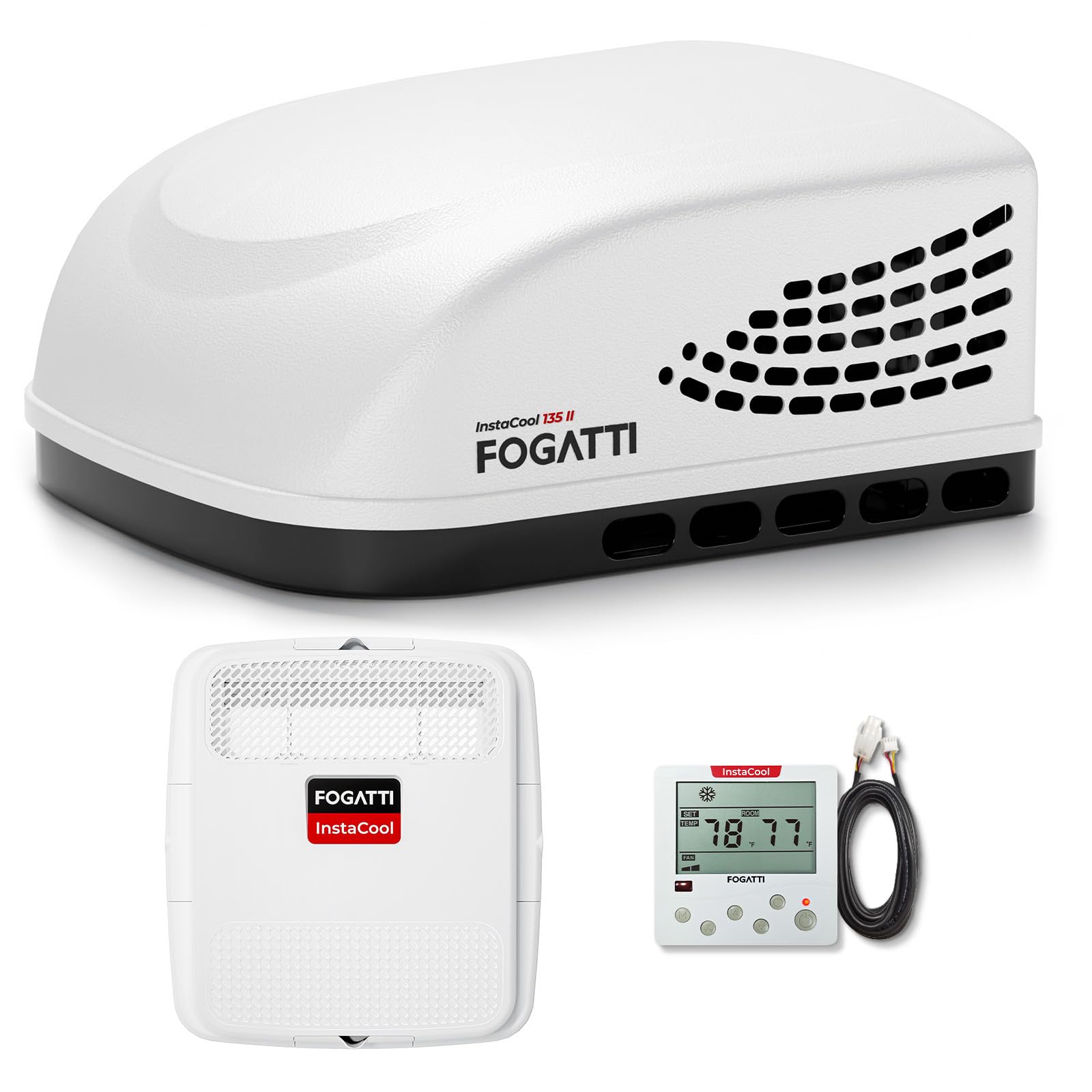
The FOGATTI InstaCool is not a pure 12V system — it requires both 115V AC and 12V DC power to operate. That makes it a hybrid rooftop unit best suited for vans that have shore power hookups or a robust inverter system. The 13,500 BTU dual-compressor design uses eco-friendly R32 refrigerant and delivers strong cooling for larger vehicles, including food trucks and 28-foot travel trailers.
Owners consistently note that the unit is quiet (59 dB) and cools rapidly. One verified buyer called it “a beast” on their enclosed trailer. The installation is straightforward for anyone familiar with RV roof units: it fits a standard 14.25 x 14.25-inch opening and includes a detailed guide. The high-strength HIPS shell resists UV and impact, which is important for full-sun exposure.
The catch for van dwellers is the power requirement. You can’t run this unit solely off a 12V battery bank without a substantial inverter and AC input. If you primarily camp with shore power or have a high-capacity inverter system, the extra BTUs and dual-compressor reliability are compelling. For pure off-grid van life, a dedicated 12V-only unit is a better fit.
Why it’s great
- Powerful 13,500 BTU cooling with dual compressors
- Quiet 59 dB operation and fast cooldown in large spaces
- Durable HIPS shell with UV and impact resistance
Good to know
- Requires 115V AC power in addition to 12V DC
- Not suitable for off-grid battery-only operation
9. Dometic FreshJet 3 Series 15K BTU

Dometic is the most established name in RV air conditioning, and the FreshJet 3 builds on that reputation with a 15,000 BTU unit that is 14% lighter and quieter than previous models. It weighs 64 pounds — still heavier than the 12V-only options, but very competitive for its cooling capacity. The e-coated evaporator coils resist corrosion, a feature that matters for coastal van dwellers.
Multiple verified owners report that the FreshJet 3 is a direct plug-and-play replacement for older Dometic units, making it an easy upgrade for anyone with an existing setup. The noise reduction is significant: “my wife can talk on the phone while it’s running,” one owner noted. The unit is compatible with both ducted and non-ducted systems, and it uses 28% less refrigerant than its predecessor.
The FreshJet 3 requires 115V AC input, much like the FOGATTI. It’s not a pure 12V unit, and the annual energy consumption is rated at 4396 watts, which means it’s for shore power or generator use, not deep off-grid living. For van conversions that visit campgrounds with hookups, it’s a premium choice backed by decades of support and parts availability.
Why it’s great
- Industry-leading brand with excellent support and parts supply
- Significantly quieter than previous Dometic generations
- E-coated coils for outstanding corrosion resistance
Good to know
- Requires 115V AC power, not a pure 12V system
- Heavier and higher power consumption than 12V-only options
10. TURBRO GL14V 13.5K BTU Inverter RV AC
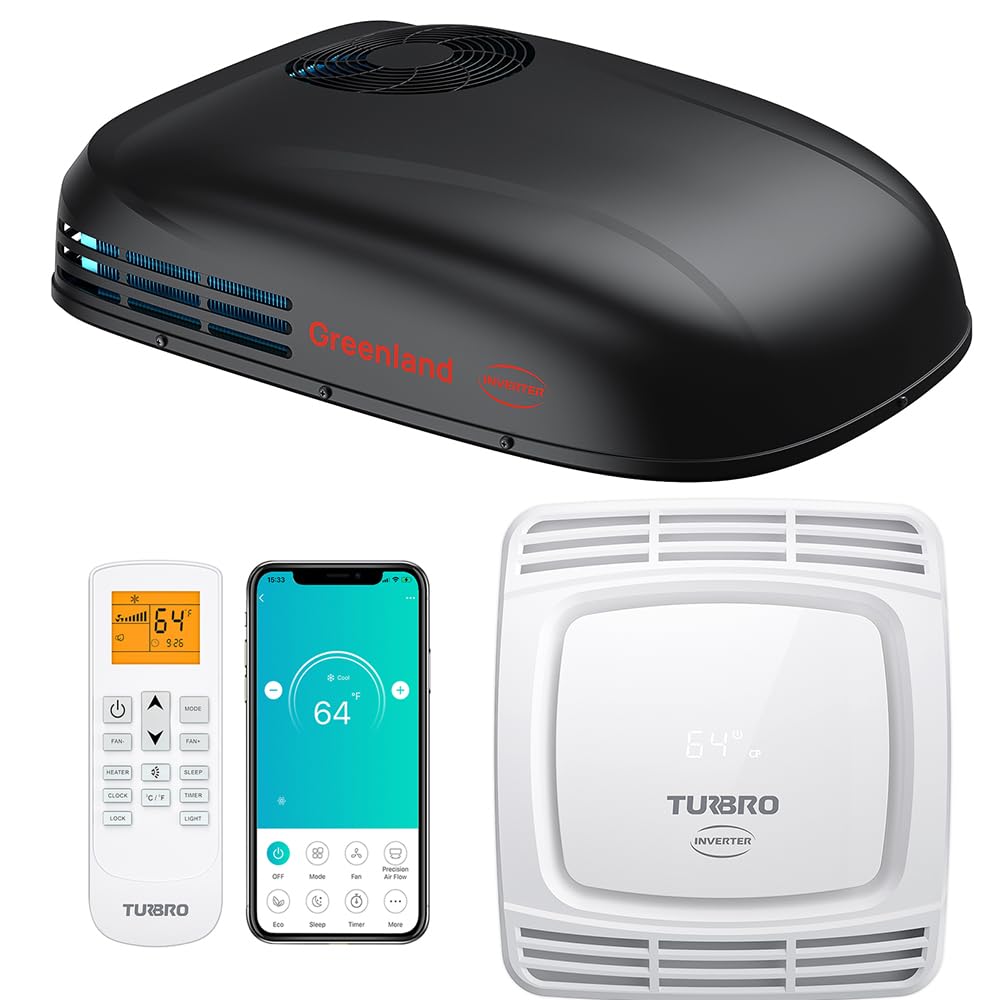
The TURBRO GL14V is a 13,500 BTU rooftop unit that incorporates inverter compressor technology for both cooling and heating. It promises up to 30% greater efficiency than non-inverter systems, and the soft start eliminates the need for a separate soft starter — a welcome feature for lithium battery systems. The unit is just 10 inches tall, making it one of the lowest-profile inverter units available.
Owner reports are largely positive, with one user noting that it ran for 13 hours on a 600Ah lithium bank in 95°F weather, drawing as little as 7.8 amps once the set temperature was reached. The heat pump can deliver four times the output of a traditional electric resistance heater, and the unit includes an LED atmosphere light with blue, yellow, or white options. The Wi-Fi and remote control add modern convenience.
The downsides are the higher price and the unit’s weight of 111.5 pounds — one of the heaviest in this list. Some owners also report that the built-in thermostat reads 10–15°F too low because of its placement near the cold air outlet, causing the compressor to run at full speed unnecessarily. A Tuya automation workaround can fix this, but it’s a notable design flaw for a premium-priced unit.
Why it’s great
- Excellent inverter efficiency with built-in soft start
- Low-profile 10-inch roof height improves aerodynamics
- Integrated heat pump for efficient year-round climate control
Good to know
- Heavy at 111.5 lbs; difficult for solo installation
- Thermostat placement can cause overcooling and waste energy
11. Furrion Chill Cube 18K Variable Speed Rooftop AC

The Furrion Chill Cube is the highest-capacity unit in this guide, with a variable-speed compressor that delivers 18,000 BTUs of cooling while drawing about half the energy of a standard non-inverter RV AC. It uses R32 refrigerant, which is more efficient and lower in global warming potential than R410A. The aerodynamic design reduces wind drag, and at 72.4 pounds, it’s actually 10% lighter than comparable 18K BTU units from Dometic or Coleman.
Verified owners who upgraded from older Dometic units report dramatic improvements in noise and efficiency. One owner of a 37-foot fifth wheel said a single Chill Cube cooled the entire space quickly, even in direct sun. The variable-speed compressor eliminates the abrupt starts and stops that cause amp spikes and noise. The unit can run on a 30-amp service without tripping the breaker.
However, the Chill Cube is an AC-only unit (no heat pump), and the ADB (air distribution box) is sold separately. One owner experienced a loud compressor vibration that shook their entire RV, though this appears to be an outlier. The tall profile (the plenum is taller than some competitors) may also interfere with roof racks or solar panel tilt. For large vans or small RVs where maximum cooling capacity is the priority, the Chill Cube delivers.
Why it’s great
- Highest 18,000 BTU cooling capacity with variable-speed compressor
- Significantly quieter and more efficient than traditional 15K units
- Lightweight for its class at 72.4 lbs
Good to know
- ADB (air distribution box) is not included with the unit
- No integrated heat pump; cooling only
FAQ
Can a 12V van AC run all night on a 200Ah lithium battery?
What is the difference between a rooftop and an under-dash 12V AC for a van?
How many amps does a typical 12V van air conditioner draw?
Do all 12V rooftop AC units fit a standard 14×14 inch roof opening?
Is a 13,500 BTU 12V AC too much for a standard campervan?
Final Thoughts: The Verdict
For most van builders, the 12v air conditioner for van winner is the Contrymod 10K BTU because it delivers the best balance of ultra-low 260W ECO draw, quiet operation, and reliable inverter performance for off-grid overnight use. If you want the lightest possible rooftop unit with backup heat capability, grab the Outequip Pro with PTC Heater. And for maximum cooling capacity in a large van or RV where shore power is common, nothing beats the Furrion Chill Cube 18K BTU.

Mo Maruf
I created WellFizz to bridge the gap between vague wellness advice and actionable solutions. My mission is simple: to decode the research and give you practical tools you can actually use.
Beyond the data, I am a passionate traveler. I believe that stepping away from the screen to explore new environments is essential for mental clarity and physical vitality.