Our readers keep the lights on and my smoothie glass nicely filled. As an Amazon Associate, I earn from qualifying purchases.
The difference between a great trip and a miserable one often comes down to a single gear decision: the tent you sleep in. In a 2-3 person backpacking tent, you’re balancing three conflicting priorities—packed weight, interior volume, and weather resistance—and getting that balance wrong means carrying dead weight or sleeping in a puddle.
I’m Mohammad Maruf — the founder and writer behind WellFizz. I’ve spent hundreds of hours cross-referencing denier ratings, hydrostatic head figures, pole geometries, and real-world user reports to sort through the noise on this specific shelter class.
Whether you’re a solo hiker who wants room to spread gear or a duo looking to split ounces without splitting up, this guide cuts through the marketing to find the true best 2-3 person backpacking tent for your trip profile.
How To Choose The Best 2-3 Person Backpacking Tent
Buying the wrong shelter is a multi-night punishment. You need to zero in on three core specs: the weight-per-person ratio, the floor-to-fly gap for condensation, and the vestibule square footage for gear storage. Here’s exactly what matters.
True Weight vs. Packed Weight
Manufacturers list “minimum trail weight” without stakes, stuff sacks, or footprint. That number is aspirational. For a 3-person tent, look for a real packed weight under 6.5 lbs. Every extra pound multiplies fatigue on a 10-mile day. The best 2-person tents hover near the 4-5 lb mark including poles and stakes.
Hydrostatic Head and Seam Quality
1,200mm HH is the entry-level figure for rain protection; 1,500mm or higher is what you want for consistent storms. But the rating is only as good as the seam construction. Factory-taped seams are non-negotiable. The floor should be a higher denier than the fly—75D on the bottom, 20-30D on the fly is a common durable build.
Living Space and Vestibule Storage
A 2-person tent with 30 sq ft of floor area works only if you sleep close. Check the floor width at the foot vs. the head—tapered designs save weight but clip shoulders. Vestibules should each hold at least one backpack. Twin doors are a major upgrade: no one crawls over a partner for a midnight bladder break.
Quick Comparison
On smaller screens, swipe sideways to see the full table.
| Model | Category | Best For | Key Spec | Amazon |
|---|---|---|---|---|
| Big Agnes Copper Spur HV UL2 | Premium Ultralight | Weight-conscious duos | 3 lbs (min trail) | Amazon |
| MSR Elixir 2 | Premium All-Rounder | Durability & longevity | 5 lb 2 oz (min trail) | Amazon |
| Marmot Limelight 3P | Premium Livable | Spacious 3-season camping | 45.2 sq ft floor | Amazon |
| ALPS Mountaineering Zephyr 3P | Mid-Range Value | Hot-climate ventilation | Full mesh walls | Amazon |
| Kelty Grand Mesa 2P | Mid-Range Freestanding | Fast solo setup | 54 sq ft floor | Amazon |
| Naturehike Cloud Up 3P | Mid-Range Budget | 3 adults on a budget | 42.6 sq ft floor | Amazon |
| OneTigris COSMITTO 2P | Mid-Range Feature | Wind resistance | 1500mm HH fly | Amazon |
| Kelty Late Start 2P | Entry-Level Quick | 3-minute setup | Quickcorner poles | Amazon |
| Naturehike Star River UL 2P | Budget Ultralight | Weight savings on a budget | 4.07 lbs packed | Amazon |
In‑Depth Reviews
1. Big Agnes Copper Spur HV UL2

The Copper Spur HV UL2 is the gold standard for ultralight backpacking shelters that still feel like a proper tent. The proprietary high-volume pole hub and pre-bend create near-vertical walls that give you usable headroom and shoulder space where you need it most. At just over 3 lbs minimum trail weight, it shaves ounces without resorting to a cramped coffin design.
The awning-style vestibules are a clever upgrade: double zippers let you crack the fly for ventilation while keeping rain out. The TipLok buckles streamline the setup by uniting pole capture, fly attachment, and stake-out in one motion.
During real-world abuse, this tent has survived 60+ mph dust storms with minimal sand ingress, thanks to its low-profile fly and reinforced corner construction. The 3-D storage mezzanine in the foot is a game-changer for keeping muddy packs off the sleeping area. For the weight-conscious duo who won’t compromise on livability, this is the tent to beat.
Why it’s great
- Fully freestanding, sets up taut with minimal staking
- Two large vestibules with awning configurations
- Exceptional weight-to-space ratio
Good to know
- Premium investment over mid-range options
- Awning feature less useful in heavy wind
- Requires 12 stakes for full severe-weather setup
2. MSR Elixir 2
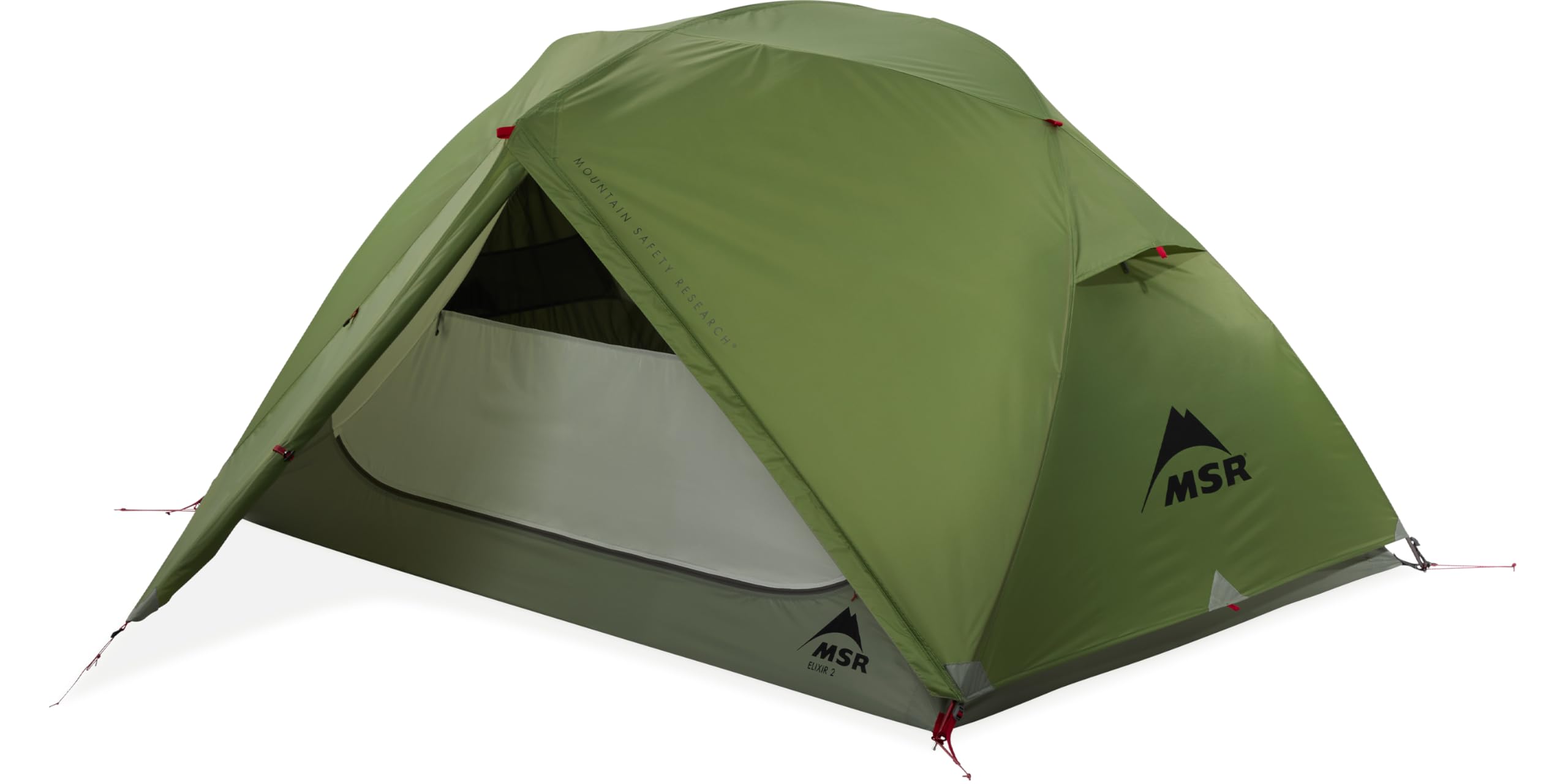
MSR has built a reputation on over-engineered durability, and the Elixir 2 continues that tradition. The nearly vertical walls and true rectangular floorplan mean you can fit wide, thick sleeping pads without the body-taper squeeze common in ultralight tents. The updated all-metal corner hardware and straight-pull zippers are deliberately chosen for longevity—curved zippers fail, straight pulls don’t.
Strategically placed mesh panels balance airflow and heat retention, drastically reducing condensation compared to cheap single-wall alternatives. The included footprint and compatibility with MSR’s Gear Shed system make this a modular shelter that adapts to different trip styles. At 5 lb 2 oz minimum trail weight, it’s not the lightest, but the extra ounces buy material toughness that lasts a decade.
Users report decades of reliable service—one owner logged 15 years on a prior MSR model. The PFAS-free waterproofing meets modern environmental standards without sacrificing rain protection. If your philosophy is “buy once, cry once,” and you prioritize repairability and ruggedness over every last gram, the Elixir 2 is your shelter.
Why it’s great
- True rectangular floor fits wide pads
- All-metal hardware and straight-pull zippers
- Excellent condensation management
Good to know
- Heavier than dedicated ultralight shelters
- Setup can be fiddly solo without practice
- Round pegs may need upgrading for hard ground
3. Marmot Limelight 3-Person
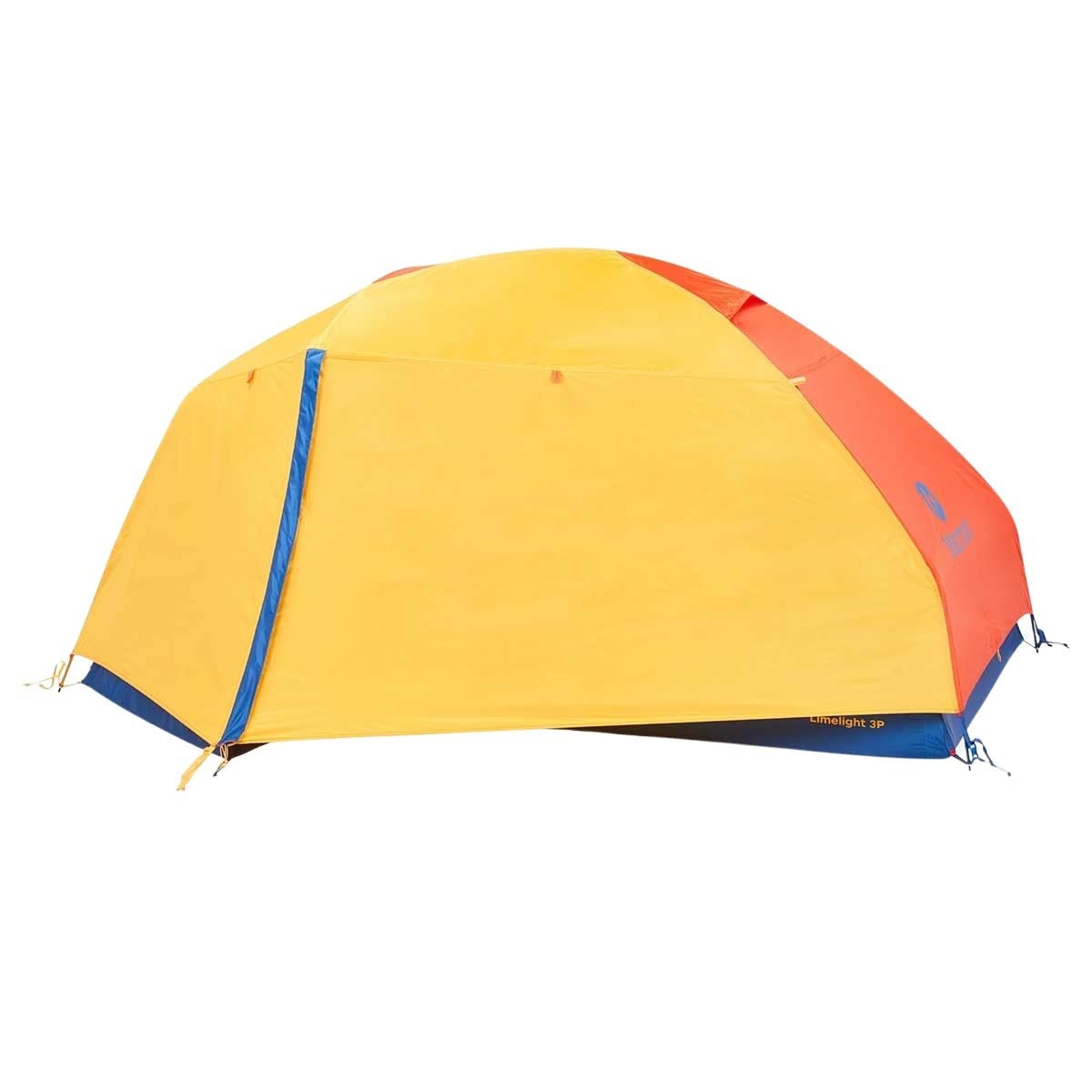
The Marmot Limelight 3P is the room-to-spread-out champion of this list. With 45.2 sq ft of floor space, it can swallow a queen-sized air mattress with inches to spare, making it an ideal basecamp shelter for car-drop backpacking or canoe trips where every pound isn’t critical. The two D-shaped doors and dual vestibules give each occupant independent entry and gear storage.
The slightly bowed side walls create gear alcoves that keep the sleeping area uncluttered—a design detail that sounds minor but changes the daily flow of camp life. The color-coded Easy Pitch clips and poles make setup intuitive even for first-time tent owners. Marmot includes the footprint, which many premium brands now charge separately for, adding to the overall value proposition.
In sustained rain, the Limelight has kept occupants bone-dry, and the gear cubbies inside are large enough to stash a camera, water bottles, and layers. The plastic pole snaps are the only long-term durability question mark—they work fine but feel less premium than metal alternatives. For the solo hiker who wants hotel-room space or the trio looking for comfort over gram-counting, this is a top-tier choice.
Why it’s great
- Fits a full queen air mattress comfortably
- Two generous vestibules for gear separation
- Footprint included, simplifying the package
Good to know
- Heavier than dedicated backpacking tents
- Plastic pole snaps have limited lifespan
- Rain fly door can catch in the main zipper
4. ALPS Mountaineering Zephyr 3-Person

The Zephyr is engineered for hot and humid summer nights where stuffy tent interiors ruin sleep. The full mesh walls on the inner tent maximize cross-flow, and the double-wall design ensures the fly never touches the mesh, creating a consistent air gap that eliminates condensation in all but the most extreme humidity. The pre-bent aluminum poles create steeper walls that add noticeable headroom for a 3-person tent in this class.
Setting up is straightforward—the free-standing design with snap-on pole clips goes from bag to pitched in under 4 minutes. The 75D polyester fly with 1500mm HH has handled 40-knot gusts and freezing rain without leaking, and the factory-taped seams add an extra layer of security. The two vestibules are not oversized, but they’re adequate for a pair of packs and boots.
At roughly 5 lbs packed, the Zephyr is competitive on weight for the category, and it packs down small enough to fit inside a 40-50L bag. The only real miss is the rainfly design—it’s missing color-coded corners, making alignment slightly tedious on a dark night. If you camp in the southeastern summer or the Pacific Northwest’s milder months, this tent’s airflow superiority is the differentiator.
Why it’s great
- Exceptional airflow with full mesh inner
- Durable 7000-series aluminum poles
- Lifetime warranty from ALPS Mountaineering
Good to know
- Vestibules are on the smaller side
- Floor corners may need additional seam sealing
- Guy lines are long and can be a tripping hazard
5. Kelty Grand Mesa 2P
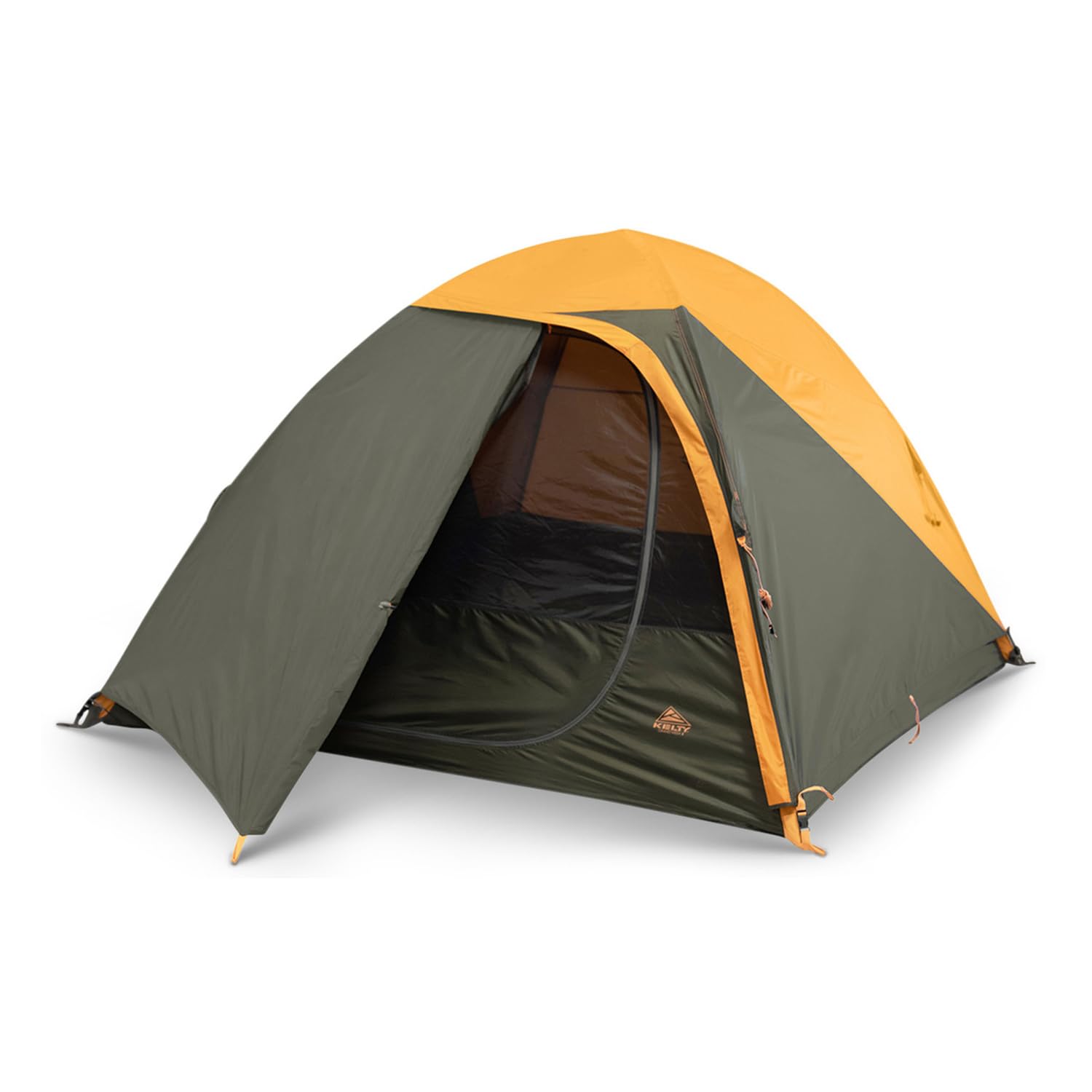
Kelty’s Grand Mesa is the tent that proves “good enough” can still be excellent. The Quickcorner system locks pole ends into place instantly, making this one of the fastest pitching tents in its weight class—even an 11-year-old can set it up in under 5 minutes. The 54 sq ft floor area is generous for a 2P shelter, comfortably fitting a large Big Agnes pad with room for gear.
The freestanding design lets you pick up the pitched tent and relocate it if you hit a root or rock—a feature that’s surprisingly rare in budget-friendly models. The 68D polyester floor and fly are seam-taped and held up beautifully in sideways rain, keeping occupants dry. The single door and vestibule keep weight and complexity low; the vestibule is large enough to stash a pack and boots under cover.
The packed weight of 7 lb 7 oz is the catch—it’s bulky for a 2P tent, better suited for trips where the hike is moderate rather than extreme. Zippers can be stiff out of the box, and the smoke stack flap on the rainfly may need a dab of seam sealer to be fully watertight. For a reliable, easy-to-deploy shelter for short carries and car-drop camping, the Grand Mesa is a stellar value.
Why it’s great
- Remarkably fast setup with Quickcorner system
- Roomier than typical 2-person tents
- Durable 68D polyester with fully taped seams
Good to know
- Heavy and bulky for serious backpacking
- Single door limits access for a second occupant
- Zippers can catch during initial break-in period
6. Naturehike Cloud Up 3 Person
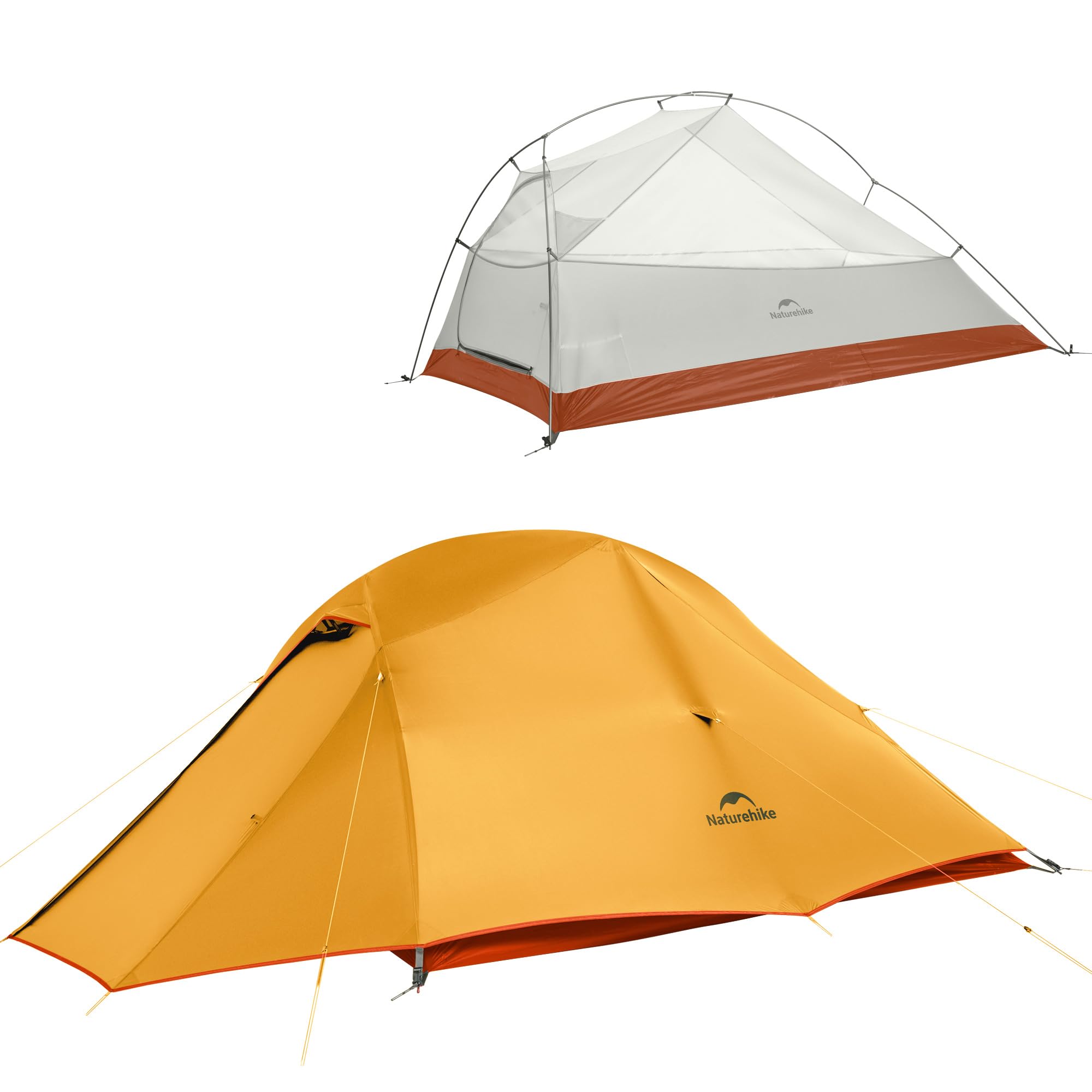
The Cloud Up 3 is a genuine 3-adult tent at a price point that undercuts domestic brands by a wide margin. The upgraded dual-Y pole structure creates 42.6 sq ft of floor space with a peak height of 45 inches, and while three adults is a tight fit, two adults with generous gear have a very comfortable setup. The footprint is included, saving an additional purchase that many competitors charge -50 for separately.
The double-wall construction with high-density B3 mesh provides excellent ventilation, and the wing-style design increases the gap between inner and outer layers, which reduces condensation drip. The fly is made from 210T ripstop polyester with a PU3000mm rating—three times the hydrostatic head of many budget tents—and it has performed admirably in heavy rain without leaking. The upgraded buckles are a welcome improvement over the older strap system.
The biggest compromise is the single door. For a 3P tent, one door means the middle person is always crawling. The floor is on the thin side—a groundsheet or extra tarp is recommended for rocky terrain. At roughly 5 lbs, it’s competitive on weight for the category. For budget-conscious trios or couples who want living space without premium pricing, this is the pick.
Why it’s great
- Includes footprint and high-quality Yuksom aluminum poles
- Excellent PU3000mm waterproof rating on fly and floor
- Packs small (16.9″ x 6.7″) for its capacity
Good to know
- Single door is inconvenient for three occupants
- Floor fabric is thin; use extra protection on rough ground
- Pole setup can be slightly challenging initially
7. OneTigris COSMITTO 2 Person

The OneTigris COSMITTO targets the camper who expects high winds and sloppy conditions without paying expedition-tier prices. The hexagon-shaped outer tent sheds wind more effectively than a standard dome, and the 1500mm HH fly has kept testers dry through sustained rain. The interior is all-no-see-um mesh, giving you 360-degree views and incredible airflow when the fly is off.
Setup takes under 5 minutes solo—the clip system and color-coded attachments are intuitive. The dual doors with two vestibules are a major plus at this price tier; each vestibule can hold a full backpack and boots. The included Line Loc 3 tensioners allow micro-adjustments on the guy lines without retying knots, a feature normally found on more expensive shelters. The stakes are robust enough to handle a hammer on hard-packed soil.
The 30.96 sq ft floor is tight for two large figures with wide pads. Users report the zippers can snag on the rainfly fabric if not aligned carefully. The stuff sack is compact at 23.6″ x 6.3″, and the tent holds up well in sustained 25-30 mph gusts with proper staking. For the budget-minded backpacker who expects real weather, the COSMITTO delivers specs that punch above its class.
Why it’s great
- Excellent wind-shedding hexagon shape
- Dual doors and dual vestibules for a 2P
- Line Loc 3 tensioners for easy guy-line adjustment
Good to know
- Floor space is tight for two large adults
- Rainfly zippers are prone to snagging
- Color may not match product images (grey runs dark)
8. Kelty Late Start 2 Person

The Late Start is Kelty’s take on an entry-level shelter that prioritizes speed over every other metric. The two-pole Quickcorner design means the entire tent can be pitched in under three minutes, even by a solo hiker. The 30.6 sq ft floor and 43-inch peak height give enough room for two average-sized sleepers with standard pads, but it’s snug—one reviewer described it as a “person-and-a-half” tent.
The 68D polyester floor and rainfly are built to last, and the PFC-free DWR finish aligns with modern eco-standards. The full-coverage rainfly with additional guy-out points kept occupants dry in steady rain, and the bathtub-style floor prevents water seepage from ground puddles. Kelty’s Conservation Alliance membership is a nice ethical bonus if brand values matter to your purchase decision.
The single door and single vestibule are the main compromises—the vestibule is large enough for a pack, but the second occupant must exit through the same opening. At over 4 lbs packed, it’s not ultralight, but the build quality and Kelty lifetime warranty make it a reliable choice for weekend warriors and families starting their backpacking journey. It’s a tent that encourages you to hit the trail rather than spend 20 minutes figuring out setup.
Why it’s great
- Lightning-fast setup with color-coded poles
- PFC-free fabrics and durable 68D polyester
- Kelty limited lifetime warranty
Good to know
- Single door and single vestibule limit utility for two
- Not suitable for cold-weather camping (rated for 40s+)
- Floor space is more “1.5-person” than true 2-person
9. Naturehike Star River UL 2 Person

The Naturehike Star River UL2 is the budget ultralight champion—a tent that weighs only 4.07 lbs packed and includes a footprint, which is rare in this price tier. The 15D nylon fabric is whisper-light, and the separated compression packaging (each part gets its own stuff sack) lets you distribute weight between hiking partners. The poles can even be strapped to the outside of a pack using the included hiking buckle.
The awning-style vestibules provide significantly more covered storage than traditional designs. The double zippers on the fly let you open small windows for ventilation without fully exposing the interior to rain. The 82.7″ x 51.2″ inner floor fits two regular sleeping pads with a little leftover space, and the 41.3-inch peak height allows sitting upright without scraping the mesh.
The catch is the 15D nylon’s durability—it’s light, but it’s not rugged. Sharp rocks or careless stakes can puncture the floor, and the fly’s water repellency has been questioned in repeated rain. Some users report water pooling on the roof if the fly isn’t tensioned absolutely perfectly. For the gram-conscious hiker on a tight budget who expects fair-weather trips, the Star River UL is a lightweight bargain that gets the job done.
Why it’s great
- Ultralight at 4.07 lbs including footprint
- Modular separated packaging for shared carry
- Large awning vestibules for gear storage
Good to know
- Thin 15D floor fabric is prone to punctures
- Water repellency is inconsistent in heavy rain
- Walls feel narrow; better for one person with gear
FAQ
Should I buy a 2-person or 3-person tent for two people?
What is the difference between a 3-season and 4-season tent for backpacking?
How important are dual doors and dual vestibules in a 2-3 person tent?
Final Thoughts: The Verdict
For most users, the best 2-3 person backpacking tent winner is the Big Agnes Copper Spur HV UL2 because it balances a market-leading 3 lb weight with true two-adult liveability and intelligently designed storage features. If you want bulletproof durability that will last a decade, grab the MSR Elixir 2. And for budget-conscious duos who need a true 3-person space without the premium price tag, nothing beats the Naturehike Cloud Up 3.

Mo Maruf
I created WellFizz to bridge the gap between vague wellness advice and actionable solutions. My mission is simple: to decode the research and give you practical tools you can actually use.
Beyond the data, I am a passionate traveler. I believe that stepping away from the screen to explore new environments is essential for mental clarity and physical vitality.