Our readers keep the lights on and my smoothie glass nicely filled. As an Amazon Associate, I earn from qualifying purchases.
Choosing the right tool for creating video content often comes down to a single, non-negotiable spec: reliable autofocus. A camera that hunts or loses your face mid-sentence can ruin a take faster than any lens flaw, turning your workflow into a frustrating battle with gear instead of a creative flow. The modern content creator needs a camera that locks onto a subject and stays there, regardless of lighting, movement, or focal length changes.
I’m Mohammad Maruf — the founder and writer behind WellFizz. I have spent over a decade analyzing hardware specifications and market trends, specifically dissecting how sensor readout speeds, phase-detection coverage, and stabilization algorithms translate into real-world performance for solo creators who can’t afford a crew.
After evaluating 11 distinct models spanning compact gimbals, APS-C hybrids, and full-frame powerhouses, I have narrowed the field to the most capable options. This guide highlights the top performers and key considerations to help you find the best cameras for content creators that match your specific workflow and budget.
How To Choose The Best Cameras For Content Creators
Selecting a camera for content creation means prioritizing video-centric features that stills-first shooters often overlook. You need a body that offers reliable subject tracking, clean high-ISO output, and practical recording limits without overheating.
Sensor Size and Low-Light Performance
Full-frame sensors (like the one in the Sony a7 III) provide superior dynamic range and cleaner shadows at high ISOs, which is vital for shooting indoors or at dusk. APS-C sensors (found in the Sony ZV-E10) are smaller but still vastly outperform phone sensors, offering a lighter body and a shallower depth of field for that cinematic look.
Autofocus System and Tracking Reliability
Phase-detection autofocus with eye-tracking is the gold standard. The Canon Dual Pixel CMOS AF II system and Sony Real-Time Eye AF are industry leaders, locking onto a face with near-zero hunting. Cheaper contrast-detection systems are unreliable for moving subjects and should be avoided for solo vlogging.
Image Stabilization: IBIS vs. Lens-Based
In-body image stabilization (IBIS) lets you shoot smooth handheld footage without a gimbal, a huge advantage for run-and-gun creators. The Panasonic Lumix S5II and the Canon EOS R7 both feature excellent IBIS systems. If your camera lacks IBIS, you must rely on lens stabilization or a tripod for steady shots.
Recording Limits and Overheating
Many entry-level cameras impose a 30-minute recording limit. For content creators scripting longer takes or livestreaming, you need a body with unlimited recording. Look for models with heat-dissipation technology, like the Panasonic S5II’s internal fan, to avoid shutdowns during long 4K sessions.
Quick Comparison
On smaller screens, swipe sideways to see the full table.
| Model | Category | Best For | Key Spec | Amazon |
|---|---|---|---|---|
| Panasonic Lumix S5II | Full-Frame | Hybrid shooters needing unlimited 4K 10-bit | 24.2MP / Phase Hybrid AF / Active I.S. | Amazon |
| Canon EOS R8 | Full-Frame | Lightweight full-frame vlog setup | 24.2MP / 4K60 uncropped / DPAF II | Amazon |
| Canon EOS R7 | APS-C | Action and sports content creation | 32.5MP / 30fps electronic / IBIS | Amazon |
| Sony a7 III | Full-Frame | Dependable all-around full-frame work | 24.2MP / 693 AF points / 10fps | Amazon |
| Sony ZV-E10 | APS-C | Entry-level vloggers moving from phone | 24.2MP / 4K oversampled / Real-Time Eye AF | Amazon |
| Nikon Z50 II | APS-C | Family and travel vloggers | 20.9MP / 4K60 / 31 Picture Controls | Amazon |
| Nikon Z fc | APS-C | Style-driven creators and casual shooting | 20.9MP / 4K UHD / Flip-out LCD | Amazon |
| Panasonic Lumix G85 | MFT | Budget-friendly stabilized video | 16MP / 5-axis IBIS / 4K | Amazon |
| DJI Osmo Pocket 3 | Compact | Ultra-portable gimbal vlogging | 1″ CMOS / 4K120 / 3-axis stab | Amazon |
| Blackmagic 6K Pro EF | Cinema | Raw cinema-grade production | Super35 / 6K RAW / 13 stops DR | Amazon |
| Blackmagic Cinema 6K L | Cinema | Full-frame cinema with L-Mount | Full-Frame 6K / 13 stops DR / BRaw | Amazon |
In‑Depth Reviews
1. Panasonic Lumix S5II
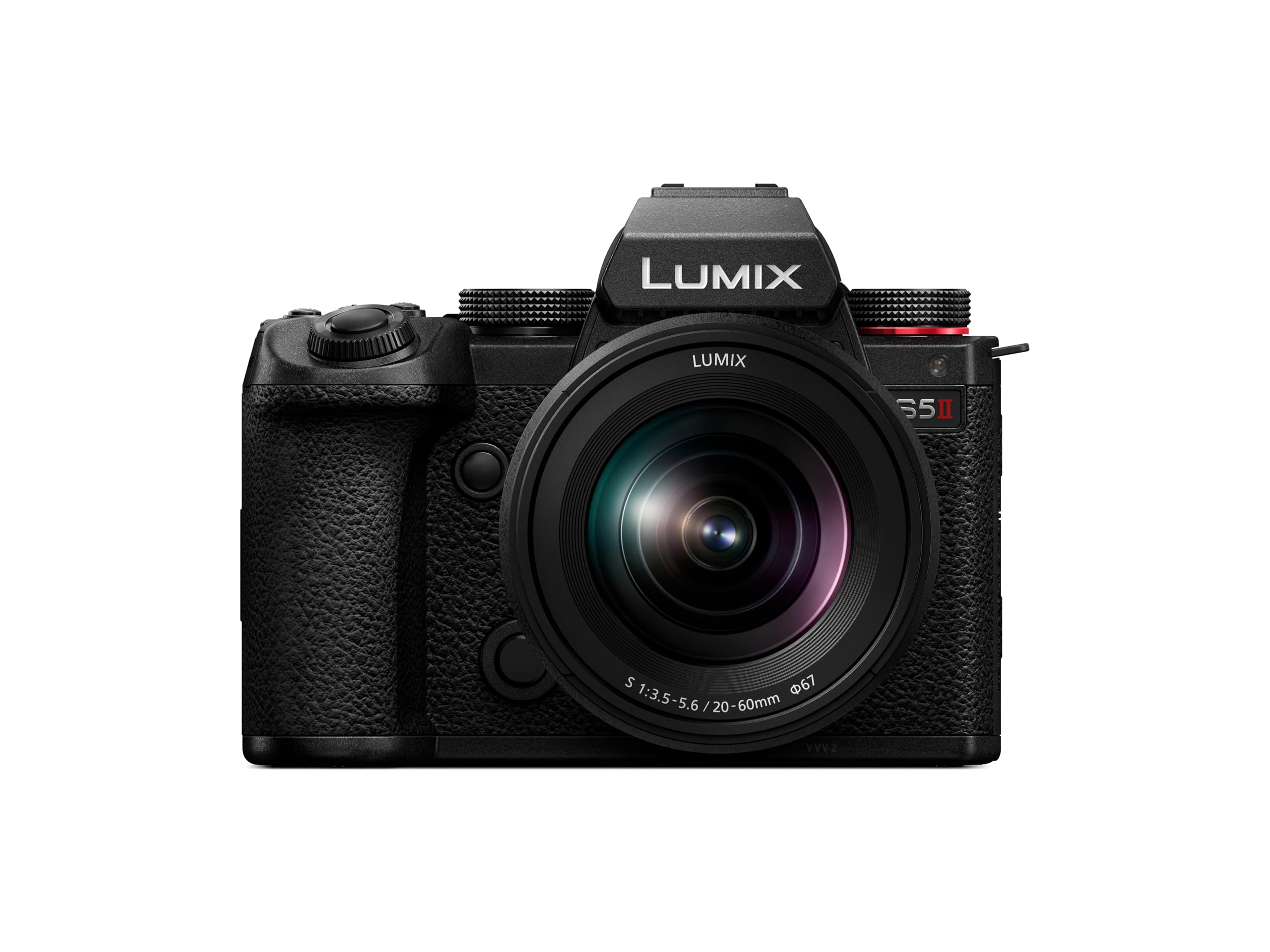
The Lumix S5II solves the biggest pain point of previous Panasonic cameras by introducing a Phase Hybrid Autofocus system that finally competes with Sony and Canon. This full-frame body delivers 24.2 megapixels with a 14+ stop V-Log capture, giving you tremendous latitude for color grading in post. The included 20-60mm kit lens offers a versatile wide-to-standard range that covers most vlogging and interview setups without needing an immediate lens swap.
The standout feature here is the Active I.S. technology, which smooths out handheld walking shots so effectively that you can often skip using a gimbal for run-and-gun content. With unlimited 4:2:2 10-bit recording and a small internal fan that prevents overheating, this camera is built for long-form creators who need reliability over hour-long shooting sessions. The build quality feels dense and weather-sealed, ready for outdoor shoots.
The only real trade-off is battery life, which will require an extra grip or spare batteries for a full day of heavy recording. The L-Mount ecosystem is growing but still smaller than Sony E or Canon RF. For a creator who wants a single hybrid camera capable of both professional video and high-resolution stills without stepping up to the + tier, this represents the best balance of features and performance in 2025.
Why it’s great
- Industry-leading Active I.S. for handheld walking shots
- Unlimited 4K 10-bit internal recording with no overheating
- Phase Hybrid AF finally locks on reliably for moving subjects
Good to know
- Battery life is average and requires spares for full-day shoots
- L-Mount lens library is still smaller than Sony E or Canon RF
2. Canon EOS R8

The Canon EOS R8 packs the same 24.2-megapixel full-frame sensor and DIGIC X processor found in the much pricier R6 Mark II into a body that is notably lighter and more compact. This makes it an excellent choice for the traveling content creator who needs full-frame dynamic range without the shoulder fatigue. The Dual Pixel CMOS AF II system provides near-instantaneous subject detection for people, animals, and vehicles, ensuring you never miss a focus pull during a talking-head segment.
Uncropped 4K video at up to 60 fps is oversampled from a 6K readout, delivering sharp, detailed footage with Canon’s excellent color science straight out of camera. The Canon Log 3 gamma curve gives you room to grade highlights and shadows, and the UVC/UAC support means you can use it as a high-quality webcam for livestreams without any capture card. The vari-angle LCD screen is essential for top-down or low-angle vlogging positions.
The major compromises are the lack of In-Body Image Stabilization (IBIS) and a small LP-E17 battery that will drain quickly during 4K recording. You will need to rely on stabilized RF lenses or a tripod for steady shots, and spare batteries are a must. The single UHS-II SD card slot also lacks redundancy for paid client work. This is a fantastic value full-frame camera, but it demands a few compromises on endurance and stabilization.
Why it’s great
- Uncropped 4K60 oversampled from 6K for incredibly sharp video
- Exceptional Dual Pixel CMOS AF II with deep-learning subject tracking
- Lightest and most compact full-frame RF mount body available
Good to know
- No IBIS forces reliance on lens stabilization or a tripod
- Small battery life requires multiple spares for video work
3. Canon EOS R7

The Canon EOS R7 brings high-speed shooting and professional-grade stabilization to the APS-C format. Its 32.5-megapixel CMOS sensor offers impressive resolution for cropping in post, while the 5-axis IBIS system provides coordinated control with RF lenses for rock-solid handheld footage. The camera can fire off 15 fps with the mechanical shutter and up to 30 fps with the electronic shutter, making it ideal for capturing fast-moving action or wildlife content.
Autofocus is a highlight here, with Dual Pixel CMOS AF covering approximately 100% of the frame with 651 zones. The subject detection locks onto eyes, animals, and vehicles with a tenacity that rivals Canon’s full-frame R-series. The video side is strong with 4K oversampled from 7K, Movie Servo AF for continuous tracking, and dual SD card slots (UHS-II) for backup. The LP-E6NH battery offers good endurance for a mirrorless camera.
The APS-C sensor means you get less dynamic range and higher noise at equivalent ISOs compared to a full-frame body. The RF-S lens lineup is limited, forcing you to buy full-frame RF lenses or use an adapter for older EF glass. The body, while well-gripped, is not fully weather-sealed to the same degree as the R5. For a creator focused on sports, dance, or wildlife content who values speed and stabilization over absolute low-light purity, the R7 is a top-tier choice.
Why it’s great
- High-resolution 32.5MP sensor with excellent crop capability
- Powerful 5-axis IBIS with coordinated control IS for smooth video
- Dual SD card slots for reliable data redundancy
Good to know
- Limited native RF-S lens selection for the APS-C format
- Dynamic range and noise performance trail full-frame alternatives
4. Sony a7 III

The Sony a7 III remains a staple in the creator community years after its launch because of its balanced package of full-frame performance and reliable autofocus. The 24.2-megapixel back-illuminated Exmor R sensor paired with the BIONZ X processor delivers 15 stops of dynamic range and impressive low-light performance up to ISO 204,800. The 693-point phase-detection system covers 93% of the sensor area, providing fast and accurate tracking for most content scenarios.
Battery life is genuinely exceptional for a mirrorless camera, with the NP-FZ100 pack lasting through a full day of mixed photo and video work without needing a swap. The 5-axis in-body stabilization is effective for handheld static shots, though it is not as aggressive as the newer Active I.S. found in the Panasonic S5II. The 4K video is oversampled and sharp, though limited to 30p without a Super 35 crop, and the menu system is notoriously complex to navigate.
The kit 28-70mm lens that ships with the camera is a functional starter but lacks the sharpness and constant aperture that serious creators will eventually want to upgrade. The touchscreen is limited to focus control, not menu navigation. For a creator who wants a proven, durable full-frame system with an enormous aftermarket lens ecosystem and stellar battery life, the a7 III is a dependable workhorse that still competes strongly despite its age.
Why it’s great
- Exceptional battery life that lasts a full day of shooting
- Wide 693-point AF coverage with reliable Real-Time Eye Tracking
- Mature Sony E-mount ecosystem with hundreds of lens options
Good to know
- 4K recording is limited to 30p; crop mode required for 4K60
- Complex menu interface and limited touchscreen functionality
5. Sony ZV-E10
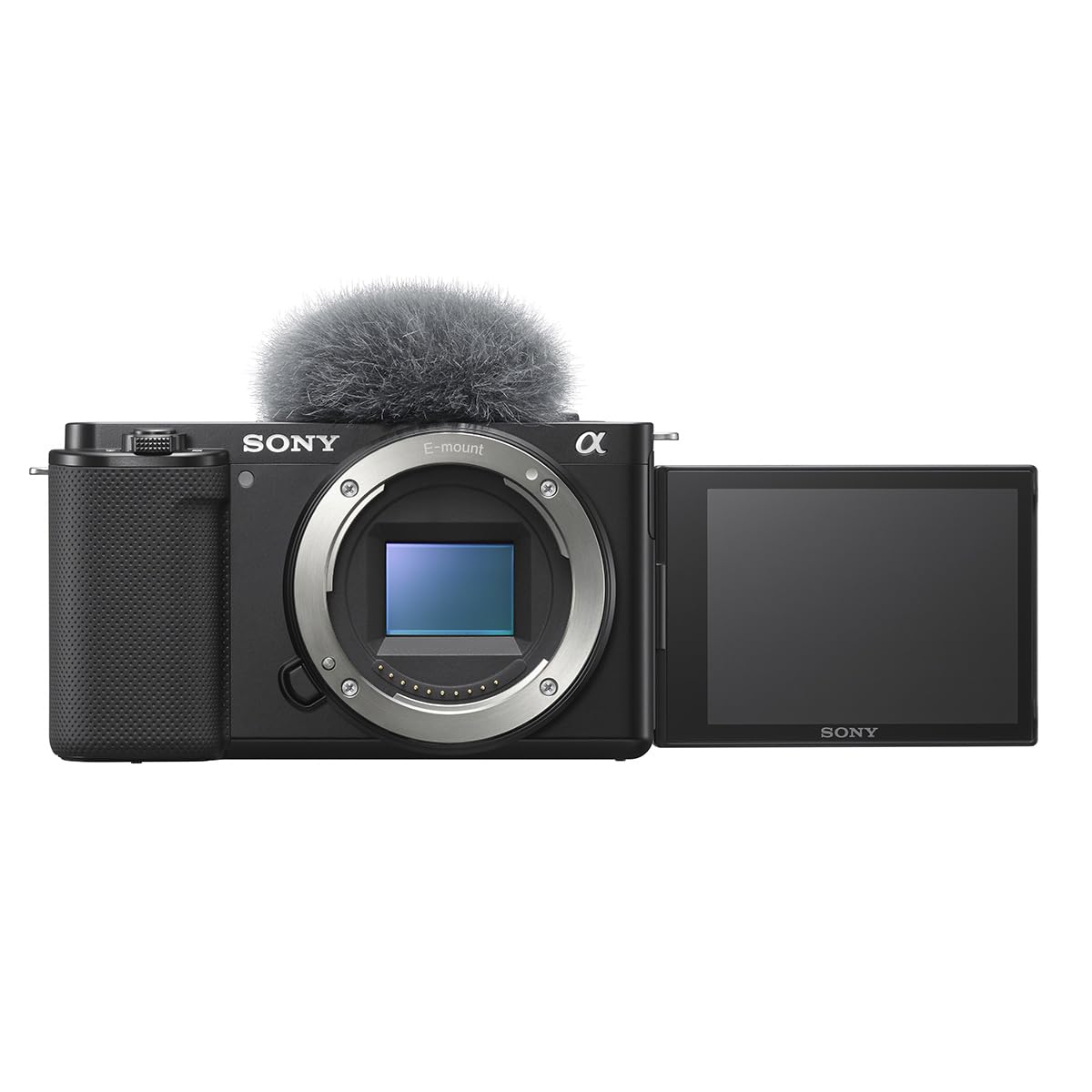
The Sony ZV-E10 targets the creator who is upgrading from a smartphone and needs a dedicated interchangeable-lens camera without the complexity of a pro body. It features a 24.2-megapixel APS-C Exmor CMOS sensor that oversamples 4K from a full 6K readout, resulting in footage that is noticeably sharper and more detailed than typical entry-level cameras. The dedicated Product Showcase Setting seamlessly transitions focus from your face to an object held up to the lens, a lifesaver for unboxing and review content.
The Background Defocus button instantly toggles between deep and shallow depth of field, allowing you to control the blur effect without diving into aperture settings. Sony’s Real-Time Eye AF locks onto eyes with a stickiness that many more expensive cameras envy, and the directional 3-capsule microphone is tuned for clear vlog audio. The lightweight body (under a pound) is easy to hold for extended recording sessions.
The downsides are significant for more advanced work. There is no in-body image stabilization, meaning you need to use a stabilized lens or a gimbal for smooth walking footage. The camera is also prone to overheating during 4K continuous recording in warm environments, and the battery life is poor, often giving only 30 minutes of 4K shooting per charge. The ZV-E10 is a fantastic gateway camera for budding creators, but its limitations become clear as your skills grow.
Why it’s great
- Product Showcase Setting for seamless face-to-object autofocus
- Impressive 4K sharpness from oversampled 6K readout
- Lightweight and accessible for first-time mirrorless users
Good to know
- No IBIS requires stabilized lenses or a gimbal for smooth footage
- Poor battery life and risk of overheating during 4K shooting
6. Nikon Z50 II

The Nikon Z50 II stands out for its emphasis on in-camera color presets, offering 31 built-in Picture Controls that let you craft a distinct aesthetic without needing to learn color grading. This is a huge advantage for creators who want to upload straight-from-camera footage with a professional look. The 20.9-megapixel DX sensor is several times larger than a phone sensor, providing rich detail and natural color reproduction that shines in daylight conditions.
The autofocus system can detect and track nine different subject types, including dogs, cats, birds, and vehicles, and the dedicated bird and airplane modes increase accuracy for specialized shooting. The kit includes both the 16-50mm and 50-250mm lenses, giving you a wide-to-telephoto range right out of the box—ideal for a creator who needs a single travel kit. The built-in flash is handy for well-lit indoor shots and the Night Portrait mode extends shooting capability after dark.
The body is lightweight and compact, making it easy to slip into a small bag. However, the 4K60 video is a welcome upgrade, though the lack of a headphone jack is an oversight for serious audio monitoring. The SnapBridge app for wireless transfer is functional but not as seamless as Sony’s or Canon’s offerings. The Z50 II is a solid, accessible entry-level APS-C system that prioritizes creative fun and ease of use over pure technical specs.
Why it’s great
- Extensive in-camera Picture Controls for instant aesthetic looks
- Two-lens kit provides versatile coverage from wide to telephoto
- Reliable subject-detection AF for people and animals
Good to know
- No headphone jack for real-time audio monitoring
- Wireless transfer via SnapBridge app can be inconsistent
7. Nikon Z fc

The Nikon Z fc is a camera that prioritizes the tactile experience of photography and video. Its retro-inspired body with analog dials for shutter speed, ISO, and exposure compensation makes it a joy to handle and a visually appealing prop in your own content. Underneath the vintage aesthetic, it houses a 20.9-megapixel DX sensor paired with the EXPEED 6 processor, delivering excellent color science and good dynamic range for the APS-C class.
The vari-angle LCD screen is fully articulated, making it easy to frame yourself when vlogging, and the 4K UHD video includes full-time autofocus with eye detection for reliable tracking during solo recording. The built-in stereo microphone is sufficient for scratch audio, and the external mic jack allows you to upgrade sound quality. The SnapBridge app for image transfer to your phone is straightforward for quick social media sharing.
The kit 16-50mm lens is compact but has a slow variable aperture that struggles in low light. The body, while charming, does not feel as robust as the more expensive Z50 II, and the grip is shallow, making it less comfortable with larger lenses. The autofocus is reliable in good light but can hunt in dim conditions. This camera is best suited for the creator who values style and inspiration over brute specs, and who shoots primarily in well-lit environments.
Why it’s great
- Engaging analog control dials for a hands-on shooting experience
- Classic design that looks great as a subject in photos or videos
- Full articulation flip-out LCD screen for easy vlogging
Good to know
- Kit lens has a slow variable aperture, lacking in low-light
- Shallow grip and less durable build compared to the Z50 II
8. Panasonic Lumix G85

The Panasonic Lumix G85 offers exceptional value by bringing 5-axis in-body image stabilization and 4K recording to a budget-friendly Micro Four Thirds platform. The 16-megapixel sensor, while lower resolution than modern APS-C competitors, lacks an optical low-pass filter, resulting in sharper fine detail than its pixel count would suggest. The class-leading dual image stabilization works in both photo and video modes, allowing you to shoot smooth handheld footage without a gimbal.
The body is built from magnesium alloy with weather sealing, giving it a durable feel that is rare at this price bracket. The included 12-60mm Power O.I.S. lens covers a useful wide-to-telephoto range with built-in optical stabilization that stacks with the IBIS. The electronic viewfinder is clear and responsive, and the articulating touchscreen is handy for creative angles. The camera is intuitive to use and offers 4K Photo mode for extracting high-res stills from your video clips.
The autofocus system uses contrast detection, which is reliable in good light but becomes sluggish and hunts more than phase-detection systems in low light during video recording. The 16-megapixel sensor is a limitation for heavy cropping in stills, and the overall image quality cannot match the dynamic range of modern APS-C or full-frame sensors. The G85 remains a solid choice for a beginner who needs a tough, stabilized camera on a very tight budget.
Why it’s great
- Excellent in-body stabilization for smooth handheld video
- Weather-sealed magnesium alloy construction for durability
- Very good value for a full-featured video-capable camera
Good to know
- Contrast-detect AF hunts in low light during video recording
- 16MP sensor limits cropping ability and low-light dynamic range
9. DJI Osmo Pocket 3

The DJI Osmo Pocket 3 redefines portability for content creators by packing a 1-inch CMOS sensor, 4K/120fps video, and a 3-axis mechanical gimbal into a device that slips into a jacket pocket. The built-in gimbal delivers footage that is indistinguishable from a much larger camera on a dedicated stabilizer, making it the ultimate tool for creators who prioritize mobility above all else. The 2-inch rotatable touchscreen automatically switches between horizontal and vertical orientation, perfect for cross-platform posting to TikTok, Instagram Reels, and YouTube.
The ActiveTrack 6.0 technology keeps you locked in center frame while you move, making it a powerful tool for solo vloggers who want dynamic walking shots. The Creator Combo bundle adds the DJI Mic 2 transmitter, a battery handle, a wide-angle lens, and a mini tripod, providing an all-in-one kit that covers audio, power, and stabilization. The 1-inch sensor offers significantly better low-light performance than the smaller sensors found in action cameras or phones, especially at night.
The trade-off for this pocket size is the lack of interchangeable lenses and a fixed wide-angle perspective. The gimbal is a delicate mechanical component that is more fragile than a solid-body camera, and the battery, while rated for 166 minutes, is non-replaceable on the standard unit. The Osmo Pocket 3 is not a replacement for a full ILC system, but for a creator who needs instant, smooth, professional-grade footage without carrying a bag, it is an unbeatable companion.
Why it’s great
- Integrated 3-axis gimbal delivers silky-smooth footage without setup
- Compact size fits in a pocket, ideal for travel and daily carry
- Excellent 1-inch sensor and low-light performance for its class
Good to know
- Non-interchangeable lens limits creative flexibility
- Fragile gimbal mechanism requires careful handling
10. Blackmagic 6K Pro EF
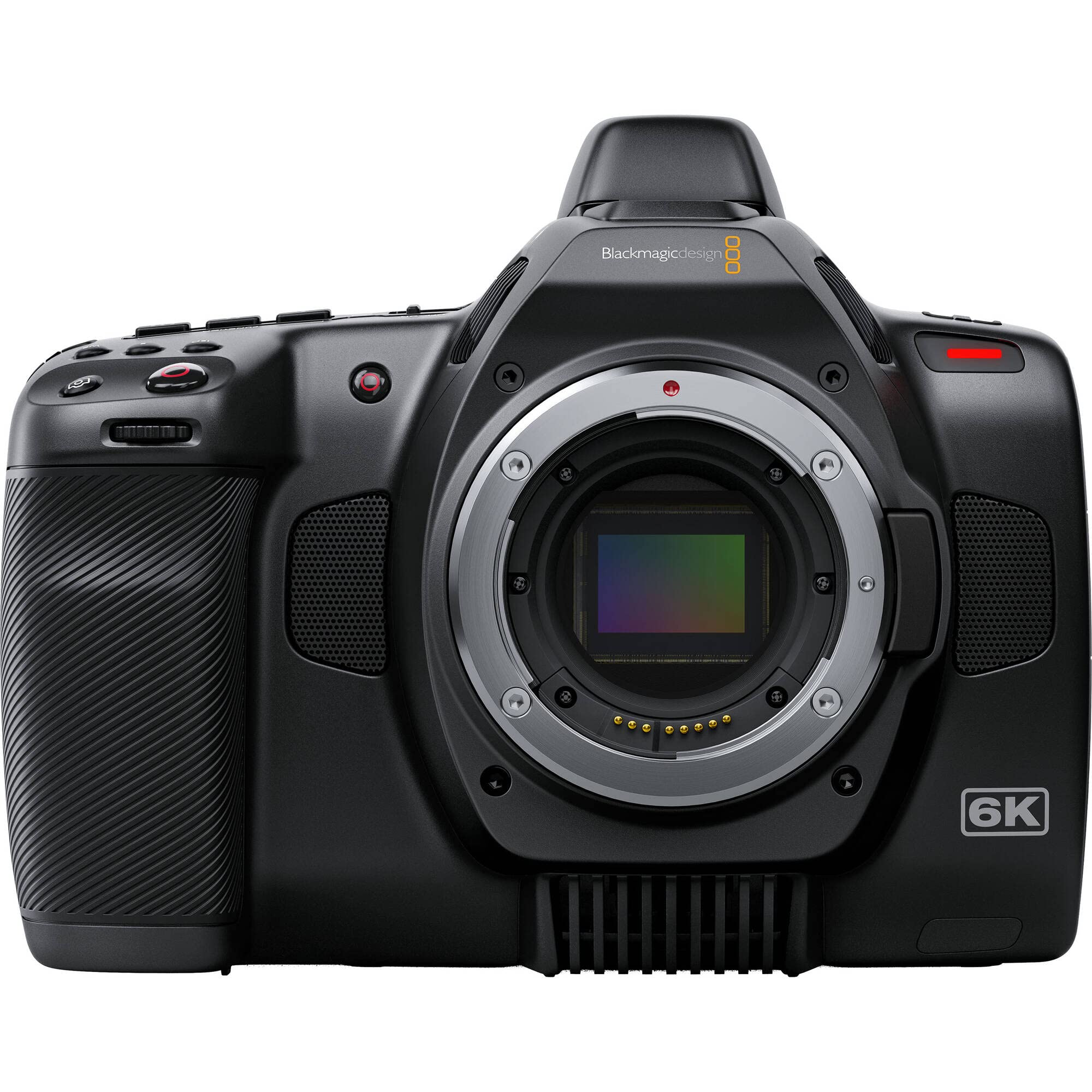
The Blackmagic Pocket Cinema Camera 6K is a cinema-grade tool designed for creators who demand raw recording and professional color science. Its Super35 sensor captures native 6K resolution at up to 50 fps and 2.8K at up to 120 fps, giving you immense flexibility for cropping, reframing, and high-quality slow motion. The EF lens mount is a major advantage, giving you access to an enormous catalog of Canon and third-party glass that is often available at lower prices than modern mirrorless lenses.
The camera records Blackmagic RAW, which provides incredible latitude for color grading with up to 13 stops of dynamic range. It includes a full copy of DaVinci Resolve Studio, the industry standard for color correction and editing, making it a truly complete package for post-production. The built-in SD card slot records HD proxies simultaneously, streamlining the editing process for long projects.
This camera is not for the faint of heart. It relies on contrast-detect autofocus, which is essentially unusable for video, meaning you must pull focus manually or use a follow-focus system. It does not come with a battery, and power management requires robust external solutions. The body is larger and heavier than a mirrorless hybrid, and a fully rigged setup is necessary for shoulder work. This is a specialized tool for creators committed to a cinema-style production workflow.
Why it’s great
- Native 6K raw recording with incredible grading latitude
- EF lens mount gives access to a huge, affordable lens ecosystem
- Includes full DaVinci Resolve Studio for post-production
Good to know
- No usable autofocus for video; requires manual focus
- Power system is demanding; needs external V-mount batteries
11. Blackmagic Cinema 6K L

The Blackmagic Cinema Camera 6K steps up to a full-frame sensor with a Leica L-Mount, delivering the ultimate in cinematic image quality for demanding content creators. The 6K sensor (6048 x 4032) offers 13 stops of dynamic range and dual native ISO up to 25,600, providing incredibly clean shadows and highlights even in challenging lighting conditions. The built-in optical low-pass filter (OLPF) reduces moiré and aliasing, preserving fine detail that is critical for high-end productions.
It records in 12-bit Blackmagic RAW and also generates real-time H.264 proxies for easier editing on less powerful computers. The large, bright 1500-nit 5-inch HDR LCD screen eliminates the need for an external monitor in most shooting conditions. The L-Mount is a true universal standard shared with Panasonic, Leica, and Sigma, giving you access to world-class optics. The included DaVinci Resolve Studio activation code makes this a true end-to-end cinema solution.
Like the 6K Pro, this camera relies on manual focus or third-party wireless follow-focus systems, as its autofocus is contrast-detection and not suitable for video. It does not come with a battery included, and reliable power requires a professional battery solution, such as NP-F570 batteries (one included) or a V-mount adapter. The body is lightweight for a cinema camera due to its carbon fiber composite, but rigging it fully requires investment. This is the pinnacle choice for creators doing narrative filmmaking, commercials, or high-end branded content.
Why it’s great
- Full-frame 6K sensor with 13 stops of dynamic range
- Open L-Mount standard with high-quality optics from Leica, Sigma, Panasonic
- Built-in 1500-nit 5-inch HDR display for accurate monitoring
Good to know
- Requires manual focus for video; no reliable autofocus
- No battery included and needs professional power solution
FAQ
Should I buy a full-frame or APS-C camera for content creation?
Why does my camera overheat when recording 4K?
How important is a headphone jack for vlogging?
What is a recording limit and why does it matter?
Final Thoughts: The Verdict
For most users, the best cameras for content creators winner is the Panasonic Lumix S5II because it combines industry-leading stabilization, reliable phase-detect autofocus, and unlimited 10-bit recording in a full-frame body that does not break the bank. If you want a lightweight full-frame setup with exceptional autofocus and a classic color science, grab the Canon EOS R8. And for ultra-portable gimbal filming without any setup, nothing beats the DJI Osmo Pocket 3.

Mo Maruf
I created WellFizz to bridge the gap between vague wellness advice and actionable solutions. My mission is simple: to decode the research and give you practical tools you can actually use.
Beyond the data, I am a passionate traveler. I believe that stepping away from the screen to explore new environments is essential for mental clarity and physical vitality.