Our readers keep the lights on and my smoothie glass nicely filled. As an Amazon Associate, I earn from qualifying purchases.
The difference between a vlog that gets watched and one that gets swiped away often comes down to a single, unforgiving metric: stabilization. A camera that delivers smooth, gimbal-like footage straight out of the box—without the post-production warp stabilizer crutch—is the difference between looking like a pro and looking like you forgot to turn off the shake reduction. The best vlogging cameras now pack 1-inch sensors, 3-axis mechanical gimbals, and AI-driven subject tracking into bodies smaller than a smartphone, making shaky footage a choice, not a limitation.
I’m Mohammad Maruf — the founder and writer behind WellFizz. I’ve spent years analyzing image sensor data, stabilization motor torque, and codec bitrates across hundreds of vlogging cameras to separate spec-sheet hype from real-world usability.
This guide dissects the sensor sizes, stabilization types, autofocus capabilities, and audio solutions that define the modern vlogging experience, helping you find the right camera for vlogging that matches how you actually shoot.
How To Choose The Best Camera For Vlogging
The vlogging camera market has split into three distinct tiers: pocket gimbal cameras that prioritize portability and stabilization, mirrorless interchangeable-lens cameras that offer superior image quality and depth of field control, and action cameras built for hands-free POV and durability. Your choice depends on how you move, what you shoot, and where you publish.
Sensor Size and Low-Light Performance
Sensor size directly dictates how much light the camera captures. A 1-inch CMOS sensor (found in the Xtra Muse and DJI Osmo Pocket 3) offers a strong balance of portability and image quality, producing usable footage in dim indoor settings. APS-C sensors (Sony ZV-E10, Nikon Z 30, Canon EOS R7) collect roughly 2.5x more light than 1-inch sensors, giving you cleaner shadows and more natural skin tones in low-light vlogs. Full-frame sensors (Canon EOS R8, Panasonic LUMIX S5II) deliver the highest dynamic range and shallowest depth of field but come with larger lenses and higher weight, which matters for all-day handheld shooting.
Stabilization: Gimbal vs. IBIS vs. E-Stabilization
Mechanical 3-axis gimbal stabilization, as found in the Xtra Muse and DJI Osmo Pocket 3, physically compensates for hand shake and walking motion, producing gimbal-smooth footage without additional gear. In-body image stabilization (IBIS) inside cameras like the Canon EOS R7 and Panasonic LUMIX S5II uses sensor-shift mechanisms to stabilize the image while allowing interchangeable lenses. Electronic stabilization (E-Stabilization) crops the frame and uses software to smooth movement—effective for stationary shots but degrades video quality during fast motion. For vloggers who walk and talk, mechanical or IBIS stabilization is the safer bet.
Autofocus and Subject Tracking
Reliable autofocus is the most underrated feature in a vlogging camera. Face and eye detection that locks onto the subject and stays locked—even as the subject moves, turns, or walks toward the camera—eliminates the need for manual focus pulls or re-shoots. Sony’s Real-Time Eye AF (ZV-E10, Alpha 6700) and Canon’s Dual Pixel CMOS AF II (EOS R8, R7) are industry benchmarks. The Xtra Muse and DJI Osmo Pocket 3 offer face/object tracking that works well for a single subject in frame. For vloggers who frequently pan between themselves and objects (product showcases), the product-showcase mode on the Sony ZV-E10 is a standout feature.
Quick Comparison
On smaller screens, swipe sideways to see the full table.
| Model | Category | Best For | Key Spec | Amazon |
|---|---|---|---|---|
| DJI Osmo Pocket 3 Creator Combo | Pocket Gimbal | All-day walk-and-talk vlogging | 1″ CMOS, 4K/120fps, 3-Axis Gimbal | Amazon |
| Canon EOS R8 | Full-Frame Mirrorless | Cinematic 4K with shallow DOF | 24.2MP Full-Frame, 4K/60p Uncrop | Amazon |
| Sony Alpha 6700 | APS-C Mirrorless | AI tracking for fast-moving subjects | 26MP APS-C, 4K/120p, AI Processor | Amazon |
| Panasonic LUMIX S5II | Full-Frame Mirrorless | Unlimited 4:2:2 10-bit recording | 24.2MP Full-Frame, Active I.S. | Amazon |
| Canon EOS R7 | APS-C Mirrorless | Hybrid IBIS + high-speed shooting | 32.5MP APS-C, 5-Axis IBIS | Amazon |
| Sony Alpha ZV-E10 | APS-C Mirrorless | Product showcase + budget creators | 24.2MP APS-C, 4K Oversampled | Amazon |
| Nikon Z 30 | APS-C Mirrorless | Live streaming + webcam use | 4K Uncrop, Eye-Tracking AF | Amazon |
| Panasonic LUMIX G100 | MFT Mirrorless | Built-in tracking microphone | 4K Video, 360° Audio Tracking | Amazon |
| Xtra Muse | Pocket Gimbal | Budget gimbal alternative to DJI | 1″ CMOS, 4K/120fps, 3-Axis Gimbal | Amazon |
| Insta360 GO Ultra | Action Cam | Wearable POV + hands-free clips | 53g, 4K/60fps, 200 Min Battery | Amazon |
| DJI Osmo Nano | Action Cam | Ultra-compact POV + sports vlogs | 1/1.3″ Sensor, 143° FOV, 64GB | Amazon |
In‑Depth Reviews
1. DJI Osmo Pocket 3 Creator Combo

The DJI Osmo Pocket 3 remains the benchmark for pocket-sized vlogging cameras because it solves the two hardest problems in one compact body: stabilization and framing. The 1-inch CMOS sensor captures 4K video at 120fps with significantly better low-light performance than smaller sensors, while the 3-axis mechanical gimbal eliminates the need for a separate gimbal rig. The 2-inch rotatable touchscreen flips between horizontal and vertical orientation without menu diving, making it a seamless tool for cross-platform creators who publish on YouTube and TikTok.
ActiveTrack 6.0 locks onto your face or a subject and keeps you centered in frame even as you move, jump, or spin—a feature that solo vloggers will find indispensable when shooting without a second person. The Creator Combo adds the DJI Mic 2 transmitter, a battery handle extending runtime to roughly 166 minutes, and a wide-angle lens for more immersive shots. The 10-bit D-Log M color profile allows for robust color grading in post, giving you professional flexibility without the bulk of a mirrorless rig.
The tradeoff is that the fixed-lens design means no optical zoom beyond 2x digital, and the gimbal mechanism is fragile enough that you’ll want the included carrying case during transport. For vloggers who prioritize portability and ready-to-shoot smooth footage, this is the most complete package on the market.
Why it’s great
- Mechanical gimbal eliminates need for external stabilizer
- 1-inch sensor delivers strong low-light performance for its size
- ActiveTrack 6.0 keeps solo vloggers centered in frame
- Included DJI Mic 2 vastly improves audio quality
- Rotatable screen makes vertical/horizontal switching instant
Good to know
- Fixed lens limits to 2x digital zoom only
- Gimbal mechanism is fragile and requires careful handling
- No viewfinder; relies entirely on the touchscreen
2. Canon EOS R8

The Canon EOS R8 is the lightest full-frame RF-mount mirrorless camera Canon has produced, weighing just 461 grams with the battery. The 24.2MP full-frame CMOS sensor paired with the DIGIC X processor delivers 4K video oversampled from 6K, resulting in noticeably sharper detail and cleaner shadows than APS-C alternatives. The Dual Pixel CMOS AF II covers the entire frame with 1,053 autofocus zones, detecting and tracking people, animals, and vehicles with a level of reliability that makes manual focus effectively obsolete for vlogging.
Canon Log 3 and HDR PQ recording give you 10-bit color depth for grading flexibility, and the uncropped 4K/60p mode means your wide-angle lenses retain their full field of view. The vari-angle touchscreen flips out and rotates, making it easy to monitor yourself while talking to the lens. For streaming, UVC/UAC support lets you use the R8 as a high-quality webcam over a single USB-C cable without additional capture hardware.
The main drawbacks are battery life (rated around 150 minutes of video) and the lack of in-body image stabilization—you’ll need stabilized RF lenses or a gimbal for smooth walking shots. The single UHS-II SD card slot also limits redundancy for paid work. For vloggers making the leap to full-frame, the R8 offers the best image quality-to-weight ratio at this price tier.
Why it’s great
- Full-frame sensor delivers superior dynamic range and low-light clarity
- 4K/60p oversampled from 6K produces extremely sharp footage
- Dual Pixel CMOS AF II is fast and reliable for subject tracking
- Canon Log 3 allows professional color grading
- UVC/UAC support for plug-and-play streaming
Good to know
- No in-body stabilization requires stabilized lenses or a gimbal
- Below-average battery life for all-day vlogging
- Single SD card slot limits backup options
3. Sony Alpha 6700

The Sony Alpha 6700 represents the current peak of APS-C mirrorless video performance, driven by a dedicated AI processor that enables Real-time Recognition for tracking people, animals, birds, insects, cars, and trains. The 26MP Exmor R back-illuminated CMOS sensor paired with the BIONZ XR engine delivers 4K/60p oversampled from 6K plus 4K/120p with a slight crop, giving you slow-motion flexibility without sacrificing detail. The 759 phase-detection autofocus points cover approximately 94% of the image area, ensuring your face stays locked even during rapid panning or movement.
For color-critical work, the 4:2:2 10-bit internal recording in S-Log3 and S-Cinetone profiles provides latitude for grading without banding, and the UHS-II SD card slot handles high-bitrate All-Intra formats. The in-body image stabilization offers around 5 stops of correction, which makes handheld walking shots usable though not gimbal-smooth. The vari-angle screen flips out to the front for self-framing, and the large grip makes it comfortable for extended handheld operation even with heavier zoom lenses.
Notable downsides include the single UHS-II card slot, the small and low-resolution EVF, and a tendency to overheat after roughly 40 minutes of 4K/60p recording in warm environments—something to factor if you shoot long takes. The battery life is average for its class, so packing a spare is recommended for full-day vlogging sessions.
Why it’s great
- AI-powered subject recognition is the most accurate in its class
- 4K/120p allows high-quality slow-motion vlogs
- IBIS provides useful stabilization for handheld shooting
- S-Cinetone and S-Log3 profiles offer pro grading flexibility
- Solid build quality with comfortable ergonomics
Good to know
- Overheating risk after 40 minutes of 4K/60p recording
- Single SD card slot only
- EVF resolution is lower than competitors at this price
4. Panasonic LUMIX S5II
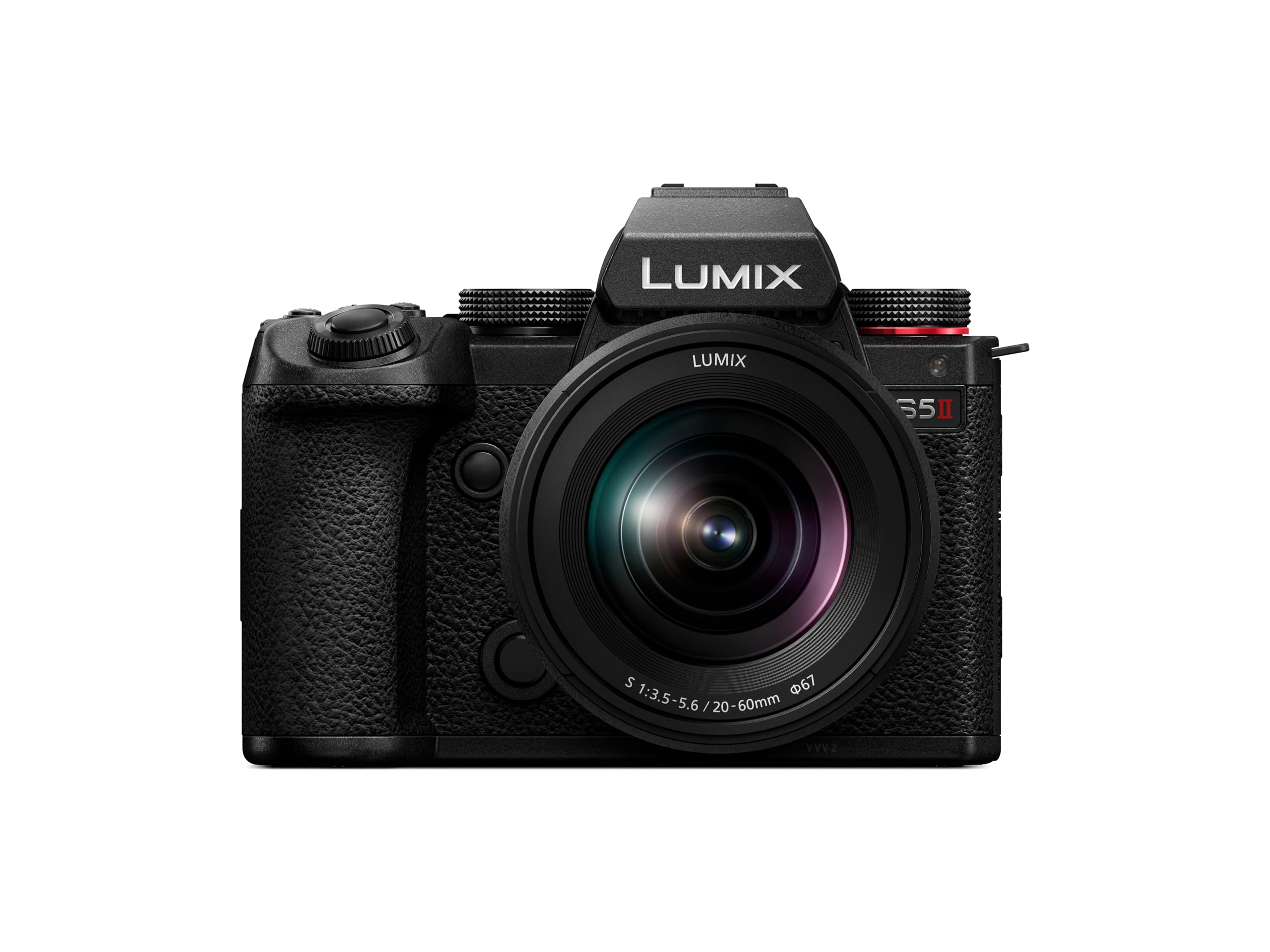
The Panasonic LUMIX S5II solves the single biggest limitation of its predecessor: autofocus. The new Phase Hybrid AF system finally brings reliable phase-detection to Panasonic’s full-frame line, making it a genuine competitor for vloggers who need consistent face and eye tracking. The 24.2MP full-frame CMOS sensor delivers 14+ stops of dynamic range with V-Log/V-Gamut capture, and the internal heat dispersion mechanism uses a small fan and heat sink to allow unlimited 4:2:2 10-bit recording—no 30-minute limit, no overheating shutdowns.
The Active I.S. technology provides the most effective in-body stabilization Panasonic has produced, allowing surprisingly smooth walking shots without a gimbal. The 6K/30p Open Gate recording mode gives you flexibility to crop to different aspect ratios in post, which is valuable for vloggers who publish to both YouTube and vertical platforms. The REAL TIME LUT feature lets you apply color grading presets in-camera, so you can nail the look on set rather than in the edit suite.
Battery life is the primary complaint—real-world usage yields roughly 90 minutes of continuous video, so a battery grip or spare batteries become essential for long shoots. The body is also slightly heavier than competitors like the Canon R8, and the L-mount lens ecosystem is still growing compared to Sony E-mount or Canon RF. For hybrid shooters who prioritize recording time and stabilization over lens selection, the S5II is a compelling full-frame vlogging machine.
Why it’s great
- Unlimited 4:2:2 10-bit recording with no overheating
- Active I.S. provides gimbal-like handheld stabilization
- Phase Hybrid AF delivers reliable subject tracking
- REAL TIME LUT allows in-camera color grading
- 6K Open Gate mode for flexible aspect ratio cropping
Good to know
- Battery life is below average, requiring spares for full-day shoots
- Heavier body than competing full-frame vlogging options
- L-mount lens library is smaller than Sony/Canon ecosystems
5. Canon EOS R7

The Canon EOS R7 is built for vloggers who also shoot action, sports, or wildlife, combining a high-resolution 32.5MP APS-C sensor with a mechanical shutter capable of 15fps and an electronic shutter hitting 30fps with full AF tracking. The Dual Pixel CMOS AF II system uses 651 zones covering nearly 100% of the frame, detecting and locking onto subjects with speed that rivals cameras costing twice as much. The 5-axis in-body image stabilization provides up to 7 stops of shake correction, making handheld walking footage noticeably smoother than unstabilized mirrorless cameras.
For video, the R7 records 4K/60p oversampled from 7K, and Canon Log 3 gives you 10-bit color depth for grading. The dual UHS-II SD card slots are a rare and welcome feature for redundancy—if one card fails, you have a backup. The body features deep, comfortable grip, and the vari-angle touchscreen articulates for self-monitoring. The inclusion of a hot shoe means you can mount wireless receivers like the DJI Mic 2 or Rode Wireless Go directly without a cage.
The main tradeoff is that the APS-C sensor, while excellent, doesn’t match the noise performance of full-frame options like the EOS R8 in extremely low light. The RF-S lens selection is still limited, though you can adapt EF-mount lenses via the optional adapter. For hybrid creators who need both high-speed stills and stabilized 4K video, the R7 is a versatile workhorse.
Why it’s great
- 5-axis IBIS delivers strong handheld stabilization
- Dual SD card slots provide recording redundancy
- Honey, mechanical shutter up to 15fps for action stills
- 4K oversampled from 7K produces extra-sharp video
- Ergonomic grip suits long shooting sessions
Good to know
- Limited native RF-S lens selection requires adapter for EF glass
- No full-frame low-light advantage over competitors
6. Sony Alpha ZV-E10
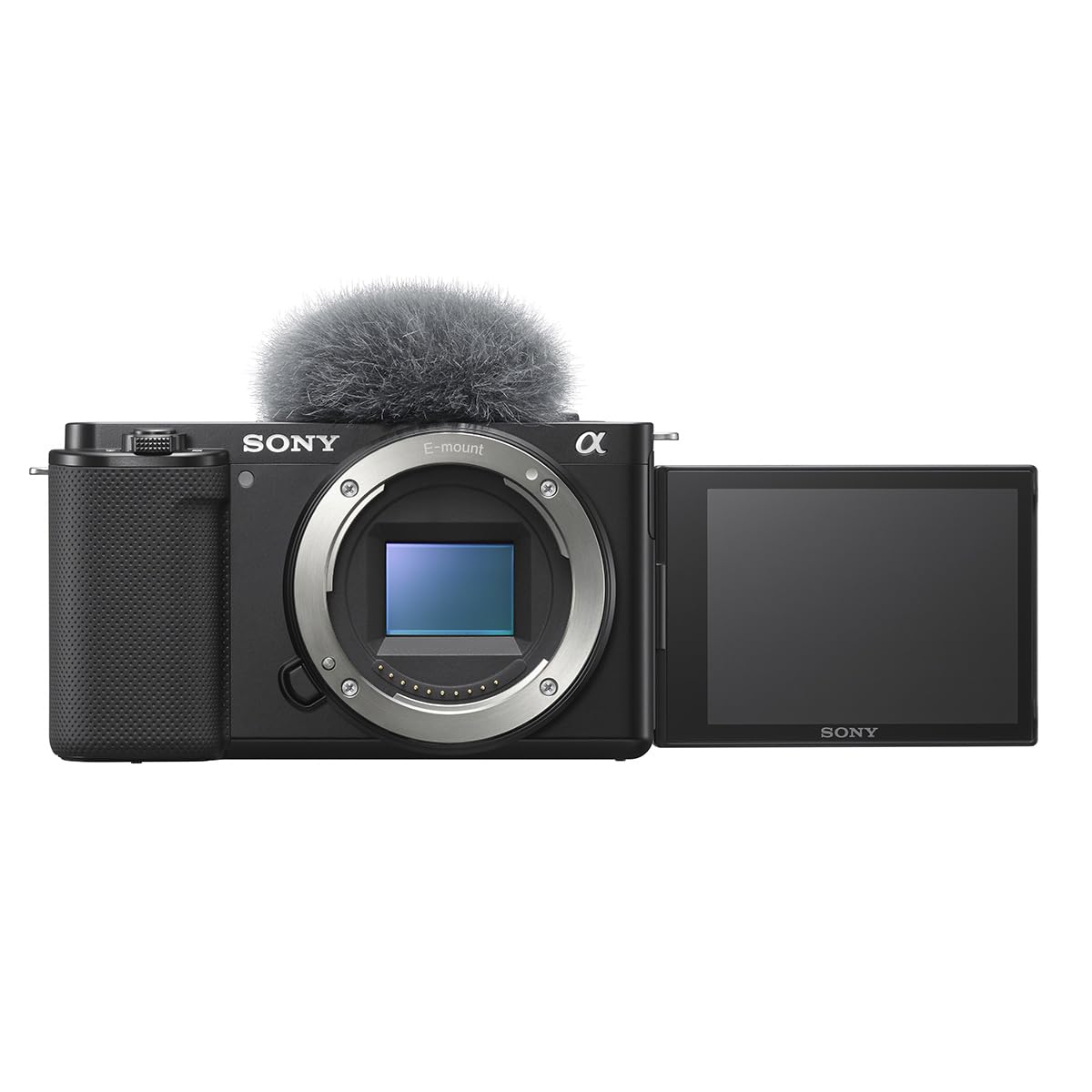
The Sony Alpha ZV-E10 was purpose-built for vloggers, and its design decisions reflect that focus. The 24.2MP APS-C Exmor CMOS sensor captures 4K video oversampled from 6K, delivering sharp footage with the color science that Sony’s mirrorless line is known for. The Product Showcase Setting instantly transitions focus from your face to an object held up to the lens, making it the easiest camera on this list for review-style and unboxing vlogs. The Background Defocus button lets you toggle between shallow depth of field and a sharp background with one tap.
The Real-Time Eye AF, inherited from Sony’s higher-end bodies, locks onto human and animal eyes with speed and accuracy that surpasses most cameras in this price bracket. The front-facing mic has adjustable three-capsule sensitivity, and the 3.5mm mic input allows connection to external lapel or shotgun microphones. The side-hinged vari-angle screen flips out to the front and stays clear of the hot shoe, so you can mount a wireless mic receiver without obstruction.
The ZV-E10 lacks in-body image stabilization, meaning you either need a steady hand, a gimbal, or a lens with optical stabilization (the included kit lens offers none). The rolling shutter is noticeable during fast pans, and the battery life is mediocre at roughly 25 minutes of 4K recording. For creators stepping up from smartphone video and focusing on desk-based or tripod-mounted content, the ZV-E10 offers an unbeatable feature-to-price ratio.
Why it’s great
- Product Showcase mode makes review vlogging effortless
- Real-Time Eye AF delivers reliable subject tracking
- 4K oversampled from 6K produces sharp video
- Simple one-touch defocus and recording buttons
- Good mic input with adjustable sensitivity
Good to know
- No IBIS; requires stabilized lenses or gimbal for smooth shots
- Short 4K battery life (~25 minutes) requires spare batteries
- Rolling shutter noticeable during fast camera movement
7. Nikon Z 30

The Nikon Z 30 is uniquely positioned for vloggers who also livestream. Its plug-and-play USB-C webcam operation delivers Full HD/60p or 4K/30p over USB-C, with constant power via USB so you never drain the battery during long streams. The flip-out touchscreen selfie monitor is paired with a dedicated REC button and a red tally light that clearly indicates when recording is active—a small but meaningful detail for solo shooters. The built-in stereo microphone has adjustable sensitivity, and the hot shoe accepts Nikon’s optional external mic for improved audio.
The 20.9MP APS-C CMOS sensor with EXPEED 6 processor delivers 4K video with eye-tracking autofocus for people and pets. The included NIKKOR Z 16-50mm f/3.5-6.3 VR lens provides optical stabilization, which helps compensate for the lack of IBIS in the body. The camera is compact enough to hold in one hand for extended periods, and the control layout puts essential functions within easy thumb reach. For creators who want a single device for recording and streaming without additional capture cards, the Z 30 simplifies the workflow significantly.
There is no electronic viewfinder, which is expected at this price but worth noting for those who prefer eye-level framing. The kit lens has a variable aperture that limits low-light performance, and the lens itself must be manually unlocked before shooting—a small annoyance during fast starts. For entry-level creators prioritizing ease of streaming over raw video specs, the Z 30 delivers a clean, frustration-free experience.
Why it’s great
- Plug-and-play UVC/UAC streaming over USB-C
- Constant power via USB keeps camera alive for long streams
- Eye-tracking AF for people and pets
- Compact and lightweight for one-handed vlogging
- Included VR lens provides optical stabilization
Good to know
- No electronic viewfinder
- Kit lens variable aperture limits low-light performance
- Lens requires manual unlock before each use
8. Panasonic LUMIX G100

The Panasonic LUMIX G100 prioritizes audio quality in a way most vlogging cameras ignore. Its built-in high-performance microphone uses OZO Audio by Nokia to deliver 360-degree spatial sound that automatically tracks the subject on screen—when you pan from person to person, the audio pans with the image. This makes it uniquely suited for vloggers who record in dynamic environments where external mic placement is impractical, such as outdoor events, interviews, or travel vlogs where you don’t want to manage multiple audio sources.
The Micro Four Thirds sensor keeps the camera lightweight and compact, and the included 12-32mm lens collapses to a pancake size for portability. The 4K video is detailed and color-accurate, with V-Log L recording available for those who want to grade in post. The frame marker feature overlays aspect ratio guides for social media platforms, which is useful for creators who need to frame for both horizontal YouTube and vertical Instagram simultaneously. The 5-axis hybrid image stabilization combines electronic and optical stabilization for usable handheld footage.
The G100 does have a 20-minute 4K recording limit per clip, which can be frustrating for lectures, podcasts, or long talking-head sessions. The Micro Four Thirds sensor performs adequately in good light but shows visible noise in dim interiors. For vloggers who produce audio-rich content like travel documentaries or multi-person interviews, the G100’s tracking microphone is a genuine differentiator that can reduce your gear load by eliminating the need for a separate recorder or wireless mic system.
Why it’s great
- 360-degree tracking microphone captures audio by subject position
- Compact Micro Four Thirds system with collapsible kit lens
- V-Log L recording for color grading flexibility
- Social media frame markers for multi-platform shooting
Good to know
- 20-minute 4K recording limit per clip
- Micro Four Thirds sensor is noisier in low light than APS-C
- Kit lens is average, recommending an upgrade for low-light work
9. Xtra Muse

The Xtra Muse enters the pocket gimbal category as a strong alternative to the DJI Pocket 3, offering a 1-inch CMOS sensor with 4K/120fps recording capability and an integrated 3-axis gimbal stabilizer. The 2-inch touchscreen provides live framing and can switch between horizontal and vertical orientation. Face and object tracking keep you centered in frame, and the fast autofocus system handles focus pulls between subjects reliably. The 161-minute battery life is competitive with the DJI option, and the USB-C charging allows top-ups from power banks during long travel days.
User reports note that the video quality is sharp and vibrant in good lighting, with acceptable performance in low light thanks to the 1-inch sensor. The included bundle packs a carrying bag, wrist strap, and a handle with a 1/4-inch thread for tripod mounting. Some users have successfully connected DJI microphones after a firmware update and report compatibility with DJI Pocket 3 accessories, which expands the ecosystem without requiring a full platform switch.
The Xtra Muse lacks the brand polish and software maturity of DJI’s offering—the menu system is less intuitive, and the companion app experience is reportedly rougher. The stabilization, while good for a budget-tier gimbal, doesn’t quite match the DJI Pocket 3’s fluidity during fast walking or running. For budget-conscious creators who want the gimbal form factor without paying the DJI premium, the Xtra Muse represents solid value with acceptable compromises.
Why it’s great
- 1-inch CMOS with 4K/120fps recording in a pocket form factor
- Built-in 3-axis gimbal eliminates need for separate stabilizer
- Face/object tracking works reliably for solo vloggers
- Good bundle includes bag, handle, and wrist strap
- DJI Pocket 3 accessories compatible after firmware update
Good to know
- Stabilization fluidity trails the DJI Pocket 3
- Menu system and app experience are less refined
- Limited low-light performance compared to APS-C alternatives
10. Insta360 GO Ultra Creator Bundle
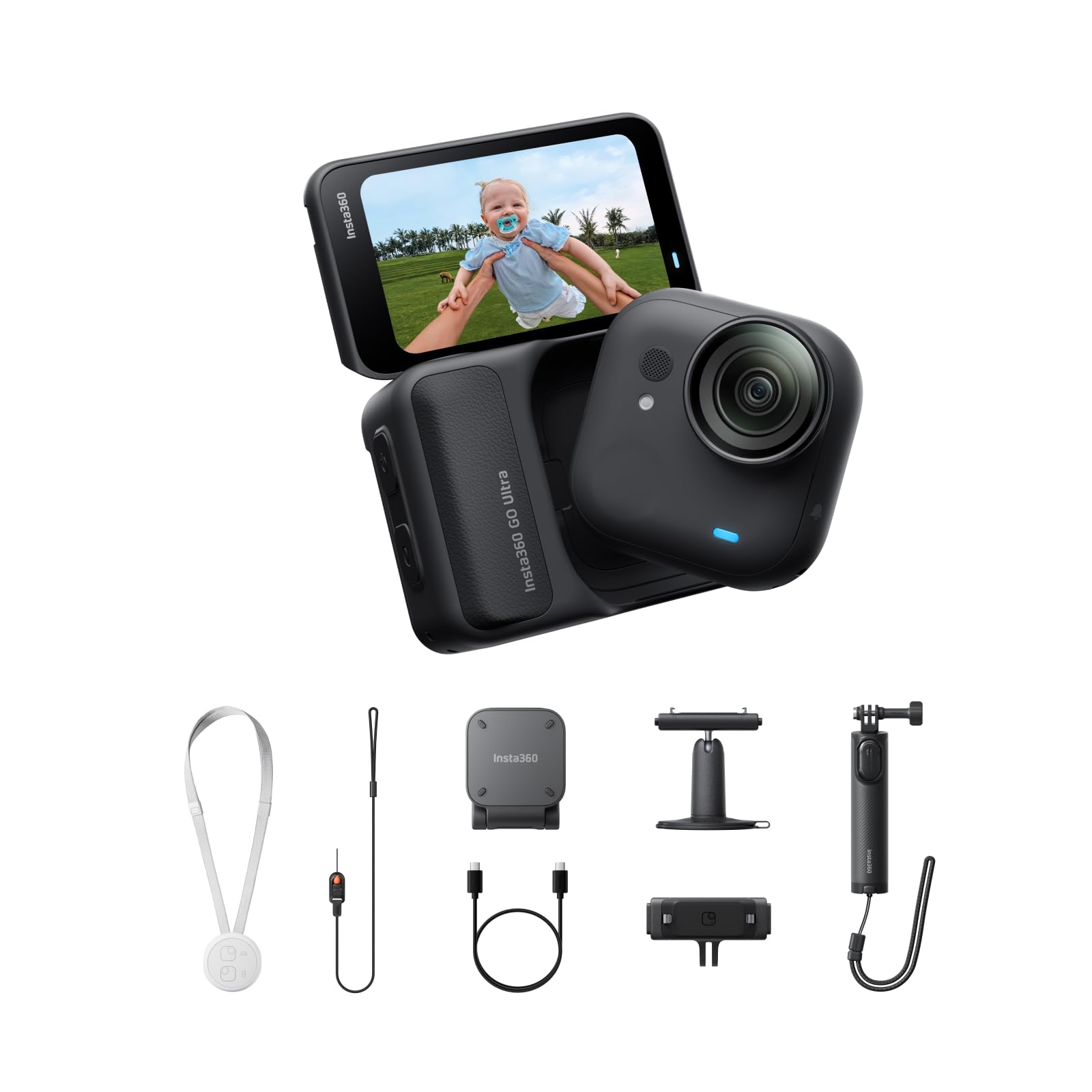
The Insta360 GO Ultra is designed for vloggers who need hands-free POV footage without the bulk of a GoPro or a mirrorless camera. Weighing just 53 grams with a 1/1.28-inch sensor, it clips magnetically to a hat, shirt, or pendant, delivering first-person perspectives that are impossible to capture with handheld cameras. The 4K Active HDR mode handles high-contrast lighting well, and the PureVideo Mode with the 5nm AI chip offers improved low-light performance compared to previous generations. The standalone camera runs for 70 minutes per charge, while the Action Pod extends total runtime to 200 minutes.
The three levels of FlowState Stabilization and 360 Horizon Lock keep footage level even during running, cycling, or diving (IPX8 waterproof to 33 feet). The magnetic mounting system makes it effortless to reposition between shots, and the AI auto-editing feature can assemble highlight reels from your footage—useful for vloggers who want quick social clips without manual editing. The 12-minute 0-80% fast charging means you can recharge during brief breaks.
The sensor, while capable for its size, doesn’t match the detail and dynamic range of a 1-inch or APS-C sensor. The non-removable battery is a long-term durability concern, and the ultra-wide field of view shows noticeable distortion at the edges. For vloggers who produce cycling, running, or travel content where a wearable perspective adds genuine value, the GO Ultra is a specialized tool that excels in its niche.
Why it’s great
- 53g wearable design enables unique hands-free POV footage
- FlowState stabilization with Horizon Lock keeps footage level
- IPX8 waterproof to 33 feet for underwater vlogging
- 200-minute total runtime with Action Pod
- AI auto-editing creates highlight reels automatically
Good to know
- Image quality limited by small sensor size
- Non-removable battery raises long-term replacement concerns
- Ultra-wide FOV shows noticeable edge distortion
11. DJI Osmo Nano Standard Combo (64GB)
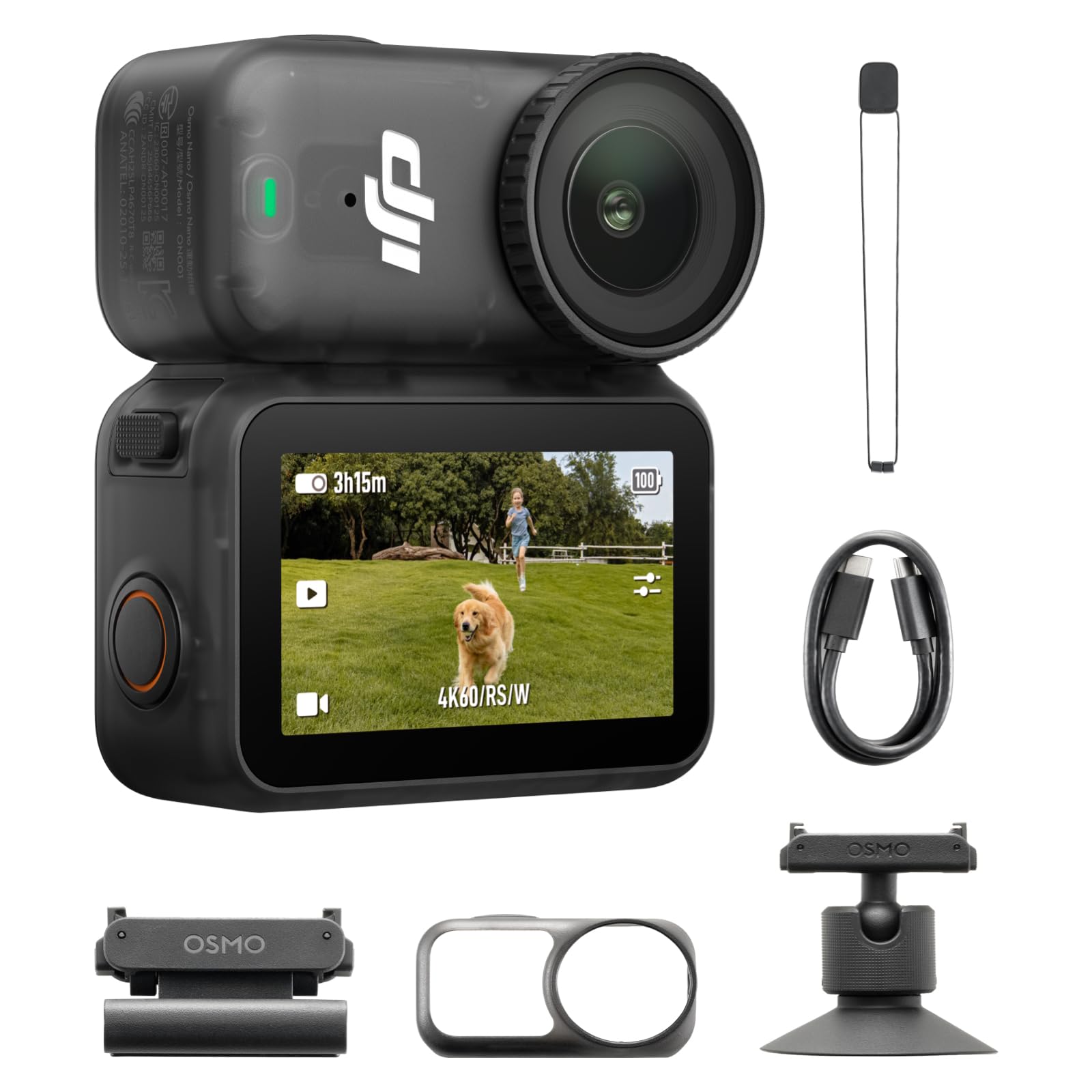
The DJI Osmo Nano shrinks the action camera form factor down to a truly pocketable size while retaining 4K/60fps video from a 1/1.3-inch sensor. The 143-degree ultra-wide field of view gives immersive POV footage ideal for action vlogs, bike rides, and travel-day montages. The built-in 64GB storage lets you start recording immediately without needing a microSD card, and expandable memory via microSD adds flexibility for longer shoots. Magnetic mounting accessories—including a hat clip and lanyard—let you attach the camera to yourself or surfaces for unique angles.
The OsmoAudio feature allows direct wireless connection to DJI Mic 2, Mic Mini, or Mic 3 transmitters, ensuring clean audio without a separate receiver. The battery life reaches 200 minutes when paired with the Vision Dock, though the standalone camera runs roughly 60 minutes in 4K. The IPX4 splash resistance on the Vision Dock and IPX8 waterproofing on the camera itself (to 10 meters) make it suitable for outdoor vlogging in rain or near water.
The main limitation is the lack of a touchscreen on the camera body itself—framing your shot requires the Vision Dock screen or the DJI Mimo app on your phone. The app dependency for configuration and playback can be a workflow bottleneck. The 1/1.3-inch sensor produces usable but not exceptional low-light footage, and the electronic stabilization, though good, shows some crop. For vloggers who want the absolute smallest form factor for mounting on hats or handlebars, the Osmo Nano is hard to beat in portability.
Why it’s great
- Extremely compact and lightweight for wearable mounting
- 64GB built-in storage eliminates immediate need for SD card
- OsmoAudio connects directly to DJI wireless microphones
- Magnetic accessories enable creative angles without rigging
- 200-minute total runtime with Vision Dock
Good to know
- No built-in touchscreen; requires phone app or dock for framing
- App dependency adds friction to playback and configuration
- Small sensor limits low-light performance
- Stabilization shows crop in high-motion scenes
FAQ
Do I need a full-frame sensor for good vlogging video?
What is the difference between 4K/30fps and 4K/120fps for vlogs?
Can I use my smartphone instead of a dedicated vlogging camera?
Does mirrorless or pocket gimbal work better for outdoor vlogging?
What microphone should I pair with my vlogging camera?
Final Thoughts: The Verdict
For most users, the camera for vlogging winner is the DJI Osmo Pocket 3 Creator Combo because it combines mechanical gimbal stabilization, a 1-inch sensor with 4K/120fps recording, and a rotatable screen into a body you can genuinely pocket—no extra gear required. If you want superior low-light performance and interchangeable lenses, grab the Canon EOS R8. And for hands-free POV vlogging, nothing beats the Insta360 GO Ultra Creator Bundle.

Mo Maruf
I created WellFizz to bridge the gap between vague wellness advice and actionable solutions. My mission is simple: to decode the research and give you practical tools you can actually use.
Beyond the data, I am a passionate traveler. I believe that stepping away from the screen to explore new environments is essential for mental clarity and physical vitality.