Our readers keep the lights on and my smoothie glass nicely filled. As an Amazon Associate, I earn from qualifying purchases.
The selfie game has evolved far beyond an outstretched arm. The defining difference between a mediocre self-portrait and a stunning, share-worthy image comes down to lens quality, stabilization, and face-tracking tech that actually locks onto you as you move. Choosing the right tool for the job means understanding sensor size, field-of-view, and exactly how the camera handles that front-facing moment.
I’m Mohammad Maruf — the founder and writer behind WellFizz. My deep-market research into vlogging and content creation hardware has focused on how lens mounts, facial recognition algorithms, and mechanical gimbals translate into a better selfie experience for real users.
After scrutinizing the specs, stabilization systems, and real-world feedback for dozens of models, I’ve narrowed the field down to the options that truly deliver. Here is my definitive guide to the camera for selfies that actually works for the way you shoot today.
How To Choose The Best Camera For Selfies
Not every camera with a screen that flips is built for the selfie-taker. The three factors below separate a true selfie machine from a general-purpose shooter that happens to face you.
Autofocus and Subject Tracking
The camera must lock onto your face and eyes instantly and track them even as you move, turn, or walk toward the lens. Real-time Eye AF is the gold standard here — if the camera relies on contrast detection alone, you will see the focus hunt and miss the moment.
Stabilization for Handheld Shooting
Selfies are almost always shot one-handed or with a mini tripod. Electronic or mechanical stabilization (3-axis gimbal) determines whether your video is smooth or jittery. Action cameras and pocket gimbals excel here, but some mirrorless bodies offer digital stabilization that crops into the frame.
Lens Field of View and Aperture
A wide-angle lens (around 20-24mm equivalent) is ideal for selfies — it captures you and the background without squishing your face. A bright aperture (f/1.8 or f/2.0) allows for pleasing background blur and better low-light performance when shooting indoors or at dusk.
Quick Comparison
On smaller screens, swipe sideways to see the full table.
| Model | Category | Best For | Key Spec | Amazon |
|---|---|---|---|---|
| DJI Osmo Pocket 3 | Pocket Gimbal | Ultra-smooth 4K vlogging | 1-inch CMOS / 3-Axis Mech. Stabilization | Amazon |
| DJI Osmo Action 6 | Action Camera | Rugged, waterproof selfies | 8K/30fps / Variable Aperture f/2.0–f/4.0 | Amazon |
| Insta360 X5 | 360 Action Cam | Invisible selfie stick shots | 8K 360° / Dual 1/1.28″ Sensors | Amazon |
| Sony ZV-1 | Compact Vlog Camera | Professional bokeh selfies | 20.1MP 1″ Stacked Sensor / f/1.8-2.8 Lens | Amazon |
| Canon EOS R50 | Mirrorless Kit | Interchangeable lens selfies | 24.2MP APS-C / Dual Pixel AF II | Amazon |
| Sony Alpha a6400 | Mirrorless Kit | Fast-action selfie captures | 24.2MP APS-C / 0.02s AF / 11fps Burst | Amazon |
| Xtra Muse | Pocket Gimbal | Entry-level gimbal vlogging | 4K/120fps / 1-inch CMOS / 3-Axis Gimbal | Amazon |
| AKASO 360 | 360 Action Cam | Budget 360 selfies with stick effect | 5.7K 360° / Dual 48MP Sensors | Amazon |
| Canon EOS R100 | Mirrorless Kit | Budget mirrorless for still selfies | 24.1MP APS-C / 4K Video / Touchscreen | Amazon |
In‑Depth Reviews
1. DJI Osmo Pocket 3

The DJI Osmo Pocket 3 is the reigning champion for handheld selfie video. Its 1-inch CMOS sensor captures 4K resolution at 120fps with a clarity that rivals larger cameras, while the built-in 3-axis mechanical gimbal eliminates the need for post-stabilization. The 2-inch rotatable touchscreen flips to portrait orientation instantly, making it the most intuitive option for social-first content.
ActiveTrack 6.0 locks onto your face and keeps you centered in the frame even during dynamic movement — spinning, walking backward, or jumping. Face tracking is sticky and fast, with no lag or hunting. The D-Log M and 10-bit color depth allow for real color grading, and the Creator Combo includes a DJI Mic 2 transmitter for crisp wireless audio.
Battery life sits at around 166 minutes, and the optional Battery Handle extends that significantly. The gimbal is delicate and should be stored in the included carrying bag. For anyone serious about selfie video quality, this is the benchmark.
Why it’s great
- Industry-best 3-axis stabilization in a compact form
- Fast, reliable ActiveTrack 6.0 face tracking
- Professional 10-bit color and D-Log M support
Good to know
- Gimbal is fragile and requires careful handling
- Premium pricing, especially for Creator Combo
2. DJI Osmo Action 6
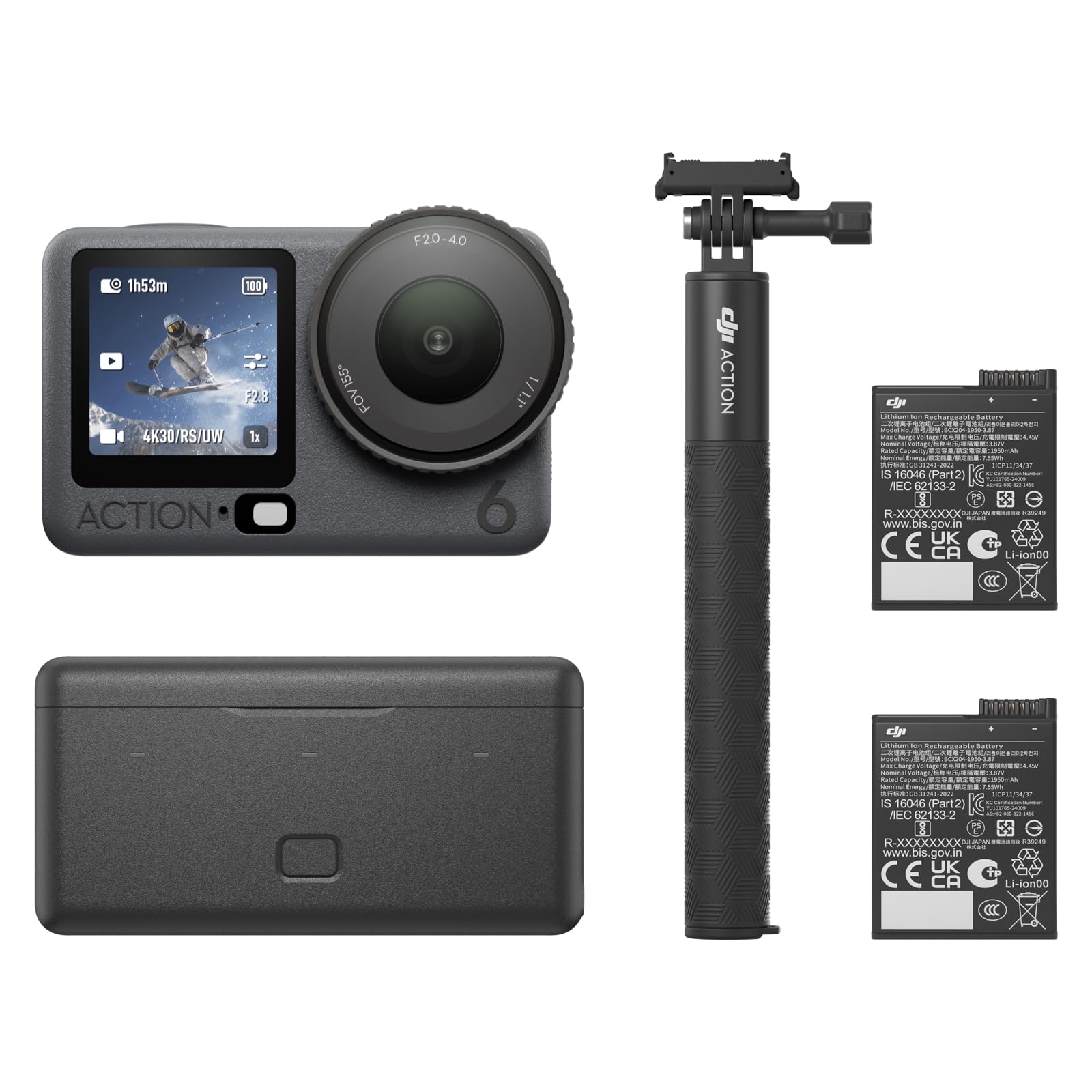
If your selfie adventures involve water, motion, or extreme conditions, the Osmo Action 6 is the tough choice. It is waterproof to 20 meters without a housing and features a variable aperture of f/2.0 to f/4.0, allowing it to adapt to shifting lighting conditions in real-time. The 1/1.1-inch square sensor delivers 8K video at 30fps and exceptional low-light performance for a camera this size.
The 360° HorizonSteady keeps your horizon level even during full rolls — a godsend for POV selfies while biking or surfing. It also includes 50GB of built-in storage and gesture/voice controls, so you can start recording without touching the camera. In the Enhanced Combo, you get two batteries (each delivering roughly 4 hours of life), a 1.5m extension rod, and a multifunctional battery case.
The on-board microphone is serviceable but not stellar; for vlogging, you will want an external DJI Mic 2. The magnetic mounting system is excellent, and the RockSteady 3.0 stabilization is the best in the action camera segment.
Why it’s great
- Variable aperture adapts to changing light automatically
- Waterproof to 20m without extra housing
- Excellent battery life with hot-swappable batteries
Good to know
- Built-in microphone is weak; external mic recommended
- Bulkier than a pocket gimbal for everyday carry
3. Insta360 X5
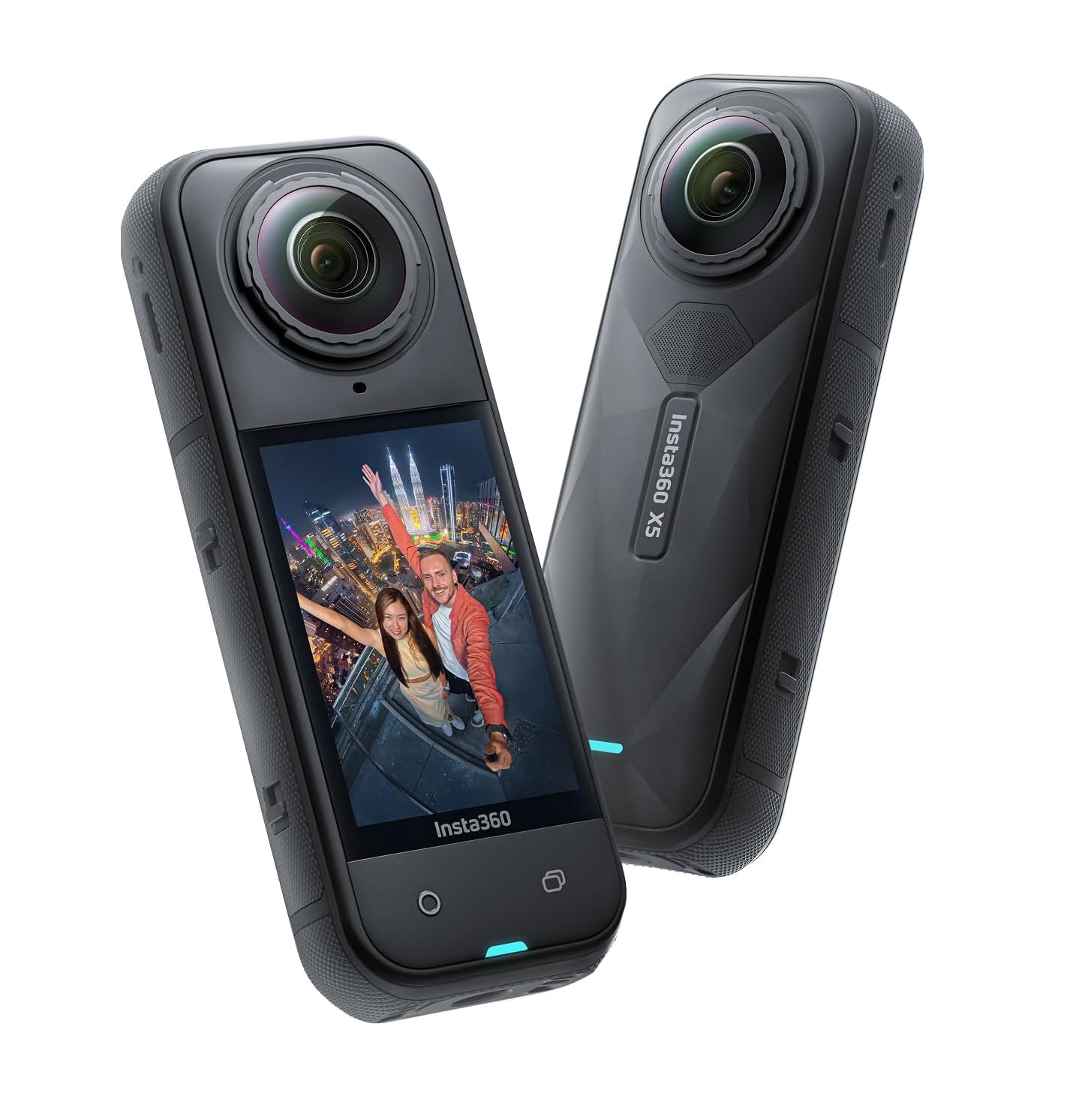
The Insta360 X5 is the ultimate tool for selfies that look like someone else shot them. Its 360-degree capture, combined with the invisible selfie stick effect, allows you to frame a third-person perspective of yourself in any scene. The dual 1/1.28-inch sensors shoot at 8K30fps, and the triple AI chip design powers aggressive noise reduction for clean footage in dimmer conditions.
Reframing happens later — you shoot blind, then pick the best angle in the app. This takes the pressure off composing the perfect selfie in the moment. InstaFrame Mode even spits out a flat video instantly if you prefer traditional framing. The new replaceable lenses are a major upgrade for durability; if you crack one at the skate park, you swap it in seconds rather than shipping the whole camera for repair.
Battery life reaches roughly 3 hours, which is solid for a 360 cam. The main trade-off is that the software requires Wi-Fi for transfers (cable imports are not supported on iPhone), and the default watermark can only be removed through the app.
Why it’s great
- True invisible selfie stick creates third-person shots
- Replaceable lens guards extend the camera’s lifespan
- Excellent low-light performance for a 360 camera
Good to know
- Forced watermark unless removed via app
- No direct USB import on iPhone
4. Sony ZV-1

The Sony ZV-1 was purpose-built for content creators who prioritize face-focused video. Its 20.1MP 1-inch stacked CMOS sensor paired with a fast ZEISS Vario-Sonnar T lens (24-70mm equivalent, f/1.8-2.8) delivers that creamy background bokeh that signals “professional camera” in every selfie. The side flip-out screen tilts up and down specifically for selfie framing, making composition effortless.
The real party trick is the Product Showcase Setting, which transitions focus seamlessly from your face to an object you hold up — perfect for review-style selfies. Real-time Eye AF locks onto your eyes with Sony’s legendary speed, even in challenging backlight. The forward-directional on-board mic with detachable windscreen does a decent job of isolating your voice from background noise, and the standard 3.5mm mic jack gives you expansion options.
Battery life is the main weak point — around 2 hours of video requires an external USB power bank or spare batteries. The ZV-1 also does not have a headphone jack, making audio monitoring impossible without an adapter. Despite these quirks, the image quality and autofocus are top-tier for a compact camera.
Why it’s great
- Outstanding autofocus with Real-time Eye AF
- Fast aperture lens for beautiful background blur
- Product Showcase Setting is unique for object reviews
Good to know
- Battery drains fast during video recording
- No headphone jack for audio monitoring
5. Canon EOS R50
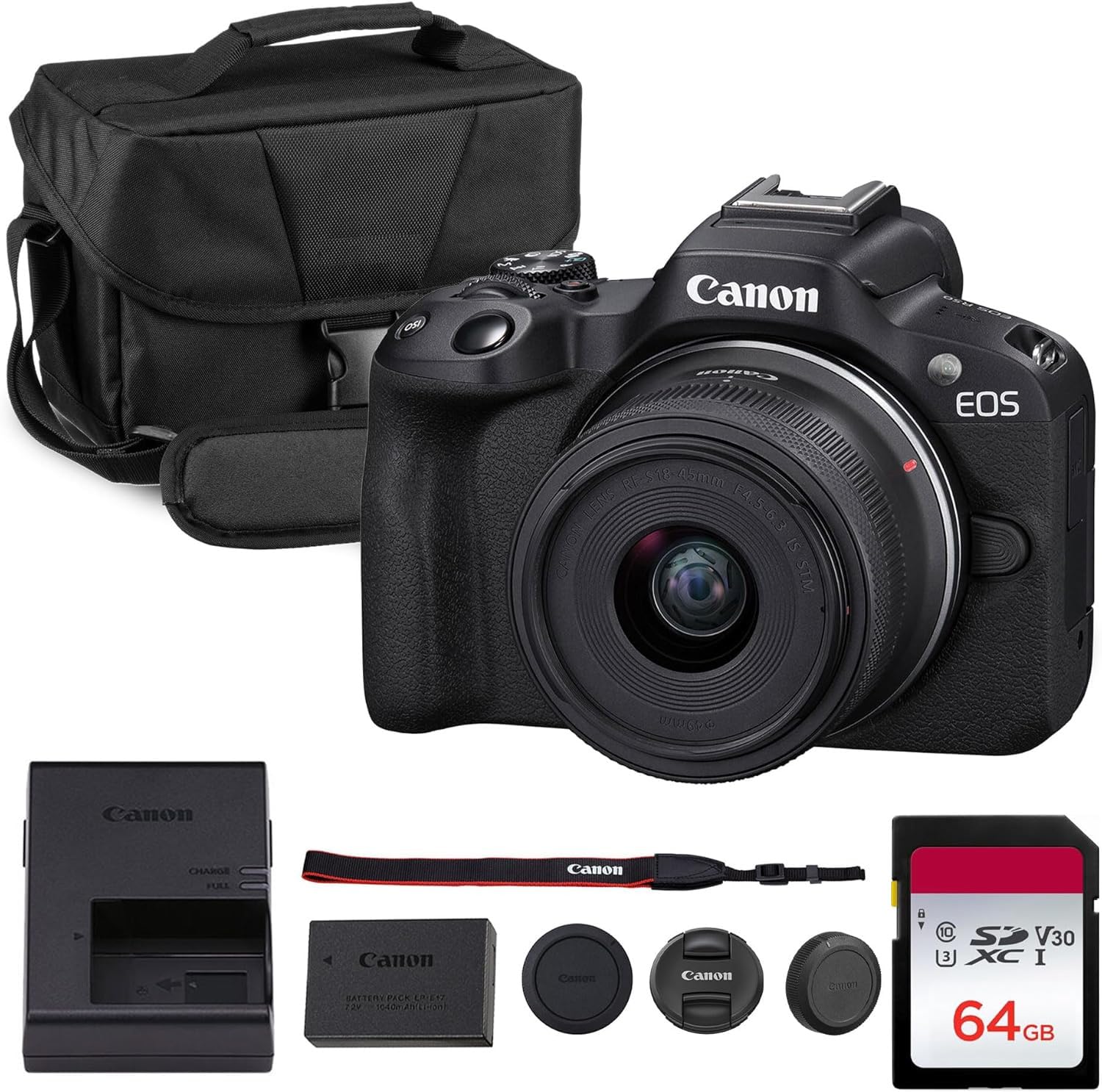
For selfie shooters who want interchangeable lens versatility without breaking the bank, the Canon EOS R50 is a standout. Its 24.2MP APS-C sensor produces crisp, detailed images, and the Dual Pixel CMOS AF II provides fast, reliable face and eye detection. The vari-angle touchscreen flips 180 degrees to face you, making selfie composition easy whether you are shooting photo or video.
The included RF-S 18-45mm f/4.5-6.3 IS STM lens is a solid starter, but the R50 truly shines when paired with a faster prime like the RF 50mm f/1.8 for portraits. That combination delivers the shallow depth-of-field look that fixed-lens cameras cannot achieve on a budget. Oversampled 4K video means footage is sharp even when cropped, and Creative Assist mode guides beginners through exposure adjustments without jargon.
Battery life is decent for a mirrorless, lasting a full day of casual shooting. The kit lens is slow in low light, and the lack of in-body image stabilization means you need stabilized lenses for handheld video.
Why it’s great
- Interchangeable lens system for future upgrades
- Reliable Dual Pixel AF II with face detection
- Lightweight and beginner-friendly menu system
Good to know
- Kit lens is slow in low light (f/4.5-6.3)
- No in-body stabilization; rely on lens IS
6. Sony Alpha a6400

If your selfies need to capture split-second expressions or motion, the a6400’s 0.02-second autofocus is unmatched in this price tier. The 24.2MP APS-C sensor, paired with Real-time Eye AF for humans and animals, nails focus even when you are moving toward the camera. The 180-degree tiltable touchscreen flips up for selfie framing, and the 11fps continuous burst at full resolution means you can snap a sequence and pick the best frame.
4K video comes from 2.4x oversampling of the full sensor readout, which produces exceptionally sharp footage with no pixel binning. The built-in flash is handy for fill light, and the E PZ 16-50mm OSS II kit lens offers powered zoom and optical stabilization. The a6400 is also a strong option for streaming via USB, serving as a high-quality webcam.
Battery life is average for mirrorless — expect around 100-120 minutes of video or a full day of stills. The kit lens is underwhelming for low light, and the 16-50mm’s power zoom is slow in manual mode. Serious selfie shooters will want to pair this body with a Sigma 16mm f/1.4 for a dedicated selfie setup.
Why it’s great
- Blazing-fast 0.02s autofocus with Real-time Eye AF
- Oversampled 4K video is exceptionally sharp
- 11fps burst for capturing the perfect expression
Good to know
- Kit lens is slow and limits low-light performance
- Battery life is only adequate for a day of shooting
7. Xtra Muse

The Xtra Muse is a direct alternative to the DJI Pocket 3, offering a similar 1-inch CMOS sensor and a built-in 3-axis gimbal at a more accessible price point. It shoots 4K video at 120fps and the “Master Follow” face-tracking mode keeps you centered in the frame as you move. The 2-inch touchscreen switches between portrait and landscape orientation, and the bundle includes a threaded handle for tripod mounting.
Video quality from the 1-inch sensor is sharp and vibrant, with good dynamic range for a camera this compact. The gimbal stabilization does a commendable job smoothing out walking motion, though it is not quite as locked-in as the DJI’s algorithm. The face tracking works reliably in good light, and the 10-bit X-Log color mode gives you room for grading in post-production.
Battery life sits at roughly 2 hours, which is competitive for this class. The app is occasionally slow, and the tracking can lose lock if you move too quickly. For the price, however, this is the best value gimbal camera for selfie video.
Why it’s great
- 1-inch sensor and 3-axis gimbal at a budget-friendly price
- Decent 10-bit color profile for grading
- Portable, sleek design with a full accessory kit
Good to know
- Tracking is less reliable than DJI’s ActiveTrack
- Occasional app connectivity issues
8. AKASO 360
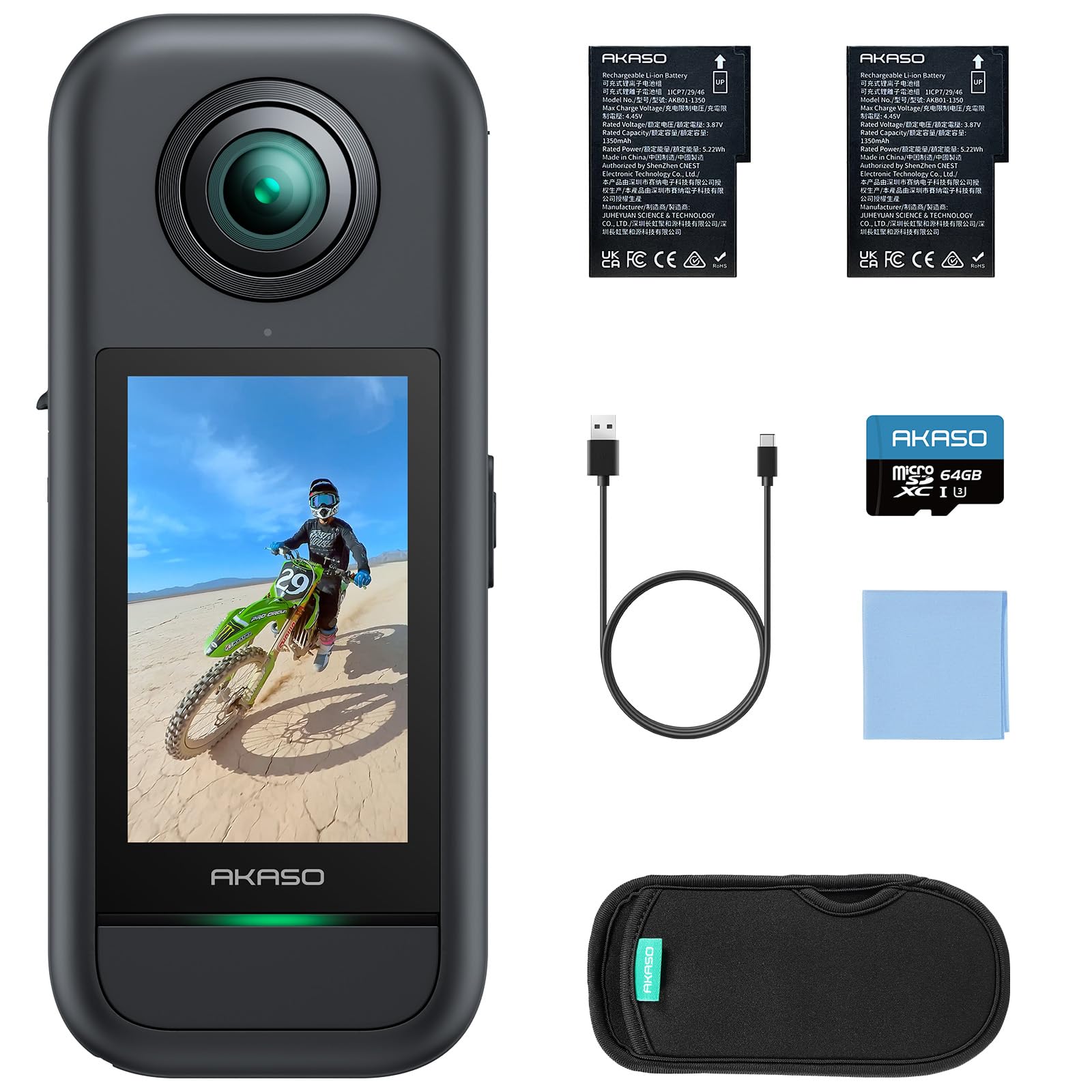
The AKASO 360 brings 360-degree capture and the invisible selfie stick effect to a price point that previously only offered flat action cameras. Its dual 1/2-inch 48MP sensors capture 5.7K 360-degree video and 72MP 360-degree photos. The invisible selfie stick works just like on the premium models — the stick disappears from the final footage, creating that coveted third-person perspective without a second person holding the camera.
Stabilization is handled by in-app algorithms that smooth out shakes, and the 360° Horizon Lock keeps the horizon level during full spins. AI Subject Tracking works within the app for reframing, and the DNG8 RAW photo mode gives you flexibility in editing low-light stills. The camera is weatherproof and includes a 64GB MicroSD card in the combo.
Battery life is limited — expect around 60 minutes of recording. The app software is basic compared to Insta360’s ecosystem, lacking text overlays and transitions. It also requires a separate purchase for the invisible selfie stick. For the price, though, this is the cheapest way to experiment with 360 selfies.
Why it’s great
- Invisible selfie stick effect at a fraction of the cost
- 72MP 360-degree photos for high-res captures
- Weatherproof design for outdoor use
Good to know
- Battery life is short; extra batteries are essential
- Basic app software with fewer editing features
9. Canon EOS R100

The Canon EOS R100 is the most affordable entry into a modern mirrorless system, and it is an excellent starting point for selfie photography on a budget. The 24.1MP APS-C sensor paired with the DIGIC 8 processor delivers image quality that outclasses any smartphone, with natural bokeh and detail. The RF-S 18-45mm kit lens covers wide to standard focal lengths, making it ideal for group selfies and environmental portraits.
Dual Pixel CMOS AF with face and eye detection covers 143 zones, ensuring that the camera locks onto you during selfie composition. The 3-inch LCD screen is fixed (no vari-angle), so you will need to frame selfies through the screen from the front. Video tops out at 4K at 24fps and Full HD at 60fps, which is fine for vlogging but not class-leading for motion.
The battery lasts a full day for casual shooting, and the camera body is the smallest in the EOS R series, fitting into a jacket pocket with a pancake lens. The LCD does not tilt for selfies — that is the biggest limitation for vloggers. Consider the R50 or a flip-screen compact if you shoot yourself frequently.
Why it’s great
- Excellent entry price for an APS-C mirrorless system
- Impressive image quality with natural bokeh
- Compact and lightweight body for daily carry
Good to know
- Fixed LCD screen is not ideal for selfie framing
- 4K limited to 24fps; no 60fps video option
FAQ
What is the best sensor size for selfie cameras?
Does face tracking work differently on mirrorless vs. gimbal cameras?
Is a flip screen essential for taking selfies?
How does the invisible selfie stick effect work?
Can I use a mirrorless camera for streaming selfies?
Final Thoughts: The Verdict
For most users, the camera for selfies winner is the DJI Osmo Pocket 3 because it combines a 1-inch sensor with best-in-class mechanical stabilization and reliable face tracking in a pocketable body. If you want the flexibility of interchangeable lenses and professional stills, grab the Canon EOS R50. And for creative, third-person selfies that look like someone else shot them, nothing beats the Insta360 X5.

Mo Maruf
I created WellFizz to bridge the gap between vague wellness advice and actionable solutions. My mission is simple: to decode the research and give you practical tools you can actually use.
Beyond the data, I am a passionate traveler. I believe that stepping away from the screen to explore new environments is essential for mental clarity and physical vitality.