Our readers keep the lights on and my smoothie glass nicely filled. As an Amazon Associate, I earn from qualifying purchases.
A 75-inch QLED TV is the point where home theater ambition meets living room reality — big enough to immerse you in a cinematic experience, but not so massive that it dominates the architecture of your space. The challenge today isn’t finding a 75-inch screen; it’s separating the models that deliver genuine contrast and brightness from those that just check the QLED box. With Mini-LED backlighting, native 144Hz panels, and advanced AI processors flooding the market, the decision has shifted from “which size” to “which technology stack.”
I’m Mohammad Maruf — the founder and writer behind WellFizz. Over the last three years, I’ve analyzed the hardware specifications of more than 200 television models, dissecting backlight zone counts, peak luminance figures, refresh rate implementations, and HDR format support to understand what actually translates to a superior viewing experience at this size class.
This guide breaks down the most compelling 75-inch QLED options available, evaluating them on dimming zone density, color volume, gaming latency, and real-world audio performance so you can match a panel to your specific room conditions and content habits. The result is a clear, spec-driven look at the current best 75 inch qled tv choices for any budget and use case.
How To Choose The Best 75 Inch QLED TV
Choosing a 75-inch QLED TV requires looking past the marketing label and into the specific technologies that drive image quality. Not all QLED TVs are created equal — the key differentiators lie in the backlight architecture, the processor’s ability to handle high dynamic range content, and the panel’s native refresh rate.
Backlight Architecture: Mini-LED vs. Edge-Lit vs. Full Array
The “QLED” name only describes the quantum dot layer that enhances color volume. The real determinant of contrast and black-level performance is the backlight system. Edge-lit QLEDs place LEDs around the screen’s perimeter, resulting in poor local dimming and visible blooming. Full-array backlighting with local dimming offers better control, but Mini-LED technology — packing thousands of tiny LEDs into hundreds or thousands of dimming zones — delivers the deepest blacks and brightest highlights, approaching OLED territory without the burn-in risk. For a 75-inch screen, Mini-LED is the gold standard for HDR impact.
Peak Brightness and HDR Format Support
Peak brightness, measured in nits, determines how well a TV handles specular highlights in HDR content and how watchable it remains in a bright room. Budget models typically hover around 400–600 nits, while premium Mini-LED sets can exceed 2,000 nits. For Dolby Vision content, a TV needs to sustain at least 1,000 nits for the format to feel impactful. Also verify that the TV supports the HDR formats you actually use: Dolby Vision and HDR10+ are both dynamic metadata formats that adjust scene-by-scene, but no single TV supports both universally, so check which streaming services you prioritize.
Refresh Rate and Gaming Features
For sports and gaming, a native 120Hz or 144Hz panel is essential. A native 144Hz panel, combined with Variable Refresh Rate (VRR) and Auto Low Latency Mode (ALLM), ensures tear-free, low-lag gameplay on PlayStation 5, Xbox Series X, and high-end gaming PCs. The number of HDMI 2.1 ports also matters — a single HDMI 2.1 port forces you to choose between connecting a console and a soundbar via eARC, whereas four ports give you full flexibility. FreeSync Premium Pro certification adds an extra layer of quality assurance for AMD GPU users.
Quick Comparison
On smaller screens, swipe sideways to see the full table.
| Model | Category | Best For | Key Spec | Amazon |
|---|---|---|---|---|
| TCL QM8K | Mini-LED | Bright-room HDR & gaming | 5,000 nits peak, 288Hz VRR | Amazon |
| Samsung QN90D | Mini-LED | Object tracking audio | 144Hz Motion Xcelerator | Amazon |
| LG QNED92A | Mini-LED | AI picture personalization | Alpha 8 AI Gen2, 120Hz | Amazon |
| Amazon Ember Mini-LED | Mini-LED | Alexa ecosystem users | 512 zones, 1,400 nits | Amazon |
| Hisense CanvasTV | QLED Art | Art mode & decor integration | Hi-Matte anti-glare, 144Hz | Amazon |
| Sony BRAVIA 9 | Mini-LED | Cinematic accuracy & PS5 | XR Processor, X-Anti Reflection | Amazon |
| Sony BRAVIA 7 | Mini-LED | Content upscaling | XR Triluminos Pro, 4K HDR | Amazon |
| Samsung The Frame Pro | Neo QLED Art | Design-first living spaces | Matte display, One Connect | Amazon |
| Toshiba Z670 | Mini-LED | Balanced performance | REGZA Engine ZRi Gen3 | Amazon |
| Roku Pro Series | Mini-LED | Roku platform simplicity | 120Hz, Dolby Vision IQ | Amazon |
| iFFALCON U85 | Mini-LED | Multi-console gaming setup | 4x HDMI 2.1, 144Hz native | Amazon |
| Amazon Ember QLED | QLED | Budget-friendly Fire TV | Dolby Vision, HDR10+ Adaptive | Amazon |
| Hisense U7 | Mini-LED | Ultra-high brightness gaming | 165Hz native, 3,000 zones | Amazon |
In‑Depth Reviews
1. TCL QM8K
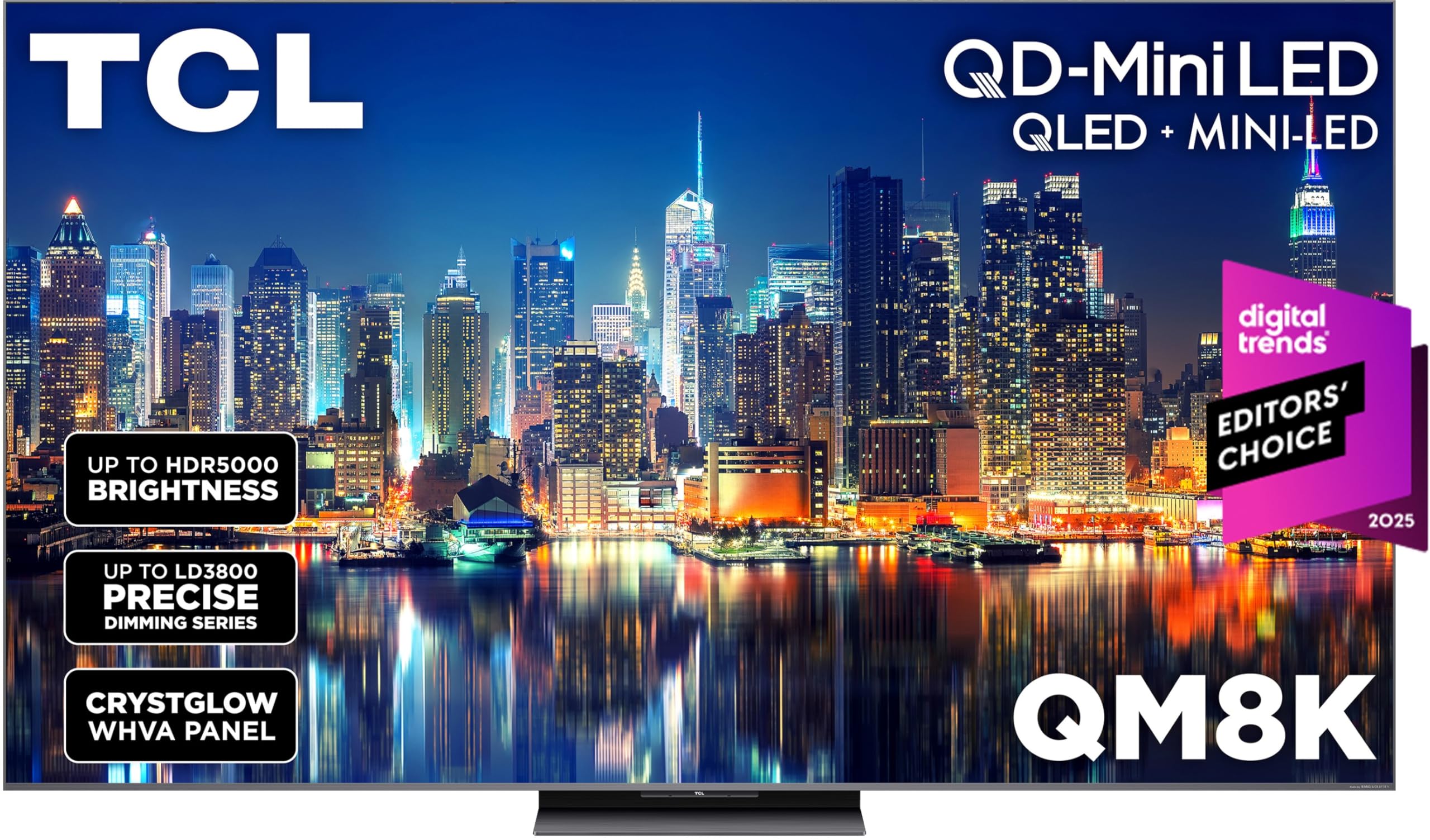
The TCL QM8K is the most aggressively specified 75-inch QLED on the market this year. Its QD-Mini LED panel, driven by TCL’s Halo Control System, delivers a peak brightness that rivals flagship OLEDs while maintaining deep black levels through thousands of controlled dimming zones. The CrystGlow WHVA panel with anti-reflective coating means bright-room performance is exceptional, and the Game Accelerator 288 feature pushes VRR up to 288Hz for butter-smooth competitive gaming.
The built-in audio benefits from Bang & Olufsen tuning, producing clear dialogue and adequate bass for a living room, though a dedicated soundbar still elevates the experience for Dolby Atmos content. Google TV with hands-free voice control and a backlit remote keeps the user experience modern and responsive. Reviewers consistently praise its near-flush wall-mount design and the absence of blooming artifacts in high-contrast scenes — a rare achievement at this tier.
For the enthusiast who wants the brightest, most future-proof 75-inch QLED without jumping to a premium-tier price bracket, the QM8K is the definitive choice. Its combination of 5,000-nit peak luminance, wide viewing angles, and sub-5ms input lag in game mode makes it equally suited for a sunlit living room and a dedicated gaming den.
Why it’s great
- Industry-leading peak brightness for stunning HDR highlights.
- 288Hz VRR and 144Hz native panel for lag-free gaming.
- Excellent anti-reflective coating minimizes glare in bright rooms.
Good to know
- Built-in audio lacks deep bass for cinematic Atmos effects.
- Hulu app has been reported to exhibit occasional sync issues.
2. Samsung QN90D

Samsung’s Neo QLED lineup continues to set the benchmark for integrated audio performance, and the QN90D is the standout this year. Object Tracking Sound+ uses a matrix of upward-firing and side-firing speakers to create a 3D soundstage that follows on-screen action — a car racing from left to right actually sounds like it’s moving across the room, eliminating the need for a separate soundbar in many living rooms. The Quantum Matrix with Mini LEDs delivers exceptional brightness and contrast, with Real Depth Enhancer Pro adding a sense of dimensionality to HDR content.
The NQ4 AI Gen2 Processor handles 4K AI upscaling competently, breathing new life into 1080p streaming content. Motion Xcelerator 144Hz ensures sports and gaming remain fluid, and the panel supports FreeSync Premium Pro for tear-free gameplay. The Tizen OS provides quick access to streaming apps, though Samsung’s insistence on a Samsung account for first-time setup can be a minor friction point.
Where the QN90D truly shines is in rooms where you want premium picture quality without a surround-sound setup. The built-in audio is genuinely immersive, not just a checkbox feature. If you prioritize a clean, speaker-free aesthetic and want dialogue clarity paired with room-filling sound, this is the QLED to beat.
Why it’s great
- Object Tracking Sound+ creates convincing virtual surround from built-in speakers.
- Neo Quantum HDR+ produces vibrant, accurate colors with minimal blooming.
- Ultra Viewing Angle maintains contrast even from extreme side seats.
Good to know
- Requires Samsung account for full smart TV functionality.
- Glossy screen can show reflections in very bright rooms.
3. LG QNED92A
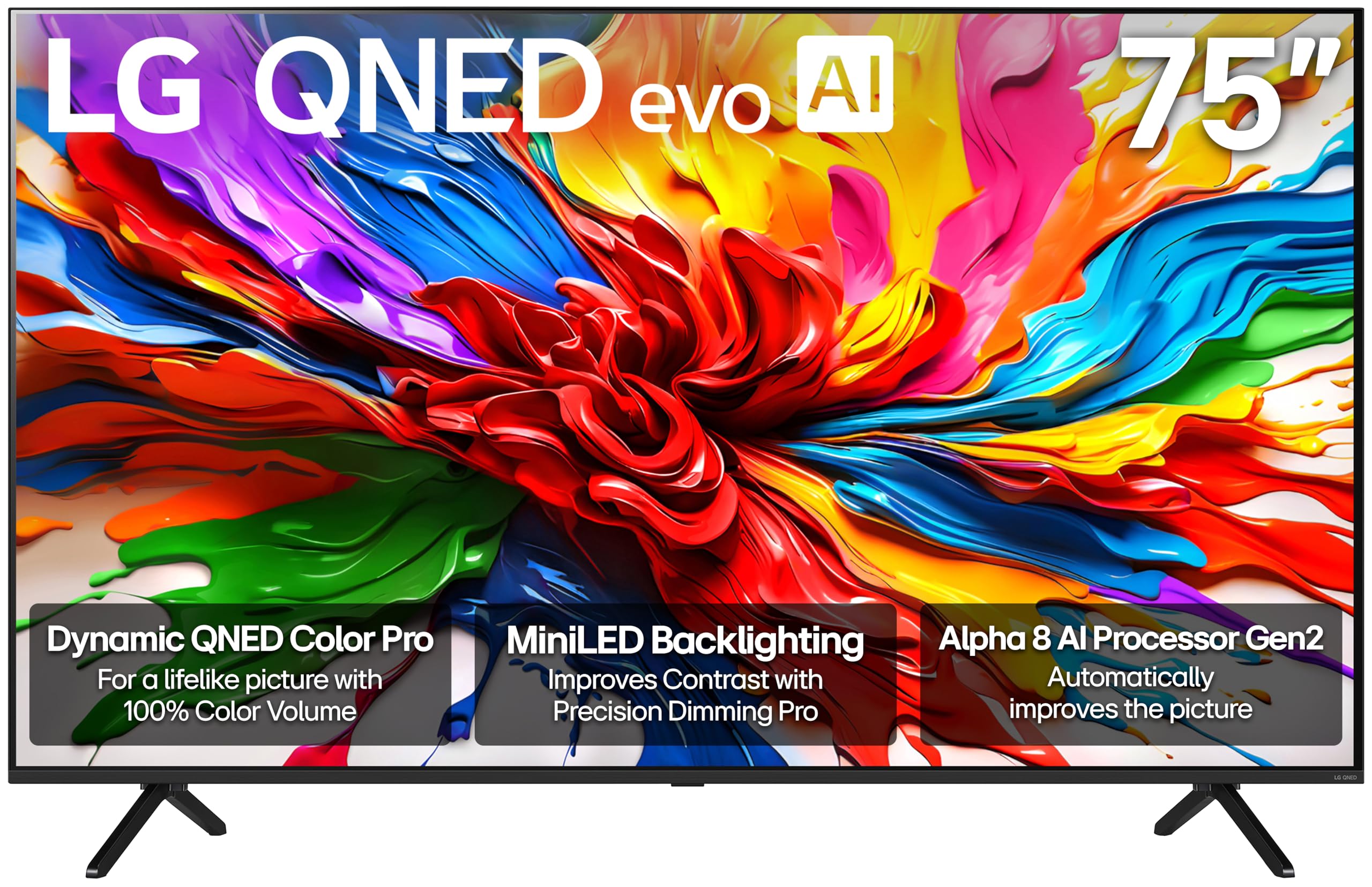
LG’s 2025 QNED evo AI series leverages the Alpha 8 AI Processor Gen2 to deliver a viewing experience that adapts in real-time to both content and room conditions. The Mini-LED backlighting with Precision Dimming Pro provides hundreds of individually controlled zones, resulting in deep blacks and bright highlights that compete with higher-tier offerings. The AI Super Upscaling 4K is particularly adept at cleaning up grainy streaming sources, adding sharpness without introducing artifacts.
Gamers will appreciate the four HDMI 2.1 ports, VRR support, and the Game Dashboard that centralizes all gaming settings in a single overlay. The webOS platform remains one of the most intuitive smart TV interfaces, with LG Channels offering over 350 free channels. The WOW Orchestra feature allows the TV speakers to work in tandem with a compatible LG soundbar, creating a wider soundstage than either system alone.
For users who want a TV that actively learns their preferences and adjusts picture and sound settings automatically, the QNED92A is a compelling option. The Personalized Picture & Sound Wizard analyzes your favorite clips to build a custom profile — a genuinely useful feature rather than a gimmick. Just note that the magic remote’s cursor control can take some getting used to, and the lack of a dedicated mute button is an odd omission.
Why it’s great
- AI processor delivers best-in-class upscaling of low-resolution content.
- Four HDMI 2.1 ports provide unrivaled connectivity for multiple consoles.
- WOW Orchestra enables seamless TV + soundbar audio blending.
Good to know
- Magic remote cursor can be imprecise and requires two-handed use.
- Narrow app selection compared to Google TV; some niche services missing.
4. Amazon Ember Mini-LED
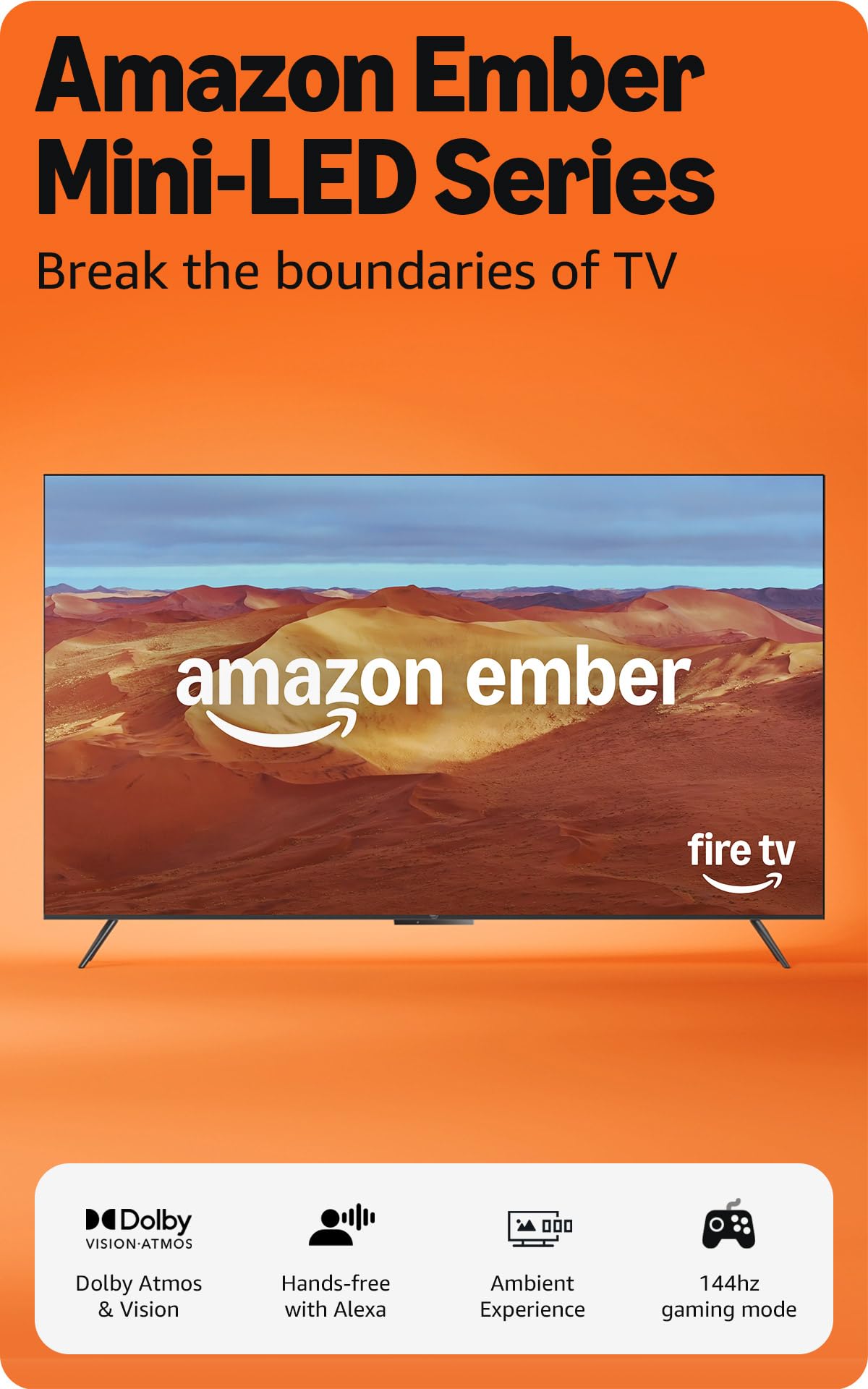
The Amazon Ember 75-inch Mini-LED Series represents Amazon’s most ambitious TV hardware yet. With 512 local dimming zones and a peak brightness of 1,400 nits, it delivers contrast and HDR punch that rivals premium brands at a lower entry point. The Fire TV experience, now updated for 2026, integrates Alexa+ deeply, allowing natural language search across streaming services and smart home controls without needing a remote. The Omnisense sensor wakes the display when it detects you entering the room — a thoughtful touch that makes the TV feel responsive to your presence.
Gaming performance is strong thanks to 144Hz native refresh, AMD FreeSync Premium Pro certification, and four HDMI 2.1 ports. The Intelligent Picture system uses the onboard processor to optimize scenes in real-time, and the Dolby Vision IQ support ensures accurate HDR regardless of ambient lighting. The 2.1-channel Dolby Atmos audio system includes a dedicated woofer, delivering bass that surpasses most built-in TV speakers.
For households deeply integrated into the Amazon ecosystem, this TV is a natural fit. The ability to view Blink camera feeds, control Alexa-compatible lights, and access Amazon Luna cloud gaming without additional hardware creates a cohesive smart home hub experience. However, the Fire TV interface includes Amazon ads and sponsored content on the home screen, which some users find intrusive.
Why it’s great
- 512 dimming zones provide strong contrast and minimal blooming.
- Omnisense motion sensor enables hands-free wake and sleep.
- FreeSync Premium Pro certification ensures tear-free gaming.
Good to know
- Fire TV home screen includes promoted content and ads.
- Some users report interface lag after extended use.
5. Hisense CanvasTV
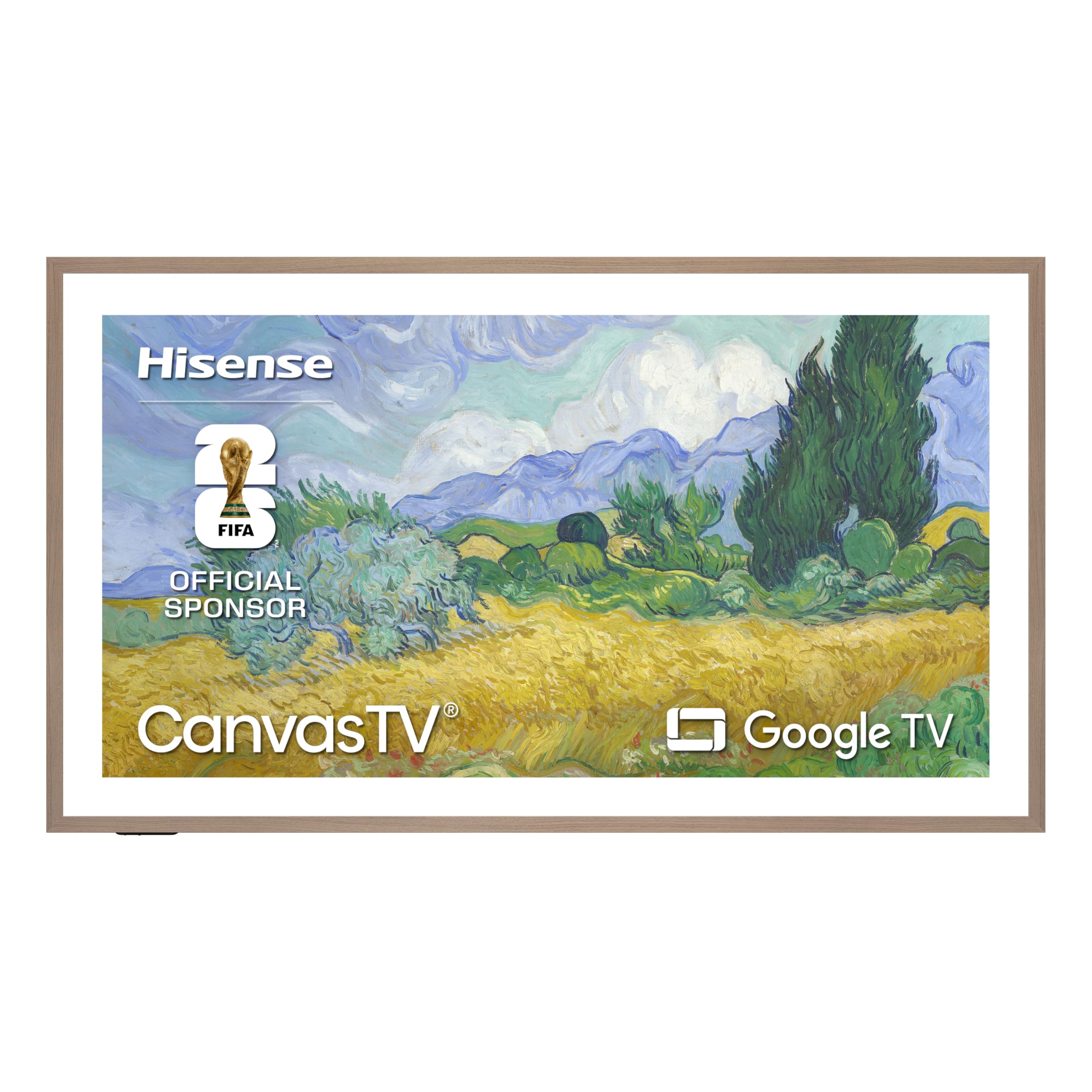
Hisense’s CanvasTV is a direct challenge to Samsung’s Frame series, and it arrives with a compelling value proposition. The Hi-Matte display uses an anti-glare panel that diffuses reflections, making displayed artwork look convincingly like a print on paper rather than a glowing screen. The included teak wood frame is magnetic and attaches to the bezel, completing the illusion of a framed painting. The flush wall mount is also included, saving you the cost of a separate third-party mount.
Under the art facade lies a capable 4K QLED TV with a native 144Hz refresh rate, AI Smooth Motion, and support for Dolby Vision HDR and HDR10+. The 2.0.2-channel audio system with DTS Virtual:X provides immersive sound without a soundbar, though purists will still want an external system for movies. The motion detector automatically turns the display on when you enter the room and fades it to sleep when you leave — a thoughtful energy-saving feature that also reinforces the illusion that you’re looking at a real painting.
The CanvasTV is ideal for living rooms, dining areas, or bedrooms where the TV is a permanent visual fixture. The Art Mode offers over 1,000 free curated artworks, with no subscription required for the base collection. For buyers who want the aesthetic of a Frame TV but refuse to pay the premium, the CanvasTV delivers 90% of the experience at a significantly more accessible price point.
Why it’s great
- Hi-Matte display effectively eliminates glare for convincing art mode.
- Magnetic bezel and included wall mount reduce installation cost.
- Native 144Hz panel ensures smooth motion during live sports and gaming.
Good to know
- Art mode brightness often needs manual adjustment for realistic look.
- Wall mount lacks adjustment flexibility; requires precise placement.
6. Sony BRAVIA 9

Sony’s BRAVIA 9 sits at the apex of the Mini-LED QLED category, and for good reason. The XR Backlight Master Drive controls thousands of Mini LEDs with unprecedented precision, delivering what Sony calls its “brightest ever 4K TV.” The X-Anti Reflection technology is the most effective glare-reduction system on any consumer TV — even with direct sunlight hitting the screen, the picture remains legible and contrasty. The X-Wide Angle layer ensures that viewers sitting far off-axis still see accurate color and luminance.
The XR Processor is the star of the show for content upscaling. Low-bitrate streaming from YouTube or live TV is cleaned up with remarkable authority, adding detail and reducing noise that lesser processors would leave visible. For PlayStation 5 owners, the exclusive Auto HDR Tone Mapping and Auto Genre Picture Mode optimize HDR output and game mode switching without any manual intervention. The Game Menu consolidates all gaming-related picture settings and assist features in one overlay.
The BRAVIA 9 is not a budget-friendly option, but for those who demand reference-grade picture accuracy, superior processing, and flawless PS5 integration, it justifies its position. The built-in audio is also strong, with Acoustic Multi-Audio using frame-mounted tweeters to project dialogue from the correct screen position. Pair it with a Sony soundbar via the S-Center input for a cohesive home theater system.
Why it’s great
- XR Processor delivers the best upscaling of sub-4K content on the market.
- X-Anti Reflection virtually eliminates glare, even in bright rooms.
- Deep PS5 integration with automatic HDR and picture mode optimization.
Good to know
- Premium pricing places it well above most Mini-LED competitors.
- Some units have reported panel failures shortly after warranty expiration.
7. Sony BRAVIA 7

The Sony BRAVIA 7 shares the same XR Processor intelligence as the flagship BRAVIA 9 but with a more moderate Mini-LED backlight system, making it a more accessible entry point into Sony’s premium tier. The XR Triluminos Pro delivers billions of accurate real-world colors, and the panel supports both Dolby Vision and IMAX Enhanced. Where the BRAVIA 7 differentiates itself is in its studio-calibrated picture modes — Netflix Adaptive, Prime Video, and Sony Pictures Core each have dedicated modes that adjust the image to match the creator’s intent.
Gamers benefit from HDMI 2.1 features including VRR and ALLM, and the Game Menu provides the same overlay found on the BRAVIA 9. The Acoustic Multi-Audio system uses two upward-firing speakers to create the illusion that sound is coming from the screen itself. The Sony Pictures Core app includes 5 movie credits and 12 months of access to hundreds of classic films in high-bitrate 4K — a nice bonus for cinephiles.
For viewers who watch a mix of new 4K content and legacy HD material — sports, news, older TV shows — the BRAVIA 7’s upscaling capabilities are transformative. It makes 720p and 1080p sources look clean and detailed, which is rare even among premium TVs. The trade-off is a narrower viewing angle compared to the BRAVIA 9, and the screen is somewhat reflective, so placement opposite windows requires careful consideration.
Why it’s great
- XR Processor upscales legacy HD content to near-4K quality convincingly.
- Studio-calibrated modes for Netflix and Prime Video ensure accurate picture.
- Acoustic Multi-Audio projects dialogue with clear screen-synced placement.
Good to know
- Narrow viewing angle causes color shift beyond 30 degrees off-center.
- Screen is more reflective than competitors; needs careful room placement.
8. Samsung The Frame Pro
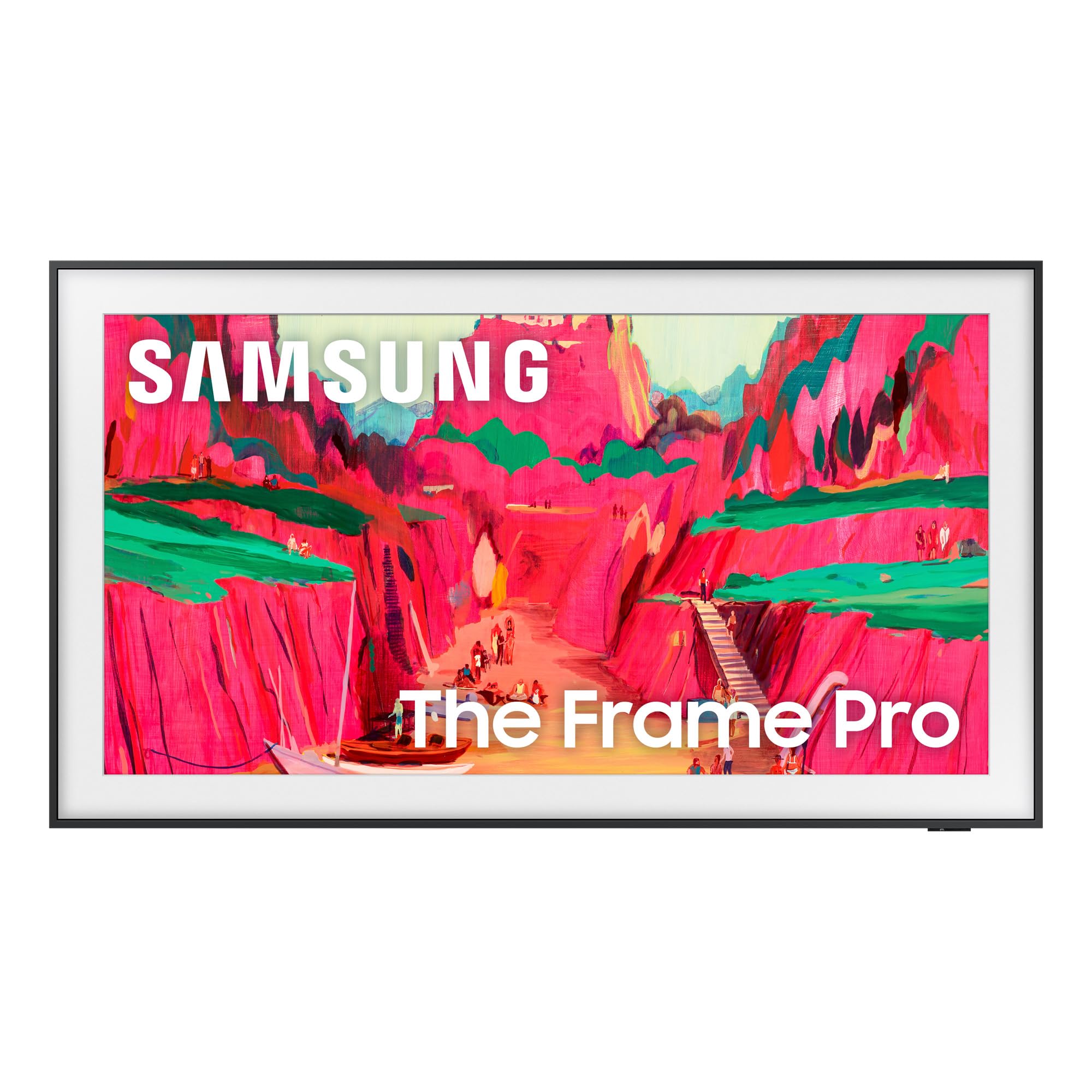
The Frame Pro from Samsung is the 2025 evolution of the best-selling art TV concept, now with Mini-LED backlighting for improved brightness and contrast. The matte display is Pantone Validated for accurate color reproduction, and the slim profile sits nearly flush against the wall. The Wireless One Connect box eliminates visible cables — a single, nearly invisible wire connects the screen to the external hub, which can be tucked away in a cabinet or mounted behind the TV.
The NQ4 AI Gen3 Processor powers the Art Mode’s automatic luminance adjustment, ensuring that displayed artwork looks natural under varying room light. The customizable bezels (sold separately) let you match the frame to your decor, and the Art Store offers a vast library of works from global museums and contemporary artists. When the TV is on, the Mini-LED panel delivers vibrant HDR with deep blacks, and the 144Hz refresh rate ensures smooth gaming and sports.
The Frame Pro is for buyers who prioritize aesthetics above all else — it’s designed to disappear into the room when not in active use. The trade-off is that the art-focused panel sacrifices some peak brightness and contrast compared to Samsung’s own QN90D. The Art Store subscription (/year after a free trial) is also an ongoing cost to consider. But for those who want a TV that doubles as a decor piece, nothing else comes close.
Why it’s great
- Wireless One Connect box eliminates visible cable clutter completely.
- Matte, Pantone-validated display makes art mode convincingly print-like.
- Customizable bezels allow full integration with room decor.
Good to know
- Art Store requires ongoing subscription for full library access.
- Picture quality in video mode is slightly below non-art Samsung Neo QLEDs.
9. Toshiba Z670

Toshiba’s return to the premium TV segment is marked by the Z670 series, a Mini-LED QLED that punches well above its tier. The REGZA Engine ZRi Gen3, developed by Toshiba’s Japanese engineering team, provides sophisticated AI-driven picture and audio processing that adjusts scene by scene. The panel supports Dolby Vision IQ and HDR10+ Adaptive, automatically calibrating HDR based on room lighting conditions. The native 144Hz refresh rate with FreeSync Premium and VRR 144Hz covers both console and PC gaming needs.
The REGZA Power Audio Pro system includes a built-in bass woofer, delivering room-shaking low-end that typically requires an external subwoofer. The dual clear direct speakers ensure vocals remain crisp and centered. The AI Light Sensor Pro adjusts brightness and color temperature in real-time, reducing eye strain during extended viewing sessions. The minimalist Japanese-inspired design features clean lines and a slim profile that integrates well with modern interiors.
The Z670 is an excellent choice for buyers who want a well-rounded, feature-complete 75-inch QLED without paying the Sony or Samsung premium. The Fire TV integration provides a familiar smart TV experience with Alexa built-in. Early reviewer feedback consistently praises the build quality and picture accuracy, noting that the REGZA engine handles motion smoothing and noise reduction more naturally than many competitors.
Why it’s great
- REGZA Engine ZRi Gen3 delivers natural, artifact-free motion processing.
- Built-in bass woofer provides deep low-end without a soundbar.
- Dolby Vision IQ and HDR10+ Adaptive cover all major HDR formats.
Good to know
- Bluetooth version 5.0 is slightly older than competitors’ 5.3/5.4.
- Limited to two HDMI 2.1 ports; heavy multi-console users may need a switch.
10. Roku Pro Series
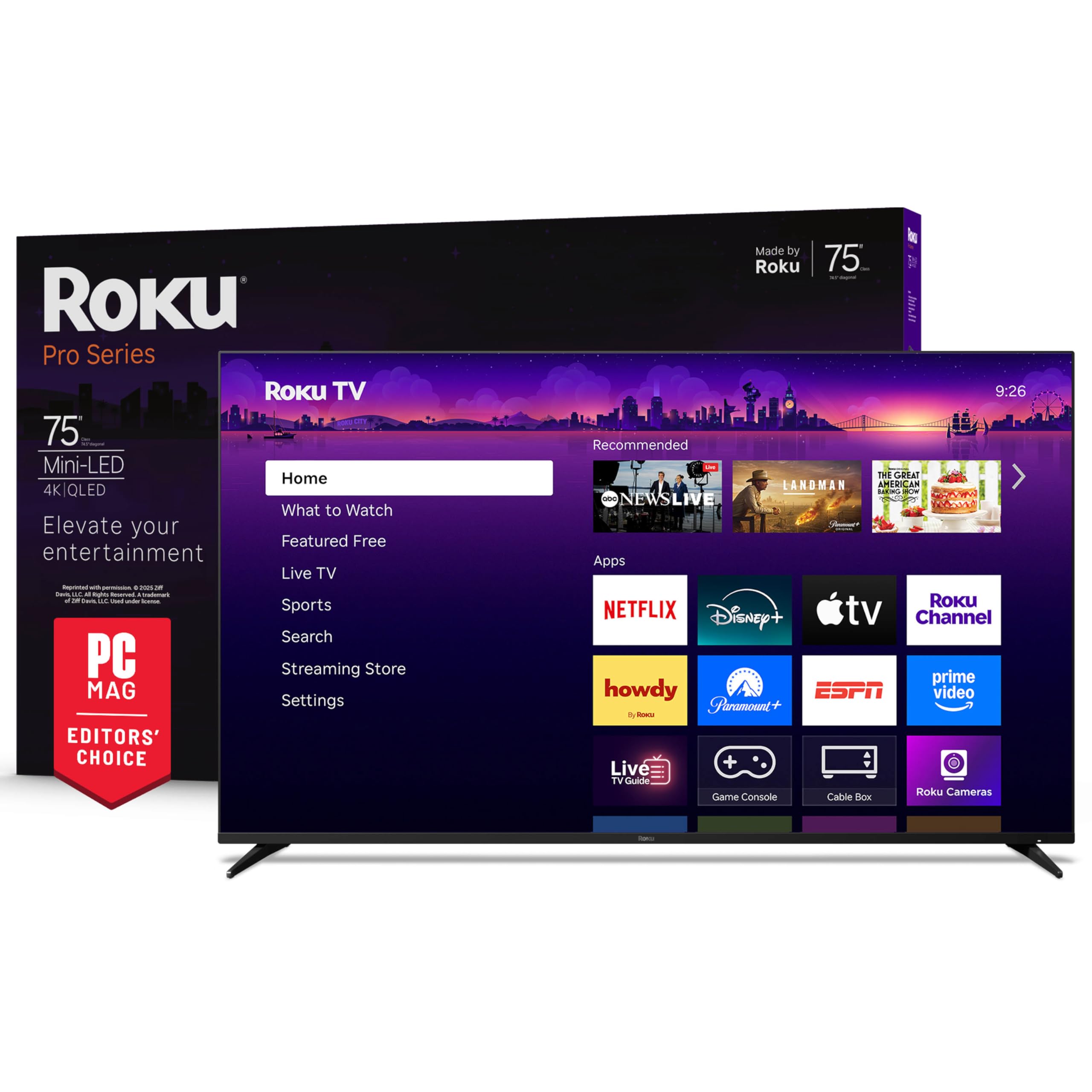
Roku’s Pro Series TV is a Mini-LED QLED that prioritizes simplicity without sacrificing performance. The Roku Smart Picture Max system uses AI to clean up and optimize incoming signals in real-time, automatically adjusting color and sharpness based on scene content. The 120Hz native refresh rate, combined with FreeSync Premium Pro and VRR, provides smooth gaming performance. The side-firing speakers in the Roku Soundstage Audio system deliver surprisingly wide stereo imaging, reducing the need for an external soundbar in smaller rooms.
The Backlit Voice Remote Pro is the standout accessory — it’s rechargeable, has a remote finder function that triggers a tone from the TV, and includes hands-free voice control. The TV’s tool-less stands offer two height positions, allowing you to clear a soundbar or center-channel speaker. The cable management system routes wires through the stand legs, keeping the setup tidy. The Backdrops feature turns the TV into a digital art gallery when idle, with options to display famous artworks or your own photos.
The Roku platform remains the gold standard for simplicity and speed. There’s no bloatware, no cluttered home screen, and no account required for basic operation. For households that include less tech-savvy members or prioritize a frustration-free user experience, the Roku Pro Series delivers a premium picture with a literally seamless interface. The only compromise is the 120Hz cap, which falls short of the 144Hz panels found on some gaming-focused competitors.
Why it’s great
- Roku platform is the most intuitive, least cluttered smart TV OS available.
- Backlit remote with finder function eliminates lost-remote frustration.
- Side-firing speakers produce wide soundstage without external audio.
Good to know
- 120Hz refresh rate is lower than competitors offering 144Hz native.
- Limited local dimming zones compared to similarly-priced Mini-LED rivals.
11. iFFALCON U85
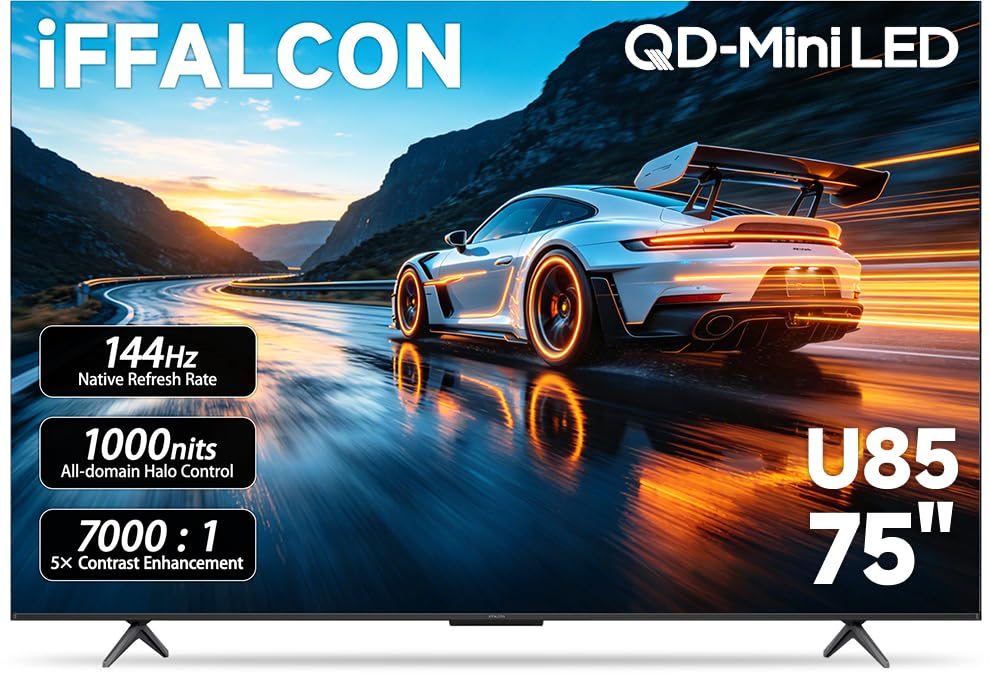
The iFFALCON 75U85 is a Mini-LED TV that makes a bold statement for gamers on a budget. Its 144Hz native panel with VRR support up to 288Hz and FreeSync Premium Pro certification ensures tear-free, low-lag gameplay across all three major consoles. Where this TV truly surprises is its four HDMI 2.1 ports — a feature typically reserved for TVs costing twice as much — allowing you to simultaneously connect a PS5, Xbox Series X, gaming PC, and soundbar via eARC without needing to swap cables.
The picture quality is respectable for the tier: up to 1,000 nits peak brightness, a 7,000:1 contrast ratio with local dimming, and support for Dolby Vision IQ, HDR10+, and IMAX Enhanced. The 50W 2.1-channel audio system (2×15W tweeters plus a 20W woofer) produces clear dialogue and punchy bass. Google TV provides a clean interface with far-field voice control, and the inclusion of hotel mode and IP/IR control makes it viable for commercial installations as well as home use.
For the gamer who wants the full HDMI 2.1 ecosystem — 4K@144Hz on two ports, ALLM, VRR — without spending flagship money, the iFFALCON U85 is arguably the best value play in the 75-inch QLED category. The build quality is slightly thicker than premium rivals, but the performance-to-cost ratio is undeniable. The brand may be unfamiliar, but the hardware specifications speak for themselves.
Why it’s great
- Four HDMI 2.1 ports at this price point is unmatched in the market.
- 144Hz native panel with 288Hz VRR provides ultra-smooth gaming.
- Built-in hotel mode and IP control suit multi-use installations.
Good to know
- Chassis is thicker and less refined than premium brand alternatives.
- Peak brightness of 1,000 nits is adequate but not class-leading.
12. Amazon Ember QLED
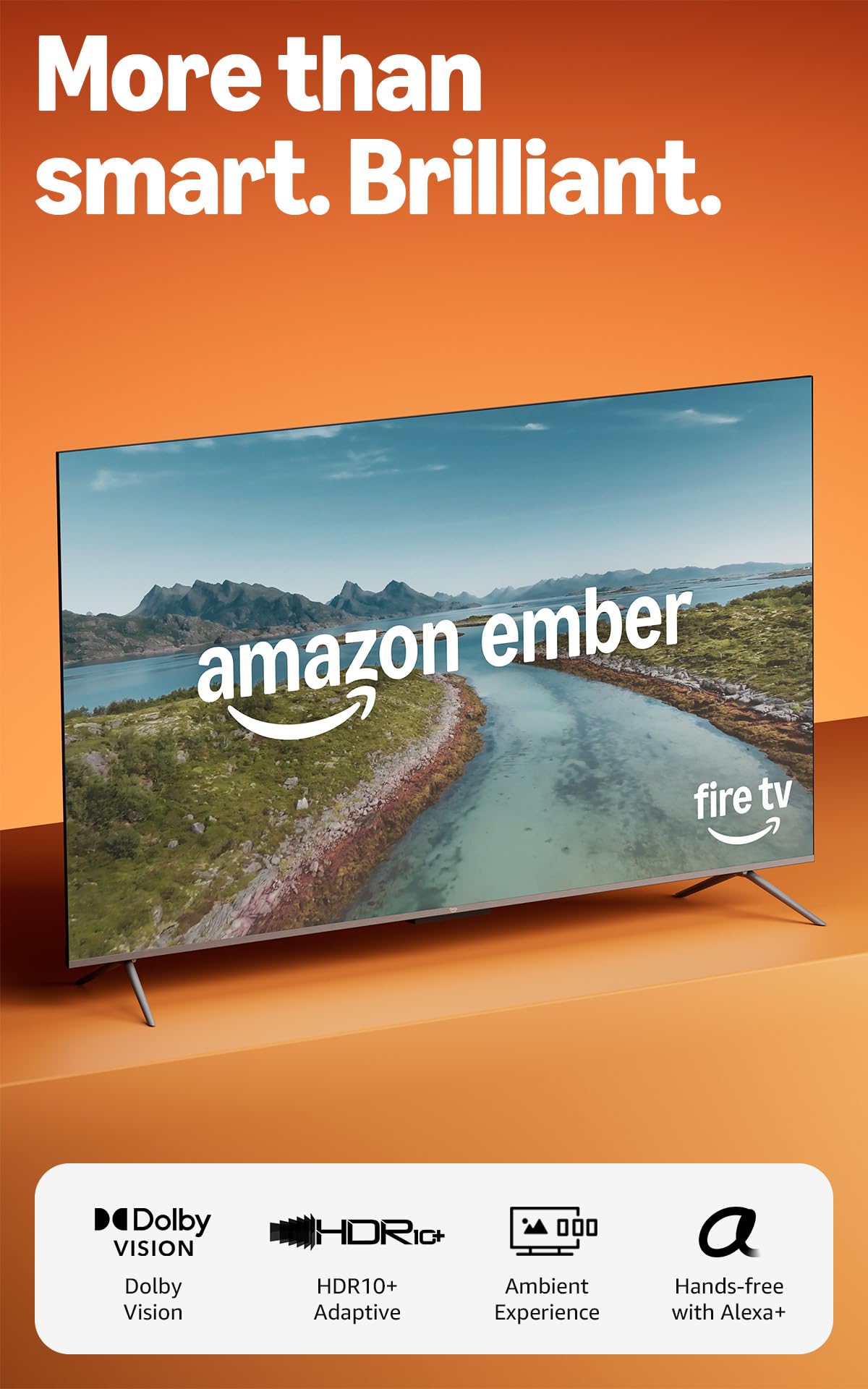
The entry-level Amazon Ember QLED offers access to Fire TV’s ecosystem at the lowest entry point in the 75-inch QLED category. The 4K QLED display supports Dolby Vision and HDR10+ Adaptive, ensuring HDR content looks vibrant despite the more modest backlight system. The quad-core processor and Wi-Fi 6 support provide snappy app loading and smooth streaming. The Omnisense technology wakes the display when you enter the room, a feature borrowed from the more expensive Mini-LED sibling.
The built-in 2.0-channel audio is adequate for casual viewing but lacks bass and spatial separation for immersive content. The four HDMI inputs provide reasonable connectivity, though only one supports eARC for lossless audio passthrough to a soundbar. The Fire TV platform includes Alexa+ with natural language search, and the hands-free voice control works reliably even from across the room.
This TV is best suited for secondary living spaces, rental properties, or budget-conscious households that prioritize smart TV integration and large-screen size over absolute picture quality. The combination of Alexa voice control, Amazon Luna cloud gaming support, and the Fire TV content ecosystem makes it a compelling package for Prime subscribers. Picture quality is solid for the tier but won’t satisfy videophiles accustomed to high-end Mini-LED performance.
Why it’s great
- Lowest entry price for a 75-inch QLED with Dolby Vision support.
- Omnisense wake feature adds convenience and energy savings.
- Alexa+ integration enables natural language content discovery.
Good to know
- Limited local dimming results in visible blooming in dark scenes.
- Audio system lacks bass; a soundbar is strongly recommended.
13. Hisense U7
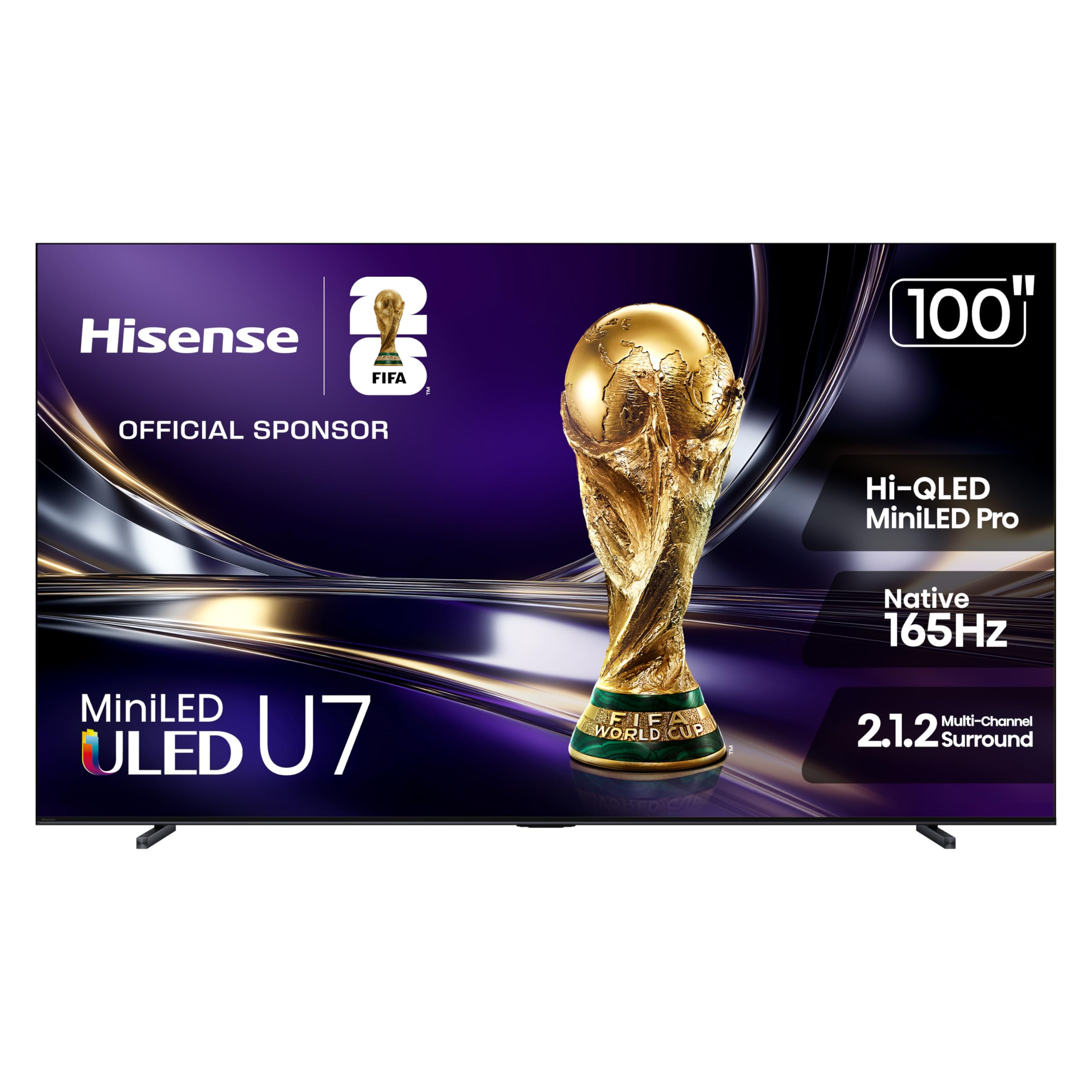
Hisense’s U7 series is a premium gaming QLED that pushes boundaries with a native 165Hz refresh rate — exceeding the 144Hz standard found on most competitors. The Hi-QLED MiniLED Pro backlight system packs up to 3,000 local dimming zones and a peak brightness of 3,000 nits, delivering HDR impact that rivals the best in class. The Pantone Validated color accuracy ensures that games and movies look as the creators intended, with natural skin tones and vibrant environmental hues.
The 2.1.2 multi-channel surround system includes DTS Virtual:X processing, creating immersive audio without external speakers. Google TV provides a comprehensive smart platform with access to over 10,000 apps. Gaming features are extensive: the 165Hz native panel supports 288Hz VRR, HDMI 2.1 on all inputs, and automatic low latency mode switching. The Hi-View AI Engine Pro constantly analyzes and optimizes the picture scene-by-scene.
For the enthusiast gamer who wants the absolute smoothest motion possible — especially competitive PC gaming at high frame rates — the U7’s 165Hz panel provides a meaningful advantage over 120Hz TVs. The sheer brightness also makes it an excellent choice for rooms with large windows or skylights. The panel is massive at 75 inches, so ensure your viewing distance is at least 8 feet to avoid eye fatigue from the extreme brightness levels.
Why it’s great
- Native 165Hz refresh rate is industry-leading for fluid motion.
- 3,000 dimming zones deliver near-OLED black levels with extreme brightness.
- Pantone Validated color accuracy for professional-grade HDR.
Good to know
- Aggressive brightness can cause eye strain in darker viewing environments.
- Requires at least 8-foot viewing distance due to sheer screen size.
FAQ
Is a 75-inch QLED TV too big for a typical living room?
What is the practical difference between 120Hz and 144Hz on a QLED TV?
Does QLED suffer from burn-in like OLED?
Should I buy a soundbar for my 75-inch QLED TV?
Final Thoughts: The Verdict
For most users, the best 75 inch qled tv winner is the TCL QM8K because it delivers flagship-tier brightness (5,000 nits) and gaming performance (288Hz VRR) at a price that undercuts Sony and Samsung equivalents. If you want the best integrated audio so you don’t need a separate soundbar, grab the Samsung QN90D. And for maximum gaming fluidity with a native 165Hz panel and 3,000 dimming zones, nothing beats the Hisense U7.

Mo Maruf
I created WellFizz to bridge the gap between vague wellness advice and actionable solutions. My mission is simple: to decode the research and give you practical tools you can actually use.
Beyond the data, I am a passionate traveler. I believe that stepping away from the screen to explore new environments is essential for mental clarity and physical vitality.