Our readers keep the lights on and my smoothie glass nicely filled. As an Amazon Associate, I earn from qualifying purchases.
The wrong running shoe for high arches doesn’t just feel tight—it actively collapses your foot’s natural suspension system, turning every stride into a jarring transmission of shock up through your knees and hips. With the arch demanding more vertical space and your foot’s rigid midfoot lacking natural pronation to absorb load, you need a shoe engineered with a raised medial post and a crash pad that accommodates that fixed curve, not one that tries to flatten it.
I’m Mohammad Maruf — the founder and writer behind WellFizz. I’ve spent years analyzing lateral heel bevel geometry, midsole durometer charts, and arch profile mapping across hundreds of stability and neutral trainers to identify which builds actually support a high-arch foot rather than fighting its natural shape.
This guide breaks down nine models that respect the elevated arch, from plush daily trainers to zero-drop trail options, and explains exactly how each one manages pressure distribution so you can stop compensating and start striding. athletic shoes for high arches that actually work share one trait: they cradle the arch without crushing it.
How To Choose The Best Athletic Shoes For High Arches
Your foot with high arches is structurally rigid—the midfoot bones sit higher, creating a shorter, tighter arch that doesn’t flatten during gait. That rigidity means your foot can’t absorb ground impact the way a neutral or flat foot does, so the shoe’s midsole and outsole design must compensate with targeted cushion zones and a stable platform that doesn’t force the arch into an unnatural flattened position.
Midsole Cushion Density Matters More Than Stack Height
Many shoppers assume more foam equals better arch support. For high arches, the durometer (firmness) of the foam matters more than its raw thickness. A too-soft midsole lets the arch sink, overstretching the plantar fascia. You want a midsole that registers between 25 and 35 on the Asker C scale—firm enough to resist bottoming out under your arch’s bony prominence, yet plush enough to absorb heel-strike vibration.
Stability Features for the Underpronator
High-arch runners typically underpronate (supinate), meaning their foot rolls outward on impact. You don’t need aggressive medial posts designed for overpronators—those will push your foot even further into supination. Instead, look for a shoe with a broad lateral heel bevel, a symmetrical crash pad, and a dual-density midsole that guides your foot through a neutral gait path without forcing it inward.
Heel Counter Rigidity and Toe Box Volume
A rigid arch needs a rigid heel counter to lock the rearfoot; any heel slip compounds the instability created by your foot’s natural lack of pronation. Simultaneously, the toe box must allow splay, because high arches often come with a wider forefoot or a Morton’s neuroma tendency. A toe box that tapers too quickly compresses the metatarsal heads, aggravating nerve pain that already plagues many high-arch wearers.
Quick Comparison
On smaller screens, swipe sideways to see the full table.
| Model | Category | Best For | Key Spec | Amazon |
|---|---|---|---|---|
| Hoka Men’s Arahi 7 | Stability Road | Long daily miles & recovery | J-Frame stability tech, 29mm stack | Amazon |
| Saucony Men’s Hurricane 24 | Stability Trainer | Long runs & high mileage | Center-path guidance frame | Amazon |
| Hoka Women’s Arahi 7 | Stability Road | PT recovery & everyday wear | J-Frame midsole, 29mm heel | Amazon |
| ALTRA Women’s Torin 8 | Zero-Drop Road | Wide forefoot & neuroma relief | Zero drop, FootShape toe box | Amazon |
| ALTRA Men’s Lone Peak 9 | Zero-Drop Trail | Trail & all-day standing | MaxTrac outsole, 25mm stack | Amazon |
| Saucony Women’s Endorphin Shift 3 | Speed/Stability Hybrid | Plantar fasciitis & gym | SpeedRoll rocker, PWRRUN PB | Amazon |
| Brooks Men’s Glycerin Stealthfit 22 | Neutral Cushion | Standing all day & walking | DNA LOFT v3, 38mm heel stack | Amazon |
| ASICS Women’s Gel-Cumulus 27 | Neutral Daily | Neutral to high arches | PureGEL insert, 30mm heel | Amazon |
| ASICS Men’s Gel-Cumulus 27 | Neutral Daily | Daily runs & walking | FlyteFoam Blast+, 30mm heel | Amazon |
In‑Depth Reviews
1. Hoka Men’s Arahi 7
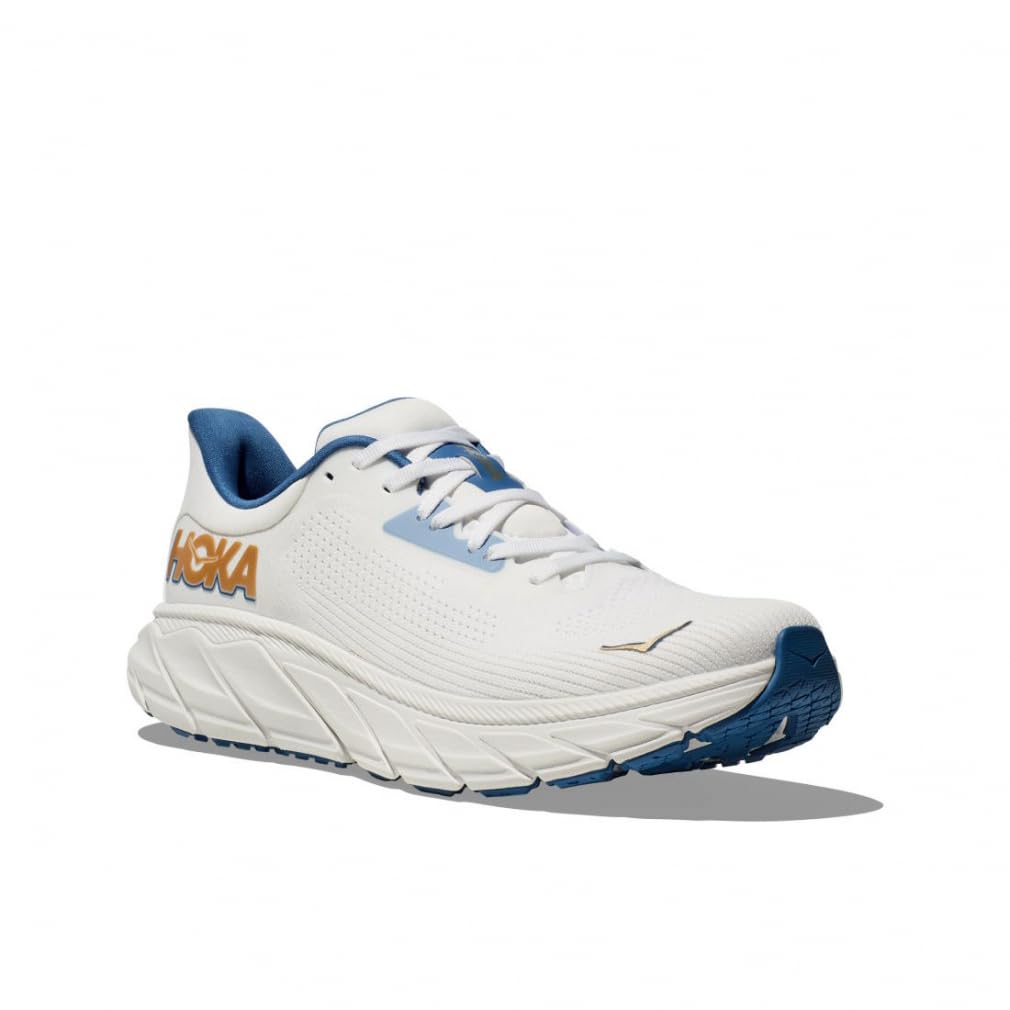
The Arahi 7’s J-Frame technology wraps the medial and lateral sides with a firmer density foam that guides the foot into a neutral path without an aggressive medial post—critical for high-arch runners who underpronate. The 29mm heel stack uses Hoka’s signature early-stage Meta-Rocker, which smooths the transition from heel strike to toe-off and reduces the jarring impact that a rigid arch can’t absorb on its own. Reviewers consistently report zero break-in time and immediate relief from foot fatigue during long days on their feet.
The engineered mesh upper is snug, particularly around the heel counter, which locks the rearfoot without slipping—a frequent pain point for high-arch wearers who often have narrow heels. The toe box offers a moderate taper; it’s not as wide as ALTRA’s FootShape, but it provides enough vertical room to avoid compressing the metatarsal heads during 10K+ walks. The outsole rubber coverage is generous under the heel and forefoot, giving reliable traction on wet pavement.
Several buyer reviews highlight the Arahi’s effectiveness for posterior tibial tendon recovery and eliminating foot pain during 10K daily walks. It is noticeably snug for wide feet; users with broader forefeet should consider sizing up or switching to a wide-width version. The heel counter has a hard internal backing that some find annoying when sitting with legs crossed, but during activity it remains unobtrusive.
Why it’s great
- J-Frame provides subtle guidance without overcorrecting supination
- Meta-Rocker reduces impact shock for rigid midfoot
- Locked-down heel counter prevents slippage during runs
Good to know
- Toe box is moderate—may feel snug for wide forefeet
- Hard internal heel backing can be uncomfortable when at rest
- Premium build commands a higher price point
2. Saucony Men’s Hurricane 24
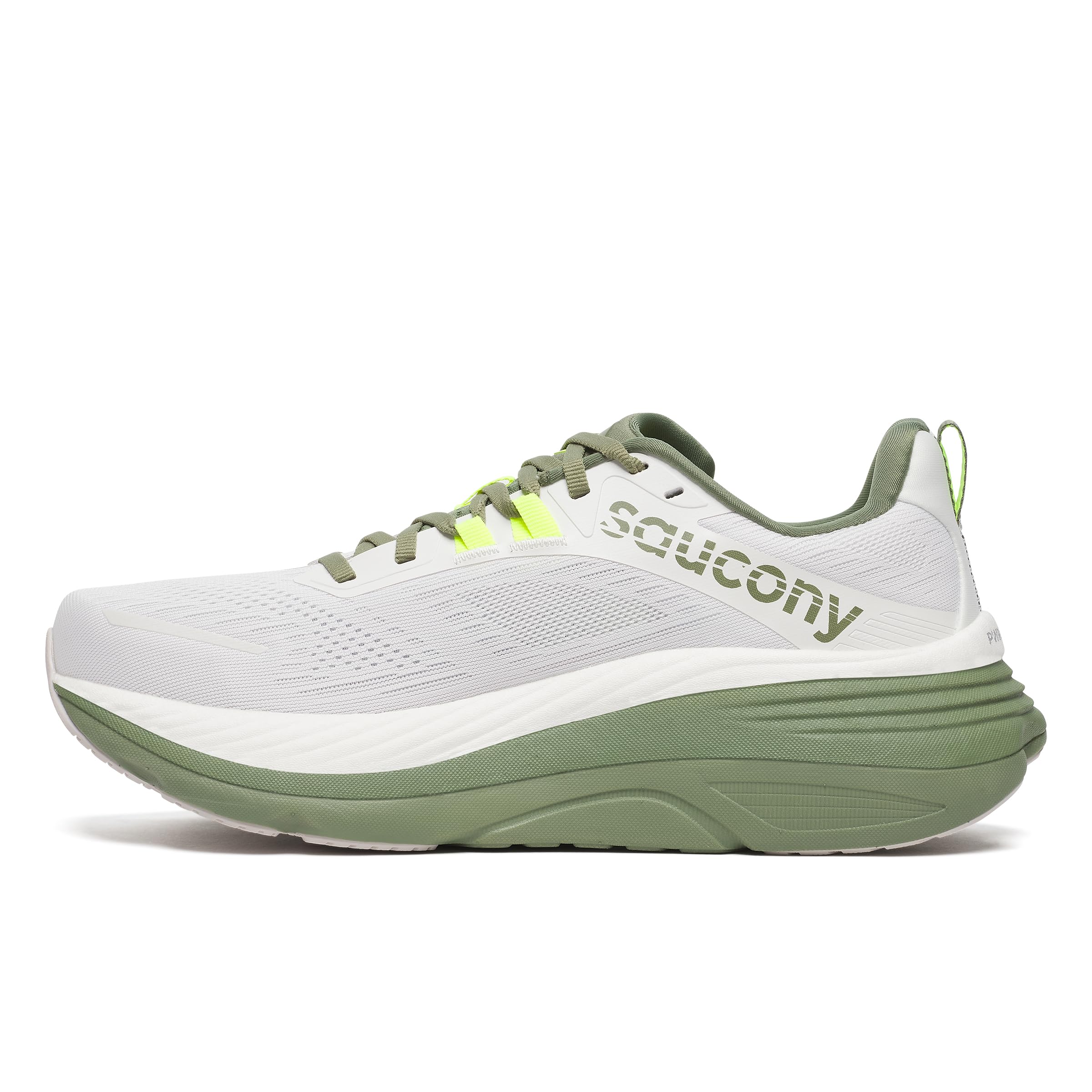
The Hurricane 24 uses a center-path guidance frame—a shaped midsole geometry that cradles the foot from both sides, creating a stable channel for the foot to ride through. For high arches, this means the foot isn’t forced into pronation; instead it’s held in a neutral alignment that respects the arch’s fixed curve. The PWRRUN PB foam (Saucony’s pebax-based compound) delivers a resilient, responsive feel that doesn’t bottom out under the bony midfoot, making it ideal for 20-mile long runs and recovery days alike.
Runners report the shoe excels at distances over 10 miles, where its weight (slightly heavier than a pure speed shoe) becomes an asset for stability rather than a liability. The forefoot and toe box are roomy without being sloppy, accommodating orthotic inserts that many high-arch runners require. The outsole rubber is durable, with one reviewer noting a full year of daily use before significant wear appeared.
A notable inconsistency surfaces in manufacturing: reviewers report that pairs made in Vietnam run narrower and more comfortable, while pairs from Chinese factories feel wider and firmer. This variance means ordering from a retailer with a flexible return policy is wise. The shoe also leans heavier, so it’s not the right choice for 5K PR attempts or tempo work.
Why it’s great
- Center-path frame keeps high-arch foot in neutral alignment
- Resilient PWRRUN PB foam resists bottoming out
- Excellent outsole durability for high-mileage runners
Good to know
- Heavier build not suited for speed work
- Inconsistent fit between manufacturing batches
- Roomy fit may feel too loose for narrow feet
3. Hoka Women’s Arahi 7
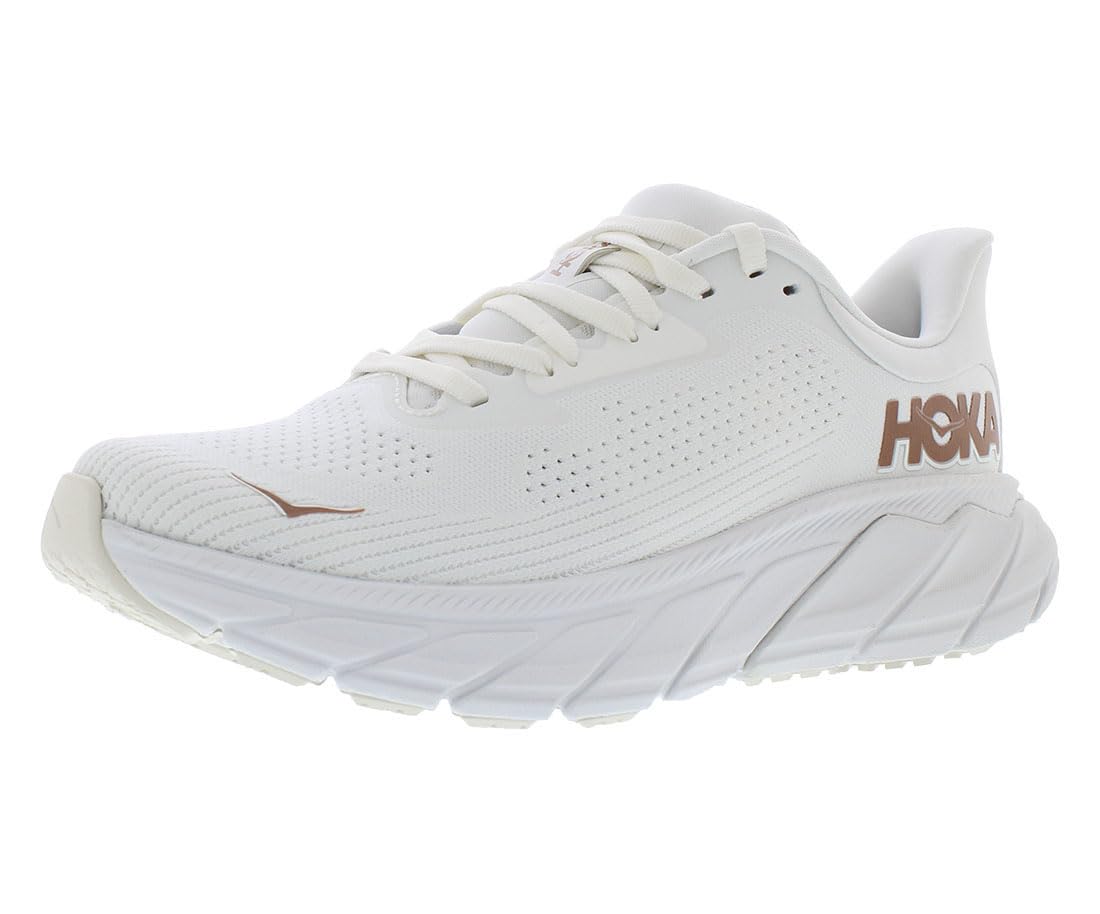
The women’s Arahi 7 shares the same J-Frame chassis as the men’s version: a denser foam rim along the medial and lateral sides that prevents the foot from rolling excessively inward or outward. For high-arch wearers who underpronate, the lateral J-Frame support is particularly beneficial—it catches the foot as it rolls outward during the gait cycle, providing a stable landing platform that a neutral shoe would not offer. The 29mm heel stack incorporates a rockered profile that reduces ankle dorsiflexion demand, which is helpful for recovering from posterior tibial tendon injuries common among high-arch runners.
Women with narrow heels report an excellent lockdown from the padded heel collar, which eliminates the heel slip that often plagues high-arch feet. The toe box is moderate in width; it accommodates a standard forefoot without compressing the lateral toes, but it isn’t as spacious as the ALTRA Torin 8. The midsole uses Hoka’s CMEVA foam, which strikes a balance between softness and responsiveness—firm enough to resist bottoming out under the arch, yet plush enough for all-day wear.
Multiple verified buyers cite the Arahi 7 as a “game changer” for foot pain recovery, with one reviewer noting it reduced posterior tibial tendon pain enough to resume daily walks. The shoe runs true to size but has a narrow overall volume; those with wide feet should consider the wide-width option. The outsole coverage is solid for road use but lacks the aggressive lug pattern needed for trail surfaces.
Why it’s great
- Lateral J-Frame support corrects underpronation without forcing pronation
- Excellent heel lockdown for narrow heels
- Rockered sole eases recovery from tendon injuries
Good to know
- Narrow overall fit; wide feet need a separate wide width
- Not intended for trail running
- Premium price point may be a barrier for budget shoppers
4. ALTRA Women’s Torin 8
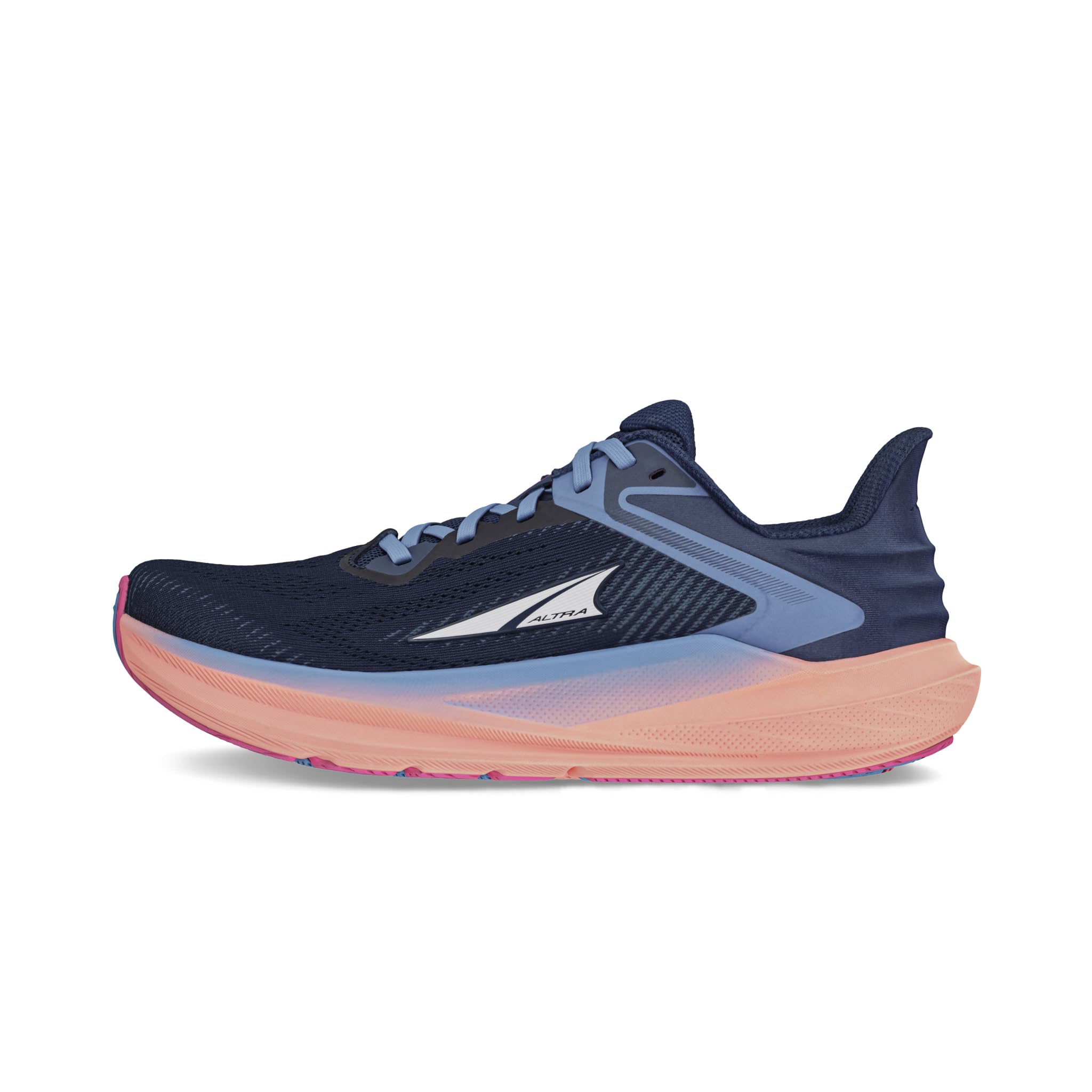
The Torin 8 is a zero-drop road shoe, meaning the heel and forefoot sit at the same height relative to the ground—a geometry that forces the foot into a more natural, midfoot-strike pattern. For high-arch runners who tend to heel-strike heavily, zero-drop redistributes impact toward the midfoot, reducing the repetitive shock that travels through a rigid arch. ALTRA’s FootShape toe box is the widest in this lineup, giving the metatarsal heads room to splay naturally and alleviating the compression that can trigger Morton’s neuroma—a common comorbidity with high arches.
The midsole uses ALTRA’s EGO MAX foam, which has a slightly firmer feel than standard EVA. It provides a grounded sensation that high-arch runners with good intrinsic foot strength appreciate—they don’t want a marshmallowy platform that destabilizes their arch. The padded heel collar is generous, and the internal heel counter offers moderate rigidity, enough to prevent slip without feeling restrictive. Reviewers with Morton’s neuroma specifically praise the Torin 8 for eliminating nerve pain during daily walks.
As a zero-drop shoe, the Torin 8 requires a transition period for runners accustomed to an 8–10mm drop. The Achilles and calf muscles need time to adapt to the flatter geometry. The outsole rubber is minimal, which keeps weight down (around 8.5 oz for a women’s size 8) but reduces durability on rough asphalt. The shoe fits true to size, though the wide toe box may feel loose for those with very narrow feet.
Why it’s great
- Wide Forefoot toe box prevents metatarsal compression
- Zero-drop geometry reduces heel-strike shock
- Firm EGO MAX foam stabilizes the rigid arch
Good to know
- Zero-drop requires an adaptation period for calves and Achilles
- Minimal outsole rubber may wear faster on rough surfaces
- Wide toe box can feel loose for narrow-footed runners
5. ALTRA Men’s Lone Peak 9
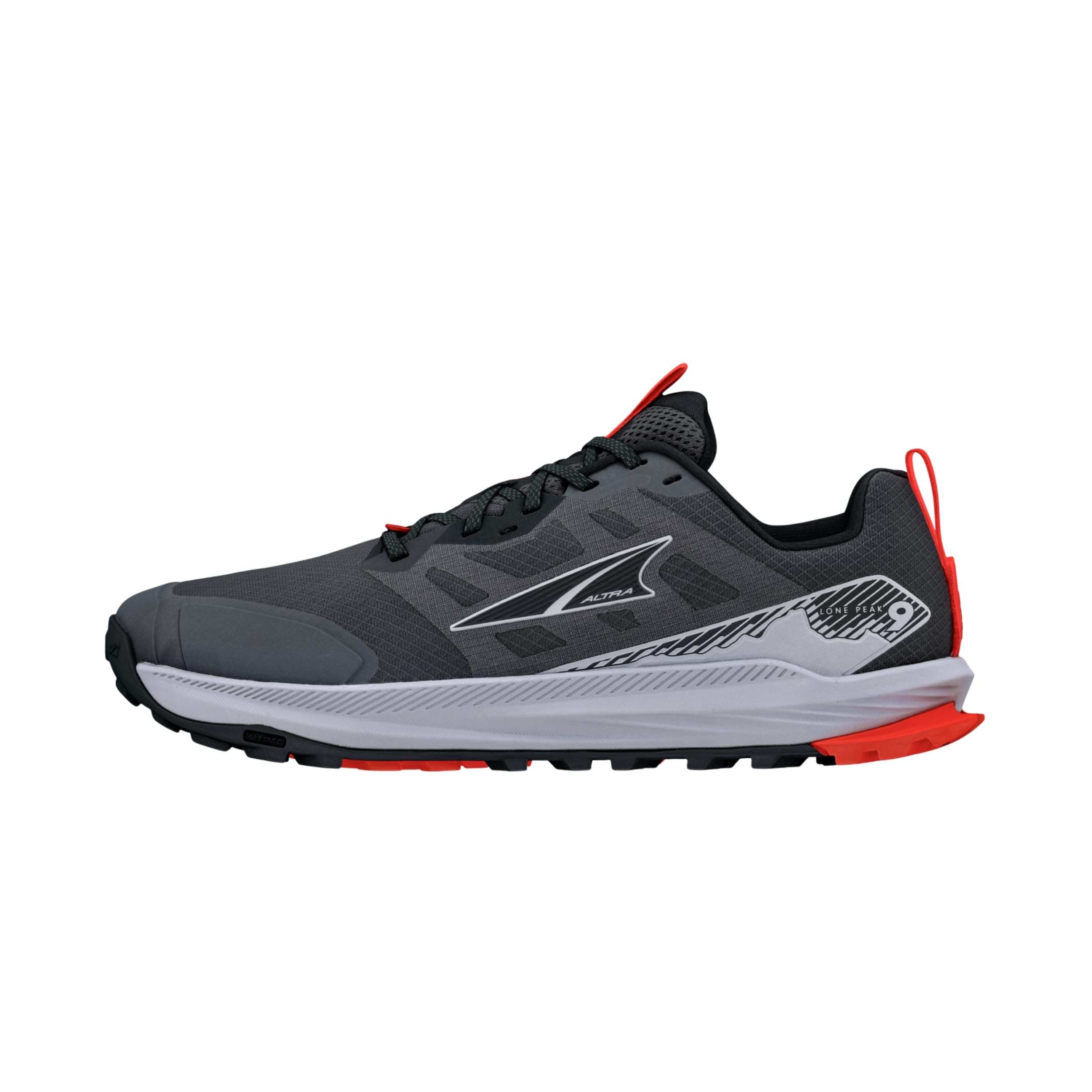
The Lone Peak 9 is a zero-drop trail runner that pairs an exceptionally wide toe box with a flat, stable platform—an ideal combination for high arches on uneven terrain. The 25mm stack height is moderate, providing enough cushion for rocky trails while maintaining ground feel and stability. ALTRA’s MaxTrac outsole uses a multi-directional lug pattern that delivers confident grip on loose dirt, mud, and wet rock, reducing the lateral slipping that can aggravate an unstable high-arch foot during trail runs.
The toe box is ALTRA’s original FootShape, which mirrors the natural shape of the foot. Reviewers with custom orthotic arch supports confirm the shoe accommodates them without raising the heel excessively. The zero-drop platform encourages a more balanced, midfoot-oriented stride that reduces the jarring heel-strike forces that high-arch runners experience on hard-packed trails. The upper is breathable mesh with a reinforced toe cap, offering protection against root and rock strikes.
Buyers report the shoe runs slightly large; many recommend going half a size down from your normal running shoe size. The wide toe box may feel excessive for runners with narrow feet, and the zero-drop geometry requires a deliberate transition period. The outsole, while grippy, shows wear after several hundred kilometers on abrasive surfaces, but the overall durability for the price point is strong.
Why it’s great
- MaxTrac outsole provides exceptional trail grip and lateral stability
- Wide toe box accommodates orthotics and natural toe splay
- Zero-drop platform reduces heel-strike impact on uneven ground
Good to know
- Runs slightly large; consider sizing half down
- Zero-drop design requires transition time for Achilles
- Outsole wears faster on abrasive rocky terrain
6. Saucony Women’s Endorphin Shift 3
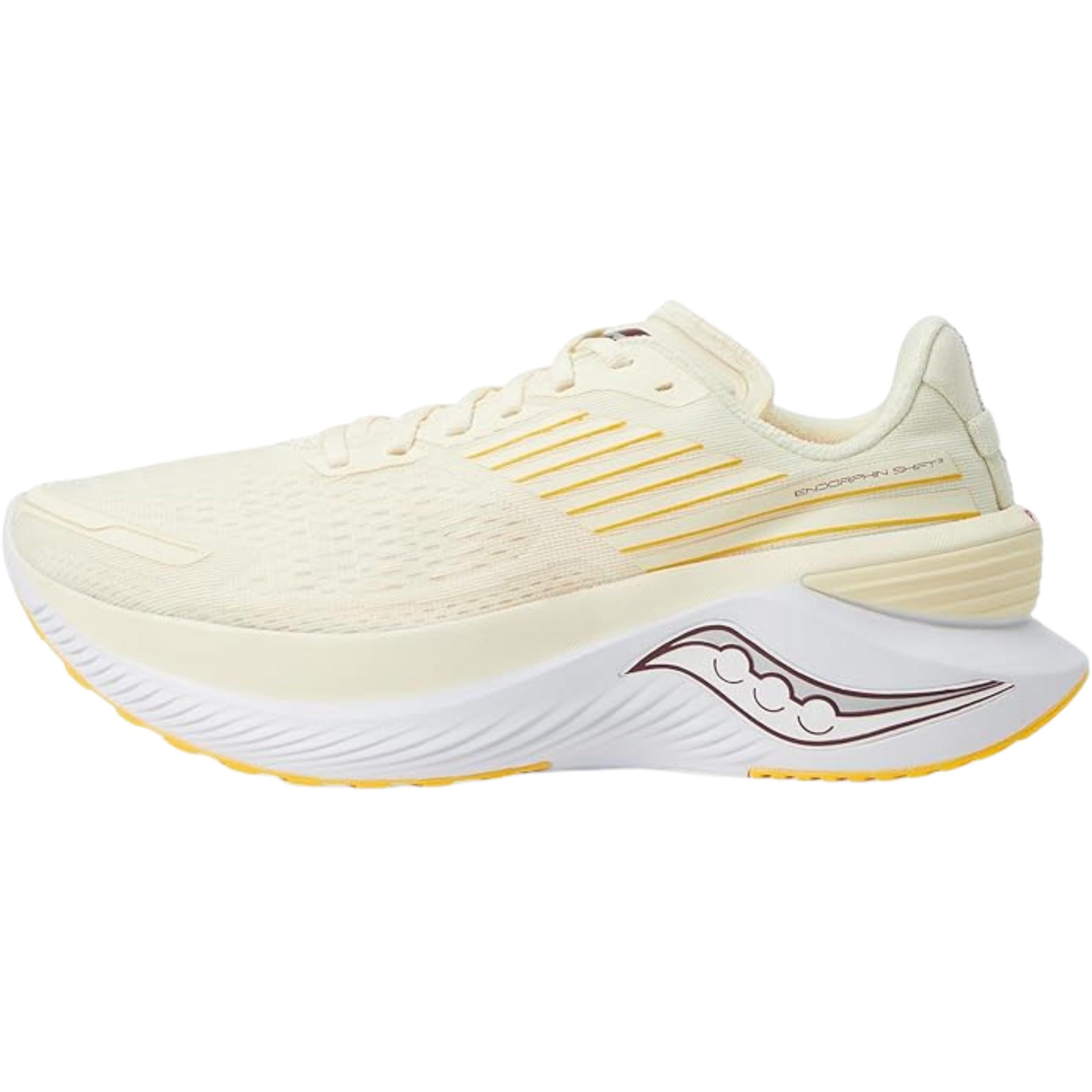
The Endorphin Shift 3 sits in a unique hybrid category: it uses Saucony’s SpeedRoll rocker geometry, which creates a forward-leaning platform that propels the foot through the gait cycle with less ankle effort. For high-arch runners, this rocker reduces the demand on the rigid midfoot to flex during toe-off, transferring the work to the shoe’s geometry instead. The PWRRUN PB midsole (a pebax-based supercritical foam) delivers a firm, highly resilient ride that doesn’t compress completely under the arch’s bony prominence, maintaining support over long distances.
Multiple verified buyers with plantar fasciitis report that the Shift 3 eliminated their heel and arch pain within weeks of switching from other brands. The shoe has a noticeably thick sole (stack height not officially stated, but visually ~35mm heel) with a wide base that provides inherent stability without a medial post. The forefoot volume is generous, accommodating both high-volume feet and custom orthotics. Reviewers also note the shoe’s versatility for gym work, treadmill walking, and daily pavement pounding.
The tongue is short and curved; some users find it slips back during wear, requiring readjustment. The included shoelaces are shorter than average, making it difficult to achieve a runner’s lock without swapping laces. Outsole durability is a concern—some reviewers note the outsole wears down within six months of exclusive use, and the arch support can go flat in that same timeframe. The model has been discontinued, so remaining inventory sells at a discount.
Why it’s great
- SpeedRoll rocker reduces midfoot flex demand for rigid arches
- PWRRUN PB foam resists bottoming out under high arch
- Eliminates plantar fasciitis pain for many users
Good to know
- Short tongue can slip back during wear
- Outsole durability may be limited to ~6 months
- Discontinued model; availability is limited
7. Brooks Men’s Glycerin Stealthfit 22
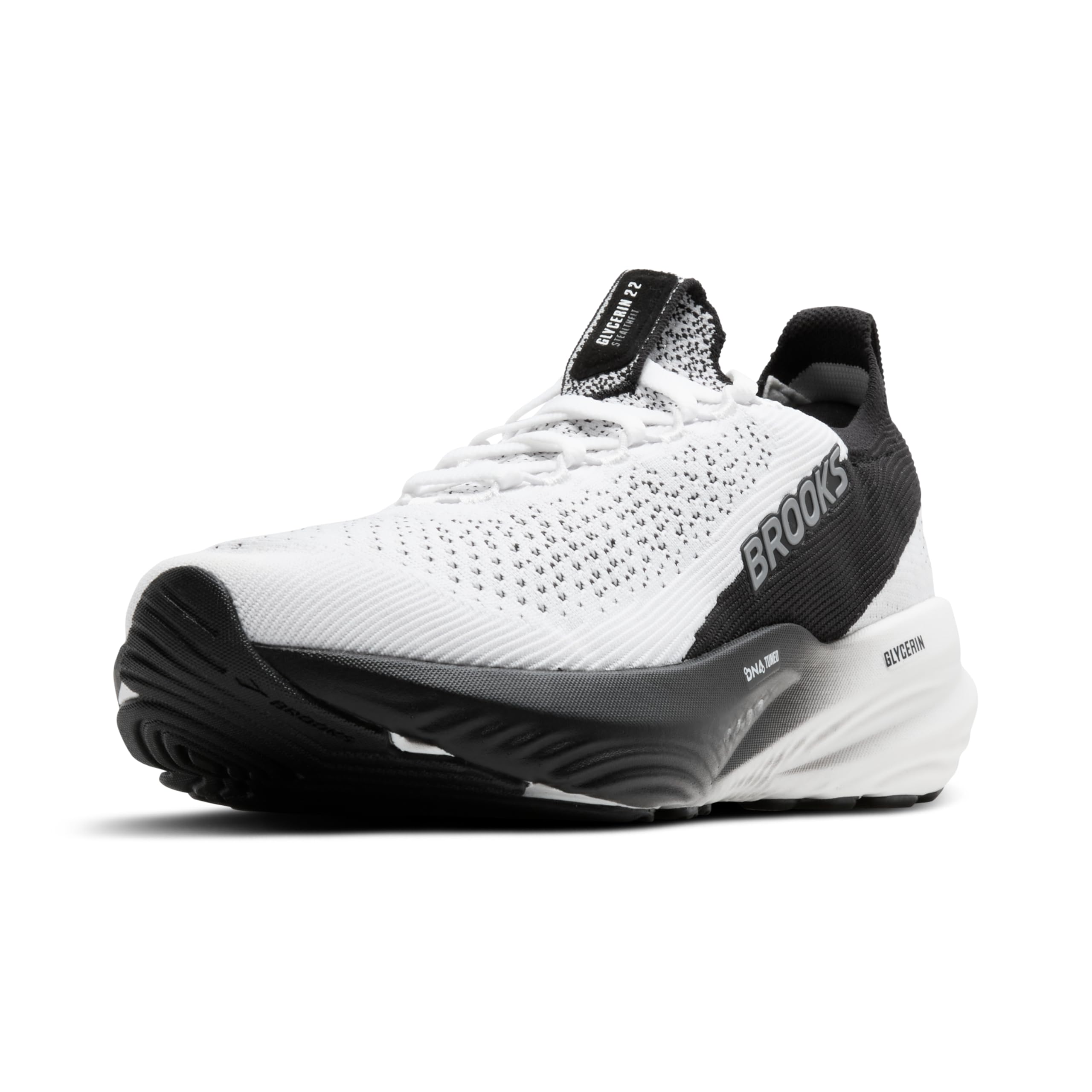
The Glycerin Stealthfit 22 is a maximum-cushion neutral trainer with Brooks’ DNA LOFT v3 foam—a blend of EVA, rubber, and air that delivers a plush, pillowy ride. For high arches, the key is that the DNA LOFT v3 is a nitrogen-infused compound with a specific durometer that resists excessive compression; it’s soft enough to absorb shock but firm enough to prevent the arch from sinking into the midsole. The 38mm heel stack is the tallest in this selection, providing substantial impact protection for runners who heel-strike heavily due to their rigid arch.
The Stealthfit upper uses a stretch-woven sock-like construction that eliminates the traditional tongue, reducing pressure points across the instep. The heel counter is padded and structured, locking the rearfoot in place without irritation. Reviewers wearing the shoe for 8+ hours of standing report zero foot fatigue, crediting the foam’s even pressure distribution. The fit is true to size with a medium-volume toe box that accommodates standard orthotics.
A small percentage of users report the Stealthfit upper runs warm, as the stretch-woven material has less breathability than traditional engineered mesh. The outsole rubber coverage is generous, but the exposed foam areas show wear under heavy heel strikers. The shoe lacks any stability features; runners who need medial or lateral guidance will feel unsupported on longer runs as the soft foam can allow the foot to drift slightly.
Why it’s great
- DNA LOFT v3 foam absorbs shock without letting the arch sink
- Tall 38mm stack provides maximum impact protection
- Sock-like Stealthfit upper eliminates tongue pressure points
Good to know
- Upper runs warm due to stretch-woven material
- No stability guidance; not ideal for runners needing correction
- Heavy heel strikers may wear out exposed foam areas quickly
8. ASICS Women’s Gel-Cumulus 27
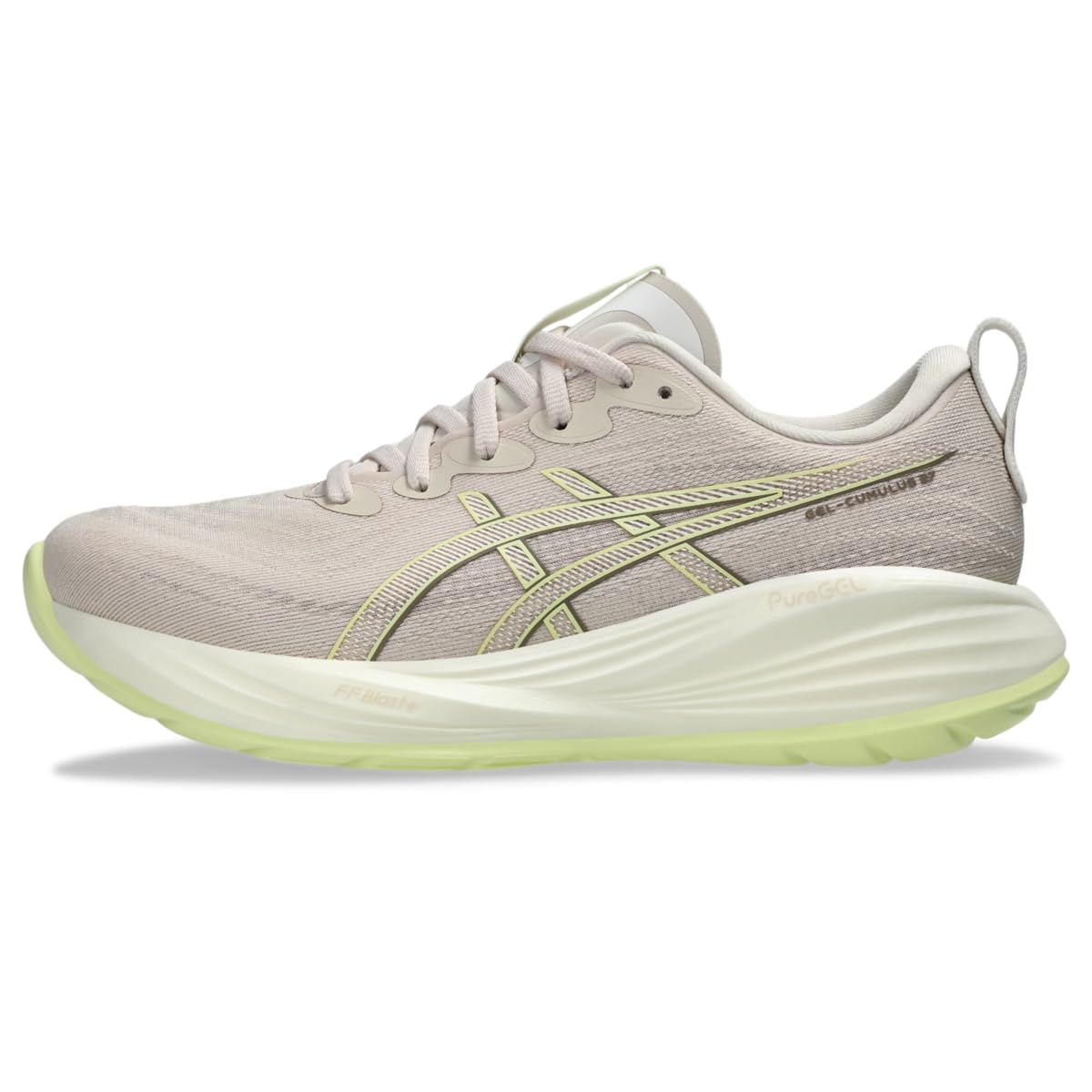
The Gel-Cumulus 27 is ASICS’ neutral daily trainer, updated with a PureGEL insert embedded in the heel for targeted shock absorption at initial contact. The 30mm heel stack uses FlyteFoam Blast+ in the midsole, a lightweight EVA blend that hits a mid-ground durometer—firm enough to support a high arch without bottoming out, yet plush enough for daily miles. The Ortholite sockliner adds an extra layer of conforming comfort, though it may not provide enough contour for severe arch profiles.
Women with narrow feet report the Gel-Cumulus 27 fits like a glove, particularly the narrow heel cup that prevents slippage during runs. The toe box is medium in volume; it offers enough room for standard forefeet but may feel restrictive for runners with wide splay needs or Morton’s neuroma. Reviewers with high arches specifically note the shoe’s compatibility with their foot shape, citing it as one of the few neutral shoes that doesn’t force the arch into an uncomfortable position.
A common critique points to the small toe box, which several reviewers found too narrow for long runs despite being comfortable for shorter distances and walking. The white colorway mentioned by one buyer gets dirty quickly but cleans up well with detergent. The outsole rubber is modest, prioritizing weight savings over long-term durability under heavy heel strikers.
Why it’s great
- PureGEL insert absorbs heel-strike shock effectively
- Narrow heel cup provides excellent lockdown for narrow feet
- FlyteFoam Blast+ maintains support without excessive sinking
Good to know
- Toe box is small; not ideal for wide forefeet or neuroma
- Outsole rubber may wear faster under heavy use
- White color option shows dirt quickly
9. ASICS Men’s Gel-Cumulus 27
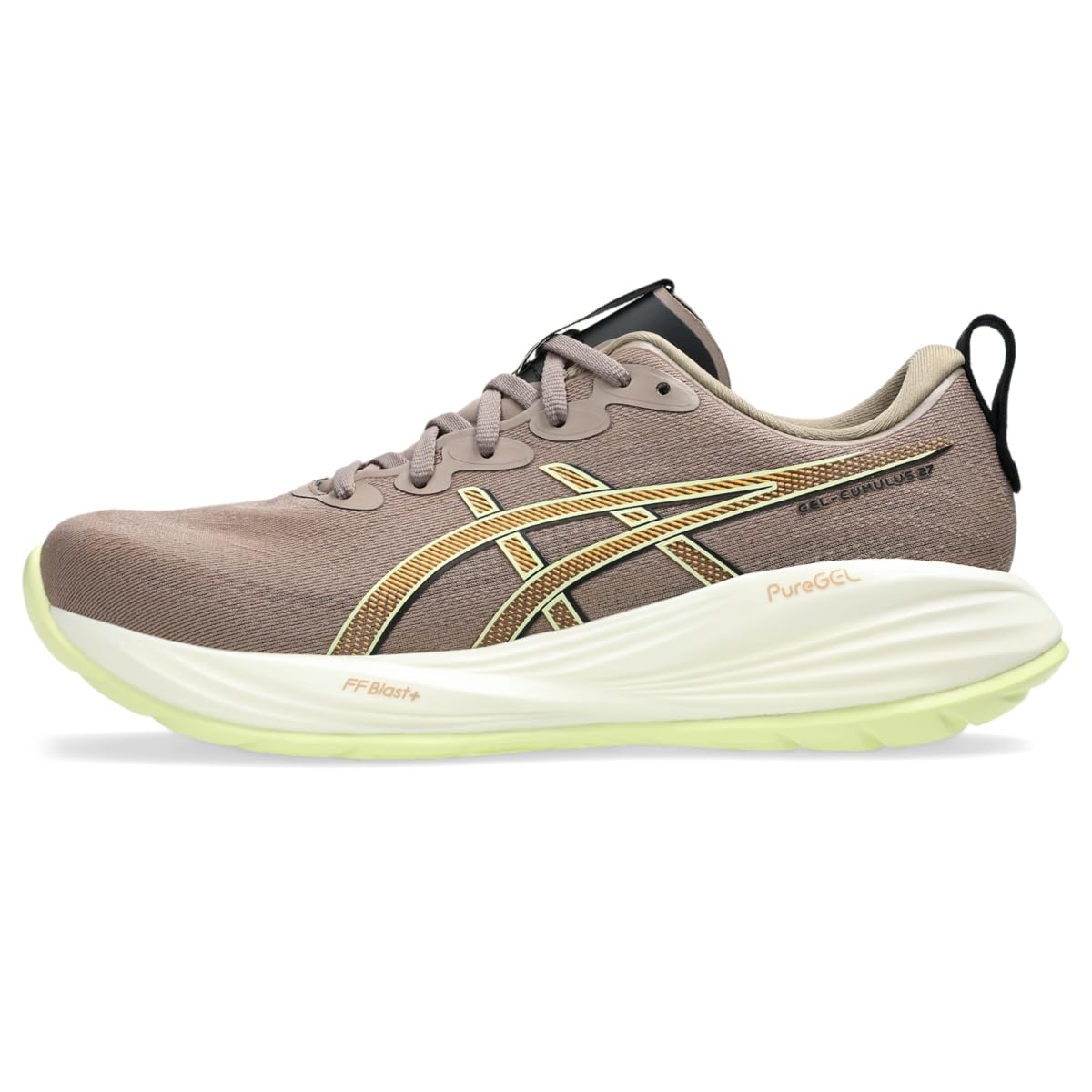
The men’s Gel-Cumulus 27 mirrors the women’s version in its core construction: a PureGEL insert at the heel, FlyteFoam Blast+ midsole, and Ortholite sockliner. The key difference for men is the broader last width and a slightly more generous toe box than the women’s model, though it remains a medium-volume fit overall. The 30mm heel stack provides adequate shock absorption for daily training runs, and the gel insert specifically targets the heel strike—the most common landing pattern for high-arch runners who can’t pronate to decelerate.
Buyers overwhelmingly praise the shoe for eliminating foot pain during walking, with one reviewer noting it resolved pain under the middle toe after switching from Skechers. The upper is a breathable engineered mesh that accommodates medium-volume feet without pressure points. The overall weight is competitive for the category, making it suitable for both easy runs and faster-paced walking. The shoe runs true to size with a moderate toe cap that prevents toe mashing.
Some runners transitioning from firmer shoes may find the FlyteFoam Blast+ too soft for tempo efforts, as the foam compresses noticeably under aggressive toe-off. The outsole durability is adequate for road use but shows wear if used on rough surfaces regularly. The heel counter is moderately stiff—it provides enough structure for neutral runners but may lack the rigidity needed for those requiring significant rearfoot control.
Why it’s great
- PureGEL insert absorbs heel-strike shock that rigid arches can’t dampen
- Breathable engineered mesh upper reduces hot spots
- True-to-size fit with moderate toe cap volume
Good to know
- FlyteFoam compresses under aggressive toe-off
- Heel counter may lack rigidity for significant rearfoot control needs
- Outsole shows wear on rough surfaces sooner than premium rivals
FAQ
Do high arches need stability shoes or neutral shoes?
Can zero-drop shoes work for high arches?
How much cushion is too much for a high arch?
Should I replace the insole in my high-arch shoes?
Final Thoughts: The Verdict
For most users, the athletic shoes for high arches winner is the Hoka Men’s Arahi 7 because its J-Frame guidance system provides the lateral support that underpronating feet need without forcing a correction that destabilizes the arch. If you want a zero-drop platform with a wide toe box for metatarsal relief, grab the ALTRA Women’s Torin 8. And for high-mileage runners who prioritize outsole durability and center-path guidance, nothing beats the Saucony Men’s Hurricane 24.

Mo Maruf
I created WellFizz to bridge the gap between vague wellness advice and actionable solutions. My mission is simple: to decode the research and give you practical tools you can actually use.
Beyond the data, I am a passionate traveler. I believe that stepping away from the screen to explore new environments is essential for mental clarity and physical vitality.