Our readers keep the lights on and my smoothie glass nicely filled. As an Amazon Associate, I earn from qualifying purchases.
That sharp, sickening twist mid-stride is every runner’s nightmare — and the reason a properly engineered ankle brace is more than just compression fabric. The wrong brace slips, bunches inside your shoe, or fails to stop the lateral roll that re-injures a recovering ligament. The right one locks down the talus without restricting your dorsiflexion.
I’m Mohammad Maruf — the founder and writer behind WellFizz. Over the last decade I’ve analyzed hundreds of joint support devices, cross-referencing material specs, closure systems, and real-world user reports to separate the braces that actually stabilize from those that just squeeze.
Whether you’re returning from a grade 2 sprain or trying to prevent one, the right ankle brace for running needs to balance rigid lateral stays with a low-profile fit that works inside your shoe.
How To Choose The Best Ankle Brace For Running
Running places repetitive, high-impact loads on the ankle that most casual braces aren’t built to handle. A brace that slips after a mile or rubs the Achilles raw becomes a distraction, not a solution. Focus on three core factors: closure system, stabilizer design, and volumetric fit inside a performance shoe.
Closure System and Security
Lace-up braces offer granular tension control but demand time to dial in. Speed-lace systems with Velcro cinching let you tighten or loosen mid-run without stopping. Hook-and-loop figure-8 straps provide targeted lateral compression that stops inversion rolls without choking the dorsum of the foot. For runners, speed and precision of adjustment often matter more than total strap count.
Stabilizer Design and Removability
Rigid medial and lateral splints prevent the ankle from collapsing into a sprain, but not every run requires maximum rigidity. Braces with removable aluminum or plastic stays let you wear them during active recovery and later remove the stays for lighter training sessions or daily wear. This versatility extends the brace’s usefulness well beyond the acute injury phase.
Low-Profile Fit
Bulky braces that force you into wide-width shoes or cause heel lift inside the heel counter create more problems than they solve. Look for an open-heel design, thin ballistic nylon or breathable knit uppers, and a total volume that sits flush against the foot. A brace that displaces the foot inside the shoe alters gait mechanics and can introduce knee or hip compensation.
Quick Comparison
On smaller screens, swipe sideways to see the full table.
| Model | Category | Best For | Key Spec | Amazon |
|---|---|---|---|---|
| Fitomo Ankle Brace | Triple-Lock | Sprain recovery & run confidence | 69% polyester, 17% nylon, 11% plastic | Amazon |
| DonJoy Stabilizing Speed Pro | Speed-Lace | High-intensity training & post-cam boot | 800D Ballistic nylon construction | Amazon |
| AGPTEK Lace-Up Ankle Brace | Cross-Lace | Post-surgery & Achilles tendonitis | Aluminum side splints, removable | Amazon |
| Vive Lace Up Ankle Brace | Figure-8 | Daily wear & multi-sport use | Dual figure-8 stabilizing straps | Amazon |
| Pure Compression Ankle Brace | Compression Pair | Mild support & swelling control | Sold as pair, nylon/spandex knit | Amazon |
In‑Depth Reviews
1. Fitomo Ankle Brace
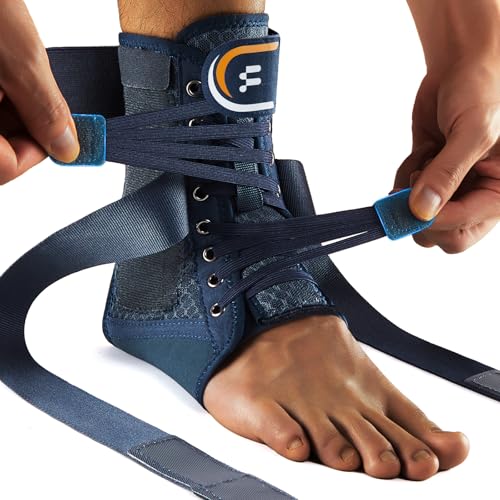
The Fitomo earns the top spot because its triple-lock architecture addresses the three failure modes runners experience: lateral roll, strap migration, and heat buildup. A top strap secures the tibia, dual removable plastic side stabilizers block inversion, and crossing figure-8 straps let you dial compression without cutting off circulation. The material blend — 69% polyester, 17% nylon, 11% plastic — breathes well enough for mile repeats.
Users recovering from ORIF surgery and stroke-related foot drop report the brace fits inside standard sneakers without heel lift. The quick lace-up with hook-and-loop closure cuts donning time to under 20 seconds, which matters when you’re at the trailhead or track. Multiple reviewers noted the brace stays put through basketball and workouts without needing mid-session readjustment.
The only catch is sizing runs slightly large — if you’re between sizes, the smaller option will give a more secure fit around a slender ankle. It’s also sold as a single unit, so those needing bilateral support will need two purchases. For the mix of rigidity, breathability, and shoe compatibility, this is the most balanced pick for runners.
Why it’s great
- Triple-lock system stops lateral roll without bulk
- Removable splints allow transition from recovery to training
- Breathable fabric reduces sweat buildup during long runs
Good to know
- Sizing runs large; measure carefully
- Only single brace per purchase
2. DonJoy Stabilizing Speed Pro Ankle Support Brace

The DonJoy Speed Pro is engineered for athletes who need to get in and out of their brace quickly without sacrificing lateral stability. Instead of threading traditional laces, the speed-lace system uses a single pull that tensions four lace zones simultaneously, then locks down with a Velcro tab. The 800D ballistic nylon outer shell resists abrasion from trail debris and the inside of a shoe tongue.
Physical therapists and surgeons frequently recommend this model for patients transitioning from a cam boot to active running. The removable articulated medial and lateral stays enhance proprioception — your ankle “feels” where it is in space, which is critical when rebuilding confidence on uneven surfaces. The full circumferential elastic strap at the top secures all underlying strapping and adds tibia/fibula compression.
Some users note the D-rings on the figure-8 heel straps can create pressure points on the bony prominences of the ankle, and the lacing stability strip has been reported to warp after months of heavy use (40+ hours per week). It’s also slightly bulkier than knit-style braces, so check that your running shoes have a roomy toe box. For high-intensity training and speed work, the convenience of 10-second application is hard to beat.
Why it’s great
- 10-second speed-lace system with Velcro lock
- Removable stays for proprioceptive training
- 800D ballistic nylon is extremely durable
Good to know
- D-rings may cause pressure points on some ankles
- Heel material can bunch and trap heat
3. AGPTEK Ankle Brace with Removable Splints

The AGPTEK brace uses a cross-lacing system that abandons the traditional strap design in favor of a shoelace-style closure that distributes tension evenly across the dorsum. Two lightweight aluminum splints on each side provide 360-degree protection, and the splints are fully detachable — you can run with them during the fragile recovery phase and remove them later for lighter training or daily walking.
The material is a polyester-nylon blend with a breathable weave that holds up to repeated hand washing. Users recovering from Achilles tendonitis and post-fracture immobilization consistently note the brace feels more substantial than the one provided by their doctor or orthopedic surgeon. The stabilizing straps on both sides lock the calcaneus and prevent the heel from shifting inside the brace during push-off.
On the downside, the brace is noticeably warm after 30+ minutes of continuous running due to the layered construction around the splints. It also requires stretchable shoes — tight-fitting racing flats will compress the aluminum stays and cause discomfort. Sizing leans slightly small, so users with a wide forefoot or high arch may need to size up.
Why it’s great
- Detachable aluminum splints offer adjustable rigidity
- Cross-lace closure provides even, secure tension
- Better construction than many medical-issued braces
Good to know
- Runs warm during extended runs
- Requires shoes with a wider toe box
4. Vive Lace Up Ankle Brace

The Vive brace delivers solid figure-8 support at a price point that makes it a no-brainer for runners who need a dependable backup brace or are managing chronic mild instability. The dual stabilizing straps wrap around the foot and ankle independently, using finger loops to pull each strap to your preferred tension. The open-heel, low-profile design fits inside most sneakers without causing heel lift.
While the polyester construction isn’t as breathable as some hybrid blends, the bilateral design works on either foot, which is convenient if you switch sides during recovery. Users managing osteoarthritis and post-sprain swelling report the brace provides better overall support than cheaper compression-only sleeves, and many doctors recommend it for replacing the walking boot during the transition to full activity.
The main compromise is bulk — several users note the brace is bulky enough to require half-size-up shoes for comfortable wear during running. The large size has been reported to run slightly small, so careful measurement is essential. For the price, the Vive offers stable, doctor-approved support without the premium of a speed-lace system.
Why it’s great
- Adjustable figure-8 straps for targeted lateral support
- Fits either foot with bilateral design
- Doctor-recommended for transition from cam boot
Good to know
- Bulky; may require larger shoe size
- Sizing can be inconsistent between sizes
5. Pure Compression Ankle Brace Support Stabilizer
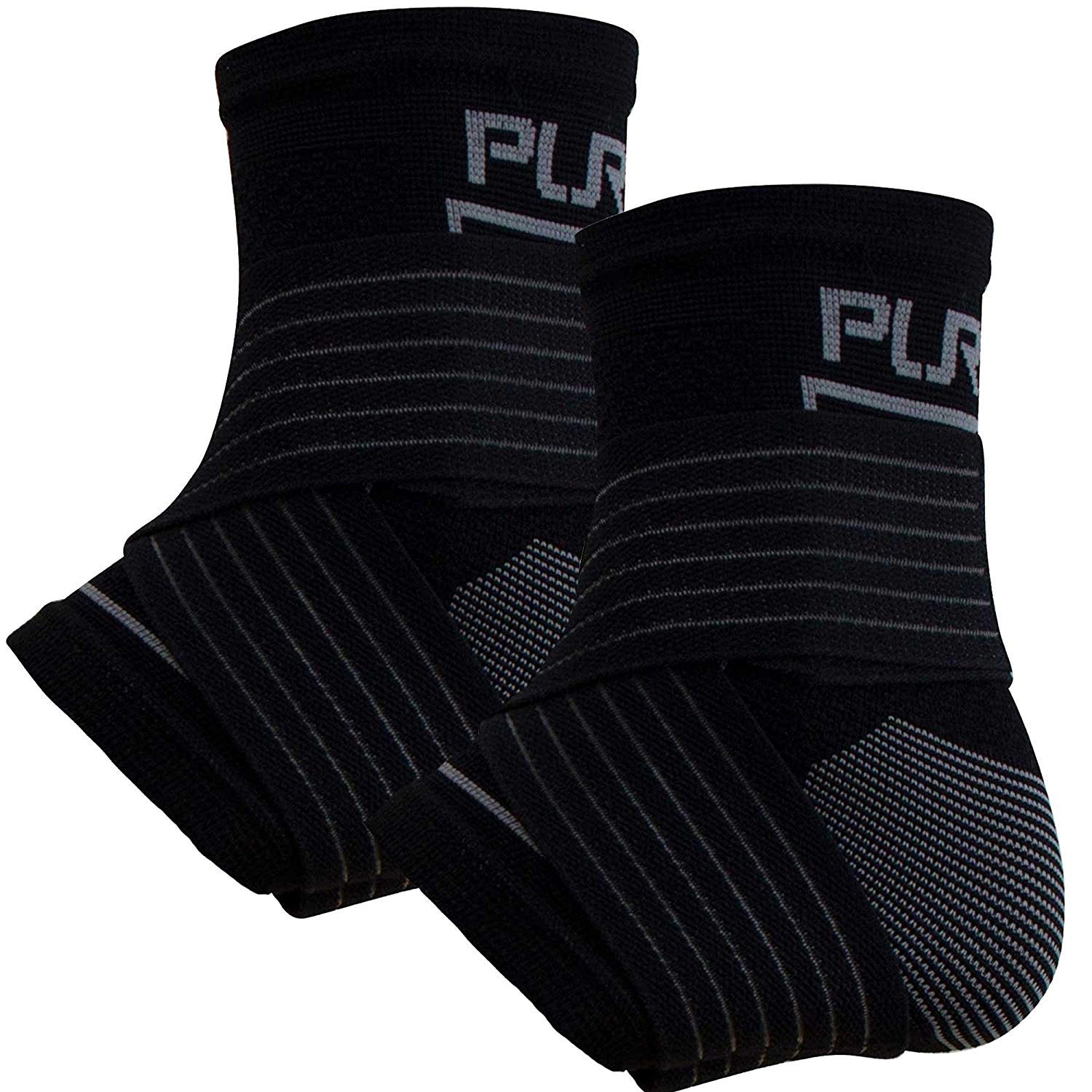
The Pure Compression is the only product on this list sold as a pair, making it the smart option for runners who want symmetrical support or need to brace both ankles after bilateral strain. The knit construction blends nylon and spandex for a sock-like fit with an adjustable x-strap integrated into the sleeve — it’s not removable, but it provides consistent figure-8 compression without hard plastic stays.
The moisture-wicking, anti-odor fabric is a genuine advantage for runners who log daily miles in hot conditions; the sleeve dries faster than polyester-heavy competition. Multiple users confirm the brace fits under a sock without noticeable bulk, which is rare for any ankle support that offers meaningful compression. It’s approved by physical therapists for ligament tear recovery and provides instant relief for heel and Achilles pain.
The trade-off is support level — without rigid splints, this is best suited for mild instability, prevention, or swelling management rather than active Grade 2 sprain recovery. The Velcro tabs can cause minor fabric fuzzing over time when unfastening, and the single strap lacks the granular tension control of a full lace-up system. For runners who want lightweight compression and don’t need lateral stays, the two-for-one value is unmatched.
Why it’s great
- Sold as a pair for bilateral support
- Moisture-wicking fabric stays dry on long runs
- Fits under socks with minimal bulk
Good to know
- No rigid stays; limited inversion protection
- Velcro tabs may cause fabric fuzzing over time
FAQ
Should I run with a lace-up or speed-lace ankle brace?
How do I know if my ankle brace fits inside my running shoes?
Can I wear an ankle brace with removable splints for daily walking too?
Final Thoughts: The Verdict
For most runners, the ankle brace for running winner is the Fitomo Ankle Brace because its triple-lock system and removable stabilizers adapt to both high-demand training and daily recovery without bulk. If you want the fastest on-off speed for interval work, grab the DonJoy Stabilizing Speed Pro. And for symmetrical mild support and moisture management during hot-weather miles, nothing beats the two-pack value of the Pure Compression Ankle Brace.

Mo Maruf
I created WellFizz to bridge the gap between vague wellness advice and actionable solutions. My mission is simple: to decode the research and give you practical tools you can actually use.
Beyond the data, I am a passionate traveler. I believe that stepping away from the screen to explore new environments is essential for mental clarity and physical vitality.