Our readers keep the lights on and my smoothie glass nicely filled. As an Amazon Associate, I earn from qualifying purchases.
The gap between your kitchen sink and countertop is a magnet for grime, trapped water, and loose edges that wobble every time you wash a dish. A failed seal there doesn’t just feel unstable—it invites moisture under the rim where mold and cabinet damage start. Getting the right bond the first time means choosing an adhesive formulated to handle thermal cycling, vibration, and constant moisture without shrinking or cracking.
I’m Mohammad Maruf — the founder and writer behind WellFizz. I spend my time dissecting product formulations, cure chemistries, and real-world adhesion data to separate marketing claims from genuine performance in home repair categories.
After sorting through epoxy putties, silicone sealants, and specialized repair pastes, the best adhesive for kitchen sink comes down to whether you need a gap-filling caulk, a structural epoxy, or a cosmetic repair compound for porcelain.
How To Choose The Best Adhesive For Kitchen Sink
Selecting the right adhesive depends on whether you are bonding the sink rim to the countertop, sealing a leak around the drain flange, or repairing a chip in the basin itself. Each job demands a different material property—flexibility, compressive strength, or cosmetic match.
Epoxy vs. Silicone — Which Job Needs Which
Epoxy putties cure into a rigid, rock-hard mass that fills gaps and transfers load. Use these when the sink is loose and needs structural reattachment to the countertop. Silicone sealants remain flexible after curing and are better for expansion joints and waterproofing around edges that experience movement. For a loose sink, epoxy wins. For a leaky seam, silicone wins.
Cure Time and Workability
Fast-cure epoxies set in under ten minutes, which is ideal for vertical applications where sagging is a problem, but they leave almost no adjustment window. Slower-curing formulas give you time to position the sink perfectly before the bond hardens. Silicone typically skins in 15 minutes but takes a full 24 hours to reach its maximum water resistance—plan your drying time accordingly.
Temperature and Moisture Resistance
Kitchen sinks endure hot water, steam, and occasional thermal shock from boiling pots. An adhesive rated for continuous exposure above 200°F prevents softening or breakdown near the drain area. For underwater applications like drain gaskets or rim sealing, a fully waterproof cure with no shrinkage is non-negotiable. Always check that the product lists explicit water resistance and a temperature range matching your sink environment.
Quick Comparison
On smaller screens, swipe sideways to see the full table.
| Model | Category | Best For | Key Spec | Amazon |
|---|---|---|---|---|
| Oatey 31274 | Epoxy Putty Stick | Multi-surface gap filling | Full cure in 5 minutes | Amazon |
| STARBOND 2 oz. White | Epoxy Putty Stick | High-temp sink bonding | Temp range -20°F to 392°F | Amazon |
| SHIELDOM RTV Silicone | RTV Silicone Gel | Waterproof edge sealing | 24-hour full cure | Amazon |
| Ankita Porcelain Repair Kit | Two-Part Paste | Cosmetic chip repair on white sinks | High-gloss white finish | Amazon |
| Amazing GOOP Plumbing | Rubberized Adhesive | Threaded joint and gasket sealing | 8-hour full cure, clear | Amazon |
In‑Depth Reviews
1. Oatey 31274 Stick Fix-It Multi-Purpose Epoxy Putty

Oatey’s steel-filled epoxy putty is the most versatile option for re-securing a loose sink rim to the countertop. The two-component stick kneads together by hand and hardens in just five minutes, meaning you can press it into a gap, hold the sink in position, and have a load-bearing bond before you walk away. The cured material can be drilled, tapped, filed, and painted, which is rare for an epoxy at this price point.
Chemically, it contains no solvents and will not shrink as it cures—critical for maintaining a tight seal under a sink that experiences daily vibration from running water and dishware. The putty is non-toxic once cured, making it safe for use around potable water fittings downstream. Users have reported success filling countertop chips, bonding porcelain to metal, and even molding replacement parts for appliances.
The main trade-off is color: the mixed putty comes out a light grey rather than true white, so it may show behind a white sink edge if used as a visible filler. For hidden structural bonds and gap fills below the rim line, this limitation is irrelevant. It is also only available in a 1.33-ounce stick, which covers one to two sink-edge applications.
Why it’s great
- Ultra-fast five-minute full cure speeds up installation
- Steel reinforcement provides excellent compressive strength for sink reattachment
- Non-toxic, solvent-free formula safe near water
Good to know
- Final color is light grey, not pure white
- Small 1.33 oz stick covers only one or two applications
2. STARBOND 2 oz. White Epoxy Putty Stick
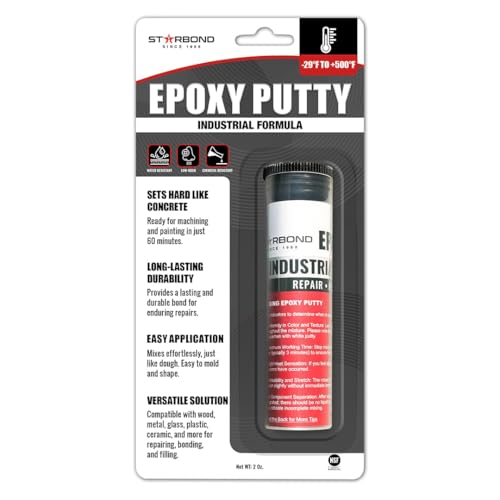
STARBOND’s white epoxy putty is engineered for environments where temperature swings break standard adhesives. With an operating range from –20°F to 392°F, it handles boiling water splashback and winter drafts equally well, making it a strong candidate for sink-to-countertop bonds near stovetops or in uninsulated exterior walls. The putty cures to a rock-hard finish that sands, drills, and paints cleanly.
The formula is BPA-free and low-odor, which matters during indoor application where ventilation is limited under the sink cabinet. It bonds effectively to metal, plastic, wood, and ceramic—covering all common sink materials including stainless steel and fireclay. Users report that the putty stays workable for about a minute before beginning to stiffen, giving you just enough time to shape it into gaps and crevices.
On the downside, the fast setup means you have to work deliberately—if you need extended adjustment time for a tricky sink alignment, this putty may set before you are satisfied. The white color blends better than Oatey’s grey, but it still appears slightly off-white after mixing. The two-ounce stick offers a bit more material volume for larger repairs.
Why it’s great
- Extreme temperature tolerance from -20°F to 392°F
- BPA-free, low-odor formula for indoor use
- White finish paints and sands well for cosmetically exposed repairs
Good to know
- Fast cure requires quick, precise application
- Some users report difficulty getting it to stick without firm kneading
3. SHIELDOM RTV Silicone Adhesive Sealant
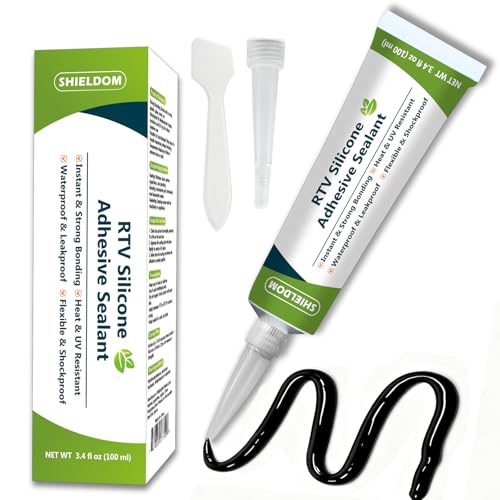
When the sink rim is already secure but the seam is leaking, SHIELDOM’s RTV silicone delivers a flexible, waterproof seal that moves with the joint. Unlike epoxy, this 100% silicone gel stays elastic after curing, so it absorbs the expansion and contraction of stainless steel or cast iron sinks without cracking. The black color suits dark fixtures but limits cosmetic use on white porcelain.
The sealant skins over in about 15 minutes, allowing you to tool the bead smooth before it sets, and achieves full cure within 24 hours. It bonds aggressively to glass, metal, tile, PVC, and stone, which covers every sink and countertop material a typical kitchen throws at it. The kit includes a caulk nozzle and smoothing tool for a clean professional bead.
The 3.4-fluid-ounce tube is small—enough for resealing one sink perimeter or a handful of drain flanges. For larger jobs like bathtub surrounds, you will need multiple tubes. It is also not a structural adhesive; if your sink wobbles independently of the countertop, use an epoxy putty first to lock the rim, then seal with silicone.
Why it’s great
- Remains flexible after cure, preventing future cracks from thermal movement
- Truly waterproof for sink seams and drain flange sealing
- Includes nozzle and smoothing tool for a neat application
Good to know
- Black color is limited to matching dark fixtures
- Not intended for structural bonding of loose sink rims
4. Ankita Porcelain Repair Kit White
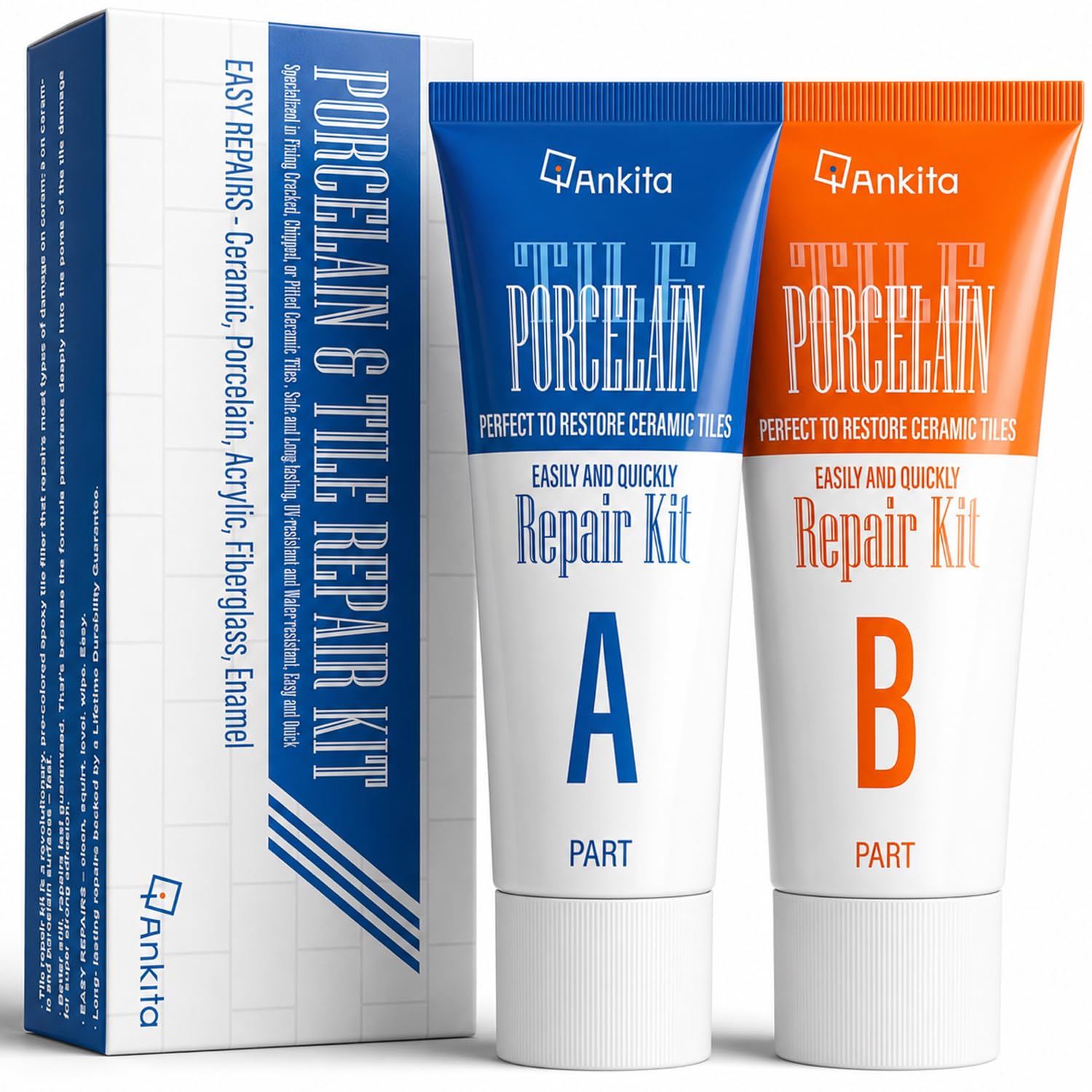
If your issue is a chipped or scratched white porcelain sink rather than a loose rim, this two-part paste from Ankita is purpose-built for cosmetic restoration. It cures to a high-gloss white finish that closely matches standard enamel, and the bond is waterproof and resistant to daily cleaning chemicals. The kit is also suitable for tubs, tiles, and fiberglass surfaces.
The application process involves mixing Part A and Part B, then applying the paste to the damaged area. Users report good color match initially, though some note that the finish can yellow slightly over months of exposure to direct sunlight or very hot water. The paste cures hard enough to resist scratching from typical dishware contact, but it is not intended for structural loads.
The main limitation is texture: smoothing the paste to a perfectly flat surface is difficult without specialty tools, and sanding the cured material may leave a matte patch that stands out against the surrounding gloss. For visible areas like the front edge of a sink basin, this requires patience with the finishing steps. The kit is best suited for small chips and thin scratches rather than large missing sections.
Why it’s great
- High-gloss white finish matches standard sink enamel well
- Waterproof and chemical-resistant for daily kitchen use
- Works on porcelain, ceramic, fiberglass, and acrylic
Good to know
- Color may shift toward cream over time with heat exposure
- Finishing to a perfectly smooth surface requires practice
5. Amazing GOOP 2-Pack Plumbing Adhesive

Amazing GOOP’s plumbing adhesive cures to a translucent rubber that remains flexible and completely waterproof, making it a solid choice for sealing slip joints, drain gaskets, and metal-to-rubber connections under the sink. The clear finish disappears against most surfaces, so it works well for repairs where the adhesive line is visible but you want it to blend in.
The formula bonds tenaciously to metal, plastic, and rubber, and once fully cured in about eight hours, it resists softening from constant water contact. Users commonly rely on it for outdoor equipment and shower repairs, confirming its long-term moisture performance. For a sink drain assembly where O-rings are worn or threaded connections weep, a bead of this adhesive provides a reliable secondary seal.
It is not a gap-filler in the way epoxy putty is—this adhesive works best when applied to mating surfaces that fit together closely. For a wide gap between the sink flange and the drain tailpiece, you would need a putty or silicone instead. The two-pack gives you a spare tube for future plumbing repairs, which is convenient for ongoing maintenance.
Why it’s great
- Dries to a flexible, waterproof rubber seal ideal for drain joints
- Clear finish is nearly invisible on most plumbing connections
- Excellent adhesion to metal, plastic, and rubber
Good to know
- Not suited for filling large structural gaps or loose sink rims
- Requires eight-hour full cure before water exposure
FAQ
Can I use regular silicone caulk to reattach a loose kitchen sink?
How long should I wait before running water after applying a sink adhesive?
Will epoxy putty damage my countertop if I need to remove the sink later?
Final Thoughts: The Verdict
For most users, the adhesive for kitchen sink winner is the Oatey 31274 because its steel-filled epoxy cures in five minutes and provides the structural strength needed to re-secure a loose rim or fill gaps under the sink. If you need extreme temperature tolerance for a sink near a stovetop, grab the STARBOND 2 oz. White. And for sealing a leaking seam or drain joint, nothing beats the SHIELDOM RTV Silicone.

Mo Maruf
I created WellFizz to bridge the gap between vague wellness advice and actionable solutions. My mission is simple: to decode the research and give you practical tools you can actually use.
Beyond the data, I am a passionate traveler. I believe that stepping away from the screen to explore new environments is essential for mental clarity and physical vitality.