Our readers keep the lights on and my smoothie glass nicely filled. As an Amazon Associate, I earn from qualifying purchases.
Blue jays are among the most striking and intelligent visitors to any backyard, but their feeding habits require a specific approach. These assertive, crested birds are naturally drawn to high-energy, high-protein foods, and they will dominate a feeder if the seed mix is right. The wrong blend, however, will leave you with a tray full of rejected filler and a flock that moves on to a neighbor’s yard.
I’m Mohammad Maruf — the founder and writer behind WellFizz. I analyze the nutritional composition, waste ratios, and palatability of wild bird feed to help backyard birders make informed choices that attract the species they love while minimizing mess and expense.
When you understand the specific lipid and protein requirements of these intelligent corvids, you can confidently choose the best bird seed for blue jays that will keep them returning morning after morning.
How To Choose The Best Bird Seed For Blue Jays
Blue jays have a strong preference for large, energy-dense foods. The most effective seed for them is one that delivers a high concentration of protein and fat with minimal filler that they will simply kick out of the feeder. You need to focus on ingredient composition, waste management, and feeder compatibility.
Prioritize Protein and Fat Content
Blue jays require a diet rich in protein (for muscle maintenance and feather growth) and fat (for energy and warmth). Shelled peanuts, sunflower hearts, and black oil sunflower seeds are the top performers. Avoid cheap mixes heavy on milo, cracked corn, and red millet, as jays will ignore these, leaving you with a feeder full of rejected grain.
Choose “No Mess” and “No Grow” Varieties
Many bird seeds come with hulls that birds discard, creating a mess of shells under your feeder. Sunflower hearts and shelled peanuts eliminate this waste entirely. “No grow” seeds are heat-treated to prevent germination, so you won’t find unwanted sunflower plants sprouting in your garden beds. This is a major consideration for anyone placing a feeder near a patio, deck, or manicured lawn.
Check for Squirrel Deterrence
Squirrels are relentless when high-value foods like peanuts and sunflower are involved. Some blends incorporate safflower seeds, which have a bitter taste that deters squirrels while remaining attractive to cardinals and jays. If squirrels are a persistent problem, a dedicated safflower-heavy mix or using a squirrel-proof feeder becomes essential.
Quick Comparison
On smaller screens, swipe sideways to see the full table.
| Model | Category | Best For | Key Spec | Amazon |
|---|---|---|---|---|
| Happy Wings Shelled Peanuts | Shelled Peanuts | High-protein, no-waste feeding | 5 lb, 100% edible | Amazon |
| Kaytee Cardinal Blend | Seed Mix | Attracting cardinals and jays | 7 lb, sunflower & safflower | Amazon |
| Happy Wings Sunflower Hearts | Sunflower Kernels | Clean feeding, no hull mess | 5 lb, high protein & fat | Amazon |
| Freebird Songbird Blend | Multi-Species Blend | Diverse backyard bird attraction | 5 lb, all-natural ingredients | Amazon |
| I LOVE WORMS Dried Mealworms | Protein Treat | High-protein supplement | 5 lb, 51% insect protein | Amazon |
In‑Depth Reviews
1. Happy Wings Shelled Peanuts
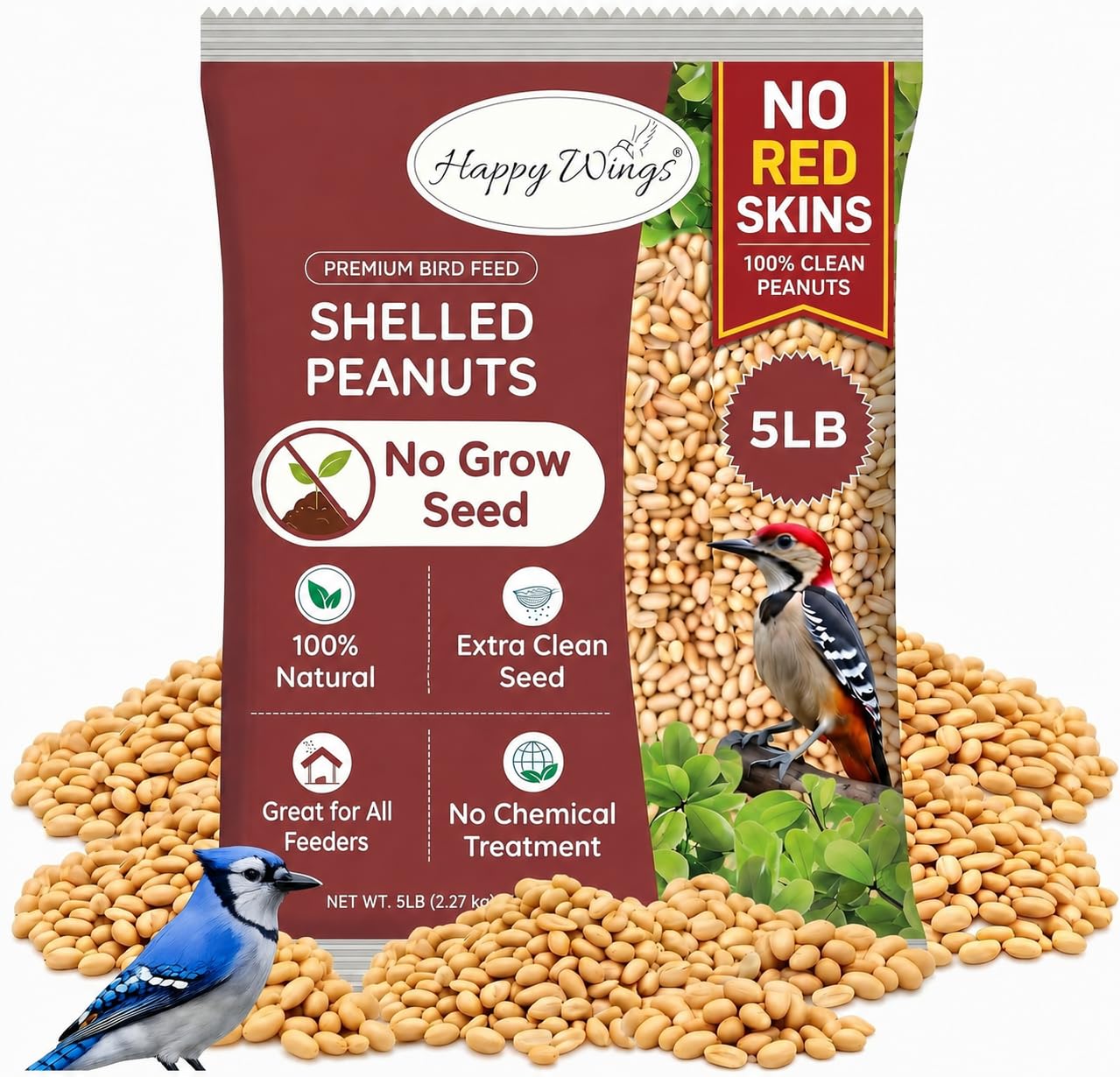
This bag of shelled peanuts is essentially the perfect single-source food for blue jays. The outer shell has been removed, meaning every single gram you buy is edible — there is no waste, no hulls to clean up, and no leftover mess under your feeder. These peanuts are heat-treated to prevent germination, so you will not have stray plants popping up in your yard. The 5-pound bag arrives vacuum-sealed, ensuring freshness upon opening.
Customer feedback consistently highlights the quality of the nuts themselves. Reviewers describe them as “clean, plump” and note that they lack the messy red skins found with competitors. The high oil and protein content is precisely what blue jays need, especially during colder months when energy demands spike. One user specifically mentioned “bluejays” as loving them, confirming their effectiveness for this target species.
The only minor adjustment is that the bag is not resealable, so you will want to transfer the peanuts to an airtight container to maintain freshness. Given the high consumption rate of an active blue jay flock, the 5-pound bag will likely be emptied quickly enough that this is a small inconvenience for the quality you receive.
Why it’s great
- 100% edible — zero shell waste to clean up
- Plump, high-quality peanuts with no red skins
- Heat-treated to prevent germination (no grow)
- Processed in a USDA-approved facility
Good to know
- Bag is not resealable; needs a separate container
- Peanuts may attract squirrels as well
2. Kaytee Cardinal Blend

Kaytee’s Cardinal Blend is a mixed seed option that combines two ingredients blue jays find irresistible: black oil sunflower seeds and safflower seeds. The inclusion of safflower is a strategic choice because its bitter taste is a natural deterrent for squirrels, giving your jays and cardinals a better chance to eat without competition. The 7-pound bag offers a solid volume for the price, making it a budget-friendly choice for those who want a reliable mix.
Real user reviews confirm that this blend attracts not only cardinals but also blue jays, woodpeckers, and house finches. One reviewer noted that their feeder had to be refilled every other day because the birds loved it so much, which is a strong testament to its palatability. However, the same reviewer pointed out that squirrels are also attracted, particularly to the sunflower component, so a squirrel-resistant feeder may still be necessary.
It is worth noting that this is not a “no mess” product. The safflower and sunflower still have hulls, which birds will crack and drop. If you place your feeder over a deck or patio, you will need to manage the shell debris. Additionally, some users reported that doves and sparrows also frequented the feeder, which may or may not be desirable depending on your birding goals.
Why it’s great
- Safflower content deters squirrels naturally
- 7-pound bag offers excellent volume
- Attracts cardinals, blue jays, and woodpeckers
- Allergen-free and additive-free formula
Good to know
- Hulls create mess under the feeder
- Still attracts squirrels despite safflower
- May also attract doves and sparrows
3. Happy Wings Sunflower Hearts & Chips
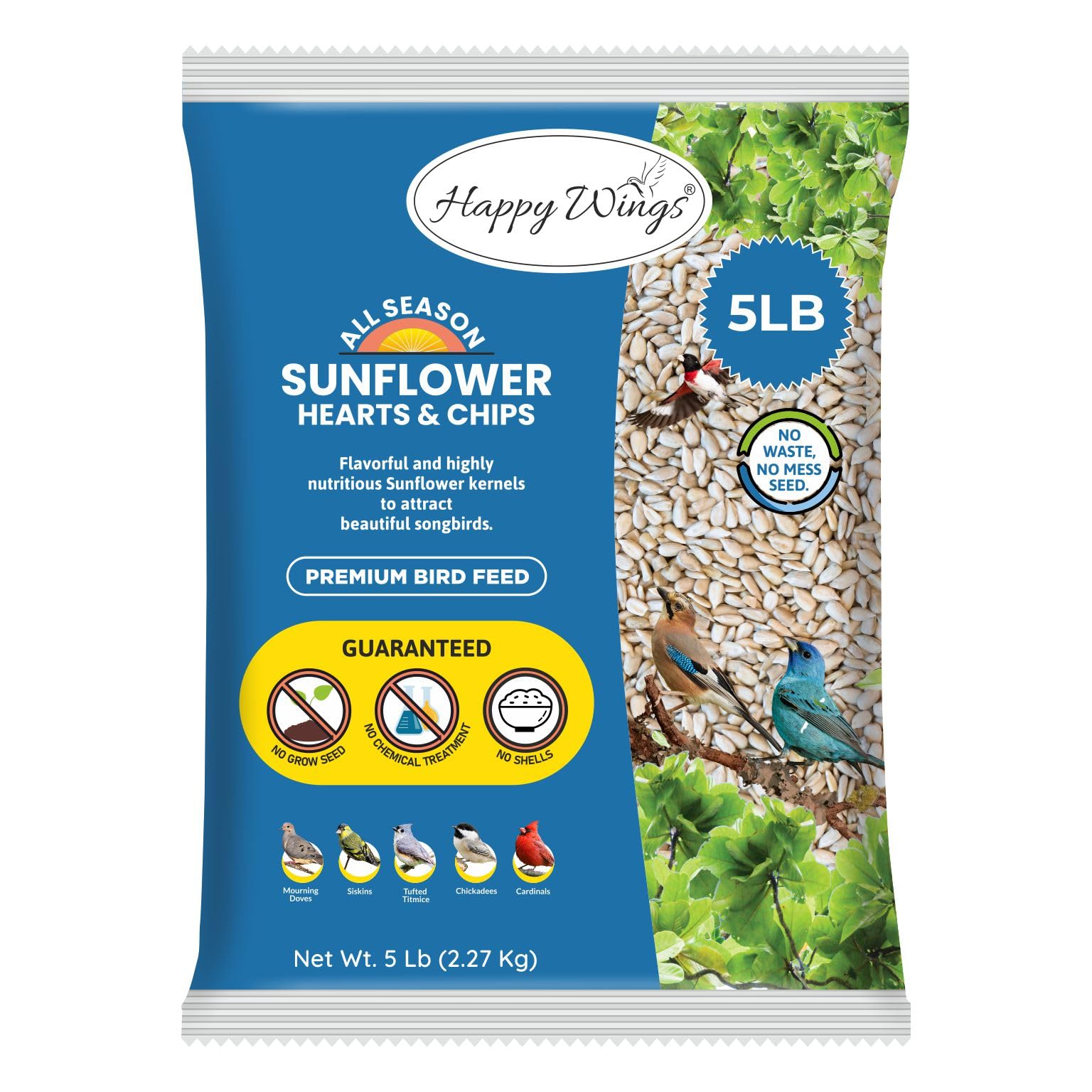
If the primary concern is keeping your feeding station clean, this bag of sunflower hearts and chips is the best solution. These are shelled sunflower kernels, meaning there are no husks for birds to discard. Every piece is edible, so your patio or lawn stays clean of hull debris. As a “no grow” product, these seeds will not germinate, keeping your landscaping free of unwanted sunflower plants.
Blue jays, cardinals, chickadees, and finches all flock to this high-protein, high-fat food source. The sunflower heart is one of the most energy-dense foods you can offer, and because there is no shell to crack, smaller birds can feed alongside jays without struggling. Customer reviews consistently note that “birds love it” and that the feeding area remains clean, which is a huge plus for anyone with a feeder over a deck or walkway.
A small number of reviews mentioned that some packages contained seeds with partial hulls still attached, which created minor mess. The product is sold in two separate bags inside the outer packaging, which is convenient for portion control but may require an additional container for long-term storage. Overall, this is the top choice for anyone who prioritizes cleanliness without sacrificing nutritional value.
Why it’s great
- Zero hull waste — ideal for patios and decks
- High protein and fat content for energy
- No grow seeds prevent unwanted plants
- Attracts a wide variety of songbirds
Good to know
- Occasional partial hulls may appear
- Bag is not resealable; transfer recommended
4. Freebird Songbird Blend
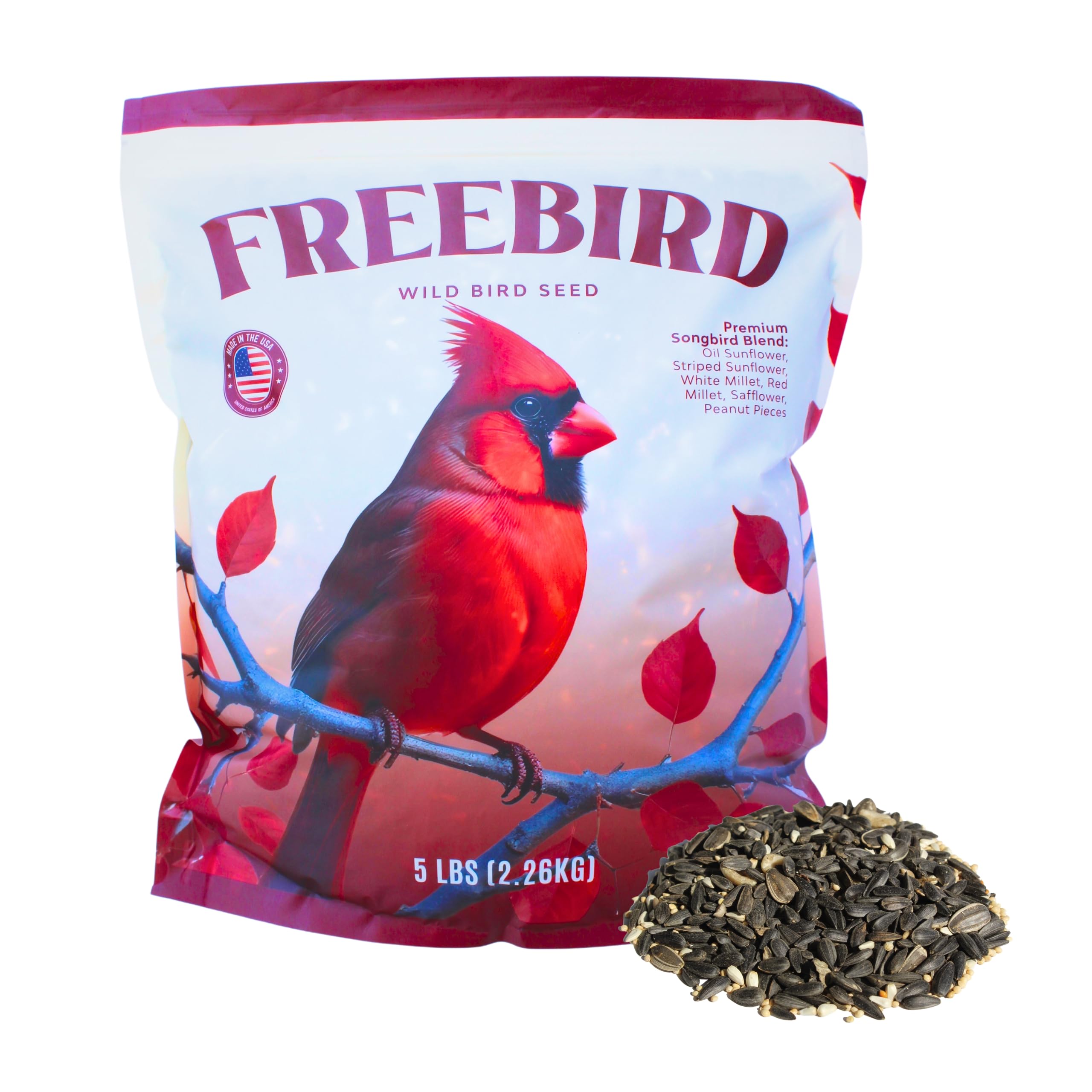
Freebird’s Songbird Blend is a thoughtfully crafted mix designed to bring a wide variety of species to your yard, including cardinals, blue jays, finches, nuthatches, and titmice. The blend combines black oil sunflower seeds, striped sunflower seeds, safflower, peanut pieces, and white and red millet. This diversity makes it a strong choice if you want to support a broader backyard ecosystem rather than targeting just one species.
The bag is made from heavy-duty material with a resealable zipper, which is a significant practical advantage for keeping the seed fresh between refills. The seeds are sourced from trusted US farms and are free from additives, artificial colors, and GMOs. One customer reported that their number of visiting cardinals tripled after switching to this blend, which suggests the sunflower and peanut ratio is well-balanced for attracting larger birds like jays.
Because this is a hulled mix, you will have some shell debris under your feeder. If you are using a platform feeder, expect to clean up empty husks. The mix also contains millet, which is more attractive to ground-feeding birds like sparrows and doves, so it may draw a larger crowd than you intend. Consider this if you want to avoid attracting the local pigeon or turkey population.
Why it’s great
- Resealable heavy-duty bag preserves freshness
- All-natural, non-GMO, additive-free ingredients
- High oil content seeds for maximum nutrition
- Sourced from trusted US farms
Good to know
- Hulled seeds create some mess
- Millet attracts ground-feeding birds and doves
5. I LOVE WORMS Dried Mealworms
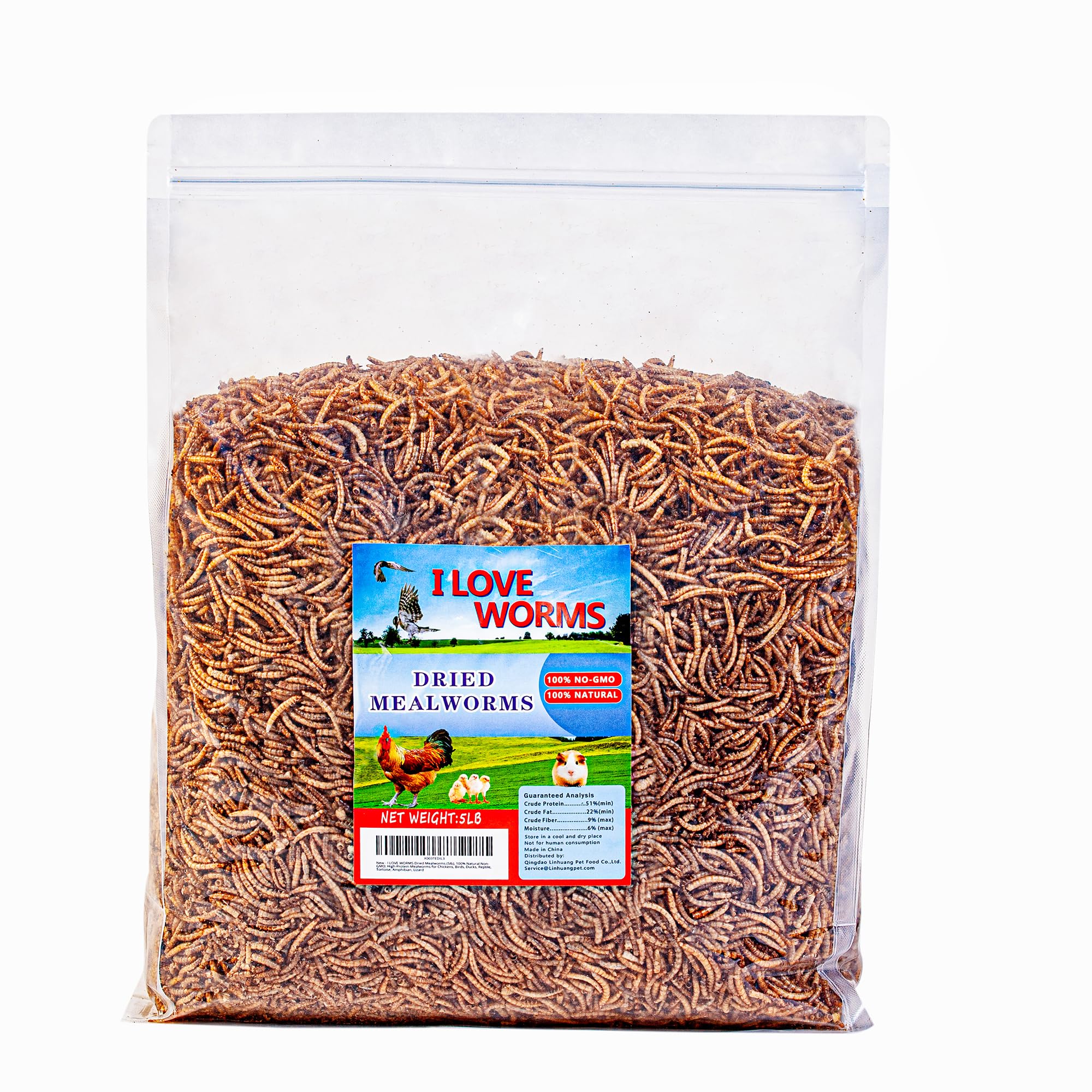
Dried mealworms are not a seed, but they are arguably one of the most effective high-protein treats you can offer blue jays. With over 51% insect protein, these mealworms provide a dense source of energy that is especially valuable during nesting season and cold winter months. This 5-pound bag is a budget-friendly way to stock up, as many competitors sell half the amount for a similar price.
The mealworms are dried using microwave technology, which preserves their nutritional content without the use of chemical preservatives or additives. They are non-GMO and certified by professional veterinarians for safety. Many birders use these as a supplementary treat, offering them a few times a week alongside a base seed to encourage blue jays and bluebirds to visit regularly.
Customer feedback is largely positive, with several birders noting that the mealworms have “no bad smell” and are “great for the babies.” However, some users mentioned that common birds like sparrows and starlings will eat them first, so you may need a specialized feeder or an observation strategy to ensure your target species (blue jays or bluebirds) get access before the flock empties the tray.
Why it’s great
- Over 51% insect protein for energy
- Excellent value compared to smaller bags
- Non-GMO, additive-free, microwave-dried
- Ideal supplement during nesting and winter
Good to know
- Sparrows and starlings may consume them first
- Best used as supplement, not sole food source
FAQ
Will blue jays eat from a tube feeder or only a platform feeder?
How can I keep squirrels away from the peanuts I put out for blue jays?
Is it better to feed whole peanuts or shelled peanuts to blue jays?
Can dried mealworms replace seed in a blue jay’s diet?
Final Thoughts: The Verdict
For most users, the best bird seed for blue jays winner is the Happy Wings Shelled Peanuts because it provides a high-protein, zero-waste food that jays find irresistible and keeps your feeding area clean. If you want a mixed blend that also deters squirrels, grab the Kaytee Cardinal Blend. And for an ultra-clean feeding experience without any hull mess, nothing beats the Happy Wings Sunflower Hearts.

Mo Maruf
I created WellFizz to bridge the gap between vague wellness advice and actionable solutions. My mission is simple: to decode the research and give you practical tools you can actually use.
Beyond the data, I am a passionate traveler. I believe that stepping away from the screen to explore new environments is essential for mental clarity and physical vitality.