Our readers keep the lights on and my smoothie glass nicely filled. As an Amazon Associate, I earn from qualifying purchases.
Ankle sprains are stubborn. One wrong step on uneven ground, a mistimed landing from a jump, and the lateral ligaments stretch past their limit. The real challenge starts the next morning, when swelling turns the simplest walk into a cautious shuffle. The right brace does more than compress; it prevents re-injury by restricting the inversion and eversion that caused the damage in the first place.
I’m Mohammad Maruf — the founder and writer behind WellFizz. My research focuses on biomechanical support systems, analyzing how specific brace designs (lace-up, wrap, figure-8, integrated stays) interact with the ankle’s natural range of motion during recovery and activity.
This guide reviews five braces that handle everything from mild rolling to post-surgery stabilization. After comparing materials, closure systems, and real customer feedback, this breakdown of the best ankle brace for sprain recovery gives you the data to choose without the guesswork.
How To Choose The Best Ankle Brace For Sprain
Sprains are graded I, II, or III based on ligament damage. A Grade I sprain (mild stretching) needs moderate compression and proprioceptive feedback. Grade II (partial tear) requires rigid stabilization to limit inversion. Grade III (complete tear) often demands a brace as a transition from a walking boot. Match the brace’s support level to your injury stage, not your sport.
Closure System: Lace-Up vs. Wrap vs. Figure-8
A full lace-up system, like the DonJoy Speed Pro, offers the most precise tension adjustment across the entire midfoot and ankle. Wrap braces with hook-and-loop straps (like the Neo-G) are faster to apply but provide more generalized compression. Figure-8 straps target the subtalar joint directly, which is excellent for limiting inversion without immobilizing the whole foot.
Removable Stays and Splints
Removable lateral or medial splints allow you to transition the brace from rigid protection (acute phase) to flexible support (return-to-play). The AGPTEK and DonJoy models include removable stays, giving one brace multiple recovery-stage applications. Fixed stays are more durable but offer no adjustability for swelling reduction.
Shoe Compatibility and Profile
A bulky brace that doesn’t fit inside your sneaker or cleat will end up in a drawer. Look for low-profile designs (Shock Doctor, AGPTEK) with open heels to accommodate normal shoe volume. Neoprene braces like the Neo-G add warmth and compression but take up more space, often requiring you to loosen laces significantly.
Quick Comparison
On smaller screens, swipe sideways to see the full table.
| Model | Category | Best For | Key Spec | Amazon |
|---|---|---|---|---|
| DonJoy Speed Pro | Premium Lace-Up | Post-fracture & severe sprain | 800D Ballistic nylon, removable stays | Amazon |
| AGPTEK Lace-Up | Mid-Range Lace-Up | All-day wear & high-impact sports | Removable dual splints, quick-lace system | Amazon |
| Shock Doctor Stabilizer | Mid-Range Wrap | Moderate sprains & low-profile fit | Speed-lace closure, flexible support stays | Amazon |
| Neo-G Figure 8 | Budget-Friendly Compression | Mild sprain & chronic instability | Neoprene warmth, figure-8 strap | Amazon |
| BraceAbility Youth | Pediatric Entry-Level | Kids’ sports & growing feet | X-small fit, figure-8 strap for active youth | Amazon |
In‑Depth Reviews
1. DonJoy Stabilizing Speed Pro Ankle Support Brace

The DonJoy Speed Pro uses 800-denier ballistic nylon, the same woven fabric you would find in high-end luggage, to resist abrasion from repetitive athletic movement or daily walking. The reinforced eyelet area prevents the lace zone from tearing under tension, a common failure point in budget braces. A full circumferential elastic strap at the top secures all the underlying strapping and adds tibia-fibula compression, which is critical for Grade II sprains where the syndesmosis is involved.
The medial and lateral stays are removable and articulated, meaning they bend with your ankle’s natural flexion rather than acting as rigid posts. This design enhances proprioception — your brain’s ability to sense joint position — without sacrificing stability. The speed-lace system uses two hook-and-loop tabs to gather the laces, so you can pull the brace tight and lock it in roughly ten seconds. That speed matters when you are swapping between a cam boot and a brace during late-stage recovery.
Some users report that the heel material can bunch up if the brace is not seated perfectly during application, and its relatively bulky profile may require loosening shoe laces more than other low-profile options. However, for anyone transitioning from a walking boot or returning from a Grade III sprain, the Speed Pro provides the most comprehensive stabilization in this lineup. It fits either foot and is universally sized for medium.
Why it’s great
- Articulated stays move with the ankle for better proprioception
- Rugged 800D nylon resists tearing through months of heavy use
- Speed-lace system allows ten-second application and removal
Good to know
- Heel material can bunch if not seated correctly
- Bulky profile may not fit slim sneakers without loosening laces
- Top laces on replacement units can be shorter than the original
2. AGPTEK Ankle Brace for Women Men, Adjustable Lace-Up with Removable Splints
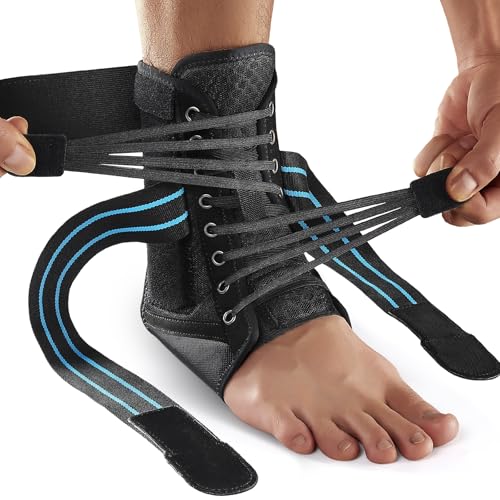
The AGPTEK brace uses a triple-support architecture: reinforced dual side stabilizers (removable splints), X-cross compression straps that cross over the front of the ankle, and a top wrapping strap for final lockdown. This combination delivers 360-degree support that can be dialed back as swelling subsides. The quick-lace system eliminates the dreaded tangled-lace frustration — elastic laces adapt to swelling changes without needing to retie the entire brace.
The honeycomb ventilation zones in the nylon Oxford fabric allow airflow, which is a significant advantage over solid neoprene braces during all-day wear. The open heel design prevents the rubbing and irritation that often occurs behind the Achilles tendon when the brace shifts during movement. At just 0.18 kilograms, it is one of the lightest options here, making it suitable for basketball, volleyball, soccer, and even post-surgery recovery.
Customers consistently report that this brace outperforms their doctor-provided brace in both comfort and support density. The medium size fits a Women’s 10 Wide, and the large handles a size 9 foot with a 13-inch circumference. The only downside is that the hook-and-loop straps may lose some grip after several months of daily washing, but given the price point, the durability-to-cost ratio is excellent.
Why it’s great
- Triple-support system covers sprains from mild to moderate-severe
- Ventilated nylon Oxford fabric prevents heat buildup during sports
- Removable splints let you adjust support as recovery progresses
Good to know
- Velcro straps may weaken after repeated machine washing cycles
- Some users report sizing runs slightly small for wide feet
- Requires stretchy or adjustable shoes for a full range of motion
3. Shock Doctor Ankle Stabilizer with Flexible Support Stays

The Shock Doctor Stabilizer is designed for athletes who need moderate inversion protection without the bulk of a full lace-up system. The speed-lace closure uses a single pull-tab to tighten the lacing system evenly across the dorsum of the foot, and the flexible support stays (made of a semi-rigid plastic) resist excessive rolling without restricting plantarflexion. The back lacing adjustment allows a customized fit for different instep heights.
What sets this brace apart is its low-profile silhouette. It fits comfortably inside basketball shoes, cleats, and even casual sneakers without requiring you to size up. The material is a blend of SBR, nylon, polyester, and latex that provides four-way stretch, so it conforms to the foot’s shape without creating pressure points. For those with narrow or oddly-shaped feet, the adjustable tension zones prevent the brace from shifting during lateral movements.
The brace provides moderate support — sufficient for Grade I sprains and chronic instability — but not enough for severe ligament tears or post-operative use. The bottom Velcro patch can stick to socks over time, causing fuzz accumulation. Sizing runs small, so if you are between sizes, sizing up is the safer choice. It is a solid entry-level stabilizer for anyone returning to sport after a mild sprain.
Why it’s great
- Low-profile design fits inside most shoes without extra volume
- Back lacing provides adjustable tension for different instep heights
- Flexible stays resist inversion without blocking natural motion
Good to know
- Not supportive enough for Grade II or III sprains
- Sizing runs small; consider sizing up if between sizes
- Bottom Velcro attracts pet hair and lint over time
4. Neo-G Ankle Brace with Figure of 8 Strap

The Neo-G brace uses a neoprene body to provide thermal compression, which increases blood flow to the injured ligaments and accelerates soft tissue healing. The figure-8 strap wraps around the heel and crosses over the instep, creating targeted tension that mimics the proprioceptive feedback of athletic tape. This design is particularly effective for peroneal tendon issues and mild lateral sprains where you need support without immobilization.
It is registered as a Class 1 Medical Device, and the specific neoprene blend (neoprene, elastane, polyester, polyamide) offers four-way stretch that contours closely to the ankle’s anatomy. The one-size-fits-all approach works for most adults, though those with extremely small or large ankles may struggle with the fit. The brace can be worn on either foot, and the open heel design allows for a moderate range of motion while still compressing the midfoot.
It is not designed for high-intensity cutting sports. Multiple reviewers noted that the thicker neoprene material made fitting into soccer cleats impossible without creating blisters. However, for daily walking, mild sprain recovery, or chronic arthritis pain, the Neo-G provides the best comfort-to-support ratio among the compression wraps. Hand washing cold and air drying is necessary to maintain the neoprene’s elasticity.
Why it’s great
- Neoprene warmth improves blood flow for faster healing of mild sprains
- Figure-8 strap mimics athletic tape proprioception
- Comfortable against the skin without digging into the malleoli
Good to know
- One-size fits most, but does not accommodate very small or large ankles well
- Thicker material makes shoe fit tighter, especially in cleats
- Not supportive enough for moderate to severe Grade II or III injuries
5. BraceAbility Lace Up Kids Ankle Brace – Pediatric Figure 8 Sprained Foot Support Wrap
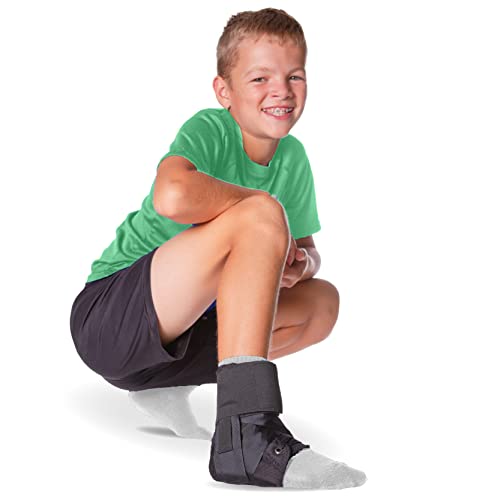
The BraceAbility pediatric brace addresses a specific gap in the market: most ankle supports are designed for adult anatomy, but a child’s foot has a different heel-to-ankle ratio. This brace uses a figure-8 strap configuration combined with a lace-up body to provide lateral stabilization without over-constricting the growing foot. The X-small size fits youth shoe sizes 5 to 7, which corresponds roughly to a Women’s 7, with an ankle circumference around 6.5 inches.
The body is made of a lightweight, stiff nylon that feels crinkly out of the box but becomes more pliable with wear. An elastic heel gusset allows moderate bending at the ankle joint, which is important for kids who need to maintain a full range of motion during sports like gymnastics, soccer, and basketball. The thick woven X-straps with strong Velcro provide targeted compression across the subtalar joint without requiring excessive tension that could cut off circulation.
It runs slightly large, so sizing down is recommended for children between sizes. The lace-up system requires adult help for the first few applications — about ten minutes for both ankles — because the laces are long and need to be tensioned evenly. After use, airing out the brace prevents odor build-up in the nylon material. It is a durable option for active youth who need protection from recurring sprains during growth spurts.
Why it’s great
- Specifically sized for children’s smaller ankle anatomy
- Figure-8 and lace-up combo provides robust lateral support
- Elastic heel gusset allows natural movement during sports
Good to know
- Runs slightly large; size down if the child is between sizes
- Long laces require adult assistance for proper tensioning
- Nylon material may hold odor if not aired out after each use
FAQ
Can I wear an ankle brace from this list for a Grade III sprain?
How do I know which size ankle brace to order?
Final Thoughts: The Verdict
For most users recovering from a moderate ankle sprain, the best ankle brace for sprain winner is the DonJoy Speed Pro because its articulated stays and high-denier ballistic nylon offer the most durable, adjustable stabilization for the critical return-to-activity phase. If you want a lightweight, ventilated option with removable splints for varying support levels, grab the AGPTEK Lace-Up. And for a child with a recurring sprain who needs a properly sized orthopedic brace, nothing beats the BraceAbility Youth.

Mo Maruf
I created WellFizz to bridge the gap between vague wellness advice and actionable solutions. My mission is simple: to decode the research and give you practical tools you can actually use.
Beyond the data, I am a passionate traveler. I believe that stepping away from the screen to explore new environments is essential for mental clarity and physical vitality.