Our readers keep the lights on and my smoothie glass nicely filled. As an Amazon Associate, I earn from qualifying purchases.
The single biggest frustration for anyone shopping for a projector is the dreaded “lights on” test — that moment when ambient light turns your cinematic dream into a washed-out, ghostly mess. A standard home projector (500–1,000 lumens) demands blackout curtains, but a proper bright room projector maintains contrast and punch even with windows open or overhead lamps blazing. This guide isolates the models that genuinely hold their own against glare, separating the lumen-boasting marketing claims from units that deliver usable daytime images.
I’m Mohammad Maruf — the founder and writer behind WellFizz. I’ve spent years analyzing home theater hardware, cross-referencing manufacturer brightness claims against real-world ambient-light performance, contrast ratios, and laser-versus-lamp tradeoffs to build a database of projectors that actually earn their lumen rating.
After evaluating 11 contenders from to , I’ve narrowed the field to the units that handle ambient light without compromising color or sharpness. Below is the definitive list of the best bright room projector options you can buy right now.
How To Choose The Best Bright Room Projector
Bright room projectors demand a specific combination of high lumen output, high native contrast, and a light source that doesn’t degrade over time. You cannot simply grab the cheapest high-lumen model and expect flagship performance. Below are the three specs that separate a genuinely daylight-capable unit from one that will disappoint as soon as the sun comes up.
Lumen Honesty: ANSI vs. ISO vs. “LED Lumens”
The most common trap in projector shopping is the “LED lumens” marketing figure, which can inflate the real brightness by 2-3x. Always look for ANSI lumens (for lamp projectors) or ISO lumens (for laser projectors) — these are standardized measurements. A projector rated at 2,000 LED lumens may only deliver 600-800 ANSI lumens, making it useless in a bright room. For this guide, every product listed uses either ANSI or ISO lumens so you can compare apples to apples.
Light Source: Laser vs. Lamp vs. LED
Lamp projectors (UHP bulbs) can deliver excellent brightness (4,000+ lumens) but lose output over time — typically dropping 30% brightness after 2,000 hours. Laser projectors maintain consistent brightness for 20,000+ hours and turn on instantly without warm-up. LED projectors are energy-efficient but rarely exceed 1,500 ANSI lumens, making them unsuitable for bright rooms. If you plan to use your projector daily in a living room, a laser light source justifies the higher upfront cost.
Native Contrast at High Brightness
High brightness alone creates a flat, washed-out image if contrast ratio is low. A projector with 3,000 lumens and a 1,000:1 contrast ratio will look worse than a 2,000-lumen unit with a 10,000:1 native ratio. Look for native contrast ratios above 5,000:1 (DLP) or dynamic contrast systems that adjust the light source frame-by-frame (laser projectors with iris control). This ensures black levels remain deep even when the projector is outputting maximum light to fight ambient glare.
Quick Comparison
On smaller screens, swipe sideways to see the full table.
| Model | Category | Best For | Key Spec | Amazon |
|---|---|---|---|---|
| XGIMI HORIZON 20 | Triple Laser | All-in-one 4K living room | 3200 ISO Lumen, 100,000:1 contrast | Amazon |
| JMGO N1S Ultra | Triple Laser | Daylight 4K on a gimbal | 2800 ISO Lumen, 1600:1 FOFO | Amazon |
| Nebula X1 by Anker | Triple Laser | Highest brightness compact | 3500 ANSI Lumen, 56,000:1 dynamic | Amazon |
| Valerion VisionMaster Pro2 | Triple Laser | Pro-level gaming & cinema | 3000 ISO Lumen, 15,000:1 native | Amazon |
| BenQ TK710 | Laser | Lag-free 4K gaming | 3200 ANSI Lumen, 600,000:1 dynamic | Amazon |
| Epson Pro EX11000 | 3LCD Laser | Brightest lumen output | 4600 Lumen, 100,000:1 dynamic | Amazon |
| JMGO N1 Ultra | Triple Laser | Premium portable 4K | 1900 ISO Lumen, 1600:1 contrast | Amazon |
| BenQ TH671ST | DLP Lamp | Short-throw gaming | 3000 Lumen, 10,000:1 native | Amazon |
| ViewSonic PA503HD | DLP Lamp | Bright budget presentations | 4000 Lumen, 22,000:1 dynamic | Amazon |
| HAPPRUN KC7 PRO | LED LCD | Entry-level smart streaming | 1000 ANSI Lumen, 20,000:1 contrast | Amazon |
| XGIMI AURA 2 | UST Laser | Ultra-short throw cinema | 2300 Lumen, 1,000,000:1 dynamic | Amazon |
In‑Depth Reviews
1. XGIMI HORIZON 20 4K RGB Triple Laser Projector
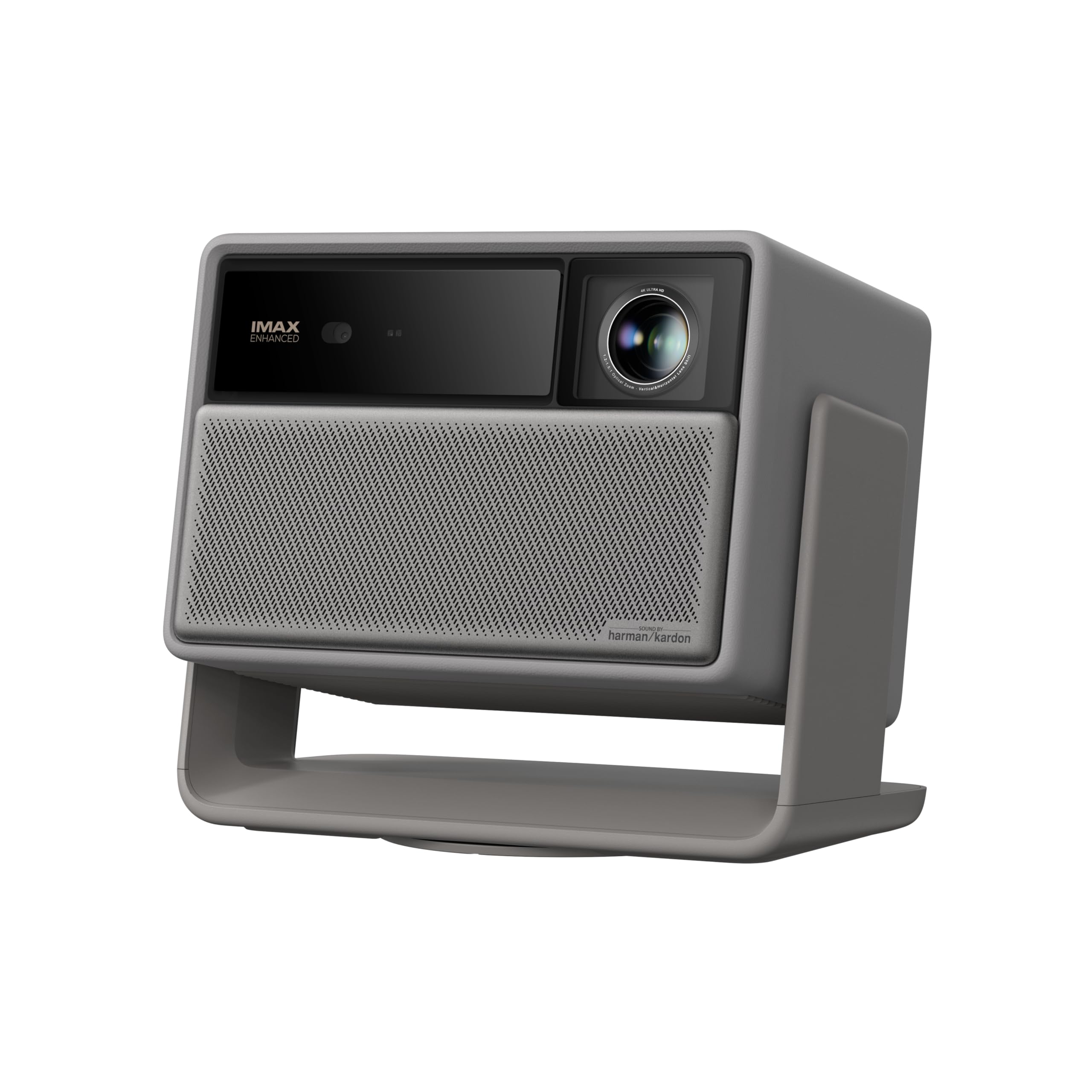
The XGIMI HORIZON 20 hits the sweet spot where brightness, color accuracy, and ease-of-use converge. Its RGB triple laser engine pushes 3200 ISO lumens — enough to hold a vibrant, detailed image with overhead lights on — while the 100,000:1 dynamic contrast ratio prevents that washed-out look that plagues lesser high-lumen projectors. The mechanical lens shift and optical zoom allow flexible placement without the pixel degradation that digital keystone correction introduces.
IMAX Enhanced, Dolby Vision, and HDR10+ certification mean the HORIZON 20 automatically optimizes tone mapping for whatever source you throw at it. Gamers will appreciate the 240Hz refresh rate at 1080p with an input lag of just 1ms in game mode, making fast-paced shooters playable on a 200-inch surface. The built-in Harman Kardon speakers deliver enough clarity for casual viewing, though a dedicated sound system still elevates the experience.
Auto keystone and auto focus work reliably in most setups, and the integrated Google TV interface eliminates the need for a separate streaming stick. The all-in-one design — stand, smart platform, and high-quality optics — makes this the most complete bright room projector for a living room that serves double duty as a theater.
Why it’s great
- True 4K with Dolby Vision and IMAX Enhanced support.
- Mechanical lens shift and optical zoom preserve pixel clarity.
- Ultra-low 1ms input lag at 240Hz for competitive gaming.
Good to know
- Built-in speakers are clear but lack deep bass for cinematic audio.
- Auto keystone can occasionally need manual fine-tuning on uneven surfaces.
2. JMGO N1S Ultra 4K Triple Laser Projector
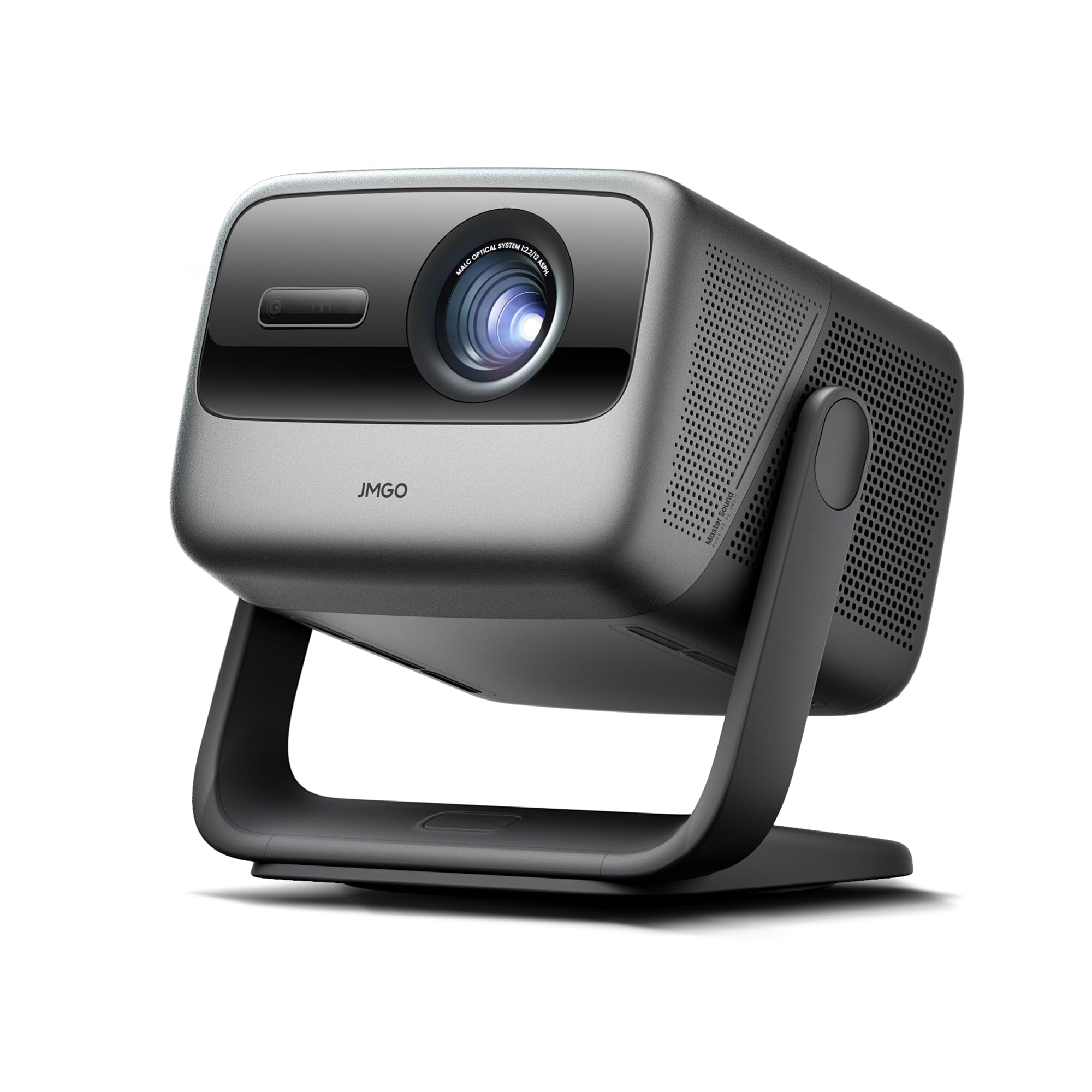
JMGO’s N1S Ultra takes the formula of the N1 Ultra and cranks brightness to 2800 ISO lumens, making it a genuine daylight contender. The 360-degree gimbal design (pan and tilt with smooth dampening) allows instant repositioning onto any wall or ceiling surface, eliminating the need for a dedicated mount. The 3D TOF sensor and CMOS camera enable real-time autofocus and keystone correction, so the image snaps into alignment within seconds of moving the projector.
The RGB triple laser delivers a 1600:1 FOFO contrast ratio with a ΔE<1 color accuracy, producing blacks that rival much darker projectors. At this brightness level, the auto brightness and wall color adaptation features are not gimmicks — they meaningfully improve image quality when projecting onto a textured beige wall versus a smooth white screen. The 20W dual speakers with Dolby Digital Plus provide surprisingly robust sound with bass extension down to 45Hz.
Google TV built-in gives access to the full app ecosystem, and Chromecast makes phone mirroring effortless. The carrying case included in the package makes this the most portable high-brightness solution for moving between living room and backyard setups without sacrificing image quality.
Why it’s great
- 360-degree gimbal enables ceiling projection without a mount.
- Excellent wall color adaptation for projection onto non-ideal surfaces.
- Portable design with built-in carrying case and responsive auto focus.
Good to know
- UI can feel sluggish compared to dedicated streaming hardware.
- No optical zoom — relies on digital zoom which crops the image.
3. Nebula X1 4K Projector by Anker

The Nebula X1 is Anker’s aggressive entry into the high-brightness laser projector space, and it arrives with a staggering 3500 ANSI lumens — the highest measured brightness in this roundup. A 6-blade iris delivers a native contrast ratio of 5,000:1, with NebulaMaster dynamic enhancement pushing that to 56,000:1. The custom 14-element all-glass lens maintains edge-to-edge sharpness even when projecting onto a 300-inch surface, a size that exposes lens flaws mercilessly.
Dolby Vision certification is rare in projectors at any price, and the X1 executes it with ISF-calibrated color accuracy that preserves the director’s intent. The auto-alignment system (auto focus, keystone, screen fitting, and obstacle avoidance) works in one click, and the Spatial Recall feature saves your settings for specific rooms — a genuine convenience for those who move the projector between indoor and outdoor locations. The gimbal base allows smooth repositioning, though it lacks the 360-degree freedom of the JMGO units.
TÜV Rheinland certification covers brightness, color accuracy, contrast, and blue light safety, which matters for long viewing sessions. The first-unit quality control issues reported by early adopters (broken seals, slight pink tint) require buyers to verify their unit is factory-fresh upon arrival, but a properly functioning X1 delivers image quality that rivals projectors costing significantly more.
Why it’s great
- Highest brightness in this roundup at 3500 ANSI lumens.
- Dolby Vision and ISF-calibrated color accuracy.
- Custom 14-element glass lens for edge-to-edge 4K clarity on large screens.
Good to know
- Input limited to 60Hz, not ideal for high-frame-rate gaming.
- Initial quality control inconsistencies reported — verify upon arrival.
4. Valerion VisionMaster Pro2 Triple Laser Projector

Valerion’s VisionMaster Pro2 is a reference-grade projector built for enthusiasts who refuse to compromise on black levels. The 15,000:1 native contrast ratio with Enhanced Black Level (EBL) technology delivers shadow detail that rivals OLED in dim environments, while the 3000 ISO lumens keep the image punchy when ambient light creeps in. The OpticFlex Lens System with a 0.9-1.5x throw ratio provides optical zoom flexibility without digital artifacts, supporting screen sizes up to 300 inches.
The AI-driven MT9618 chipset with 4GB RAM and 128GB ROM ensures lag-free navigation through Google TV, and the 4ms input lag at 240Hz refresh rate makes this one of the most responsive projectors available for competitive gaming. IMAX Enhanced and HDR10+ with Dynamic Tone Mapping optimize contrast frame-by-frame, eliminating the common issue of clipped highlights in bright HDR scenes. The ISF-certified calibration delivers Rec.2020 color coverage exceeding 110% out of the box.
Build quality is exceptional — the heavy chassis and premium foam carrying case suggest a device meant to travel without damage. The auto-adjustment suite (focus, keystone, obstacle avoidance, screen alignment) works reliably, and the voice control compatibility with Alexa, Google Home, and Apple HomeKit integrates seamlessly into a smart home ecosystem.
Why it’s great
- 15,000:1 native contrast with EBL delivers deep blacks at high brightness.
- Low 4ms input lag with 240Hz refresh for serious gaming.
- Optical zoom range (0.9-1.5x) maintains resolution flexibility.
Good to know
- Some users report minor pulsating artifacts in panning scenes.
- EBL effect is subtle and may not meet expectations for those seeking full OLED blackout.
5. BenQ TK710 4K Laser Projector

BenQ’s TK710 is a purpose-built gaming projector that doesn’t sacrifice everyday brightness. The 3200 ANSI lumens from the laser light source ensure over 20,000 hours of consistent output, and the 600,000:1 dynamic contrast ratio (via Dynamic function that adjusts the light source in real-time) prevents the washed-out look during daytime gaming sessions. The vertical lens shift and 3D keystone correction give installation flexibility that fixed-lens gaming projectors lack.
The standout spec is the 4ms response time at 1080p/240Hz, which puts this on par with high-end gaming monitors for latency-sensitive genres like fighting games and first-person shooters. At 4K/60Hz input lag sits at 16ms, still excellent for console gaming on PS5 and Xbox Series X. The 1.3x optical zoom and shorter throw distance than many competitors mean you can get a 100-inch image from a closer mounting position, useful for smaller rooms.
HDR10 and HLG support ensures compatibility with modern streaming content, and the built-in 5W speaker is usable for desktop gaming but inadequate for a dedicated theater room. The laser light source eliminates bulb replacement costs, and the grey/white chassis blends into most living room decors without screaming “projector.”
Why it’s great
- 4ms response time at 1080p/240Hz for competitive gaming.
- 3200 ANSI lumens from laser source with 20,000-hour lifespan.
- Installation flexibility with vertical lens shift and 3D keystone.
Good to know
- Built-in speaker is basic — external audio is necessary for immersion.
- No built-in smart platform; requires external streaming device.
6. Epson Pro EX11000 3LCD Laser Projector
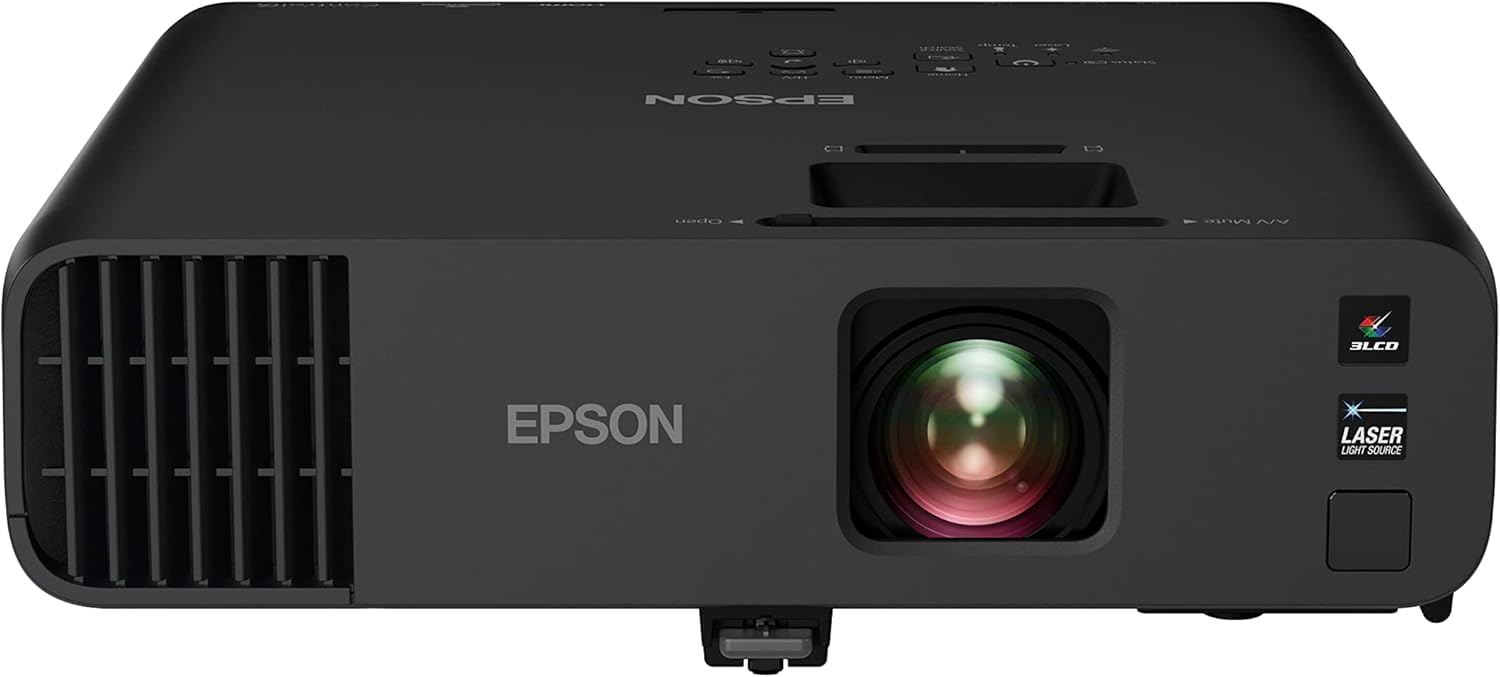
The Epson Pro EX11000 is the brightest projector in this roundup by a wide margin at 4600 lumens of both color and white brightness, a figure that makes it usable even with windows fully exposed to direct sunlight. The 3-chip 3LCD technology ensures 100% of the RGB color signal is delivered for every frame — meaning there’s zero “rainbowing” (sequential color artifact) that plagues single-chip DLP projectors at high brightness. This makes it ideal for sports viewing where fast motion can expose DLP artifacts.
The laser light source is rated for 20,000 hours of virtually maintenance-free operation, eliminating lamp replacement costs. The 100,000:1 dynamic contrast ratio is achieved through the laser’s ability to dim in dark scenes, though native black levels are not as deep as the best DLP units due to the 3LCD light engine. The Pro EX11000 includes screen mirroring via Miracast, two HDMI ports, and a USB-A port that powers streaming sticks, simplifying cable management.
At over 10 pounds, this is the heaviest unit here — it is not designed for portability between rooms. The built-in 16W speaker is adequate for presentations but will disappoint for movie watching without external speakers. For users whose primary need is defeating extreme ambient light in a fixed installation, nothing in this list comes close to the EX11000’s raw lumen output.
Why it’s great
- Highest brightness at 4600 lumens, usable in sunlit rooms.
- Zero rainbow effect thanks to 3-chip 3LCD engine.
- Laser light source with 20,000-hour maintenance-free operation.
Good to know
- Heavy and large — not suitable for portable use.
- Black levels are not as deep as DLP competitors with high native contrast.
7. JMGO N1 Ultra 4K Triple Laser Projector

The JMGO N1 Ultra establishes the gimbal design language that later models refined, and remains a compelling choice for buyers who prioritize image quality over peak brightness. The 1900 ISO lumens from the MALC triple-color RGB laser optics deliver a more modest brightness than the N1S Ultra, but the 110% BT.2020 color gamut coverage produces colors with a vibrancy that lower-spec projectors cannot match. The 1600:1 contrast ratio at this light output yields an image with surprising depth for the lumen class.
The integrated gimbal allows 360-degree horizontal and 135-degree vertical tilt, enabling ceiling projection without any mount — a genuine space-saving feature for apartments. The Dynaudio co-created 10W x 2 speakers deliver clean, balanced sound with 45Hz bass extension that outclasses most built-in speaker systems. Blu-ray 3D support is a niche but welcome inclusion for those with 3D libraries, and MEMC ensures smooth motion interpolation for sports content.
Android TV 11.0 provides access to over 5,000 apps, though Netflix is notably absent from the native interface and requires sideloading. The auto brightness adaptation works effectively, adjusting lumen output to match room conditions without user intervention. The EPP carrying bag makes this a viable option for those who want premium color accuracy without committing to the highest brightness tier.
Why it’s great
- 110% BT.2020 color gamut for exceptional color vibrancy.
- Gimbal design enables ceiling projection without hardware.
- Dynaudio speakers offer best-in-class built-in audio.
Good to know
- 1900 ISO lumens may not be sufficient for very bright rooms.
- Native app support lacks Netflix without sideloading.
8. BenQ TH671ST 1080p Short Throw Gaming Projector

BenQ’s TH671ST is a veteran in the short-throw gaming space, and its longevity in the market is a testament to its reliable formula. The 3000 lumens of brightness and 10,000:1 native contrast ratio deliver a sharp, punchy 1080p image that has aged well. The short-throw lens projects a 100-inch image from just five feet away, solving the space constraints that make standard throw projectors impractical in small rooms or golf simulator setups.
The ultra-fast input lag (12.9ms at 1080p/60Hz, even lower at higher refresh rates) makes it one of the most responsive projectors for console gaming, and the 92% Rec.709 color accuracy ensures game environments look as intended. The 1.1x zoom and auto vertical keystone provide basic installation flexibility, though the manual focus and lack of horizontal keystone are noticeable limitations. The built-in 10W speaker is adequate for casual gaming but thin for movie dialogue.
The lamp-based light source (rated for approximately 4,000 hours in normal mode, up to 10,000 hours in Eco mode) will require a replacement after a few years of heavy use, but the 3-year limited parts and labor warranty provides peace of mind. For buyers who need a short-throw solution for gaming or simulators and don’t require 4K resolution, the TH671ST remains a proven, reliable choice.
Why it’s great
- 100-inch image from just five feet away — ideal for small spaces.
- Ultra-low input lag for responsive console gaming.
- 3-year warranty provides long-term coverage.
Good to know
- Lamp requires replacement after 4,000-10,000 hours.
- Limited to 1080p resolution — no 4K upscaling.
9. ViewSonic PA503HD 4000 Lumens Projector
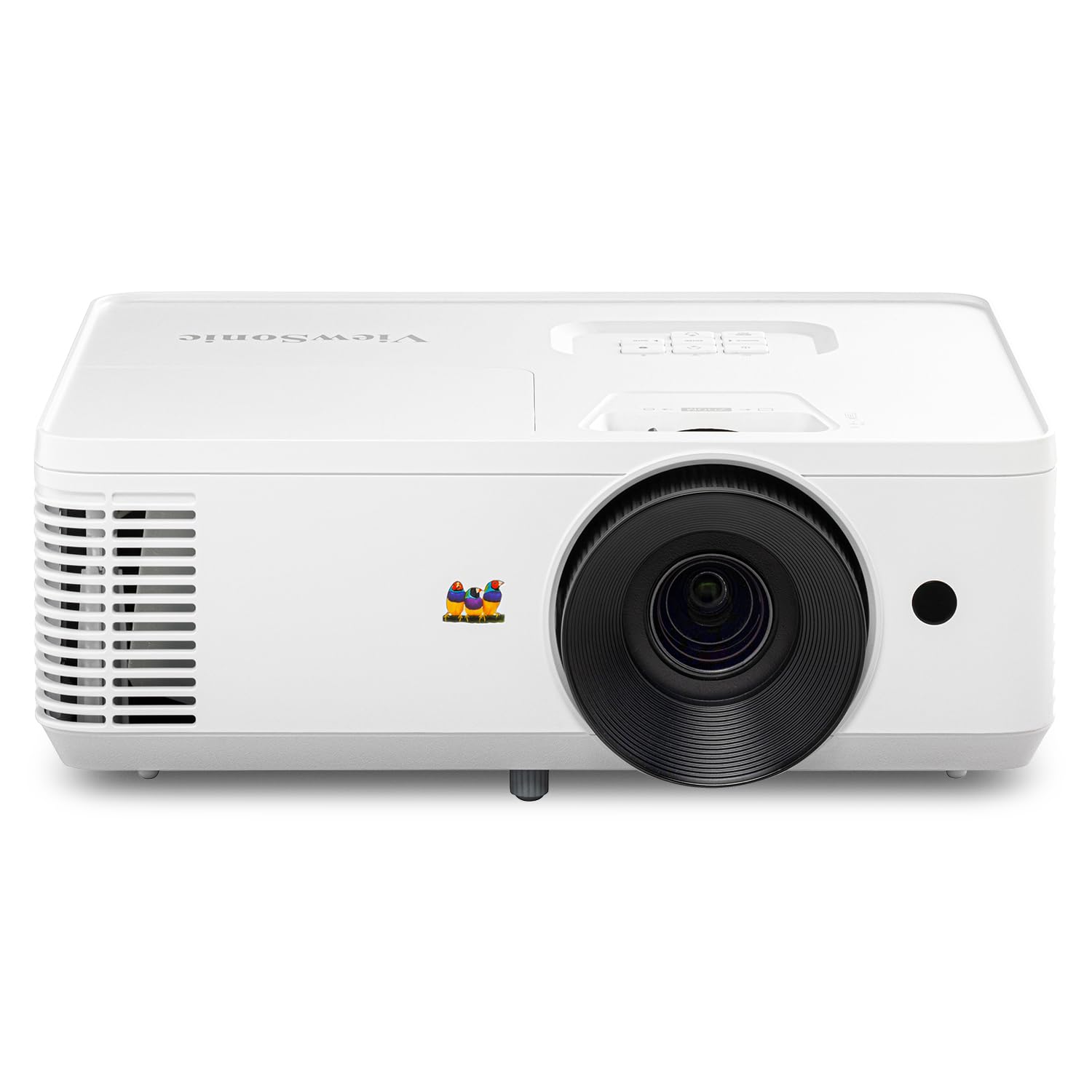
The ViewSonic PA503HD delivers an impressive 4000 ANSI lumens at a price point that undercuts most competitors by a wide margin, making it the go-to choice for budget-conscious buyers who need serious brightness for presentations or casual home use. The DLP chip with a 22,000:1 dynamic contrast ratio produces images with solid depth, and the 0.65-inch DMD panel ensures decent native contrast without the rainbow effect being as pronounced as in cheaper DLP units.
The 1.1x optical zoom and auto vertical keystone make installation straightforward, and the dual HDMI inputs allow simultaneous connection to a laptop and streaming device. The 16ms input lag in gaming mode is serviceable for casual console play, though competitive gamers will want faster options. The built-in 10W speaker is loud enough for a classroom or conference room but lacks the low-end response needed for movie immersion.
The lamp life is rated at 5,000 hours in normal mode and 15,000 hours in Eco mode, with replacement bulbs costing around — making total cost of ownership very low. The screw-type leveling feet are functional but feel less premium than competitors, and the plastic chassis is lightweight but not luxurious. For buyers whose primary requirement is high brightness on a tight budget, the PA503HD offers the best lumens-per-dollar ratio in this list.
Why it’s great
- 4000 lumens at an entry-level price point.
- Dual HDMI inputs for multi-device connectivity.
- Low replacement lamp cost keeps long-term ownership affordable.
Good to know
- Screw-type leveling feet are finicky and feel less durable.
- No built-in smart platform — requires external streaming device.
10. HAPPRUN 2500 ANSI Lumens Projector
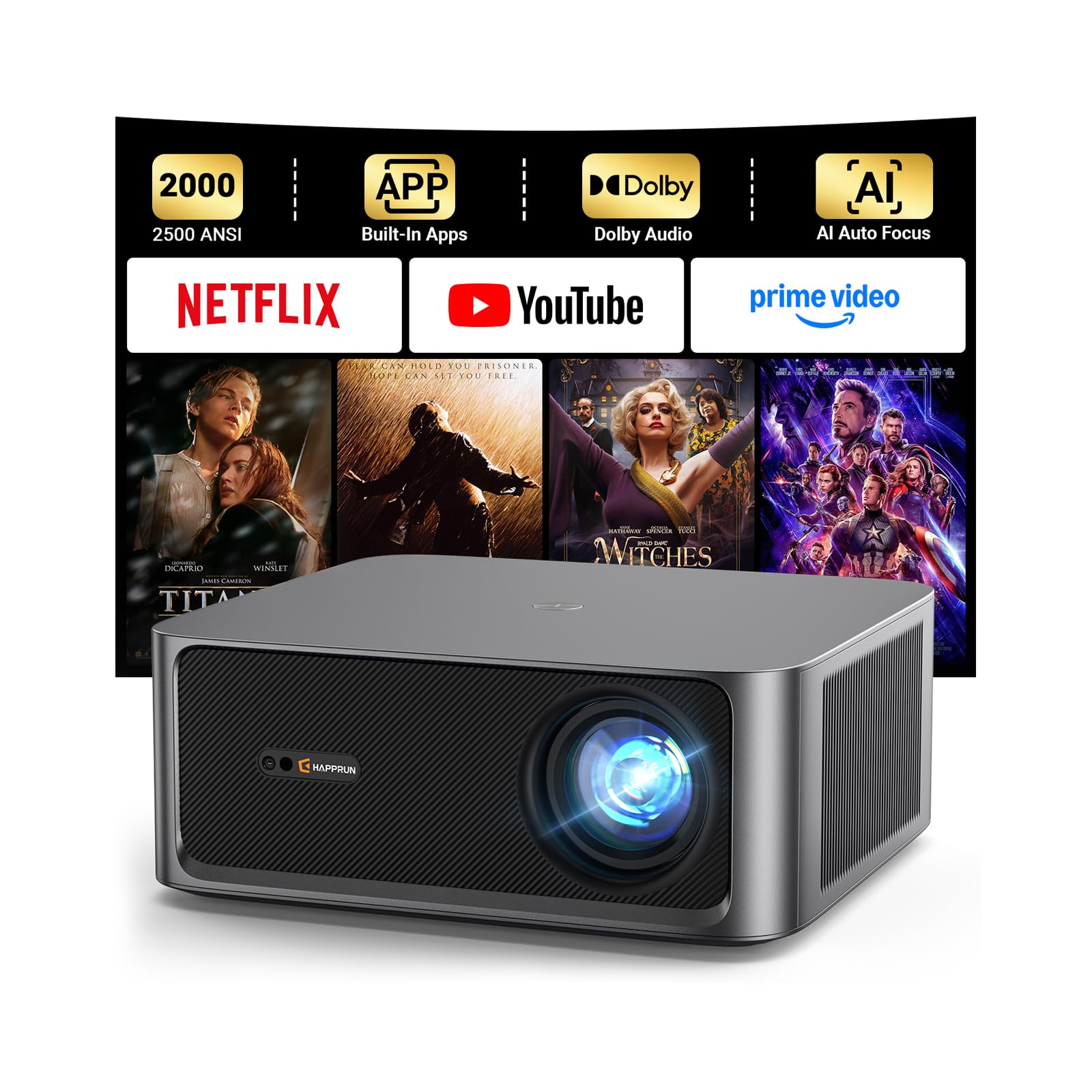
The HAPPRUN KC7 PRO positions itself as a value-centric all-in-one smart projector with 1000 ANSI lumens of real-world brightness (the 2500 referenced in the name uses the less standard “LED lumens” metric). In practical terms, this means the projector is usable with low ambient light — think lamps on opposite sides of the room or dimmed overheads — but will struggle in direct sunlight or a fully lit living room. The built-in streaming system provides access to Netflix, Prime Video, YouTube, and Hulu without any external device, a genuine convenience for those who want a single-cable setup.
The smart AI system handles auto focus and auto keystone automatically, and the 4K decoding resolution (displaying 1920×1080 pixels natively) produces sharp enough images for casual movie watching. The 20,000:1 contrast ratio and HDR10+ support help the image hold together better than the entry-level price suggests, and the dual 10W speakers with Dolby Audio deliver surprisingly capable sound. The compact form factor and lightweight chassis make it simple to move between rooms.
Customer reviews consistently praise the brightness and ease of use, though the lack of adjustable legs can make level placement on uneven surfaces frustrating. Gaming performance is noted as weak, with enough input lag to be noticeable in fast-paced titles. For a bedroom or apartment where total darkness is achievable and simplicity is paramount, this HAPPRUN projector delivers excellent value, but it is not a true bright room solution.
Why it’s great
- Built-in streaming apps eliminate need for external devices.
- Auto focus and auto keystone make setup effortless.
- Excellent value for casual, low-ambient-light viewing.
Good to know
- 1000 ANSI lumens is insufficient for bright rooms.
- No adjustable feet for leveling on uneven surfaces.
11. XGIMI AURA Series UST Laser Projector

The XGIMI AURA Series (AURA 2) is built for the ultra-short throw installation where the projector sits inches from the wall. At 2300 lumens with a 1,000,000:1 dynamic contrast ratio, it produces a large image with minimal shadow interruption — ideal for furniture placement where a standard throw projector would be blocked. The 0.177:1 throw ratio means a 120-inch image is possible with the projector just a few inches from the wall surface, making it the most space-efficient option in this list.
Dolby Vision and IMAX Enhanced certification ensure the AURA 2 handles HDR content with appropriate tone mapping, and the built-in Harman Kardon speakers deliver high-fidelity audio that fills the room. The auto protective shutter closes when the projector detects movement in front of the lens, preventing eye damage from accidental direct exposure to the bright laser. The wall color adaptation and auto keystone work well for most surfaces, though some users report issues with corner keystone accuracy on uneven walls.
Wi-Fi 6 and Android TV 11 complete the package, offering fast streaming and broad app availability. The sleek, low-profile design with a fabric-covered chassis blends into modern living rooms far better than a ceiling-mounted projector. The tradeoff is placement sensitivity — the AURA 2 requires a perfectly flat wall and cannot be moved between rooms as freely as a standard throw projector. For a dedicated home theater or living room where furniture layout prohibits a ceiling mount, this is the premium UST option.
Why it’s great
- Ultra-short throw fits inches from the wall for a 120-inch image.
- Dolby Vision and IMAX Enhanced certification for high-quality HDR.
- Auto protective shutter prevents accidental eye exposure.
Good to know
- Requires an absolutely flat wall for optimal corner keystone.
- Not portable; designed for permanent installation only.
FAQ
Can a projector be watchable in a fully lit room?
What is the difference between a lamp, laser, and LED projector for brightness?
Does higher brightness always mean a better image?
How important is an ALR screen for a bright room projector?
Final Thoughts: The Verdict
For most users, the best bright room projector winner is the XGIMI HORIZON 20 because it combines 3200 ISO lumens with Dolby Vision certification, mechanical lens shift, and a 1ms gaming mode in a package that requires no external streaming device. If you prioritize portability and gimbal versatility, grab the JMGO N1S Ultra. And for the absolute highest brightness in a permanent installation, nothing beats the Epson Pro EX11000 with its 4600 lumens and zero rainbow effect.

Mo Maruf
I created WellFizz to bridge the gap between vague wellness advice and actionable solutions. My mission is simple: to decode the research and give you practical tools you can actually use.
Beyond the data, I am a passionate traveler. I believe that stepping away from the screen to explore new environments is essential for mental clarity and physical vitality.