Our readers keep the lights on and my smoothie glass nicely filled. As an Amazon Associate, I earn from qualifying purchases.
A backpacking first aid kit is the one piece of gear you hope never to use but absolutely cannot leave behind. Between trail- rash from a slip, a blister forming on day two, or an unexpected cut while setting up camp, the difference between an annoyance and a trip-ending problem often comes down to what’s inside your pack. The wrong kit means wasted ounces and missing essentials; the right one delivers organized, lightweight coverage without eating into your base weight.
I’m Mohammad Maruf — the founder and writer behind WellFizz. I’ve spent years analyzing outdoor medical kits, comparing their fill counts, fabric durability, and organization systems to identify which ones actually serve hikers, climbers, and backcountry travelers.
After reviewing dozens of options, my clear recommendation for a backpacking first aid kit that balances weight, waterproofing, and real-world utility is the Adventure Medical Kits Ultralight/Watertight .7, a purpose-built system that prioritizes ounces without sacrificing essential gear.
How To Choose The Best Backpacking First Aid Kit
A well-stocked backpacking first aid kit does more than treat a cut — it prevents a minor injury from ending your trip. The key is finding a kit that matches your trip length, group size, and the specific hazards of your terrain.
Weight and Volume Fit Your Pack
Every ounce matters when you’re carrying everything on your back. Look for kits weighing under 10 ounces for solo trips and under a pound for two-person outings. Check the packed dimensions — a bulky square pouch wastes space. Slim, flat profiles fit better in side pockets or near the top of your pack for quick access.
Waterproofing and Durability
Rain, stream crossings, and condensation inside your pack can ruin paper bandages and adhesive supplies. Choose a kit with a waterproof or water-resistant shell, ideally with sealed seams and a high-quality zipper. A separate dry bag insert, like the DryFlex system, adds another layer of protection for critical items.
Organization System for Trail-Side Access
When someone is bleeding, you don’t want to dump everything on the ground. Kits with clearly labeled main compartments and internal elastic loops let you grab gauze, tape, or trauma shears in seconds. A flat-lay opening design is a major advantage — it lets you see every item at once.
Supply Composition Beyond Piece Count
Don’t be fooled by a high piece count. A 180-piece kit full of tiny adhesive bandages is less useful than a 50-piece kit with quality gauze rolls, medical tape, a trauma pad, and blister-specific items like moleskin. Prioritize sterile wound-care supplies, a tourniquet-grade option, and medications relevant to your environment.
Quick Comparison
On smaller screens, swipe sideways to see the full table.
| Model | Category | Best For | Key Spec | Amazon |
|---|---|---|---|---|
| Adventure Medical Ultralight/Watertight .7 | Premium | Ultralight solo and duo trips | 5.92 oz / DryFlex waterproof bag | Amazon |
| RHINO RESCUE EVA 130pc | Mid-Range | Family and short overnight trips | 1.35 lbs / EVA water-resistant case | Amazon |
| RHINO RESCUE Ultralight 114pc | Mid-Range | Day hikes and packable backup | 2/3 lb / seam-sealed fabric | Amazon |
| Everlit 180pc IFAK | Budget | Tactical/group base-camp kits | 1.2 lbs / 1000D nylon pouch | Amazon |
| Adventure Medical Mountain Hiker | Premium | 2-person, 2-day expeditions | 7.2 oz / Easy Care organization | Amazon |
In‑Depth Reviews
1. Adventure Medical Kit Ultralight/Watertight .7
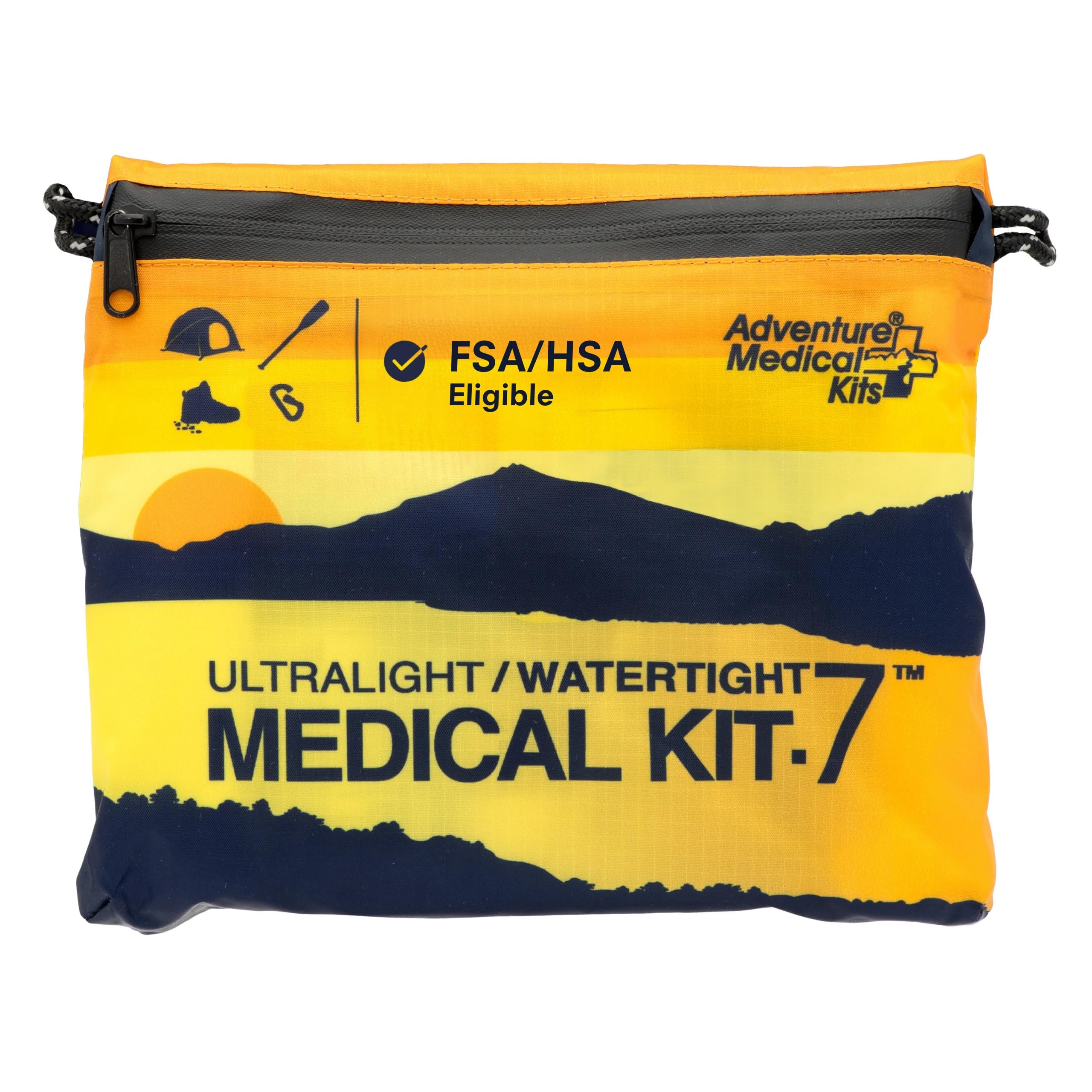
The Adventure Medical Ultralight/Watertight .7 nails the core backpacking requirement: keep it light, keep it dry, and keep it simple. The DryFlex inner bag is a genuine waterproof barrier, so your gauze and tape survive river crossings and unexpected downpours. At under 6 ounces, this kit disappears into a side pocket without affecting your load balance.
Inside, you get a smartly curated selection that prioritizes blister care with die-cut moleskin, plus basic wound supplies like bandages, gauze, and antiseptic wipes. The inclusion of tick remover forceps is a thoughtful addition for trekkers in tick-heavy regions. The outer shell uses a durable water-repellent finish, and the whole package is compact enough for day use or multi-day trips where every gram counts.
Some users note that the kit is best suited for one person on shorter routes — the supply volume is lean for a group of three over three days as the label suggests. You’ll want to supplement with your own medications and possibly an extra trauma pad for serious excursions. Still, for a pure backpacking-first mindset, this kit sets the benchmark.
Why it’s great
- Ultralight at just under 6 oz — ideal for gram-conscious hikers
- Reusable DryFlex bag provides true waterproof storage
- Smart blister kit with die-cut moleskin and tick remover
- Fits easily in pack side pockets
Good to know
- Lean on supplies for groups larger than one person
- Lacks a trauma pad or tourniquet for severe bleeding
- Medications have a limited shelf life out of the box
2. RHINO RESCUE EVA First Aid Kit 130pc

The RHINO RESCUE EVA kit takes the waterproof concept further with a rigid EVA outer shell that resists crushing and water ingress. The curved double-zipper design lets the case open completely flat, giving you full visibility of all 130 items in one glance — a huge advantage when you’re treating an injury in low light.
Inside, you’ll find a comprehensive assortment for minor wounds, burns, sprains, and blisters, along with a CPR mask and a quick-reference first aid guide. The built-in carabiner clip allows you to attach the kit to the outside of a pack or belt loop, keeping it accessible without digging through your main bag. The organized internal dividers prevent items from shifting into a jumbled mess.
The trade-off is weight: at 1.35 pounds, this kit is significantly heavier than ultralight alternatives. It’s better suited for family camping trips, car-accessible base camps, or overnight backpacking where pack weight isn’t the top priority. Some users also note the included scissors are small — you may want to swap in a pair of trauma shears.
Why it’s great
- Rigid EVA shell protects contents from crushing and moisture
- Flat-lay opening gives immediate access to all supplies
- Generous 130-piece count covers a wide range of minor injuries
- Includes CPR mask and first aid guide
Good to know
- At 1.35 lbs, it’s heavy for ultralight backpacking
- Scissors are small and not TSA-friendly
- Some supplies like ointments are single-use packets
3. RHINO RESCUE Small First Aid Kit Ultralight 114pc
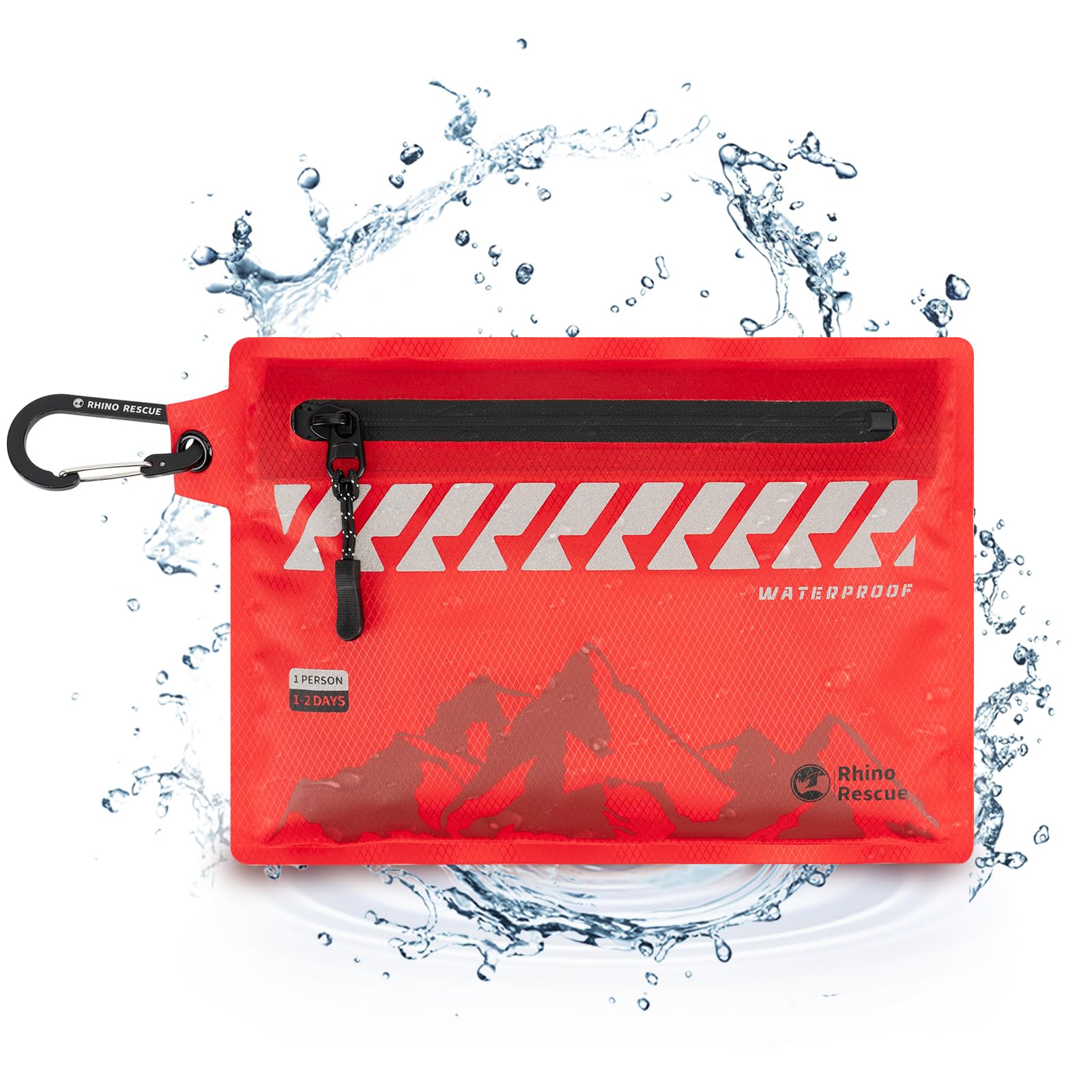
This RHINO RESCUE kit addresses the ultralight crowd with a clever seam-sealed fabric construction that avoids stitched leak points, backed by a premium waterproof zipper. The empty bag weighs only 30 grams, and the fully loaded kit comes in at just over two-thirds of a pound — light enough for day hikers and minimalists who want backup without bulk.
The 114-piece assortment is well-rounded, including standard bandages, gauze, antiseptic wipes, blister prevention items, plus a whistle and a multitool for emergency survival situations. The compact size fits into a pocket or clips onto a pack loop, making it a viable choice for cyclists, climbers, and trail runners who need to move fast.
Some users report that the included scissors are passable but not heavy-duty, and the carabiner clip feels less robust than the rest of the bag. While the seam-sealed design resists water well in light rain, it’s not submersible — don’t expect it to survive a full river dunk. For quick overnights and day missions, it’s a solid, lightweight companion.
Why it’s great
- Seam-sealed waterproof construction with premium zipper
- Extremely lightweight at 2/3 lb fully loaded
- Includes whistle and multitool for emergency signaling
- Compact enough for pocket or pack clip carry
Good to know
- Carabiner clip is not heavy-duty
- Scissors lack cutting power for tough materials
- Not submersible — water-resistant, not waterproof
4. Adventure Medical Kits Mountain Series Hiker
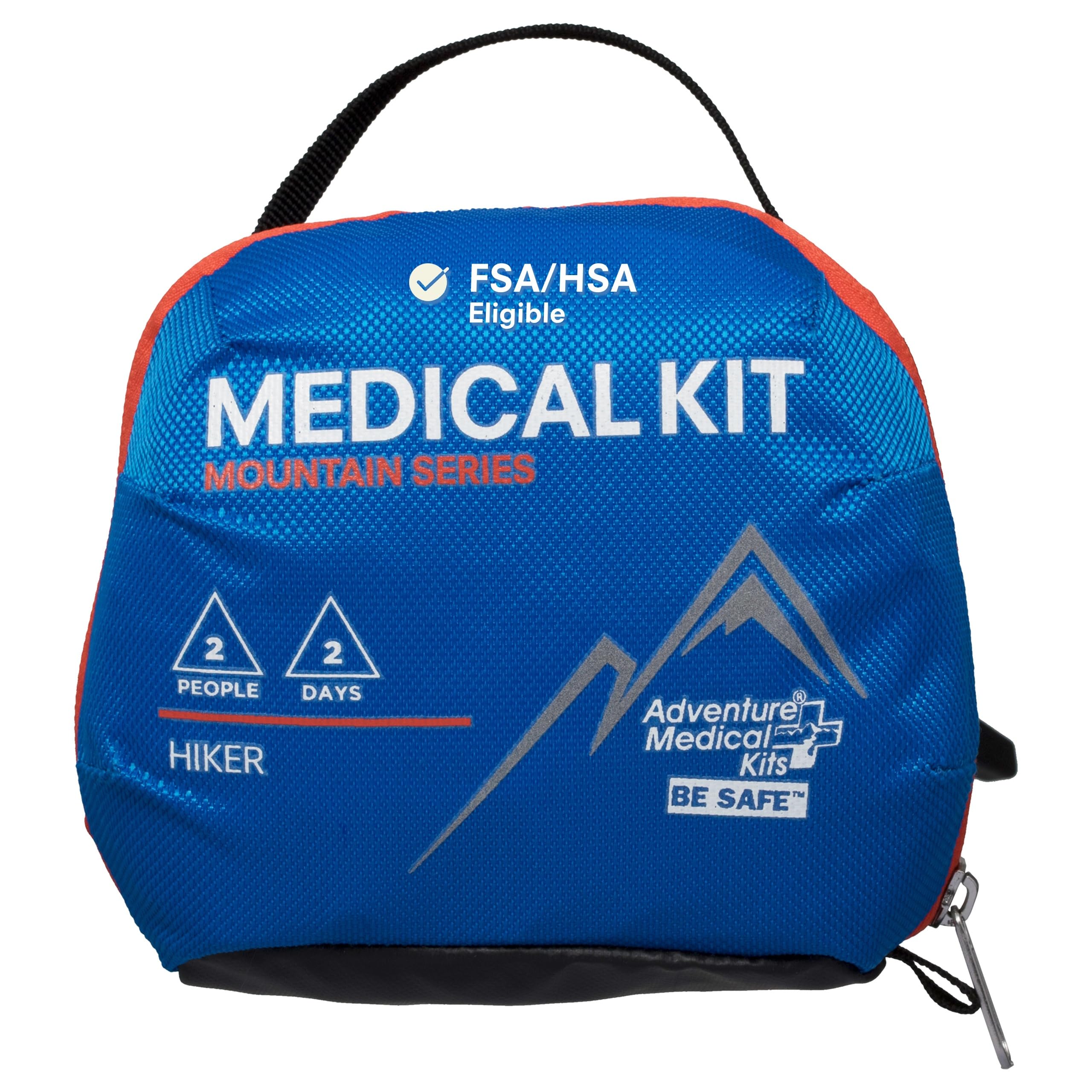
Adventure Medical Kits built the Mountain Series Hiker for two people over two days, and the Easy Care organization system is its standout feature. Each compartment is clearly labeled with the type of injury it treats — wound care, blister management, medication — so you don’t waste time fumbling through pouches when every second counts. The water-resistant bag adds trail-ready durability.
The kit includes a trauma pad for bleeding control, elastic bandages for sprains, and a comprehensive wilderness first aid guide that’s genuinely useful for backcountry decision-making. The compact 7.2-ounce weight keeps it friendly for overnight trips, and the size fits neatly into the brain of most hiking packs. The inclusion of a CPR mask is a welcome safety feature.
A few users note that the gauge of the gauze and elastic bandage could be longer for larger group scenarios, and the included medications have expiration dates around 20 months from purchase. Some units have arrived with a folded napkin packed in place of missing supplies — a quality-control inconsistency. For small-group alpine trips, however, this kit delivers excellent organization and essential trauma capability.
Why it’s great
- Easy Care labeled compartments for fast, injury-specific access
- Includes trauma pad and elastic bandage for bleeding and sprains
- Lightweight at 7.2 oz with a wilderness medical guide
- Compact, pack-brain-friendly dimensions
Good to know
- Gauze and bandage lengths are short for larger injuries
- Medications expire within ~20 months of purchase
- Occasional quality-control issues with packed items
5. Everlit 180 Pieces Tactical First Aid Kit IFAK

The Everlit 180-piece IFAK is built for rugged environments where gear takes a beating. The outer pouch is made from 1000D reinforced nylon with a MOLLE-compatible backing, allowing you to attach it directly to a tactical vest, plate carrier, or the exterior of a backpack. This kit is less about ultralight principles and more about having a robust, organized trauma solution.
Inside, you get over 20 types of medical supplies, including burn dressing, trauma shears, a CPR mask, elastic bandages, eye pads, iodine wipes, and moleskin for blisters. The two main pockets and elastic keepers prevent the contents from shifting around. Users repeatedly praise the value — the piece count and case quality punch above the expected price tier.
The square shape is the main ergonomic drawback for backpacking. At 6 x 6 x 4 inches, it wastes volume in a rounded pack compared to slimmer alternatives. It’s better deployed as a base-camp or vehicle kit. Some users also choose to supplement the included items with their own tourniquet and chest seals for true tactical preparedness.
Why it’s great
- Extremely durable 1000D nylon pouch with MOLLE attachment
- Comprehensive 180-piece supply including burn dressing and trauma shears
- Well-organized with labeled compartments and elastic keepers
- Great value for the supply count and case quality
Good to know
- Square shape wastes space in a backpack
- Heavier and bulkier than ultralight alternatives
- Missing tourniquet and chest seal for severe trauma
FAQ
How many pieces should a backpacking first aid kit have?
Can I use a standard car first aid kit for backpacking?
Should I add a tourniquet to my backpacking first aid kit?
Final Thoughts: The Verdict
For most users, the backpacking first aid kit winner is the Adventure Medical Kit Ultralight/Watertight .7 because it hits the perfect balance of sub-6-ounce weight, genuine waterproof storage, and blister-specific supplies. If you want a flat-lay organized case with a higher piece count for family trips, grab the RHINO RESCUE EVA 130pc. And for short day hikes where every gram matters, nothing beats the RHINO RESCUE Ultralight 114pc.

Mo Maruf
I created WellFizz to bridge the gap between vague wellness advice and actionable solutions. My mission is simple: to decode the research and give you practical tools you can actually use.
Beyond the data, I am a passionate traveler. I believe that stepping away from the screen to explore new environments is essential for mental clarity and physical vitality.