Our readers keep the lights on and my smoothie glass nicely filled. As an Amazon Associate, I earn from qualifying purchases.
You vacuum the baseboards, dust the shelves, and still wake up with that gritty film coating your throat and sinuses. The root cause isn’t your cleaning schedule; it’s the microscopic particles you can’t see settling back into your air the moment you put the duster away. An air purifier built for dust removal doesn’t just catch the obvious lint on a pre-filter; it uses a motor-driven fan and dense filter media to continuously pull particulate matter out of circulation, stopping that repetitive settling cycle at its source.
I’m Mohammad Maruf — the founder and writer behind WellFizz. I’ve spent years analyzing market data, decoding manufacturer spec sheets, and cross-referencing third-party lab results so you don’t have to guess which filtration system actually moves the needle on airborne dust load.
Whether you share a home with heavy-shedding pets, live near a construction zone, or simply want to cut down on the weekly dusting marathon, the best air purifier for dust removal must balance clean air delivery rate, filter density, and long-term filter cost to keep your indoor air genuinely cleaner without breaking your budget on replacements.
How To Choose The Best Air Purifier For Dust Removal
Dust isn’t a single substance; it’s a mix of dead skin cells, textile fibers, pollen, soil, and particulate matter tracked in from outdoors. To actually remove it, your purifier needs a fan strong enough to pull air through a dense filter without sounding like a jet engine. You’ll want to weigh the following factors before committing to a purchase.
Focus on the CADR for Dust, Not Just Room Size
Clean Air Delivery Rate (CADR) is the industry standard for measuring how many cubic feet of air a purifier cleans per minute. The dust-specific CADR rating tells you how well the unit handles larger, heavier particles like household dust. A unit with a dust CADR of 150 or higher will cycle the air in a medium bedroom fast enough to keep dust from resettling on surfaces. Ignoring this number and relying solely on “room size” marketing often leads to a unit that recirculates air too slowly to make a real dent.
True HEPA vs. HEPA-Type vs. Washable Filters
True HEPA filters are constructed from a dense mat of randomly arranged fibers that trap 99.97% of particles sized 0.3 microns — the most penetrating particle size. “HEPA-type” or “HEPA-style” filters lack independent certification and may let fine dust slip through. Washable or permanent filters can be cleaned and reused, but their pore size is larger, so they catch less fine dust and degrade in performance over time. For serious dust removal, a certified True HEPA filter is non-negotiable.
Pre-Filter Design and Filter Replacement Cost
A good pre-filter captures the big stuff — pet fur, lint, visible dust bunnies — before they reach the main HEPA layer. Washable pre-filters save you money because you can rinse them monthly instead of buying a new filter every time the unit gets clogged. But watch the long-term cost: some premium purifiers have cheap initial prices with expensive filter replacements every 6 to 12 months. Calculate the annual filter cost before buying, because a budget-friendly unit can become expensive within two years.
Noise Level, Auto Mode, and Real-Time Air Quality Display
Dust removal is a 24/7 job, so you need a purifier that stays quiet enough to run while you sleep. Look for a sleep mode rating at or below 30 dB — roughly the sound of a whisper. Auto mode with a PM2.5 or air quality sensor is invaluable for dust control because it ramps up fan speed when the sensor detects a spike in airborne particles, then slows down once the air is clean, saving energy and reducing noise during low-load periods.
Quick Comparison
On smaller screens, swipe sideways to see the full table.
| Model | Category | Best For | Key Spec | Amazon |
|---|---|---|---|---|
| Coway Airmega 250 | Premium | Large rooms & open floor plans | 1860 sq ft coverage, dual filtration | Amazon |
| AirDoctor AD3500 | Premium | Hospital-grade particle capture | UltraHEPA 0.003 micron capture | Amazon |
| Winix 5520 | Mid-Range | Smart home integration & auto mode | 1882 sq ft, 23.5 dB sleep mode | Amazon |
| LEVOIT Core300-P | Mid-Range | All-around value for medium rooms | 143 CFM CADR for dust | Amazon |
| ECOSELF HAP603 | Mid-Range | Large room coverage with AQI display | 2400 sq ft, 22 dB sleep mode | Amazon |
| LEVOIT Core 200S-P | Budget | Compact bedroom or dorm use | 140 sq ft, 27 dB sleep mode | Amazon |
| GermGuardian AC4825E | Budget | Odor control & allergen reduction | 743 sq ft, UV-C optional | Amazon |
In‑Depth Reviews
1. Coway Airmega 250

The Coway Airmega 250 uses a dual-filtration approach with a washable pre-filter that captures large dust particles before they reach the activated carbon and True HEPA layers. This design keeps the main filter from clogging prematurely, which is critical for homes with heavy dust loads or shedding pets. The Airmega 250 refreshes spaces up to 1,860 square feet in one hour, making it one of the few units powerful enough to handle an open-concept living area without needing a second unit.
Real-time air quality monitoring is handled by a PM2.5 sensor that displays color-coded feedback—blue for clean, red for poor—on the front panel. When it detects a spike in particulate matter, Smart Mode automatically adjusts the fan speed to scrub the air faster. Users consistently report that the auto mode catches cooking fumes and dust disturbances within minutes, then quiets down to an almost silent hum once the air quality returns to baseline.
Filter maintenance is straightforward: you rinse the pre-filter every few weeks, replace the carbon filter annually, and swap the HEPA filter every 12 to 18 months. The annual filter cost is roughly competitive for this size class, and the unit’s 3-year warranty adds peace of mind. The 20.5-pound weight and 18.5-inch width mean it occupies a fair footprint, but the neutral warm gray finish blends into most decor without looking like medical equipment.
Why it’s great
- Washable pre-filter extends HEPA life significantly
- Auto mode responds quickly to dust and odor spikes
- Impressive coverage for large rooms and open floor plans
Good to know
- No Wi-Fi or smart app control
- Wider footprint requires dedicated floor space
2. AirDoctor AD3500
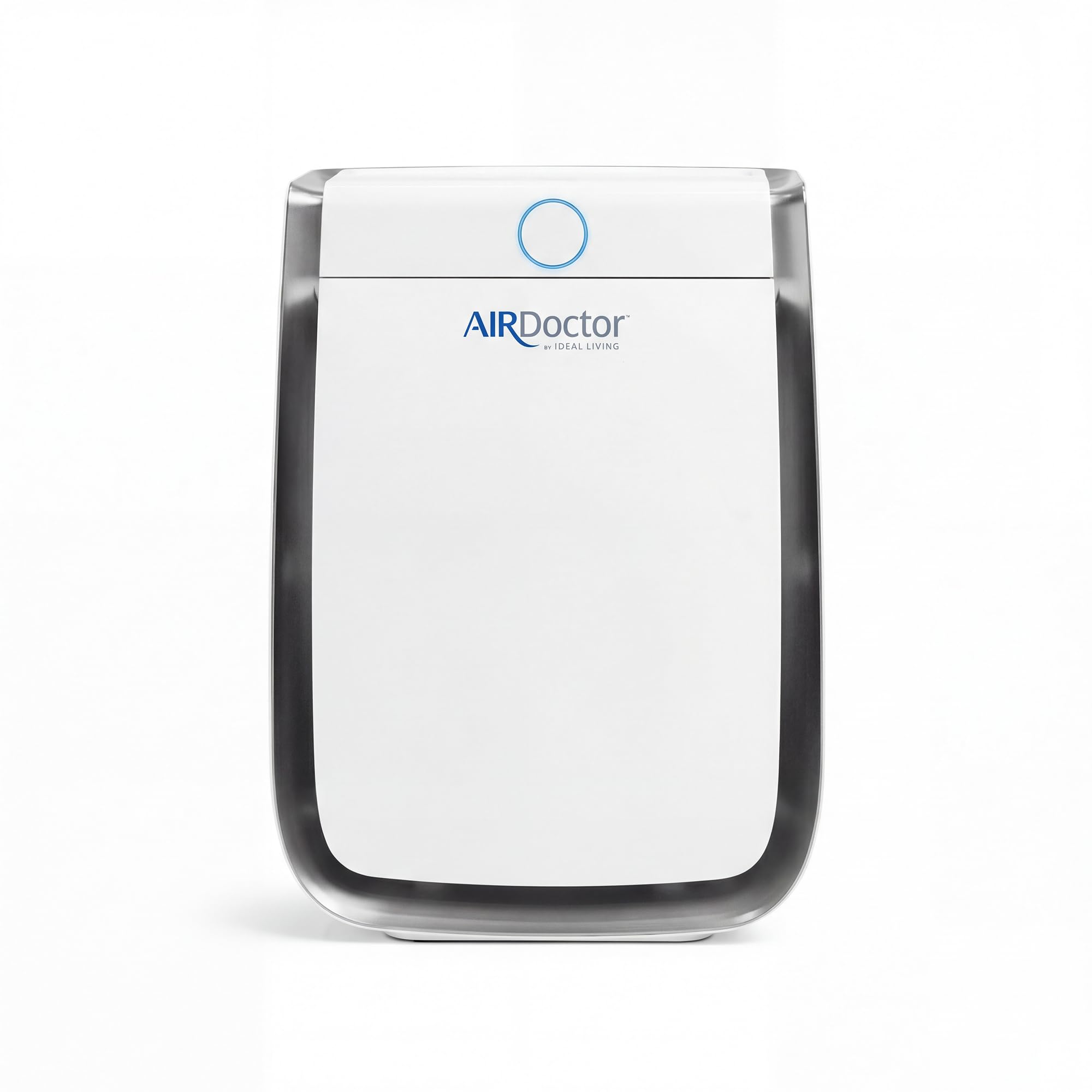
The AirDoctor AD3500 pushes filtration beyond standard True HEPA with its UltraHEPA media, which captures 99.99% of particles down to 0.003 microns — 100 times smaller than the HEPA threshold. For dust removal, this means it grabs not just visible house dust but also ultrafine particulate matter like smoke residues, bacteria, and virus carriers that often bind to dust particles. The three-stage system includes a pre-filter, a premium activated carbon filter infused with potassium permanganate, and the UltraHEPA layer.
Coverage is generous: the AD3500 cleans up to 2,520 square feet in one hour, making it suitable for oversized living rooms, basements, or combined kitchen-dining areas. The built-in PM2.5 sensor drives Auto Mode, displaying color-coded Halo feedback that shifts from blue to yellow to red as air quality changes. Owners note that the auto mode reliably detects cooking smoke, dust kicked up during cleaning, and even emissions from a nebulizer, ramping up fan speed until the air clears.
Noise output is well-controlled for a unit this powerful. On auto mode at low loads, it runs quietly enough for a bedroom, though the highest manual speed produces a noticeable airflow roar. Replacement filters are the primary long-term cost: the carbon filter needs swapping every 6 months and the UltraHEPA filter annually. Those recurring expenses are worth budgeting for if your priority is the highest possible capture rate for fine and ultrafine particulate.
Why it’s great
- UltraHEPA captures particles 100x smaller than standard HEPA
- Auto mode with color-coded Halo display is intuitive
- Massive coverage for large, open spaces
Good to know
- High replacement filter cost over time
- Bulky dimensions (24 lbs) limit placement flexibility
3. Winix 5520
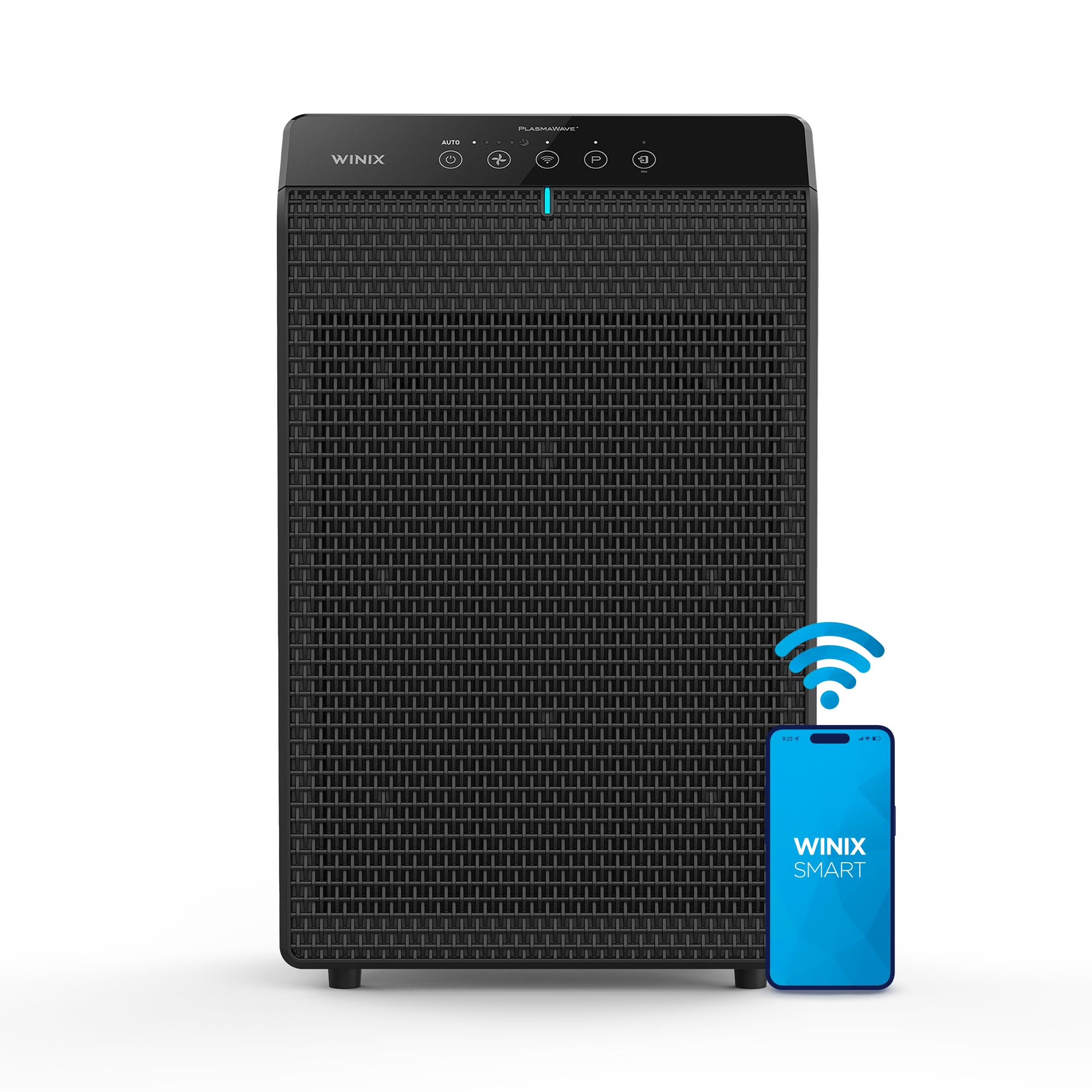
The Winix 5520 brings serious connectivity to dust removal. It pairs with the Winix Smart App for remote monitoring and fan speed adjustments, and it works with Amazon Alexa and Google Home for voice commands. The unit’s AHAM Verifide rating at 392 square feet means its certified performance is transparent, but it can cycle air in rooms up to 1,882 square feet in one hour thanks to a strong motor and optimized airflow path. The washable fine mesh pre-filter traps large dust and pet hair, preserving the True HEPA and advanced odor control carbon filter underneath.
An integrated air quality sensor feeds a three-color LED indicator — blue for good, orange for fair, red for poor — and automatically adjusts fan speed in Auto Mode. The unit also features a light-automated Sleep Mode that activates when the room darkens, dropping noise to a near-silent 23.5 dB. That combination of auto-sensing and sleep automation makes the Winix 5520 an excellent choice for a bedroom where dust levels fluctuate during the day and you want silence at night.
Filter replacement intervals are about 12 months for the HEPA and carbon filters, and the pre-filter is permanently washable. The 13.3-pound weight and 13.6-inch width are manageable, and the black finish is unobtrusive. Some users note that the airflow on the lowest setting feels mild, but for continuous dust suppression in a medium-to-large bedroom, the combination of smart features and certified clean air delivery is a strong value proposition.
Why it’s great
- Smart app and voice assistant compatibility
- Near-silent 23.5 dB sleep mode
- Washable pre-filter reduces maintenance costs
Good to know
- Wi-Fi connectivity adds idle power draw
- Lowest fan setting moves modest air volume
4. LEVOIT Core300-P

The LEVOIT Core300-P delivers one of the highest dust-specific CADR ratings in its price bracket: 153 CFM for dust, 143 CFM for smoke, and 167 CFM for pollen. AHAM Verifide certification backs those numbers, so you know the unit actually moves and cleans the air it claims to. The 56W high-torque motor pushes enough volume to refresh a 222-square-foot room 4.8 times per hour, or a larger 1,073-square-foot space once per hour on continuous operation. That makes it a versatile option for everything from a master bedroom to an open-concept apartment.
Levoit offers multiple replacement filter variants tailored to specific needs: a Toxin Absorber for VOCs and smog, a Smoke Remover for wildfire smoke, and a Pet Allergy filter for dander and odors. This modular approach lets you adapt the purifier to the dust composition in your home without buying a whole new unit. The 3-in-1 filtration stack includes a nylon pre-filter, a high-efficiency activated carbon layer, and a True HEPA filter rated to capture 99.97% of particles down to 0.3 microns.
Sleep Mode reduces noise to a near-silent 24 dB via QuietKEAP technology, and the display lights can be turned off completely for zero light pollution at night. The unit’s compact 8.7-inch squared footprint and 7.9-pound weight make it easy to relocate from bedroom to office. The main trade-off is that replacement filters, while reasonably priced compared to premium brands, still need annual replacement, and the unit lacks a real-time PM2.5 display — you’ll need to judge air quality by how often you need to dust surfaces.
Why it’s great
- High dust CADR of 153 CFM at an accessible price point
- Interchangeable filter types for different air quality needs
- Very compact footprint for the airflow output
Good to know
- No real-time air quality display
- Does not restart automatically after a power outage
5. ECOSELF HAP603
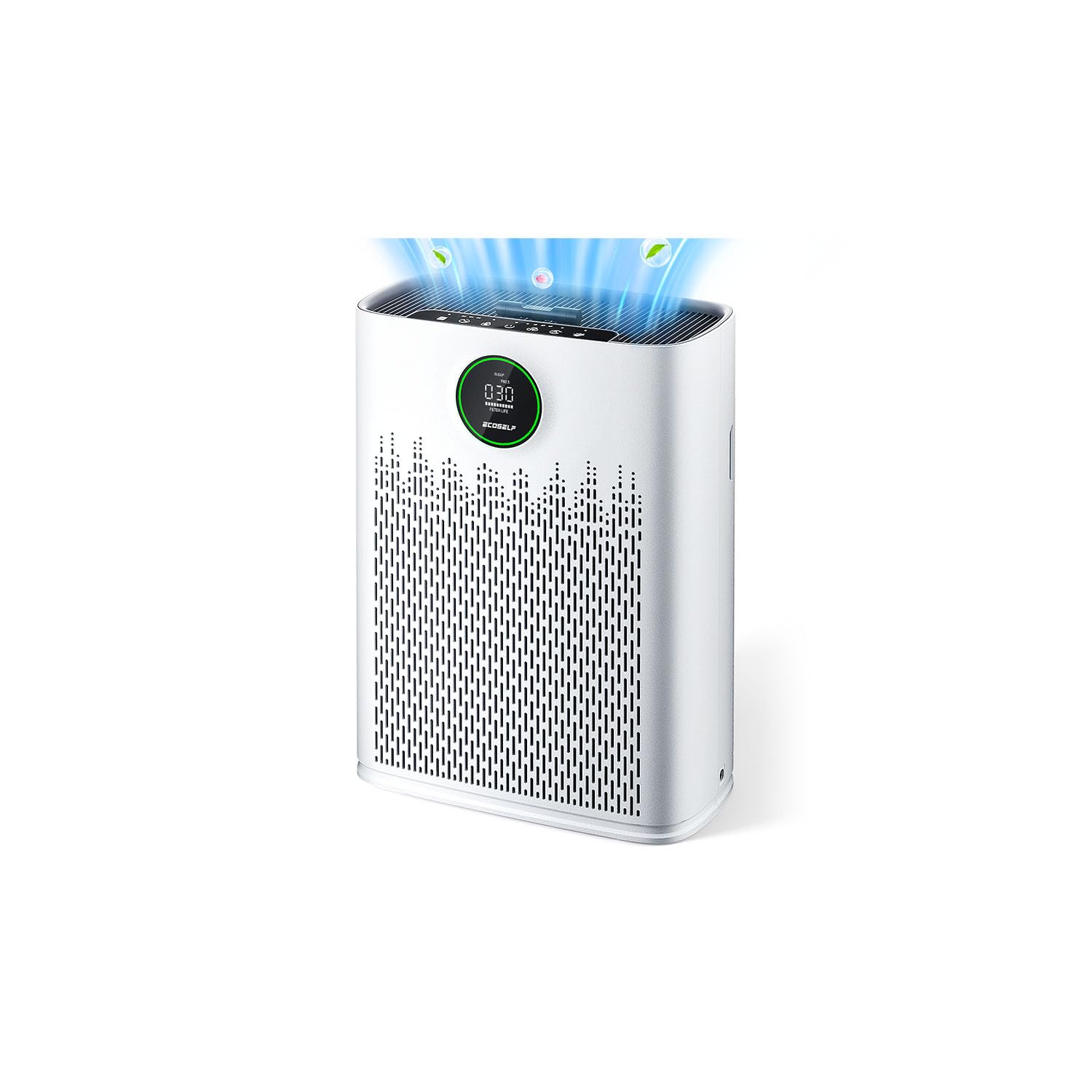
The ECOSELF HAP603 uses a 2X-Power Filtration system that cleans rooms up to 2,400 square feet twice per hour, making it one of the highest-coverage units in the mid-range tier. The True HEPA filter captures 99.97% of airborne particles including dust, smoke, and pollen, while the activated carbon layer handles household odors from cooking and pets. A real-time PM2.5 display with an infrared sensor shows the current particle level on the front panel, so you can see the dust load drop as the purifier runs.
Smart Mode automatically adjusts the fan speed based on the PM2.5 reading, ramping up when the sensor detects a dust spike and slowing down once the air clears. Sleep Mode drops noise to 22 dB, which is genuinely whisper-quiet and suitable for light sleepers. The unit also includes an aromatherapy pad slot for adding essential oils, though the scent is mild and short-lived — a nice bonus but not a core feature for dust removal.
At 6.72 pounds and 6.3 inches deep, the HAP603 is surprisingly lightweight and slim for a unit that claims such large coverage. The filter indicator alerts you when it’s time to change the cartridge, and ECOSELF recommends using official replacement filters for optimal performance. The annual filter cost is moderate, and the 30-day money-back guarantee plus 1-year warranty provide a safety net. Some users note that the coverage claim is theoretical for heavy dust loads, but in practical use, the unit makes a noticeable difference in medium-to-large bedrooms with hardwood floors that kick up visible dust.
Why it’s great
- Real-time PM2.5 display shows dust reduction in action
- Ultra-quiet 22 dB sleep mode
- High claimed coverage for the price
Good to know
- Official replacement filters must be used for best performance
- Aromatherapy feature adds little value for dust control
6. LEVOIT Core 200S-P

The LEVOIT Core 200S-P is a smaller sibling to the Core300-P, designed specifically for tight spaces like dorm rooms, nurseries, or small bedrooms up to 140 square feet. Despite its compact size, it pulls in air through a 360-degree intake and uses a 3-in-1 filter that captures 99.97% of dust, pollen, and dander down to 0.3 microns. The unit refreshes a 140-square-foot room about 4.8 times per hour, which is adequate for keeping dust levels in check in a single-occupant space.
Smart capabilities include Wi-Fi connectivity and voice control via Alexa or Google Assistant, allowing you to adjust fan speed or set timers without getting up. The free Levoit app also lets you monitor filter life remotely. Sleep Mode brings noise down to 27 dB, and the Display Off button eliminates all light leakage, so there’s no visual disturbance during the night. These features make the Core 200S-P a strong candidate for a child’s room where quiet operation and dark sleep environment are priorities.
The unit weighs only 6.6 pounds and measures 8 inches square, making it genuinely portable between rooms. The main limitation is the smaller coverage area; it’s not designed for open living spaces or heavy dust loads from multiple pets. Replacement filters are reasonably priced and last about 6 to 8 months under continuous use. If your dust problem is localized to one small room, the Core 200S-P offers smart convenience without over-spending on unnecessary power.
Why it’s great
- Wi-Fi and voice control in a very compact body
- Near-silent sleep mode with zero light output
- Affordable filter replacements
Good to know
- Coverage limited to small rooms under 150 sq ft
- Not powerful enough for multi-room open areas
7. GermGuardian AC4825E

The GermGuardian AC4825E is a long-standing entry-level tower that balances dust capture with odor control. Its True HEPA filter traps 99.97% of allergens down to 0.1 microns, and the activated carbon layer absorbs cooking fumes, pet smells, and smoke. A dedicated UV-C light cycles on to help neutralize airborne bacteria and viruses, adding an extra layer of protection for households concerned about germs. The 22-inch tower design directs air upward at an angle rather than straight out, which some users find less drafty than side-venting units.
Coverage is rated for 153 square feet on the fast cycle (12.5 minutes per air change) and 743 square feet on the slower one-hour cycle. Three manual fan speeds and a separate UV-C toggle give you direct control without any automatic sensors. The lowest speed is quiet enough for a bedroom, the medium speed is barely noticeable, and the high speed moves significant air at the cost of noise — expect to hear it clearly if the unit is in the same room. The dial-based controls are simple and reliable, with no app or Wi-Fi components to fail.
Filter replacement is straightforward: the pre-filter is washable, the HEPA and carbon filters need swapping every 6 to 12 months depending on usage. GermGuardian’s proprietary replacement filters are widely available and competitively priced. The main downsides are the lack of auto-mode or air quality feedback and the fact that the UV-C bulb adds an additional consumable to track. For a straightforward, no-nonsense dust filter in a bedroom or office, the AC4825E gets the job done without any extra frills.
Why it’s great
- Proven track record with years of positive reviews
- UV-C light adds germicidal capability
- Washable pre-filter and easy filter refills
Good to know
- No auto mode or air quality sensor
- High fan speed is quite loud for a bedroom
FAQ
How often should I replace the HEPA filter for dust removal?
Can an air purifier eliminate dust completely?
Is it better to have one large purifier or multiple smaller units for dust?
What is the difference between a pre-filter and the main HEPA filter for dust?
Do UV-C lights help with dust removal?
Final Thoughts: The Verdict
For most users, the best air purifier for dust removal winner is the Coway Airmega 250 because it combines a washable pre-filter, powerful True HEPA and carbon filtration, and intelligent auto-mode sensing into a package that handles large spaces without breaking the bank on filter replacements. If you want the highest possible particle capture rate for ultrafine dust and smoke, grab the AirDoctor AD3500. And for a compact, smart-enabled option that works great in a small bedroom or dorm room, nothing beats the value of the LEVOIT Core 200S-P.

Mo Maruf
I created WellFizz to bridge the gap between vague wellness advice and actionable solutions. My mission is simple: to decode the research and give you practical tools you can actually use.
Beyond the data, I am a passionate traveler. I believe that stepping away from the screen to explore new environments is essential for mental clarity and physical vitality.