Our readers keep the lights on and my smoothie glass nicely filled. As an Amazon Associate, I earn from qualifying purchases.
A freezing night in the backcountry is not the time to discover your sleeping bag’s temperature rating is a marketing myth. When the mercury drops below zero, the line between a restful sleep and a survival situation is drawn by your bag’s insulation quality, baffle design, and draft management. For backpackers, every ounce of warmth must earn its place in your pack — the wrong choice adds pounds of dead weight or leaves you shivering at first light.
I’m Mohammad Maruf — the founder and writer behind WellFizz. I’ve analyzed hundreds of cold-weather sleeping bags, comparing fill powers from 550 to 850+, baffle architectures, and real-world thermal performance across the budget-to-premium spectrum to find the bags that truly deliver on their sub-zero promises.
This guide breaks down the nine best contenders for the backpacking sleeping bag 0 degree category, weighing warmth-to-weight ratios, packability, and durability so you can match the right bag to your winter adventures.
How To Choose The Best Backpacking Sleeping Bag 0 Degree
Selecting a 0-degree bag for backpacking is a tighter balancing act than any other temperature rating. You need enough insulation to survive sub-freezing nights, but the bag must be light and compressible enough to fit inside a 50–60 liter pack. Understanding the specs that actually drive performance — not just the marketing numbers — is the only way to get it right.
Fill Power: The Language of Down Quality
Fill power measures the loft, or fluffiness, of down insulation — higher numbers mean more warmth per ounce. A bag using 850+ fill power down can achieve the same thermal rating as a 600-fill bag while weighing nearly half a pound less. For 0-degree backpacking, aim for at least 650 fill power if you want a reasonable warmth-to-weight ratio. Budget bags often use 600 fill, which works but adds noticeable bulk. Premium options at 850+ fill are the gold standard for serious ounce-counters.
Down vs. Synthetic: Moisture Management and Cost
Down offers superior compressibility and longevity, but loses nearly all insulating value when wet. Synthetic fills like Kelty’s Cirroloft or Big Agnes’ FireLine Max Eco retain warmth even when damp and are generally cheaper, but they are heavier and bulkier for the same temperature rating. For 0-degree backpacking in consistently dry climates, down is the clear winner. If your trips involve wet snow, coastal fog, or river crossings, a high-quality synthetic bag may be the safer bet despite the weight penalty.
Baffle Architecture: Where Cold Spots Are Born
A bag is only as warm as its weakest seam. Vertical baffles prevent down from shifting sideways, creating cold spots on top of your body. Horizontal baffles are cheaper and common on budget bags but allow down to migrate. For 0-degree bags, look for box baffles or continuous baffles — these maximize loft and eliminate gaps. Draft collars around the neck, insulated zipper tubes, and a snug hood with a drawcord are non-negotiable features at this temperature range.
Quick Comparison
On smaller screens, swipe sideways to see the full table.
| Model | Category | Best For | Key Spec | Amazon |
|---|---|---|---|---|
| Sea to Summit Spark | Down, Ultralight | Ultralight backpacking | 850+ fill power down | Amazon |
| Rab Ascent | Down, Mountaineering | Alpine winter trips | 650FP European Duck Down | Amazon |
| Big Agnes Echo Park | Synthetic, Roomy | Car camping & comfort | FireLine Max Eco insulation | Amazon |
| Kelty Cosmic 20 Down | Down, Value | 3-season backpacking | 550 fill power down | Amazon |
| QEZER 0°F Mummy (B0BGNCDH8X) | Down, Budget | Deep winter on a budget | 600 fill, 3.3lb down fill | Amazon |
| Kelty Cosmic Synthetic 0° | Synthetic, Durable | Wet-weather camping | Cirroloft synthetic fill | Amazon |
| Naturehike Snowbird | Down, RDS Certified | Lightweight value seekers | 650 fill RDS down | Amazon |
| QEZER 600FP Down (B0DBVLCBD7) | Down, Entry-Level | First winter backpacking bag | 600 FP, 2.2lb duck down | Amazon |
| QEZER 10°F Down (B0C7BD9WB5) | Down, Wide | Tall & broad sleepers | 650 FP, 88.6″ length | Amazon |
In‑Depth Reviews
1. Sea to Summit Spark Ultralight Down Sleeping Bag
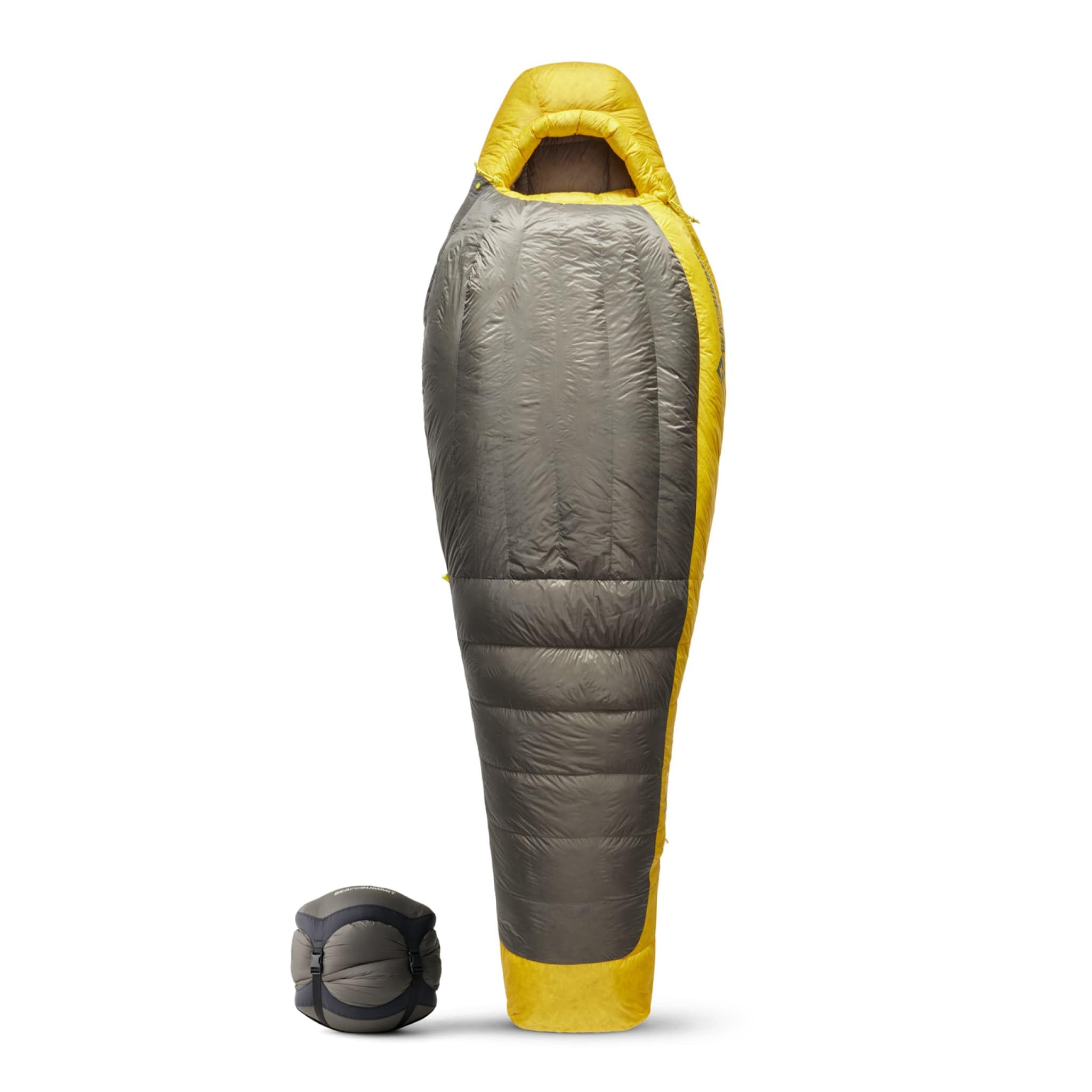
The Sea to Summit Spark is the ultralight benchmark for 0-degree backpacking. With 850+ fill power goose down packed into full box baffles, this bag delivers exceptional warmth at just 2.83 pounds — a weight that most competitors can’t touch at this temperature rating. The 10D nylon shell with PFC-free DWR is whisper-thin but remarkably durable for its weight, and the YKK #5 zipper operates smoothly without snagging.
The contoured mummy shape provides adequate hip and shoulder room without excess dead space that steals heat. The hood is anatomically shaped with a single drawcord, cinching down to a small opening that traps warmth around the face. At 83.1 inches long in the regular size, it accommodates taller sleepers without compressing toe box insulation.
This is a specialist tool for gram-conscious winter backpackers who value pack space above all. The Ultra-Dry Down treatment helps the bag resist moisture from tent condensation, but like all high-fill down, it demands careful dry storage. If your trips involve deep wet snow or constant drizzle, the near-premium price may be better spent on a synthetic alternative.
Why it’s great
- Incredible warmth-to-weight ratio (2.83 lbs at 0°F rating)
- 850+ fill RDS-certified down with hydrophobic treatment
- Full box baffles eliminate cold spots
Good to know
- Very high entry cost for most backpackers
- Thin 10D shell requires careful handling around tent poles
- Not suitable for consistently wet conditions
2. Rab Men’s Ascent Down Sleeping Bag
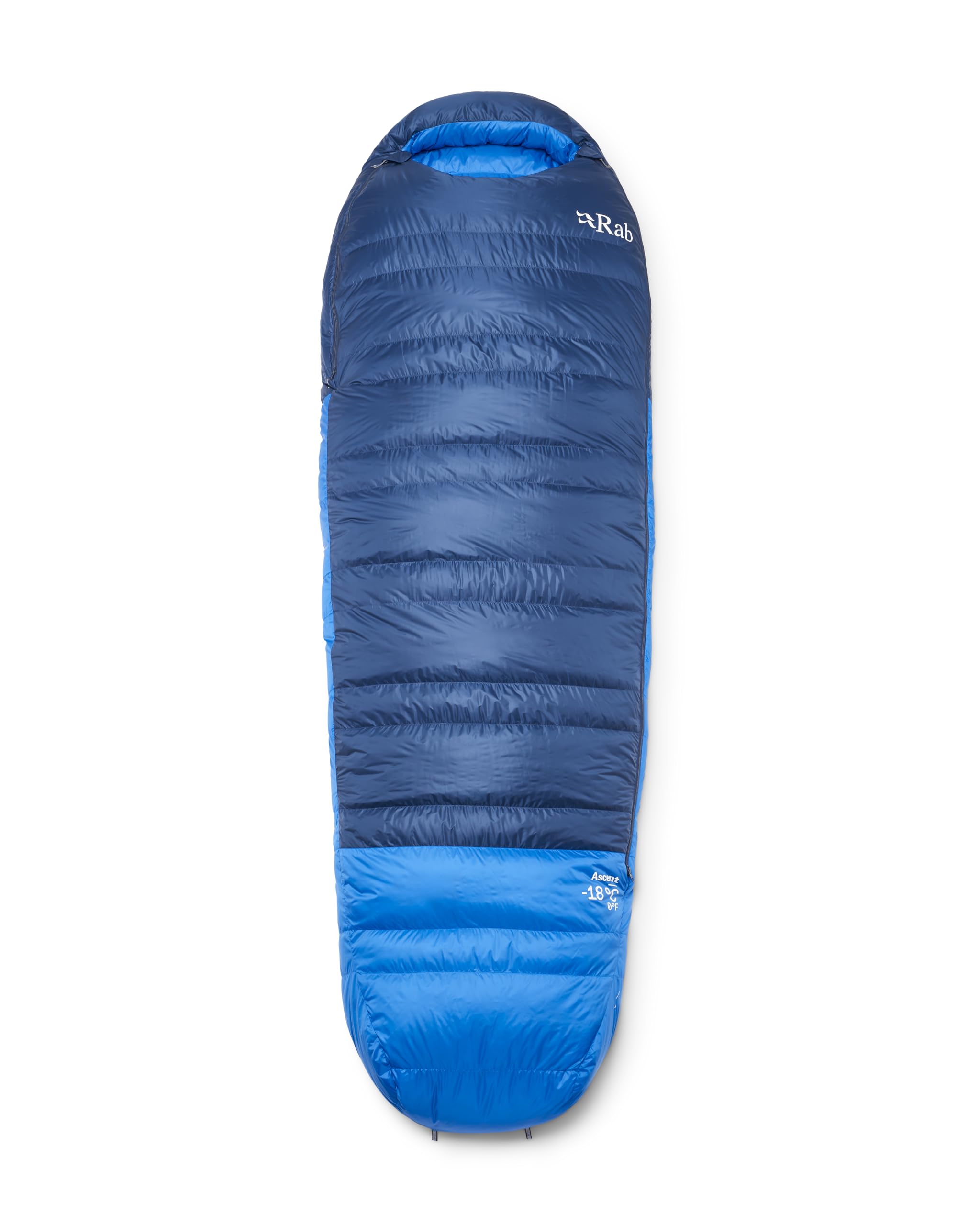
Rab’s Ascent sleeping bag brings mountaineering-grade engineering to the 0-degree category. Its 650-fill European duck down is treated with Grangers hydrophobic finish, and the Pertex Quantum shell is both downproof and windproof — a critical combo when you’re pitched above treeline. The L.O.F.T baffling system prevents down migration while optimizing loft, and the 3D collar with drawcord seals warmth at the neck more effectively than most bags at this price.
At 58.2 ounces for the regular length, this is not the lightest option here, but the construction quality justifies the weight. The anatomic hood with dual drawcords adjusts independently of the collar, letting you fine-tune coverage without compressing insulation around your shoulders. The ¾-length main zipper saves weight while still allowing enough venting for temperature regulation.
Some users have reported the temperature rating feels optimistic — a few found it comfortable only down to 20°F with base layers. This is common with many 0-degree down bags, and the solution is simple: pair the Ascent with a quality insulated pad and wear a mid-layer. For serious cold-weather trekkers and mountaineers who need a bombproof shell fabric, this bag delivers peace of mind that cheaper options cannot.
Why it’s great
- Tough Pertex Quantum shell resists wind and moisture
- L.O.F.T baffling prevents cold spots from down shift
- Excellent neck collar and hood seal system
Good to know
- Heavier than premium ultralight competitors
- Real-world comfort rating may be closer to 14°F than 0°F
- Limited color and size availability
3. Big Agnes Echo Park Sleeping Bag
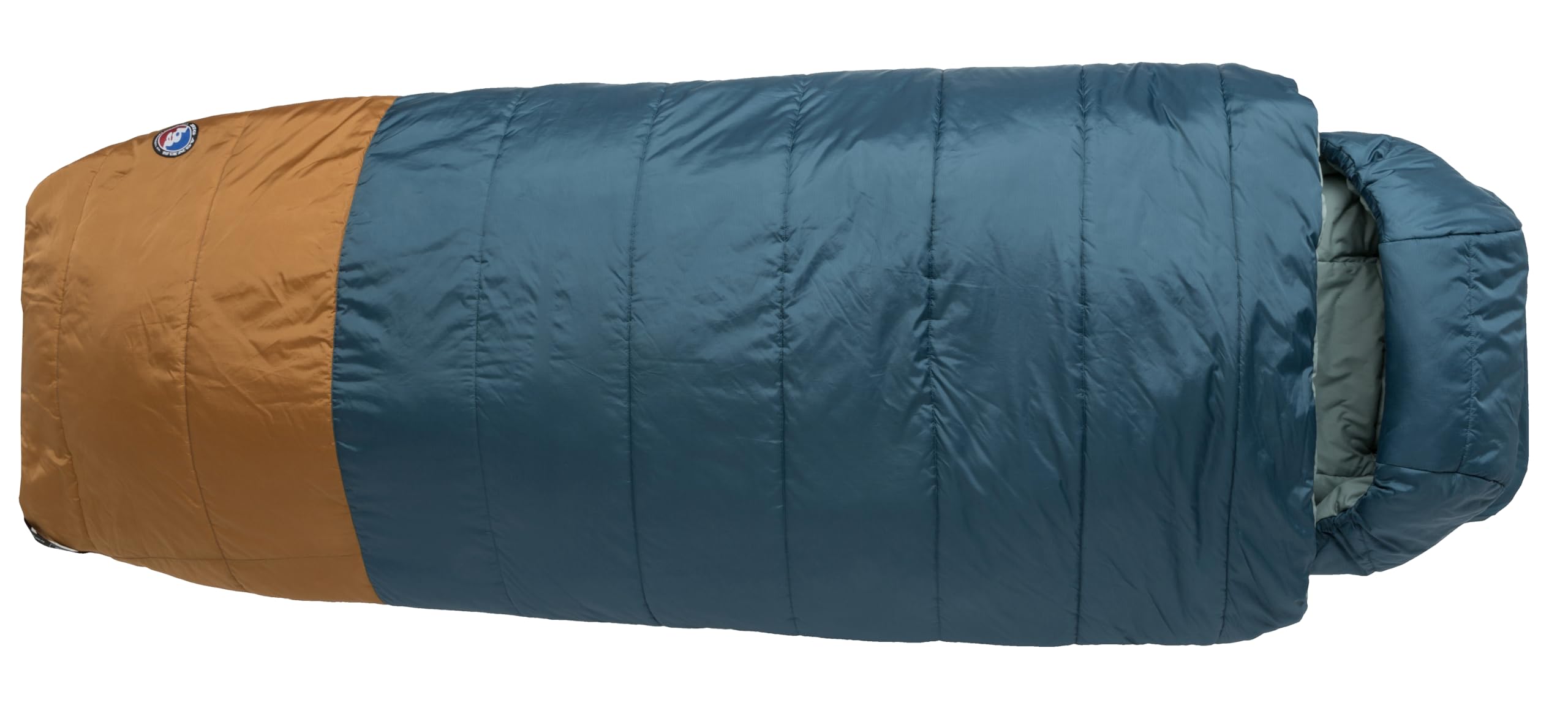
Big Agnes rethinks the 0-degree bag formula with the Echo Park: it’s a roomy, rectangular-cut synthetic bag designed for campers who prioritize comfort over pack weight. The FireLine Max Eco insulation — made from 100% post-consumer recycled polyester — keeps you warm even if the tent floor gets damp. The PadLock system integrates with your sleeping pad via a sleeve, so you never roll off onto cold ground in the middle of the night.
The cotton-poly blend lining is soft and quiet, unlike the crinkly nylon found in most winter bags. The “Pillow Barn” pocket on the pad sleeve keeps your pillow in place, and the top corner hand pockets let you wrap the bag around your shoulders like a comforter. Dual zippers allow entry from either side and can be unzipped at the bottom for ventilation on warmer nights.
This bag is too large and heavy for traditional backpacking — its 78×80-inch cut won’t fit into a standard backpacking pack. But for winter car camping, basecamp use, or RV trips, the Echo Park offers a level of spacious luxury unmatched by any mummy bag. If you are a side sleeper or a larger person who feels claustrophobic in a tight mummy, this bag is a game-changer.
Why it’s great
- Extremely spacious cut with 80-inch shoulder girth
- PadLock sleeve keeps you on your sleeping pad all night
- Synthetic insulation retains warmth when damp
Good to know
- Too bulky for backpacking packs
- Not as warm as 0°F rating suggests for cold sleepers
- Compression sack sold separately for minimum pack size
4. Kelty Cosmic 20 Down Mummy Sleeping Bag

Kelty’s Cosmic 20 Down is the bag that proves you don’t need to spend a fortune for solid winter performance. With 550-fill RDS-certified down, this bag delivers reliable warmth to its ISO limit of 21°F — perfect for late-fall and early-winter backpacking. The recycled nylon shell and polyester taffeta liner feel soft against the skin, and the dual-direction zippers with a draft tube keep cold air from sneaking in at the seam.
At about 2 pounds 6 ounces for the regular length, the Cosmic 20 is impressively light for its price tier. It compresses down to just 13×7 inches, leaving plenty of room in your pack for extra layers and food. The hood is adequately sized but not over-engineered — a simple drawcord adjusts the fit. For sleepers up to 6 feet tall, the regular size offers a comfortable 78-inch length with no wasted fabric.
The 550 fill power means the warmth-per-ounce ratio is lower than premium options, so this bag runs a bit colder than the 0-degree rating suggests for deep winter. It is best matched to temperatures from the high 20s to mid-30s Fahrenheit when paired with a quality pad. For backpackers who need a do-it-all bag from fall through early spring without breaking the bank, this is the smart pick.
Why it’s great
- Excellent value for RDS-certified down insulation
- Lightweight and highly compressible (13×7 in stuff sack)
- Smooth YKK zippers with effective draft tube
Good to know
- Snug fit at shoulders for broad-shouldered users
- 550 fill power less efficient than higher-fill alternatives
- Best suited to 25°F+ conditions, not true zero-degree nights
5. QEZER 0°F Down Sleeping Bag (B0BGNCDH8X)

QEZER packs an aggressive amount of down into this bag — 3.3 pounds of 600-fill duck down — creating a thick, warm cocoon that easily handles single-digit temperatures. The mummy shape includes a wide trapezoidal footbox that prevents foot cramping, and the left-right zipper compatibility lets you zip two bags together for a double-wide setup. The 400T nylon shell is densely woven enough to prevent down leakage while shedding light moisture.
At 4.74 pounds, this is not a lightweight backpacking bag. It is best suited for short winter trips where pack weight is a secondary concern, or for sleepers who run very cold and need maximum insulation at a low price. Multiple users reported feeling warm and comfortable in Colorado mountain conditions with snow and freezing rain, which speaks to the real-world thermal margin this bag provides.
The included compression sack works well, but the inner mesh storage bag tore on first use for one owner — a small inconvenience given the overall value. The zippers are smooth, and the Velcro closures at the hood keep the draft collar sealed. For anyone who needs a genuinely warm 0-degree bag but cannot justify spending three times as much on a premium down bag, this QEZER gets the job done.
Why it’s great
- Massive 3.3lb down fill for extreme warmth at low cost
- Wide footbox prevents toe cramping
- Pairs with another bag for a double-wide setup
Good to know
- Heavy at 4.74 lbs for backpacking
- Inner storage bag durability is questionable
- 600 fill power is less efficient than higher fill ratings
6. Kelty Cosmic Synthetic Fill 0 Degree Backpacking Sleeping Bag
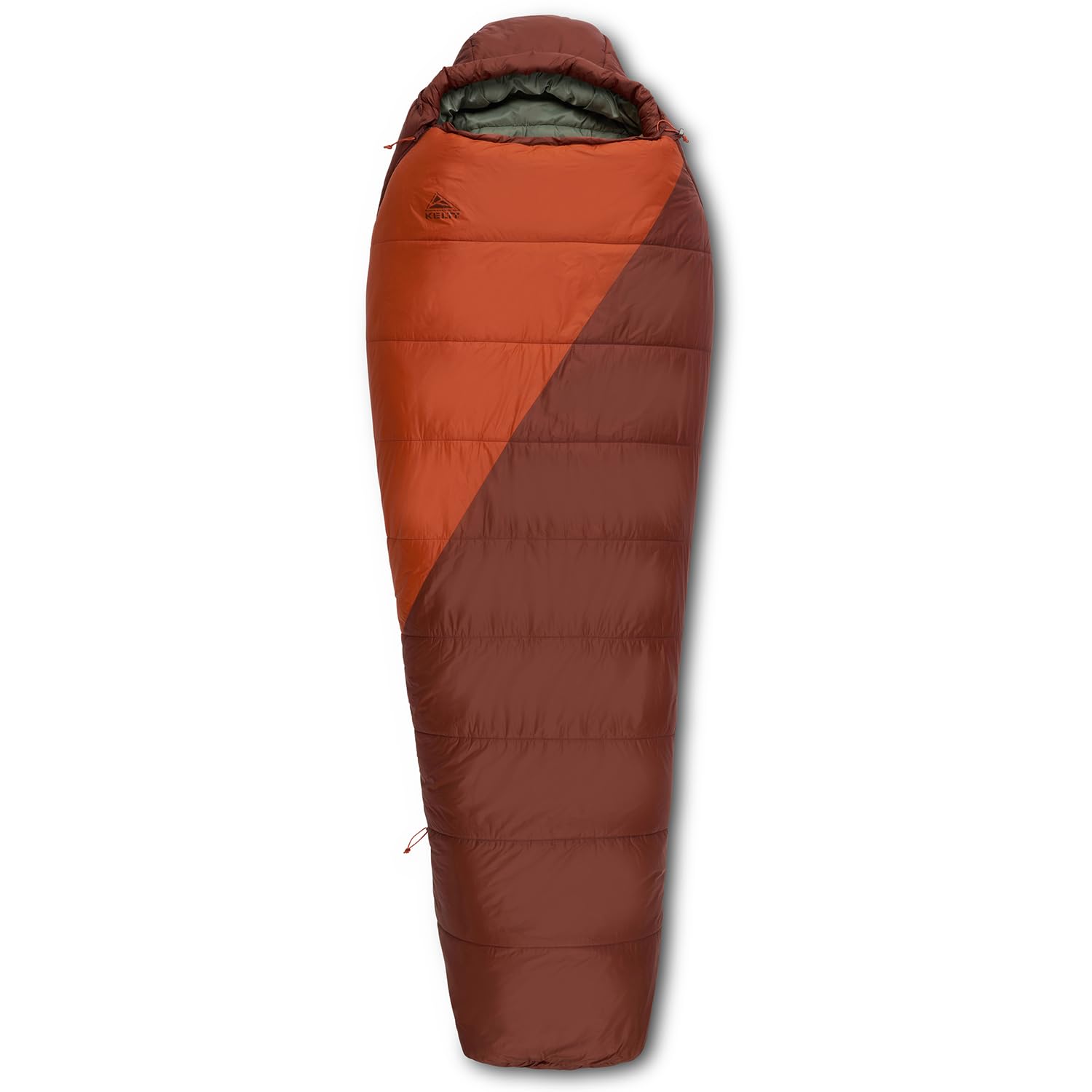
The synthetic version of Kelty’s Cosmic is a specialty tool for wet-weather winter campers. Cirroloft synthetic insulation is heavier than down — the long size weighs 4 pounds 11 ounces — but it continues to provide warmth even when the bag gets damp from snowmelt or condensation. The 20D recycled nylon shell with PFAS-free DWR sheds light precipitation, and the natural fit footbox gives toes room to wiggle without creating dead air space.
With an ISO comfort rating of 18°F, this bag is a legitimate 0-degree contender when paired with the right under-insulation. The integrated compression stuff sack cinches down the bulk significantly, though it still takes up roughly half of a 55-liter pack. The external stash pocket is a thoughtful touch for storing a headlamp or phone within easy reach during the night.
Several users noted the zipper catches fabric near the bicep area — a minor design flaw that can be managed with careful zipping. The lack of a Velcro closure at the hood draft collar is a missed opportunity for a bag in this temperature range. Still, for scout leaders, canoe campers, and anyone who expects wet conditions, this synthetic Cosmic is a reliable choice that outperforms comparably priced down bags in moisture management.
Why it’s great
- Synthetic fill maintains loft and warmth when wet
- ISO comfort rating of 18°F at an entry-level price
- Spacious natural fit footbox and external stash pocket
Good to know
- Bulky — uses half a 55L pack volume
- Zipper snags near the bicep area occasionally
- No hood Velcro closure for draft sealing
7. Naturehike Snowbird 0 Degree RDS Down Mummy Sleeping Bag
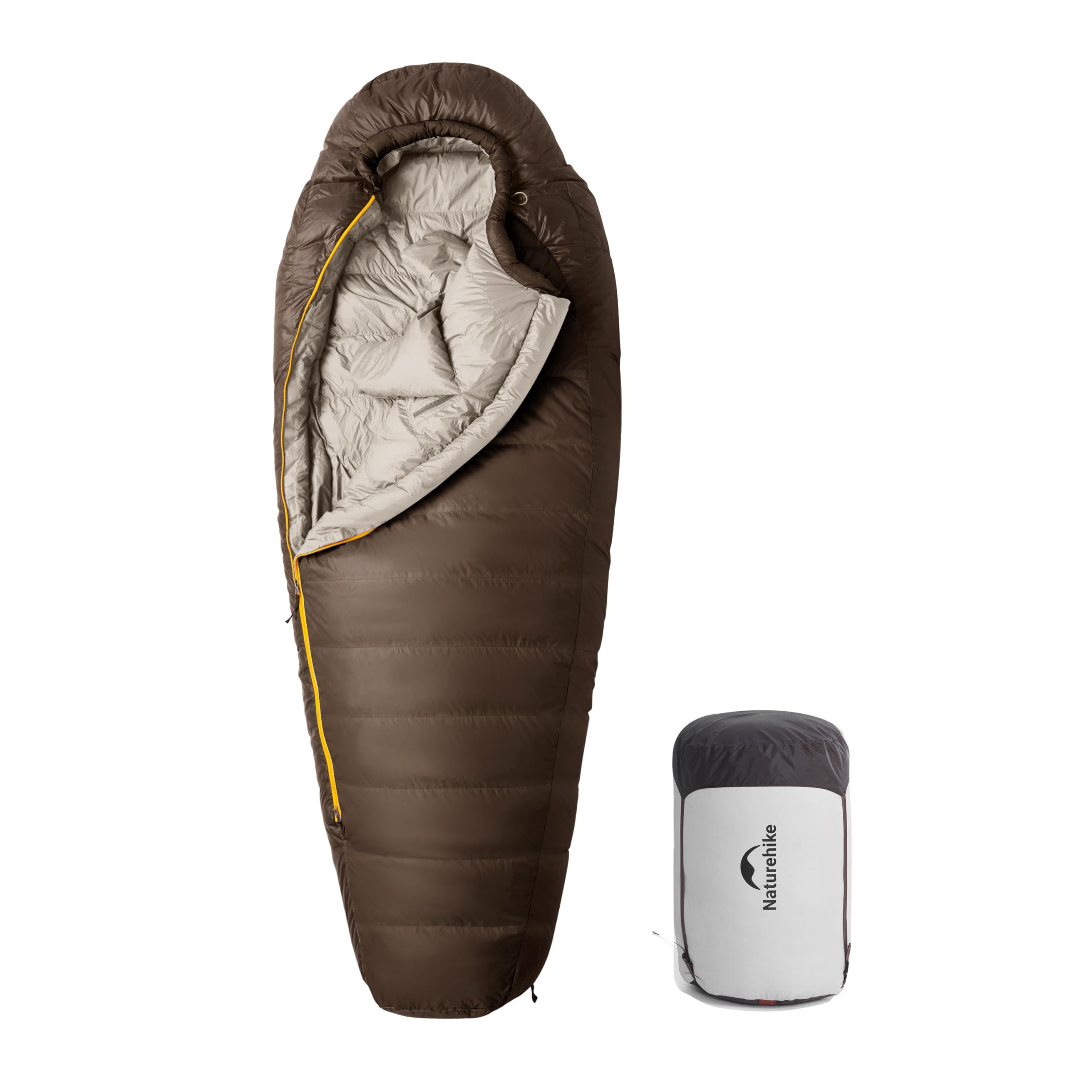
Naturehike’s Snowbird line brings a surprising level of quality to the mid-range segment with RDS-certified 650-fill down and a thoughtful feature set. The U-shaped neck collar and dual shoulder baffles work together to eliminate drafts around the shoulders — a common weak point in cheap mummy bags. The YKK two-way zipper runs smoothly with no snagging, and the internal pocket keeps a phone warm and accessible.
At just 1.9 pounds for the SP400 model, this is one of the lightest bags in this review for the 0-degree category. The 6:4 upper-to-lower down distribution places more insulation on top of your body where you need it most, while the 3D footbox allows natural foot movement. The C-shaped wrapping design helps the bag hug your body without feeling restrictive
The main trade-off is the comfort temperature: the SP400 is rated to 39°F comfort, which is well above 0°F. To get genuine 0-degree performance, you need the SP1000 model with heavier down fill. The product description can be confusing on this point, so check the specific model number carefully. For late-fall backpacking where temperatures stay above freezing, the SP400 is an outstanding lightweight performer.
Why it’s great
- Exceptionally lightweight at 1.9 lbs for a 0-degree bag
- RDS-certified down with traceable supply chain
- Smart 6:4 down distribution for upper-body warmth
Good to know
- Model choice matters — SP400 is not a true 0°F bag
- 3D footbox may feel tight for users with larger feet
- Confusing product descriptions between models
8. QEZER Down Sleeping Bag for Adults (B0DBVLCBD7)

This QEZER entry-level down bag uses 2.2 pounds of 600-fill duck down in a semi-rectangular shape that offers more room than a traditional mummy. The 30.71 x 86.61-inch size accommodates sleepers up to 7 feet tall, and the foot zipper provides ventilation when temperatures rise. The double zipper design includes chest insulation to prevent cold air from seeping in at the closure.
At 3.68 pounds, this bag is lighter than many synthetic options but heavier than high-fill down competitors. The 400T high-density nylon shell feels durable and resists down leakage better than expected at this price. Several users praised the warmth and value, with one scout leader reporting it kept a 130-pound scout warm below 30°F. The bag puffs up impressively after unpacking, indicating good down quality despite the low cost.
The outer fabric is noticeably thin — one user found a small hole after a single trip, likely from a wood splinter. The included stuff sack is also thin and may not survive many compression cycles. For the price, this is a fantastic entry point into down sleeping bags, but budget-conscious buyers should plan to handle the bag with care and consider a replacement stuff sack for longevity.
Why it’s great
- Roomy semi-rectangular shape fits very tall sleepers
- Very warm for the price with good down loft
- Foot zipper allows ventilation on milder nights
Good to know
- Thin outer shell fabric is prone to punctures
- Stuff sack is low quality and may tear quickly
- Not a true 0°F bag for cold sleepers — best to 25°F+
9. QEZER 10 Degree Down Sleeping Bag (B0C7BD9WB5)
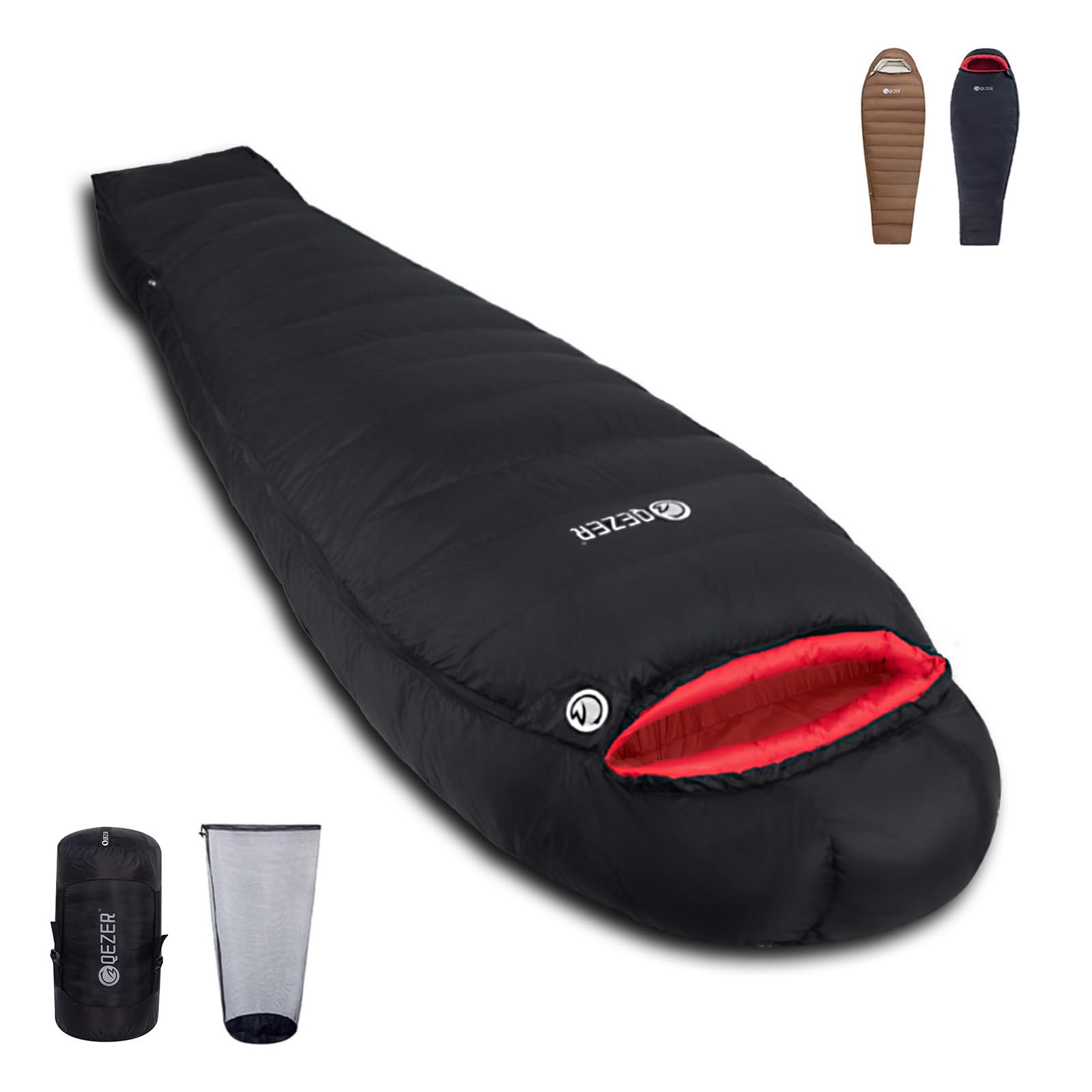
This QEZER model is the widest and longest bag in the lineup, measuring 88.58 x 32.28 inches — enough room for a 6-foot-5-inch sleeper with a heavy build. The 650-fill white duck down is packed into vertical baffles that maximize warmth retention, and the saddle-shaped neck collar wraps tightly around the neck to prevent heat loss. The ergonomic footbox provides natural foot positioning while maintaining insulation density.
The bag compresses to 15.35 x 7.87 inches — reasonable for its size class — and weighs 3.44 pounds. User reports confirm it handles temperatures in the low teens effectively when paired with a proper sleeping pad. The fabric is 400T nylon that resists down leakage, though the material has a slightly crinkly feel that some users notice when shifting positions during the night.
Some users found the zipper catches occasionally, and one long-term tester noted feathers starting to escape after 5 months of use. The bag is also not as warm as the 0-degree label suggests for side sleepers who compress insulation. It excels as a spacious three-season bag for tall backpackers who need extra length and width, but true cold sleepers should consider a dedicated winter bag with higher fill power.
Why it’s great
- Exceptional 88.6-inch length fits very tall users
- 32.3-inch width provides room for broad builds
- Vertical baffles improve thermal efficiency
Good to know
- Zipper can catch fabric during operation
- Down leakage may occur after extended use
- Not warm enough at 0°F for cold sleepers
FAQ
Can I really trust a 0-degree rating on a budget sleeping bag?
Is a 0-degree down bag safe to use in summer temperatures?
How important is a draft collar at 0 degrees?
Final Thoughts: The Verdict
For most backpackers seeking the best warmth-to-weight ratio in the backpacking sleeping bag 0 degree category, the Sea to Summit Spark is the winner — it delivers genuine 0-degree warmth at just 2.83 pounds with premium 850+ fill down. If you are a tall sleeper who needs extra length without paying ultralight prices, the QEZER 10 Degree (B0C7BD9WB5) offers the most space for the money. And for campers who face wet conditions or want the security of synthetic insulation, the Kelty Cosmic Synthetic 0° provides reliable damp-weather warmth at a fair entry-level price.

Mo Maruf
I created WellFizz to bridge the gap between vague wellness advice and actionable solutions. My mission is simple: to decode the research and give you practical tools you can actually use.
Beyond the data, I am a passionate traveler. I believe that stepping away from the screen to explore new environments is essential for mental clarity and physical vitality.