Our readers keep the lights on and my smoothie glass nicely filled. As an Amazon Associate, I earn from qualifying purchases.
You apply a carrier oil expecting supple, hydrated skin, but you’re left with a sticky, tacky layer that attracts lint and makes you reach for the towel. The problem is rarely your skin — it’s the oil’s molecular weight and fatty acid profile. Choosing the wrong viscosity can sabotage even the best moisturizing routine.
I’m Mohammad Maruf — the founder and writer behind WellFizz. I’ve spent years analyzing the fatty acid compositions, absorption rates, and cold-press certifications of carrier oils to separate what genuinely penetrates from what just sits on top of the skin.
This guide breaks down the top contenders, from ultra-light fractionated options to nutrient-dense cold-pressed classics, so you can find the best carrier oil for your specific skin type and DIY needs.
How To Choose The Best Carrier Oil
Selecting a carrier oil isn’t just about grabbing the bottle with the prettiest label. The oil’s molecular structure dictates everything from how fast it sinks into your skin to whether it feeds unwanted bacteria or fungi. Here are the three non-negotiable factors to evaluate before you buy.
Comedogenic Rating & Pore-Friendliness
The comedogenic scale, ranging from 0 (non-pore-clogging) to 5 (highly likely to clog), is your first filter. Oils like fractionated coconut oil score a 0, making them safe for acne-prone faces, while coconut oil (non-fractionated) scores a 4 and can cause breakouts. Always cross-check the rating against your skin’s reactivity, especially if you have a history of congestion.
Fatty Acid Profile & Target Use
The ratios of linoleic, oleic, and lauric acids determine whether an oil feels heavy or feathers into the skin. High-oleic oils like avocado oil offer deep nourishment for dry, mature skin but can exacerbate fungal acne or seborrheic dermatitis. High-linoleic oils like jojoba mimic the skin’s natural sebum and work best for oily or combination skin types.
Extraction Method & Purity Certification
Cold-pressed, unrefined oils retain their natural antioxidants, vitamins, and fatty acids because no heat or chemical solvents are used in extraction. USDA Organic and Non-GMO Verified certifications add a layer of assurance that you’re not applying pesticide residues or hexane traces to your skin. Always confirm “100% pure” isn’t hiding a blend of cheaper filler oils.
Quick Comparison
On smaller screens, swipe sideways to see the full table.
| Model | Category | Best For | Key Spec | Amazon |
|---|---|---|---|---|
| Cliganic Organic Avocado Oil | Avocado Oil | Deeply nourishing dry skin | 12 oz, Cold-Pressed, USDA Organic | Amazon |
| MAYJAM Jojoba Oil | Jojoba Oil | Balancing oily/combination skin | 16 oz, Unrefined, USDA Organic | Amazon |
| NOW Foods Sweet Almond Oil | Almond Oil | Body massage & baby care | 16 oz, Non-GMO, Absorbs Quickly | Amazon |
| Viva Naturals Fractionated Coconut Oil | Coconut Oil | Lightweight carrier for essential oils | 16 oz, Liquid at Room Temp, USDA Organic | Amazon |
| Sky Organics Castor Oil | Castor Oil | Hair growth & lash conditioning | 16 oz, Unrefined, Hexane-Free | Amazon |
In‑Depth Reviews
1. Cliganic Organic Avocado Oil

Cliganic’s avocado oil feels lush without crossing into heavy-grease territory. Its high omega-3 content delivers deep replenishment for dry, mature skin, and the cold-press extraction preserves the antioxidants that fight environmental stress. Users report that stubborn finger wrinkles soften visibly within days of daily application, a result that olive oil often fails to match without multiple applications.
The 8-ounce bottle is compact, but the pump dispenser delivers controlled doses — no accidental floods of oil. It’s USDA Organic, EWG Verified, and Non-GMO, giving you three layers of integrity beyond the “100% pure” claim. For those mixing DIY serums, it blends evenly without separating overnight, a sign of stable fatty acid composition.
One caveat: the high oleic acid content makes it a potential trigger for Malassezia-related scalp issues. A reviewer noted that using this on a dandruff-prone scalp worsened flaking and itching, so reserve this for body and face if you have fungal sensitivities. For non-reactive skin, this is a premium single-ingredient workhorse.
Why it’s great
- Deeply moisturizing without sticky residue
- Cold-pressed & USDA Organic with third-party verification
Good to know
- High oleic content may aggravate fungal acne or scalp conditions
2. NOW Foods Solutions Sweet Almond Oil

NOW Foods has been a staple in the natural products space for decades, and this sweet almond oil justifies the reputation. Its molecular weight lands in the medium range — light enough to avoid greasiness but substantial enough to lock in moisture for a full day. A single 16-ounce bottle covers full-body moisturizing for weeks, making it a cost-effective workhorse for families.
The oil absorbs in roughly 30 seconds on warm skin and leaves zero tackiness, which is why it appears consistently in the routines of massage therapists and parents performing baby massage. It’s also food-grade quality, so you can theoretically use it in the kitchen — though its real strength is cosmetic. The unscented profile means it won’t clash with your essential oil blends.
It’s classified as moderately comedogenic (rating 2), so acne-prone faces should spot-test before committing. Also, because it’s derived from tree nuts, anyone with a nut allergy must avoid it entirely. The bottle lacks a pump, so you’ll need to pour carefully or transfer to a dispenser.
Why it’s great
- Large 16-oz bottle at an accessible price point
- Quick absorption with no sticky finish, ideal for massage
Good to know
- Not suitable for tree nut allergies; moderate comedogenic risk
3. MAYJAM Jojoba Oil Organic USDA Certified
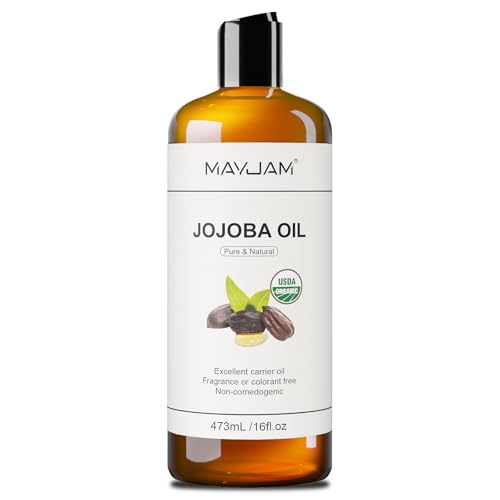
Jojoba oil is technically a liquid wax ester, not a triglyceride oil, which is precisely what makes it mimic the human sebum structure so effectively. MAYJAM’s version is cold-pressed from Israeli jojoba seeds and carries USDA Organic certification. The 16-ounce amber bottle protects the oil from light degradation, and the unrefined nature preserves the natural vitamin E content.
On oily or combination skin, this oil tricks the sebaceous glands into producing less sebum because the skin recognizes the molecular structure as its own. Users with large pores report a visible tightening effect within two weeks. It also works as a makeup remover, dissolving waterproof mascara without the tugging that wipes cause, and won’t clog pores (comedogenic rating of 0).
A small minority of users notice that the oil feels slightly waxy if applied too heavily. Because jojoba solidifies at cool room temperatures (below roughly 50°F), you may need to warm the bottle in your hands during winter months. The pump dispenser on this bottle is precise but slow — expect to pump 4 to 5 times for a full face application.
Why it’s great
- Molecularly identical to human sebum, ideal for balancing oily skin
- Zero comedogenic rating, safe for acne-prone complexions
Good to know
- May solidify in cold storage; pump requires multiple presses
4. Viva Naturals Organic Fractionated Coconut Oil

Fractionated coconut oil is the distilled medium-chain triglyceride (MCT) portion of coconut oil with the long-chain fatty acids removed. The result is a perfectly clear, odorless liquid that remains in fluid form even in a cold pantry. Viva Naturals’ version is USDA Organic and hexane-free, and its molecular profile gives it a comedogenic rating of 0 — a safe bet for anyone prone to breakouts.
This oil is the best choice for diluting therapeutic-grade essential oils because it won’t compete with the aroma profile. It dries down within 10 seconds on the skin, leaving a velvety finish with no trace of greasiness. Massage therapists favor it because it doesn’t stain linens, and DIY formulators use it as a base for roll-on perfumes, beard oils, and cuticle serums.
The flip side is that fractionated coconut oil has a shorter shelf life than full-spectrum oils — once opened, it stays fresh for roughly 12 months versus 2-plus years for unrefined jojoba. It also lacks the antioxidant punch of cold-pressed oils because the fractionation process strips some of the natural polyphenols. For pure slip and absorbency, it’s unmatched.
Why it’s great
- Completely non-greasy, absorbs in under 10 seconds
- USDA Organic, non-GMO, and hexane-free
Good to know
- Shorter shelf life; fewer antioxidants compared to unrefined oils
5. Sky Organics Castor Oil Organic
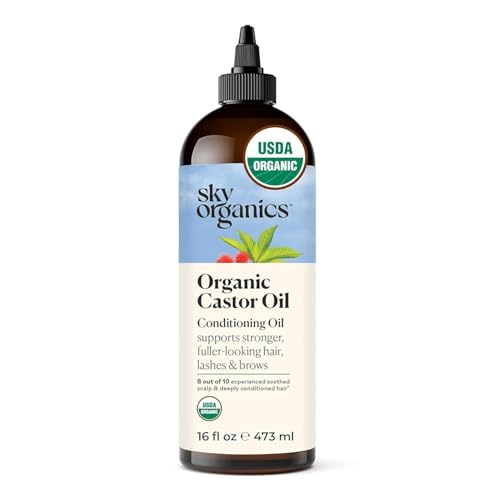
Castor oil is the heavyweight of the carrier oil world — thick, viscous, and rich in ricinoleic acid, which has documented anti-inflammatory effects. Sky Organics’ version is unrefined, cold-pressed, and hexane-free, preserving the high concentration of omega-9 fatty acids. Users report visible thickening of eyelashes and eyebrows within 4 to 6 weeks of nightly application when used with a spoolie brush.
The thickness means a little goes a long way. A single 16-ounce bottle can last a year even with daily scalp treatments. To reduce the sticky drag, many users mix it 50/50 with a lighter carrier like fractionated coconut oil or jojoba. It also functions as a lip balm base and can be rubbed onto dry cuticles for overnight repair.
On the downside, pure castor oil is thick enough to feel tacky on the skin, and some users dislike the subtle nutty scent. It’s not ideal for face moisturizing unless heavily diluted — the comedogenic rating sits around 1, but the density increases the risk of clogging pores if applied undiluted. The bottle includes a precision applicator spout for targeted delivery to lash lines or scalp.
Why it’s great
- High ricinoleic acid content supports hair and lash growth
- Unrefined, cold-pressed, and hexane-free
Good to know
- Very thick and sticky; best used diluted with a lighter carrier
FAQ
Can I use avocado oil if I have fungal acne on my face?
How long does an opened bottle of cold-pressed carrier oil last?
Can I mix multiple carrier oils together for a DIY serum?
Final Thoughts: The Verdict
For most users, the best carrier oil winner is the Cliganic Organic Avocado Oil because it delivers deep moisture without greasy residue, backed by USDA Organic and EWG verification. If you want an oil that mimics your skin’s natural sebum for balance, grab the MAYJAM Jojoba Oil. And for a featherlight blending base that won’t clog pores, nothing beats the Viva Naturals Fractionated Coconut Oil.

Mo Maruf
I created WellFizz to bridge the gap between vague wellness advice and actionable solutions. My mission is simple: to decode the research and give you practical tools you can actually use.
Beyond the data, I am a passionate traveler. I believe that stepping away from the screen to explore new environments is essential for mental clarity and physical vitality.