Our readers keep the lights on and my smoothie glass nicely filled. As an Amazon Associate, I earn from qualifying purchases.
A backpack that fits badly on day one is gear you will resent mile after mile. For hiking and camping, the difference between a pack that feels like part of your body and one that fights you every step comes down to frame design, torso adjustment, and how the hip belt transfers load. This guide cuts through the volume wars and pocket counts to focus on what actually keeps you moving comfortably.
I’m Mohammad Maruf — the founder and writer behind WellFizz. I’ve spent years combing through trail feedback, comparing material specs, and cross-referencing real-world load tests to understand exactly which features matter when you are carrying 30 to 50 pounds for multiple days.
This guide compares seven internal frame packs that span budget-friendly options to premium haulers. Whether you are planning weekend overnights or extended backcountry treks, these picks represent the strongest options in the backpack for hiking and camping category for reliable comfort and durable construction.
How To Choose The Best Backpack For Hiking And Camping
The right pack hinges on matching your torso length to the suspension range, selecting a volume that matches your trip duration, and confirming the hip belt can offload weight from your shoulders. Beginners often over-prioritize pocket layouts while ignoring frame stiffness and lumbar support. These three factors separate a comfortable carry from a miserable one.
Frame Type and Suspension Adjustability
Internal frame packs with an aluminum stay or wire frame are the baseline for carrying loads over 25 pounds. Look for adjustable torso lengths — a range of 15 to 21 inches covers most adult builds. Packs with a fixed frame that does not allow you to shift the shoulder yoke up or down will cause pressure points regardless of how much padding they have. The suspension must also include load-lifter straps that pull the pack toward your body at the top of the shoulder straps.
Capacity Selection for Your Trip Length
Volume is measured in liters. For a single overnight, a 35L to 50L pack is sufficient for a sleeping bag, pad, stove, food, and extra layers. For trips lasting three to five days, 60L to 65L provides the extra room for a bear canister or bulkier tent. Anything above 75L is for extended expeditions or winter gear. Oversizing forces you to carry unnecessary weight, while undersizing leaves no room for food and water.
Hip Belt and Load Transfer
The hip belt is the primary weight-bearing component. A padded, contoured belt that wraps around the iliac crest transfers 70 to 80 percent of the pack weight away from your shoulders onto your hips. Thin belts or belts without adjustable webbing allow the load to sag backward, creating shoulder strain. Check that the belt includes a padded lumbar pad that sits in the small of your back to fill the gap between your spine and the pack frame.
Quick Comparison
On smaller screens, swipe sideways to see the full table.
| Model | Category | Best For | Key Spec | Amazon |
|---|---|---|---|---|
| TETON Sports Explorer 65L | Mid-Range | Best Overall for Value | 5 lb weight, 65L, 600D PU lining | Amazon |
| Kelty Asher 65L | Premium | Lightweight Load Control | 3 lb 5 oz weight, 65L, Fit Pro torso | Amazon |
| Osprey Rook 65L | Premium | Built-In Rain Protection | 3.7 lb weight, 65L, AirSpeed suspension | Amazon |
| Osprey Stratos 44L | Premium | Day Hikes to Short Overnights | 3.64 lb weight, 44L, AirSpeed backpanel | Amazon |
| Mardingtop 60L Military | Budget | MOLLE Modular Customization | 4.49 lb weight, 60L, YKK zippers | Amazon |
| Mardingtop 50L | Budget | Tactical & Survival Use | 3.9 lb weight, 50L, 600D polyester | Amazon |
| Ubon 60L Internal Frame | Budget | Entry-Level Weekend Hikes | 2.65 lb weight, 60L, mesh back panel | Amazon |
In‑Depth Reviews
1. TETON Sports Explorer 65L Internal Frame Backpack
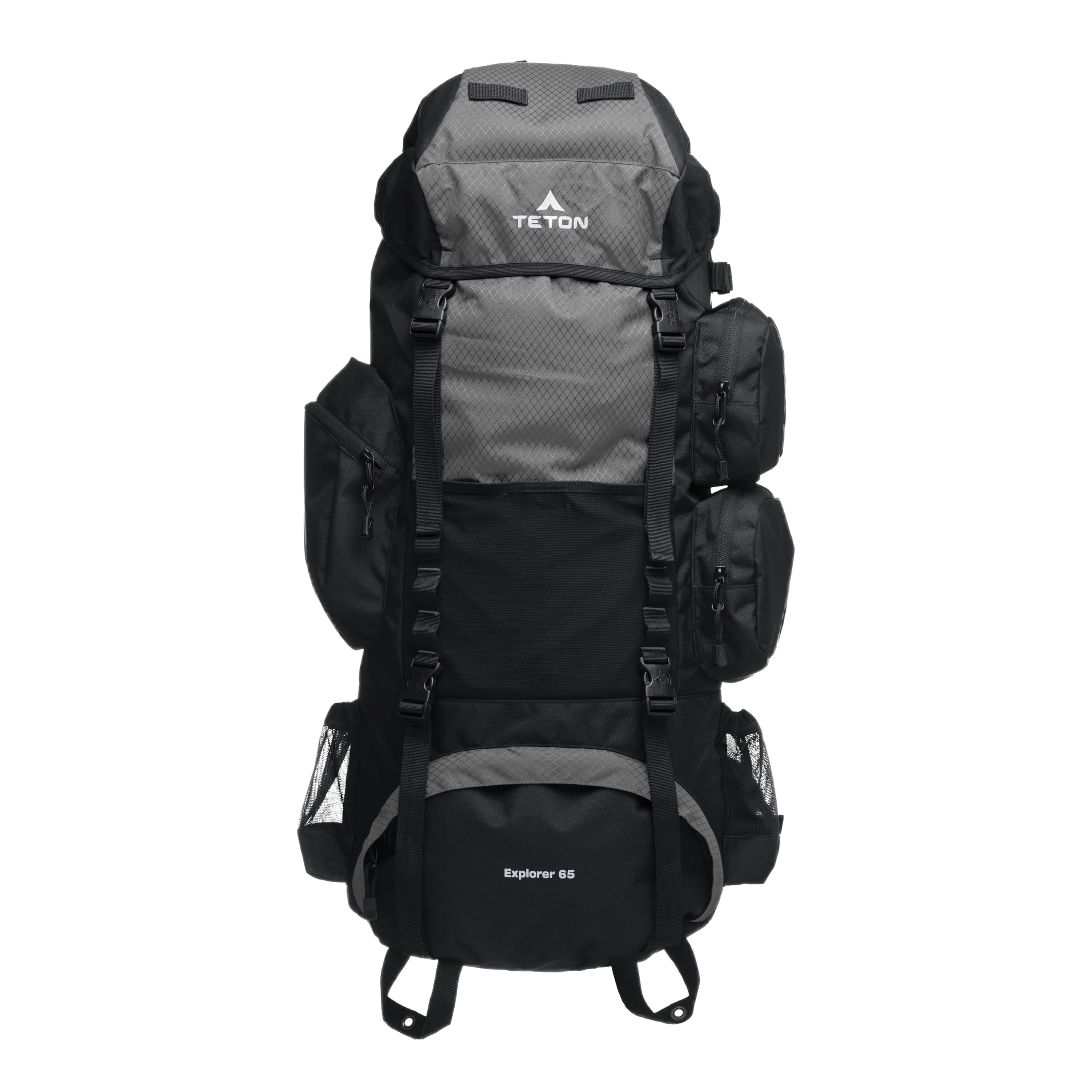
The TETON Explorer earns the top spot because it delivers a full internal frame with multi-position torso adjustment and a dense open-cell foam lumbar pad at a price that undercuts premium competitors by a wide margin. The 65L volume is ideal for three- to seven-day trips, and the separate sleeping bag compartment with a floating divider keeps your gear organized without wasting space. Users consistently report carrying loads from 35 to 47 pounds comfortably, with weight distributed onto the hip belt rather than the shoulders.
The 600D polyurethane-lined fabric has held up against rain, brush, and repeated stuffing without tearing. The included rain cover fits snugly over the entire pack and kept contents dry during heavy downpours in multiple trail reports. Multi-directional compression straps on the sides and bottom let you cinch down a half-full load, preventing the pack from shifting side to side. Side mesh pockets accommodate standard 32-ounce water bottles, though some users note the mesh is not stretchy enough for oversized Nalgene bottles.
The main limitation is the weight — at 5 pounds empty, it is not an ultralight option for fast-and-light hikers. The zippers can feel stiff during the first few uses, and the hip belt does not include built-in pockets, which forces you to rely on the lid pocket or a separate fanny pack for trail snacks. For the price, however, the combination of torso adjustability, load capacity, and durability makes this the most balanced option for the majority of hikers.
Why it’s great
- Adjustable torso fits 5’9″ to 6’5″ users effectively
- Separate sleeping bag compartment with removable divider
- Excellent weight distribution for loads up to 50 lbs
Good to know
- Empty pack weight of 5 lbs is not ultralight
- No hip belt pockets for quick-access items
2. Kelty Asher 65L Backpack

Kelty’s Asher 65L hits a sweet spot for hikers who want premium-level suspension without the premium weight. The Fit Pro torso adjustment system allows on-the-fly lengthening or shortening across a 15.5- to 21-inch range, which is rare at this price tier. The Amp Flow ventilated back panel uses a tensioned mesh design that keeps your back dry even during summer climbs, and the aluminum stay in the perimeter frame stabilizes the load laterally so the pack does not sway on uneven terrain.
The 65-liter capacity includes a sleeping bag compartment with a floating divider, hydration sleeve with a hose port, and multiple daisy chain lash points on the front for strapping a tent or sleeping pad. The shell fabric is a C0 and PFC-free DWR polyester, which sheds light rain well, though the included rain cover provides full protection during sustained downpours. Users who have logged hundreds of miles report no stitching failures or strap wear, and the pack handles the 30- to 50-pound recommended carry range with good balance.
The hip belt padding is adequate but not as dense as higher-end Osprey belts, and the belt does not have the same level of contouring found on packs priced above . Some users find the shoulder strap padding a bit thin for loads exceeding 45 pounds over long distances. The lid pocket is generous, but the main compartment opening is relatively narrow, which makes packing cube organization more important than with a full-front zip design. For its weight and feature set, the Asher offers the best weight-to-carry-comfort ratio in this lineup.
Why it’s great
- Ventilated Amp Flow back panel keeps you dry
- Quick-adjust torso range fits most body types
- Lightweight 3 lb 5 oz without sacrificing frame support
Good to know
- Hip belt padding could be thicker for heavy loads
- Main compartment opening is relatively narrow
3. Osprey Rook 65L Men’s Backpacking Backpack

The Osprey Rook 65L brings Osprey’s proven AirSpeed suspension into the mid-size category, using a tensioned mesh backpanel that creates a full air gap between the pack and your back. This design is markedly effective at reducing sweat buildup during strenuous ascents, and the LightWire frame transfers load efficiently into the padded hip belt. The belt itself is contoured with a soft edge that avoids digging into the iliac crest, making it comfortable even at the 35-pound sweet spot that users report as the pack’s upper comfort limit.
Integrated rain cover is a standout feature — it stows in a dedicated zippered pocket on the bottom of the pack and deploys quickly when the sky opens. The main compartment is top-loading with a drawcord closure and a floating divider over the sleeping bag section. Side mesh pockets are angled so you can access a water bottle without removing the pack, which is a small but real convenience on a long day. The zippers are YKK-branded and feel smooth and sturdy, and the 330-denier nylon fabric has resisted abrasion well in testing.
The Rook does not have a large external mesh shove-it pocket for stuffing a jacket, which some users miss. The sleeping bag divider is removable, but accessing the bottom compartment requires opening the main compartment anyway, so the separate zip access is less useful than it appears on paper. The pack also weighs 3.7 pounds, which is lighter than the TETON but heavier than the Kelty. For hikers who prioritize ventilation above all else and want Osprey’s reliable warranty, the Rook is a strong investment.
Why it’s great
- AirSpeed mesh backpanel provides excellent ventilation
- Integrated rain cover stores in its own pocket
- Angled side pockets for one-handed water bottle access
Good to know
- No large front mesh pocket for quick stowage
- Upper comfort limit is around 35 lbs for most users
4. Osprey Stratos 44L Men’s Hiking Backpack
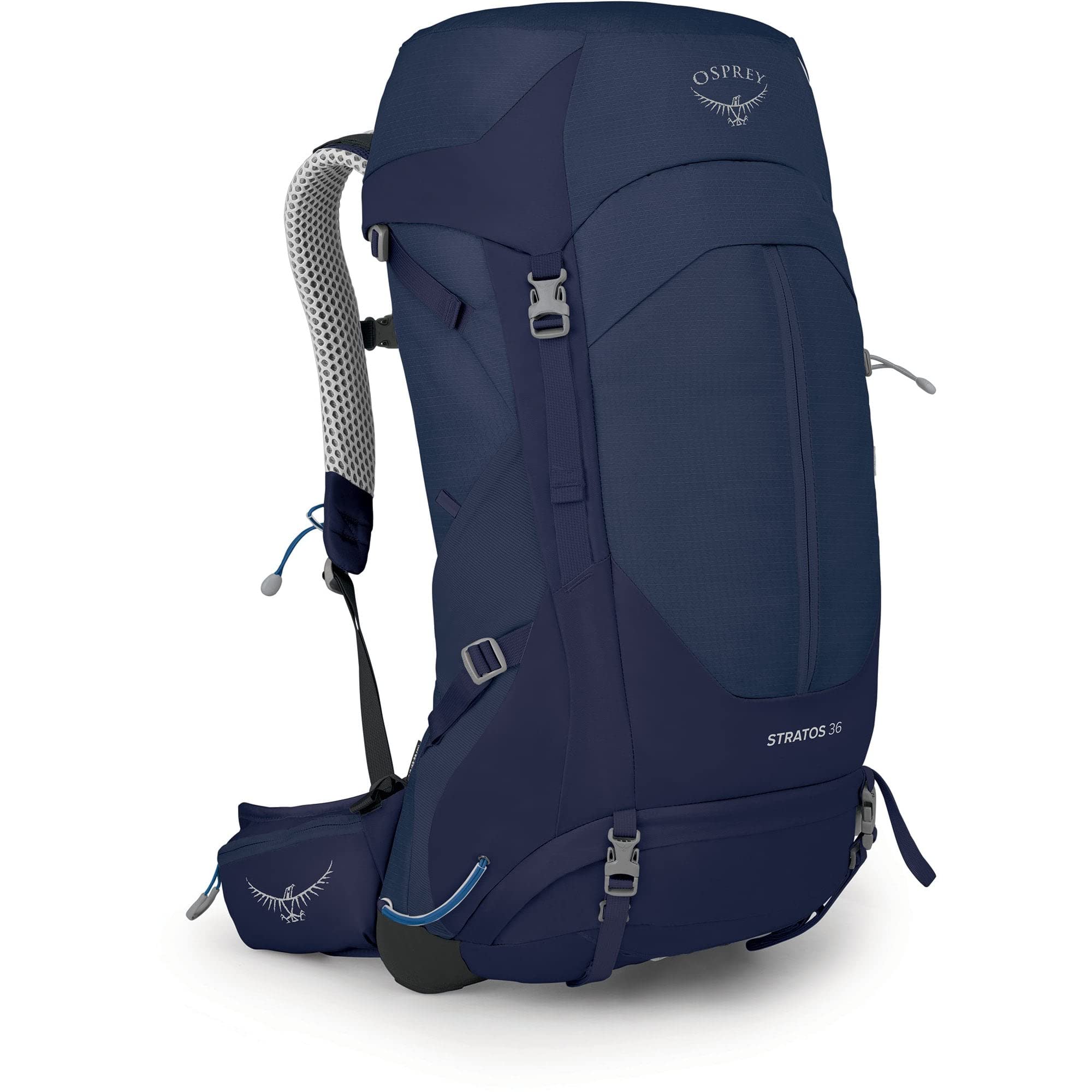
The Osprey Stratos 44L is the smallest pack in this roundup and the best choice for day hikes with enough capacity for a warm-weather overnight or a minimalist ultralight trip. The AirSpeed ventilated backpanel is identical in design to the Rook’s — tensioned mesh over a wire frame — which means you get the same sweat-reduction benefits in a more compact package. The injection-molded suspension includes a ladder-style torso adjustment that extends the fit range for taller users, and the hip belt is equipped with two zippered pockets for immediate access to snacks, phone, or a map.
User reports consistently highlight the pack’s carry-on compatibility for air travel — at 28.3 inches tall, it fits in most overhead bins — and the included rain cover ensures the pack stays dry during unexpected storms. The top-loading main compartment has a drawcord closure with a floating lid, plus a separate zippered bottom compartment for a sleeping bag or wet clothes. Internal hydration sleeve with a hose port is standard, and the side pockets are deep enough for 1-liter bottles without popping out when the pack is full. The zippers feel premium, and the 100-denier nylon fabric has held up well against trail-side granite and scree.
The obvious trade-off is volume — 44L cannot handle a full four-season expedition kit or a bear canister along with a tent and sleeping bag. The hard frame structure also means the pack cannot be compressed into a personal item for budget airlines. Some users with wider shoulders have noted the shoulder straps sit slightly close together. For anyone whose hiking routine centers on single-day pushes or weekend trips where every ounce matters, the Stratos is the most refined ventilated pack in its size class.
Why it’s great
- Excellent AirSpeed ventilation for hot-weather hiking
- Hip belt pockets keep essentials within reach
- Carry-on friendly for air travel
Good to know
- 44L capacity limits multi-day gear options
- Rigid frame prevents under-seat storage on planes
5. Mardingtop 60L Military Internal Frame Backpack
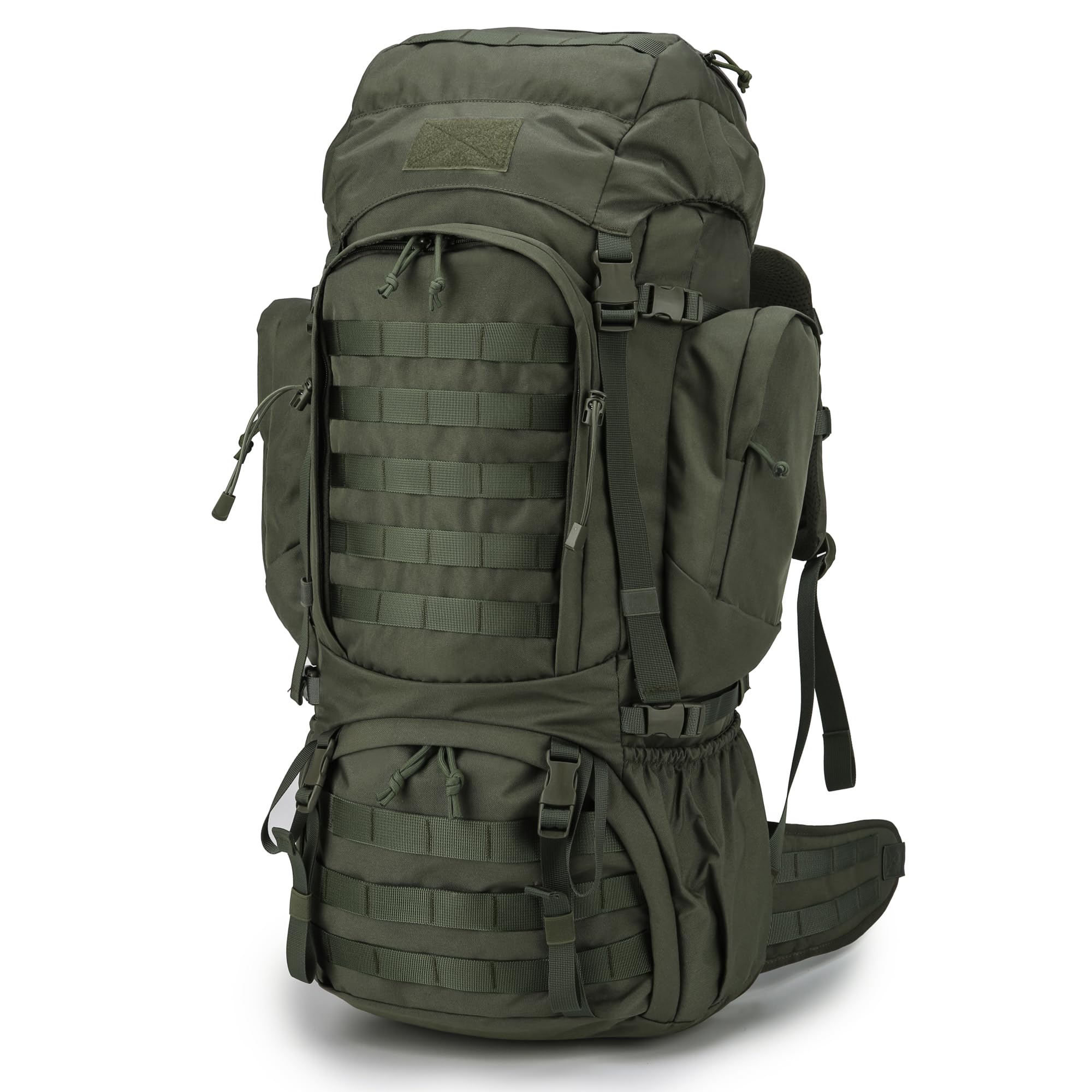
The Mardingtop 60L military-style pack adds a tactical twist with full MOLLE webbing on the front and sides, allowing you to attach pouches, a hydration carrier, or external gear directly to the pack surface. The 60-liter main compartment can be expanded to roughly 75 liters through the lid riser, giving you flexibility for trips that start light and collect extra supplies. YKK zippers run throughout the construction, which is a strong indicator of reliability at this price level, and the 600D polyester fabric has proven durable in user reports covering 150-plus miles of trail use and regular ruck runs.
The internal frame includes an aluminum stay that provides reasonable load transfer, though the hip belt padding is thinner than the Kelty or Osprey options. The back panel uses a mesh-covered foam pad that offers moderate airflow but does not match the ventilated mesh designs found on premium packs. Compression straps on both sides and the bottom let you secure a tent or sleeping pad externally, and the included rain cover uses cheap elastic that several users have reinforced with cord locks. The pack features a large front zip access that opens the main compartment like a suitcase, which is helpful for packing and unpacking without digging through the top.
Multiple users note that the waist belt cinches tend to loosen under heavy loads above 50 pounds, and the narrow shoulder straps can create pressure points on longer carries. The pack is also on the heavier side at 4.49 pounds empty, but the build quality and modular expandability make it a favorite among hunters, survivalists, and ruckers who prioritize attachment options over ultralight performance. For hikers on a budget who want the flexibility of a modular system, this pack delivers enormous value.
Why it’s great
- MOLLE webbing accepts tactical pouches and add-ons
- YKK zippers and quality stitching hold up to trail abuse
- Expandable main compartment from 60L to 75L
Good to know
- Hip belt padding thin for heavy loads over 50 lbs
- Rain cover elastic is cheap and prone to failure
6. Mardingtop 50L Hiking Backpack with Rain Cover
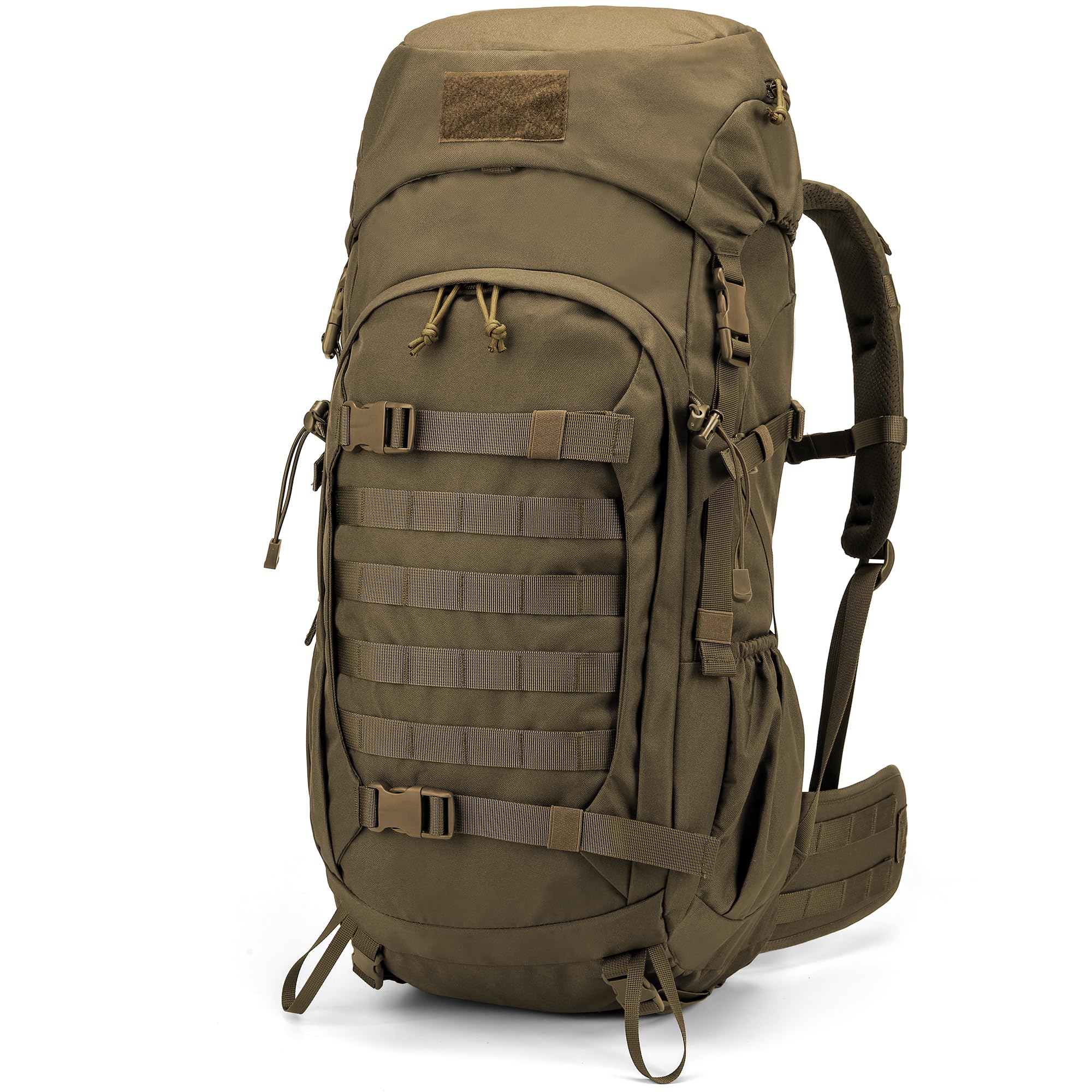
The smaller 50-liter version of Mardingtop’s military pack retains the same 600D polyester shell and MOLLE webbing but in a more compact package suited to weekend trips and tactical day use. The internal frame provides enough structure for loads in the 30- to 40-pound range, and the included rain cover protects the pack during wet weather. Users praise its spaciousness for its size class, noting that the main compartment swallows a three-day kit comfortably, and the front zip access allows you to grab gear from the middle of the pack without pulling everything out.
The hydration compartment fits a 5-liter bladder (not included), and the side compression straps keep the load tight against your back. The back panel uses a breathable mesh design, but user feedback indicates it still runs hot in warm conditions, similar to most budget packs without a tensioned mesh trampoline. The pack weighs 3.9 pounds empty, which is reasonable for a framed pack at this price.
Torso adjustment range is adequate for most body types between 5’7″ and 6’1″, but users taller than 6’2″ may find the hip belt sits too low. The lid pocket includes a small printed outdoor survival guide, which is a gimmick but does not add weight. For hikers who want a durable, MOLLE-capable pack for short trips and do not need the extra volume of the 60L version, this 50L pack offers the same construction quality in a more manageable size.
Why it’s great
- MOLLE system allows endless external attachments
- Front zip access for easy packing and unpacking
- Durable 600D polyester resists tears and abrasion
Good to know
- Waist belt buckles can slip and may need replacement
- Back panel ventilation is mediocre in hot conditions
7. Ubon 60L Internal Frame Hiking Backpack
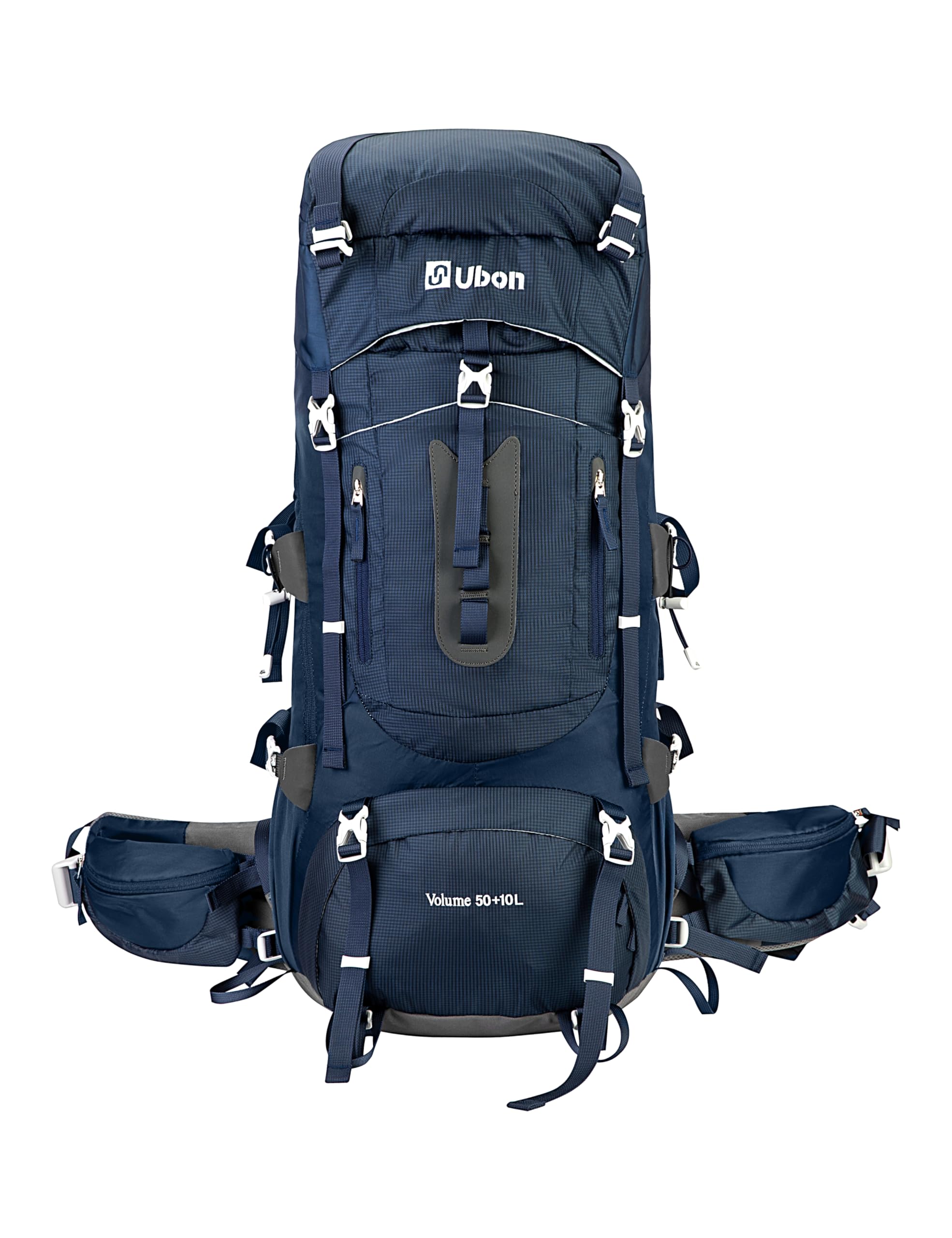
The Ubon 60L is the lightest framed pack in this comparison at just 2.65 pounds, which makes it an attractive entry point for new hikers who want an internal frame without committing to a heavy pack. The mesh back panel provides decent airflow, and the adjustable frame has received positive feedback from users ranging from 5’8″ to 6’3″. The pack includes a rain fly, multiple pockets for organization, and a sleeping bag compartment with a divider. Users report carrying 25 to 28 pounds comfortably over 13-mile hikes, with no shoulder pain attributable to the pack itself.
The main compartment is spacious enough for five nights of gear if you pack efficiently, and the bottom zip compartment isolates your sleeping bag or dirty shoes. Side mesh pockets hold water bottles securely, and the included rain cover fits the entire pack. The shoulder straps and waist belt use foam padding that several users note feels less dense than mid-range competitors, but the adjustable sternum strap and load-lifter straps help compensate by pulling the load closer to your center of gravity. The fabric has held up against rain and light bushwhacking without tearing.
The primary limitations are the zippers, which some users describe as feeling light-duty, and the hip belt pockets that sit too far back for users with a larger waist circumference. The foam padding on the shoulder straps could be thicker for loads approaching 30 pounds, and the pack does not have the same level of structural rigidity as the TETON or Mardingtop options. For beginner to intermediate hikers on a tight budget who need a functional 60-liter pack for weekend trips, the Ubon delivers surprising value without falling apart.
Why it’s great
- Ultra-light frame at 2.65 lbs for easy carrying
- Adjustable frame fits a wide range of torso heights
- Internal mesh back panel reduces back sweat
Good to know
- Zippers feel less durable than premium competitors
- Hip belt pockets positioned too far back for larger waists
FAQ
What liter size is best for a 3-day backpacking trip?
Can I use a hiking backpack for camping car trips?
How do I measure my torso length for a pack?
Why does my pack hurt my shoulders even with a hip belt?
Final Thoughts: The Verdict
For most users, the backpack for hiking and camping winner is the TETON Sports Explorer 65L because it combines an adjustable torso range, durable 600D fabric, a comfortable lumbar pad, and a separate sleeping bag compartment at a price that rivals packs costing significantly more. If you want lighter weight without sacrificing frame support, the Kelty Asher 65L offers the best weight-to-comfort ratio with its Fit Pro adjustment system. And for shorter trips where every ounce of ventilation matters, the Osprey Stratos 44L is the most refined ventilated pack you can buy for day hikes and minimal overnight kit.

Mo Maruf
I created WellFizz to bridge the gap between vague wellness advice and actionable solutions. My mission is simple: to decode the research and give you practical tools you can actually use.
Beyond the data, I am a passionate traveler. I believe that stepping away from the screen to explore new environments is essential for mental clarity and physical vitality.