Our readers keep the lights on and my smoothie glass nicely filled. As an Amazon Associate, I earn from qualifying purchases.
Indoor photography is a battle against light. Whether you’re capturing a toddler’s birthday party, a family dinner, or an artist’s studio, the ambient light inside a home is rarely consistent or plentiful. The wrong lens turns your camera into a sluggish, grainy machine; the right lens lets you freeze a moment without a flash. The decision comes down to a single spec more than any other: maximum aperture.
I’m Mohammad Maruf — the founder and writer behind WellFizz. I’ve spent over a decade dissecting optical designs, analyzing lens coatings, and comparing real-world low-light performance across hundreds of models to help photographers match the right glass to their shooting conditions.
The complication is that lens makers use terms like “fast” and “bright” loosely, while the real measurable difference between a usable indoor shot and a blurry mess is often just one f-stop. This guide cuts through the marketing to help you find the absolute best camera lens for indoor photography for your specific camera system and budget.
How To Choose The Best Camera Lens For Indoor Photography
Choosing a lens for indoor use isn’t like choosing one for a sunlit landscape. You’re trading reach for brightness, and sharpness for speed. The three pillars to evaluate are aperture, focal length, and the lens’s ability to handle mixed artificial light without ghosting or flaring.
Aperture: The Golden Number
The lower the f-number, the more light the lens lets in. An f/1.4 lens gathers twice the light of an f/2.0 lens, and four times what an f/2.8 zoom delivers. For dim living rooms, restaurants, or event halls, a lens with a maximum aperture of f/2.0 or wider (smaller number) is non-negotiable if you want to avoid cranking ISO into noisy territory. A prime lens at f/1.8 can mean the difference between a sharp image at 1/100th second and a motion-blurred mess at 1/30th.
Focal Length: Room for the Shot
In tight indoor spaces, a 50mm lens on a full-frame camera can feel like a telephoto. On APS-C cameras, that same 50mm behaves like a 75mm or 80mm, forcing you to step way back. Wide-angle primes in the 24mm to 35mm range (full-frame equivalent) are more forgiving in cramped rooms. If you shoot on an APS-C body, consider lenses in the 16mm to 28mm range to maintain a useful field of view without distortion.
Coatings and Autofocus Quality
Indoor lighting often mixes warm tungsten, cool LED, and window daylight. Cheap lenses can produce unwanted flare or color shifting under these conditions. Look for multi-coating formulations like Canon’s Super Spectra Coating, Sony’s Nano AR Coating, or Nikon’s anti-reflective coatings. Autofocus motor type matters too — stepping motors (STM) and linear motors provide quiet, smooth focus for both stills and video, whereas older ultrasonic motors can be audible enough to disrupt a quiet scene.
Quick Comparison
On smaller screens, swipe sideways to see the full table.
| Model | Category | Best For | Key Spec | Amazon |
|---|---|---|---|---|
| Canon RF50mm F1.8 STM | Prime | Budget full-frame low-light | f/1.8 aperture | Amazon |
| Canon RF28mm F2.8 STM | Prime | Compact walk-around indoor | 28mm pancake lens | Amazon |
| SIRUI Night Walker 55mm T1.2 | Cine Prime | APS-C cinema & low-light video | T1.2 aperture (f/1.1) | Amazon |
| Nikon NIKKOR Z 50mm f/1.8 S | Prime | Nikon Z full-frame sharpness | f/1.8 S-Line optics | Amazon |
| VILTROX 56mm F1.2 Pro | Prime | APS-C portrait with shallow DoF | f/1.2 aperture | Amazon |
| Sigma 18-35mm F1.8 Art | Zoom | Versatile indoor zoom for APS-C | Constant f/1.8 zoom | Amazon |
| Sony FE 20mm F1.8 G | Prime | Ultra-wide full-frame indoor | 20mm f/1.8 G | Amazon |
| Sigma 35mm F1.2 Art | Prime | Maximum aperture full-frame | f/1.2 aperture | Amazon |
| Sony FE 35mm f/1.4 GM | Prime | Premium full-frame compact | f/1.4 G Master | Amazon |
In‑Depth Reviews
1. Canon RF50mm F1.8 STM

The RF50mm F1.8 STM is the classic “nifty fifty” reimagined for Canon’s full-frame mirrorless RF mount. Weighing just 0.35 pounds, this pancake-ish prime delivers a bright f/1.8 aperture that transforms indoor shooting — allowing you to keep ISO lower and shutter speeds faster than any kit zoom at f/3.5 or f/4. The stepping motor (STM) provides quiet, smooth autofocus that won’t buzz during video, though it’s not the fastest for tracking erratic subjects.
Optically, the Super Spectra Coating does a respectable job suppressing flare and ghosting when you’re shooting near a window or under mixed artificial light. The 50mm field of view on full-frame is a natural perspective — not too wide, not too tight — making it ideal for product shots, half-body portraits, and casual event photography. On APS-C cameras, the effective 80mm equivalent is better suited for portraits than group shots in cramped rooms.
Image quality is strong for the price, with decent sharpness wide-open that improves when stopped to f/2.8 or f/4. Chromatic aberration is present but well-controlled. The plastic barrel feels lightweight but not fragile, and the control ring on the lens barrel allows direct adjustment of aperture or exposure compensation. Autofocus is the lens’s weakest link — it’s acceptable but not snappy, and occasional hunting occurs in dim light.
Why it’s great
- Very bright f/1.8 aperture for low-light shooting
- Extremely lightweight and compact for the RF system
- Super Spectra Coating minimizes flare in mixed indoor lighting
Good to know
- Autofocus can hunt in very dim conditions
- Plastic build lacks weather sealing
- 50mm on APS-C is tight for interior spaces
2. Canon RF28mm F2.8 STM

The RF28mm F2.8 STM is a pancake lens designed for maximum portability on Canon EOS R-series bodies. At f/2.8, it’s a full stop slower than the RF50mm f/1.8, but the 28mm focal length is more forgiving for indoor group shots and environmental portraits. On full-frame, you get a wide-angle perspective with minimal distortion; on APS-C, it becomes a versatile 45mm equivalent that’s excellent for everyday walk-around shooting.
Optically, three aspheric elements and Canon’s Super Spectra Coating work together to deliver sharp results with good contrast, even when shooting into mixed light. Corners are slightly soft wide-open, but center sharpness is strong and color saturation is pleasing. The leadscrew-type STM motor provides very quiet autofocus suitable for video, and the focus is fast and consistent on modern R-series bodies.
The trade-off for the slim profile is that there’s no image stabilization, and f/2.8 means you’ll need higher ISO or slower shutter speeds compared to faster primes. For well-lit indoor scenes or when using a monopod, it performs beautifully. Its true strength is vanishing into a bag or pocket, making it a lens you’re likely to have with you rather than leave at home.
Why it’s great
- Extremely slim pancake design for easy carry
- 28mm is ideal for tight indoor spaces on full-frame
- Fast and quiet STM autofocus suitable for video
Good to know
- f/2.8 is slower than many primes used for low-light
- No optical image stabilization
- Corner sharpness is not as strong as center
3. SIRUI Night Walker 55mm T1.2

The SIRUI Night Walker 55mm T1.2 is a manual-focus cine lens built for APS-C and Super35 sensors. Its T1.2 aperture (effectively f/1.1) is extraordinarily fast, allowing clean, low-noise indoor footage even in near-darkness. The 55mm focal length equates to roughly 77mm on full-frame, making it a strong choice for close-up portrait work and product videography where you want separation between subject and background.
The aluminum housing is robust and cinema-oriented, with standard 0.8-mod gears on both the focus and aperture rings for use with follow-focus systems. The 270-degree focus rotation enables precise rack-focus pulls. Optically, the 12-blade aperture produces smooth, circular bokeh at wide apertures, and the lens maintains good contrast even when shooting into light sources. Wide-open at T1.2, the image is soft with a pleasing vintage character; stopping to T4 delivers much sharper results.
This lens is not for speed shooters who need autofocus — every shot is manual focus, and there’s no electronic communication with the camera beyond manual aperture control. The lack of autofocus is a real hurdle for fast-moving indoor events but liberating for controlled video or staged stills. Some units have shipped with missing caps, so verify the package on arrival. For videographers seeking ultra-shallow depth of field on APS-C, this is a unique tool at its price point.
Why it’s great
- Exceptionally fast T1.2 aperture for extreme low-light
- Professional cine build with standard gear rings
- 12-blade aperture creates smooth, cinematic bokeh
Good to know
- Manual focus only — no autofocus capability
- Soft wide-open; sharpens significantly at T4
- APS-C/S35 only; not suitable for full-frame
4. Nikon NIKKOR Z 50mm f/1.8 S
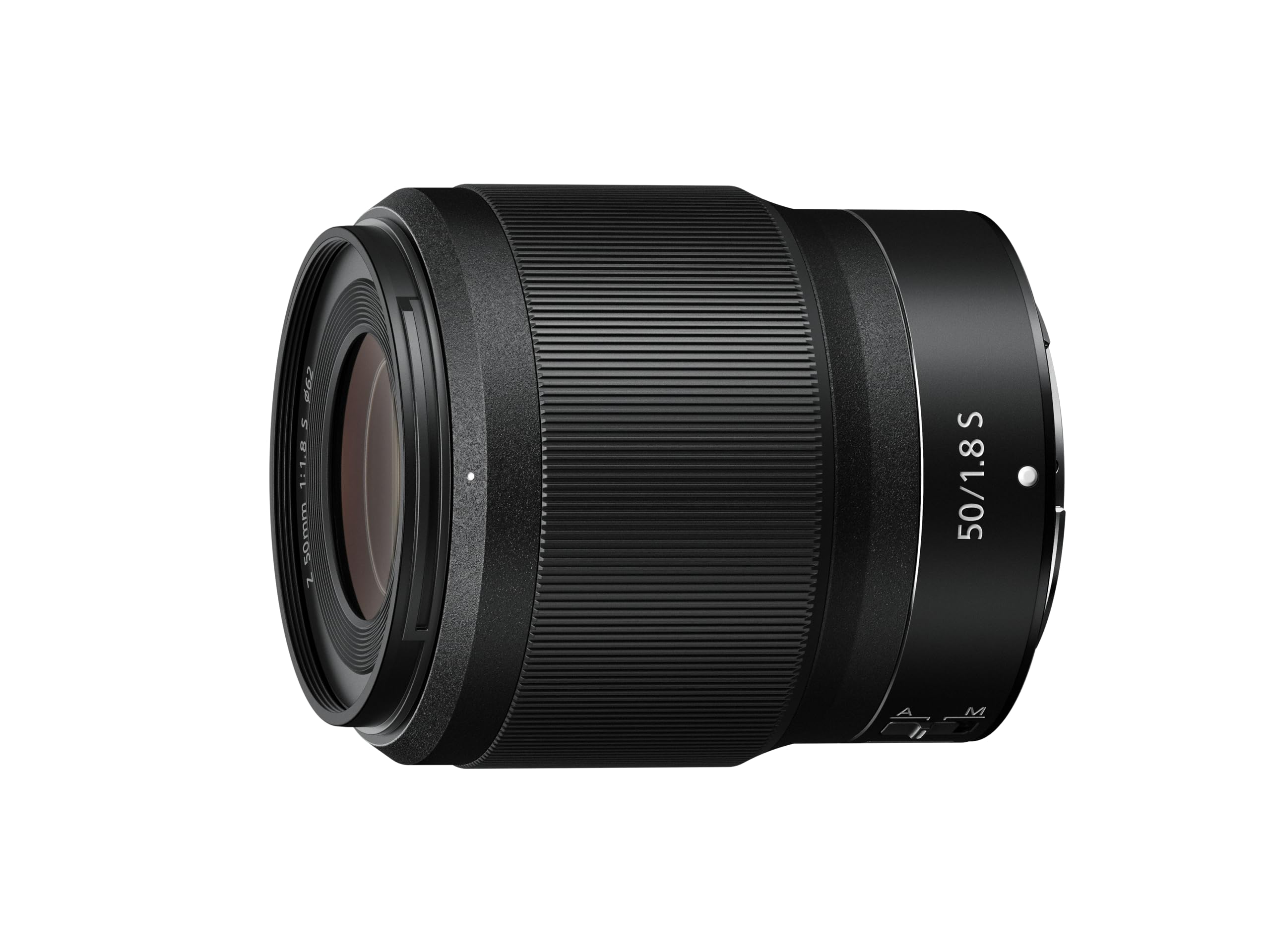
The Nikon NIKKOR Z 50mm f/1.8 S is the benchmark for what an f/1.8 prime can achieve. Part of Nikon’s S-Line, it delivers extreme sharpness across the frame, even wide open, with virtually zero distortion and minimal chromatic aberration. On a Z-series full-frame body, this lens is a masterclass in optical correction, producing images that rival far more expensive glass like the Zeiss Otus series in terms of micro-contrast and resolution.
Indoors, the f/1.8 aperture provides the speed needed to capture clean, sharp images in dim living rooms and event spaces. The five-axis Dual Detect Optical VR, working in tandem with Z camera bodies, offers effective stabilization for handheld video or longer exposures. The ultra-quiet stepping motor is genuinely silent — ideal for shooting during a ceremony or while recording video in a quiet room. Bokeh is smooth, though wide-open shots can show some cat’s eye highlighting in the corners.
Build quality is exceptional for a non-S-Line lens, with a dust- and moisture-resistant design. The unibody construction and wide control ring feel substantial without being excessively heavy. It’s larger than classic 50mm f/1.8 lenses, but the optical performance justifies the size. Some photographers may prefer the even more compact 40mm f/2 for everyday carry, but for pure image quality in an indoor setting, this S-Line prime is hard to beat.
Why it’s great
- Extremely sharp from corner to corner, even at f/1.8
- Near-zero distortion and minimal chromatic aberration
- Silent autofocus and effective in-body stabilization
Good to know
- Larger and heavier than vintage 50mm f/1.8 designs
- Bokeh can exhibit cat’s eye effect wide-open
- Only compatible with Nikon Z mount cameras
5. VILTROX 56mm F1.2 Pro
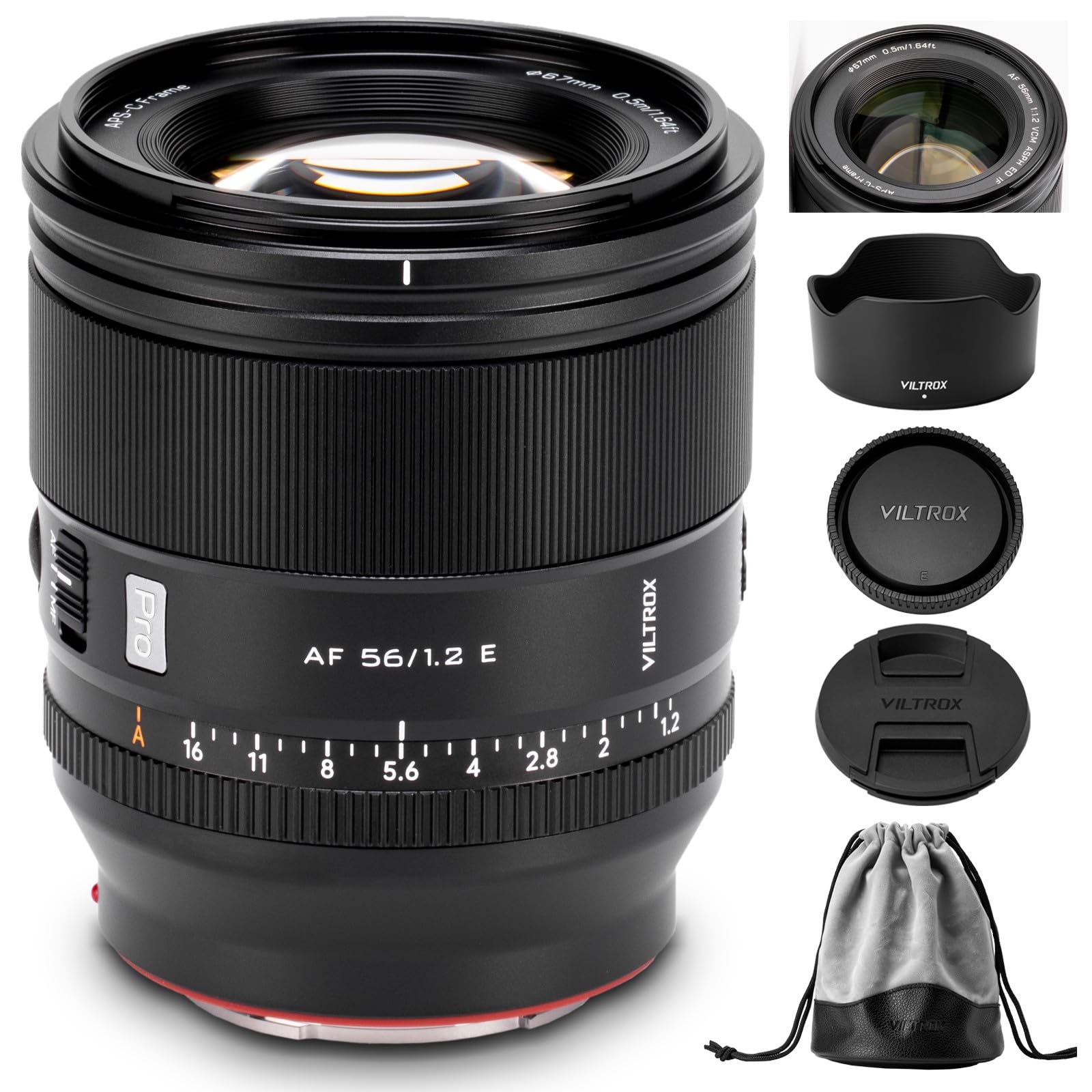
The VILTROX 56mm F1.2 Pro is a third-party autofocus prime designed for Sony E-mount APS-C cameras. Its f/1.2 maximum aperture is unusually fast for this category, delivering extremely shallow depth of field and outstanding low-light performance on bodies like the ZV-E10, FX30, and A6700. The 56mm focal length gives an 85mm full-frame equivalent, widely considered the classic portrait focal length — excellent for isolating a subject against a busy indoor background.
Optically, the lens features advanced aspherical elements that maintain sharpness from center to edge even at f/1.2. The dual HyperVCM motors provide fast and accurate autofocus, and the lens fully supports Sony’s face and eye detection for both stills and video — a critical feature when shooting moving subjects indoors. Close focusing at 0.5 meters is practical for detail shots and still-life work. The metal barrel and included pouch case give a premium feel that exceeds its price point.
The lenses produce beautiful, smooth bokeh with 11 aperture blades, but the autofocus motor is audibly louder than Sony’s native GM lenses, which can be distracting during quiet video recording. Some users report that the lens struggles with autofocus reliability in very dim conditions, occasionally hunting for focus. There is no weather sealing, so it’s best kept away from rain or heavy humidity. For the price, however, the optical quality and speed are remarkable for APS-C users.
Why it’s great
- Very fast f/1.2 aperture for extreme shallow DoF
- Sharp center-to-edge performance even wide open
- Reliable face and eye autofocus for Sony bodies
Good to know
- Autofocus motor is audible and can interfere with video
- No weather sealing
- May hunt in very dim conditions
6. Sigma 18-35mm F1.8 Art

The Sigma 18-35mm F1.8 Art is a legendary lens for APS-C cameras — the first zoom lens to offer a constant f/1.8 aperture across its entire range. For indoor photography, this is transformative. You get the flexibility of a zoom (27-52.5mm full-frame equivalent) without the common compromise of a slow variable-aperture kit lens. In a dimly lit living room, you can zoom to frame exactly the shot you want while maintaining a bright f/1.8 exposure.
Optically, the Art series pedigree delivers extremely high sharpness from center to edge at all focal lengths. Chromatic aberration is minimal and well-controlled, and the ring-type ultrasonic motor is fast and quiet — suitable for most indoor environments. The build quality is exceptional, with a solid metal barrel and a padded case included. Internal focusing and zooming means the lens doesn’t extend or rotate, which is a practical plus when using filters.
The main trade-off is weight. At over 1.5 pounds, it’s significantly heavier than most primes and even some other zooms. On a small APS-C body like a Nikon D3500 or a Sony A6000-series, the combination feels front-heavy. There is no image stabilization, so you’re relying on your camera’s IBIS or steady hands. Also, the zoom range is relatively short — 18-35mm — so you lose telephoto reach for tight portraits. For anyone who needs one lens to handle variable indoor scenes, this remains a unique and powerful tool.
Why it’s great
- Unique constant f/1.8 aperture across a zoom range
- Excellent sharpness and low chromatic aberration
- Solid metal build with internal focusing
Good to know
- Heavy — creates imbalance on smaller camera bodies
- No optical image stabilization
- Zoom range is short (18-35mm)
7. Sony FE 20mm F1.8 G

The Sony FE 20mm F1.8 G is a compact ultra-wide prime that excels in tight indoor environments where you need to capture the full scene. At f/1.8, it provides excellent low-light performance for its focal length class, allowing you to shoot in dim conditions without resorting to a tripod or flash. The 20mm field of view is ideal for interior real estate shots, group photos in small rooms, or creative environmental portraits where the setting is as important as the subject.
Optically, the lens incorporates advanced aspherical elements and Sony’s Nano AR Coating to deliver stunning resolution even wide-open, with minimal flare and ghosting from indoor light sources. The two XD (Extreme Dynamic) linear motors provide fast, precise, and near-silent autofocus that’s a pleasure for both stills and video. The design includes an aperture ring with a click on/off switch, which is welcome for video shooters who want smooth iris pulls.
The lens weighs just 13.2 ounces, making it one of the lightest ultra-wide primes in its class. Its compact size encourages carrying it as a walk-around lens. There is no in-lens stabilization, but Sony’s IBIS systems handle it well. The only real criticism is that some users find the aperture ring too easy to bump accidentally when in A-mode. For Sony full-frame shooters who need wide coverage with a fast aperture, this G lens offers remarkable value against the GM alternatives.
Why it’s great
- Compact and lightweight for an ultra-wide f/1.8
- Sharp wide-open with excellent flare control
- Fast, quiet autofocus ideal for video
Good to know
- No in-lens image stabilization
- Aperture ring can be bumped unintentionally
- Ultra-wide perspective may distort close-up portraits
8. Sigma 35mm F1.2 Art

The Sigma 35mm F1.2 Art is a milestone lens — the first autofocus wide-angle lens to achieve f/1.2 for full-frame cameras. For indoor photography, this aperture delivers an extraordinary amount of light, allowing you to shoot in conditions where even f/1.4 lenses would struggle. The 35mm focal length is a versatile choice: wide enough for environmental shots, yet tight enough for half-body portraits without perspective distortion.
Optically, this is one of Sigma’s finest Art-series lenses. It’s razor-sharp in the center from f/1.2, and corners clean up nicely by f/4. Bokeh is exceptionally smooth thanks to the rounded 11-blade aperture, and chromatic aberration is virtually non-existent. Autofocus is fast, accurate, and works seamlessly with Sony Eye AF on modern bodies. The build quality is top-tier, with a weather-sealed design and a massive metal barrel that feels like it could survive a drop.
The catch is size and weight. This lens is huge for a wide-angle prime — over 2.2 pounds — and it’s noticeably front-heavy on smaller Sony bodies. The autofocus motor, while fast, is audible enough to be picked up by an on-camera microphone in quiet settings. Some early copies had compatibility issues with Panasonic L-mount bodies regarding infinity focus, though Sony E-mount versions appear reliable. For photographers who prioritize aperture over portability, this is the brightest 35mm AF lens you can buy.
Why it’s great
- Unprecedented f/1.2 for a wide-angle autofocus lens
- Exceptional center sharpness and smooth bokeh
- Weather-sealed build with pro-grade feel
Good to know
- Very heavy and bulky for a 35mm prime
- Autofocus motor is audible
- Some compatibility quirks exist on non-Sony mounts
9. Sony FE 35mm f/1.4 GM

The Sony FE 35mm f/1.4 GM is the gold standard for compact, high-performance wide-angle primes on Sony full-frame cameras. It delivers f/1.4 speed for excellent low-light indoor performance in a package that weighs only 18.5 ounces. The G Master badge guarantees exceptional bokeh quality, high resolution, and professional-grade build. The two XA (Extreme Aspherical) elements produce stunning clarity, while the Nano AR Coating II virtually eliminates flare and ghosting.
In practice, this lens is a joy for indoor photography. The f/1.4 aperture allows you to maintain fast shutter speeds and low ISO even in dim restaurants or living rooms. Autofocus is incredibly fast and accurate, thanks to dual XD linear motors, and it supports Sony’s real-time Eye AF tracking for both stills and video. The lens also features aperture ring with a click de-click switch and an iris lock, making it highly functional for video production. The dust- and moisture-resistant design handles challenging environments.
The only consistent critique is that autofocus can be almost too fast for video, sometimes causing abrupt focus shifts if you’re filming a slow-moving subject. The weight, while light for its class, is still noticeable on ultra-compact bodies like the A7C. For Sony shooters who want the absolute best blend of speed, image quality, and portability for indoor work, this GM lens remains the reference point that other wide-angle primes are measured against.
Why it’s great
- Excellent f/1.4 speed in a compact, lightweight GM body
- Exceptional sharpness, bokeh, and flare resistance
- Fast, reliable autofocus with advanced video support
Good to know
- AF can be too quick for smooth video transitions
- Visible on smaller camera bodies due to lens size
- Premium price tier
FAQ
Is f/1.8 fast enough for indoor photography without a flash?
Should I choose a 35mm or 50mm lens for indoor photography on full-frame?
What does “lens coating” mean for indoor shooting?
Does image stabilization matter for indoor photography?
Can I use a manual focus lens for indoor photography?
Final Thoughts: The Verdict
For most users, the best camera lens for indoor photography overall is the Nikon NIKKOR Z 50mm f/1.8 S because it delivers extreme optical performance, silent autofocus, and a fast f/1.8 aperture in a well-built package that suits both stills and video on Z-series cameras. If you want a compact walk-around lens for a Canon RF system, the Canon RF28mm F2.8 STM is a lightweight option that disappears into your bag while giving a useful indoor perspective. And for Sony APS-C users who need the absolute fastest aperture for shallow depth of field, the VILTROX 56mm F1.2 Pro offers remarkable speed and sharpness at a budget-friendly price.

Mo Maruf
I created WellFizz to bridge the gap between vague wellness advice and actionable solutions. My mission is simple: to decode the research and give you practical tools you can actually use.
Beyond the data, I am a passionate traveler. I believe that stepping away from the screen to explore new environments is essential for mental clarity and physical vitality.