Our readers keep the lights on and my smoothie glass nicely filled. As an Amazon Associate, I earn from qualifying purchases.
The difference between a good morning and a great one often comes down to the first sip. Chasing that café-quality crema at home without dropping four figures on a machine feels like a gamble, but the technology in modern automatic espresso machines has closed the gap. The real challenge isn’t the budget—it’s sorting through the specs to find a machine that pulls consistently rich, hot shots without a finicky workflow.
I’m Mohammad Maruf — the founder and writer behind WellFizz. I’ve spent the last six months analyzing pump pressures, burr grinder materials, steam wand performance, and thermal stability across dozens of models to identify which units deliver real café-quality output without crossing into luxury pricing territory.
This guide breaks down the top-rated bean-to-cup contenders to help you find the automatic espresso machine under $500 that fits your counter space, drink preferences, and tolerance for daily maintenance.
How To Choose The Best Automatic Espresso Machine Under $500
Buying an automatic espresso machine in this price band means balancing integrated grind quality, pump pressure consistency, and milk system design. You don’t have infinite budget, but you also don’t want to sacrifice the fundamentals that make espresso taste like espresso. Here are the three specs to prioritize before hitting buy.
Grinder Build & Adjustability
A built-in conical burr grinder is the heart of any bean-to-cup machine. You want at least 12 to 15 grind settings so you can dial in everything from light roasts (finer) to dark roasts (coarser). Look for stainless steel or ceramic burrs—ceramic stays cooler during grinding, preserving delicate aromatics. Machines with a “bean purge” function let you swap bean types without cross-contamination, a feature that matters if you switch between decaf and regular throughout the day.
Pump Pressure & Thermal Performance
A 15-bar pump is the industry standard for proper extraction, but the quality of the pressure curve matters more than the max rating. A well-tuned 15-bar system that maintains stable pressure through the full brew cycle produces better crema than a 20-bar pump with poor pressure regulation. Also check the boiler type: single thermoblock systems heat fast but struggle with back-to-back milk steaming, while dual-coil thermoblocks offer better thermal recovery for consecutive drinks.
Milk System Type & Cleaning Commitment
Your milk system choice defines your daily routine. Automatic frothers with removable containers (like Philips’ LatteGo or De’Longhi’s LatteCrema) deliver consistent foam with a 10-second rinse—ideal for fast mornings. Manual steam wands give you total control over microfoam texture for latte art, but require immediate purging and wiping to prevent clogs. If you or your household regularly uses plant-based milks, an automatic system with a wide straw diameter handles thicker liquids far better than a narrow manual wand.
Quick Comparison
On smaller screens, swipe sideways to see the full table.
| Model | Category | Best For | Key Spec | Amazon |
|---|---|---|---|---|
| De’Longhi Magnifica Start | Super-Automatic | Best Overall | 13 grind settings, 15-bar pump | Amazon |
| Philips 3200 Series (EP3241/54) | Super-Automatic | Silent Grinding | Ceramic burrs, 5 coffee presets | Amazon |
| Ninja Luxe Café Premier | 3-in-1 | Versatility | 25 grind settings, weight-based dosing | Amazon |
| Bosch TIU20307 | Fully Automatic | Compact Build | Ceramic grinder, 14.7 lbs | Amazon |
| Philips 2300 Series (EP2330/10) | Super-Automatic | Easy Clean Milk System | LatteGo, 40% quieter SilentBrew | Amazon |
| Kismile (B0GH72WY3R) | Fully Automatic | Smart Reminders | 15-step conical burr grinder | Amazon |
| Zulay Kitchen Magia Clasica | Semi-Automatic | Aesthetic & Manual Frothing | 1.8L tank, self-cleaning cycle | Amazon |
| EUHOMY CM003 | Super-Automatic | Touchscreen Automation | 20-bar pump, 15 grind levels | Amazon |
| Kismile (B0GH7QSLNF) | Fully Automatic | One-Touch Americano | 20 bars, 15 grind settings | Amazon |
| Electactic (B0GCZT9MK4) Silver | Semi-Automatic | Large Water Capacity | 2.8L tank, anti-clog grinder | Amazon |
| Electactic (B0G64ZVGGZ) Black | Semi-Automatic | Budget-Friendly Grinder Combo | 2.3L tank, 15-bar pump | Amazon |
In‑Depth Reviews
1. De’Longhi Magnifica Start Automatic Espresso Machine

De’Longhi’s Magnifica Start consistently ranks as a top seller for good reason: the 13-step conical burr grinder offers enough granularity to dial in everything from a fine Ethiopian light roast to a coarser dark Italian blend, and the 15-bar pump delivers a steady pressure curve that produces thick, persistent crema. The LatteCrema automatic milk frother handles both dairy and oat milk with reliable texture, and the removable milk carafe stores directly in the fridge between uses—a practical touch for daily drinkers.
The five one-touch recipes (espresso, coffee, cappuccino, latte macchiato, hot water) cover the typical morning rotation without menu-diving. The brew unit is accessible from the front for rinsing, and most parts are dishwasher-safe. Owners report the descale light triggers early (around 30 days with harder water), but the process is straightforward at about 30 minutes.
Where it stumbles is the fixed puck size, which means larger cup volumes result in a noticeably weaker brew. The two-cup function also requires a tall container—standard mugs often don’t fit under the spout. The auto shut-off timer cannot be disabled, and the lack of a bean level indicator means you’ll occasionally hear the grinder whirring on an empty hopper. Still, for pure shot quality within the budget, this machine edges ahead of the competition.
Why it’s great
- 13 grind settings deliver precise dose control
- Automatic LatteCrema frother handles plant milks well
- Dishwasher-safe components simplify cleaning
Good to know
- Fixed puck size weakens larger drinks
- No bean level indicator in hopper
- Auto shut-off timer cannot be disabled
2. Philips 3200 Series Fully Automatic Espresso Machine (EP3241/54)
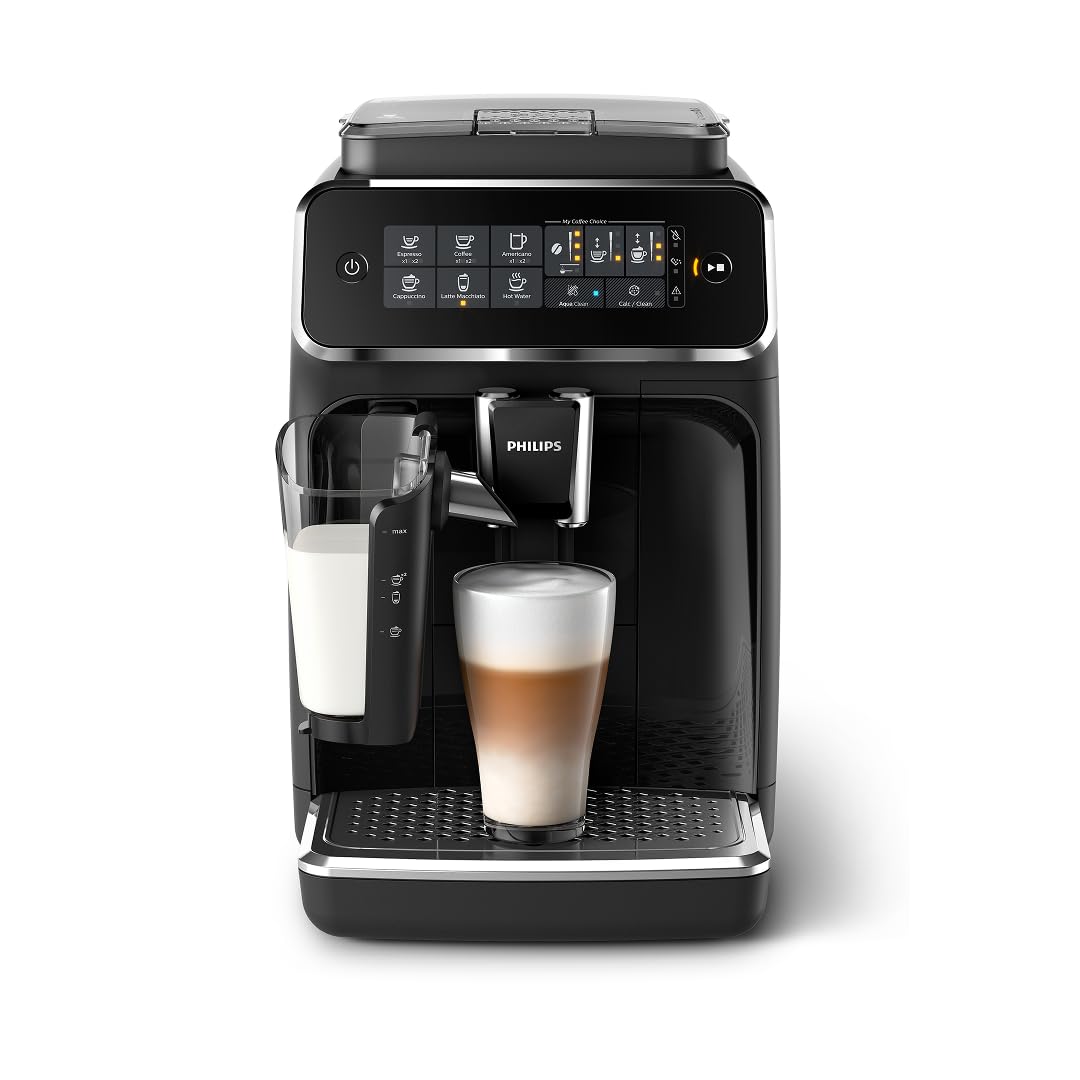
Philips engineered the 3200 Series around the LatteGo milk system, which uses just two dishwasher-safe parts and no internal tubes—cleaning takes about 15 seconds under the tap. The 100% ceramic grinder runs cooler than steel alternatives, preserving the volatile oils in fresh beans, and users consistently report quieter operation compared to De’Longhi’s geared grinders. The intuitive touch display cycles through espresso, coffee, americano, cappuccino, and latte macchiato with one press.
The AquaClean filter is a standout: one filter lasts up to 5,000 cups before descaling is needed, dramatically reducing maintenance frequency. The Aroma Extract system monitors brewing temperature and adjusts the pre-infusion time to match the bean type, resulting in consistently balanced shots. Owners with three-plus years of use report the machine holds up well with regular cleaning.
Downsides include a splash-prone milk spout and a drip tray that fills quickly due to steam purge water from the LatteGo system. Some users report moisture accumulation in the used-grounds cavity, which requires monthly deep cleaning to prevent mold. The pre-ground coffee bypass function can be finicky, often requiring multiple attempts before the machine accepts the dose. It’s also the noisiest in the lineup during grinding, though the actual grinding cycle is brief.
Why it’s great
- 2-part LatteGo system rinses in 15 seconds
- AquaClean filter delays descaling for 5,000 cups
- Ceramic burrs preserve bean aroma
Good to know
- Drip tray fills fast due to steam purge water
- Pre-ground bypass can be inconsistent
- Moisture in grounds cavity needs monthly cleaning
3. Ninja Luxe Café Premier 3-in-1 Espresso Machine

The Ninja Luxe Café Premier earns its “3-in-1” title by delivering espresso, drip coffee, and rapid cold brew from a single machine—a rare versatility in this price tier. The integrated conical burr grinder offers 25 grind settings, the widest range in this comparison, and the built-in scale uses weight-based dosing rather than time-based grinding. That means the machine stops grinding when the precise gram weight is reached, eliminating the guesswork of under- or over-dosing.
The assisted tamper levels and compresses the puck evenly with a spring-loaded mechanism, removing one of the biggest variables in home espresso consistency. The hands-free Dual Froth System combines steaming and whisking, with four presets (steamed milk, thin froth, thick froth, cold foam) that work well with both dairy and plant-based alternatives. Owners consistently call the build quality “sturdy” and note the stainless steel construction feels substantially more premium than the plastic-heavy competition.
Trade-offs include a learning curve for the interface—the weight-based system requires users to select the drink first, then follow on-screen prompts—and the drip tray can get messy during the learning phase. The cold brew mode is genuinely good, using a slow low-temperature extraction over ice, but it requires a separate brew basket swap. At just under $500, it’s the highest-value option for households that want espresso, drip, and cold brew without buying three appliances.
Why it’s great
- Weight-based dosing for precise grind amounts
- 25 grind settings cover all roast levels
- Hands-free frother with 4 programs
Good to know
- Interface has a learning curve
- Drip tray can be messy during setup
- Cold brew requires basket swap
4. Bosch Fully Automatic Coffee and Espresso Machine (TIU20307)
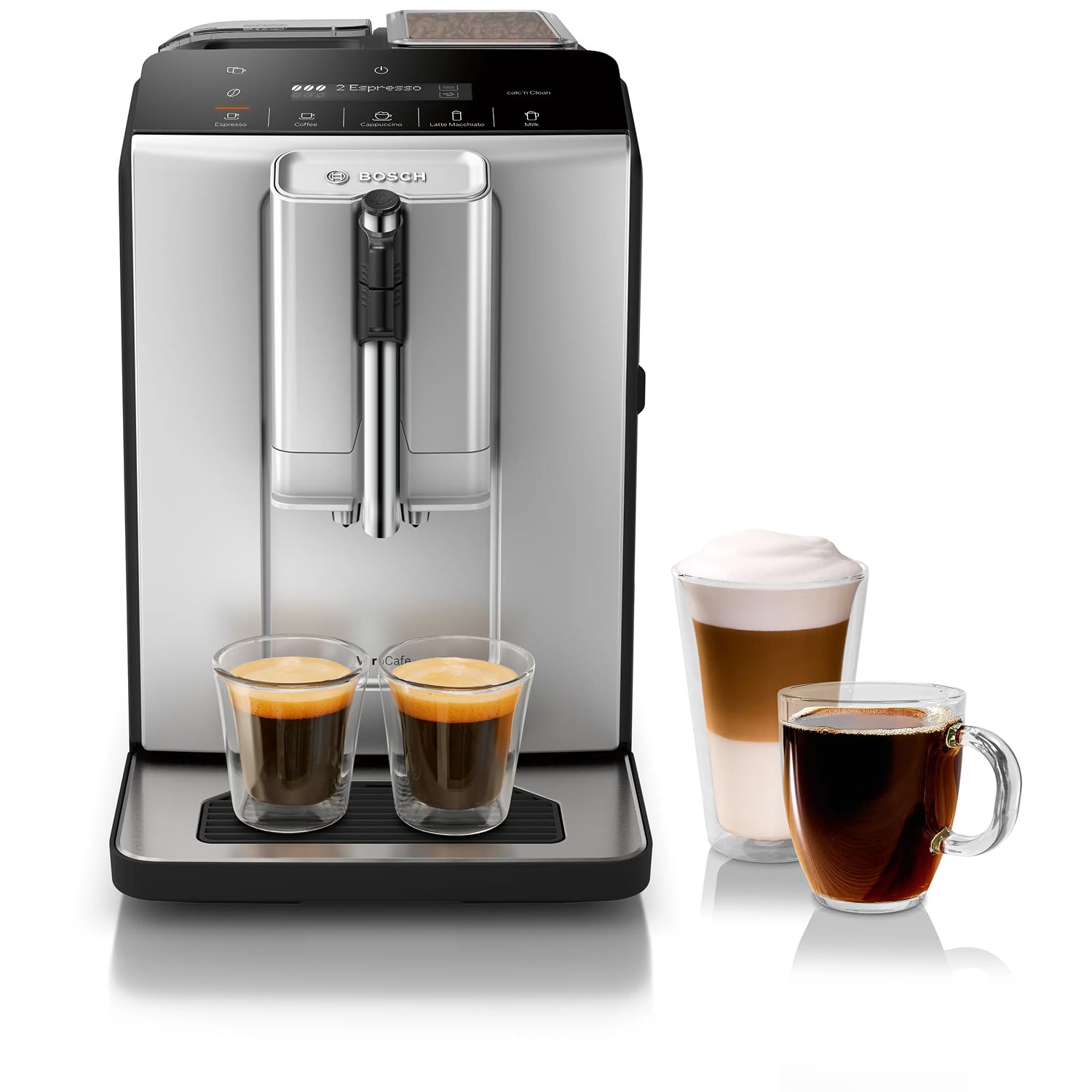
Bosch’s TIU20307 squeezes a fully automatic bean-to-cup experience into a surprisingly compact chassis—just 14.7 pounds and a footprint smaller than most drip coffee makers. The ceramic grinder delivers precise, even particle size without overheating, and the front-access removable brew unit makes weekly rinsing straightforward. The adjustable milk frother sits on a swivel arm, creating foam directly into your cup, and the machine runs a self-rinse cycle on startup and shutdown.
The Calc’n Clean system sends a visual prompt when descaling is due, and the process is guided through the front panel. The integrated grinder is audible but brief, lasting only 6-8 seconds per shot. Owners report consistent thermal performance across 4-5 drinks per day, with the machine holding temperature well through back-to-back espresso pulls.
The milk frother doesn’t heat milk as aggressively as dedicated steam wands—some owners supplement with a separate Aeroccino for hotter lattes. There’s no secondary hopper for decaf beans, so swapping bean types requires emptying the main hopper. A small but vocal subset of units shipped with a “fill water tank” error despite full tanks, a known air-in-line issue that Bosch’s support struggles to resolve remotely. Overall, it’s a solid choice for couples or individuals who prioritize counter space and build quality over volume.
Why it’s great
- Compact footprint saves counter space
- Ceramic grinder runs cool and consistent
- Front-access brew unit simplifies cleaning
Good to know
- Milk frother doesn’t heat very hot
- No secondary decaf bean hopper
- Some units have air-in-line error issues
5. Philips 2300 Series Fully Automatic Espresso Machine (EP2330/10)
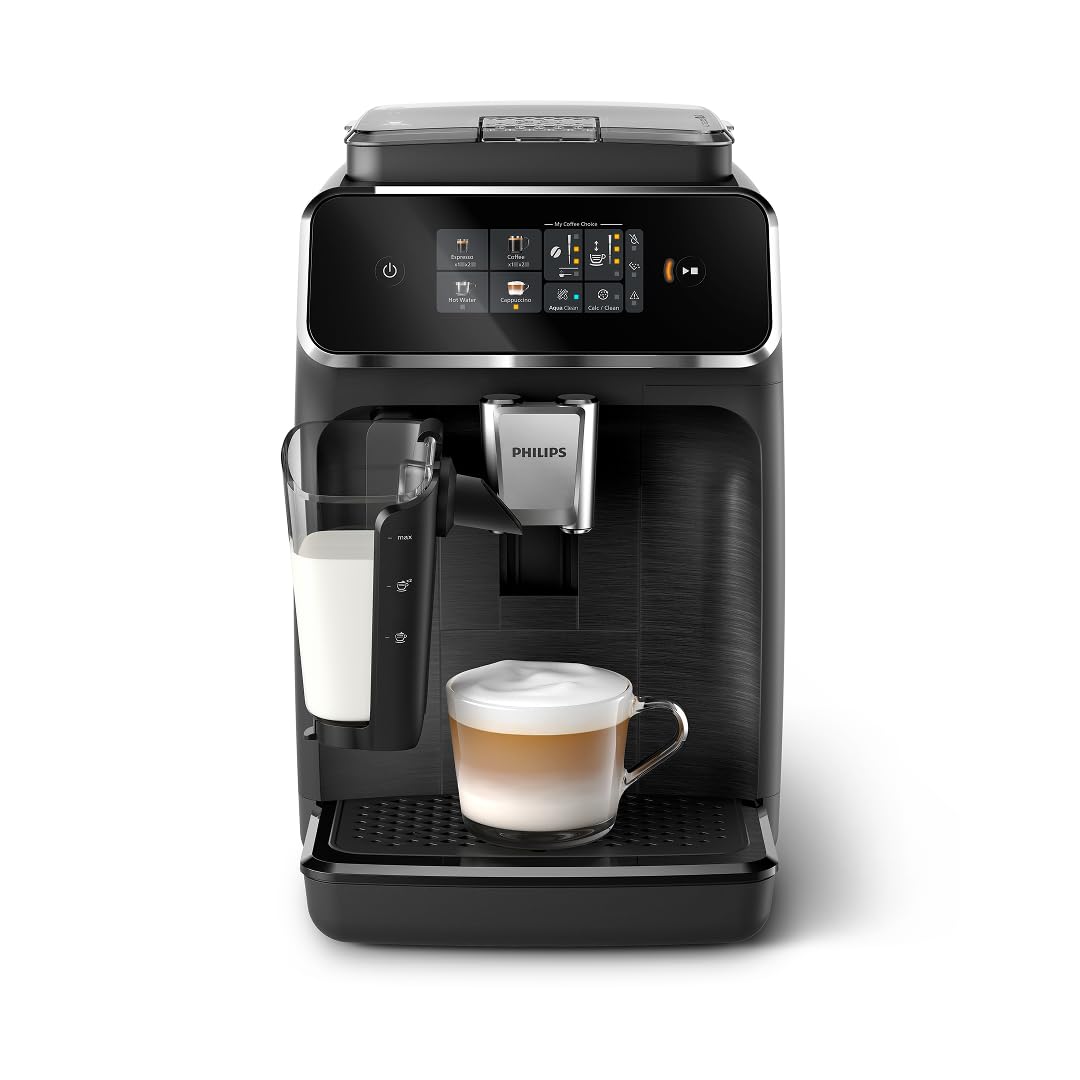
The 2300 Series is Philips’ value-forward super-automatic, retaining the same LatteGo milk system and AquaClean filter as the 3200 Series but dropping the touchscreen for simpler button controls and reducing the preset count to four (espresso, coffee, cappuccino, hot water). The SilentBrew technology dampens the grinding noise by about 40% compared to earlier models—a meaningful difference for early-morning brewing when others are still asleep.
The machine shares the 2300’s same internal pump and thermoblock as the more expensive 3200, meaning shot quality is nearly identical. The LatteGo system still cleans in 15 seconds, and the AquaClean filter still provides up to 5,000 cups before descaling. Owners upgrading from older Gaggia or Saeco units regularly comment on the smaller footprint and quieter operation.
Reliability flags are worth noting: a subset of owners report units failing within the first two months, typically water leaking from the drip tray area or the machine ceasing to recognize the water tank. Philips’ customer support is often described as unhelpful during warranty claims, with some users citing five weeks of back-and-forth. For budget-conscious buyers who are comfortable with the gamble, the 2300 offers 90% of the 3200’s performance at a lower entry point. For those prioritizing reliability above all, consider adding a third-party extended warranty.
Why it’s great
- SilentBrew dampens grinder noise by 40%
- LatteGo milk system cleans in 15 seconds
- Same shot quality as the more expensive 3200
Good to know
- Some units leak water within 2 months
- Customer support is slow during warranty claims
- No touchscreen display
6. Kismile Automatic Espresso Machine (B0GH72WY3R)
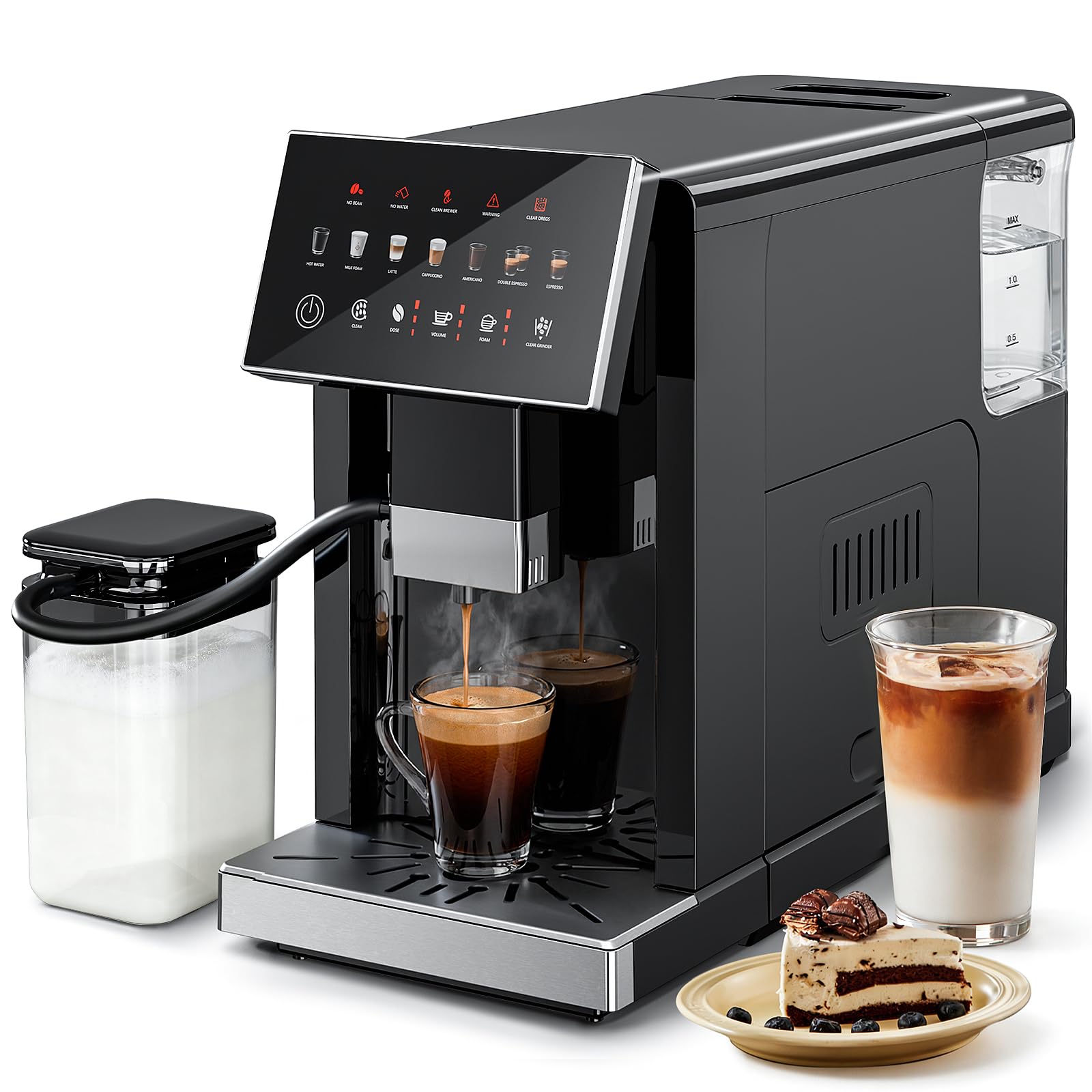
Kismile’s fully automatic model hits a strong balance between features and price, packing a 15-step conical burr grinder, automatic milk frother, and a sealed bean hopper that keeps beans fresh. The smart reminders system alerts you when beans are low, water is low, the grounds container is full, or components aren’t seated properly—eliminating the troubleshooting that plagues less communicative machines.
The direct-drive brew system handles grinding, tamping, brewing, and puck ejection in one continuous cycle, and the adjustable spout height (3.35–4.53 inches) accommodates everything from espresso cups to taller travel mugs. The detachable milk container stores in the fridge, and the 1.5L water tank is large enough for 6-8 drinks before a refill. Owners praise the durable build and stainless steel side panels that keep the unit stable during operation.
Early reliability concerns exist: a small number of units fail to brew within the first 30 days, with steam escaping from the top and water failing to transfer from the reservoir to the brew group. Kismile’s warranty support is unproven at scale compared to Philips or De’Longhi. For risk-tolerant buyers who want a full-featured automatic machine with little daily fuss, this is a compelling mid-range contender.
Why it’s great
- Smart alerts for water, beans, and grounds
- 15-step grinder covers fine to coarse
- Adjustable spout fits travel mugs
Good to know
- Some units fail to brew within first month
- Warranty support is unproven at scale
- Plastic construction in some internal parts
7. Zulay Kitchen Magia Clasica Automatic Espresso Machine

The Zulay Kitchen Magia Clasica stands out visually with its cream-and-silver retro colorway and compact stainless steel body, but the real story is the semi-automatic workflow. The smart touch panel handles grinding and brewing automatically, while the manual steam wand gives you direct control over milk texture. That hybrid approach appeals to users who want consistent puck prep without giving up the tactile satisfaction of hand-frothing for latte art.
The built-in conical burr grinder offers adjustable fineness, and the machine can brew from whole beans or pre-ground coffee. The programmable strength settings let you tweak intensity from mild to bold, and the self-cleaning cycle runs during power-on and power-off to flush the internal lines. The 1.8L water tank is decently sized, and the removable waste bin makes puck disposal straightforward.
Reliability is the main concern. Multiple owners report malfunctions around the 60-day mark—brew units failing, water leaks, and significant back-and-forth with Zulay’s customer support, which is based in the U.S. but has been described as slow to resolve hardware issues. The drip tray is also shallow and fills quickly, requiring daily emptying. If you’re drawn to the aesthetic and comfortable with the care and cleaning demands of a semi-automatic, this machine delivers excellent shot quality for the price.
Why it’s great
- Stylish cream and silver design
- Manual steam wand offers full froth control
- Self-cleaning cycle flushes lines
Good to know
- Reliability issues reported after 60 days
- Customer support is slow to resolve hardware claims
- Shallow drip tray needs daily emptying
8. EUHOMY Fully Automatic Espresso Machine (CM003)
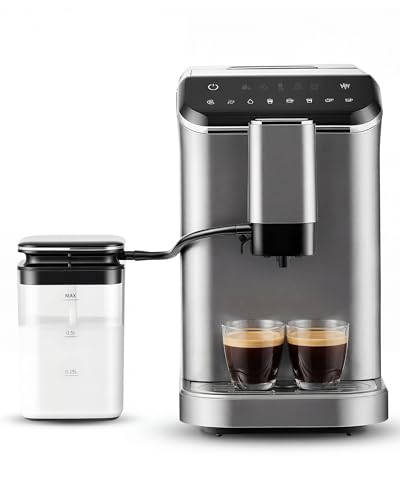
EUHOMY’s CM003 targets buyers who want a fully automatic, touchscreen-driven experience without crossing into Philips or De’Longhi territory. The 20-bar professional pump claims higher max pressure than the standard, but the real advantage is the programmable extraction volume and temperature, which let you fine-tune the shot profile. The conical burr grinder offers 15 precise levels, and the one-touch bean purge clears old grounds instantly when you want to switch roast profiles.
The automatic milk frothing system uses an integrated milk container with a dedicated frothing spout, creating consistent foam for cappuccinos and lattes at the push of a button. The self-cleaning cycle runs automatically after each use, and the removable 1.5L water tank and drip tray make routine maintenance straightforward. The metal and plastic hybrid construction keeps the weight manageable at 19.1 pounds.
Because this model is relatively new to the market, long-term reliability data is thin. There are no verified owner reviews available yet to confirm build quality or support responsiveness. The touchscreen interface, while modern, adds a potential failure point—if the display fails, the machine becomes non-functional. For early adopters willing to test the waters, the CM003 offers a spec sheet that rivals machines costing significantly more.
Why it’s great
- 20-bar pump with adjustable extraction volume
- 15 grind levels cover fine to coarse
- One-touch bean purge for flavor switching
Good to know
- No long-term reliability data available
- Touchscreen is a single-point failure risk
- New product with no owner reviews yet
9. Kismile 20 Bar Automatic Espresso Machine (B0GH7QSLNF)
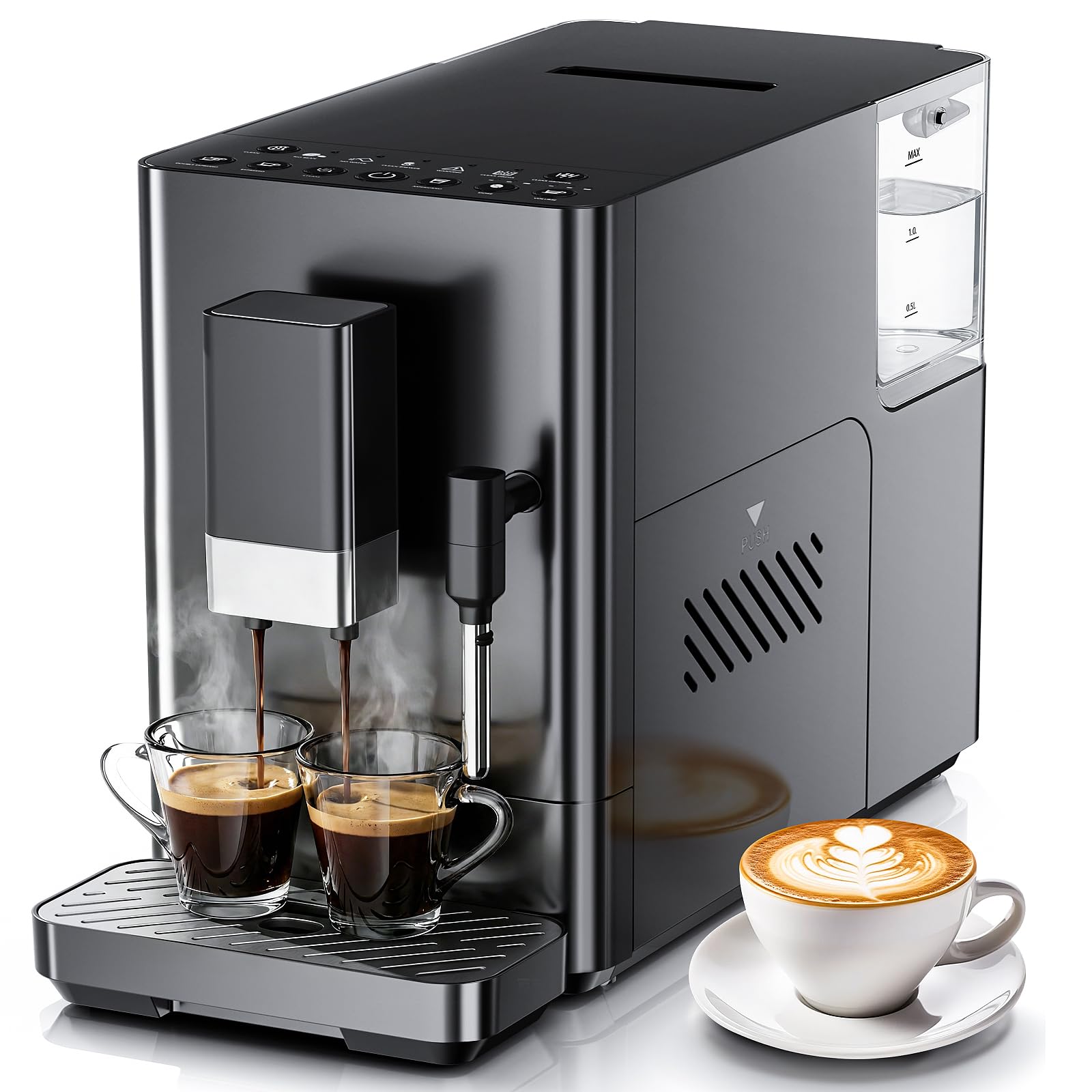
Kismile’s second offering swaps the automatic milk frother for a manual steam wand, keeping the price competitive while retaining the 20-bar pump and 15 grind settings. The one-touch button panel includes presets for single/double espresso, Americano, and hot water, with adjustable strength and volume. The smart alerts system notifies you of low beans, water, full grounds container, and maintenance needs—useful for buyers new to bean-to-cup machines.
The compact body (7.09 inches wide) makes this one of the narrowest super-automatic options on the market, fitting into tight galley kitchens easily. The 1.52L water tank is on the smaller side—expect to refill every 4-5 drinks—but the removable drawer-style grounds container and detachable brewing unit simplify cleaning. The manual steam wand produces adequate microfoam but lacks the fine texture control of De’Longhi’s LatteCrema system.
Some owners note the instructions are cryptic, and the initial setup requires trial and error to dial in the grind. The plastic body feels less substantial than the stainless steel of more expensive competitors. For buyers who want a true super-automatic with a 20-bar pump at a budget-friendly price, this Kismile delivers solid value as a gateway machine.
Why it’s great
- Narrow footprint fits tight counters
- Smart alerts for beans, water, and cleaning
- 20-bar pump for rich crema
Good to know
- Small 1.52L tank needs frequent refilling
- Instructions are cryptic, steep learning curve
- Plastic body feels less premium
10. Electactic (2026 Upgrade) Espresso Machine Silver (B0GCZT9MK4)
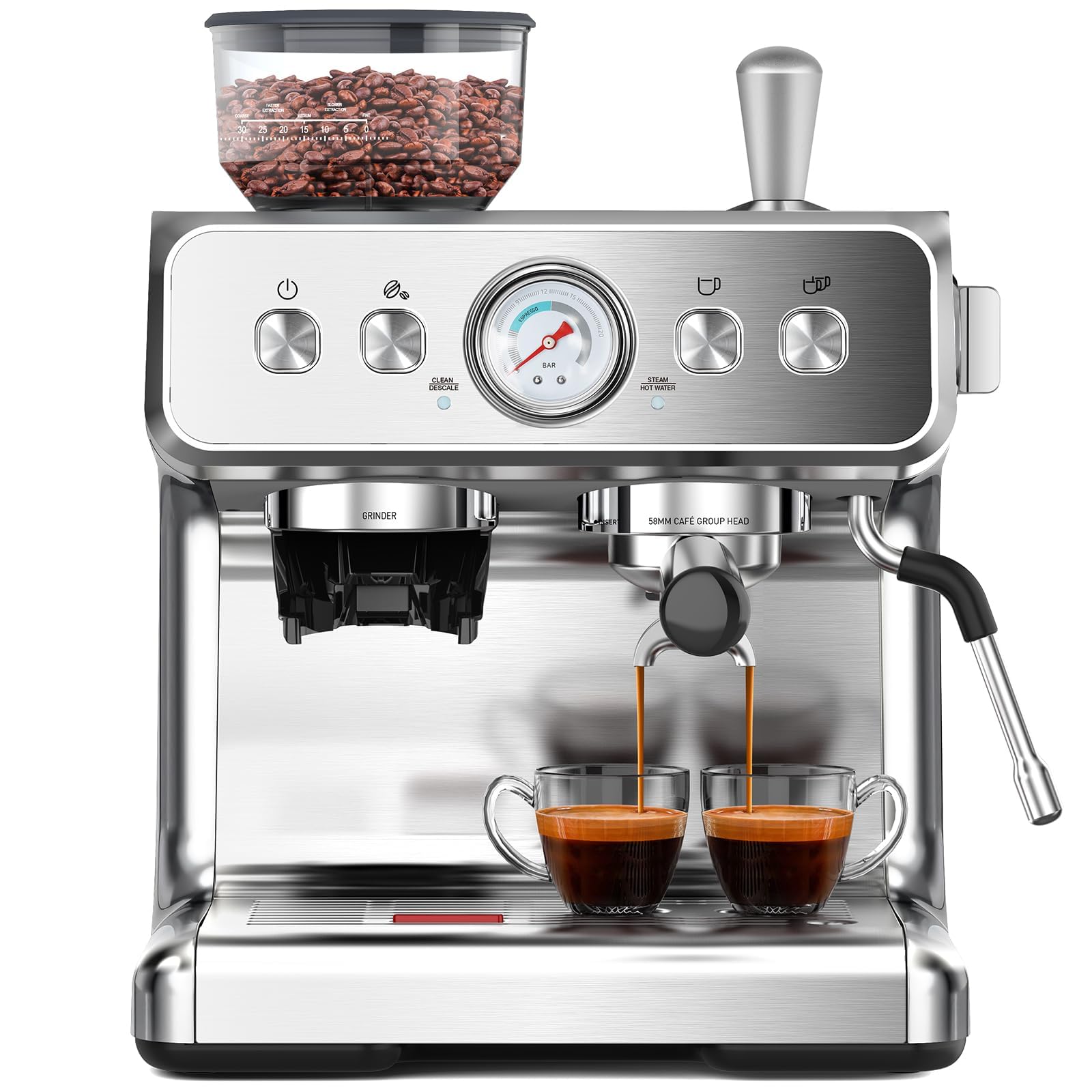
Electactic’s 2026 upgrade in silver shares the same anti-clog grinder path as the black version but steps up to a 2.8-liter water tank—the largest in this comparison. That means fewer refills during heavy-use mornings or gatherings. The 15-bar pump and reinforced helical auger claim to eject oily dark roast grounds instantly, reducing a common pain point where light-roast-optimized grinders choke on darker beans.
The manual steam wand produces barista-grade microfoam, and the included accessories (58mm portafilter, tamper, dual-wall filter baskets, cleaning needle) mirror the starter kit typically found in semi-professional setups. The metallic finish and 26.2-pound weight give it a solid, anchored feel on the counter. Owners consistently describe the espresso quality as “rich” and “smooth” with a noticeable crema layer, especially after dialing in the grind.
The workflow is more involved than a super-automatic: you grind, tamp, lock the portafilter, pull the shot, then manually steam milk. The machine lacks the push-button convenience of Philips or De’Longhi. A few owners report frustration with the multi-step process for making an Americano (grind, pull shot, then add hot water from the frother wand separately). For buyers who don’t mind a slightly longer routine and value the largest water tank and robust build, this Electactic is a strong semi-automatic contender.
Why it’s great
- 2.8L water tank, largest in this comparison
- Anti-clog grinder path handles oily beans
- Included 58mm portafilter and dual-wall baskets
Good to know
- Semi-automatic workflow is more involved
- Americano requires two separate steps
- Heavy at 26.2 lbs, less portable
11. Electactic (2026 Upgrade) Espresso Machine Black (B0G64ZVGGZ)
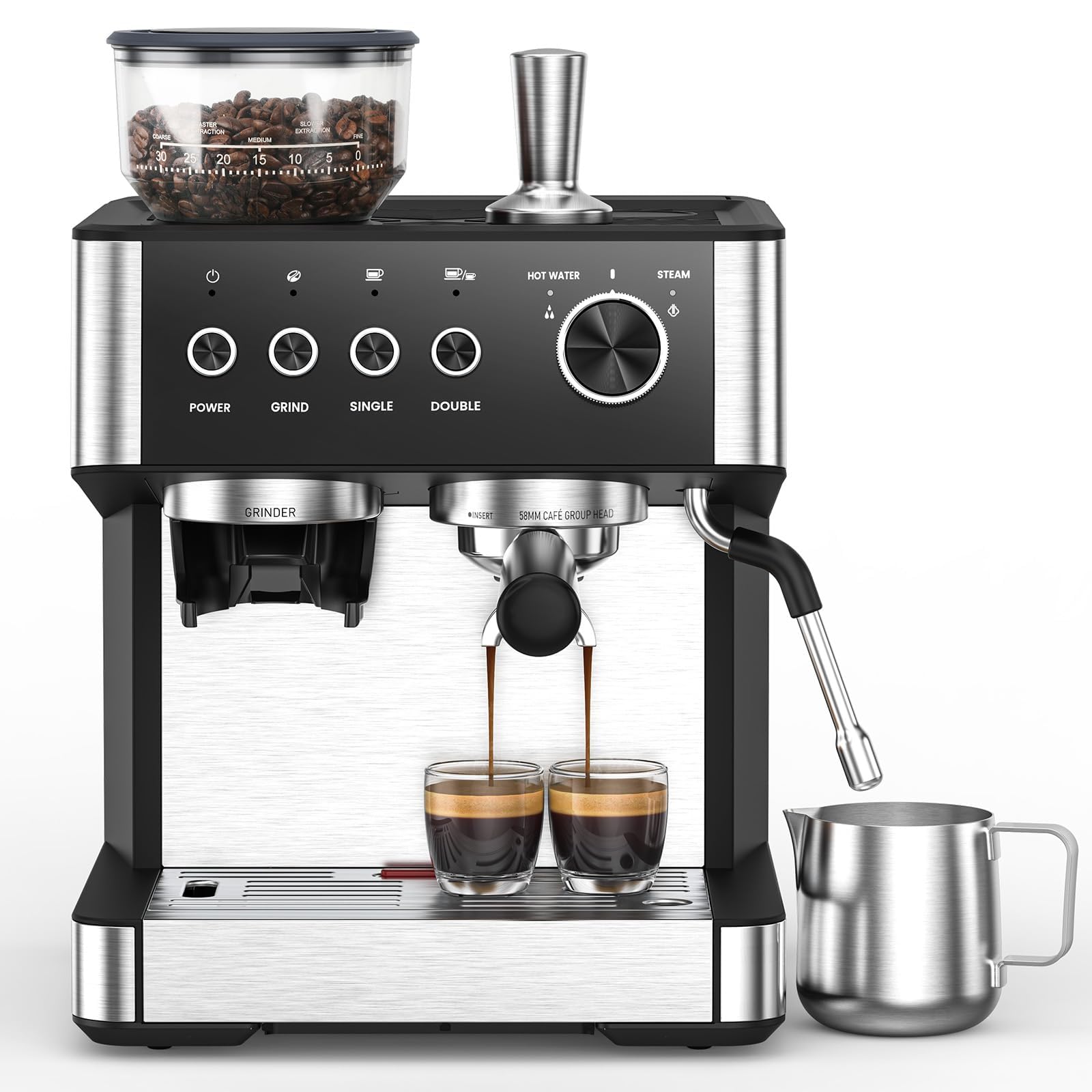
Electactic’s entry-level option packs the same core features—built-in grinder, 15-bar pump, manual steam wand—into a more compact and affordable package. The 2.3-liter water tank is slightly smaller than the silver version but still larger than most super-automatics. The “clog-crushing” grinder path uses a 20% wider polished chute and helical auger to push grounds through quickly, and owners confirm it handles dark roasts without jamming, a weak point on many budget-level integrated grinders.
The included 58mm portafilter and dual-wall filter baskets help beginners achieve a decent crema even before they master puck prep. The steam wand produces adequate microfoam for home lattes, though the texture won’t rival a professional machine. The unit weighs 18 pounds and measures 11.5 inches deep, fitting comfortably on standard counters. Former coffee shop employees who reviewed the machine described it as an effective coffee shop replacement—compact, quiet, and easy to clean.
The main trade-off is durability: one owner reported the machine failed after a few uses and had to be returned, replacing it with a Gaggia that cost significantly more. The lack of ETL certification verification in the box raises a minor trust flag. For buyers who want the lowest entry point to a built-in grinder espresso setup and are willing to accept some risk, this Electactic delivers surprising shot quality for the price. For those who prioritize long-term reliability over absolute cost savings, the De’Longhi or Philips options offer stronger track records.
Why it’s great
- Clog-crushing grinder handles dark roasts well
- Included 58mm portafilter and dual-wall baskets
- Compact footprint fits most kitchens
Good to know
- No third-party durability validation yet
- Some units fail and require returns
- Steam wand texture is entry-level
FAQ
Should I choose a 15-bar or a 20-bar machine?
Can I use pre-ground coffee in an automatic espresso machine?
How often should I descale an automatic espresso machine?
Does an automatic milk frother work with oat or almond milk?
What is the difference between a semi-automatic and a super-automatic machine?
Final Thoughts: The Verdict
For most users, the automatic espresso machine under $500 winner is the De’Longhi Magnifica Start because it combines a proven 13-step grinder with a reliable 15-bar pump and an automatic milk system that works consistently with both dairy and plant milks. If you want silent grinding and the fastest-cleaning milk system on the market, grab the Philips 2300 Series EP2330/10. And for the widest versatility—espresso, drip coffee, and cold brew in one machine—nothing beats the Ninja Luxe Café Premier.

Mo Maruf
I created WellFizz to bridge the gap between vague wellness advice and actionable solutions. My mission is simple: to decode the research and give you practical tools you can actually use.
Beyond the data, I am a passionate traveler. I believe that stepping away from the screen to explore new environments is essential for mental clarity and physical vitality.