Our readers keep the lights on and my smoothie glass nicely filled. As an Amazon Associate, I earn from qualifying purchases.
A hyperextended knee forces the joint past its natural straight line, snapping the ligaments and straining the surrounding tendons. The right stabilizing brace doesn’t just mask the pain—it mechanically blocks that dangerous end-range motion, giving the posterior capsule and ACL a chance to heal without re-injury.
I’m Mohammad Maruf — the founder and writer behind WellFizz. I’ve spent years analyzing orthopedic bracing designs, hinge mechanics, and material tensioning systems to find which models actually prevent hyperextension without restricting daily movement.
Whether you’re recovering from an ACL sprain, managing chronic laxity, or returning to sport, this guide breaks down the best brace for hyperextended knee on the market today based on real structural engineering, not marketing claims.
How To Choose The Best Brace For Hyperextended Knee
Not all knee braces are built to stop hyperextension. A basic elastic sleeve may provide warmth and proprioception, but it offers zero resistance against the backward snap that damages the ACL and posterior capsule. You need a brace with a mechanical stop—either a rigid four-point leverage system or a dampened hinge that physically limits terminal extension.
Hyperextension Stop vs. Compression-Only Designs
If your primary goal is preventing the knee from locking back, prioritize braces with a hyperextension stop mechanism. These typically use a four-point leverage system or an extension-limiting dial on the hinge. Sleeves without side braces or with unhinged wraps cannot control end-range motion; they only manage swelling and mild instability.
Hinge Construction and Range of Motion Control
Polycentric hinges (triaxial or geared) track the knee’s natural rolling and gliding motion better than single-axis hinges. Geared hinges provide more precise flexion-extension control, which is critical for moderate to severe hyperextension. Triaxial hinges allow smoother movement for mild cases or return-to-sport use. Look for hinges that are removable in a later rehab phase if you plan to dial back support over time.
Strap Configuration and Patella Tracking
A brace that shifts during activity won’t protect the knee. Four-strap open designs let you adjust compression at the thigh, above and below the patella, and at the calf independently. Open-patella designs with a buttress or gel pad help stabilize the kneecap if you also experience patellar maltracking. Measure the circumference of both your thigh and calf—many sizing problems come from the brace being unable to slip over the calf muscle.
Quick Comparison
On smaller screens, swipe sideways to see the full table.
| Model | Category | Best For | Key Spec | Amazon |
|---|---|---|---|---|
| DonJoy Performance BIONIC FULLSTOP | Premium | ACL protection, hyperextension prevention | 4-point leverage system | Amazon |
| MUELLER Hg80 Hinged | Premium | Sports, daily comfort, hyperextension | Triaxial hinges | Amazon |
| DonJoy Drytex Sport Hinged | Mid-Range | Ligament/meniscus recovery, breathability | Drytex breathable fabric | Amazon |
| Comforband Adjustable Hinged | Mid-Range | Geared hinge control, meniscus tear | Two-point geared hinge | Amazon |
| Galvaran Knee Brace | Mid-Range | Patella support, nighttime use | 4 memory stabilizers + gel pad | Amazon |
| ACE Brand Hinged Knee Brace | Budget | Entry-level stabilization, daily wear | Dual-pivoting hinges | Amazon |
| COPPER FIT Natural Motion | Budget | Mild hyperextension, odor control | Tri-pivot hinge | Amazon |
In‑Depth Reviews
1. DonJoy Performance BIONIC FULLSTOP Knee Brace

The DonJoy Performance BIONIC FULLSTOP is the only brace on this list built with a true four-point leverage system designed to train you out of the at-risk extension position. That mechanical dampening cycle prevents the knee from locking back in the first place—critical for anyone with a history of ACL rupture or Ehlers-Danlos-related laxity.
Its compression sleeve includes thermal heat regulation and anti-migration technology, so it doesn’t slide down during high-impact sports like football, soccer, or basketball. The adjustable straps let you fine-tune tension around the thigh and calf independently, and the reflective visibility is a bonus for low-light outdoor training.
Some users with extreme recurvatum (hyperextension beyond 30 degrees) report that even the FULLSTOP doesn’t fully block their range, and a few experienced strap degradation after six months. Still, for moderate ACL and meniscus instability, this is the most mechanically robust off-the-shelf brace available.
Why it’s great
- Four-point leverage system actively prevents hyperextension
- Anti-migration sleeve stays in place during sport
- Breathable back panel reduces sweat buildup
Good to know
- Expensive compared to mid-range alternatives
- Strap stitching may loosen with heavy daily use
- Does not fully control extreme recurvatum (-35° or more)
2. MUELLER Sports Medicine Hg80 Hinged Knee Brace
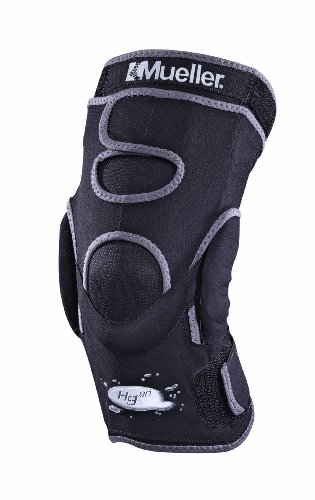
MUELLER’s Hg80 is a favorite among physical therapists for its low-profile build and triaxial hinge system that tracks the natural rolling motion of the knee. The three-part hinge allows near-normal bending while providing firm mediolateral stability and preventing hyperextension in mild to moderate cases.
The HydraCinn fabric wicks moisture and feels noticeably thinner than standard neoprene, making it one of the most comfortable braces to wear under clothing. Users with MCL and meniscus issues report up to 80% pain reduction, and the brace holds up well over years of daily wear—though the hinges can squeak after extended use and are tricky to reinsert if removed.
Sizing is where this brace trips people up: the sleeve must slip over the foot and calf, so if your calves measure 17 inches or more, the XL may still be too tight. Measure carefully and consider sizing up one increment for a secure fit without circulation issues.
Why it’s great
- Slim, breathable design works under clothing
- Triaxial hinge tracks natural knee motion
- Firm ML support for MCL/meniscus rehabilitation
Good to know
- Hinges can squeak and are difficult to reinsert
- Not designed for severe ACL/PCL instability
- May be too tight on larger calves
3. DonJoy Drytex Sport Hinged Knee Brace
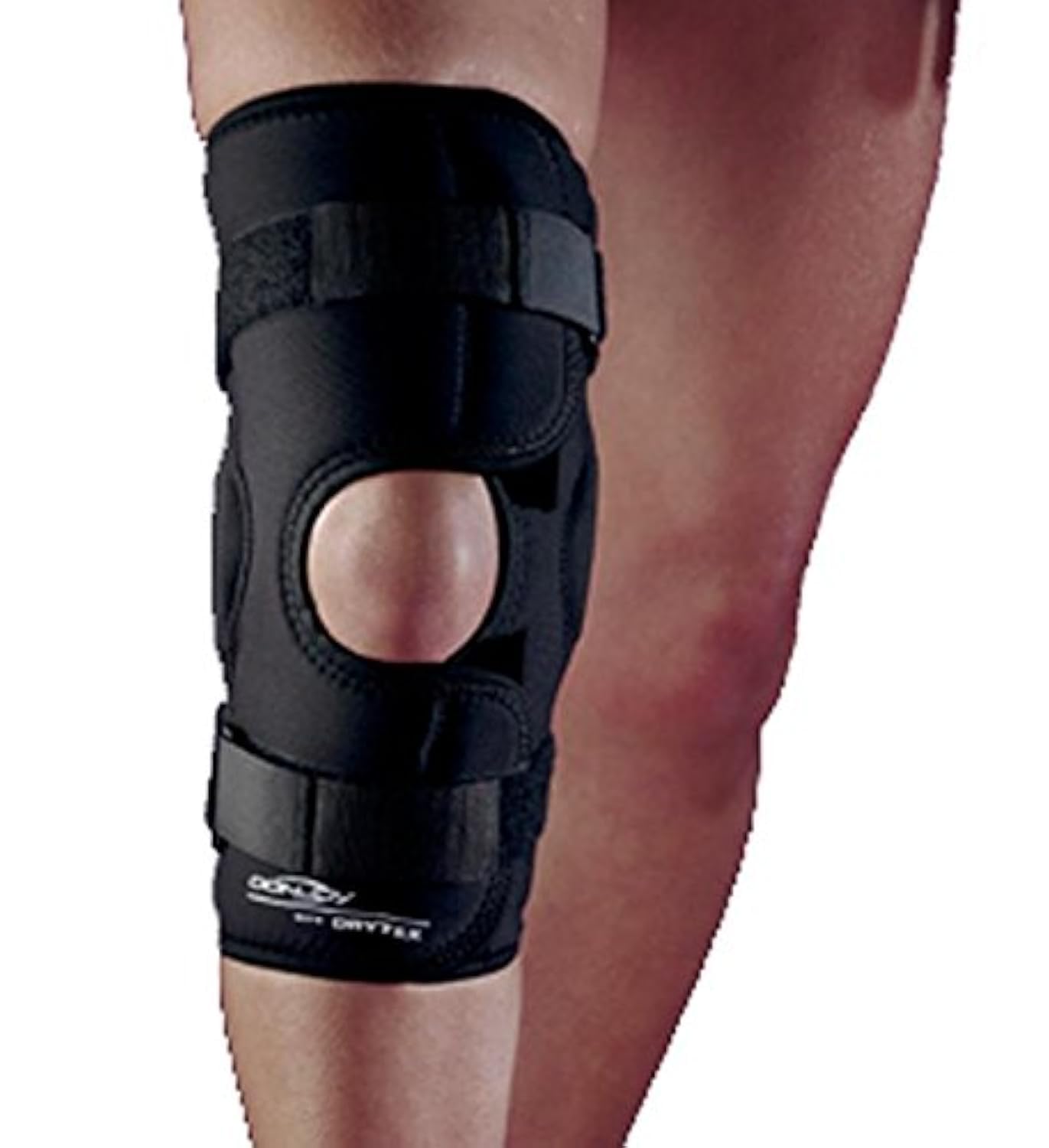
DonJoy’s Drytex Sport delivers the same brand reliability as the BIONIC FULLSTOP but in a lighter, more ventilated package aimed at ligament and meniscus recovery. The Drytex material breathes significantly better than neoprene, making this a solid choice for warm-weather training or all-day wear during work shifts.
The compressive support helps stabilize the knee after a sprain, and the hinged sidebars provide enough resistance to prevent minor hyperextension during walking and light activity. Users report it fits well and feels supportive, though the seam near the popliteal cutout can rub on bare skin after extended wear.
Durability is a mixed bag—several users have gotten years of use out of the Drytex Sport, but a few found that the stretch fabric lost tension over time. It’s best suited for mild to moderate cases where breathability is a priority and absolute end-range prevention isn’t required.
Why it’s great
- Highly breathable Drytex material for active use
- Lightweight compression supports mild ligament sprains
- Easy to put on and take off
Good to know
- Seam behind knee can irritate bare skin
- Not designed for severe hyperextension
- Fabric may lose elasticity over long-term use
4. Comforband Adjustable Hinged Knee Brace

The Comforband is a standout mid-range option because it features removable two-point geared hinges—a feature typically found on braces costing twice as much. The geared mechanism gives you precise control over flexion and extension movement, making it effective for meniscus tears and post-surgery recovery where you need to limit range at specific angles.
The four-strap open design avoids the uncomfortable material bunching behind the knee that plagues many wrap-around braces. The inner terry cloth lining is soft against the skin, and users report it runs true to size when you measure thigh circumference properly. Many buyers note it supports a floating kneecap better than any elastic sleeve they’ve tried.
The main drawback is that the velcro attachment points make it a bit fussy to put on—the hook-and-loop tends to grab before you’ve positioned it correctly. Once on, it stays put and doesn’t limit motion, but expect a slightly longer donning process.
Why it’s great
- Geared hinges for precise motion control
- Comfortable terry cloth inner lining
- Four-strap design reduces popliteal bunching
Good to know
- Velcro makes initial positioning tricky
- Not as breathable as mesh-backed braces
- Hinges may be overbuilt for mild instability
5. Galvaran Knee Brace for Men & Women
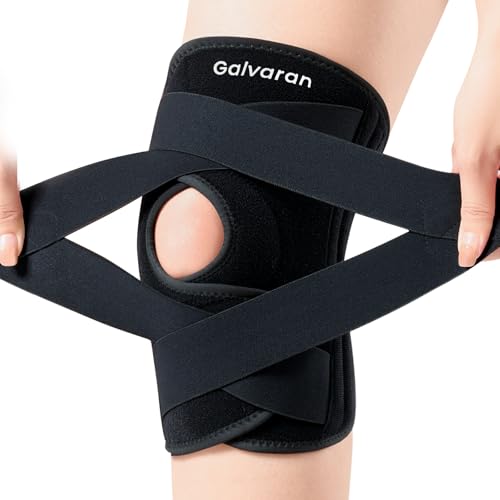
Galvaran’s brace takes a different approach to hyperextension support by using four memory stabilizers and a V-shaped band to limit lateral patella movement while still allowing natural flexion. The dual gel pads provide targeted compression around the kneecap, which helps if your hyperextension is accompanied by patellar maltracking.
Users with torn menisci report that wearing this brace at night reduces pain and gives a sense of security without the stiffness of a full hinged brace. The breathable neoprene blend wicks moisture well, and the hook-and-loop closure lets you adjust tension precisely. Several customers note it feels less bulky than steel-hinged alternatives while still delivering noticeable stabilization.
The sizing chart is the weakest link—it offers only one measurement per size, and users between sizes recommend sizing down. If your primary need is pure hyperextension stop rather than patella tracking, a geared-hinge brace may be more appropriate.
Why it’s great
- V-band and gel pads improve patella tracking
- Comfortable for nighttime wear and sleep
- Adjustable tension with easy on/off
Good to know
- Sizing guide is ambiguous between sizes
- No geared hinge for precise extension stop
- Durability testing limited to short-term use
6. ACE Brand Hinged Knee Brace

ACE’s hinged brace is the most widely available option and a reasonable entry point for someone trying a hyperextension-prevention brace for the first time. The dual-pivoting hinges provide firm mediolateral stability, and the kneecap cushion adds protection for the patella during flexion.
Users consistently report that it lasts five to six years with proper care, making it an economical choice for daily wear during yard work or light activity. The wrap-around design fits either leg and is easy to adjust on the fly. It’s not the most breathable option, and the neoprene material can get warm during extended use.
The biggest limitation is that the brace tends to slip downward over several hours, requiring re-tightening. It also lacks a true hyperextension stop—the hinges control side-to-side motion but don’t mechanically block terminal extension. For mild instability, it’s a capable starter brace; for moderate or severe hyperextension, you’ll want a more sophisticated hinge system.
Why it’s great
- Durable construction lasts 5+ years
- Fits left or right knee
- Good side-to-side stabilization for the price
Good to know
- Tends to slip downward during activity
- No mechanical hyperextension stop
- Neoprene lacks breathability for warm conditions
7. COPPER FIT Natural Motion Knee Brace
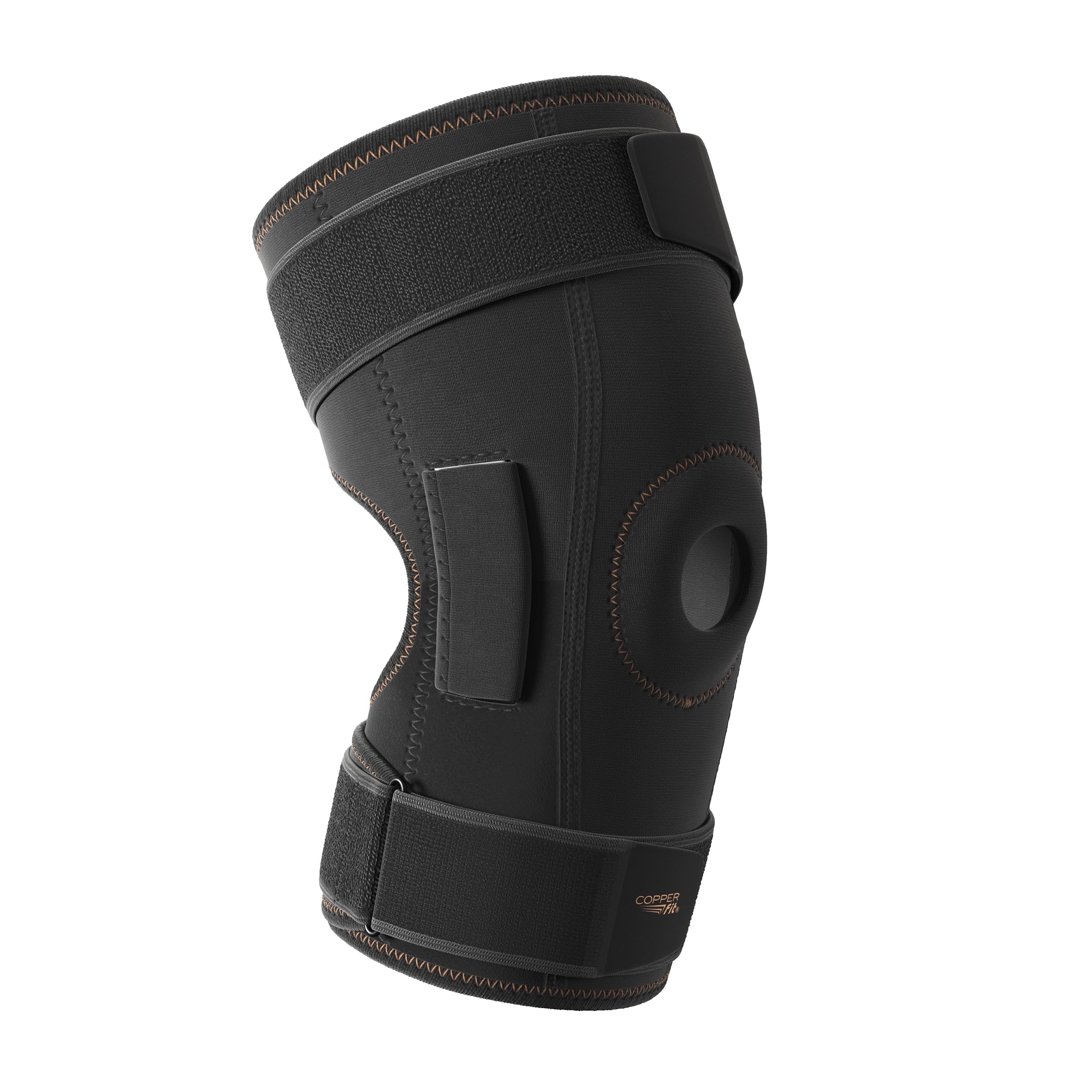
Copper Fit’s Natural Motion brace uses a tri-pivot hinge that allows smoother bending than single-pivot competitors, making it a solid choice for mild hyperextension where you want to maintain full range of motion. The rigid side stabilizers add lateral support, and the open-patella cushion relieves pressure on the kneecap during deep flexion.
The copper infusion helps reduce odor during long wear days, and the wrap-around design makes it easy to put on and take off without removing your footwear. Several users report this brace works better for them than custom-fitted alternatives that cost significantly more, though stitch quality can begin to degrade after about eight months of daily use.
It’s important to note that this brace is designed for natural motion, not aggressive hyperextension prevention. If your knee routinely locks back during walking or standing, you’ll benefit more from a brace with a dedicated full-stop mechanism. For general support and pain relief during moderate activity, the Copper Fit is a comfortable, budget-friendly option.
Why it’s great
- Tri-pivot hinge allows natural bending motion
- Copper infusion reduces odor
- FDA registered and HSA/FSA eligible
Good to know
- Stitching can fail after 6-8 months of heavy use
- Not designed for severe hyperextension
- May need a sleeve underneath for comfort on bare skin
FAQ
Can a knee brace fully prevent hyperextension?
What is the difference between a hinged brace and a compression sleeve?
Should I wear my hyperextension brace at night?
How do I measure my knee for a hyperextension brace?
Final Thoughts: The Verdict
For most users, the best brace for hyperextended knee winner is the DonJoy Performance BIONIC FULLSTOP because its four-point leverage system is the only off-the-shelf design that actively trains you away from end-range extension, making it ideal for ACL protection and moderate hyperextension. If you want a slim, breathable brace that works under clothing and still provides solid mediolateral support, grab the MUELLER Hg80. And for a budget-friendly geared hinge option that punches above its price point, nothing beats the Comforband Adjustable Hinged.

Mo Maruf
I created WellFizz to bridge the gap between vague wellness advice and actionable solutions. My mission is simple: to decode the research and give you practical tools you can actually use.
Beyond the data, I am a passionate traveler. I believe that stepping away from the screen to explore new environments is essential for mental clarity and physical vitality.