Our readers keep the lights on and my smoothie glass nicely filled. As an Amazon Associate, I earn from qualifying purchases.
Every parent knows the feeling — creeping into the nursery at 2 a.m. to check if that tiny chest is still rising. Baby sock monitors promise to replace that midnight panic with data, but the market is flooded with gadgets that measure everything from pulse rate to room temperature. The real question isn’t which device has the most features; it’s which one actually delivers reliable, actionable information without driving you crazy with false alarms.
I’m Mohammad Maruf — the founder and writer behind WellFizz. I’ve spent years analyzing consumer health hardware, separating the clinically-backed trackers from the marketing fluff so parents can make informed choices about sleep safety and peace of mind.
After evaluating the current landscape of wearable and contact-free monitors, I’ve broken down the specs that actually matter so you can confidently select the best baby sock monitor for your family’s unique sleep setup and budget.
How To Choose The Best Baby Sock Monitor
Baby sock monitors fall into two distinct camps: optical pulse oximeters that track oxygen saturation and heart rate via a wearable foot sensor, and movement-based or contact-free systems that monitor breathing patterns through abdominal motion or camera-based respiration tracking. Choosing between them depends on your primary concern — oxygen levels or breathing cessation detection — and your tolerance for false alerts.
Sensor Technology: PPG vs. Movement vs. Contact-Free
Photoplethysmography (PPG) sensors, used in products like the Owlet Dream Sock and Sense-U Smart Sock Shoe 2, shine light through the skin to measure blood volume changes. This gives you pulse rate and SpO₂ data but requires a snug fit and proper positioning. Movement-based monitors like the Snuza Hero clip to the diaper and detect abdominal rise — they measure breathing directly, not heart rate. Contact-free cameras like the Miku Pro use radio-frequency or vision-based algorithms to track chest motion through blankets. Each approach has a different error profile, and none is perfect for every sleeping position.
False Alarm Rate and Notification Fatigue
The best sensor in the world is useless if it wakes you up three times a night for a loose sock or a shifted clip. Look for devices that offer adjustable sensitivity thresholds, multi-stage alerts (vibration before audible alarm), and clear calibration instructions. Monitors with built-in arousal vibration, like the Sense-U Pro, can attempt to stimulate the baby before sounding a full alarm, reducing unnecessary midnight heart-rate spikes for parents.
Data Storage and Subscription Costs
Some systems, like the Owlet Dream Duo, require a monthly subscription for advanced sleep trend analysis and historical data beyond a single night. Others, like the iBaby i7 and Snuza Hero, function fully without recurring fees. If long-term sleep pattern tracking matters to you, factor in whether the free tier gives you enough information or if the paid tier is a hidden cost that eats into your monthly budget over two years of use.
Fit and Comfort for Different Age Ranges
Newborn feet are small and fragile. A sock-style monitor must stay securely in place without being tight enough to restrict circulation. Check the weight range and age specifications — the Owlet Dream Sock supports babies from 6 to 30 pounds (1-18 months), while the Sense-U Smart Sock Shoe 2 covers 1-12 months with two size options. For premature or very small infants, a clip-on abdominal monitor may be the only comfortable wearable option until the baby reaches the minimum weight for foot-based sensors.
Quick Comparison
On smaller screens, swipe sideways to see the full table.
| Model | Category | Best For | Key Spec | Amazon |
|---|---|---|---|---|
| Owlet Dream Duo (Gen 3) | Pulse Oximetry | Complete health monitoring | Medical-grade SpO₂ + 2K camera | Amazon |
| Miku Pro Smart Baby Monitor | Contact-Free | No-wearable breathing tracking | SensorFusion through blankets | Amazon |
| Sense-U Smart Sock Shoe 2 | Foot PPG | Affordable heart rate tracking | Transmissive PPG sensor | Amazon |
| Sense-U Pro Baby Monitor | Abdominal Movement | Breathing + rollover alerts | Arousal vibration at 15 sec | Amazon |
| iBaby i7 Contactless Monitor | Contact-Free | Subscription-free camera tracking | Yobi-PPG face-based breathing | Amazon |
| Snuza Hero Baby Movement Monitor | Abdominal Movement | Portable no-WiFi breathing detection | Patented direct-touch sensor | Amazon |
| MedChirrup Handheld Pulse Oximeter | Medical Pulse Ox | Clinical-grade home SpO₂ | Wrap foot + finger probes | Amazon |
| Manhero Continuous Pulse Oximeter | Medical Pulse Ox | Overnight trend data logging | 500 data storage + alarms | Amazon |
| Manhero Overnight Pulse Oximeter | Medical Pulse Ox | Budget-friendly infant monitoring | ±1% SpO₂ accuracy | Amazon |
In‑Depth Reviews
1. Owlet Dream Duo (Gen 3)

The Owlet Dream Duo represents the gold standard for parents who want a single ecosystem that tracks both physiological health and room conditions. The Dream Sock uses medical-grade pulse oximetry — the same technology hospitals rely on — to monitor oxygen saturation and pulse rate, while the 2K HD Dream Sight camera provides sharp day-and-night video with a 130-degree wide-angle lens. The SGS Cybersecurity Mark on the camera add
s real encryption credibility that few competitors match.
Setup requires a 2.4 GHz Wi-Fi connection for the sock during initial pairing, and the base station must stay within six feet of the sensor for reliable Bluetooth communication — a limitation that can be frustrating for larger homes. The four included fabric socks fit babies from 6 to 30 pounds (approximately 1-18 months), with the nylon and plastic sensor housing designed to withstand nightly use. The Predictive Sleep Technology analyzes wake windows to suggest optimal nap and bedtime schedules, and 94% of parents in Owlet’s internal surveys report improved sleep after adopting the system.
The subscription model is the main friction point: full sleep trend analysis and daily morning reports require the Owlet360 upgrade at a monthly fee. Without it, you still get real-time alerts for out-of-range oxygen and heart rate, plus the camera feed, but historical data is limited. For parents of babies with known respiratory concerns or those who simply want the most comprehensive safety net, the up-front investment paired with ongoing costs is justified by the clinical-grade sensing core.
Why it’s great
- FDA-cleared pulse oximetry provides hospital-grade SpO₂ and heart-rate accuracy
- 2K HD camera with 4x zoom and night vision delivers excellent video clarity
- Includes four fabric sock sizes to accommodate growth up to 18 months
Good to know
- Base station Bluetooth range is limited to approximately six feet
- Advanced sleep trend data requires a monthly subscription beyond the base app
- Initial setup requires 2.4 GHz Wi-Fi, which may need router configuration
2. Miku Pro Smart Baby Monitor
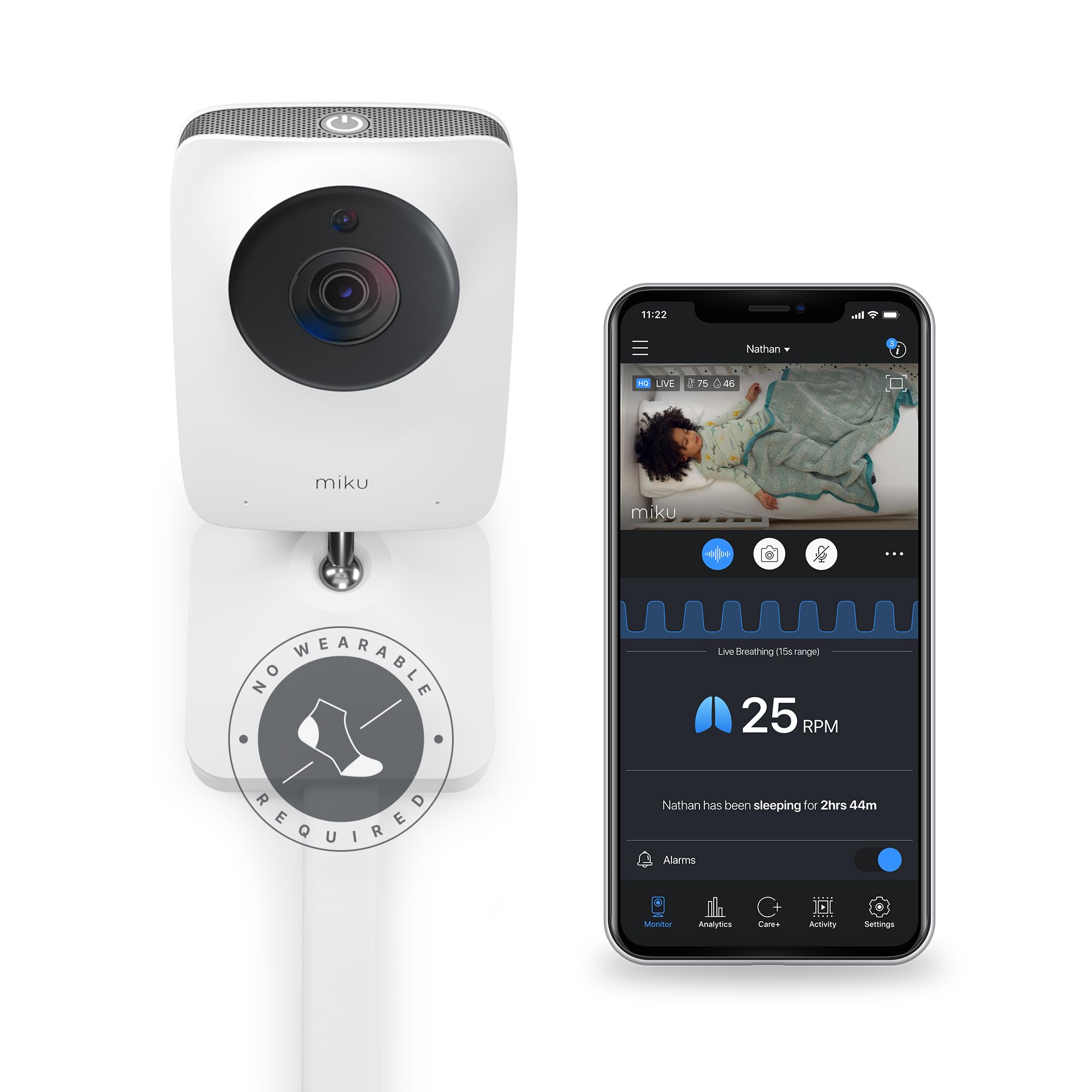
The Miku Pro eliminates the need for any wearable by using SensorFusion technology — a combination of radio-frequency and vision-based algorithms — to track breathing through blankets, stuffed animals, and in any sleep position. This is a fundamentally different approach from optical sock monitors: it measures chest wall motion rather than blood flow, so it delivers respirations per minute rather than oxygen saturation. The trade-off is that you cannot measure SpO₂, but for parents whose primary anxiety is breathing cessation, this contact-free method removes the hassle of sensor placement, charging, and sock washing.
Video quality is excellent at 1080p with night vision, and the included wall mount kit with cable guides ensures a clean installation. The app provides real-time breathing rate, sleep score, and motion event recording, though the premium Miku Membership (/month) unlocks deeper sleep trend analysis and expanded video clip storage. The dual-band Wi-Fi with Qualcomm wireless chipsets ensures stable streaming, but some users report occasional connection drops in homes with mesh networks that switch bands aggressively. The Crypto Chip and two-step authentication add meaningful security for parents concerned about camera hacks.
One unique advantage is that the Miku Pro continues to function well beyond the typical 18-month sock monitor window — most families use it past age three because the breathing tracking works regardless of the child’s size. The subscription is optional for basic breathing monitoring, and the base hardware is complete out of the box with no additional sensor purchases needed. For families who want reliable breathing data without the nightly ritual of fitting a sock, this is the most elegant solution available.
Why it’s great
- No wearable required — tracks breathing through blankets in any sleep position
- Works beyond age three, far exceeding typical sock monitor lifespan
- Includes wall mount, cable guides, and installation tools for clean setup
Good to know
- Does not measure oxygen saturation, only respiratory rate
- Premium sleep analytics require a /month subscription
- Occasional connectivity issues with mesh Wi-Fi networks that auto-switch bands
3. Sense-U Smart Sock Shoe 2
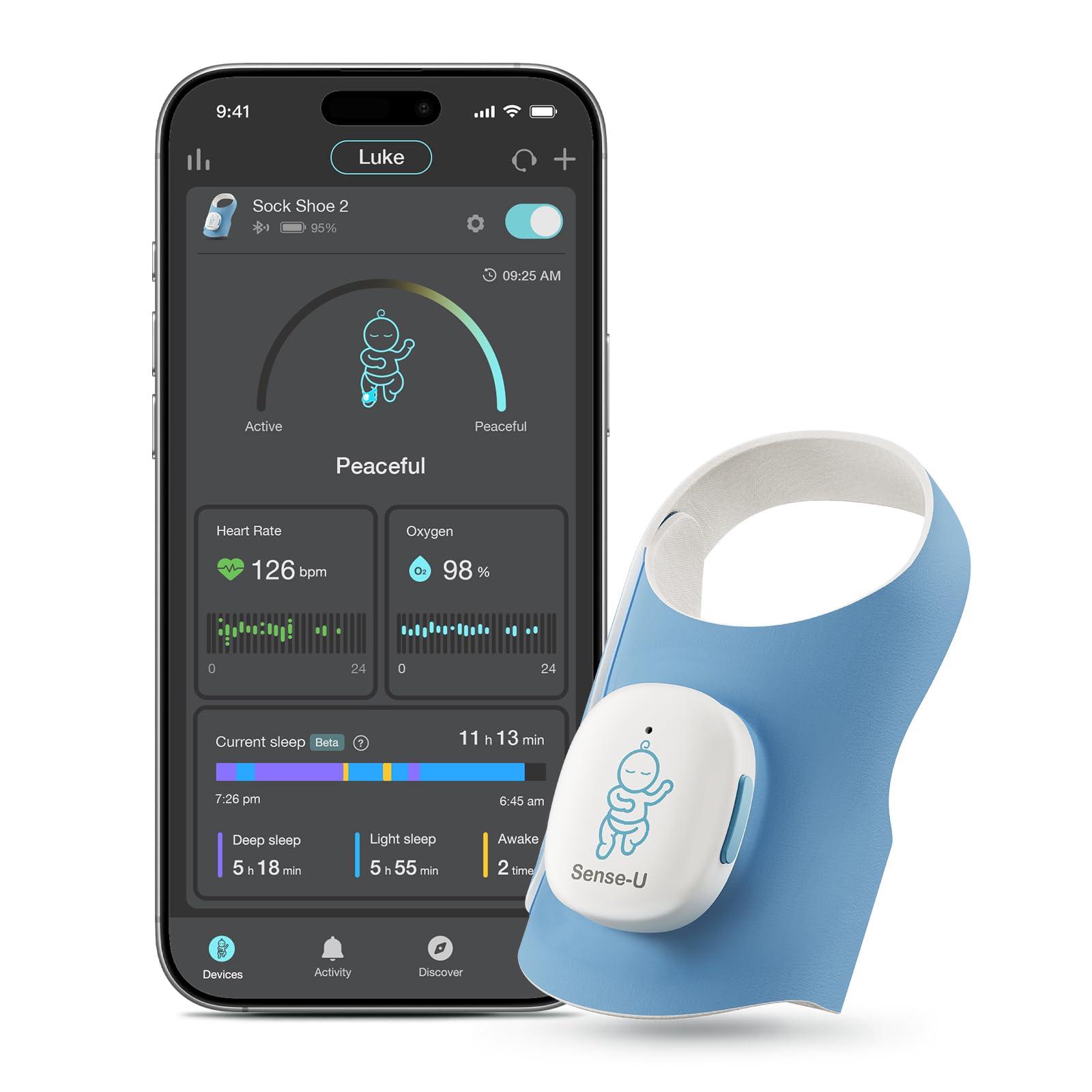
The Sense-U Smart Sock Shoe 2 differentiates itself from the crowded PPG sock market by using transmissive photoplethysmography — the same optical approach used in hospital pulse oximeters — rather than the reflected-light method found in many consumer wearables. Transmissive sensing requires the LED and photodetector to be on opposite sides of the tissue, which in practice means the sensor wraps around the foot to shine light through the skin. This design yields more consistent heart-rate readings across different skin tones and perfusion levels, a well-documented weak point of reflected PPG sensors.
On-device light indicators and built-in audible alerts allow the monitor to function without a phone nearby, which is critical for parents who want the base-level alarm even if their phone is on silent or charging in another room. The Sense-U Baby app adds sleep stage breakdowns (deep vs. light sleep), nap tracking, and wake-time analysis. The soft fabric shoe-style sock comes in two sizes for babies 1-12 months, and the material is breathable enough for all-night wear. Bluetooth range is rated for about 50 feet in open space, but real-world performance through walls drops to roughly 25-30 feet, so the phone ideally stays in the same room.
Some users report occasional connection loss where the sensor shows “calculating” without displaying data, requiring a restart. This seems to be a firmware quirk rather than a hardware defect, and Sense-U has pushed updates to address it. At a price point significantly below the Owlet Dream Sock while delivering comparable heart-rate tracking, the Sense-U Smart Sock Shoe 2 is the strongest mid-range option for parents who prioritize SpO₂ and pulse data without paying for a bundled camera system.
Why it’s great
- Transmissive PPG sensor provides more accurate heart-rate readings than reflected optical
- On-device audible alerts work independently of smartphone connection
- Breathable fabric and two size options ensure a comfortable fit for 1-12 months
Good to know
- Occasional Bluetooth connection drops requiring device restart
- Bluetooth range through walls is limited to approximately 25-30 feet
- No dedicated base station — relies entirely on phone app for advanced features
4. Sense-U Pro Baby Monitor
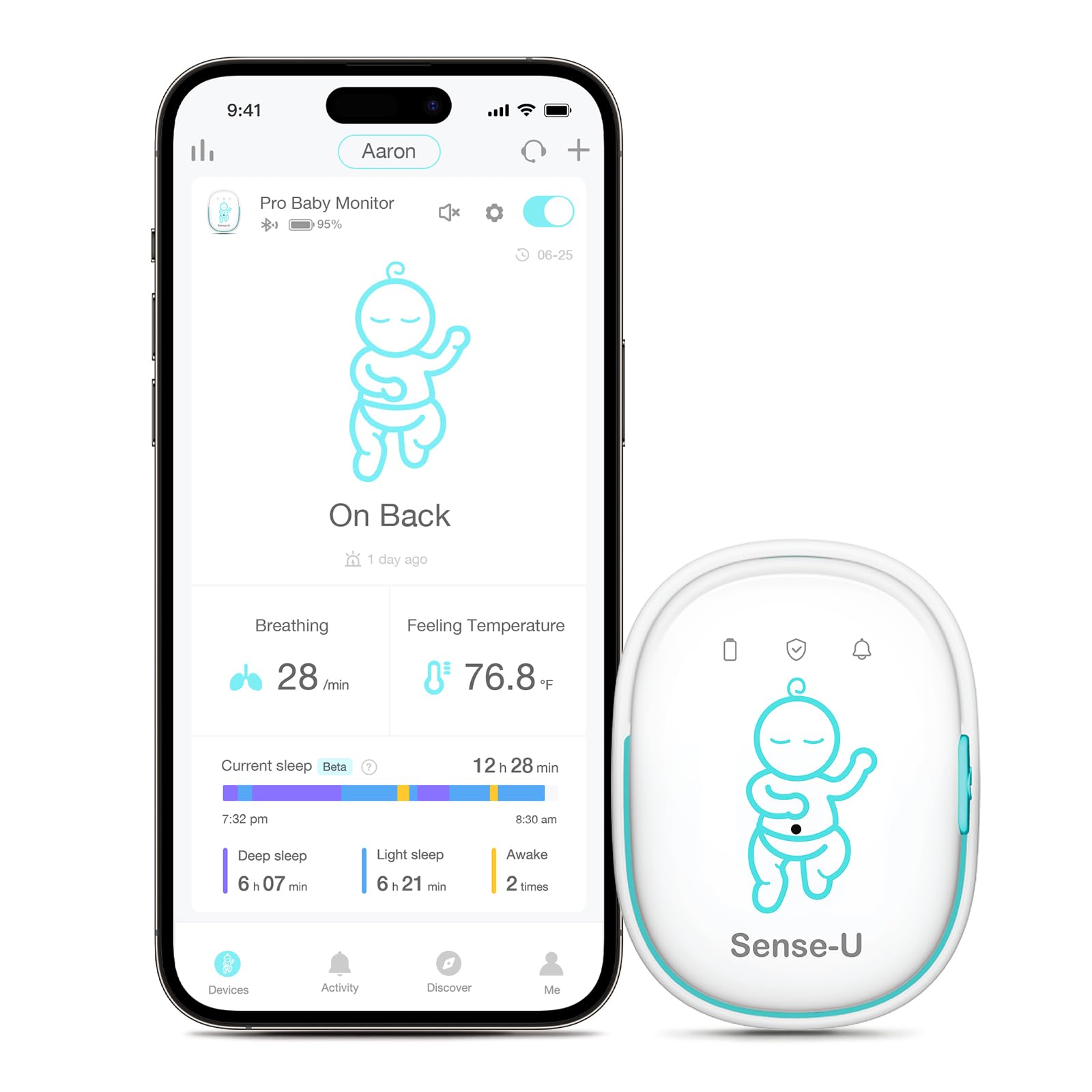
The Sense-U Pro takes a fundamentally different approach from sock monitors by clipping directly to the diaper and tracking abdominal movement — the physical rise and fall of the belly during breathing. This is not a pulse oximeter; it measures mechanical breathing rather than blood oxygen, so it cannot detect desaturation events caused by apnea that does not involve physical cessation of movement. However, for the most common parental fear — that the baby has simply stopped breathing — this clip-on design offers the fastest possible detection of no-movement events.
The three-stage alert system is the standout feature: after 15 seconds of no detected movement, the device vibrates gently against the baby’s abdomen to stimulate a breath. If movement remains undetected for another 5 seconds, a loud audible alarm sounds. This graduated response reduces false alarms for babies who breathe shallowly or shift position, while still providing a decisive alert for genuine cessation. The device also tracks rollover position and ambient temperature via a built-in sensor, sending notifications when the baby is on their stomach or if the room leaves preset comfort zones.
Battery life is excellent at 7+ days on a single charge, and the Bluetooth Low Energy protocol means radiation output is roughly 1/1000 of a typical smartphone. The clip is small and lightweight enough that it does not interfere with swaddling or sleep sacks. The main limitation is that the monitor must be in the same room as the paired phone for real-time alerts, and the app is necessary for movement trend data. For parents who want a non-optical, movement-first monitor with a thoughtful escalation protocol, the Sense-U Pro is the best option in its category.
Why it’s great
- Three-stage alert system (vibration then alarm) reduces false alarm anxiety
- Also tracks rollover position and room temperature for comprehensive safety
- Compact clip-on design works with any diaper brand and fits under sleepwear
Good to know
- Does not measure oxygen saturation — movement detection only
- Requires smartphone nearby for movement trend data and app notifications
- Not intended for use with premature or medically fragile infants without doctor approval
5. iBaby i7 Contactless Baby Breathing Monitor
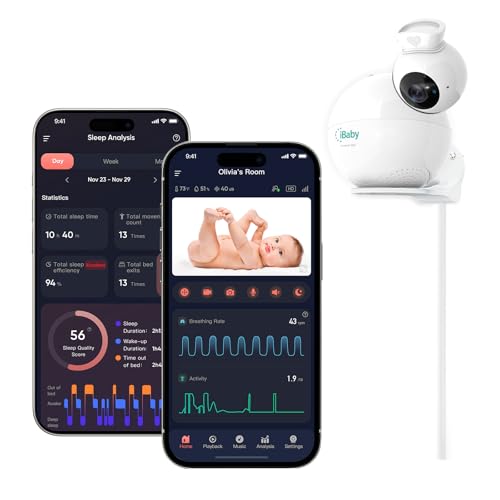
The iBaby i7 uses a technology it calls Yobi-PPG — essentially a camera-based optical system that analyzes facial skin color changes to estimate breathing rate. This is contact-free, requiring no wearable, but it comes with a critical limitation: the camera needs a clear, unobstructed view of the baby’s face. If the baby turns away from the camera or buries their face in a blanket, the breathing reading disappears and displays a dash until the face is visible again. For newborns who sleep on their backs under a clear swaddle, this is usually fine; for older babies who roll and move, the tracking can be intermittent.
Where the iBaby i7 shines is its lack of ongoing costs. The free app includes cry detection, face-covered alerts, temperature and humidity monitoring, and sleep analysis with weekly or monthly reports — all without a subscription. The 1080p camera with 360-degree pan and 110-degree tilt offers flexible positioning, and night vision is crisp. The two-way audio and built-in lullaby library add convenience, though the audio quality is noticeably less crisp than the Miku Pro’s. The wall mount is included, but there is no dedicated parent unit — everything runs through the app, which can be a dealbreaker for parents who want a separate monitor screen.
Setup is straightforward, and the camera connects to 2.4 GHz Wi-Fi. The breathing tracking is sensitive enough to detect motion through a light muslin swaddle, but heavier blankets can block the signal. For parents who want a subscription-free, no-wearable breathing monitor for a stationary infant, the iBaby i7 provides the best value in the contact-free category, though its reliance on facial visibility means it is not a complete replacement for a wearable pulse oximeter if oxygen levels are the primary concern.
Why it’s great
- Completely free app with no subscription for sleep analysis and alerts
- 360-degree pan and 110-degree tilt provide flexible nursery coverage
- Includes temperature, humidity, cry, and face-covered alerts in one device
Good to know
- Breathing tracking requires clear facial visibility — fails if baby turns away
- No dedicated parent unit — requires smartphone or tablet for viewing
- Audio quality for two-way talk is less crisp than premium competitors
6. Snuza Hero Baby Movement Monitor

The Snuza Hero is the most portable and simplest monitor in this lineup, and that simplicity is its greatest strength. It clips directly to the diaper and uses a patented direct-touch sensor that detects the physical motion of abdominal breathing without any optical components or Bluetooth connectivity. There are no apps, no Wi-Fi passwords, no firmware updates — just a green indicator light for movement detection, a red alert if movement stops for 20 seconds, and an optional ticking sound for auditory reassurance. The lithium-ion battery lasts up to six months, making it essentially maintenance-free for the entire newborn period.
The trade-off for this simplicity is that you get no data. There is no heart-rate graph, no sleep score, no oxygen saturation percentage — just a binary movement-or-no-movement status. The alarm is loud enough to be heard across a hallway but not ear-shattering, and the green flashing light is visible through most sleep clothing. Some users report false alerts when the diaper shifts during the night, causing the sensor to lose contact with the baby’s abdomen. Clipping it to a snug diaper under a swaddle usually resolves this. The device is medical-grade plastic and silicone, safe for sensitive skin, and the carry case makes it easy to bring when traveling or visiting grandparents.
Pediatricians often recommend the Snuza Hero over sock-style monitors for families dealing with postpartum anxiety because it delivers the most essential information — is the baby breathing? — without the flood of data that can fuel obsessive checking. It is not a medical device and will not detect oxygen desaturation without apnea, but for the specific job of monitoring respiratory movement in a healthy infant, it is the most reliable and distraction-free option available.
Why it’s great
- No apps, Wi-Fi, or setup required — clips on and works immediately
- Six-month battery life eliminates daily charging hassle
- Compact and portable with included carry case for travel
Good to know
- Provides no heart rate, SpO₂, or sleep data — movement detection only
- False alerts can occur if diaper shifts and sensor loses abdominal contact
- Loudness of alarm may not be sufficient for very large or noisy homes
7. MedChirrup Handheld Pulse Oximeter
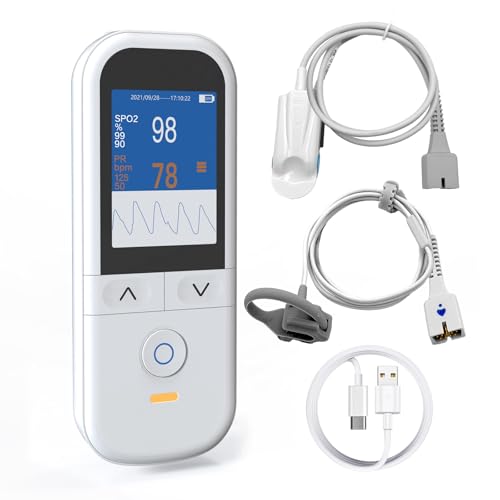
The MedChirrup handheld pulse oximeter is a medical-grade device repurposed for home infant monitoring, and it serves a very specific need: parents who want clinical-level SpO₂ and pulse-rate accuracy without the subscription ecosystem of the Owlet. It includes both a finger probe for adults and a wrap-around foot sensor for infants, making it a versatile tool for families monitoring a baby with a known respiratory condition like bronchiolitis or a congenital heart defect. The measurement accuracy is rated at ±1% for SpO₂ in the 70-100% range, which matches hospital-grade standalone pulse oximeters.
The 2.4-inch OLED display is bright enough to read in a dark nursery without being disruptive, and the rechargeable Type-C battery delivers up to 8 hours of continuous monitoring — enough for a full night’s sleep. The custom alarm thresholds allow you to set both upper and lower limits for SpO₂ and pulse rate, with an audible alert that is loud enough to wake a parent in the same room. The device stores up to 500 readings with trend data, viewable on the device screen without requiring a phone or app.
The main drawbacks are the lack of smartphone integration — no app, no sleep graphs, no remote notifications — and the fact that the foot sensor wraps around the baby’s foot with a Velcro strap that can be uncomfortable for long wear and is difficult to sanitize. Some users report that the sensor cord is too short for active babies who move during sleep. This is a tool for parents who need precise oxygen data and are comfortable interpreting raw readings, not for those who want a passive, set-it-and-forget-it monitoring experience.
Why it’s great
- Medical-grade ±1% SpO₂ accuracy suitable for clinical home monitoring
- Includes both infant foot wrap and adult finger probes for family use
- Stores 500 readings with trend data directly on device — no app required
Good to know
- No smartphone app, Wi-Fi, or remote notification capability
- Foot sensor Velcro strap is difficult to sanitize and may irritate sensitive skin
- Sensor cord length may be too short for babies who move during sleep
8. Manhero Continuous Pulse Oximeter
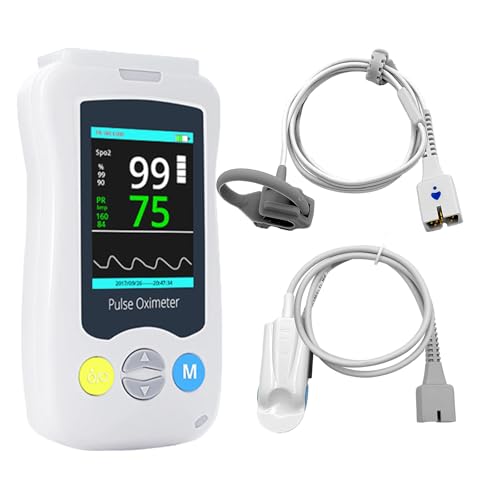
The Manhero continuous pulse oximeter is built for overnight trend monitoring, with a 500-set data storage capacity and both point-test and trend-test recording modes. This allows parents to track how oxygen saturation and pulse rate change across the entire sleep cycle rather than just checking a single snapshot. The 2.4-inch HD display offers nine levels of brightness adjustment, making it readable in bright daylight or dim nursery lighting without glare. The device supports both AAA battery operation and USB cable power, giving you the flexibility to run it plugged in for overnight use without worrying about battery drain.
Included dual probes — one for adults and one for infants — cover the full age range, though the infant probe uses a Velcro strap similar to the MedChirrup. The adjustable alarm thresholds for SpO₂ (default alert at 90%) and pulse rate give parents the ability to customize alert sensitivity based on their specific concerns. The measuring range covers 70-99% SpO₂ with ±2% accuracy, which is slightly less precise than the MedChirrup’s ±1% but still within acceptable clinical limits for screening purposes. The device also functions as a continuous oxygen monitor when paired with the secure adjustable strap.
Customer reports highlight a significant battery drain issue — the device consumes AAA batteries within 24 hours of continuous use, making the USB power option essential for overnight monitoring. The included USB cord is noted to be short, so you may need to place the monitor close to an outlet or use an extension cable. The probes are the same design across Manhero models, and the Velcro strap durability has drawn mixed feedback. For parents who want a budget-friendly alternative to the MedChirrup for continuous SpO₂ tracking and are comfortable with the power management quirks, this offers solid functionality at a lower entry barrier.
Why it’s great
- 500-set data storage with both point and trend test modes for sleep analysis
- Flexible power via AAA batteries or USB cable for overnight monitoring
- Nine-level brightness adjustment on 2.4-inch HD display for any lighting
Good to know
- Battery life is exceptionally short — USB power is recommended for overnight use
- Included USB cord is short, may require an extension or proximity to outlet
- SpO₂ accuracy is ±2% rather than the ±1% found on more premium models
9. Manhero Overnight Pulse Oximeter
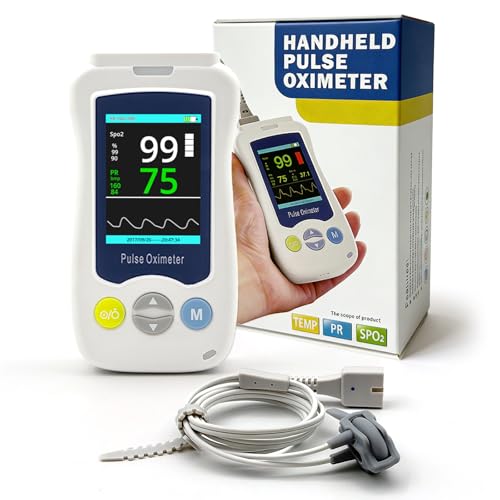
The Manhero overnight pulse oximeter is the most price-conscious entry in this guide, offering the same core SpO₂ and pulse-rate tracking as its sibling model but with a slightly more streamlined feature set. It still delivers medical-grade accuracy with a ±1% error margin in the 70-100% SpO₂ range, and the inclusion of both adult and infant probes makes it a true family device. The 2.4-inch clear HD display is identical in quality to the more expensive Manhero model, and the dual power option (disposable batteries or direct plug-in) ensures you can keep monitoring even if the batteries die.
The data storage capacity is significantly lower than its sibling — 500 spot-check records plus 24 hours of overnight logs — which is sufficient for tracking short-term trends but not for long-term sleep pattern analysis. The alarm thresholds are adjustable, and the device includes both point-test and trend-test modes. The baby-friendly soft material on the infant probe is identical to the higher-priced model, but the Velcro strap has the same durability and sanitation concerns. The device runs on a single AA battery rather than three AAA batteries, which is a welcome simplification.
The primary compromise is in battery life: users report that the AA battery lasts approximately 8 hours of continuous use, meaning you will be swapping batteries daily if you use it without the power cord. The probe cord is also on the short side, and the Velcro finger strap is difficult to clean and can feel bulky on small fingers. For parents who need a backup monitoring device, a travel unit, or a cost-effective entry point into pulse oximetry without the commitment of a premium ecosystem, this is a functional and accurate option despite the battery management trade-offs.
Why it’s great
- Medical-grade ±1% SpO₂ accuracy at the most accessible price in this guide
- Includes both infant and adult probes for whole-family monitoring
- Dual power option (AA battery or plug-in) for overnight use flexibility
Good to know
- AA battery lasts only about 8 hours of continuous use — plug-in recommended
- Velcro strap on finger probe is difficult to sanitize and feels bulky
- Short probe cord limits placement flexibility during overnight monitoring
FAQ
Can a baby sock monitor prevent SIDS?
Why does my baby sock monitor show inaccurate heart rate readings at night?
Are contact-free baby monitors as accurate as wearable sock monitors?
How long can a baby wear a sock monitor continuously?
Final Thoughts: The Verdict
For most users, the best baby sock monitor winner is the Owlet Dream Duo (Gen 3) because it combines FDA-cleared pulse oximetry with a high-quality 2K camera in a single app, giving parents the most complete picture of both oxygen status and room conditions without juggling multiple devices. If you want contact-free breathing tracking that works beyond the infant stage, grab the Miku Pro. And for a straightforward, no-app-required movement monitor for travel or as a backup, nothing beats the Snuza Hero.

Mo Maruf
I created WellFizz to bridge the gap between vague wellness advice and actionable solutions. My mission is simple: to decode the research and give you practical tools you can actually use.
Beyond the data, I am a passionate traveler. I believe that stepping away from the screen to explore new environments is essential for mental clarity and physical vitality.