Our readers keep the lights on and my smoothie glass nicely filled. As an Amazon Associate, I earn from qualifying purchases.
A documentary camera is not a tool for static shots or scripted lighting. You are capturing real moments, often in uncontrolled environments where the difference between a powerful sequence and a missed opportunity comes down to dynamic range, autofocus reliability, and the ability to shoot for hours without a system failure. The right camera disappears into the background and lets the story take center stage.
I’m Mohammad Maruf — the founder and writer behind WellFizz. My research focuses on analyzing how sensor technology, codec options, and ergonomic design translate directly into real-world shoot-day success, especially when the subject is unpredictable and the crew is small.
This guide walks through the most capable bodies that serve the demands of nonfiction filmmaking, helping you match specs to shooting style so you can confidently invest in the best camera for documentary work that fits your workflow and budget.
How To Choose The Best Camera For Documentary
Documentary filmmaking places unique demands on a camera system. You are rarely in a studio with controlled lighting, and you often have one chance to capture a moment. Prioritizing the wrong feature — like pixel count over dynamic range — can cost you usable footage when the light drops or the action moves. Here are the three most critical factors to evaluate before you buy.
Dynamic Range and Log Profiles
The latitude to recover highlights and shadows without noise is arguably the most important spec for documentary work. A camera that records 13 or more stops of dynamic range gives you the flexibility to shoot into a window-lit room or handle a sudden shift from shade to sun without the image falling apart. Look for a log or flat gamma profile (S-Log, V-Log, C-Log, Blackmagic RAW, or Fujifilm F-Log) — this preserves the widest tonal range for color grading in post.
Autofocus Reliability for Run and Gun
When you are the only operator and the subject is moving through a crowd or pacing during an interview, a camera with fast, accurate continuous autofocus (phase-detection or hybrid) is a lifesaver. Sony’s Real-time Tracking, Canon’s Dual Pixel CMOS AF, and Nikon’s hybrid AF systems are industry leaders. Cameras that rely solely on contrast detection are harder to use in unpredictable scenarios and should be reserved for controlled tripod work.
Ergonomics, Battery Life and Recording Redundancy
A documentary shoot often lasts 8–12 hours. A camera that overheats after 30 minutes of 4K recording or drains a battery in under an hour is a liability. Look for active cooling, a battery rated for at least 90 minutes of continuous recording, and dual card slots. Dual slots allow you to record a backup simultaneously — essential protection when you cannot ask the subject to repeat a moment.
Quick Comparison
On smaller screens, swipe sideways to see the full table.
| Model | Category | Best For | Key Spec | Amazon |
|---|---|---|---|---|
| Blackmagic Pocket Cinema Camera 6K Pro | Cinema Camera | Narrative doc with internal ND | 13 stops DR, internal ND | Amazon |
| Sony Cinema Line FX30 | Cinema Camera | Run-and-gun solo shooter | 14+ stops, active cooling | Amazon |
| Nikon D850 | DSLR | Hybrid stills/4K documentary | 45.7MP, 9fps, tilting screen | Amazon |
| Canon EOS 5D Mark IV | DSLR | Reliable full-frame DSLR | 30.4MP, DPAF, 4K 30p | Amazon |
| Sony a7 III | Mirrorless | Versatile full-frame system | 15-stop DR, 693 AF points | Amazon |
| Blackmagic Pocket Cinema Camera 4K | Cinema Camera | High-end image quality on a budget | 13 stops, MFT mount | Amazon |
| Canon EOS RP | Mirrorless | Lightweight full-frame entry | 26.2MP, 4K 24p, DPAF | Amazon |
| OM SYSTEM OM-5 Mark II | Mirrorless | Weather-sealed travel doc | 5-axis IBIS, 4K unlimited | Amazon |
| Panasonic HC-X2 | Camcorder | All-in-one ENG/doc work | 20x optical zoom, V-Log | Amazon |
| Sony FDR-AX43 | Camcorder | Family doc and events | 20x zoom, Balanced OIS | Amazon |
| Nikon RED Z Cinema | Cinema Camera | Pure cinema-grade doc | 15+ stops, 6K full-frame | Amazon |
| Fujifilm X-E2S | Mirrorless | Compact street doc | 16MP APS-C, 1080p video | Amazon |
| Canon EOS 5D Mark IV (Renewed) | DSLR | Budget-friendly full-frame DSLR | 30.4MP, DPAF, 4K 30p | Amazon |
In‑Depth Reviews
1. Blackmagic Design Pocket Cinema Camera 6K Pro

The Blackmagic Pocket Cinema Camera 6K Pro is a dedicated cinema body with a Super 35 sensor that captures 6144 x 3456 native resolution and 13 stops of dynamic range. The built-in 2, 4, and 6-stop ND filters are a crucial advantage for documentary work — they let you maintain a wide aperture in bright conditions without screwing on external glass, saving precious seconds when a scene shifts.
It records Blackmagic RAW and Apple ProRes to CFast 2.0, SD/UHS-II cards, or external SSDs via USB-C. The included DaVinci Resolve Studio activation key means you can start editing and grading immediately. The adjustable 5-inch HDR tilt screen is bright enough for outdoor monitoring, though the NP-F570 battery runs about 45–60 minutes in 4K, so a multi-battery rig is standard practice.
Autofocus is contrast-based and not reliable for fast-moving subjects, which pushes this camera toward tripod or gimbal work. For controlled interviews, b-roll, and narrative doc sequences where manual focus is acceptable, the image quality and internal ND make it a powerful tool.
Why it’s great
- 13 stops of dynamic range paired with an internal ND filter system for quick exposure control.
- Super 35 sensor delivers a cinematic look with shallow depth-of-field on adapted EF/EF-S lenses.
- Records to affordable external SSDs via USB-C, reducing media costs on long shoots.
Good to know
- Contrast-detect autofocus struggles with continuous tracking — manual focus is the best approach.
- Battery life is short (about one hour) when recording 4K, requiring multiple spares or an external power solution.
- No built-in electronic viewfinder (EVF), making it less practical for bright-sun handheld shooting without an external monitor.
2. SONY Cinema Line FX30 Super 35 Camera

The Sony FX30 is built on a 20.1 MP Exmor R APS-C (Super 35) sensor with dual base ISO and a 14+ stop dynamic range. It delivers S-Cinetone color science straight out of the box, which means you can get a cinematic look without heavy grading. The active cooling system is a standout feature: it eliminates the risk of overheating during long interviews or 4K recording sessions, a common weakness in mirrorless hybrids.
It supports Cine EI, Cine EI Quick, and Flexible ISO modes, plus user LUTs can be applied to the LCD display and HDMI output. The autofocus is Sony’s industry-leading Real-time Tracking with 495 phase-detection points, making it one of the best run-and-gun options in this class. The FX30 also includes a full-size HDMI port, dual card slots, and a flip-out screen.
The NP-FZ100 battery lasts roughly 70–80 minutes of continuous 4K recording, which is better than the BMPCC 6K Pro but still requires spares for a full day. The E-mount gives access to a huge lens ecosystem, though APS-C crop means you lose the wide-angle coverage of full-frame.
Why it’s great
- Active cooling allows unlimited 4K recording without overheating — critical for long-form documentary work.
- S-Cinetone and dual base ISO produce clean, filmic images with minimal noise up to ISO 6400.
- Real-time tracking autofocus with 495 points performs reliably for moving subjects in fast-changing environments.
Good to know
- Super 35 sensor imposes a 1.5x crop factor on lenses, reducing wide-angle options compared to full-frame cameras.
- No built-in ND filters, requiring external screw-on or drop-in ND for controlling exposure in bright light.
- Battery life is decent but not sufficient for an all-day shoot — plan for two or more NP-FZ100 packs.
3. Nikon D850 FX-Format Digital SLR Camera Body

The Nikon D850 is a full-frame DSLR with a 45.7 MP back-side illuminated (BSI) sensor and no optical low-pass filter, delivering exceptional detail and dynamic range. It shoots up to 9 fps with full AF and offers 4K UHD video from the full sensor width. For documentary shooters who also need high-resolution stills, this combination is hard to beat.
The 153-point phase-detection AF system is fast and reliable for stills, but video autofocus using contrast detection is not as smooth as modern mirrorless systems. The tilting touchscreen is a big plus for low-angle tripod work. Battery life is excellent for stills (approximately 1,840 shots per charge), but using live view and video drains it much faster.
It supports 8K time-lapse and 4K 30p video with no crop. The downside for documentary video is the limited codec options (H.264 only, no log profile pre-installed), though you can load a flat profile. The body is heavy (about 32 oz with battery), which adds fatigue during long handheld shoots.
Why it’s great
- 45.7 MP BSI sensor provides exceptional resolution and dynamic range that rivals medium-format cameras.
- 4K video from the full sensor width with no crop, and 1080p up to 120 fps for smooth slow motion.
- Tilting touchscreen and illuminated buttons make operation easier in low-light or awkward shooting positions.
Good to know
- Video autofocus is contrast-based and not as smooth as dual-pixel or hybrid AF systems for moving subjects.
- No internal log profile, requiring a flat picture style to maximize dynamic range for grading.
- Heavy body (over 2 lbs) and limited video codec choices may not suit all-day handheld documentary work.
4. Canon EOS 5D Mark IV Digital SLR Camera (Body Only)
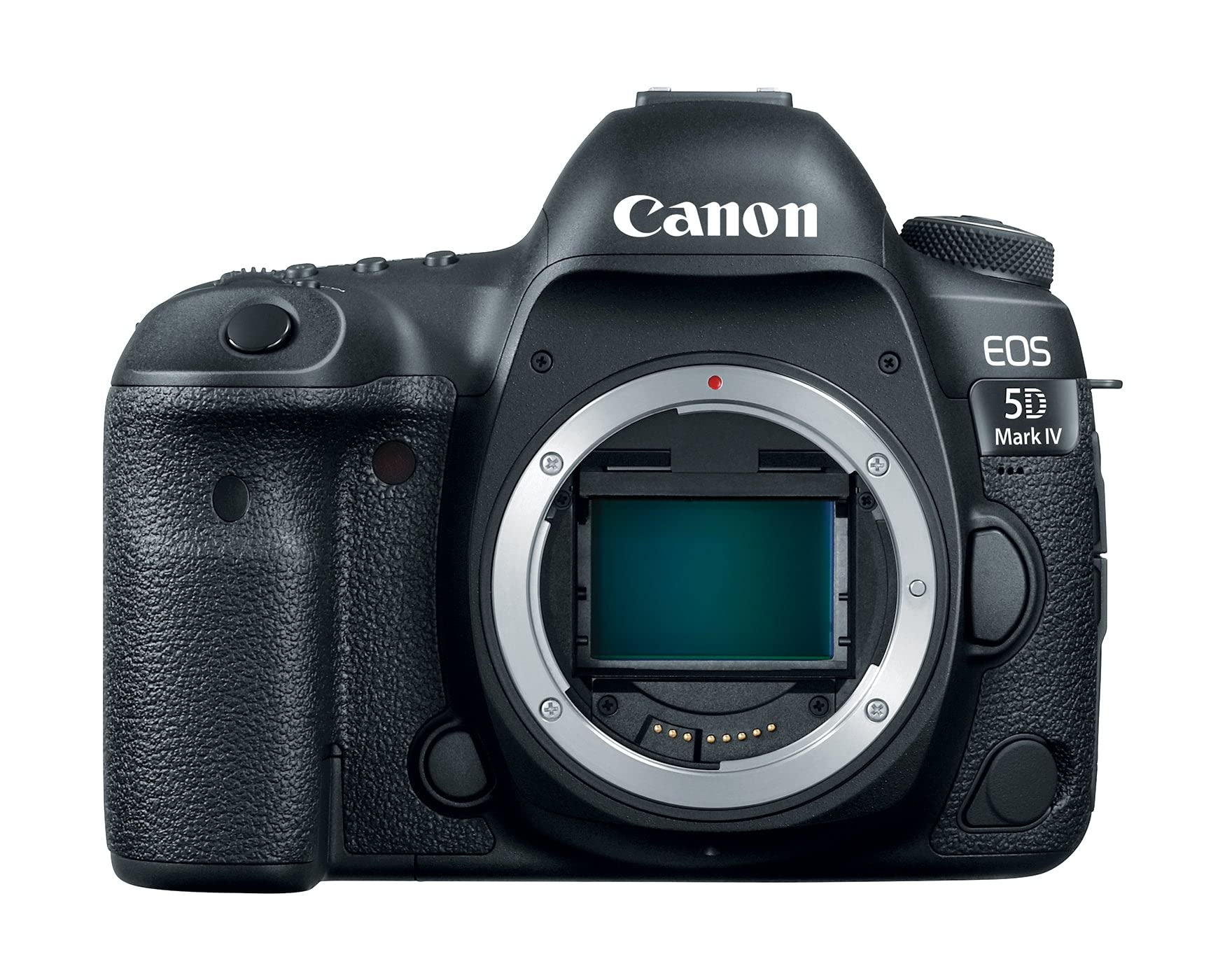
The Canon 5D Mark IV is a full-frame DSLR with a 30.4 MP sensor and Canon’s Dual Pixel CMOS AF, which provides smooth and fast continuous autofocus during video recording. It shoots 4K Motion JPEG at 30/24 fps, though the 4K video uses a 1.74x crop factor, reducing the effective field of view. The DIGIC 6+ processor delivers up to 7 fps continuous shooting and an ISO range expandable to 102,400.
It includes built-in Wi-Fi, GPS, and a full touchscreen interface for selecting AF areas during live view. The body is weather-sealed and built to withstand demanding field conditions. The Dual Pixel AF is particularly valuable for documentary interviews or following a subject in a controlled space, as it locks on smoothly and does not hunt.
The primary limitation for modern documentary use is the 4K Motion JPEG codec, which produces large file sizes (about 800 MB per minute) and the cropped sensor. Full HD 60p is uncompressed and uses the full sensor. This is a proven, reliable tool, but shooters who prioritize 4K flexibility may want to look at mirrorless alternatives.
Why it’s great
- Dual Pixel CMOS AF provides smooth, reliable video autofocus for interviews and controlled environments.
- 30.4 MP full-frame sensor delivers excellent dynamic range and low-light performance with a wide selection of Canon EF lenses.
- Weather-sealed magnesium alloy body is durable and designed for professional use in challenging conditions.
Good to know
- 4K video has a 1.74x crop factor and records in Motion JPEG, which produces massive file sizes compared to modern codecs.
- No flip-out screen for self-monitoring or vlogging, which can be limiting for solo operators.
- Heavier and bulkier than many mirrorless alternatives offering similar or better video features for documentary work.
5. Sony a7 III Full-Frame Mirrorless Camera with 28-70mm Lens

The Sony a7 III features a 24.2 MP back-illuminated Exmor R full-frame sensor with 15 stops of dynamic range and 14-bit uncompressed RAW. Its 693-point phase-detection autofocus covers 93% of the frame, making it one of the most reliable systems for tracking subjects in documentary setups. The 10 fps continuous shooting with AE/AF tracking works for both stills and video.
The a7 III records 4K 30p from the full sensor width with no crop, oversampled from 6K for detailed footage. It supports S-Log2 and S-Log3 for grading latitude. The NP-FZ100 battery offers excellent life (about 710 shots per charge), and the body is compact and lightweight for full-frame, weighing about 23 oz with battery and card.
The kit lens (28-70mm f/3.5-5.6) is serviceable but not optically outstanding. Low-light performance is strong, with usable results up to ISO 12800. The menu system is complex, and the 1.44M-dot EVF is lower resolution than newer models. For a hybrid shooter who wants a single system for both photo and documentary video, this remains a strong entry point.
Why it’s great
- Fast and accurate 693-point phase-detection autofocus with Real-time Eye Tracking for reliable subject tracking.
- Full-frame sensor with 15 stops of dynamic range and excellent high-ISO performance up to ISO 12800.
- Outstanding battery life for a mirrorless camera, reducing the need for frequent swaps during long shoots.
Good to know
- Menu system is notoriously complex and can be slow to navigate during active shooting.
- Kit lens (28-70mm f/3.5-5.6) is mediocre for low-light documentary work; a faster prime is recommended for serious shooting.
- Electronic viewfinder resolution is lower than newer alternatives and may not suit all shooters.
6. Blackmagic Design Pocket Cinema Camera 4K

The BMPCC 4K uses a 4/3″ sensor with native 4096 x 2160 resolution and 13 stops of dynamic range. It records Blackmagic RAW and Apple ProRes to CFast 2.0, SD/UHS-II, or external SSDs via USB-C. The included DaVinci Resolve Studio key provides a full post-production pipeline. The dual gain ISO up to 25,600 allows decent low-light performance for a smaller sensor.
The MFT mount opens up a wide range of compact lenses, including speedboosters that adapt full-frame glass with a focal reduction. The 5-inch LCD is bright and usable, but there is no EVF. The body is lightweight carbon fiber polycarbonate, but battery life is very short — about 30–40 minutes with the included LP-E6 cell, so external power is almost mandatory for a full day.
Image quality is stunning for the price point, with smooth highlight rolloff and rich color. Autofocus is contrast-based and not reliable for video. This camera is ideal for a shooter who prioritizes image quality and is comfortable with manual focus, gimbal, or tripod-based documentary work.
Why it’s great
- 13 stops of dynamic range and Blackmagic RAW deliver image quality that competes with cameras costing much more.
- Compact and lightweight MFT body makes it easy to rig on a gimbal or small tripod for mobile setups.
- USB-C external SSD recording keeps media costs low and simplifies file transfer.
Good to know
- Battery life is extremely short (under 40 minutes), requiring external power for any extended recording session.
- Contrast-detect autofocus is slow and unreliable for video, forcing manual focus operation.
- No built-in ND filters or electronic viewfinder add to the list of required accessories.
7. Canon EOS RP Full-Frame Mirrorless with RF24-105mm Lens

The Canon EOS RP is the most affordable entry into Canon’s full-frame mirrorless system. It packs a 26.2 MP sensor with Dual Pixel CMOS AF for smooth video autofocus. The RF24-105mm F4-7.1 IS STM lens kit provides a versatile zoom range with up to 5 stops of optical image stabilization, making it a compact travel companion for run-and-gun documentary work.
The body is lightweight (about 17.6 oz) and comfortable for handheld shooting. The touchscreen interface is responsive and intuitive, and the DPAF works well for interviews and slow-moving subjects. It also functions as a high-quality webcam via the EOS Utility software, adding flexibility for remote or hybrid storytelling.
The key limitation for serious documentary work is the 4K video: it uses a 1.6x crop factor, lacks Dual Pixel AF in 4K, and has a 30-minute recording limit. Full HD 60p with DPAF is the practical choice for most production. The kit lens is also slow (f/7.1 at telephoto), requiring good light for noise-free footage.
Why it’s great
- Excellent Dual Pixel CMOS AF works well in 1080p mode for reliable subject tracking during interviews.
- Lightweight and compact full-frame body is ideal for travel, vlogging, or long days of handheld shooting.
- Intuitive touchscreen controls and a simple menu system make it easy for beginners to operate quickly.
Good to know
- 4K video has a significant 1.6x crop and lacks Dual Pixel AF, making it less practical for documentary video.
- Kit lens aperture is slow (f/7.1 at the long end), limiting low-light performance and depth-of-field control.
- 30-minute 4K recording limit can interrupt long interviews or events.
8. OM SYSTEM OM-5 Mark II SLV w/M.ZUIKO Digital 14-150mm
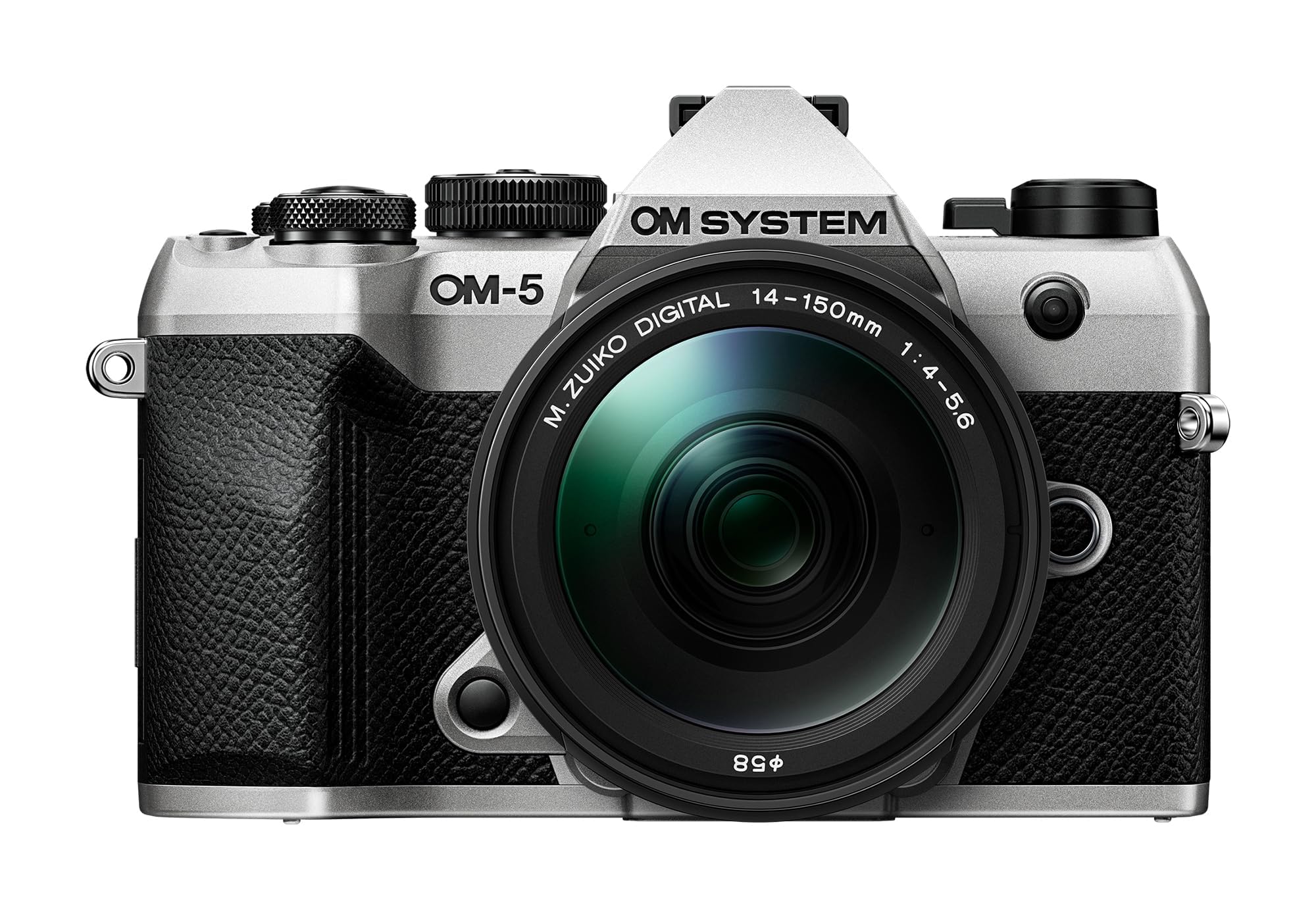
The OM-5 Mark II from OM SYSTEM is a weather-sealed Micro Four Thirds mirrorless camera with a 20 MP sensor and 5-axis in-body image stabilization rated at 6.5–7.5 stops. It records unlimited 4K video and includes computational photography features like focus stacking, high-res shot mode, and night vision. The 14-150mm f/4.0-5.6 lens covers a 28-300mm equivalent range in one zoom.
The body is one of the most compact and rugged options for outdoor documentary work, with IP53 weather sealing that handles rain and dust. The autofocus uses both contrast and phase detection with 121 points, which performs well for slow-to-moderate subject movement. The small size makes it easy to carry discreetly in public without drawing attention.
The Micro Four Thirds sensor has a 2x crop factor, which means depth of field is deeper than full-frame at equivalent apertures. Low-light performance is behind larger sensors, with visible noise above ISO 6400. The kit lens is versatile but slow, and the built-in flash is weak. This is a travel-first documentary tool for controlled environments.
Why it’s great
- Exceptional 5-axis IBIS (6.5-7.5 stops) provides smooth handheld footage with no extra stabilization gear.
- Fully weather-sealed body (IP53) allows shooting in rain, dust, and cold without worry.
- Unlimited 4K video recording and a versatile 14-150mm (28-300mm equivalent) zoom lens in a very small package.
Good to know
- Micro Four Thirds sensor delivers deeper depth of field and less background blur compared to full-frame at the same field of view.
- Noise performance above ISO 6400 is noticeably worse than similarly priced APS-C or full-frame competitors.
- Battery is small enough to require a spare for a full day of video shooting.
9. Panasonic HC-X2 Professional 4K Camcorder

The Panasonic HC-X2 is a dedicated professional camcorder with a 1.0-type 15 MP MOS sensor, a fixed 24.5mm wide-angle lens with 20x optical zoom (32x i.Zoom in FHD), and a 13-stop V-Log profile for grading. It records 4K 60p 10-bit 4:2:2 internally to dual SDXC card slots, and offers simultaneous SDI and HDMI output for multi-camera productions.
This is a purpose-built ENG tool: the body is ergonomically balanced with a manual triple ring for zoom, focus, and iris, and it includes XLR audio inputs with phantom power. The 5-axis HYBRID O.I.S. and 4K high-precision AF with face detection make it suitable for single-operator news, events, and doc interviews. It also supports wired LAN streaming for live broadcasts.
The trade-off is the lack of a large sensor for shallow depth of field. The 1-inch sensor produces more depth than Super 35 or full-frame, which some documentary shooters prefer for keeping subjects in focus. It also cannot swap lenses, limiting creative flexibility. This is the right tool when you need reliability, long zoom reach, and professional I/O in one box.
Why it’s great
- Fixed 20x optical zoom (24.5-490mm equivalent) provides excellent reach without changing lenses — ideal for inaccessible subjects.
- Simultaneous SDI and HDMI output with 10-bit 4:2:2 recording to dual SDXC cards for professional production workflows.
- V-Log profile delivers 13 stops of dynamic range in a camcorder form factor, enabling high-end color grading.
Good to know
- Fixed lens limits wide-angle capability and creative flexibility compared to interchangeable-lens systems.
- 1-inch sensor creates deeper depth of field, which some doc shooters prefer but others find less cinematic.
- Heavy and bulky compared to mirrorless or DSLR setups, especially when rigged for all-day handheld use.
10. Sony FDR-AX43 UHD 4K Handycam Camcorder

The Sony FDR-AX43 is a consumer 4K camcorder built around a 1/2.5-inch Exmor R CMOS sensor with Balanced Optical SteadyShot stabilization. It features a 20x optical zoom ZEISS Vario-Sonnar T lens (26.8mm wide-angle) with Clear Image Zoom extending to 30x in 4K and 40x in HD. The built-in gimbal-like stabilizer is excellent for reducing shake in telephoto shots.
Audio recording is supported via a mic input, and the camera has Wi-Fi and NFC for remote control via a smartphone. The Fast Intelligent AF tracks subjects reliably for family events and casual documentary use. Video quality is good in good light, with true 4K oversampled detail and natural color reproduction.
The small sensor struggles in low light, producing noisy footage above ISO 1600. The date/time resetting issue when the battery is removed is a common complaint. There is no built-in memory, so a fast SD card is mandatory. This is a practical choice for capturing long interviews, school events, or travel documentaries where portability and zoom reach are paramount.
Why it’s great
- Built-in Balanced Optical SteadyShot stabilization allows smooth handheld shooting even at high zoom levels.
- 20x optical zoom with 30x Clear Image Zoom in 4K provides excellent reach without additional lenses.
- Consumer-friendly menus and Wi-Fi remote control make it accessible for non-technical operators.
Good to know
- Small 1/2.5-inch sensor produces noticeable noise in low light, limiting indoor and evening shooting quality.
- No internal memory requires a fast SD card for immediate use after unboxing.
- Battery life is average, and the date/time resets quickly after battery removal — an annoying quirk.
11. Nikon RED Z Cinema Camera Body

The Nikon RED Z Cinema is a dedicated cinema camera that merges Nikon engineering with RED color science. It features a 6K full-frame sensor with 15+ stops of dynamic range and dual base ISO. It records REDCODE RAW (R3D NE) footage, which provides maximum grading flexibility in post. The Z-mount is described by Nikon as the world’s shallowest and most adaptable full-frame lens mount.
The camera includes a 4-inch DCI-P3 touchscreen monitor that swivels, and it supports 32-bit float audio recording with external microphones, eliminating the risk of audio clipping. The body weighs only 1.18 lbs, making it remarkably light for a full-frame cinema camera. It includes a CFexpress Type B slot and USB-C connectivity.
This is a specialized tool for high-end documentary productions that require RED’s color science and RAW workflow. It is not a hybrid shooter — there is no still photo mode in the traditional sense, and files are massive (6K R3D), requiring fast storage and powerful computers for editing. It is best paired with dedicated cinema rigging.
Why it’s great
- RED color science and 15+ stops of dynamic range provide industry-leading image quality for premium documentary projects.
- 32-bit float audio recording ensures clean audio capture without gain-staging problems on location.
- Extremely lightweight (1.18 lbs) for a full-frame cinema camera, reducing fatigue on long shoots.
Good to know
- No built-in photo mode or mechanical shutter, making it unsuitable as a stills camera or hybrid.
- 6K REDCODE RAW files require very fast CFexpress cards and a powerful editing workstation, increasing total system cost.
- Limited lens ecosystem compared to Sony E or Canon RF mounts, especially for third-party options.
12. Fujifilm X-E2S Mirrorless Camera with XF18-55 Lens

The Fujifilm X-E2S is a rangefinder-style mirrorless camera with a 16.3 MP APS-C X-Trans CMOS II sensor and EXR Processor II. It features an Intelligent Hybrid AF system with Zone and Wide/Tracking modes, and a high-resolution 2.36M-dot OLED electronic viewfinder with 0.005-second lag. The XF18-55mm f/2.8-4 R OIS lens provides a standard zoom range with optical stabilization.
The camera excels as a discreet street-documentary tool. Its small size, quiet electronic shutter (up to 1/32,000 sec), and classic film simulations (including Classic Chrome) allow you to capture candid moments with a unique look straight out of camera. The manual control dials on the top plate appeal to photographers who want tactile feedback.
Video is limited to 1080p at 60fps, and the continuous AF is poor for moving subjects. The fixed rear LCD is not a touchscreen. Image quality is excellent for stills, but this is a camera best suited to documentary photographers who need occasional video clips, not primary video makers.
Why it’s great
- Fujifilm’s X-Trans sensor and film simulations produce excellent JPEGs with minimal post-processing needs.
- Compact, discreet rangefinder design is ideal for street documentary and candid portrait work.
- Manual control dials and vintage aesthetic appeal to photographers who enjoy a hands-on shooting experience.
Good to know
- Video is limited to 1080p 60fps with poor continuous autofocus, making it a secondary video option at best.
- Fixed rear LCD is not a touchscreen and does not tilt, limiting creative framing angles.
- Continuous AF (AF-C) performance is slow and unreliable for moving subjects, even in stills mode.
13. Canon EOS 5D Mark IV Full Frame DSLR Camera Body (Renewed)

This renewed Canon EOS 5D Mark IV body offers the same core specifications as the new model — 30.4 MP full-frame CMOS sensor, DIGIC 6+ processor, 61-point AF system with 41 cross-points, and up to 7 fps continuous shooting. The ISO range of 100-32000 expands to 50-102400, and Dual Pixel CMOS AF works for video in live view. The camera includes Wi-Fi, NFC, and GPS.
For a documentary shooter on a tighter budget, a renewed Mark IV provides access to Canon’s L-series lens ecosystem and proven reliability at a lower entry point. The 4K Motion JPEG limitation (1.74x crop) still applies, but Full HD 60p footage is excellent. The camera is well-built with weather sealing and long battery life for stills.
The main risks with renewed products are variable shutter counts and potential wear. Verified by the seller, this copy appears to be in good condition. The 5D Mark IV is a classic workhorse, but it is heavy (31.3 oz) and lacks modern mirrorless convenience like an EVF or a flip-out screen.
Why it’s great
- Full-frame Dual Pixel CMOS AF provides reliable video autofocus for interviews in 1080p mode.
- Renewed pricing offers access to Canon’s professional lens system at a lower budget entry point.
- Proven rugged build quality with extensive customization options for professional workflows.
Good to know
- 4K video is cropped (1.74x) and recorded in Motion JPEG, limiting its usefulness for modern documentary projects.
- Heavy (over 30 oz) and bulky body is more fatiguing for all-day handheld shooting than mirrorless alternatives.
- Renewed units may have high shutter counts or minor cosmetic wear; battery is not included with this listing.
FAQ
What is the minimum dynamic range needed for professional documentary work?
Should I choose a Super 35 or full-frame sensor for documentary filming?
How important are built-in ND filters for a documentary camera?
Do I need dual card slots for documentary work?
What audio recording features should I prioritize for documentary?
Final Thoughts: The Verdict
For most users, the best camera for documentary work is the Sony Cinema Line FX30 because it combines active cooling for long recording sessions, superb autofocus for run-and-gun flexibility, and dual card slots for peace of mind. If you want the Blackmagic Pocket Cinema Camera 6K Pro for its cinematic image and internal ND filters, that is a strong second choice for controlled tripod work. And for a proven full-frame hybrid system that also handles stills, the Nikon D850 remains a very capable workhorse.

Mo Maruf
I created WellFizz to bridge the gap between vague wellness advice and actionable solutions. My mission is simple: to decode the research and give you practical tools you can actually use.
Beyond the data, I am a passionate traveler. I believe that stepping away from the screen to explore new environments is essential for mental clarity and physical vitality.