Our readers keep the lights on and my smoothie glass nicely filled. As an Amazon Associate, I earn from qualifying purchases.
Finding a trail shoe that digs into loose gravel without leaving your wallet behind feels like a rare win. The wrong pair lets every pebble dictate your footing, turning a good run into a hazard zone. The right pair disappears under your feet, letting you read the terrain ahead instead of staring down at your own strides.
I’m Mohammad Maruf — the founder and writer behind WellFizz. I analyze hundreds of trail runner reviews and spec sheets each season to find the models that balance durable traction with honest cushioning at a reachable price point.
This guide ranks the models that deliver real off-road grip without the premium markup. After comparing lug depth, midsole density, and outsole rubber compound across seven contenders, I’ve narrowed the field to the best affordable trail running shoes that earn their place on rocky singletrack and muddy descents.
How To Choose The Best Affordable Trail Running Shoes
Trail shoes live a harder life than road shoes. They hit sharp rocks, wet roots, and loose scree. Choosing cheaply built versions costs you traction, foot protection, and long-term durability. Focus on these three pillars to avoid the typical budget buyer’s mistake of buying a shoe that looks rugged but delivers zero grip when the trail tilts.
Outsole Grip and Lug Pattern
A trail shoe’s sole is its primary tool. Look for lugs between 4mm and 6mm deep — shallow enough to roll smoothly on packed dirt, deep enough to bite into mud. The rubber compound matters equally. Softer compounds like Vibram® MegaGrip stick to wet rock but wear faster; harder compounds last longer on dry terrain but slip on damp surfaces. Most affordable shoes use a proprietary rubber blend that splits the difference. Check the lug shape too — chevron patterns shed mud better than straight horizontal bars.
Midsole Firmness and Rock Protection
Trail running demands a firmer midsole than road running. A soft, plush foam feels luxurious in the store but compresses fully under a sharp rock, transmitting pain straight to your foot sole. Look for a midsole density that offers enough cushion for a half-day run without bottoming out. A rock plate — a thin plastic or composite layer between the outsole and midsole — is the secret weapon for affordable shoes. It deflects sharp edges and extends the shoe’s usable life on technical terrain. Without it, your foot absorbs every irregularity of the ground.
Upper Durability and Drainage
The upper is what holds your foot over shifting terrain. Mesh uppers ventilate well and dry fast after a creek crossing, but thin mesh tears on sharp branches. Affordable trail shoes often use a mix of mesh with welded overlays or suede reinforcement at the toe. That overlay adds abrasion resistance without adding weight. Also check the heel counter stiffness — a rigid heel cup prevents your foot from sliding forward on steep descents. A gusseted tongue keeps trail debris from entering the shoe’s interior, which is a common annoyance in budget models that skip this detail.
Quick Comparison
On smaller screens, swipe sideways to see the full table.
| Model | Category | Best For | Key Spec | Amazon |
|---|---|---|---|---|
| New Balance Fresh Foam X Garoé V2 | Premium | All-day cushion on mixed terrain | 4mm lugs, Fresh Foam X midsole | Amazon |
| Merrell Speed Strike 2 | Premium | Technical descents on loose rock | 5mm lugs, Vibram® outsole | Amazon |
| ASICS Gel-Cumulus 27 | Mid-Range | Long road-to-trail transitions | PureGEL® cushioning, 8mm drop | Amazon |
| ASICS Gel-Venture 11 | Value | Light hiking and daily trail walks | Rearfoot GEL® cushioning | Amazon |
| Puma Reflect Lite Trail | Mid-Range | Urban walking with occasional trail | Water-resistant upper, 2.13 lbs | Amazon |
| Under Armour Charged Bandit Trail 3 | Budget | Entry-level trail and daily walking | Charged Cushioning midsole | Amazon |
| adidas Terrex Soulstride Rain.rdy | Budget | Wet weather trail runs | Rain.RDY membrane, 2.43 lbs | Amazon |
In‑Depth Reviews
1. New Balance Men’s Fresh Foam X Garoé V2
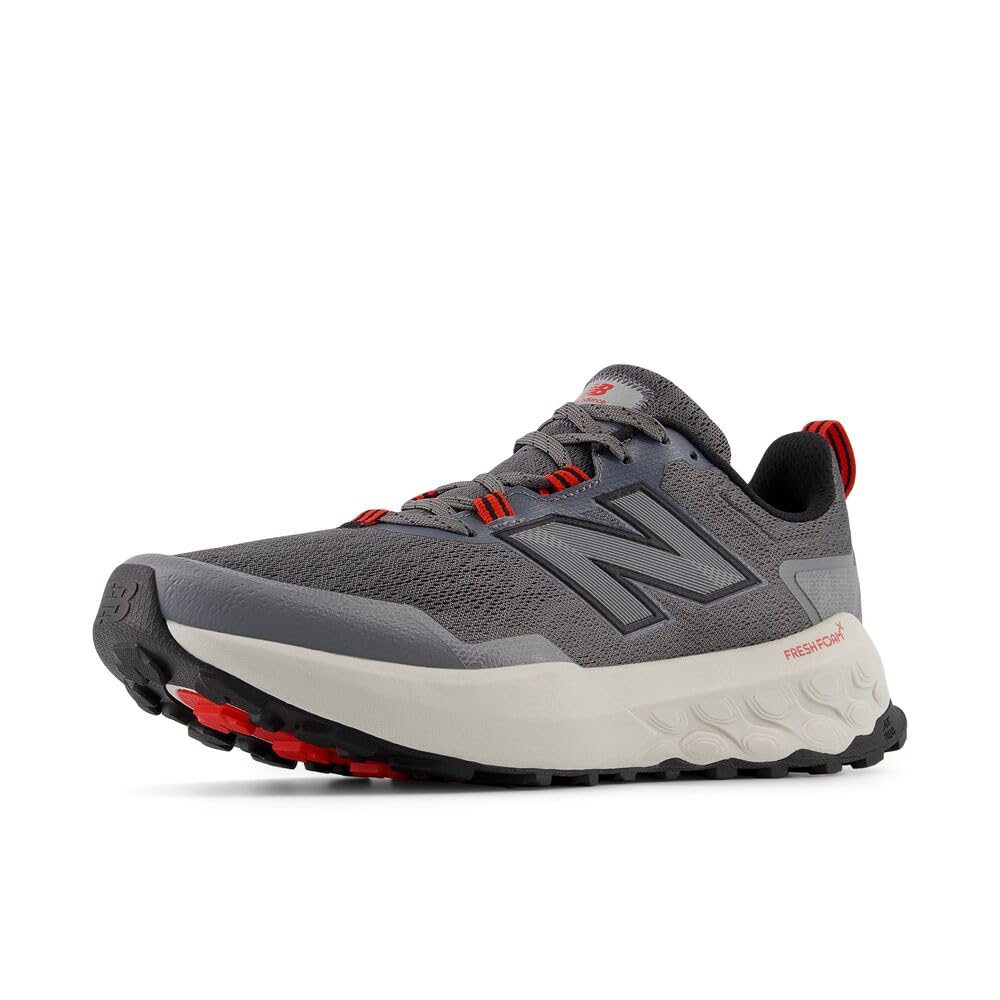
The Fresh Foam X Garoé V2 earns the top spot by delivering premium midsole cushion without the usual price surge. The Fresh Foam X compound is noticeably softer than standard EVA, yet it doesn’t compress completely under a rock — a balance that eludes many trail shoes. Owners report logging over 700 miles on a single pair with the upper still looking unworn, which speaks to the build quality at this level.
The outsole uses a moderately aggressive lug pattern that grips well on packed dirt and pavement transitions. It is not a full mud-shedder like a dedicated technical shoe, but for mixed-terrain runs where the route includes fire roads and sections of asphalt, it rolls smoothly. A few reviewers noted visible glue residue around the sole, a minor cosmetic detail that doesn’t affect performance.
The fit runs true to size compared to other New Balance models, though the toe box offers ample room for splaying on uneven surfaces. The lack of a firm arch support bothered some users, but most found the neutral platform allowed them to add their own lightweight insert. For runners who want plush landings on moderate trails without hunting for deals, this is the most complete package in this price tier.
Why it’s great
- Fresh Foam X midsole offers exceptional shock absorption without bottoming out on sharp rocks
- Upper material holds shape beyond 700 miles of mixed use
- Lightweight feel for a shoe with this much cushion stack
Good to know
- Lacks firm arch support — flat-footed runners may need an insert
- Grip is adequate on dry rock but less confidence-inspiring on wet slab
- Visible glue spots on some units — cosmetic only
2. Merrell Men’s Speed Strike 2

Merrell built the Speed Strike 2 for runners who point downhill and trust their footwear to stay planted. The Vibram® outsole uses deep, widely spaced lugs that bite into loose scree and wet roots with a confidence that cheaper rubber soles simply can’t match. At a sub-ounce weight per shoe, it feels lighter than its 5mm lug depth suggests, making it one of the more nimble options on this list.
Several buyers reported using this shoe for 40-hour warehouse weeks in addition to trail runs, and the midsole held its shape without packing out prematurely. The toe cap reinforcement is minimal, which keeps weight down but offers less protection if you habitually kick rocks. The fit matches New Balance sizing, so ordering your usual size works. One reviewer noted a subtle instability on the lateral edge of the left foot — worth checking if you have wide feet or supinate heavily.
The Speed Strike 2 is not waterproof, but the mesh upper dries quickly after wet crossings. For runners who prioritize outsole aggression over plush ride and want a shoe that scrambles confidently on technical sections, Merrell delivers a performance tier normally reserved for models costing more.
Why it’s great
- Vibram® outsole with 5mm lugs provides exceptional grip on loose and wet terrain
- Lightweight build for a shoe with this level of traction hardware
- Durable construction holds up to heavy daily use beyond trail running
Good to know
- Minimal toe protection — feels exposed on rocky singletrack
- Some users report a lateral stability issue on the left shoe
- Not waterproof; mesh drains well but saturates fast in heavy rain
3. ASICS Men’s Gel-Cumulus 27
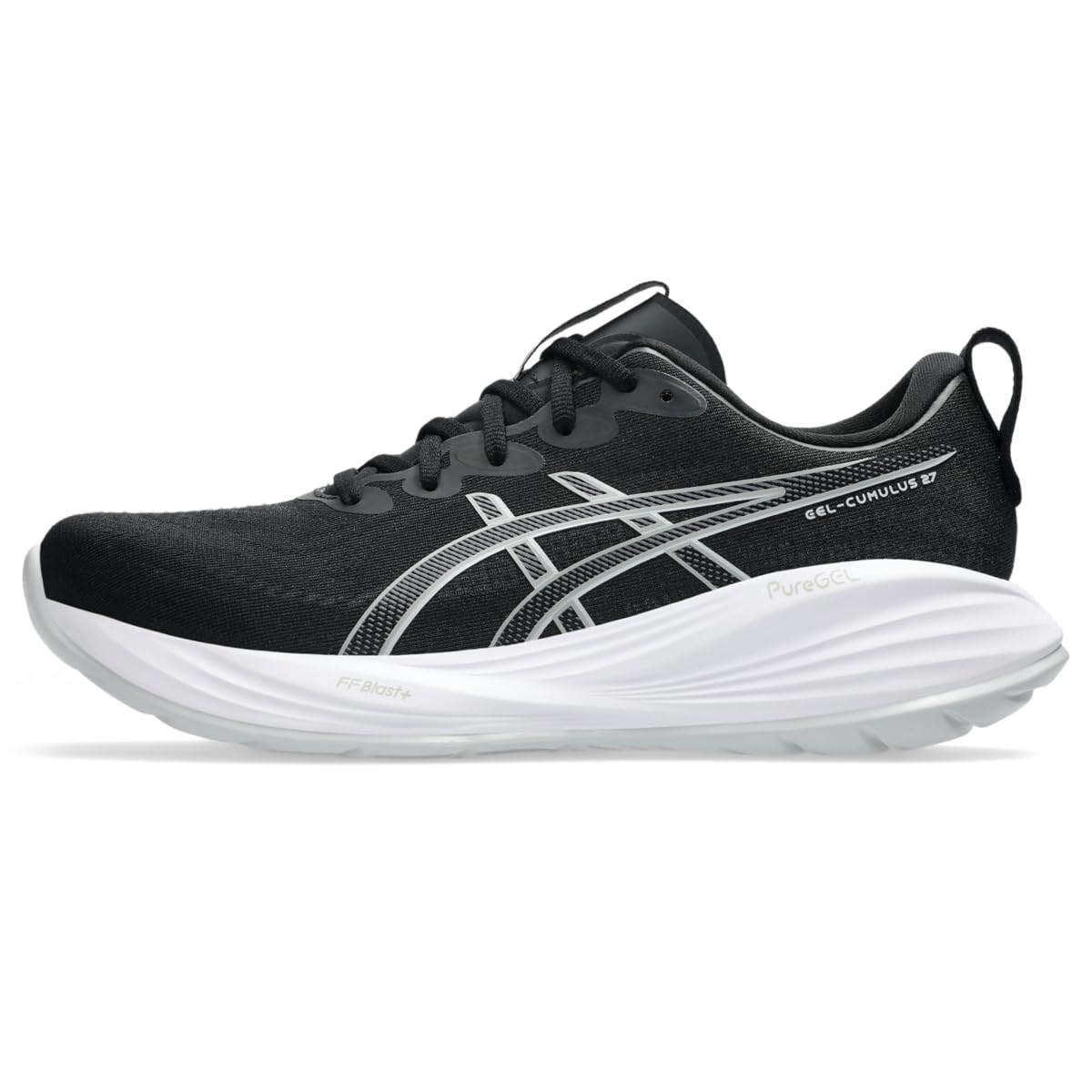
The Gel-Cumulus 27 sits in an interesting space — it is technically a road shoe, but its generous toe cap and stable heel make it a capable companion on groomed dirt paths and fire roads. The PureGEL® rearfoot unit absorbs heel strike impact without adding the unstable squish of a max-cushion shoe. ASICS runners who tested the Cumulus against the Nimbus found the Cumulus lighter and snappier, with a more responsive toe-off.
The outsole lacks aggressive lugs, so this is not a shoe for muddy trails or loose gravel descents. On packed dirt and dry hardpack, the grip is sufficient, and the ride feels smooth because the shoe doesn’t have tall, clunky tread blocks interrupting the gait cycle. Reviewers who suffer from mid-toe pain reported complete relief after switching to the Cumulus 27 — the gel unit plus the structured heel counter control pronation without overcorrecting.
The breathable mesh upper manages heat well on warm days, and the fit runs slightly generous in the toe box, which accommodates foot swelling on long miles. If your route is 80% pavement or hardpack and 20% easy dirt, the Cumulus 27 bridges the gap better than a pure trail shoe.
Why it’s great
- PureGEL® cushioning delivers plush heel landings with stable toe-offs
- Roomy toe box prevents toe mashing on long runs
- Podiatrist-recommended for mid-toe and forefoot pain relief
Good to know
- Shallow tread pattern unsuitable for wet mud or loose gravel
- Not a trail shoe — limited to fire roads and packed dirt only
- Popular colorways sell out quickly
4. ASICS Men’s Gel-Venture 11
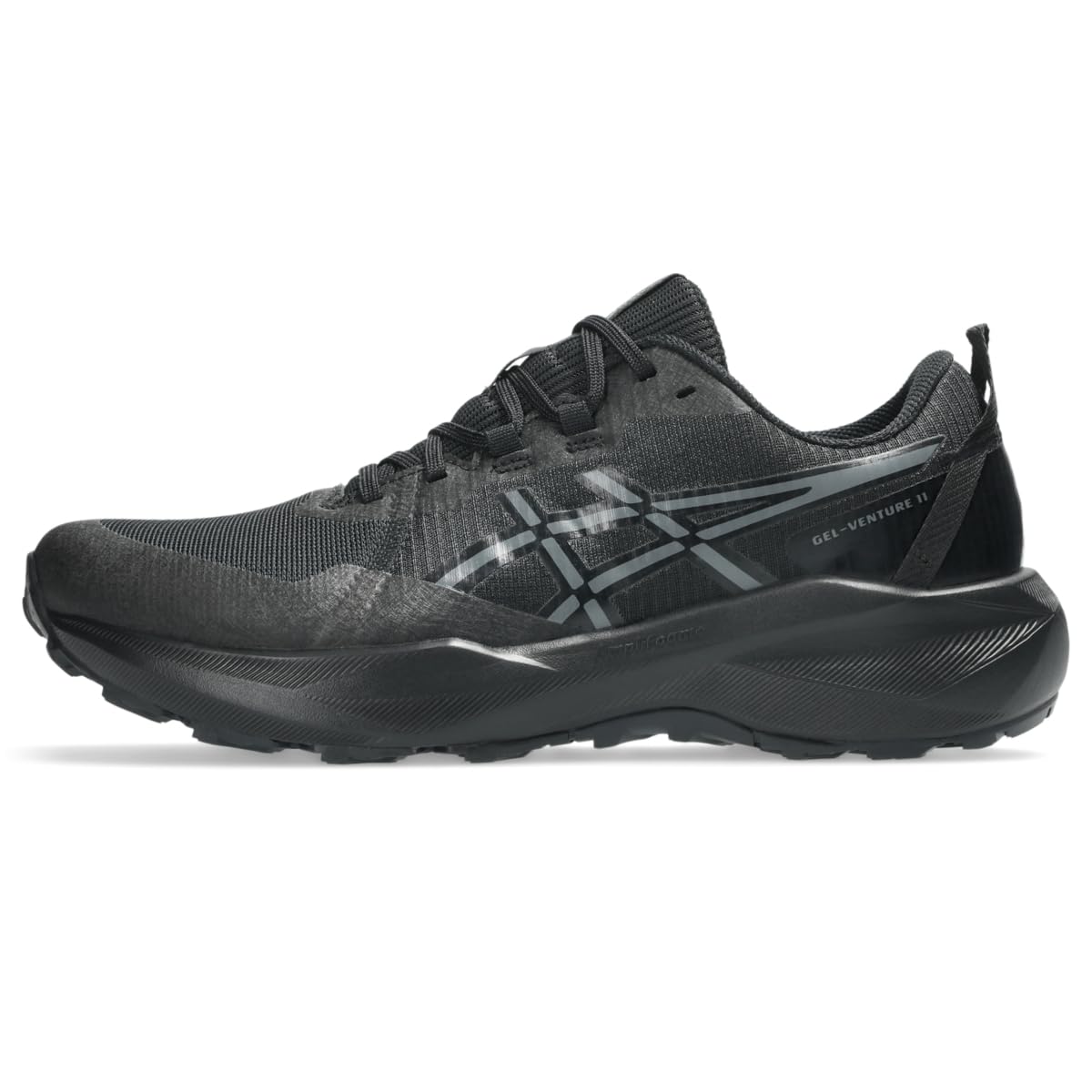
The Gel-Venture 11 is the entry point for anyone moving from road running into light trail use. The rearfoot GEL® capsule sits under the heel to mute impact, while the rest of the midsole uses a denser foam formulation that resists compression under body weight. This makes the Venture 11 feel firm compared to a road shoe, but that firmness translates to predictable footing on uneven dirt and gravel.
The outsole uses a multi-directional lug pattern that provides reasonable traction on dry trails and moderate inclines. A common complaint among long-term users is that the rear tread wears down noticeably after six months of 35-40 miles per week. For the price, that durability is acceptable — many shoes in this tier would require replacement sooner. The fit runs true to ASICS sizing, which tends to accommodate medium-width feet comfortably.
One surprising secondary use emerged in reviews: several buyers confirmed the Gel-Venture 11 works well as a lightweight golf shoe because the sole pattern grips turf without damaging it. That versatility, combined with the low cost, makes it a solid pick if you need a dedicated trail shoe for short runs and weekend hikes.
Why it’s great
- Rearfoot GEL® absorbs heel impact without adding unstable plushness
- Multi-directional lugs grip dry trails and gravel reliably
- Versatile design works for golf, hiking, and casual walking
Good to know
- Rear tread wears faster than premium competitors at high mileage
- Midsole feels firmer than road runners expect from ASICS
- Iron-on logo may peel over time — cosmetic only
5. Puma Mens Reflect Lite Trail

The Reflect Lite Trail sits at the intersection of lifestyle sneaker and light trail shoe. The sole uses a moderate tread pattern that handles rough sidewalks, packed dirt paths, and the occasional patch of wet grass — but it’s not designed to scramble up a muddy climb. Owners who wear these for 12-hour shifts on concrete floors appreciated the cushion balance between firmness and padding under the ball of the foot.
The upper includes a water-resistant treatment that keeps dew and light rain from saturating the mesh, though standing in a puddle will still wet through. Multiple color options are available, and buyers noted that fit can vary by color — black versions ran a half size smaller than the blue version in the same size labeling. If you buy across colors, plan to try both.
For runners who want a single shoe that pulls double duty — casual daily wear plus occasional easy trail access — the Reflect Lite Trail delivers a sleeker look than most trail models. The outsole is not aggressive enough for technical terrain, but on groomed paths and urban mixed surfaces, the traction feels secure and the weight stays low.
Why it’s great
- Lightweight and comfortable for all-day standing and walking
- Water-resistant upper sheds light moisture effectively
- Sleek design works for casual wear and light trail use
Good to know
- Tread too shallow for muddy or rocky trails
- Size variance between colorways — order carefully
- Not built for high-mileage trail training
6. Under Armour Men’s Charged Bandit Trail 3

The Charged Bandit Trail 3 is the shoe most likely to convert a road runner to the trail without sticker shock. The Charged Cushioning midsole is firmer than Under Armour’s road offerings, which helps on uneven ground, and the outsole uses a chevron-inspired tread pattern that sheds small debris. Multiple five-star reviews called these the most comfortable hiking shoes they have ever worn, praising the secure fit straight out of the box.
The tongue is thin and un-gusseted, which means small stones can slip in through the top opening on loose trails — a minor annoyance that higher socks can fix. The shoe is true to size and runs consistent across colorways. The upper mesh breathes well but offers less abrasion protection than models with welded overlays or suede toe caps, so aggressive rock contact may wear the fabric faster.
For a budget-tier trail shoe, the lateral stability is impressive. Several buyers who used these for walking recovery after an injury reported that the shoe helped them maintain a stable gait without wobbles. The Charged Bandit Trail 3 won’t survive extreme technical abuse, but for gentle trail runs, daily walks, and the occasional hike, it performs well above its cost suggests.
Why it’s great
- Firm, stable midsole reduces wobble on uneven ground
- True-to-size fit with zero break-in period
- Excellent value for entry-level trail and everyday walking
Good to know
- Ungusseted thin tongue lets trail debris enter through the opening
- Mesh upper lacks abrasion resistance for sharp rock contact
- Tread is adequate but not confidence-inspiring on wet surfaces
7. adidas Women’s Terrex Soulstride Rain.rdy
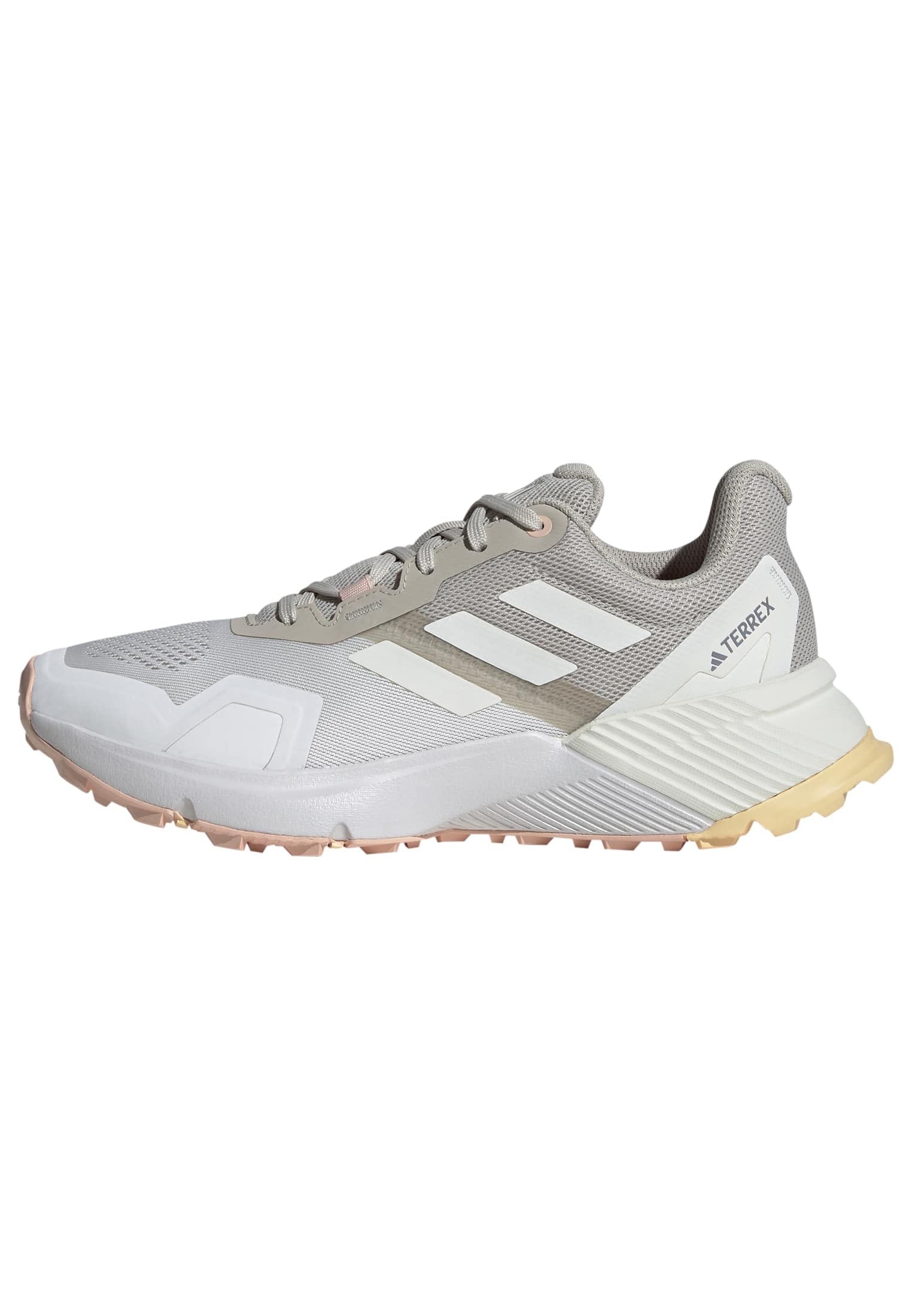
The Terrex Soulstride Rain.rdy targets the runner who hits the trail regardless of weather. The Rain.RDY membrane sits between the upper and the lining to block light rain and puddle splash while still allowing moisture vapor to escape — a trick many waterproof membranes fail at. The outsole uses an aggressive tread pattern with deep chevron lugs that bite into soft ground and shed mud with each stride.
Owners with neuropathy, knee spurs, and general stability concerns reported that the heel design improved blood flow and reduced pain during daily two-mile walks. The heel cup is structured and supportive, though some reviewers with narrow feet found the overall fit slightly snug. The mesh upper is breathable enough for mild-temperature runs but the Rain.RDY layer retains more heat than standard mesh, making this less ideal for hot summer miles.
The built-in arch support drew consistent praise from buyers who previously used orthotic inserts. If you prefer a wide toe box, the Terrex runs true to length but the midfoot is narrower than typical trail shoes. For wet-condition trail runs and all-season reliability, the Soulstride Rain.rdy delivers weather protection that most shoes in this price tier simply omit.
Why it’s great
- Rain.RDY membrane blocks moisture while maintaining some breathability
- Deep chevron lugs provide strong mud-shedding grip
- Structured heel improves stability for users with gait or joint concerns
Good to know
- Narrow fit may feel restrictive for runners with wide forefeet
- Rain.RDY layer traps heat — less comfortable above 75°F
- Some trail debris can enter through the collar opening
FAQ
Can I use road running shoes on dirt trails?
How many miles should an affordable trail shoe last?
What does a rock plate do and do I need one?
Should I size up for trail running shoes?
Final Thoughts: The Verdict
For most users, the best affordable trail running shoes winner is the New Balance Fresh Foam X Garoé V2 because it delivers premium-level midsole cushion and proven upper durability without the premium price tag. If you want aggressive outsole traction for technical descents on loose rock, grab the Merrell Speed Strike 2. And for a reliable entry-level trail shoe that handles daily walks and gentle dirt paths, nothing beats the consistent comfort of the ASICS Gel-Venture 11.

Mo Maruf
I created WellFizz to bridge the gap between vague wellness advice and actionable solutions. My mission is simple: to decode the research and give you practical tools you can actually use.
Beyond the data, I am a passionate traveler. I believe that stepping away from the screen to explore new environments is essential for mental clarity and physical vitality.