Our readers keep the lights on and my smoothie glass nicely filled. As an Amazon Associate, I earn from qualifying purchases.
The 65-inch OLED TV market has reached a fascinating inflection point. You no longer have to choose between perfect blacks and enough brightness to fight off a sunlit living room — the latest panels deliver both, but each manufacturer tunes that balance differently. Understanding which processing philosophy and feature set matches your viewing habits is the difference between a TV that wows you every night and one that leaves you fiddling with settings.
I’m Mohammad Maruf — the founder and writer behind WellFizz. Over years of analyzing home theater hardware, I’ve tracked every panel generation, dimming algorithm, and HDR format war to separate genuine leaps from marketing noise.
This guide cuts through the spec sheets to compare 13 of today’s most compelling models. Whether you prioritize pure cinematic contrast, blistering gaming refresh rates, or a gallery-friendly design, these reviews will help you find the 65 inch oled tv that truly fits your home and habits.
How To Choose The Best 65 Inch OLED TV
OLED technology delivers exceptional contrast, but not all 65-inch models are created equal. Your choice should hinge on three main factors: the panel’s peak brightness and anti-reflective coating, the intelligence of its video processor, and the specific connectivity options your devices require. A TV that excels in a dim, dedicated theater room may struggle in a bright, open-concept space, and a gaming-focused set may skimp on the nuanced processing that makes film content sing. Matching the TV to your primary use case is critical.
Panel Generation & Brightness
The shift from standard WOLED to OLED evo and QD-OLED panels has been dramatic. The latest generations from LG (OLED evo G4/G5) and Samsung (QD-OLED S95F) push peak brightness well beyond 1,000 nits, making HDR highlights truly pop. If your room has large windows or you watch during the day, prioritize a model with a robust anti-glare treatment or a matte finish — like the Samsung S95F or Hisense U7 — to maintain black depth without reflections washing out the image.
Processor & Motion Handling
The panel is only half the equation; the image processor determines how smoothly the TV handles fast-moving sports, how intelligently it upscales 1080p or 720p content, and how accurately it maps HDR tones beyond the panel’s native capabilities. Sony’s XR Processor, LG’s a11 Gen2, and Samsung’s NQ4 AI Gen3 each take different approaches. Sony excels at preserving cinematic motion and skin tones, while LG and Samsung prioritize brightness and gaming features. A powerful processor also future-proofs your TV against evolving streaming codecs.
Gaming & Connectivity
For console gaming, HDMI 2.1 bandwidth and Variable Refresh Rate (VRR) support are non-negotiable. Look for at least two HDMI 2.1 ports to connect a PlayStation 5 and Xbox Series X simultaneously. Refresh rates above 120Hz (144Hz or 165Hz) benefit high-end PC gaming but offer diminishing returns on current consoles. Low input lag, ideally under 10ms in Game Mode, and support for NVIDIA G-Sync and AMD FreeSync Premium ensure a tear-free, responsive experience in competitive titles.
Quick Comparison
On smaller screens, swipe sideways to see the full table.
| Model | Category | Best For | Key Spec | Amazon |
|---|---|---|---|---|
| LG G4 OLED evo | Premium | Cinema & Bright Rooms | a11 AI Processor Gen1 | Amazon |
| Sony BRAVIA 8 II | Premium | Accurate Color & PS5 | XR Processor + QD-OLED | Amazon |
| Samsung S95F | Premium | Bright Room Gaming | Glare-Free Matte Screen | Amazon |
| LG G5 OLED evo | Premium | Bright HDR & Future-Proof | Brightness Booster Max | Amazon |
| Panasonic Z95A | Premium | Filmmaker Mode Purists | HCX Pro AI MKII Processor | Amazon |
| Samsung S90F | Mid-Range | Value OLED + AI Features | NQ4 AI Gen3 Processor | Amazon |
| Sony BRAVIA XR8 | Mid-Range | PS5 Gaming & Movies | XR Processor + PS5 Features | Amazon |
| LG C2 OLED | Mid-Range | Proven Performance | α9 Gen 5 AI Processor | Amazon |
| Samsung S85D OLED | Mid-Range | First-Time OLED Buyer | OLED HDR + 120Hz Motion | Amazon |
| Hisense U7 Mini-LED | Mid-Range | Bright Room & Gaming | Native 165Hz + 3000 Zones | Amazon |
| TCL QM7K Mini-LED | Budget-Friendly | High Contrast on a Budget | Up to 2500 Dimming Zones | Amazon |
| Hisense CanvasTV | Mid-Range | Art Mode & Living Space | Hi-Matte Display + Frame | Amazon |
| Sony BRAVIA 8 (Renewed) | Budget-Friendly | Premium Features, Lower Cost | XR Processor (Refurbished) | Amazon |
In‑Depth Reviews
1. LG 65-Inch Class OLED evo G4 Series

The LG G4 represents the pinnacle of LG’s WOLED evo technology, delivering the highest brightness we’ve seen from this panel type in a 65-inch footprint. The Brightness Booster Max truly makes a difference in HDR highlights — specular reflections on metal and glass pop with an intensity that rivals premium QD-OLEDs, while still maintaining the pure, inky blacks that only self-lit pixels can achieve. In a moderately bright room, the G4 holds its own against ambient light better than any previous LG OLED.
The a11 AI Processor Gen1 is a massive step forward in upscaling and motion handling. Lower-resolution cable TV and 1080p streaming content look remarkably clean and detailed, with far less noise and edge artifacting than older LG processors. Filmmaker Mode with Dolby Vision IQ delivers a reference-grade picture straight out of the box, and the One Wall Design means the TV sits virtually flush against the wall, mimicking a piece of art when not in use.
Smooth and crisp in fast-paced content, the 120Hz panel with VRR and G-Sync support makes this an excellent choice for PS5 and Xbox Series X gaming. The webOS interface is snappy and includes the Re:New program promising five years of software updates. For the buyer who wants no-compromise brightness and contrast in a single package, the G4 is the clear leader.
Why it’s great
- Exceptional peak brightness for an OLED evo panel, improving HDR realism in bright rooms.
- Superb upscaling and picture processing via the a11 AI Processor Gen1.
- Flush wall-mount design integrates beautifully into any living space.
Good to know
- Does not include a stand; a separate purchase or wall-mount is required.
- WebOS interface can feel less intuitive than Google TV for some users.
2. Sony BRAVIA 8 II 65 Inch TV

Sony’s BRAVIA 8 II is a tour de force for those who prioritize meticulously accurate color and cinematic motion above all else. The panel combines a Quantum Dot layer with OLED pixels, delivering a wider color gamut — especially in reds and yellows — and a higher peak brightness than standard WOLED panels. The XR Processor with AI works wonders, analyzing each scene in real time to boost color, contrast, and clarity without introducing artifacts.
For PlayStation 5 owners, the exclusive features are genuinely useful. Auto HDR Tone Mapping and Auto Genre Picture Mode mean the console and TV communicate to deliver the optimal picture for games and streaming without manual fiddling. The Acoustic Surface Audio+ system, which turns the screen into a speaker, offers surprisingly clear dialog and decent directional effects, though a dedicated sound system is still recommended for action movies.
Where the BRAVIA 8 II truly shines is in its ability to make all content look its best. The XR Clear Image upscaling is among the best in the industry, breathing new life into old DVDs and compressed streaming feeds. It’s handling of 24p film content is flawless, with no judder. For the cinephile who also games, this is arguably the most well-rounded premium OLED available.
Why it’s great
- Outstanding color accuracy and brightness from the QD-OLED panel.
- Industry-leading upscaling makes low-res content look sharp.
- Deep integration with PlayStation 5 for a seamless gaming experience.
Good to know
- Premium pricing places it at the top of the market.
- Built-in sound, while good, still benefits from an external soundbar.
3. Samsung 65-Inch Class OLED S95F

The Samsung S95F addresses the single biggest complaint about OLEDs in bright rooms: reflections. Its new Glare-Free matte screen treatment diffuses ambient light superbly, keeping blacks deep and contrast high even with direct sunlight streaming through windows. This is the first OLED where you don’t feel compelled to close the blinds during daytime viewing, and it does so without introducing the haze that plagues some anti-glare coatings.
Under the hood, the NQ4 AI Gen3 Processor, powered by 128 neural networks, delivers aggressive upscaling and motion enhancement. The Motion Xcelerator 164Hz support is superb for competitive PC gaming, ensuring ultra-smooth, tear-free visuals. OLED HDR+ boosts brightness to the highest levels we’ve seen on a Samsung OLED, making HDR content look spectacularly vibrant.
The biggest trade-off is the Tizen OS, which is feature-rich but can be slightly slower and more ad-heavy than Google TV. Some users also report the remote’s lack of a tactile nav ring is a minor annoyance. For anyone whose living room gets a lot of natural light, however, the S95F’s glare-free performance makes it the superior choice without sacrificing OLED’s pristine contrast.
Why it’s great
- Industry-leading matte anti-glare screen maintains black depth in bright rooms.
- Very high peak brightness for vibrant HDR highlights.
- 165Hz refresh rate and low input lag are ideal for high-end PC gaming.
Good to know
- Tizen OS is less intuitive than Google TV and has more promotional content.
- Some users find the thin chassis feels slightly fragile during handling.
4. LG 65-Inch Class OLED evo G5 Series

The LG G5 builds on the G4’s foundation with the more powerful Alpha 11 AI Processor Gen2 and a boost to a native 165Hz refresh rate. The result is a TV that feels incredibly responsive in gaming and smooth in fast-moving sports. The Brightness Booster Max technology is refined further, pushing peak brightness even higher, making it one of the brightest WOLEDs on the market, certified as Discomfort Glare Free by UL.
The new processor brings AI Director Processing, which analyzes scene composition to optimize tone mapping in real-time. This results in remarkably natural HDR rendering, whether you’re watching a dark thriller or a bright nature documentary. The Perfect Black and Perfect Color technology lives up to its name, with infinite contrast and vibrant, accurate hues across the entire frame. The inclusion of four HDMI 2.1 inputs is a future-proofing win for multi-console households.
The main drawback remains the remote, which lacks backlit buttons — a surprising oversight at this price point. The wall-mount design is excellent, but the TV does not include a table stand, adding another cost for those who aren’t wall-mounting. For the uncompromising enthusiast wanting the latest processing and the highest WOLED brightness, the G5 is a compelling step forward.
Why it’s great
- Very high WOLED brightness with excellent anti-glare certification.
- Alpha 11 Gen2 processor delivers superb real-time scene optimization.
- Four full HDMI 2.1 ports and 165Hz refresh rate for heavy gaming setups.
Good to know
- Remote control lacks a backlight, which is a nuisance in dark rooms.
- No stand included, and printed manual instructions are sparse.
5. Panasonic Z95 Series 65-inch OLED

The Panasonic Z95A is a rare breed in the North American market, and it’s aimed squarely at the videophile. Its Master OLED Ultimate panel, combined with the HCX Pro AI MKII processor, delivers reference-level accuracy straight out of the box. Filmmaker Mode with Intelligent Sensing goes a step further by adjusting the picture based on the ambient light in the room, ensuring the director’s intent is preserved regardless of your environment.
The 360 Soundscape Pro audio system is genuinely impressive for a built-in solution, offering a wide soundstage and clear dialog without an external speaker. The center-mounted swivel stand is a thoughtful design touch that allows you to angle the TV toward different seating areas without moving the whole unit. For those who demand the most accurate picture possible, the Z95A is a top contender.
However, Fire TV OS comes with significant caveats. The platform’s heavy reliance on Amazon’s ecosystem and persistent Alexa listening can be intrusive, and the Ethernet port is limited to 100Mbps — a bottleneck for high-bitrate streaming. Many owners recommend using an external streaming device like an Nvidia Shield Pro. For the purist willing to accept software quirks for unparalleled picture quality, this Panasonic is hard to beat.
Why it’s great
- Class-leading picture accuracy and Filmmaker Mode with Intelligent Sensing.
- Excellent built-in sound system with a wide soundstage.
- Unique center-mounted swivel stand for flexible room placement.
Good to know
- Fire TV OS can be intrusive and requires a fast internet connection to function fully.
- The 100Mbps Ethernet port is outdated; Wi-Fi or a separate streamer is better.
6. Samsung 65 inch OLED S90F Smart TV
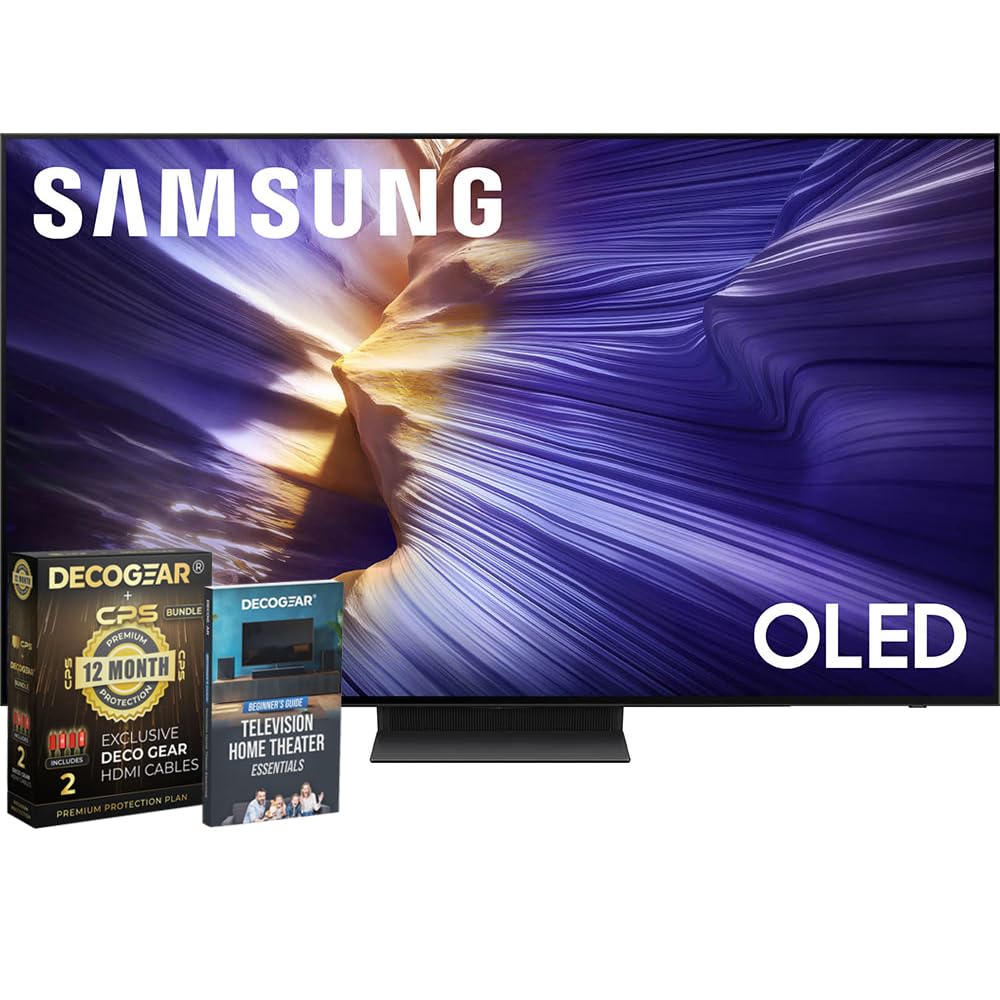
The Samsung S90F brings the company’s powerful NQ4 AI Gen3 processor — the same one found in the flagship S95F — into a more attainable package. This means you get the same excellent 4K AI Upscaling Pro and AI Motion Enhancer Pro for sharpening sports and smoothing fast-moving objects. The OLED HDR+ panel delivers punchy brightness and deep contrast that will satisfy most viewers, especially in HDR content.
Gaming performance is strong, with Motion Xcelerator 144Hz support and VRR for smooth, tear-free action. The TV’s design is sleek and lightweight, making wall-mounting simple. This bundle also includes a one-year protection plan and a beginner’s home theater guide, adding peace of mind for first-time OLED buyers. The SolarCell Remote is a nice eco-friendly touch, reducing battery waste.
The primary compromise is that the S90F uses an older panel technology than the S95F, resulting in slightly lower peak brightness and a glossier screen finish that is more susceptible to reflections in bright rooms. For a dedicated home theater or dimmer room, this is a fantastic way to get Samsung’s latest processing and excellent OLED picture without the flagship price tag.
Why it’s great
- Flagship-level NQ4 AI Gen3 processor for excellent upscaling in a mid-range model.
- Sleek, lightweight design with a solar-powered remote.
- Best value entry point into high-quality Samsung OLED for gamers.
Good to know
- Lower peak brightness and a glossy screen are more reflective in bright rooms.
- Remote lacks tactile navigation aids, making blind operation difficult.
7. Sony 65 Inch OLED BRAVIA XR8B

The Sony BRAVIA XR8 is a fantastic middle-ground option for those who want Sony’s excellent picture processing and exclusive PlayStation 5 features without stepping all the way up to the flagship BRAVIA 8 II. The XR Processor provides the same intelligent scene analysis, boosting color, contrast, and clarity in real-time. It also features the same Studio Calibrated modes for Netflix and Prime Video, ensuring you see content as creators intended.
PS5 integration is superb. Auto HDR Tone Mapping and Auto Genre Picture Mode work flawlessly, making the TV a perfect companion for Sony’s console. The panel produces deep blacks and rich colors, and the Acoustic Surface Audio+ provides decent built-in sound. The Google TV interface is responsive and intuitive, offering easy access to all major streaming apps.
The main difference from the more expensive model is the use of a standard OLED panel rather than QD-OLED, meaning slightly less color volume and peak brightness. For most viewers in a dimmer room, this difference is negligible. The XR8B offers a compelling mix of Sony’s renowned processing, excellent gaming features, and a more accessible price point, making it a top pick for dedicated gamers who also watch a lot of movies.
Why it’s great
- Excellent PS5 integration with exclusive Auto HDR and Genre Picture modes.
- Top-tier processing and upscaling from the XR Processor.
- Responsive Google TV interface with all major streaming apps.
Good to know
- Standard OLED panel has slightly less brightness than the premium QD-OLED model.
- Built-in speakers are adequate but not room-filling for action movies.
8. LG C2 Series 65-Inch OLED evo

The LG C2, despite being from the 2022 model year, remains a benchmark for what a great OLED should be. Its α9 Gen 5 AI Processor 4K still delivers a beautiful picture with infinite contrast, vibrant colors, and excellent motion handling. For many users, the difference between the C2 and the latest G-series is marginal in a dimly lit room, making the C2 a phenomenal value at its current price point.
Gaming support is where the C2 still holds its own. It features four HDMI 2.1 ports, NVIDIA G-Sync and AMD FreeSync Premium, and a superb Game Optimizer dashboard. Input lag is extremely low, making it a top choice for competitive console gaming. The webOS interface, while older, is still fast and reliable.
The main drawback is brightness. The C2 is noticeably dimmer than the latest LG G4/G5 or Samsung S95F. In a bright room, specular highlights won’t pop as much, and blacks can take on a slight grayish tint due to reflections. It also lacks the latest processing improvements. For a dedicated home theater or a buyer on a tighter budget, the C2 still offers a stunning OLED experience.
Why it’s great
- Fantastic picture quality with infinite contrast and vibrant colors.
- Excellent gaming features including four HDMI 2.1 ports and G-Sync support.
- Outstanding value proposition for a still-capable OLED.
Good to know
- Peak brightness is lower than current-generation models, impacting HDR in bright rooms.
- Lacks the latest AI processing and brightness boosting technologies.
9. Samsung 65-Inch Class OLED S85D Series

The Samsung S85D is an inviting entry point into the world of OLED, offering the core technology — pure blacks, infinite contrast, and Pantone-validated colors — at a budget-friendly price. It’s an excellent TV for someone upgrading from an old LED set who wants that dramatic improvement in picture quality. The Motion Xcelerator 120Hz ensures sports and fast-paced shows remain smooth and clear.
The design features Samsung’s Contour Design, which looks elegant and blends well into a living space. The NQ4 AI Gen2 Processor powers the smart TV experience and provides decent upscaling, though it’s not as aggressive as the higher-end models. The remote is a solar-powered unit, eliminating the need for disposable batteries. Dolby Atmos and Object Tracking Sound Lite provide a more immersive audio experience than a standard TV.
The compromises are significant. This is a lower-brightness OLED, and it lacks the anti-glare treatment of the S95F, making it unsuitable for very bright rooms. It also has a 120Hz maximum refresh rate, not the higher 144Hz of newer models. For a secondary TV, a bedroom, or a dedicated dark room, the S85D provides the OLED magic at a price that makes the jump accessible to more people.
Why it’s great
- Introduces pure OLED picture quality at a very accessible price point.
- Pantone-validated color ensures accurate and beautiful hues out of the box.
- Sleek, elegant design with an eco-friendly solar-powered remote.
Good to know
- Lower peak brightness and glossy screen make it poor for bright rooms.
- Limited to 120Hz refresh rate; not as future-proof for high-end PC gaming.
10. Hisense 65″ U7 Mini-LED ULED
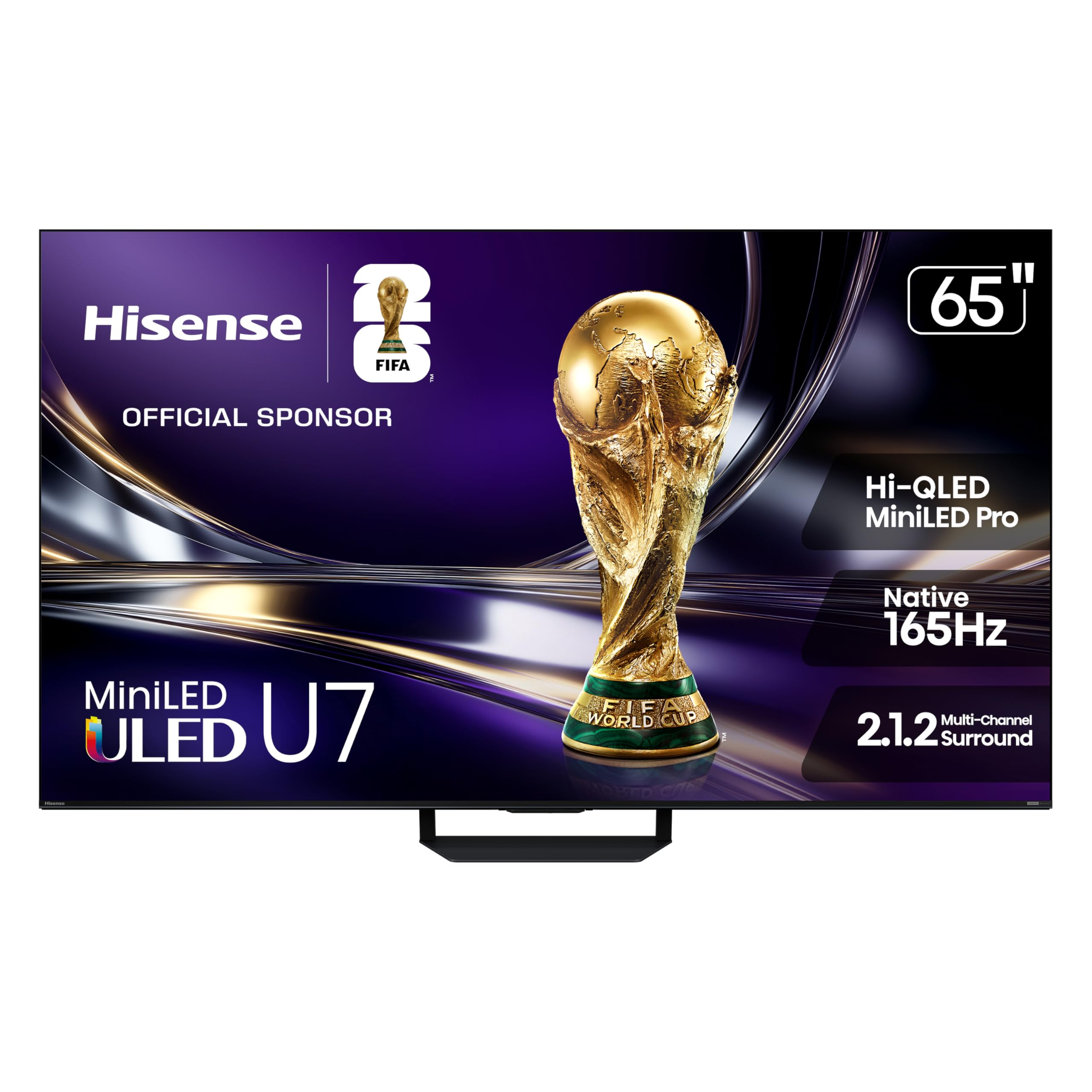
The Hisense U7 is not an OLED, but it uses thousands of Mini-LED backlights to deliver a level of contrast and black depth that rivals many OLEDs, especially in bright rooms. With up to 3000 local dimming zones, it achieves exceptional control over blooming, making dark scenes look impressively deep. The peak brightness is outstanding, providing stunning HDR performance that easily cuts through glare.
The native 165Hz refresh rate is the highest in this comparison, making it a superb choice for competitive PC gamers. The anti-glare and glare-free screen treatment is remarkably effective, keeping the picture vibrant even with direct light. The Hi-View AI Engine Pro adds smart upscaling, and Google TV remains a fast and intuitive platform. For a family room with a lot of ambient light, this is an incredibly strong performer.
The trade-off is that Mini-LED, no matter how good, is not perfect. In very dark scenes with a bright object moving against a black background, you may still see a faint halo effect. The built-in sound is decent, but a soundbar is recommended for an immersive experience. If peak brightness in bright environments is your priority, the U7 outperforms many OLEDs at a lower cost.
Why it’s great
- Excellent brightness and contrast with very high local dimming zone count.
- Native 165Hz refresh rate and outstanding anti-glare screen.
- Great value proposition for a high-performance gaming and living room TV.
Good to know
- Mini-LED may still exhibit some blooming in extreme high-contrast scenes.
- Built-in audio is fine, but an external sound system improves the experience.
11. TCL 65 Inch Class QM7K Series
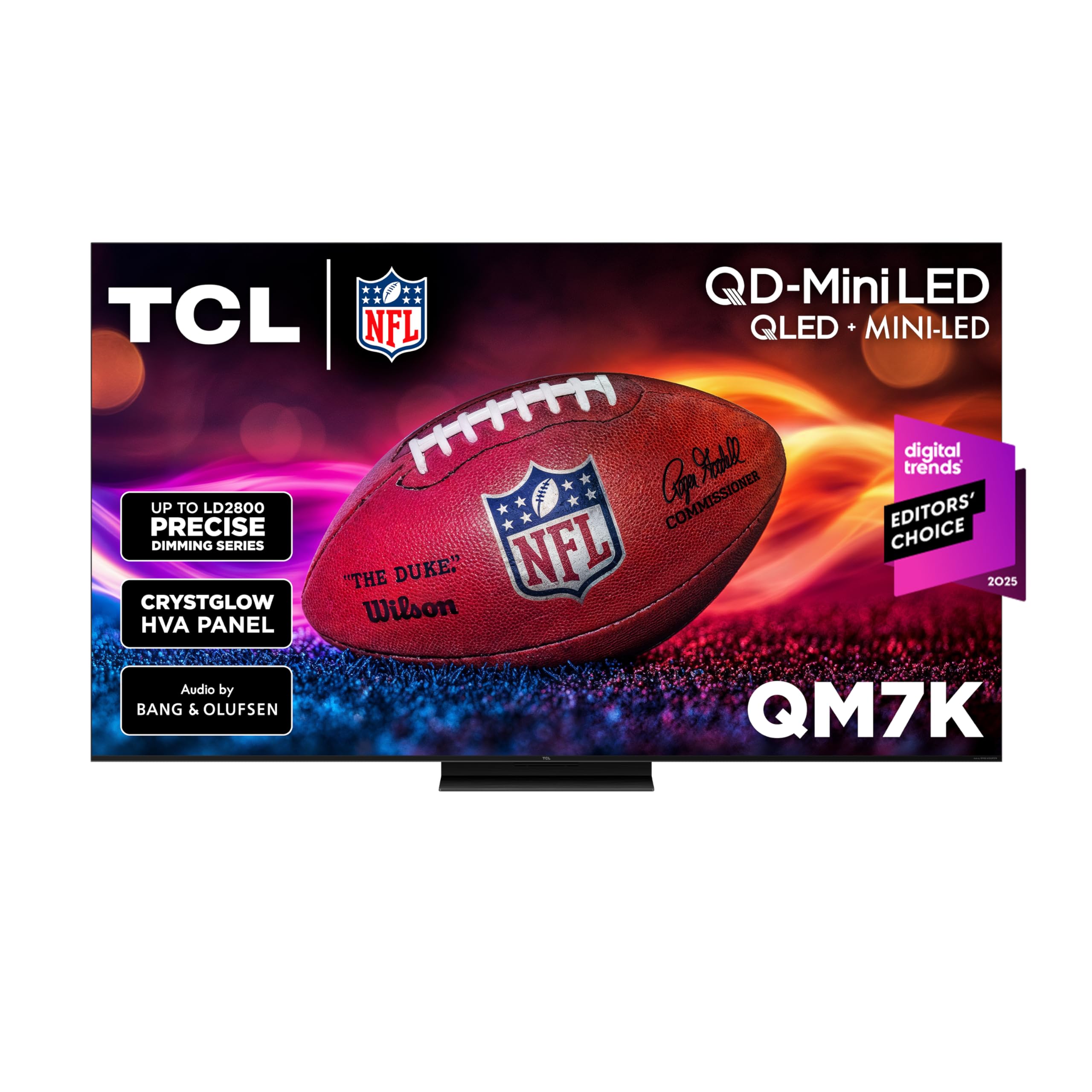
The TCL QM7K is a strong budget-friendly alternative for buyers who want impressive contrast and brightness without the OLED price tag. Its QD-Mini LED technology and TCL Halo Control System produce deep blacks with minimal halo effect around bright objects, thanks to up to 2500 local dimming zones. The CrystGlow HVA Panel is also effective at blocking reflections, making it a capable performer in living rooms.
Gaming performance is solid, with a 144Hz native refresh rate and a 288Hz variable refresh rate mode for PC gaming. The Google TV platform is responsive, and the adjustable stand provides some flexibility in placement. The high HDR brightness ensures a vibrant picture in any lighting condition, making it a great choice for daytime sports and news.
The most common complaint is the bundled remote, which feels cheap and lacks backlighting. The built-in sound is mediocre, and the Google TV interface can have bloatware. For the budget-conscious shopper who values a bright, high-contrast picture for mixed-content viewing in a moderately bright room, the QM7K offers exceptional value per dollar.
Why it’s great
- High brightness and contrast with effective local dimming at a budget price.
- Good anti-reflective panel handles room lighting well.
- Strong gaming specs with 144Hz native and VRR support.
Good to know
- Included remote feels cheap and is not backlit.
- Built-in sound quality is mediocre; a soundbar is a wise investment.
12. Hisense 65″ CanvasTV Series
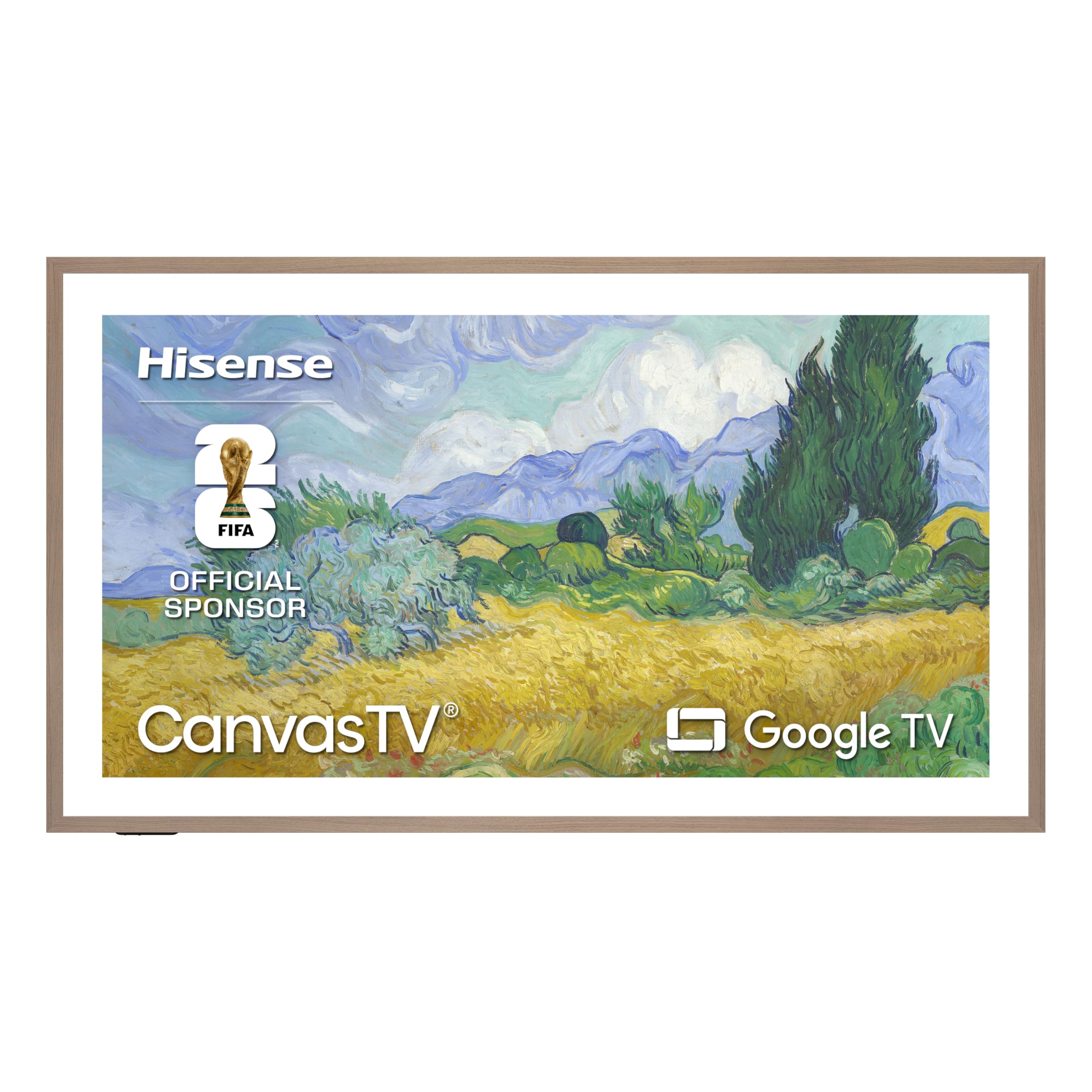
The Hisense CanvasTV is a clever concept that prioritizes aesthetics as much as picture quality. Like the Samsung Frame, it aims to disappear into your decor when not in use, displaying curated artwork or your own photos. The Hi-Matte display is a key differentiator — it effectively cuts reflections and gives the screen a paper-like texture, making the art mode much more convincing than a glossy TV panel.
Beyond the art mode, it’s a fully capable 4K TV with a native 144Hz refresh rate and AI Smooth Motion for sports and gaming. The included teak frame and ultra-slim wall mount make installation look clean and flush against the wall. The AI Ambient Light Sensor ensures the screen adjusts brightness for the time of day, mimicking a real picture. It runs on Google TV, providing a familiar and feature-rich smart platform.
The primary concession is that the picture quality, while good with vibrant Hi-QLED color, does not match the contrast and brightness of true OLED panels like the S85D or C2. The flush wall mount has no tilt or swivel adjustment, requiring careful planning for power and cable placement. For design-focused buyers who want a TV that becomes art when turned off, the CanvasTV is a unique and compelling choice.
Why it’s great
- Hi-Matte display makes art mode look like a real framed painting, not a TV.
- Includes a teak frame and ultra-slim wall mount for a clean installation.
- AI Ambient Light Sensor and Motion Detector for an interactive art experience.
Good to know
- Picture quality is not as good as true OLED, particularly in contrast.
- Flush wall mount lacks adjustability, complicating cable management.
13. Sony 65″ BRAVIA 8 OLED (Renewed)

For the budget-conscious buyer who refuses to compromise on picture processing, this Certified Refurbished Sony BRAVIA 8 is a high-risk, high-reward gamble. It combines Sony’s excellent XR Processor and precise OLED contrast — producing pure black levels and beautiful color accuracy — at a significant discount over the new model. The panel is driven by Sony’s intelligent motion handling and upscaling, which remain best-in-class.
It supports Dolby Vision, Atmos, and AirPlay 2 for a modern streaming experience. The refurbished condition means it should show limited wear, and the 90-day hardware warranty offers some protection. For a secondary viewing space or a dedicated theater room, this can be an incredible value, allowing you to access Sony’s premium technology for much less.
The risks are substantial. Customer reviews detail horror stories of units arriving with defective speakers, dead pixels, or other issues that are difficult to resolve. The warranty is short, and dealing with returns can be stressful. If you choose this route, ensure you are comfortable with the potential for issues and have a plan for a return. For the brave, the picture quality reward is immense.
Why it’s great
- Access to Sony’s best-in-class XR processing and OLED panel at a reduced cost.
- Excellent upscaling and motion handling for all content.
- Can be a fantastic value if you receive a well-functioning unit.
Good to know
- Refurbished units carry a risk of defects, such as speaker or panel issues.
- The 90-day warranty is very short compared to new models.
FAQ
Is a 65-inch OLED TV too big for a small room?
Can I use a 65-inch OLED TV for PC gaming?
How does burn-in affect a 65-inch OLED TV?
What is the difference between Dolby Vision and HDR10+?
Is a glossy or matte screen better for an OLED TV?
Final Thoughts: The Verdict
For most users, the 65 inch oled tv winner is the LG G4 OLED evo because it offers the best balance of reference-grade picture quality, high brightness for a variety of rooms, and excellent gaming features. If you want the most color-accurate picture and the best processing for movies, grab the Sony BRAVIA 8 II. And for a bright room where reflections are a problem, nothing beats the Samsung S95F with its glare-free screen.

Mo Maruf
I created WellFizz to bridge the gap between vague wellness advice and actionable solutions. My mission is simple: to decode the research and give you practical tools you can actually use.
Beyond the data, I am a passionate traveler. I believe that stepping away from the screen to explore new environments is essential for mental clarity and physical vitality.