Our readers keep the lights on and my smoothie glass nicely filled. As an Amazon Associate, I earn from qualifying purchases.
Uninsulated air ducts bleed conditioned air into unconditioned spaces, forcing your HVAC system to work overtime and driving up monthly utility bills. Whether you’re battling a scorching attic in summer or a freezing crawlspace in winter, the right wrap stops thermal transfer, prevents condensation, and quiets the system.
I’m Mohammad Maruf — the founder and writer behind WellFizz. I’ve spent months analyzing HVAC insulation materials, comparing R-value claims, foil reflectivity percentages, and real-world installation feedback to separate effective products from marketing hype.
After evaluating dozens of rolls across price tiers, these seven represent the strongest options for anyone serious about sealing their ductwork. This guide breaks down the best air duct insulation based on measurable performance, not packaging promises.
How To Choose The Best Air Duct Insulation
Selecting the right insulation for your ductwork isn’t just about picking the thickest roll — it’s about matching the material’s thermal performance, moisture resistance, and fire rating to your specific environment. Here are the three factors that matter most.
Material Construction: Foam Core vs. Bubble Pack vs. Double Bubble
Foam core insulation (typically EPE or closed-cell polyethylene) offers superior structural rigidity and a higher R-value per inch compared to bubble pack. It resists compression and maintains its thermal break over time. Bubble pack is lighter and more flexible, making it easier to wrap around tight duct elbows, but it delivers a lower R-value. Double bubble adds a second air layer for slightly better performance but remains less effective per thickness than foam core.
R-Value and Radiant Reflectivity
Unlike fiberglass batt, reflective insulation’s effective R-value depends on the air gap on either side of the material. A single layer of double-bubble insulation may list an R-8 rating, but that number assumes a 1-inch air gap facing the interior. Without that gap, the real-world R-value drops significantly. Look for products that also state their reflectivity percentage — anything above 95% radiant heat reflection will meaningfully reduce attic heat load on your ducts.
Vapor Barrier and Fire Safety
In humid climates or unconditioned spaces, condensation on cold duct surfaces can lead to mold and rot. A vapor barrier — typically the aluminum foil facing — prevents moisture migration into the insulation core. Additionally, check for a Class A / Class 1 fire rating under ASTM E84 standards. This ensures the material won’t contribute to flame spread in a building fire, which is often required by local building codes.
Quick Comparison
On smaller screens, swipe sideways to see the full table.
| Model | Category | Best For | Key Spec | Amazon |
|---|---|---|---|---|
| Reflectix BP48050 | Bubble Pack | Garage doors & RV windows | 5/16 in thick; 96% reflectivity | Amazon |
| AES R-8 4×50 ft | Foam Core | HVAC duct wrap (large projects) | 1/4 in thick; 200 sq ft coverage | Amazon |
| SmartSHIELD -10mm | Thick Foam Core | Metal buildings & pole barns | 10mm thick; R-20 rating | Amazon |
| US Energy Products 48×100 | Double Bubble | Large attic & metal building | 6mm thick; 99.7% reflectivity | Amazon |
| VEVOR Double Reflective | Thin Foam Core | Windows & RV roof | 3.2mm thick; 95% reflectivity | Amazon |
| SmartSHIELD -5mm | Foam Core | Attics & crawl spaces | 5mm thick; R-17 rating | Amazon |
| AES R-8 4×25 ft | Foam Core | Smaller duct runs & entry level | 1/4 in thick; 100 sq ft coverage | Amazon |
In‑Depth Reviews
1. Reflectix BP48050 48-Inch-by-50-Feet Square Edge Bubble-Pack Insulation

Reflectix is the most recognized name in reflective bubble-pack insulation, and the BP48050 proves why. The two layers of heavy-gauge polyethylene bubbles sandwiched between 96-percent reflective film deliver a balance of strength and flexibility that few competitors match. At 5/16-inch nominal thickness, it provides a meaningful thermal break without adding bulk that complicates wrapping around duct elbows.
Installation is straightforward with a staple gun and utility knife — no respirator, no itchy fibers. Users consistently report significant temperature reductions in garages, chicken coops, and RVs. One Florida installer noted a 30-35°F drop on a garage door with two layers and an air gap. The foil layer does not delaminate easily, a common failure point on cheaper bubble-pack products.
For HVAC duct wrap specifically, this material works best when you maintain a dead air space on at least one side. Use foil tape for seam sealing to preserve the vapor barrier. While the R-value is modest without an air gap, its radiant reflectivity and moisture resistance make it a reliable choice for most residential duct applications.
Why it’s great
- Proven brand with consistent quality — foil does not peel or delaminate
- Easy to cut, staple, and handle without protective gear
- Effective vapor barrier prevents condensation on cold ducts
Good to know
- Requires an air gap for rated R-value to be realized
- Price has increased recently; less budget-friendly than before
2. AES R-8 HVAC Duct Wrap Insulation Reflective 2 Sided Foam Core 4′ x 50′ (200 Sq Ft)

AES’s R-8 foam core insulation is designed specifically for HVAC ductwork, and the 4×50-foot roll provides ample coverage for larger homes with extensive exposed duct runs. The 1/4-inch closed-cell foam core offers better structural integrity than bubble wrap — it holds its shape when wrapped around rectangular ducts and resists sagging over time. The double-sided reflective foil reflects 97 percent of radiant energy, according to the manufacturer.
Users who installed this on basement heat ducts reported a 7-8°F increase in outlet air temperature, confirming the material reduces thermal loss during cold-weather heating. The foam core also adds a modest sound-dampening effect, dulling the noise of air rushing through metal ducts. However, the material is stiffer than bubble pack, making it harder to conform to tight-radius bends without creasing.
For large-scale projects where labor time matters, the 200-square-foot coverage means fewer seams to tape and less waste. Pair this with aluminum foil tape rated for HVAC use to maintain the vapor seal. Some users noted the roll was slightly short of the advertised 50-foot length, so measure carefully if you need exact coverage.
Why it’s great
- Foam core resists compression better than bubble pack for long-term thermal performance
- Large coverage reduces seams and installation time on big projects
- Noticeably improves outlet air temperature in heating season
Good to know
- Stiff material — difficult to wrap around sharp duct elbows without creasing
- Some users reported the roll was shorter than 50 feet
3. SmartSHIELD -10mm 48″ x 50ft R20 Reflective Insulation roll, Foam Core Radiant Barrier
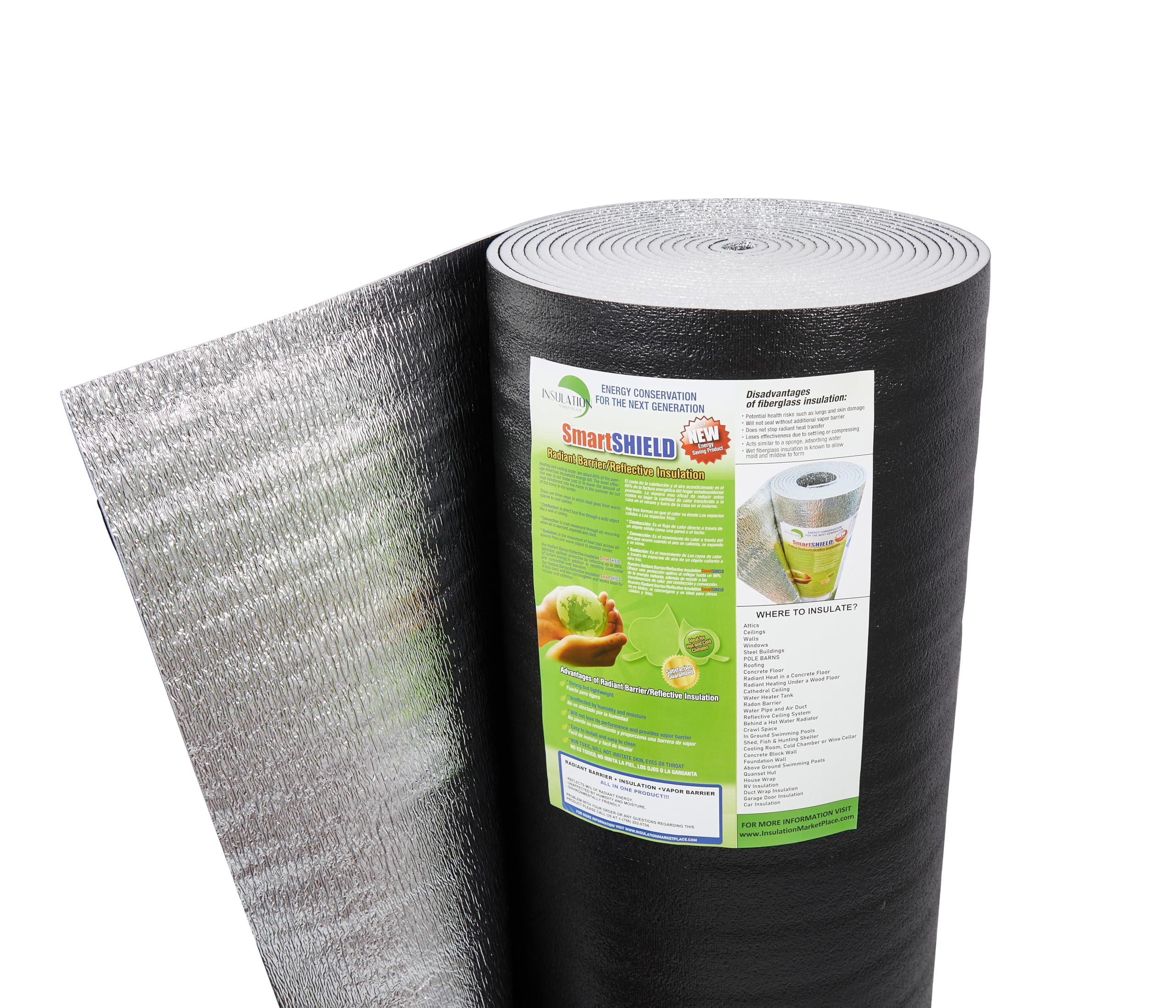
SmartSHIELD’s 10mm foam core insulation is the thickest option on this list, delivering an advertised R-20 value that puts it in a different league from the 1/4-inch alternatives. The closed-cell polyethylene foam is noticeably more rigid, which makes it the best choice for flat surfaces like metal building roofs, pole barn walls, and concrete floors. For air duct insulation, it works exceptionally well on large rectangular trunk lines where you can staple it taut.
In real-world testing, users reported dramatic temperature reductions — one bus conversion installer saw a 30°F drop inside the vehicle the day after installing this on the ceiling. The material is also a strong vapor barrier, preventing condensation in humid environments. The black/foil version reduces glare in bright spaces, which is a thoughtful detail for workshops and garages.
The stiffness is the trade-off. Wrapping this around small-diameter round ducts or tight duct boots requires cutting multiple smaller pieces and taping them in place. It also lets some light through at the seams if not overlapped correctly. For users who prioritize maximum R-value and structural rigidity, this is the top performer.
Why it’s great
- Highest R-value in this lineup at R-20, suitable for extreme climates
- Closed-cell foam provides excellent vapor barrier properties
- Staples easily and stays flat on large surfaces
Good to know
- Too stiff for tight-radius duct elbows — requires multiple pieces for complex runs
- Some light transmission at seam overlaps if not properly taped
4. US Energy Products 48″ x 100′ White Double Bubble Reflective Foil Insulation Thermal Barrier R8

US Energy Products delivers a 100-foot roll of double-bubble insulation with a white foil face on one side, making it a smart choice for visible installations where you want a clean, finished look. The 6mm thickness (approximately 1/4 inch) and 99.7 percent reflectivity are impressive numbers for a bubble-pack material. The Class A / Class 1 ASTM fire rating means it meets code requirements for exposed applications.
Homeowners in hot Texas climates reported that this insulation stabilized their AC cycles and kept a 3000-square-foot home comfortable despite extreme heat. The double-bubble construction provides two dead air layers, which improves thermal performance over single-bubble products. Users also praised the ease of cutting — scissors or a sharp knife slice through cleanly without fraying.
The white side is slightly less reflective than the foil side, so orient the foil face toward the heat source for maximum radiant barrier performance. Some users received rolls where the white side was inadvertently shipped as foil, so verify the product matches your order before cutting. The large 400-square-foot coverage is ideal for whole-house projects or metal building insulation.
Why it’s great
- White face provides a clean aesthetic for visible ductwork in basements or garages
- Double-bubble design improves thermal performance over single-layer bubble pack
- Class A fire rated for code-compliant installation
Good to know
- Some shipments arrived with foil on both sides instead of one white side
- Bubble construction is less rigid than foam core for vertical installations
5. VEVOR Double Reflective Insulation Roll, Foam Core Radiant Barrier, 3.2 mm 48 in x 50 ft
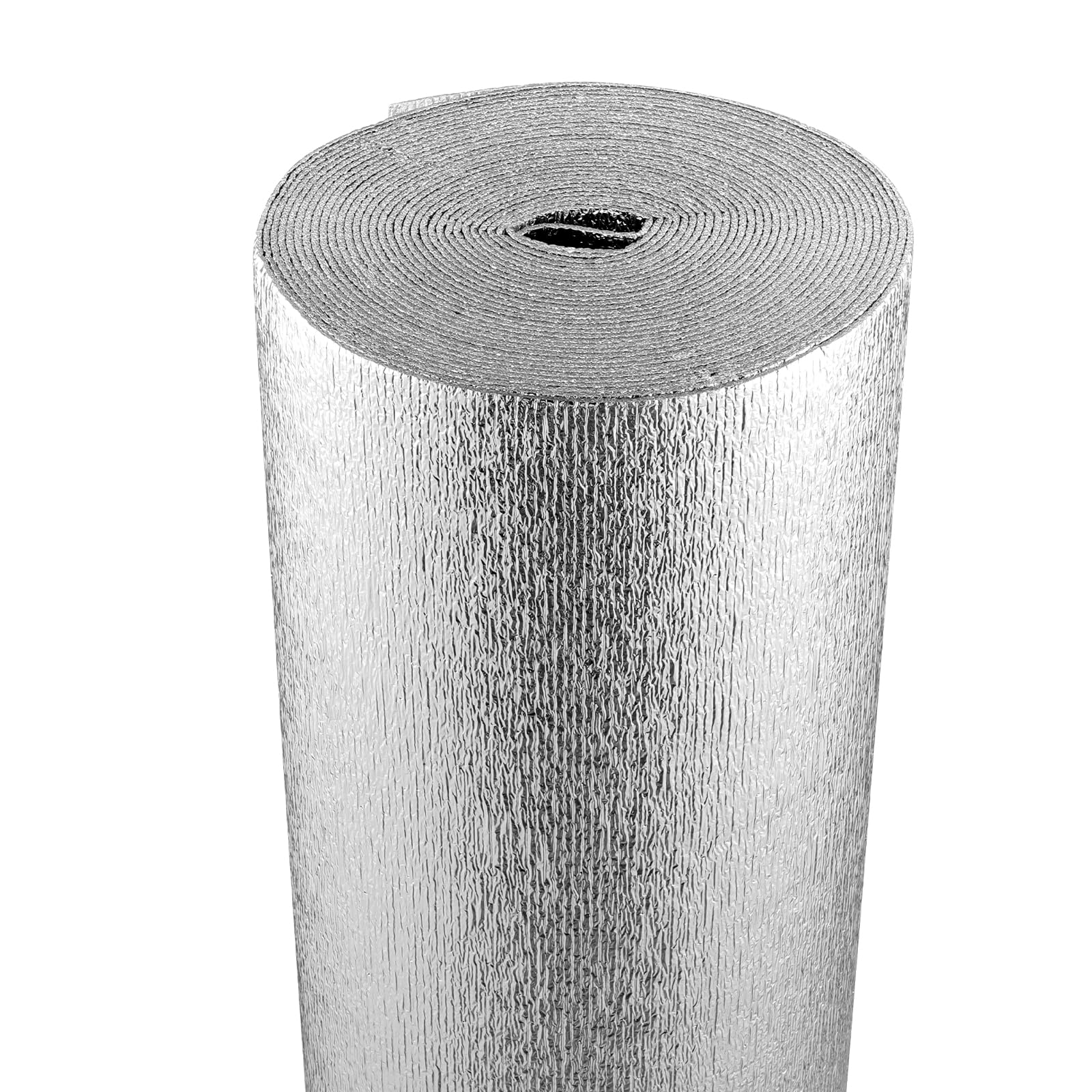
VEVOR’s 3.2mm reflective insulation is noticeably thinner than the foam core options from SmartSHIELD and AES, but that slim profile makes it exceptionally easy to cut and fold into tight spaces. The double-sided aluminum foil bonded to high-density EPE foam creates a 3-in-1 radiant barrier, insulation, and vapor control layer. Users report immediate temperature improvements on garage doors and windows, with one installer noting a 30-35°F reduction on a 16-foot garage door in direct Florida sun.
The lightweight construction — just 4.2 pounds per 50-foot roll — makes it manageable for one-person installation. It cuts cleanly with scissors and can be stapled or glued in place. The material is tear-resistant but not puncture-proof; avoid dragging it across rough surfaces during installation.
For HVAC duct insulation, this works best as a secondary wrap over existing insulation or on ductwork in conditioned spaces where extreme thermal performance isn’t critical. The thin foam core provides less thermal resistance than thicker alternatives, but the radiant reflectivity still blocks significant heat transfer. It’s a solid entry-level option for small projects.
Why it’s great
- Thin and lightweight — ideal for tight spaces and one-person installs
- Reflects over 95% of radiant heat for immediate temperature relief
- Easy to cut and shape without specialized tools
Good to know
- Low R-value compared to thicker foam core or double-bubble products
- Less durable — can puncture if dragged over sharp edges during installation
6. SmartSHIELD -5mm 24”X50ft R17 Reflective Insulation Roll, Foam Core Radiant Barrier
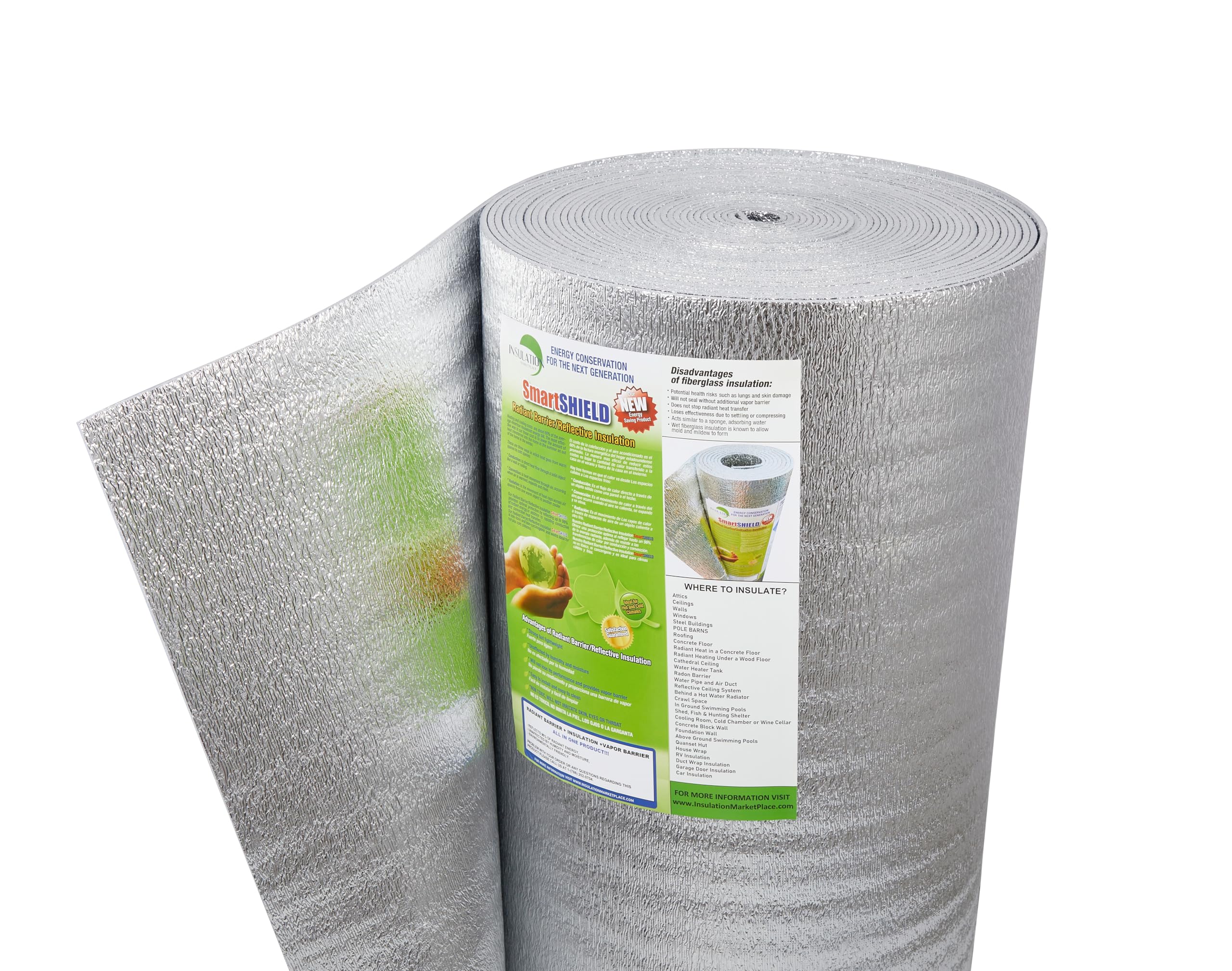
The 5mm version of SmartSHIELD sits between the thin VEVOR and the thick 10mm option, offering a solid R-17 rating without the extreme stiffness of its thicker sibling. The 24-inch width is narrower than the standard 48-inch rolls, which actually makes it more convenient for wrapping individual duct runs where a full-width sheet would require wasteful trimming. The double-sided engineered foil reflects 95 percent of radiant energy and meets ASTM C1313 standards with a Class A fire rating.
Users reported excellent results in attic applications — one homeowner stapled it to the attic hatch cover and completely stopped hot air infiltration from the unconditioned space. Another RV owner used it on windows and noted the interior temperature held steady even when outside temperatures dropped 40°F. The material is waterproof and unaffected by humidity, which makes it suitable for crawl spaces where moisture is a concern.
The 50-foot length covers 100 square feet, but some reviews noted the actual length was slightly short at closer to 25 feet. Verify the roll dimensions upon arrival, and contact the seller if there’s a discrepancy — the company has a reputation for resolving such issues. For small-to-medium duct projects where you need a balance of thickness, fire safety, and ease of handling, this is a strong contender.
Why it’s great
- Narrow 24-inch width reduces waste when wrapping smaller ducts
- Class A fire rated and meets ASTM C1313 standards
- Waterproof construction prevents mold growth in humid spaces
Good to know
- Some rolls shipped shorter than the advertised 50-foot length
- Thickness and R-value less than the 10mm version for extreme climates
7. AES R-8 HVAC Duct Wrap Insulation Reflective 2 Sided Foam Core 4′ x 25′ (100 Sq Ft)
AES’s smaller 4×25-foot roll provides the same 1/4-inch foam core and double-sided reflective construction as the larger roll, but at a lower entry point for smaller projects. At 100 square feet, it covers roughly two standard 20-foot duct runs, making it ideal for homeowners who only need to insulate a basement trunk line or a single attic branch. The reflective surface reflects 97 percent of radiant energy and the foam core adds structural stability compared to bubble wrap.
One user with a RenewAire ERV duct solved a persistent condensation problem by adding this insulation, noting the double vapor barrier prevented mold formation. Another homeowner saw their AC electric bill drop to one-third of the previous month after wrapping exposed ducts. The material is easy to handle, cuts with a utility knife, and produces no airborne fibers — a significant advantage over fiberglass duct wrap.
The smaller roll size means more seams per project compared to buying the 50-foot version, so budget for extra foil tape if you’re covering a long run. Some users noted the R-8 claim requires an air gap to achieve; without it, the effective R-value is closer to R-1 or R-2. This doesn’t negate its value as a radiant barrier, but temper your expectations for conductivity-based insulation performance.
Why it’s great
- Smaller roll size perfect for targeted duct wraps and small projects
- Double vapor barrier effectively stops condensation and mold
- Clean, fiber-free installation with no respiratory protection needed
Good to know
- R-8 rating requires an air gap; real-world performance is lower for conduction
- More seams required than larger rolls — additional tape cost applies
FAQ
Can I use reflective insulation directly on metal ductwork without an air gap?
What is the difference between bubble pack and foam core air duct insulation?
How do I seal seams and edges on reflective duct insulation?
Final Thoughts: The Verdict
For most users, the best air duct insulation winner is the Reflectix BP48050 because it combines proven durability, reliable reflectivity, and the flexibility needed for typical residential ductwork. If you want the highest R-values and maximum thermal resistance for a metal building or pole barn, grab the SmartSHIELD -10mm. And for large-scale HVAC projects where coverage area and foam-core rigidity matter most, nothing beats the AES R-8 4×50 ft Foam Core.

Mo Maruf
I created WellFizz to bridge the gap between vague wellness advice and actionable solutions. My mission is simple: to decode the research and give you practical tools you can actually use.
Beyond the data, I am a passionate traveler. I believe that stepping away from the screen to explore new environments is essential for mental clarity and physical vitality.