Our readers keep the lights on and my smoothie glass nicely filled. As an Amazon Associate, I earn from qualifying purchases.
That nagging ache between your shoulder blades after a day at a desk isn’t just fatigue—it’s your spine begging for alignment. A quality back posture corrector pulls your shoulders into a natural, open position, training the deep postural muscles to remember what straight feels like without you having to consciously brace against the pull of gravity and poor habits all day.
I’m Mohammad Maruf — the founder and writer behind WellFizz. Over the past decade, I’ve analyzed the structural mechanics, material science, and real-world durability of over a hundred body-alignment products, from rigid medical braces to flexible wearable straps.
Whether you are dealing with desk slouch, mild scoliosis, or upper back tension, finding a reliable back posture corrector means balancing support density, breathability, and adjustability to match your unique torso dimensions and daily activity level.
How To Choose Your Back Posture Corrector
Not all posture correctors work the same. The cheapest elastic straps simply remind you to sit up, while multi-rod braces physically resist the hunch. You need to decide which level of intervention your daily routine requires.
Support Rod Count & Rigidity
The number of flexible ABS rods embedded in the back panel determines how much resistance the brace offers against your forward pull. A 4-rod design provides balanced mid-back leverage, while a 5-rod system extends that support further down into the lumbar curve. Fewer rods (or none) mean a lighter, more discreet feel but less corrective force for severe slouching.
Fabric Breathability & Strap Width
You will likely wear this for hours at a time. Look for ventilated mesh panels that wick sweat rather than nylon or solid polyester that traps heat. Wide, padded shoulder straps distribute pull without digging into the armpit—a common complaint in this category that leads to users abandoning the brace after a week.
Fit Range & Adjustability
Every corrector works only if it fits properly. Measure your waist at the navel and check the product’s belt-length chart. A system with multiple Velcro points in the front and adjustable over-shoulder straps lets you fine-tune the tension without needing a second person to help you buckle in.
Quick Comparison
On smaller screens, swipe sideways to see the full table.
| Model | Category | Best For | Key Spec | Amazon |
|---|---|---|---|---|
| KNXWALT Posture Corrector | Premium Mesh | All-day office comfort | 4 removable support rods | Amazon |
| Kepwaa Full Back Support | 5-Rod Max Support | Lumbar & upper back correction | 5 flexible ABS support rods | Amazon |
| Sloworld Upgraded Brace | 2-in-1 Belt | Budget-friendly daily wear | 4 built-in support bars | Amazon |
| ComfyBrace Fully Adjustable | Soft Orthopedic | Gentle posture retraining | Lightweight breathable polyester | Amazon |
| Sparthos Lower Back Brace | Medical Lumbar | Sciatica & disc support | Adjustable lumbar pad | Amazon |
In‑Depth Reviews
1. KNXWALT Posture Corrector
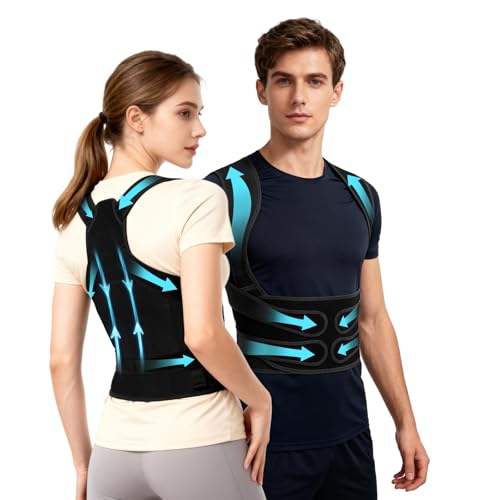
The KNXWALT strikes a near-perfect balance between structural support and wearable comfort. Its four reinforced yet removable support rods mold to the natural curve of your spine, providing noticeable resistance against slouching without feeling like you are strapped into a medieval device. The high-quality, ventilated mesh fabric prevents the heat buildup that plagues cheaper nylon braces, making it practical for 8-hour desk sessions.
Testers consistently noted that the strap design avoids the dreaded armpit rub—a failure point for many correctors in this price tier. The lightweight profile slips discreetly under a shirt, so you can wear it during meetings or errands without drawing attention. Users with mild scoliosis and upper back tension reported a decrease in daily neck stiffness after a few weeks of consistent use.
While the fit range is generous, very tall users with a long torso may find the back panel sits slightly high. The four rods supply excellent thoracic and lumbar leverage, but if you need reinforcement lower on the sacrum, you might prefer a unit with five rods. Overall, this is the most versatile pick for someone who wants measurable posture correction without sacrificing daily comfort.
Why it’s great
- Removable rods let you adjust support level
- Breathable mesh stays cool during extended wear
- Discreet enough for all-day use under clothing
Good to know
- May fit short for users over 6’2″
- Rod covers require careful hand washing
2. Kepwaa Full Back Support Brace
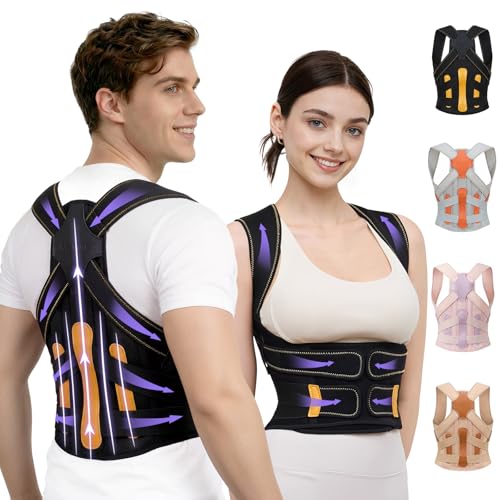
If you need serious structural reinforcement, the Kepwaa brings five flexible ABS rods to the table—one more than most competitors. This extra rod extends support further down the lumbar spine, which helps if your pain sits low in the back rather than solely between the shoulder blades. The ergonomic contouring is designed to avoid compressing the armpits, a thoughtful detail for longer wear sessions.
The mesh fabric is lightweight and breathable, though a few users in humid climates still reported some sweat accumulation under the straps. The wide midriff panel does not roll or bulge, and the Velcro adjustments are straightforward enough to fine-tune while wearing. Several reviews noted that after a 28-day regimen, their sitting posture felt noticeably easier to maintain even without the brace on.
On the downside, adjusting the shoulder straps takes a few days of trial and error to get the tension just right. A smaller number of users with curvy figures found the brace tended to ride up slightly during bending motions. For its price point, however, the 5-rod configuration delivers the highest corrective force in this lineup, making it ideal for those who need to actively resist severe hunching.
Why it’s great
- Five support rods for maximum corrective leverage
- Ergonomic shape minimizes underarm digging
- Wide midriff stays flat without rolling
Good to know
- Shoulder straps take time to dial in
- Can feel warm in hot, humid conditions
3. ComfyBrace Fully Adjustable Posture Corrector

The ComfyBrace is for people who hate the feeling of rigid plastic rods pressing into their spine. It uses a soft, lightweight polyester construction with no internal bars, relying on elastic tension and a cross-back strap design to gently guide your shoulders into alignment. Multiple testers reported immediate relief from upper back tension and noticed that their chiropractor required fewer adjustments after two weeks of daily use.
This is not a brace that will physically force your back straight; it is a reminder system that builds muscle memory over time. The Velcro closure points allow a wide range of adjustment for chest sizes from 30 to 43 inches. The fabric stays soft against the skin even after several washes, and the lifetime warranty removes any hesitation about durability.
The main compromise is that the underarm straps can cause chafing if worn for more than four hours without a base layer. Additionally, because it lacks support rods, it provides minimal lower back stabilization—users with lumbar disc issues may find it insufficient on its own. For mild posture retraining and neck relief, though, its simplicity is a virtue.
Why it’s great
- Extremely lightweight and soft against skin
- Lifetime warranty backs the purchase
- Effective for building posture awareness
Good to know
- No support rods means less lumbar pull
- Armpit straps may irritate without layering
4. Sloworld Upgraded Posture Corrector

The Sloworld offers a surprising amount of hardware—four built-in support bars and a 2-in-1 belt design—at a very accessible price point. The extended belt wraps from two separate spinal anchor points, distributing pull more evenly across the upper and lower back. Users with scoliosis specifically noted that daily walks became less painful after a few months of consistent wear.
The material combines polyester and spandex for a bit of stretch, and the wide shoulder straps help avoid the armpit-binding sensation that cheaper braces often produce. The sizing chart covers waists from 26 to 44 inches, which is a broader range than many competitors. Several reviews highlighted that the brace is sturdy enough to hold up to daily use without the fabric pilling or the Velcro losing grip.
Where the Sloworld falls short is in lower back support. The 2-in-1 belt focuses corrective tension more on the upper thoracic region than the lumbar spine. Some users also reported that the underarm straps caused significant rubbing against the skin, requiring a shirt underneath. For upper-back slouching on a budget, this is a solid performer, but it is not a full spinal solution.
Why it’s great
- Four sturdy support bars provide noticeable pull
- Wide sizing range fits many body types
- Stretch fabric resists pilling over time
Good to know
- Armpit straps may cause irritation without layering
- Lower back support is limited compared to 5-rod braces
5. Sparthos Back Brace for Lower Back Pain
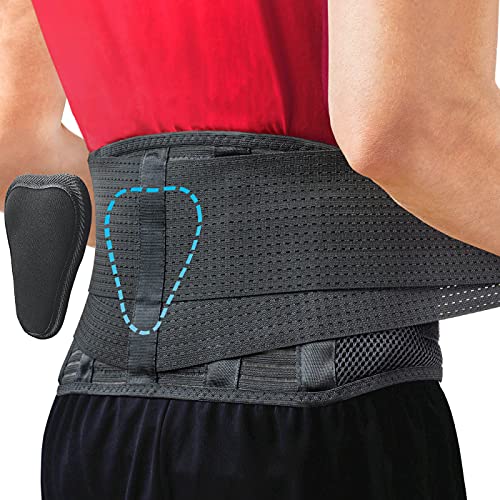
The Sparthos is designed for a different problem than upper-back slouching. Its primary target is lower back pain from herniated discs, sciatica, and spinal stenosis. The adjustable lumbar pad provides focal compression exactly where the lumbar curve meets the sacrum, and the vertical stabilizers prevent the brace from rolling up when you bend. This is the only unit in the lineup built to medical-grade standards for lower-spine stabilization.
Users with chronic conditions reported dramatic improvements—one reviewer noted the ability to walk without a cane for the first time in a year. The nylon construction is sturdy and the Velcro is extremely strong, though some users found it almost too aggressive, snagging on clothing during removal. The brace fits waist sizes up to 52 inches, making it one of the most inclusive options for larger frames.
The trade-off is that the Sparthos focuses almost entirely on the lumbar region with minimal pull on the upper back or shoulders. If your primary issue is a forward head or rounded shoulders, this brace will not address it. It is also slightly more bulky than the mesh-based thoracic correctors, so wearing it under fitted clothes is not practical. For pure lower-back support, however, it is the most effective tool in this group.
Why it’s great
- Adjustable lumbar pad targets disc and sciatica pain
- Inclusive sizing up to 52-inch waist
- Strong vertical stabilizers prevent rolling
Good to know
- Provides minimal upper back or shoulder correction
- Bulky profile does not hide well under clothing
FAQ
How tight should I adjust my posture corrector on the first use?
Can I sleep while wearing a back posture corrector?
Will a 5-rod brace fix my lower back pain from a herniated disc?
Final Thoughts: The Verdict
For most users, the back posture corrector winner is the KNXWALT Posture Corrector because it combines four adjustable support rods with a breathable mesh design that stays comfortable through a full workday. If you want maximum corrective force for severe hunching, grab the Kepwaa Full Back Support with its five rods. And for targeted lower-back pain relief from sciatica or disc issues, nothing beats the Sparthos Back Brace with its adjustable lumbar pad.

Mo Maruf
I created WellFizz to bridge the gap between vague wellness advice and actionable solutions. My mission is simple: to decode the research and give you practical tools you can actually use.
Beyond the data, I am a passionate traveler. I believe that stepping away from the screen to explore new environments is essential for mental clarity and physical vitality.