Our readers keep the lights on and my smoothie glass nicely filled. As an Amazon Associate, I earn from qualifying purchases.
A 3-year-old’s legs are built for walking, not pedaling. The magic of a balance bike is that it removes the pedals entirely, letting your child learn the hardest part of riding—balance—before they ever have to worry about a drivetrain. This single design shift cuts the learning curve from weeks of wobbling to just a few afternoons of gliding.
I’m Mohammad Maruf — the founder and writer behind WellFizz. My research focuses on the mechanical specs and real-world durability data that separate a true long-term investment from a toy that gathers dust in the garage.
After analyzing customer feedback and weighing the specs of seven top designs, I’ve broken down the best options for your family in this guide to the balance bike for 3 year old.
How To Choose The Best Balance Bike For 3 Year Old
Not all balance bikes are built equally. For a 3-year-old, the deciding factors are seat-height range (the bike must fit their inseam now and next year), tire type (foam versus air versus plastic), and total weight (a bike heavier than 30% of your child’s body weight is hard for them to lift and steer). Below are the three specs that matter most.
Seat Height and Inseam Matching
A 3-year-old’s inseam typically falls between 14 and 17 inches. The bike’s minimum seat height must be at or below that inseam so your child can stand flat-footed. Bikes with an adjustable range of 14 to 18 inches are ideal, offering at least two full years of use.
Tire Material and Ride Quality
Foam or EVA puncture-proof tires are the industry standard for this age group. They never go flat, provide adequate grip on pavement and grass, and barely vibrate. Avoid hard plastic wheels unless you plan to ride exclusively on ultra-smooth indoor floors.
Frame Material and Bike Weight
Steel frames are the most common and most durable, but they push the bike’s weight to 8–11 pounds. Aluminum frames (like the Strider Pro) drop weight to 5–6 pounds, making it far easier for a small child to lift, carry, and steer independently. The trade-off is a higher price tag.
Quick Comparison
On smaller screens, swipe sideways to see the full table.
| Model | Category | Best For | Key Spec | Amazon |
|---|---|---|---|---|
| Gotrax KS12 | Mid-Range | Best Overall Value | 8.6 lbs with LED lights | Amazon |
| KRIDDO Toddler | Mid-Range | Smooth Ride & Customization | Dual-bearing wheels | Amazon |
| RIDYEE GreenSport | Mid-Range | Tool-Free Adjustability | 13.4–15.8 in seat range | Amazon |
| Bobike Pink | Entry-Level | Safety-Locked Steering | 135° steering limit | Amazon |
| Radio Flyer Steady Start | Premium | Ultra-Stable 3-Wheel Design | Wide front + dual rear wheels | Amazon |
| Retrospec Cub | Premium | Multi-Terrain Durability | 11–14.5 in seat height | Amazon |
| Strider 12 Pro | Premium | Lightest Frame for Small Riders | 5.6 lbs aluminum frame | Amazon |
In‑Depth Reviews
1. Gotrax KS12 Balance Bike
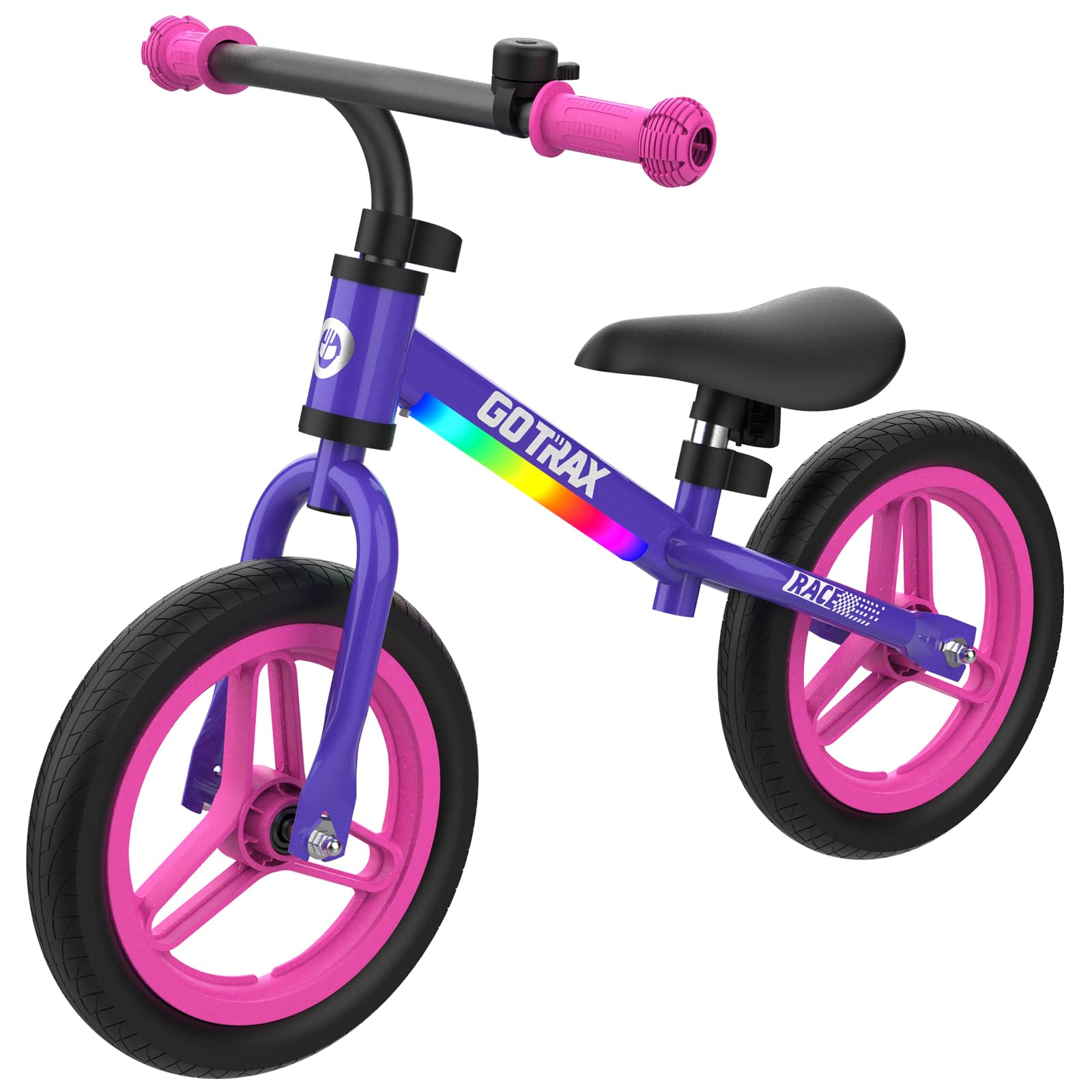
The Gotrax KS12 nails the sweet spot between feature-set and quality for a 3-year-old’s first bike. The 12-inch EVA foam tires are puncture-proof and ride smoothly on pavement, grass, and indoor flooring. At just 8.6 pounds, a typical 3-year-old can lift and steer the bike without help. The adjustable seat spans 16.5 to 18.3 inches, which accommodates children with an inseam as low as 14 inches.
The LED light on the frame is not just a gimmick—it creates a visual reward loop that encourages evening rides. The bell adds another layer of engagement. Assembly takes about five minutes with the included tools, and the iron frame feels solid under a 110-pound max load capacity, meaning this bike can survive multiple siblings.
Parents consistently report that the KS12 builds balance confidence within the first week. The lightweight design and cushioned seat cover make longer rides comfortable without leaving the child tired or frustrated. This is the best all-around pick for a family that wants a complete package without overspending.
Why it’s great
- LED light and bell boost kid engagement
- Extremely lightweight at 8.6 lbs for easy kid handling
- Quick 5-minute assembly with included tools
Good to know
- No braking system, so kids must foot-stop
- Steering is not limited, which may feel twitchy for very young riders
2. KRIDDO Toddler Balance Bike
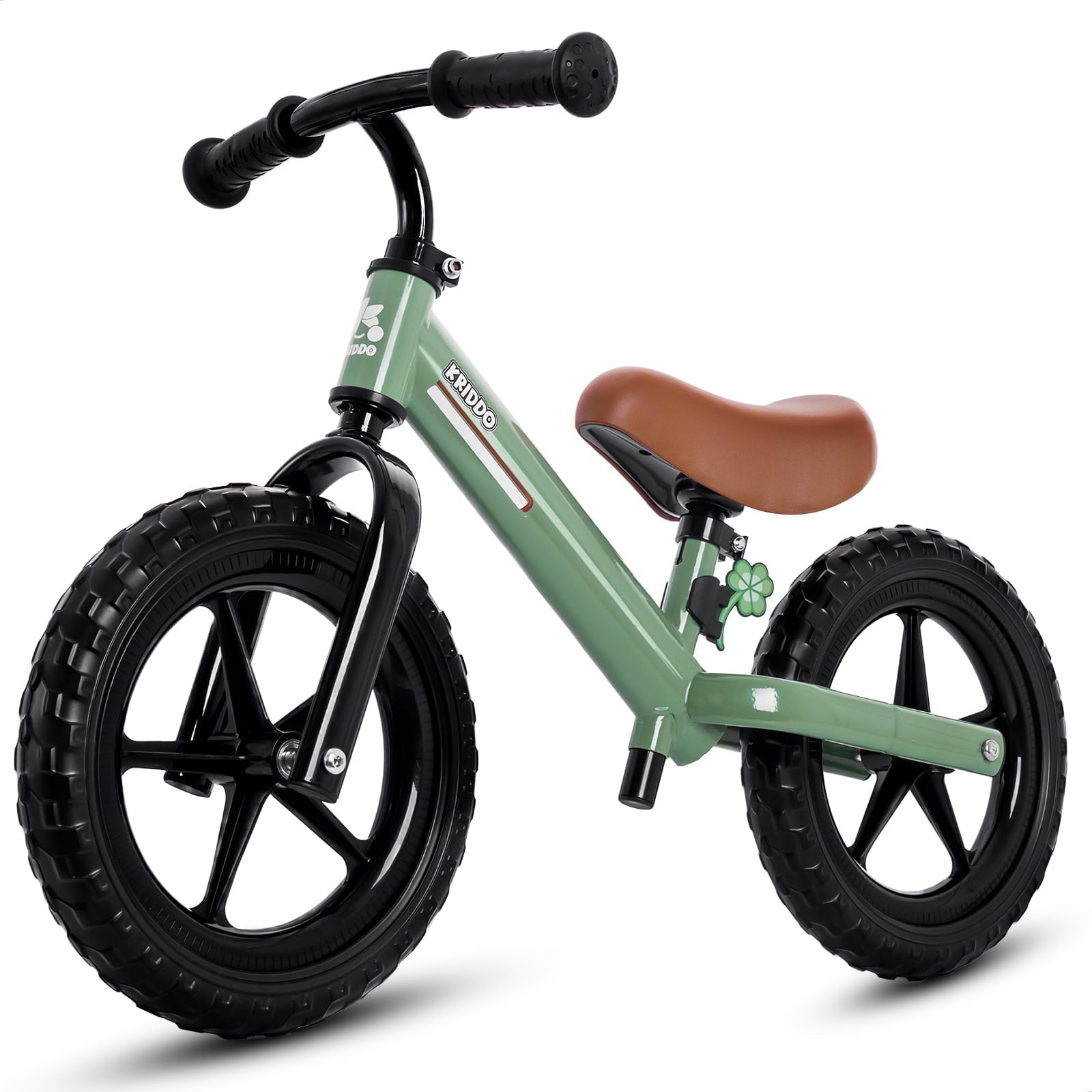
The KRIDDO stands out for its dual-bearing wheel design, which reduces rolling resistance significantly compared to single-bearing competitors. This translates to a smoother glide with less kick effort from your child, making it ideal for kids who tire easily or are just learning to scoot. The 12-inch puncture-proof tires handle grass, concrete, and hardwood without leaving scuffs or losing air.
The adjustable seat range of 14.17 to 18.5 inches is among the widest in its price tier, fitting children from age two into their fifth year. The handlebars adjust from 20.08 to 21.65 inches, giving the bike roughly two years of growth before the posture becomes cramped. The carbon steel frame is sturdy and resists rust, while the green color keeps a neutral, gender-free aesthetic.
Kids love the two customizable plates (a flower and a clover) that attach under the seat. This simple personalization trick increases the novelty factor, motivating toddlers to ride more often. The bike is easy to assemble, and the flat-free tires eliminate maintenance headaches. If you want the smoothest-rolling mid-range bike, start here.
Why it’s great
- Dual bearings reduce rolling resistance for easier gliding
- Wide seat-height range (14.17–18.5 in) extends usable life
- Customizable plates increase kid engagement
Good to know
- Slightly heavier than some aluminum competitors at ~9 lbs
- No bell or light included
3. RIDYEE Toddler Balance Bike
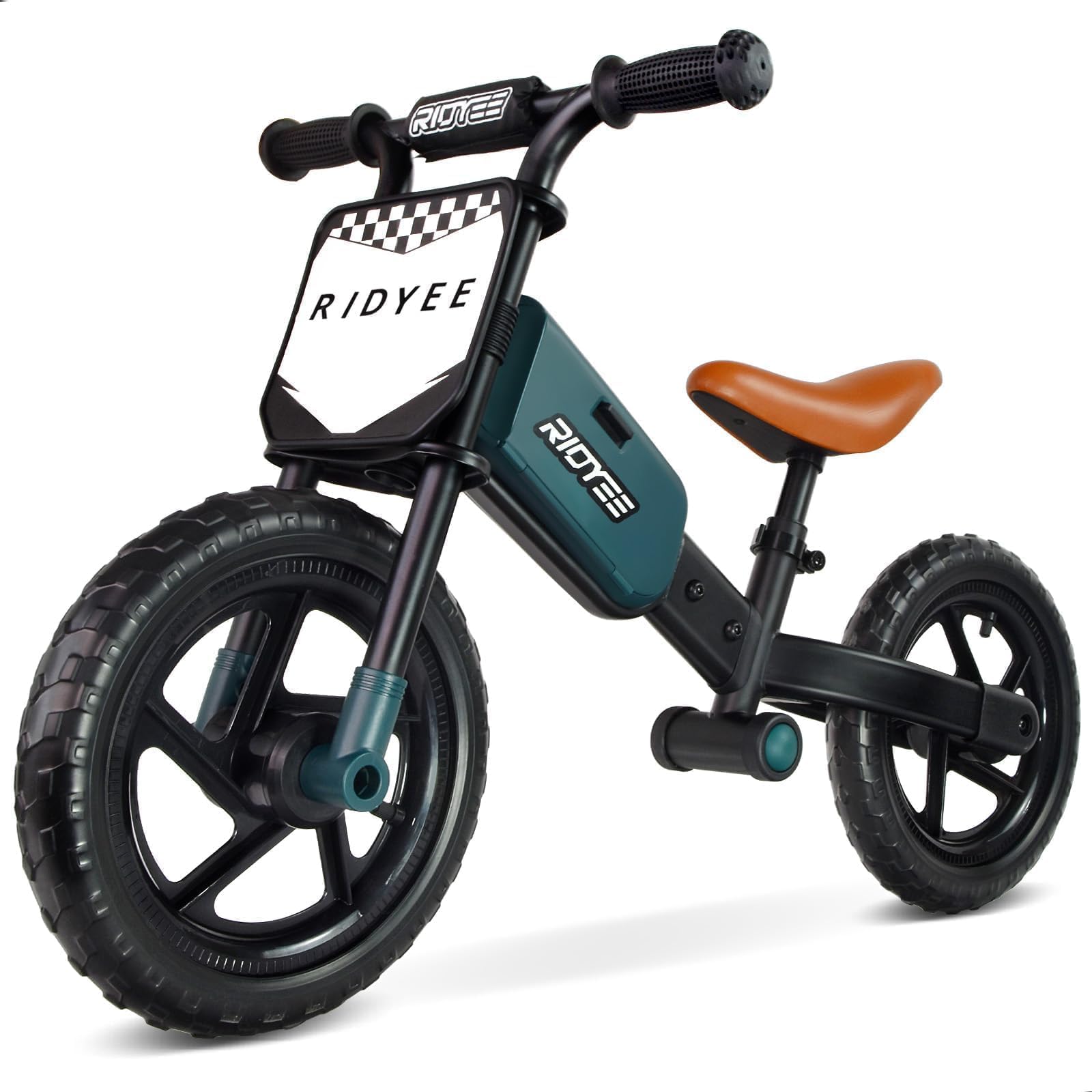
The RIDYEE brings a sand-motocross aesthetic to the balance bike world, but the real value is in the tool-free adjustment system. The seat can be raised or lowered from 13.4 to 15.8 inches without any tools, making it exceptionally easy to dial in the right height for your child. The bike also features a limited steering angle, preventing oversteer crashes that frustrate new riders.
A shock-absorbing seat post adds comfort on bumpy terrain like gravel or grass, while the all-terrain tires provide reliable grip. The bike comes with a customizable front plate and three sets of letter/number stickers, letting your child design their own look. A built-in storage pocket under the seat is a clever touch for carrying small toys or snacks on longer rides.
The carbon steel frame holds up to rough use, and the bike arrives almost fully assembled. One notable design decision is the use of hard plastic tires rather than rubber or foam, which can feel rough on pavement. The RIDYEE is best for a family that values quick adjustability and personalization over the quietest possible ride.
Why it’s great
- Tool-free seat adjustment for quick on-the-go changes
- Limited steering angle improves safety for new riders
- Storage pocket adds practical fun for small items
Good to know
- Plastic tires create more noise and vibration on hard surfaces
- Seat height range is narrower than some competitors (13.4–15.8 in)
4. Bobike Toddler Balance Bike

The Bobike is designed with a 135-degree steering limiter that prevents the front wheel from turning too sharply, a frequent cause of tip-overs for toddlers. The fully enclosed, non-slip wheels are another safety-first touch—they eliminate the risk of small feet or shoelaces getting caught in the spokes. The alloy steel frame is robust, though the max weight limit of 40 pounds means it will be outgrown earlier than other options.
Assembly takes a few minutes and a basic screwdriver. The adjustable seat allows the bike to grow with your child from age 1 to 4. The pink color appeals strongly to some kids, but the bike also comes in other colorways. Several parent reviews note that the narrow tire profile makes it easier for young legs to push without their feet kicking the wheels.
While the Bobike lacks bells, lights, or customizable accessories, its laser-focus on safety and simplicity makes it a strong choice for cautious parents. The ASTM F963-11 and EN71 certifications provide peace of mind. For a budget-friendly bike that prioritizes accident prevention above all else, this is a solid pick.
Why it’s great
- 135° steering limiter prevents sharp-turn tip-overs
- Enclosed non-slip wheels protect feet and shoelaces
- Easy assembly with basic tools
Good to know
- Low max weight limit of 40 pounds shortens usable life
- No bell, light, or customization features included
5. Radio Flyer Steady Start Balance Bike

The Radio Flyer Steady Start uses a wide front wheel paired with dual rear wheels—a three-point stance that eliminates the need for a kickstand and prevents the bike from tipping over when parked or during slow-speed maneuvering. This design is ideal for a 3-year-old who is still building confidence: the bike simply refuses to fall over sideways when the child is learning to mount and dismount.
The treaded wheels are designed for quiet operation on hardwood, carpet, cement, and paved paths, making this one of the best indoor-outdoor hybrids on the market. The padded seat adjusts tool-free, and the comfort handgrips fit small hands. At just 7 pounds, the alloy steel frame is light enough for a toddler to drag around the yard.
Radio Flyer’s reputation for durable, heirloom-quality toys is backed by a 100-year history. The Steady Start is their most innovative balance bike, borrowing stability principles from three-wheeled training scooters. The trade-off is that the 3-wheel geometry teaches a slightly different balancing feel than a 2-wheel bike, but the transition to a pedal bike is still smooth.
Why it’s great
- Three-wheel geometry is almost impossible to tip over
- Extremely quiet ride on indoor and outdoor surfaces
- Tool-free seat adjustment for quick height changes
Good to know
- 3-wheel design differs from standard 2-wheel balance bikes
- No footrest for gliding practice
6. Retrospec Cub Toddler Balance Bike

The Retrospec Cub addresses a specific gap in the market: a balance bike that can handle gravel, dirt paths, and grass without losing its smooth ride character. The airless puncture-proof tires are thick and deeply treaded, providing the kind of traction that cheap plastic wheels cannot match. The seat adjusts from a very low 11 inches up to 14.5 inches, accommodating the smallest 18-month-old riders up to a tall 3-year-old.
The low frame design lowers the center of gravity, making it easier for children to mount and dismount independently. Rounded edges and non-slip grips reinforce the safety-first philosophy. The alloy steel frame weighs about 10 pounds, which is on the heavier side but still manageable for a determined 3-year-old. The quick-release handlebar adjustment allows one-step changes as the child grows.
Parent feedback after a full year of use reports the Cub feels as solid as the day it was built. The lack of a braking system is standard for this category, but the heavy-duty construction means this bike can survive being thrown in a car trunk, left in the rain, or passed down to a younger sibling. If your child’s riding area includes loose terrain, this is the bike.
Why it’s great
- Thick treaded tires provide superior traction on loose terrain
- Low frame design (11 in min seat) fits the smallest riders
- Durable construction holds up to outdoor abuse
Good to know
- Heavier build at 10 pounds compared to aluminum competitors
- Seat height maxes out at 14.5 in, limiting growth
7. Strider 12 Pro Balance Bike
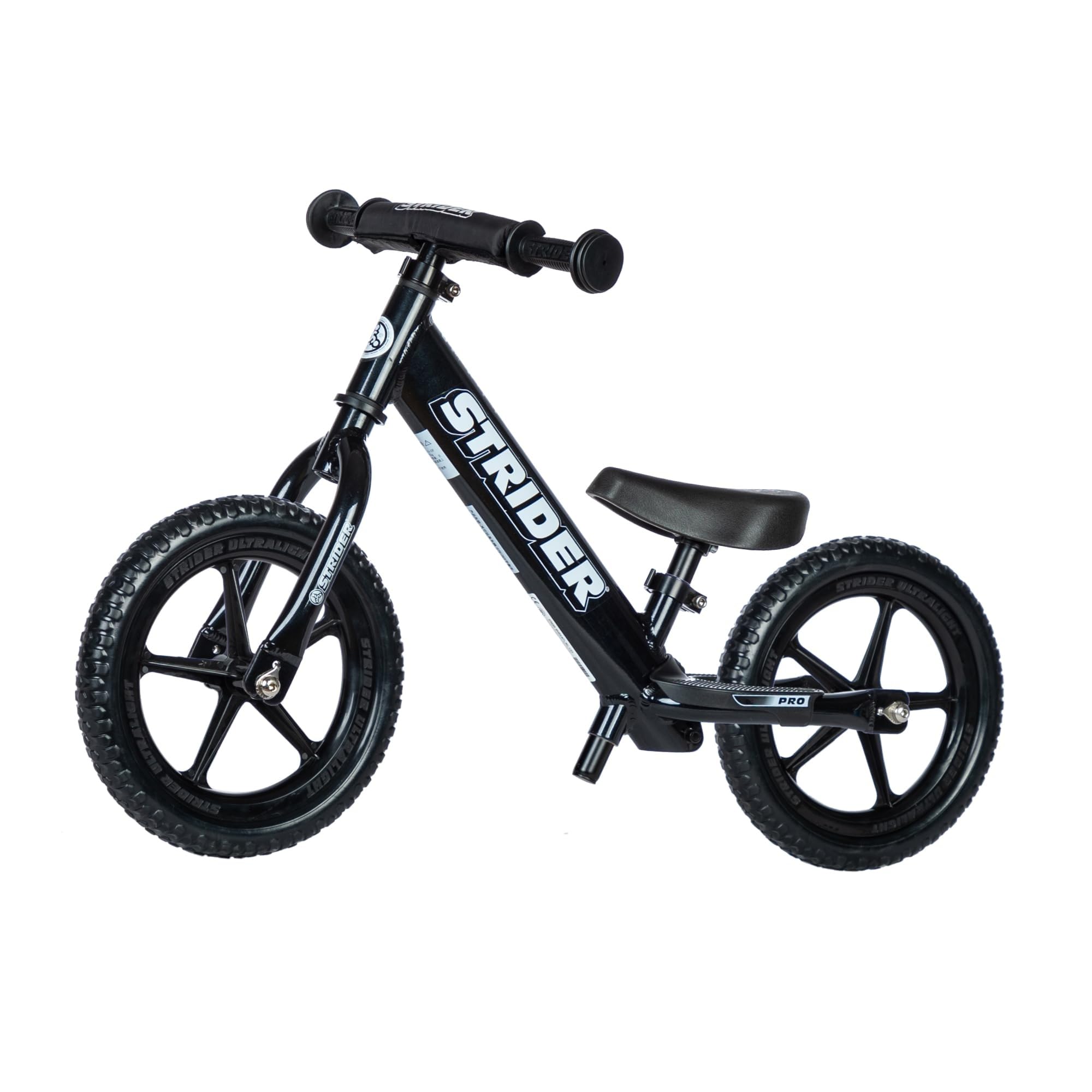
The Strider 12 Pro is the gold standard for weight-conscious parents—at 5.6 pounds, it is the lightest bike on this list by a significant margin. The aluminum frame makes it effortless for a 3-year-old to lift, carry, and steer, which accelerates the learning process. The bike includes both a standard seat post (11 to 17 inches) and an XL seat post (15 to 19 inches), giving a total range that fits children from age 1 all the way to 5.
The foam rubber flat-free tires are built to withstand the abuse of daily outdoor use without ever needing air. The seat and handlebar heights adjust tool-free, so you can raise the saddle in seconds as your child grows. The max rider weight of 60 pounds means this bike can easily serve as the family hand-me-down for a younger sibling.
Strider has pioneered the balance bike category and their Pro model reflects years of refinement. Parent reviews consistently note that children who learn on the Strider transition to a pedal bike without training wheels in under an hour. The only trade-offs are the premium price and the lack of a braking system, but for a bike this light, foot-stopping is perfectly natural.
Why it’s great
- Ultra-light 5.6-pound aluminum frame for easy kid handling
- Dual seat posts cover ages 1 to 5 for extended use
- Foam tires are indestructible and never require inflation
Good to know
- Higher price point than most competitors
- No hand brake for teaching stopping techniques
FAQ
How do I know if a balance bike is the right size for my 3-year-old?
Should I buy a balance bike with a footrest?
Do I need a balance bike with a brake for a 3-year-old?
Final Thoughts: The Verdict
For most families, the best balance bike for 3 year old is the Gotrax KS12 because it combines a lightweight frame, engaging LED light and bell, and a wide seat-height range at a reasonable price point. If you want the smoothest possible roll for a hesitant rider, grab the KRIDDO Toddler. And for a child who needs the absolute lightest bike to carry and steer, nothing beats the Strider 12 Pro.

Mo Maruf
I created WellFizz to bridge the gap between vague wellness advice and actionable solutions. My mission is simple: to decode the research and give you practical tools you can actually use.
Beyond the data, I am a passionate traveler. I believe that stepping away from the screen to explore new environments is essential for mental clarity and physical vitality.