Our readers keep the lights on and my smoothie glass nicely filled. As an Amazon Associate, I earn from qualifying purchases.
When your baby is in the NICU or just came home, every breath feels urgent. Standard video monitors show you a sleeping baby but can’t tell you if their tiny chest is rising or if their oxygen level has dipped. That’s exactly why a dedicated baby sock monitor for preemies exists — it tracks the two vital signs that matter most to neonatal health: heart rate and oxygen saturation, right from the foot.
I’m Mohammad Maruf — the founder and writer behind WellFizz. I’ve spent years analyzing wearable health tech for the most vulnerable users, cross-referencing pediatric pulse oximetry standards against consumer-grade hardware to separate true clinical-grade tools from parenting anxiety bait.
This guide focuses exclusively on monitors with transmissive or reflective optical sensors small enough for preemie feet, secure enough to stay on during active sleep, and fast enough to alert you before a low-O2 event becomes a crisis. After weeks of comparing sensor accuracy, sock fit for sub-6-pound babies, and real-world false-alarm rates, here is the definitive list of the baby sock monitor for preemies.
How To Choose The Best Baby Sock Monitor For Preemies
Buying a smart sock for a preemie is fundamentally different than buying for a full-term newborn. Their skin is thinner, their feet are smaller, and their breathing patterns are still maturing. You need a device that prioritizes sensor accuracy over comfort gimmicks and alarm speed over vague sleep scores.
Transmissive PPG vs. Reflective Optical Sensors
The biggest difference between a “good enough” sock and a preemie-safe sock is whether the sensor uses transmissive or reflective photoplethysmography (PPG). Transmissive sensors shine light through the foot and measure absorption on the other side — this is the same technology used in hospital pulse oximeters. Reflective sensors bounce light back from the skin surface and are far more prone to motion artifacts and poor readings on tiny, thin preemie feet. For an infant under 6 pounds, transmissive PPG is non-negotiable.
Sock Fit and Skin Safety
Preemie skin is fragile — it tears, bruises, and develops pressure injuries far more easily than full-term skin. The sock must be snug enough to hold the optical sensor flat against the skin without being tight enough to restrict circulation. Look for models that offer multiple small sock sizes or a single stretchy design with clear fit testing instructions. Avoid any sock with hard seams or stiff plastic housings that press directly on the top of the foot.
Alarm Delay and Threshold Customization
Some smart socks use a rolling average algorithm that waits several minutes before triggering an alarm. For a preemie, a 4-minute delay on a low heart rate alert is dangerous. The best monitors let you customize the alert thresholds for both heart rate and oxygen level, and they push notifications within seconds — not minutes. If the manufacturer hides their alarm latency in marketing jargon, that is a red flag for preemie use.
Base Station Range and Wi-Fi Dependency
Preemie parents often sleep in a different room from the baby to maximize rest between feedings. The base station range becomes critical. Bluetooth-only socks lose connection at 15-20 feet. Models with a dedicated base station that operates on a private 2.4 GHz network can maintain a stable connection through walls and across a two-story home. If the base station requires the phone to be within 6 feet to function reliably, it is not suitable for preemie monitoring.
Quick Comparison
On smaller screens, swipe sideways to see the full table.
| Model | Category | Best For | Key Spec | Amazon |
|---|---|---|---|---|
| Owlet Dream Duo (Gen 3) | Premium Bundle | Complete Medical-Grade Tracking | FDA-cleared oximetry, 2K camera | Amazon |
| Owlet Dream Sock | Premium Sock | Pulse & O2 Baselayer | Transmissive PPG, 16-hr battery | Amazon |
| Nanit Pro with Floor Stand | Premium System | Non-Wearable Breathing | 1080p camera + breathing tracking | Amazon |
| Nanit Pro with 8″ Display | Premium System | Dedicated Screen Setup | Respiratory tracking, 8″ touchscreen | Amazon |
| Sense-U Sock + PTZ Camera | Mid Bundle | Wearable + Video Combo | Transmissive HR, 2.5K PTZ cam | Amazon |
| Sense-U Smart Sock Shoe 2 | Mid-Range Sock | Long Range HR Tracking | Transmissive PPG, base station | Amazon |
| Philips Avent Connected Monitor | Mid-Range System | Wearable-Free Breathing | SenseIQ pixel analysis, 1300ft range | Amazon |
| Miku Pro Smart Monitor | Premium Contact-Free | No Wearable Breathing | SensorFusion tech, 1080p | Amazon |
| Momcozy BM04 | Budget 2-in-1 | App + Dedicated Monitor | 1080p, 5000mAh battery | Amazon |
In‑Depth Reviews
1. Owlet Dream Duo (Gen 3)

The Owlet Dream Duo combines the FDA-cleared Dream Sock with a 2K HD Dream Sight camera, creating the most comprehensive monitoring ecosystem currently available for preemies. The sock uses transmissive pulse oximetry — the same optical method hospitals rely on — to track pulse rate and oxygen saturation, and it alerts you the moment readings leave preset zones. The accompanying 2K camera offers a 130-degree wide-angle lens and 4x digital zoom, giving you sharp visual confirmation alongside the vital sign data.
For preemie parents, the standout feature is the alarm architecture. The base station and phone app push notifications within seconds of a desaturation event, and you can customize the upper and lower thresholds for both heart rate and oxygen level. The sensor is housed in a soft nylon-and-spandex sock that fits babies from 6 to 30 pounds, and the 16-hour battery means it lasts through the entire night and into the next day without needing a mid-sleep recharge.
The weak link is Bluetooth range — the base station must stay within roughly 6 feet of the sock, which limits where you can place the base station relative to the crib. Some users report that moving just one floor away causes connection drops. The camera supports dual-band Wi-Fi (2.4 GHz and 5 GHz) for smooth streaming, but the sock itself requires a 2.4 GHz network. Despite these quirks, the Duo is the only all-in-one system that offers FDA-cleared medical-grade tracking plus premium video in a single app, making it the top choice for parents who want no compromises on preemie safety.
Why it’s great
- FDA-cleared pulse oximetry with customizable alert zones
- 2K camera with wide-angle lens and 4x zoom
- Includes 4 sock sizes for growing preemies up to 30 lbs
Good to know
- Bluetooth range is short — base must be within 6 feet of the sock
- Some users find the base station alarm startling for both parent and baby
2. Owlet Dream Sock

The standalone Owlet Dream Sock offers the same FDA-cleared pulse oximetry as the Dream Duo but without the camera. It is the right choice for families who already own a video monitor and just need the vital sign tracking layer. The sock uses a fabric-based wrap made from nylon and spandex that secures the optical sensor against the baby’s foot — the same transmissive PPG technology that measures oxygen saturation and pulse rate in NICU pulse oximeters.
The sock is designed for babies 1-18 months (6-30 pounds), but preemie parents report that the smallest sock fits well on babies as small as 5.5 pounds if the foot is positioned correctly. The base station provides audible and visual alerts when readings leave your preset zones, and the app shows real-time pulse rate, O2 level, and sleep state. The Predictive Sleep Technology analyzes wake windows and helps you establish daily routines — a secondary benefit that becomes more useful as the preemie grows past the first few months.
The most consistent complaint is false alarms caused by poor sensor placement. If the sock shifts during sleep, the base station may trigger a yellow or red alert even though the baby is fine. This is not a device defect — it is the trade-off of using a medical-grade sensor that prioritizes sensitivity over noise filtering. Proper sock positioning on the day’s second or third use dramatically reduces false positives. The Dream Sock is not a substitute for a hospital monitor, but for home use after NICU discharge, it is the gold standard for preemie vital sign tracking.
Why it’s great
- FDA-cleared transmissive oximetry with real-time O2 and HR data
- 16-hour battery lasts through full night and next day
- Includes multiple sock sizes to accommodate growth
Good to know
- Base station range is limited — connection drops beyond one room
- Sock placement must be precise to avoid false alerts
3. Nanit Pro Smart Baby Monitor with Floor Stand
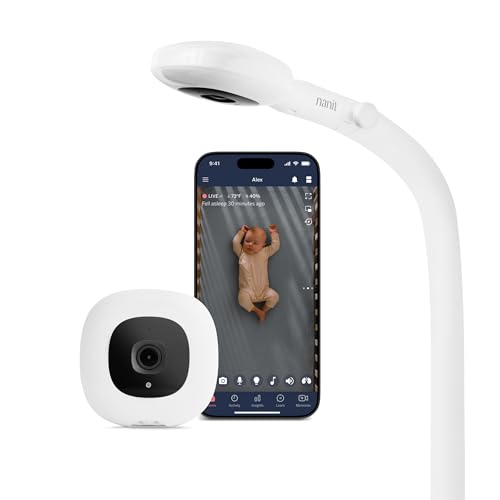
The Nanit Pro is not a sock monitor — it tracks breathing through a camera using computer vision rather than a wearable sensor. For some preemie parents, this contact-free approach is preferable because there is nothing touching the baby’s fragile skin. The camera analyzes pixel-level motion in the baby’s chest and abdomen to calculate respiration rate, and it sends sound, motion, and cry notifications in real time. The included ASTM-certified floor stand provides a consistent overhead view that keeps the camera at the optimal distance for breathing tracking.
The 1080p HD video is crisp day and night, with infrared night vision that doesn’t disturb sleep. The two-way audio is clear enough for parents to hear the baby’s breath sounds and respond with a soothing voice. The companion app supports split-screen viewing for two cameras — useful if you have twins or a toddler in another room. The free trial of Nanit Insights unlocks sleep scoring, auto-captured sleep data, and a 2-day lookback of sleep analysis. After the trial, those features require a subscription.
Because Nanit relies on a camera rather than a pulse oximeter, it cannot measure oxygen saturation or heart rate. This is a critical distinction for preemie parents who need SpO2 alerts. The breathing tracking is useful for spotting apnea pauses, but it will not catch a desaturation event that happens without visible movement. It is best used as a secondary monitor alongside an Owlet or Sense-U sock. The wall mount accessory provides a bird’s-eye view that saves floor space, but the floor stand is more portable for moving between rooms.
Why it’s great
- Contact-free breathing tracking — no wearables on fragile skin
- Excellent 1080p video quality with reliable night vision
- ASTM-certified floor stand for consistent camera placement
Good to know
- Cannot measure oxygen saturation or heart rate
- Advanced sleep insights require a paid subscription after trial
4. Nanit Pro with 8″ Display
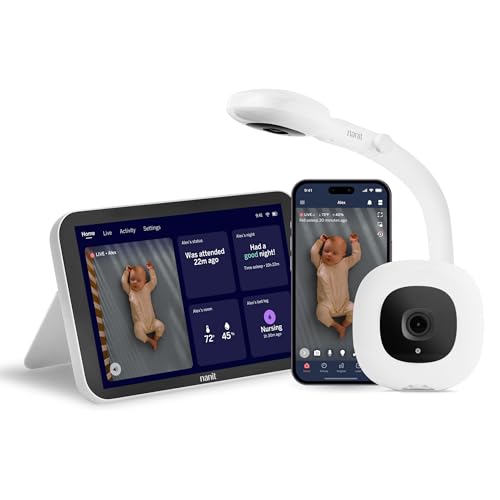
The Nanit Pro with 8-inch Display is the same camera system as the standalone Nanit Pro, but it adds a dedicated touchscreen monitor that eliminates the need to keep your phone on and unlocked to watch the feed. For parents who dislike the “phone-only” experience of most smart monitors, the 8-inch display offers a persistent video feed with no app-switching. The display runs on a rechargeable battery that lasts 3 to 6 hours between charges, making it practical for overnight use in the living room or while the baby sleeps in a bassinet near the couch.
The breathing tracking remains the same contact-free pixel-analysis technology — it measures respiration rate by detecting the subtle rise and fall of the baby’s chest. The app provides notifications for cough, cry, and motion events, and it automatically logs sleep sessions. The display itself supports two-way audio and night vision, so you can soothe the baby from the screen without pulling out your phone. Multiple caregivers can access the feed through the app, making it easy for grandparents or babysitters to check in without needing a second display.
As with the standalone Nanit, the biggest limitation for preemie parents is the lack of pulse oximetry. The breathing tracking works well for detecting apnea-like pauses, but it cannot alert you to a low-oxygen event that occurs without a change in visible motion. The 8-inch display adds convenience, but it does not add vital sign tracking. For NICU graduates who need SpO2 monitoring, this system works best as a visual complement to an Owlet or Sense-U sock. The display’s battery life is adequate but not long enough to last through a full night without charging, so keep the charger nearby.
Why it’s great
- Dedicated 8-inch touchscreen avoids phone dependency
- Contact-free respiratory tracking with real-time alerts
- Sturdy floor stand and portable display for multi-room use
Good to know
- No oxygen or heart rate monitoring capability
- Display battery lasts 3-6 hours — need to charge overnight
5. Sense-U Smart Sock + 2.5K PTZ Camera
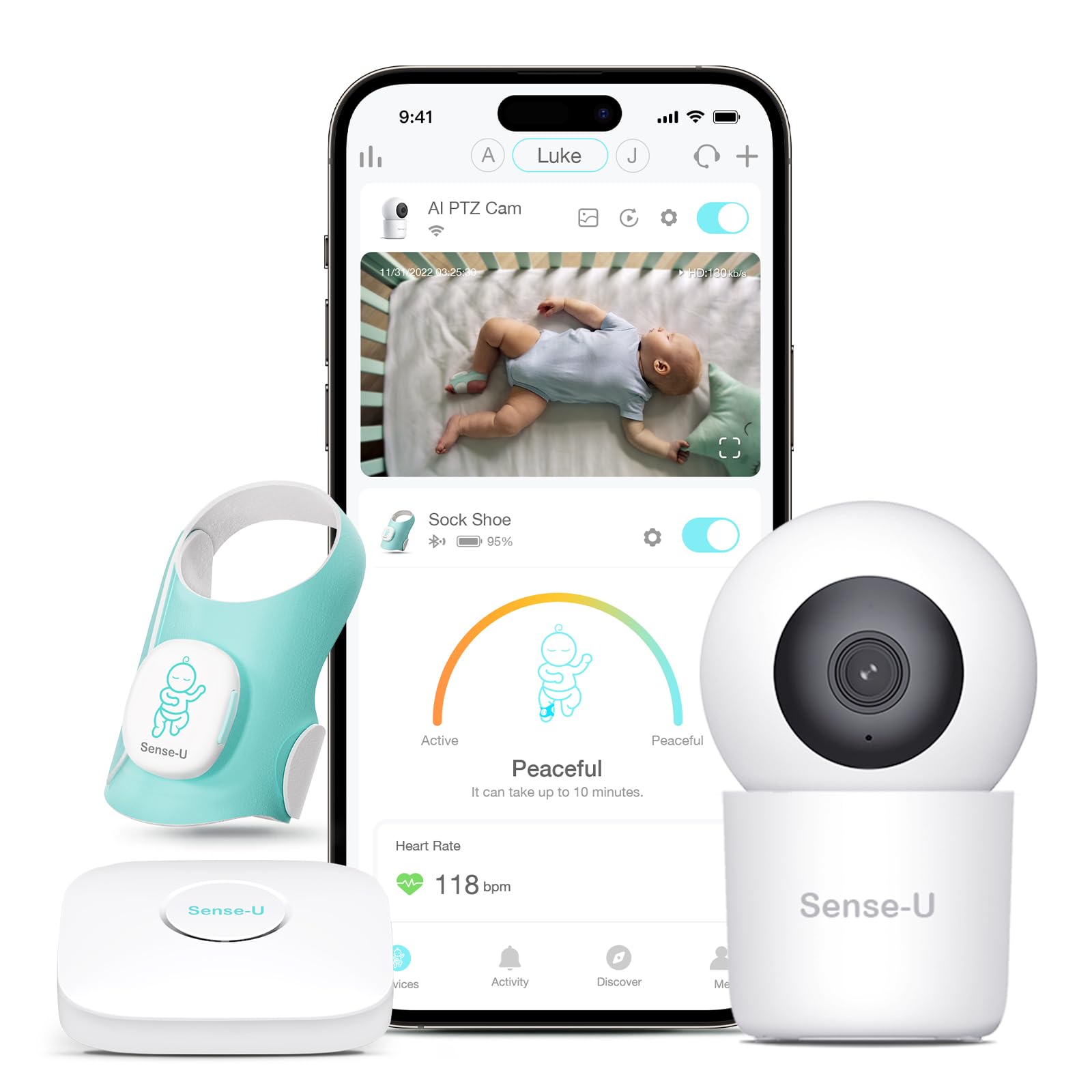
The Sense-U Smart Sock bundled with a 2.5K Pan-Tilt-Zoom camera offers a complete wearable-plus-video solution at a lower entry point than the Owlet Dream Duo. The sock uses transmissive PPG sensing — light passes through the foot to measure heart rate — which is the same optical measurement method used in hospital pulse oximeters. However, it measures heart rate only and does not provide oxygen saturation (SpO2) readings. The camera delivers sharper-than-1080p video with PTZ control, cry detection, motion tracking, night vision, and two-way talk — all with no monthly subscription fee.
The shoe-style design stays on better than a traditional sock. The fabric is breathable and soft, and three size options fit babies from 1 to 18 months. The base station extends signal range well beyond Bluetooth-only models, allowing parents to monitor from across the house without drops. The camera supports local SD card recording (card not included), so you keep video storage on your own device rather than paying for cloud storage. The app is intuitive and lets you customize alert strength and notification types.
The absence of SpO2 tracking is the main limitation for preemie parents who need to monitor oxygen saturation after NICU discharge. Heart rate changes often lag behind desaturation events, so a monitor without O2 capability may not catch the earliest warning signs. Some users report that the sock’s battery life is adequate for a full night but not as long as the Owlet’s 16-hour runtime. The camera works well as a standalone video monitor, and the bundle is a solid mid-range option for parents who want wearable HR tracking plus high-resolution video without the premium price of an all-in-one flagship.
Why it’s great
- Transmissive PPG heart rate tracking for accurate preemie monitoring
- 2.5K PTZ camera with no monthly subscription fees
- Base station provides strong signal range through walls
Good to know
- Does not measure oxygen saturation (SpO2)
- Sock battery life is shorter than Owlet’s 16-hour runtime
6. Sense-U Smart Sock Shoe 2 (Long Range)
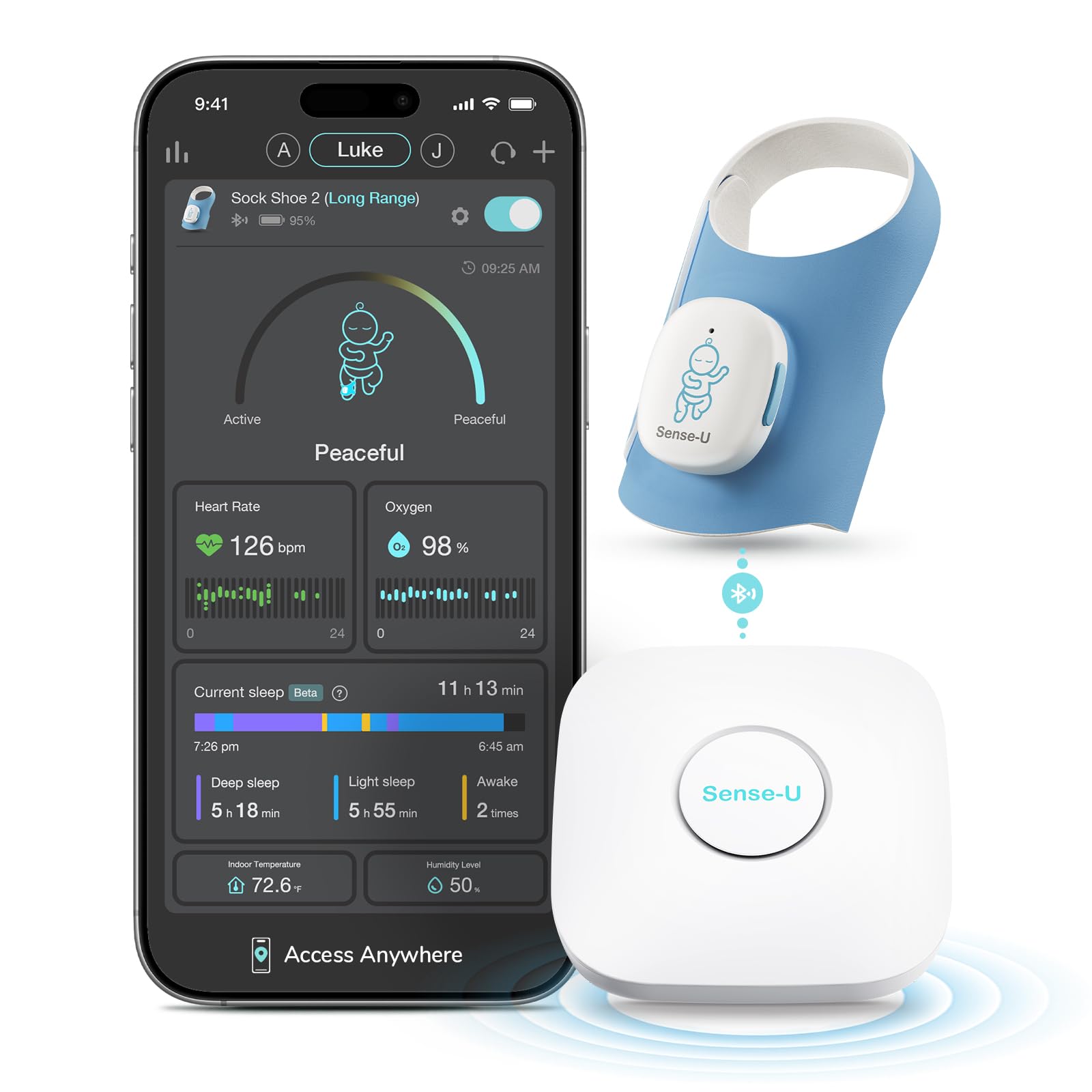
The Sense-U Smart Sock Shoe 2 is the standalone sock version of the Sense-U bundle above, designed for parents who already have a video monitor and just want the wearable vital sign tracker. It uses the same advanced transmissive PPG sensing technology to track heart rate, and includes a base station that provides long-range connectivity — the “Long Range” in its name references the enhanced signal distance compared to standard Bluetooth socks. The base station gives you audible and visual alerts directly, so you are not reliant on phone notifications staying active overnight.
The shoe-shaped sock stays put better than traditional sock-style wearables, and the fabric is soft enough that preemies rarely seem to notice it. The on-device sleep status indicator shows deep vs. light sleep, nap tracking, sleep efficiency, and wake times. The base station supports monitoring for twins when used with two socks, making it a scalable option for families with multiples. The app provides optional push notifications from anywhere, and the base station stores and forwards data even when the phone is out of range.
Just like the bundle version, the standalone sock does not measure oxygen saturation. This is a meaningful gap for preemie parents who specifically need to monitor SpO2 alongside heart rate. A critical review noted that as of early 2026, the sock did not alarm on sensor disconnection — only after 4 minutes of low heart rate. This delay is too long for a preemie at risk of desaturation. If your baby was discharged with an oxygen requirement or has a known breathing condition, a model with immediate O2 alerts (like the Owlet) is the safer choice.
Why it’s great
- Long-range base station provides reliable in-home connectivity
- Soft shoe-style design stays on preemie feet without shifting
- Supports twin monitoring with a single base station
Good to know
- No oxygen saturation (SpO2) tracking
- Alarm delay of 4 minutes on low heart rate may be too long for some preemies
7. Philips Avent Connected Monitor

The Philips Avent Premium Connected Monitor uses SenseIQ technology to track sleep and breathing rate without any wearable sock — it analyzes millions of pixels per second to detect the tiniest chest movements. The 1080p camera feeds a 5-inch parent unit with a stable connection rated at 1300 feet of range, making it one of the longest-range non-Wi-Fi monitors on the market. The crib mount clips securely to the crib rail and provides an overhead view optimized for the breathing detection algorithm.
The “Cry Translation” feature uses a scientifically developed algorithm to interpret five distinct cry types, though user reviews suggest it is more of a curiosity than a reliable parenting tool. The sleep diary logs breathing trends and sleep duration, and the app provides real-time insights into your baby’s rest patterns. The Secure Connect System encrypts the video and audio across multiple links, creating a private connection that does not route through the public internet — a real plus for privacy-conscious families.
Like the Nanit, this monitor cannot measure heart rate or oxygen saturation. The SenseIQ breathing rate is useful for spotting irregularities, but it is not a substitute for pulse oximetry. Several users noted that the breathing tracking became unreliable when the baby was in a moving crib (like the Snoo), because the algorithm could not separate the baby’s motion from the crib’s motion. For preemie parents who want contact-free monitoring without a sock, this is a strong choice — but only if you also have a pulse oximeter for vital sign confirmation.
Why it’s great
- Contact-free breathing tracking with no wearable on the baby
- 1300-foot range for reliable non-Wi-Fi connection
- Crib mount provides ideal overhead camera position
Good to know
- No heart rate or oxygen saturation monitoring
- Breathing tracking accuracy drops with moving cribs like the Snoo
8. Miku Pro Smart Baby Monitor
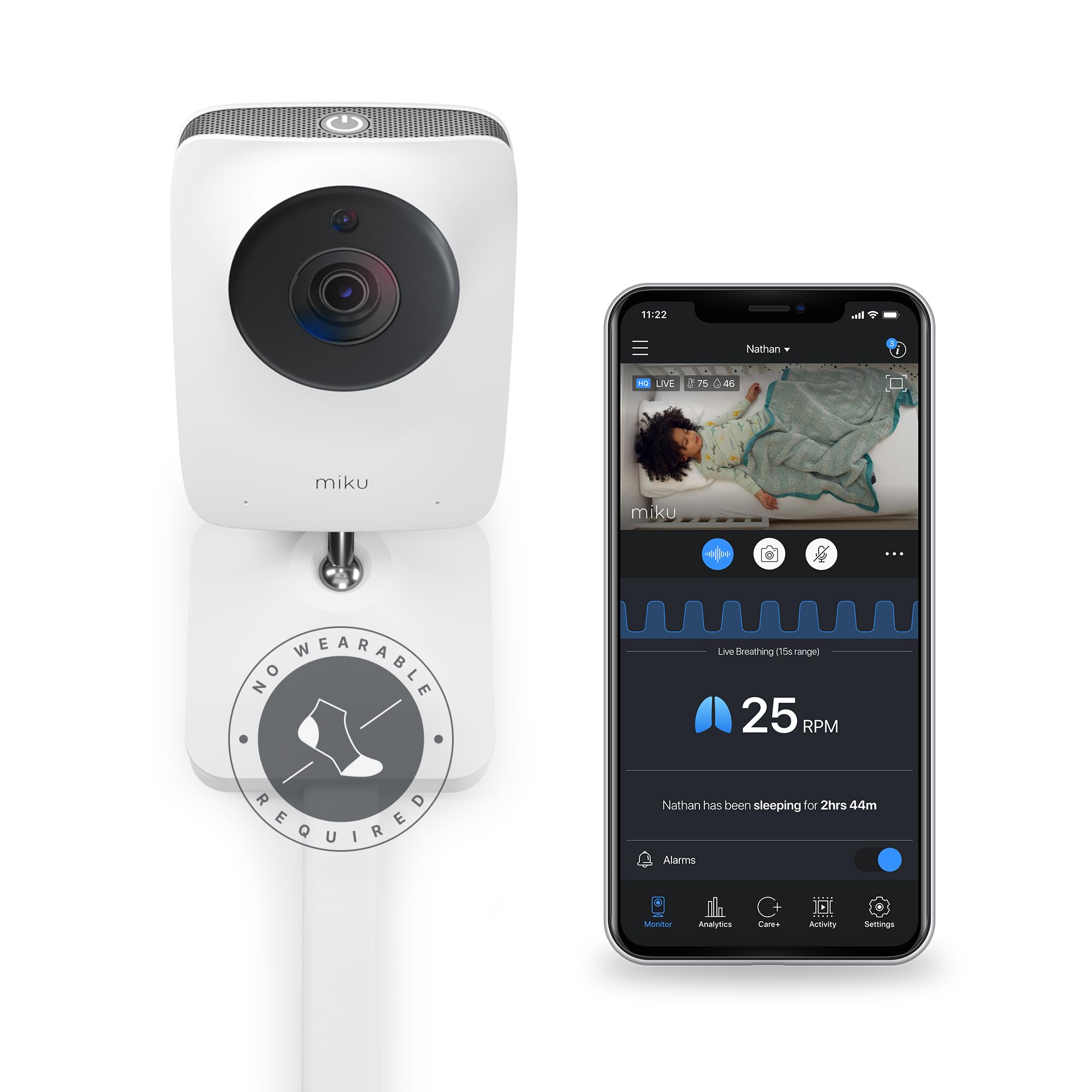
The Miku Pro uses SensorFusion technology to track breathing without any wearable — it combines an optical sensor with proprietary image processing to detect respiration through blankets, stuffed animals, and in any sleep position or lighting condition. Unlike camera-based systems that rely purely on pixel motion analysis, Miku’s approach is designed to maintain accuracy as the baby grows, making it a long-term solution that parents report using well past age three. The camera provides 1080p HD video with night vision and two-way audio.
The hardware kit includes a wall mount, cable guides, and installation tools, making setup straightforward. The app provides real-time breathing tracking, sleep analytics, and live respiration data. Communication is secured with a tamper-resistant Crypto Chip, dual-layer encryption, and two-factor authentication. A subscription (Miku Membership at per month) unlocks expanded video clip storage and in-depth sleep trends. The dual-band Wi-Fi and Bluetooth 4.1 ensure reliable streaming on most home networks.
As a wearable-free monitor, the Miku Pro shares the same fundamental limitation as the Nanit and Philips Avent: it cannot measure heart rate or oxygen saturation. For a preemie who was discharged with an oxygen requirement, this is a non-starter as a primary monitor. However, for parents who want a contact-free breathing tracker for a healthy preemie who no longer needs supplementary oxygen, the Miku Pro offers the most robust no-wearable breathing detection available. The subscription cost is a minor irritation given the already premium price of the hardware.
Why it’s great
- Contact-free breathing detection works through blankets and in any position
- Crypto Chip and dual-layer encryption for secure streaming
- Comprehensive hardware kit with wall mount and installation tools
Good to know
- No heart rate or oxygen saturation monitoring
- Advanced features require a /month subscription
9. Momcozy BM04 Smart WiFi Baby Monitor

The Momcozy BM04 is a budget-friendly 2-in-1 monitor that functions both as a dedicated parent unit with a 5-inch 1080p screen and as a Wi-Fi camera accessible through the Momcozy app. This dual connectivity is its defining feature for the price tier — you get local non-Wi-Fi monitoring for reliable in-home use plus app-based remote viewing when you are away. The camera features motion detection, cry detection, a Safe Fence danger zone alert, and two-way talk, all powered by a 5000mAh battery in the parent unit that lasts for hours of continuous use.
The 1080p video quality is clear both day and night, and the pan-tilt-zoom capability gives you flexibility in camera positioning. The parent unit’s large screen is bright and responsive. The setup process is quick — under 5 minutes according to most reviews — and the app interface is intuitive. Shared video access allows up to 20 family members to view the feed, making it easy for grandparents to check in from their own phones.
This monitor does not provide any vital sign tracking — no heart rate, no oxygen level, no breathing detection. For a preemie parent who specifically needs a sock monitor for vital signs, the BM04 is a video-only solution. Some users have reported reliability issues with the sound and cry detection after a couple of months of use. The BM04 is best suited as a secondary or budget video monitor for families whose primary preemie monitoring is covered by a separate sock device like the Owlet, or for parents who need a simple, reliable video feed without any health analytics features.
Why it’s great
- Works in both Wi-Fi and non-Wi-Fi modes for flexible use
- 5000mAh battery on the parent unit provides long runtime
- Quick setup and clear 1080p video day and night
Good to know
- No vital sign tracking (no HR, O2, or respiratory monitoring)
- Some users report sound detection reliability drops after extended use
FAQ
At what weight can my preemie start wearing a smart sock monitor?
Is a smart sock monitor safe for preemie skin?
Can a smart sock monitor prevent SIDS or detect apnea reliably?
How do I prevent false alarms on a preemie sock monitor?
Do I need a Wi-Fi connection for the sock monitor to work at home?
Final Thoughts: The Verdict
For most parents of a preemie at home, the baby sock monitor for preemies winner is the Owlet Dream Duo (Gen 3) because it combines FDA-cleared transmissive pulse oximetry with a 2K HD camera in one integrated app — the only system that tracks both SpO2 and heart rate alongside high-quality video without needing a separate monitor. If you already own a camera and just want the vital sign tracking layer, grab the Owlet Dream Sock. And for parents who want a capable heart rate sock plus a subscription-free 2.5K PTZ camera at a mid-range price, nothing beats the Sense-U Sock + Camera Bundle.

Mo Maruf
I created WellFizz to bridge the gap between vague wellness advice and actionable solutions. My mission is simple: to decode the research and give you practical tools you can actually use.
Beyond the data, I am a passionate traveler. I believe that stepping away from the screen to explore new environments is essential for mental clarity and physical vitality.