Our readers keep the lights on and my smoothie glass nicely filled. As an Amazon Associate, I earn from qualifying purchases.
That persistent ache on the outside of your elbow isn’t just annoying — it’s a signal that the tendons anchoring your forearm muscles are strained and inflamed. Whether you chalk it up to tennis, a weekend of pickleball, or just typing with poor ergonomics, elbow tendonitis has a way of derailing everything from your workout to your sleep. A targeted brace is often the fastest way to offload that tendon tension without stopping your daily routine.
I’m Mohammad Maruf — the founder and writer behind WellFizz. I’ve spent years analyzing biomechanical support products, from ergonomic chairs to joint braces, tracking how material density, compression geometry, and adjustability translate into real pain relief for active adults.
Below, I’ve broken down the leading options on the market to help you cut through the noise and find the right brace for elbow tendonitis based on your specific activity level, arm size, and pain pattern.
How To Choose The Best Brace For Elbow Tendonitis
Picking the wrong brace wastes money and, worse, prolongs the pain. You need to match the brace’s mechanism to your specific tendinopathy — lateral (tennis elbow) or medial (golfer’s elbow) — and your intended use from heavy lifting to light daily wear. Here is what separates the effective from the forgettable.
Compression Type: Strap vs. Sleeve
A narrow counterforce strap wraps just below the elbow belly to disrupt the force traveling through the tendon. This is the gold standard for lateral epicondylitis because it creates a new fulcrum point, reducing strain on the bony attachment. Full sleeves provide more diffuse compression and joint warmth, which helps with general arthritis aches but does less to offload a specific tendon insertion. If you have sharp, localized pain when gripping, lean toward the strap category.
Pad Design & Material
The pressure pad that sits over the tendon is the heart of the brace. Look for a built-in gel pad or a contoured foam insert that stays in place without digging in. Some models use a hard plastic disc covered in fabric — these apply precise point pressure but can feel like a rock against the ulna after a few hours. A flexible, cushioned pad distributes force more evenly and is easier to wear for an entire workday.
Adjustability & Anti-Slip Construction
Hook-and-loop closure with an internal D-ring allows single-handed tensioning and stays snug as your forearm changes diameter during activity. The strap material matters too — a non-stretch nylon or neoprene blend holds its position under dynamic loads, while elastic-only straps tend to migrate. Look for embedded silicone strips or a tapered profile if you struggle with braces sliding down toward the wrist during repetitive motion.
Quick Comparison
On smaller screens, swipe sideways to see the full table.
| Model | Category | Best For | Key Spec | Amazon |
|---|---|---|---|---|
| Mueller Gel Pad Strap | Strap with Pad | Gel-cushioned all-day wear | Integrated gel pad, fits 10″-14″ | Amazon |
| BraceAbility Epicondylitis Brace | Counterforce Strap | Smaller forearms & precise pressure | Embedded pressure tube, fits up to 15″ | Amazon |
| Soloever Copper Sleeve w/ Strap | Sleeve + Strap | High-intensity sports & stability | Copper-infused, anti-slip strips | Amazon |
| Copper Compression PowerKnit Sleeve | Compression Sleeve | General soreness & recovery | Seamless knit, copper-infused fibers | Amazon |
| Mueller Sports Medicine Strap | Counterforce Strap | Budget-friendly entry-level relief | Neoprene blend, fits 7″-14″ | Amazon |
In‑Depth Reviews
1. Mueller Tennis Elbow Support with Gel Pad

The Mueller Gel Pad strap strikes an almost ideal balance between targeted compression and all-day comfort. Unlike basic straps that rely on a bare foam block, this version embeds a soft gel pad directly into the contact area. That gel layer conforms to the lateral epicondyle instead of pressing a hard edge into it, which is why users report wearing it for three-hour stretches without the usual sore-spot complaints. The double-knit moisture-wicking fabric breathes better than standard neoprene, so you don’t end up with a sweaty band after a round of golf or a long day at the worksite.
The hook-and-loop closure paired with D-ring hardware lets you dial in tension one-handed — a small detail that matters when your other arm is already sore. The gel pad sits inside a small pocket on the strap’s underside, and a few users note that the pad can shift slightly during aggressive movement. That said, a quick repositioning takes two seconds, and the relief it delivers once centered is hard to beat at this tier. It also fits both arms and accommodates forearms measuring between 10 and 14 inches.
Where this brace truly earns its spot is the reported speed of relief. Multiple verified buyers describe significant pain reduction within three days of consistent use during activities like walking, computer work, and light sports. It is not a cure for the underlying tendinosis, but as a load-management tool it allows you to keep moving while the tendon heals. The only real friction point is that the instructions for pad positioning could be clearer — you will likely need to experiment an inch or two up or down your forearm to find your sweet spot.
Why it’s great
- Integrated gel pad cushions the tendon without digging in
- Breathable moisture-wicking fabric for long sessions
- One-handed D-ring adjustment stays locked during activity
Good to know
- Gel pad may need occasional repositioning
- Some users find it uncomfortable beyond three continuous hours
2. BraceAbility Epicondylitis Brace

BraceAbility takes a slightly different engineering approach: instead of a wide gel pad, this strap uses an embedded cylindrical pressure tube that runs along the inside of the band. That tube creates a very narrow, concentrated line of compression over the tendon origin — think of it as a precision tool for people who know exactly where their pain point is. For adults with smaller forearms, this design is a standout because the tube stays centered on the tendon better than a bulky pad that can drift. The double-ring closure system also locks tension evenly without twisting the strap material.
The strap itself is slim and low-profile, which makes it easy to slide under a long-sleeve work shirt or a golf glove without bunching. Users with arm circumferences up to 15 inches will find the one-size range accommodating, and the lightweight build means you may forget you are wearing it — until you attempt a heavy lift and realize your elbow is not screaming. Several verified reviews mention being able to bowl three full games or complete a Pilates class pain-free while wearing it, which speaks to the tube’s ability to offload tendon force during repetitive gripping.
On the downside, the pressure tube is firm. A handful of reviewers compare the sensation to having a small piece of wood strapped to their arm, especially if the band is cinched too tight. The Velcro-like exterior fabric can also irritate sensitive skin over extended wear — a felt lining or wearing it over a thin sleeve can mitigate that. Durability is a moderate concern since the hook material may fray after repeated washing, so hand washing is advised. If you prioritize pinpoint relief over pillowy comfort, this is your pick.
Why it’s great
- Precision pressure tube targets the tendon insertion exactly
- Slim, unobtrusive profile fits under clothing
- Double-ring closure prevents twisting
Good to know
- Firm tube can feel uncomfortable against the bone
- Rough hook fabric may irritate sensitive skin
3. Soloever Copper Elbow Compression Sleeve with Adjustable Strap
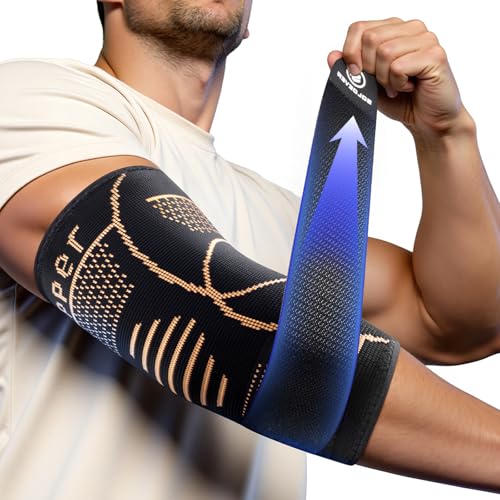
The Soloever brace is really two products in one: a full compression sleeve that wraps the entire elbow joint, plus a detachable adjustable strap that layers extra pressure over the tendon. This hybrid design is ideal for people who need both joint stability and localized tendon offloading — think weightlifting, factory work, or any scenario where the elbow is under multi-directional load. The copper-infused fabric does not just sound technical; it adds a slight antimicrobial benefit that keeps odor down during long shifts, and the moisture-wicking knit helps you avoid that clammy sleeve feeling after an hour of sweat.
What sets this apart from a plain sleeve is the reinforced anti-slip silicone strips on the inner hem. These bite into the skin and prevent the brace from migrating, a common complaint with all-in-one sleeves. The adjustable strap sits over the sleeve, so you can tighten it for heavy lifts and loosen it for desk work without removing the base layer. Four sizes (S through XL) allow a more tailored fit than one-size-fits-most straps, with detailed circumference measurements above the elbow rather than at the forearm. Users working 12-hour warehouse shifts report the sleeve stays put without needing a single readjustment.
The trade-off is that this is the bulkiest option on this list. The sleeve adds noticeable thickness under a dress shirt, and the strap mechanism adds a small amount of hardware above the elbow. It is also hand-wash only to preserve elasticity, which is a mild inconvenience compared to machine-washable straps. For maximum pain relief during high-output activities, however, the combined compression-plus-strap approach outperforms standalone straps that can shift under heavy load. If your tendonitis flares up most when you grip, lift, or pull, this is the most secure platform available here.
Why it’s great
- Full sleeve + adjustable strap for dual-action support
- Anti-slip silicone strips prevent migration during intense movement
- Copper-infused fabric reduces odor over long wear
Good to know
- Bulky profile — not ideal under tight sleeves
- Requires hand washing to maintain compression
4. Copper Compression PowerKnit Elbow Sleeve

The Copper Compression PowerKnit sleeve is not a counterforce strap — it is a continuous compression garment designed to wrap the elbow, forearm, and lower bicep in even, graduated pressure. This makes it a better fit for people whose pain is diffuse: general stiffness from arthritis, post-workout soreness, or mild tendonitis that has not localized into a single sharp point. The seamless PowerKnit construction is exceptionally comfortable against the skin and dries quickly, so you can wear it during sleep or recovery without the chafing that straps sometimes cause after hours of contact.
Copper-infused fibers run through the entire fabric rather than being coated on top, meaning the antimicrobial benefits persist wash after wash. The sleeve also provides mild thermal insulation, which can help loosen the muscles around the joint before activity. Users with golfer’s elbow particularly appreciate the support during repetitive lifting movements like nannying or warehouse work, and several report significant improvement from the first wear. The S/M size accommodates smaller-to-average arms, but the available size range (up to XXL) covers a wide demographic, including elderly users managing age-related tendon discomfort.
The major caveat is sizing precision. Multiple users report falling between S/M and L/XL, with the smaller option too tight and the larger too loose. Because compression sleeves rely on a snug fit to be effective, this gap can be frustrating — Copper Compression does not offer a standalone medium. Additionally, this sleeve provides no adjustable tension or localized pad, so if your tendonitis pain is sharp and point-specific, you will likely get better results from a strap-style brace. For generalized soreness and recovery compression, though, the PowerKnit is a comfortable, low-fuss solution.
Why it’s great
- Seamless knit is comfortable for all-day and sleep wear
- Copper infusion is built into the fiber, not a coating
- Wide arm coverage supports forearm and bicep muscles
Good to know
- Sizing jumps from S/M to L/XL may be too big a gap
- No adjustable strap or localized pressure pad
5. Mueller Sports Medicine Tennis Elbow Support Strap
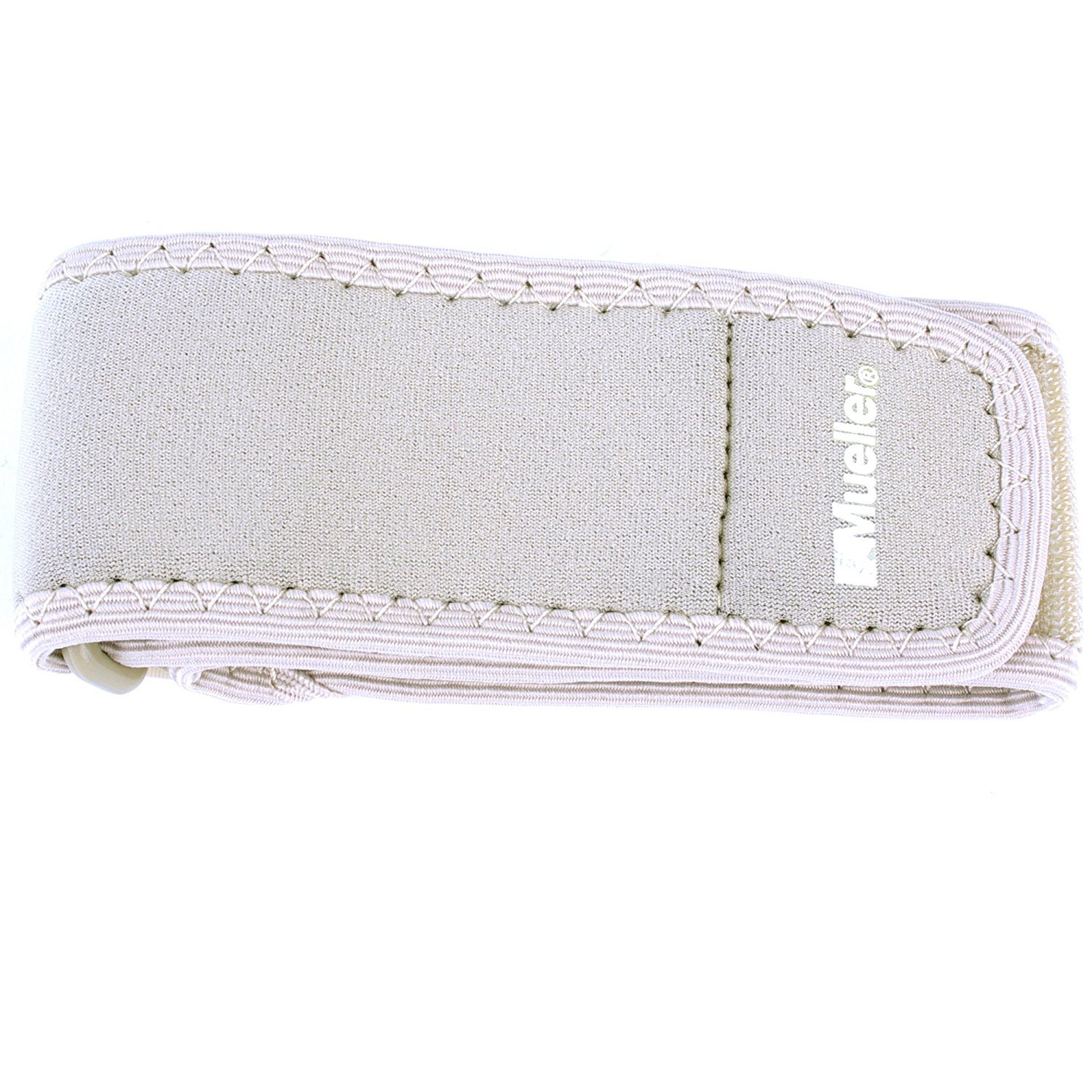
The classic Mueller counterforce strap is one of the most popular entry-level braces for elbow tendonitis, and for good reason: it is simple, effective, and built around a neoprene blend that provides both compression and soothing warmth. There is no gel pad, no pressure tube, no copper infusion — just a straightforward 2-inch wide band with a hook-and-loop closure that wraps the forearm and applies direct pressure over the extensor tendons. This simplicity keeps the profile very low; you can slide it under a dress shirt or polo and most people will not notice it is there.
Despite its lack of bells and whistles, the strap delivers consistent relief for a wide range of activities. Verified reviews from pickleball players, weightlifters, and office workers all report noticeable pain reduction within a few days. The neoprene retains body heat, which can be therapeutic for stiff joints, though some users in warmer climates find it causes sweating. The one-size-fits-most range of 7 to 14 inches covers the majority of adults, and the strap works on either arm. It is also machine-washable, which is a practical advantage over many competitors that require hand washing.
Where this strap falls short is the lack of a pressure pad. The neoprene itself applies the compression, so the force is distributed over a wider area rather than concentrated on the exact tendon insertion point. For mild to moderate tendonitis, this is usually sufficient. For severe, sharp pain, you may find that a strap with a built-in pad provides more focused relief. The strap can also feel a bit hot during extended use in summer, and the Velcro closure can sometimes snag on clothing or fabric if not fully secured. For a no-fuss, budget-friendly starting point, though, this Mueller strap is a proven winner.
Why it’s great
- Simple, low-profile design fits under work clothes
- Neoprene warmth aids joint stiffness and circulation
- Machine washable for easy maintenance
Good to know
- No gel or foam pad for concentrated pressure
- Can feel warm or sweaty during extended wear
FAQ
Should I wear the brace above or below the elbow for tendonitis?
Can I sleep with an elbow tendonitis brace on?
How tight should I make the strap?
Will a brace cure my tendonitis or just mask the pain?
Can I use the same brace for both tennis and golfer’s elbow?
Final Thoughts: The Verdict
For most users, the best brace for elbow tendonitis is the Mueller Tennis Elbow Support with Gel Pad because it combines effective targeted compression with a cushioned gel pad that stays comfortable during hours of wear, making it versatile enough for work, sports, and daily activity. If you need precise, concentrated pressure on a specific tender spot, the BraceAbility Epicondylitis Brace offers a unique pressure tube design that smaller-armed users find particularly effective. For heavy lifting or high-intensity sports where you need both joint stability and tendon offloading, the Soloever Copper Compression Sleeve with Adjustable Strap provides the most secure, anti-slip platform available in this lineup.

Mo Maruf
I created WellFizz to bridge the gap between vague wellness advice and actionable solutions. My mission is simple: to decode the research and give you practical tools you can actually use.
Beyond the data, I am a passionate traveler. I believe that stepping away from the screen to explore new environments is essential for mental clarity and physical vitality.