Our readers keep the lights on and my smoothie glass nicely filled. As an Amazon Associate, I earn from qualifying purchases.
Choosing a camera in this bracket means weighing sensor format, autofocus speed, and lens availability against every dollar saved.
I’m Mohammad Maruf — the founder and writer behind WellFizz. I analyze camera sensor technologies, lens mount roadmaps, and autofocus systems to separate real photographic value from marketing noise.
After comparing over a dozen models across Canon, Nikon, Sony, and Panasonic, I’ve found the best affordable photography cameras that genuinely balance image quality, features, and long-term usability for growing photographers.
How To Choose The Best Affordable Photography Cameras
Buying a camera on a budget isn’t just about the body price — it’s about understanding which features you can compromise on and which ones directly impact your ability to grow as a photographer. Here are the critical factors to evaluate.
Sensor Size: APS-C vs. Full-Frame
APS-C sensors (found in models like the Canon EOS R100 and Nikon D3500) offer a sweet spot between cost, image quality, and lens affordability. A full-frame sensor (like the Canon EOS RP or Panasonic S5IIX) collects more light, delivers shallower depth of field, and performs better in low light, but the cameras and compatible lenses cost significantly more. For most beginners, a modern APS-C sensor is more than enough to produce professional-looking images.
Autofocus System: Points, Detection, and Speed
The number of autofocus points tells only part of the story. Phase-detection autofocus (used by Canon’s Dual Pixel CMOS AF and Sony’s system) tracks moving subjects faster than older contrast-detection systems. Models with face and eye detection simplify portrait and event photography dramatically. A camera with 143 or more phase-detect points will capture sharp images of kids and pets, while a 9-point contrast system will frustrate you in the same scenario.
Lens Ecosystem and Upgrade Path
The camera body is temporary, but lenses last decades. Canon’s RF mount (R100, RP) and Sony’s E-mount (ZV-E10) offer clear upgrade paths to higher-end bodies without replacing glass. Nikon’s F-mount DSLR lenses are widely available used, but the system is effectively discontinued for new development. Panasonic’s L-mount (S5IIX) is shared with Leica and Sigma, giving access to premium optics. Always check what lenses are available within your budget before committing to a mount.
Video Capabilities: 4K, Frame Rates, and Stabilization
If you plan to record video, look for 4K resolution at a minimum (ideally oversampled from a higher resolution for sharper detail). In-body image stabilization (IBIS), found in the Panasonic G85 and S5IIX, allows smooth handheld footage without extra gimbal gear. Consider whether the camera has a microphone input and a flip-out screen for vlogging — features absent in many entry-level DSLRs but standard in mirrorless vlog cameras.
Quick Comparison
On smaller screens, swipe sideways to see the full table.
| Model | Category | Best For | Key Spec | Amazon |
|---|---|---|---|---|
| Canon EOS R100 (Kit) | Mirrorless | Best overall beginner mirrorless | 24.1MP APS-C / 143 AF points | Amazon |
| Panasonic LUMIX G85 | Mirrorless | Best stabilized hybrid shooter | 16MP MFT / 5-Axis IBIS | Amazon |
| Nikon D3500 | DSLR | Best entry-level DSLR value | 24.2MP APS-C / 11 AF points | Amazon |
| Sony ZV-E10 | Mirrorless | Best vlogging & content creation | 24.2MP APS-C / 425 AF points | Amazon |
| Canon EOS RP | Full-Frame | Best affordable full-frame | 26.2MP Full-Frame / 4779 AF zones | Amazon |
| Panasonic LUMIX S5IIX | Full-Frame | Best premium hybrid kit | 24.2MP Full-Frame / 779 AF points | Amazon |
| Canon EOS Rebel T100 Bundle | DSLR | Budget-friendly DSLR bundle | 18MP APS-C / 9 AF points | Amazon |
| Canon EOS 4000D Pixi Bundle | DSLR | Value kit with extra lenses | 18MP APS-C / 19 AF points | Amazon |
| Panasonic LUMIX FZ80D | Bridge | Best superzoom for travel | 18MP 1/2.3″ / 60x optical zoom | Amazon |
| Sony Alpha a3000 | Mirrorless | Budget mirrorless entry | 20.1MP APS-C / 25 AF points | Amazon |
| Canon EOS R100 (Bundle) | Mirrorless | All-in-one starter kit | 24.1MP APS-C / 143 AF points | Amazon |
In‑Depth Reviews
1. Canon EOS R100 Mirrorless Camera (Body + Lens Kit)

The Canon EOS R100 hits the sweet spot where modern mirrorless technology meets an accessible price. Its 24.1-megapixel APS-C CMOS sensor paired with the DIGIC 8 processor delivers sharp, color-accurate images straight out of camera, with natural bokeh that smartphone computational modes can’t replicate. The Dual Pixel CMOS AF covers 143 zones and includes human face and eye detection, making this the most forgiving autofocus system in its segment for portraits and casual action.
This camera is genuinely small and light — Canon markets it as the smallest body in the EOS R series, and it delivers on that promise. The RF-S 18-45mm f/4.5-6.3 IS STM kit lens provides optical stabilization and a versatile zoom range for daily shooting, though you’ll want a faster prime lens for indoor low-light work. The 4K video mode records at up to 24 frames per second with a crop factor, and Full HD at 60 fps is smooth for general use.
The menu system is beginner-friendly without being patronizing, and the “Creative Assist” mode gives new photographers a visual way to adjust settings without diving into full manual. Battery life is good for a day of casual shooting. The lack of in-body stabilization means you rely on lens-based IS or steady hands, but at this price point, that’s a fair tradeoff for the autofocus performance you get.
Why it’s great
- Dual Pixel CMOS AF with 143 zones and subject tracking rivals cameras costing twice as much.
- Compact, lightweight body makes it easy to carry daily without fatigue.
- RF lens mount provides a clear upgrade path to higher-end Canon bodies.
- Excellent image quality with natural color reproduction and good dynamic range for APS-C.
Good to know
- 4K video is limited to 24p and applies a crop factor, reducing wide-angle coverage.
- Kit lens aperture (f/4.5-6.3) struggles in low light without raising ISO.
- No in-body image stabilization relies entirely on lens-based IS.
2. Panasonic LUMIX G85 Mirrorless Camera

The Panasonic LUMIX G85 is a mirrorless hybrid that punches well above its weight class, especially for video creators and travel photographers who need stabilization without a gimbal. Its 16-megapixel Micro Four Thirds sensor lacks a low-pass filter, resulting in noticeably sharper fine detail than other 16MP sensors in its generation. The real star is the 5-axis in-body image stabilization (IBIS) that works alongside lens-based OIS to eliminate handheld shake even when shooting 4K video at the long end of the kit lens.
The magnesium alloy body with weather sealing gives you confidence shooting in light rain or dusty environments — a rare feature at this price tier. The 12-60mm Power O.I.S. kit lens (24-120mm equivalent) is versatile and sharp, covering wide-angle to moderate telephoto. The G85 records 4K video at 30p with no crop, and the 4K Photo mode lets you extract 8-megapixel stills from video at up to 30 frames per second, which is useful for capturing precise moments in action sequences.
The electronic viewfinder is large and clear (2360K dots), and the 3-inch fully articulating touchscreen makes it easy to shoot from awkward angles. Autofocus is contrast-detection with DFD technology — it’s fast in good light but can hunt in dim conditions. Battery life is moderate, averaging around 300 shots per charge, so an extra battery is a smart investment. The G85 isn’t the newest camera on the market, but its stabilization and build quality remain competitive with newer mid-range models.
Why it’s great
- Class-leading 5-axis IBIS makes handheld video and low-light shooting exceptionally smooth.
- Weather-sealed magnesium alloy body built for real-world durability.
- 4K video with no crop and 4K Photo extraction at 30 fps.
- Excellent ergonomics with intuitive control layout and large EVF.
Good to know
- Contrast-detect autofocus can struggle in dim lighting conditions.
- Battery life is below average; plan for a spare battery on long shoots.
- Micro Four Thirds sensor has less low-light dynamic range than larger APS-C sensors.
3. Nikon D3500 DSLR Camera

The Nikon D3500 remains one of the best entry-level DSLRs ever made, and its value proposition is stronger than ever on the renewed market. The 24.2-megapixel APS-C CMOS sensor delivers exceptional image quality with no optical low-pass filter, meaning you get maximum sharpness from the sensor. Native ISO ranges from 100 to 25,600, providing usable images in dimmer conditions than most smartphones can handle. The optical viewfinder gives a clear, lag-free view of the scene that many beginners prefer over electronic viewfinders.
The included AF-P DX NIKKOR 18-55mm f/3.5-5.6G VR lens is one of the better kit lenses in the industry — it focuses quickly and quietly, and the Vibration Reduction (VR) helps stabilize handheld shots. The Guide Mode is genuinely helpful for new photographers, offering step-by-step instructions for different scenarios like portraits or landscapes. Battery life is outstanding, rated at over 1,000 shots per charge, which means you can shoot an entire event without worrying about recharging.
The D3500 lacks 4K video (it records only 1080p at 60 fps) and its 11-point autofocus system is basic by modern standards, with no phase-detect coverage on the sensor. That means live view autofocus is slow, so you’ll primarily use the optical viewfinder for shooting. The Snapbridge wireless connection app has a poor reputation for reliability, and the camera has no external microphone input. If you’re focused purely on still photography and learning fundamentals, this DSLR remains a fantastic bargain.
Why it’s great
- Outstanding 24.2MP APS-C image quality with no low-pass filter for maximum sharpness.
- Guide Mode provides real educational value for learning photography fundamentals.
- Class-leading battery life at over 1,000 shots per charge.
- Excellent kit lens with quiet autofocus and image stabilization.
Good to know
- No 4K video and limited 1080p at 60 fps.
- Only 11 autofocus points, all clustered near the center.
- No external microphone input for video recording.
- Snapbridge app is unreliable for wireless photo transfer.
4. Sony Alpha ZV-E10 Mirrorless Camera
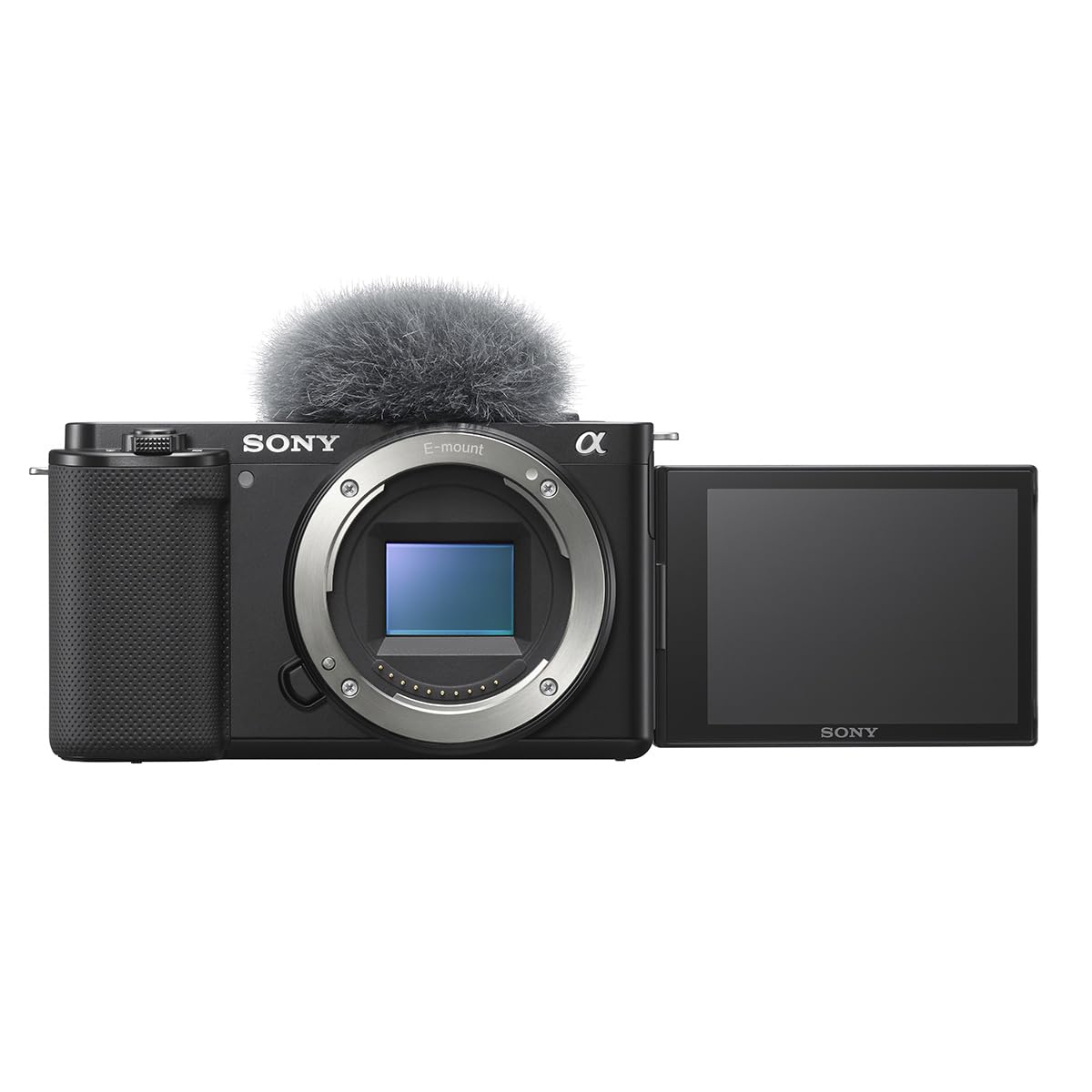
The Sony ZV-E10 is purpose-built for content creators, combining the excellent 24.2-megapixel APS-C sensor from the a6400 with video-first features that make vlogging and streaming seamless. The 4K video is oversampled from a 6K readout, delivering noticeably sharper footage than most rivals in this price class. Sony’s Real-Time Eye AF and Real-Time Tracking use 425 phase-detection points to lock onto faces and eyes with remarkable reliability, even when subjects move unpredictably — a feature that professional videographers regularly praise.
The ZV-E10 includes dedicated tools for content creators: the Product Showcase Setting transitions focus from a face to an object held up to the camera, ideal for review videos; the Background Defocus button instantly toggles between a shallow depth of field and a stopped-down aperture; and the directional three-capsule microphone captures decent audio in quiet environments. The fully articulating flip screen faces forward for self-recording, and the single USB cable connection allows live streaming to a computer without additional capture hardware.
There are notable limitations to consider. The ZV-E10 lacks in-body image stabilization, so you’ll need stabilized lenses or a gimbal for smooth walking shots. The rolling shutter is severe in 4K, and the electronic stabilization introduces a significant crop. Battery life is modest — expect around 30 minutes of continuous 4K recording before needing a swap. The overheating issue reported by some users occurs in hot environments with extended recording. If your primary use is controlled indoor content creation, this is a fantastic tool, but all-day outdoor filming requires careful management.
Why it’s great
- 4K video oversampled from 6K provides exceptional detail and sharpness.
- Best-in-class Real-Time Eye AF and subject tracking for reliable focus.
- Dedicated vlogging features like Product Showcase and defocus toggle.
- Compact and lightweight with a large E-mount lens ecosystem.
Good to know
- No in-body stabilization; relies on lens OIS or external gimbal.
- Severe rolling shutter in 4K mode limits fast motion use.
- Battery life is poor; a few spare batteries are essential for extended shoots.
- Can overheat in hot environments during continuous 4K recording.
5. Canon EOS RP Full-Frame Mirrorless Camera

The Canon EOS RP is the most affordable path to a full-frame sensor in the modern mirrorless world, and it delivers a dramatic image quality leap over any APS-C camera — especially in low light and dynamic range. The 26.2-megapixel full-frame CMOS sensor paired with the DIGIC 8 processor produces images with beautiful tonality, accurate skin tones, and a depth-of-field separation that smaller sensors simply cannot match when paired with fast glass. The RF mount gives you access to Canon’s outstanding lens lineup, from affordable primes like the RF 35mm f/1.8 to professional L-series glass.
The included RF 24-105mm f/4-7.1 IS STM lens is a practical all-rounder with optical stabilization, covering wide-angle to medium telephoto. It’s sharp in the center and good for general travel and portrait work, though the variable aperture limits low-light performance at the telephoto end. The camera body is remarkably compact for a full-frame camera — lighter than many APS-C DSLRs — and the ergonomic grip is comfortable for extended shooting sessions. The Dual Pixel CMOS AF covers a large portion of the frame with 4779 selectable zones, and face-tracking works well for casual portraits and family events.
The EOS RP records 4K video at 24p, but with a significant 1.6x crop and contrast-detect AF in that mode, making it less ideal for video than its stills performance would suggest. The electronic viewfinder is decent but not class-leading, and the burst rate of 5 fps in one-shot AF is modest. Battery life is acceptable for a mirrorless camera of this era, averaging around 250 shots per charge if you use the EVF. For photographers moving from crop-sensor to full-frame without breaking the bank, the RP is a legitimate gateway to pro-level image quality.
Why it’s great
- Full-frame sensor delivers superior low-light performance and depth of field control.
- RF mount provides access to Canon’s rapidly expanding lens ecosystem.
- Very compact and lightweight for a full-frame mirrorless body.
- Dual Pixel AF with face tracking for reliable portrait focusing.
Good to know
- 4K video has a heavy 1.6x crop and uses slower contrast-detect autofocus.
- Kit lens variable aperture (f/4-7.1) limits low-light flexibility.
- 5 fps burst rate is slow compared to modern mirrorless competitors.
- Battery life is modest; a spare battery is recommended for day trips.
6. Panasonic LUMIX S5IIX Full-Frame Camera
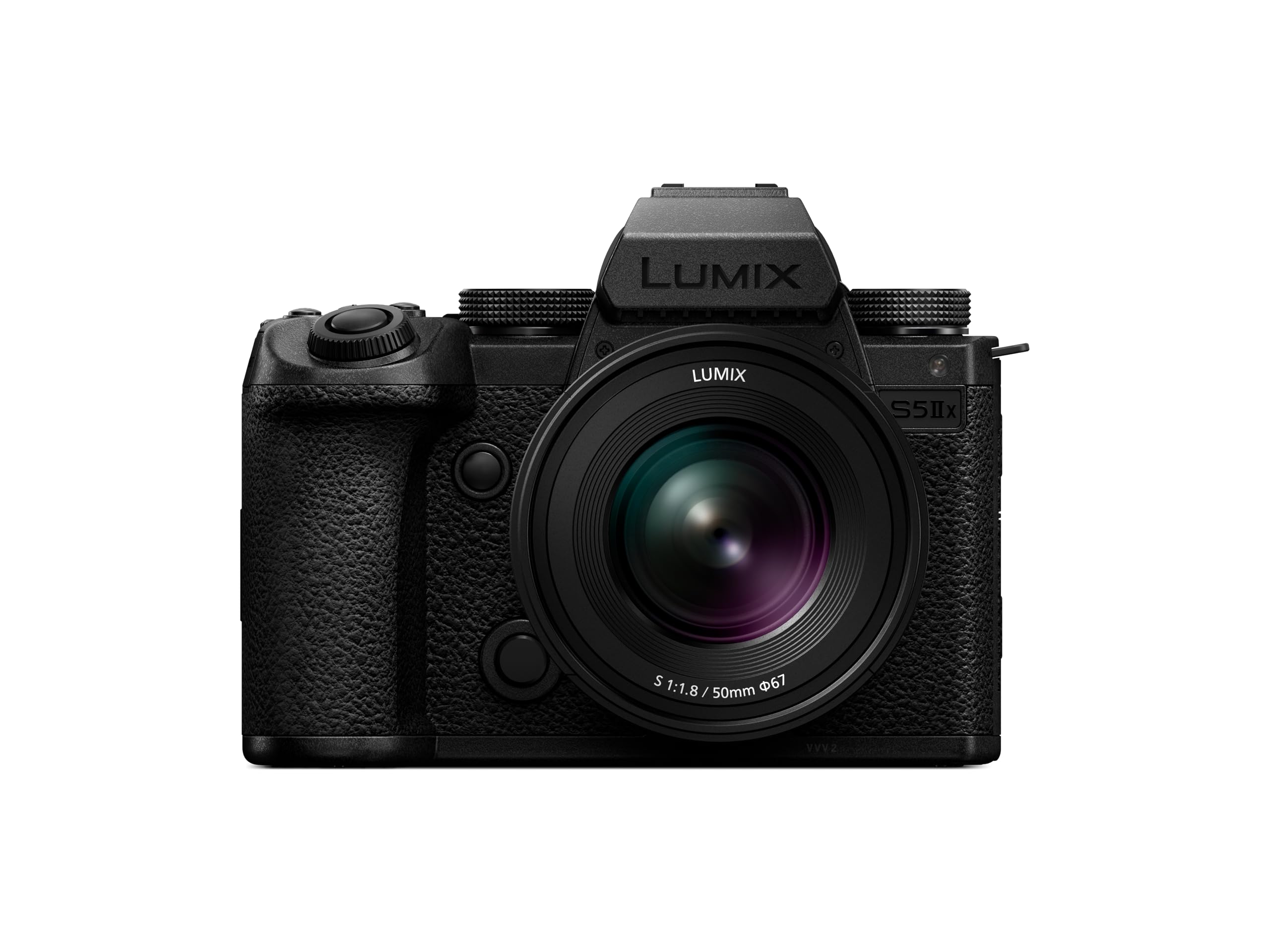
The LUMIX S5IIX represents a major leap for Panasonic, finally integrating phase-detection autofocus into a full-frame body after years of contrast-depend FHD systems. The 24.2-megapixel full-frame CMOS sensor with Phase Hybrid AF uses 779 phase-detection points, delivering reliable subject tracking for both stills and video. This kit includes a 20-60mm f/3.5-5.6 zoom lens and a 50mm f/1.8 prime lens, giving you a versatile wide-to-portrait pairing out of the box that rivals the dual-lens value of competitor kits.
The S5IIX is a video powerhouse: it records 5.8K ProRes internally, 10-bit 4K at up to 60p, and unlimited recording thanks to a built-in cooling fan that prevents overheating. The 14+ stop V-Log/V-Gamut captures exceptional dynamic range for color grading, and the camera supports wired and wireless IP streaming. The Active I.S. stabilization system keeps walking shots remarkably smooth. For hybrid shooters who need professional video features alongside excellent stills, the S5IIX offers capabilities normally found in cameras costing twice as much.
The build quality is excellent with full weather sealing, a high-resolution EVF, and a fully articulating touchscreen. The L-mount system is shared with Leica and Sigma, giving access to a growing range of high-quality lenses. The camera is slightly larger than some full-frame competitors, but the ergonomics and control layout are well-regarded. Some firmware features related to Ethernet streaming have been modified after launch, and the learning curve for the extensive menu system is steep. For photographers who want a future-proof hybrid that won’t limit their video aspirations, the S5IIX is a compelling investment.
Why it’s great
- Phase hybrid AF finally delivers reliable tracking for Panasonic full-frame users.
- Unlimited 4K recording with built-in fan prevents overheating in extended shoots.
- Includes two lenses (20-60mm zoom and 50mm f/1.8 prime) for versatile coverage.
- Active I.S. and 14+ stop V-Log for professional-grade video work.
Good to know
- Steep menu complexity; requires time investment to learn all features.
- Some firmware features (Ethernet streaming quality) were revised after launch.
- Larger and heavier than full-frame competitors like the EOS RP or Sony A7C.
- L-mount lens library, while growing, is still smaller than Canon RF or Sony E.
7. Panasonic LUMIX FZ80D Point & Shoot

The Panasonic LUMIX FZ80D is a bridge camera that fills a very specific niche — extreme reach in a compact, non-interchangeable package. Its 60x optical zoom (20-1200mm equivalent) opens up photography subjects that are simply impossible with a standard kit zoom: moon craters, birds at a distance, wildlife from a safe range, and architectural details far away. The POWER O.I.S. stabilization effectively suppresses hand-shake at the telephoto end, and the electronic viewfinder (2360K-dot) lets you compose in bright sunlight without glare.
The FZ80D records 4K video at 30p, and the 4K Photo mode allows you to extract 8-megapixel stills from video — useful for capturing the perfect frame from a burst of motion. The Post Focus feature is genuinely innovative: you touch the area you want in focus after taking the shot, and the camera uses multiple captures to refocus. The camera offers full manual controls, so you can learn aperture and shutter priority without the investment of interchangeable lenses. It’s light enough for all-day hiking at just over 600 grams.
The image quality tradeoffs are real and important to understand. With a small 1/2.3-inch sensor, the FZ80D struggles in low light — images get grainy quickly above ISO 800, and the resolution at full zoom is softer than you’d get from a DSLR with a dedicated telephoto lens. The interface is somewhat unintuitive, and the camera lacks WiFi for quick photo transfer. This camera is not a substitute for a larger sensor system if your priority is pure image quality, but for reach-per-dollar, nothing in this guide comes close.
Why it’s great
- 60x optical zoom (20-1200mm) covers subjects far beyond standard kit lenses.
- 4K Photo and Post Focus features provide creative flexibility.
- Lightweight and compact for a superzoom; ideal for travel and hiking.
- Full manual controls help teach photography fundamentals.
Good to know
- Small 1/2.3-inch sensor produces soft, grainy images in low light and at high ISO.
- Image quality at full 60x zoom is noticeably softer than interchangeable zoom lenses.
- No WiFi for wireless photo transfer to phone or tablet.
- Interface and menu system are less intuitive than most competitors.
8. Canon EOS Rebel T100 Bundle (Renewed)

The Canon EOS Rebel T100 (also known as the EOS 4000D outside North America) is the most affordable entry point into the Canon DSLR ecosystem, and this bundle stretches the value further by including a 64GB memory card, tripod, UV filter, tulip hood, and carrying case. The 18-megapixel APS-C CMOS sensor with DIGIC 4+ processor is a proven combination that delivers pleasing images in good light, and Scene Intelligent Auto mode means you can hand the camera to anyone and get solid results without adjusting settings.
The included EF-S 18-55mm f/3.5-5.6 DC III lens is optically basic but sufficient for learning composition basics. The optical viewfinder provides a clear, real-time view, and the 6.8cm LCD screen is adequate for reviewing shots, though its 230K-dot resolution is noticeably low by modern standards. The camera has built-in WiFi and works with the Canon Connect app for transferring photos to your smartphone — a feature missing from some older budget DSLRs.
The Rebel T100 is by far the most limited camera in this guide. It records only 1080p video at 30 fps, the 9-point autofocus system is slow and basic, and the continuous shooting rate of 3 fps misses fast action. The international version may not carry the same warranty as US-market models. The included tripod and accessories in the bundle are inexpensive and functional but not durable. This camera is suitable for absolute beginners who want to learn on a DSLR with minimal financial commitment and plan to upgrade to a better body once they outgrow its limitations.
Why it’s great
- Lowest cost entry to the Canon DSLR system with a broad used lens market.
- Bundle includes memory card, case, tripod, and filters — ready to shoot out of box.
- WiFi connectivity allows easy photo transfer to smartphone.
- Scene Intelligent Auto makes it easy for absolute beginners to get decent shots.
Good to know
- 18MP sensor and DIGIC 4+ processor are a generation behind current standards.
- 9-point autofocus system feels slow and limited for moving subjects.
- 3 fps burst rate cannot capture action or sports effectively.
- Low-resolution LCD screen (230K dots) makes critical manual focus difficult.
9. Canon EOS 4000D Pixi Advanced Bundle (Renewed)

The Canon EOS 4000D Pixi Advanced Bundle is the same Rebel T100 camera body but packaged with additional accessories that increase versatility right out of the box. The key additions are a wide-angle lens attachment and a telephoto lens attachment that screw onto the front of the standard 18-55mm kit lens, extending your reach without buying a separate zoom lens. The bundle also includes a tripod, camera bag, UV filter, and microfiber cloth — everything a new photographer needs to start shooting immediately.
The 18-megapixel APS-C sensor with DIGIC 4+ processor captures 3:2 aspect ratio images at up to 3 fps, with an ISO range up to 6400 that provides usable results in moderate indoor lighting. The optical viewfinder offers a clear, real-time view that many beginners find more comfortable than electronic viewfinders. The built-in flash provides fill light for close subjects, and the battery charge is sufficient for a day of casual shooting. The 19 autofocus points are an upgrade over the standard Rebel T100 bundle’s 9-point system, providing slightly better tracking coverage.
The same limitations of the Rebel T100 apply here: no 4K video, modest build quality, and a dated processor. The add-on lenses are optically inferior to dedicated zoom lenses, with visible distortion and chromatic aberration at the edges. The camera bag is functional but flimsy for regular travel. This bundle is best suited for someone who wants to experiment with different focal lengths without buying expensive glass, with the understanding that the add-on lenses are learning tools, not permanent solutions. If image quality is your priority, skip the add-ons and invest in a single better lens instead.
Why it’s great
- Includes wide-angle and telephoto screw-on adapters for focal length experimentation.
- Complete kit with bag, tripod, and accessories — no additional purchases needed.
- Optical viewfinder provides zero-lag framing that some beginners prefer.
- 19-point AF system is a meaningful upgrade over the standard Rebel T100.
Good to know
- Add-on lenses degrade image quality with distortion and chromatic aberration.
- 18MP sensor and DIGIC 4+ processor are outdated for current photography standards.
- No 4K video; only 1080p at 30 fps.
- Bundle accessories (bag, tripod) are low quality and may need replacement.
10. Sony Alpha a3000 Mirrorless Camera

The Sony Alpha a3000 was one of the earliest budget mirrorless cameras, and while its technology is visibly dated by 2024 standards, it still offers some interesting value for extreme budget buyers who want interchangeable lenses. The 20.1-megapixel Exmor APS-C sensor captures good image quality up to ISO 400, with usable results at ISO 800. The camera includes a built-in flash and an electronic viewfinder, both features often missing from budget options. The E-mount system gives access to Sony’s extensive lens library, including affordable third-party options from Sigma and Tamron.
The body features a comfortable grip that feels more like a small DSLR than a typical mirrorless camera, and the ergonomic layout is generally well-regarded. The camera records Full HD video at 1080p, supports RAW shooting for maximum editing flexibility, and charges via USB — which is convenient for travel, though slow. The 18-55mm OSS kit lens includes optical stabilization and provides adequate coverage for general shooting. Focus peaking makes manual focus with adapted lenses easier than on many entry-level bodies.
The limitations are substantial and directly affect everyday usability. The electronic viewfinder resolution is very low (202K dots), and the rear LCD is equally poor, making critical focusing difficult. Battery life is poor — users report 20-30% drain per hour, and the USB charging is slow. Autofocus is contrast-detection only, with 25 points, and it hunts in low light. The camera generates noticeable noise above ISO 800. This camera is only recommended for someone who finds one at a steep discount and needs access to the E-mount system at the absolute lowest possible cost, with the full understanding that user experience will be compromised compared to even entry-level modern options.
Why it’s great
- APS-C sensor in a very affordable body with interchangeable E-mount lenses.
- Built-in flash and EVF for composing in bright conditions.
- Good ergonomic grip feels comfortable for extended shooting sessions.
- Focus peaking aids manual focus with adapted vintage lenses.
Good to know
- Extremely low-resolution EVF and rear LCD make composition and review difficult.
- Poor battery life with slow USB charging; external charger recommended but not included.
- Contrast-detect AF hunts in low light and struggles with moving subjects.
- Image quality degrades sharply above ISO 800 with visible noise.
11. Canon EOS R100 Mirrorless Camera Bundle

This bundle version of the Canon EOS R100 packages the same excellent camera body and RF-S 18-45mm kit lens with a shoulder bag and 64GB SD card, effectively eliminating the two most common extra purchases new photographers face. The camera itself is identical to the standalone R100: a 24.1-megapixel APS-C CMOS sensor with DIGIC 8 processor, Dual Pixel CMOS AF with 143 zones, and a compact body that’s the smallest in the EOS R series. The 4K video mode records at 24p (with crop), and Full HD at 60p is smooth for general use.
The RF-S 18-45mm f/4.5-6.3 IS STM lens includes optical image stabilization and a versatile zoom range equivalent to 29-72mm on full-frame. The lens retracts to a very compact size for storage, though you need to extend it before shooting. The included shoulder bag is basic but functional for day trips, and the 64GB card provides ample storage for thousands of JPEG images or hours of video. The camera’s autofocus system includes subject tracking for humans and animals, which is exceptional for a camera at this price tier.
As with the standalone R100, there’s no in-body stabilization, so IS relies on the lens. The battery life is rated for approximately 260 shots per charge when using the EVF, which is typical for mirrorless cameras in this class. Some users have reported that the included neck strap can detach accidentally, so inspecting the attachment points before use is wise. This bundle is an excellent value for someone who wants the best mirrorless camera in this guide and prefers the convenience of a complete kit over buying accessories separately.
Why it’s great
- Same excellent 24.1MP APS-C sensor and Dual Pixel AF as the standalone R100.
- Bundle includes bag and 64GB card, saving the hassle of separate purchases.
- Compact and lightweight body with RF mount upgrade path.
- 4K video and full HD at 60p with reliable autofocus tracking.
Good to know
- No in-body stabilization; lens IS must cover handheld shake.
- 4K video is limited to 24p with a crop factor.
- Battery life is modest at around 260 shots per charge.
- Some reports of neck strap attachment issues; inspect before trusting heavy lenses.
FAQ
Is an 18-megapixel sensor enough for good prints and online sharing?
Should I buy a DSLR or mirrorless camera as a beginner?
Does the Canon EOS R100 support external microphones for video?
What does “renewed” mean for cameras listed in this guide?
Can I use Canon EF and EF-S lenses on the EOS RP or R100?
Final Thoughts: The Verdict
For most users, the best affordable photography cameras winner is the Canon EOS R100 because it delivers modern mirrorless autofocus, excellent image quality, and a clear upgrade path within the Canon RF ecosystem at a price that doesn’t force compromises on sensor quality. If you need smooth handheld video without a gimbal, grab the Panasonic LUMIX G85 with its class-leading IBIS and weather-sealed body. And for the absolute best image quality and low-light performance, nothing beats the Canon EOS RP, which offers full-frame photography at a price that rivals many APS-C cameras.

Mo Maruf
I created WellFizz to bridge the gap between vague wellness advice and actionable solutions. My mission is simple: to decode the research and give you practical tools you can actually use.
Beyond the data, I am a passionate traveler. I believe that stepping away from the screen to explore new environments is essential for mental clarity and physical vitality.